
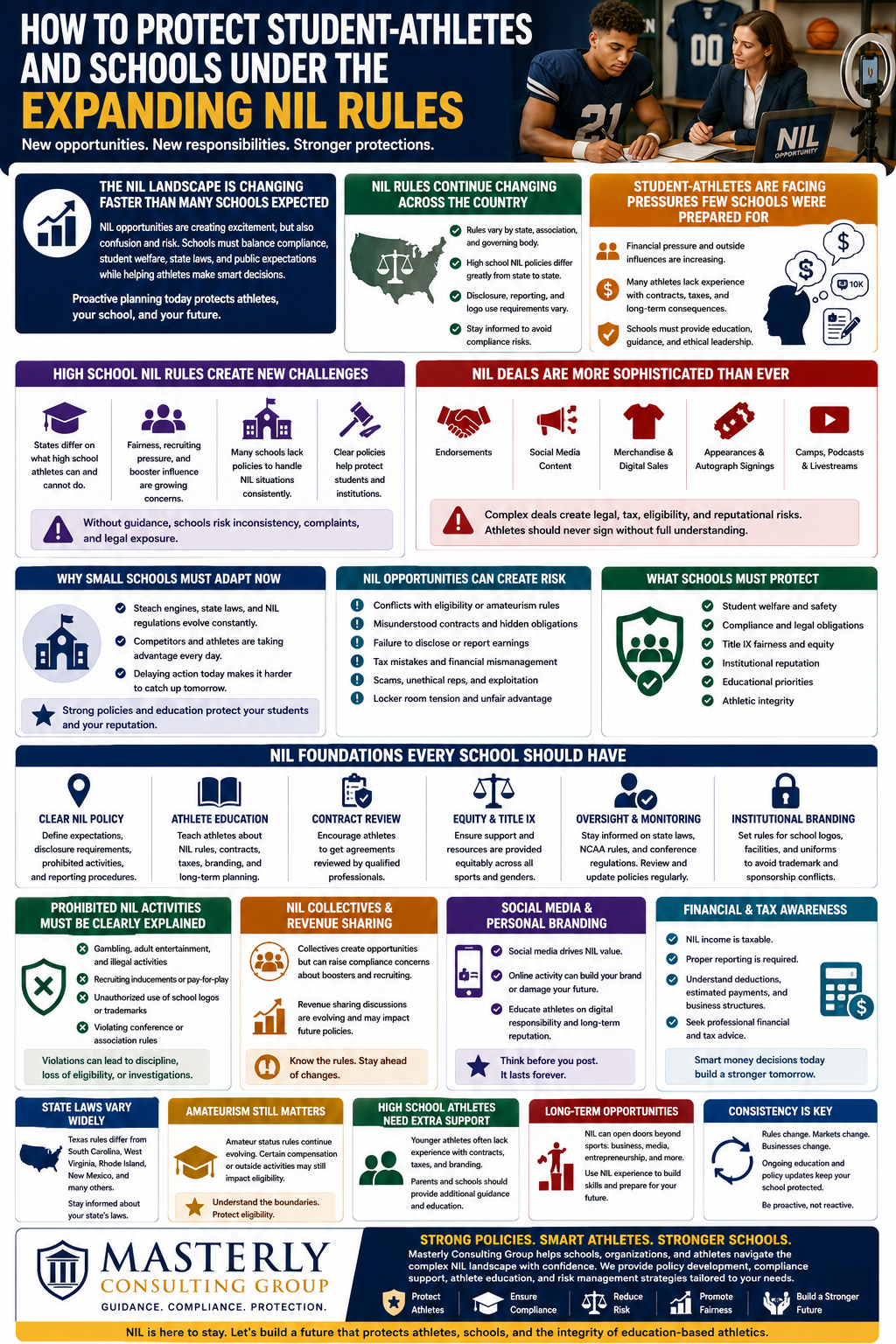
How to Protect Student-Athletes and Schools Under the Expanding NIL Rules
The NIL Landscape Is Changing Faster Than Many Schools Expected
The world of college sports and high school athletics has changed dramatically in a very short period of time. Only a few years ago, student athletes had limited opportunities to profit from their name image and likeness. Today, NIL deals are becoming part of everyday conversations among schools, athletes, parents, coaches, and athletic departments across the country.
For many schools, the rapid growth of NIL opportunities has created confusion, pressure, and uncertainty. Administrators are now balancing student welfare, compliance responsibilities, public expectations, and evolving state laws while trying to maintain fairness and protect educational priorities. At the same time, many athletes are navigating financial opportunities without fully understanding long-term legal, tax, or eligibility consequences.
At Masterly Consulting Group, we help schools, organizations, and athletes understand how NIL rules continue evolving and how proactive planning can reduce compliance risks. The NIL era has created exciting opportunities, but it has also introduced serious legal and ethical responsibilities for schools and student athletes alike.
Student Athletes Are Facing Pressures Few Schools Were Prepared For
The growth of NIL opportunities has changed the emotional and financial pressures facing many athletes. High school athletes and college athletes are now being approached about endorsement deals, social media content, autograph signings, appearances, and sponsorship opportunities before fully understanding the risks involved.
Some athletes feel pressure to build a personal brand before they even understand long-term educational or career goals. Others worry about losing eligibility because they signed NIL agreements without understanding school policies or applicable state NIL laws.
Many schools are realizing that protecting athletes now involves far more than coaching sports or monitoring athletic performance. It also requires education, guidance, oversight, and ethical leadership regarding NIL activities and financial decision-making.
NIL Rules Continue Changing Across the Country
One of the biggest challenges facing schools today is that NIL rules vary significantly between states, athletic associations, and governing organizations. High school NIL policies in Texas may look very different from rules in South Carolina, West Virginia, Rhode Island, or New Mexico.
Some states allow broader NIL activities for high school student athletes, while others still limit or prohibit many forms of NIL compensation entirely. Certain state laws also create disclosure requirements, reporting obligations, or restrictions involving school logos and institutional involvement.
Because NIL regulations continue changing rapidly, schools that fail to monitor updates may unknowingly expose athletes or programs to compliance risks.
High School NIL Rules Are Creating New Challenges for Administrators
The rise of nil high school opportunities has become one of the most controversial developments in modern athletics. While college athletes have received most national attention, high schoolers are increasingly becoming part of NIL discussions as states modify policies regarding athlete compensation.
Many schools were never designed to handle business negotiations, endorsement reviews, or financial compliance questions involving teenage athletes. Athletic departments are now being forced to navigate legal and ethical situations that barely existed just a few years ago.
High school NIL issues also create concerns involving fairness, recruiting pressure, booster influence, and educational priorities. Schools that fail to develop clear NIL policy guidance may struggle to respond consistently as more athletes pursue paid opportunities.
Schools Are Being Forced to Adapt Quickly
Many schools are trying to create policies while regulations continue changing around them. Administrators often feel caught between protecting student athletes and avoiding unnecessary legal exposure for the institution.
School leaders must now evaluate how NIL activities affect compliance, student safety, equity concerns, and institutional reputation. They must also consider how evolving NCAA rules, state laws, and conference regulations intersect with existing athletic policies.
Without proper guidance, schools may unintentionally create inconsistent enforcement practices that expose both athletes and institutions to significant risk.
NIL Deals Are Becoming More Sophisticated
Early NIL deals often involved simple social media promotions or local sponsorships. Today, many NIL agreements involve much larger financial opportunities, complex contracts, and long-term business arrangements.
Student athletes may now participate in endorsement deals, paid appearances, social media campaigns, trading cards, sports camps, merchandise promotions, and digital marketing partnerships. Some NIL earners are generating substantial NIL income before ever reaching professional sports.
As NIL deals become more sophisticated, schools must understand how these agreements affect compliance responsibilities, athlete eligibility, and institutional oversight obligations.
NIL Opportunities Can Create Serious Compliance Risks
While NIL opportunities offer exciting possibilities, they also create legal and ethical concerns that many athletes do not fully understand. Poorly structured NIL agreements can lead to conflicts involving amateurism rules, recruiting restrictions, taxes, disclosure obligations, or prohibited NIL activities.
Some athletes unknowingly sign contracts that restrict future opportunities or create conflicts with school policies. Others fail to disclose NIL earnings properly or misunderstand reporting obligations connected to NIL agreements.
Schools that fail to educate athletes about these risks may later face investigations, reputational concerns, or disputes involving compliance failures.
The Pressure on College Athletes Continues Growing
College athletes are now managing responsibilities that previously belonged mostly to professional sports organizations. In addition to practices, academics, travel, and competition, many athletes are now negotiating contracts, managing social media strategies, and evaluating sponsorship offers.
The pressure can become overwhelming, especially for younger athletes with little financial or legal experience. Some earning college athletes feel pressured to prioritize branding opportunities over academic development or personal well-being.
Schools that prioritize athlete welfare must recognize that NIL success can create emotional stress alongside financial opportunity.
NIL and Title IX Concerns Are Becoming More Important
As NIL opportunities continue expanding, many schools are also facing growing concerns regarding Title IX compliance and equity. Questions surrounding equal support, institutional involvement, and access to opportunities are becoming more common.
Although schools do not directly control many NIL deals, institutional actions connected to athlete promotion, marketing access, or resource distribution may still create legal concerns. Schools must carefully evaluate how NIL support programs affect athletes across different sports and genders.
Institutions that fail to address these issues proactively may face increased scrutiny regarding fairness and equal treatment.
Schools Must Protect Athletes From Exploitation
Many athletes are entering NIL agreements without fully understanding long-term financial, contractual, or reputational consequences. Young athletes may feel pressured to accept deals quickly because they fear missing opportunities.
Some NIL agreements contain restrictive terms, hidden obligations, or unrealistic expectations involving social media content, appearances, or exclusivity requirements. Others may expose athletes to scams or unethical business practices.
Schools that provide education and compliance support help protect student athletes from entering harmful or poorly structured arrangements.
NIL Activities Are Expanding Beyond Traditional Sponsorships
Modern NIL activities now extend far beyond local advertisements or social media endorsements. Athletes may now participate in podcasts, digital subscriptions, livestream promotions, online merchandise sales, autograph signings, and content partnerships with major brands.
Some athletes are building substantial online followings before even reaching college athletics. Others are leveraging NIL opportunities to prepare for future careers outside sports.
Because NIL activities continue evolving rapidly, schools must regularly review policies and educational programs to address new business models and emerging risks.
Social Media Has Changed the Entire NIL Environment
Social media platforms now play a major role in how NIL opportunities develop. Athletes with strong online followings often attract more endorsement deals and sponsorship attention regardless of athletic rankings alone.
Social media posts can significantly affect NIL valuations, public perception, and recruiting visibility. However, online activity also creates risks involving inappropriate partnerships, compliance concerns, or reputational damage.
Schools should educate athletes about responsible digital behavior and the long-term consequences of public online activity connected to NIL rights and personal branding.
NIL Money Can Create Division Inside Athletic Programs
As NIL money becomes more visible, schools are facing growing concerns about locker room culture, team dynamics, and athlete relationships. Athletes receiving larger NIL deals may unintentionally create tension among teammates receiving little or no compensation.
This challenge becomes especially difficult when schools attempt to balance athlete support with fairness across programs. Some athletes become public top earners while others feel overlooked despite strong athletic contributions.
Administrators must recognize that NIL opportunities affect emotional dynamics inside programs, not just financial opportunities outside competition.
High School Athletics Are Facing New Recruiting Pressures
The rise of high school NIL opportunities has also increased recruiting concerns across many states. Schools worry that financial opportunities may influence athlete transfers, competitive balance, or booster involvement.
Some states continue debating how much NIL involvement should be allowed at the high school level. Others are already implementing broader rules permitting NIL activities under certain conditions.
As these debates continue, schools must develop ethical standards that protect both athletes and institutional integrity.
NIL Agreements Should Be Carefully Reviewed
Many athletes sign NIL agreements without understanding the long-term consequences of contract language. Some agreements may limit future endorsements, conflict with school sponsorships, or create unrealistic obligations for athletes balancing academics and athletics.
NIL agreements may also include financial clauses, exclusivity restrictions, or image usage rights extending well beyond the athlete’s expectations. Schools should encourage athletes and families to seek professional review before signing major agreements.
Providing educational resources about NIL agreements helps reduce future disputes and protect athlete interests.
Schools Need Clear NIL Policies
Every school participating in modern athletics should develop a clear NIL policy explaining expectations, disclosure requirements, prohibited NIL activities, and compliance procedures.
A strong NIL policy helps schools maintain consistency while reducing confusion among athletes, coaches, parents, and boosters. It also provides guidance regarding school logos, institutional endorsements, recruiting restrictions, and reporting obligations.
Without clear policies, schools may struggle to respond fairly and consistently as NIL situations become more complex.
Prohibited NIL Activities Must Be Clearly Explained
Athletes often assume all NIL opportunities are automatically permitted. In reality, many prohibited NIL activities still exist depending on state laws, conference rules, and institutional policies.
Certain agreements involving gambling, adult entertainment, recruiting inducements, or unauthorized use of school logos may violate school or athletic association rules. Athletes participating in prohibited NIL activities may risk losing eligibility or facing disciplinary consequences.
Schools should provide regular education regarding prohibited NIL activities to reduce confusion and protect athletes from avoidable mistakes.
NIL Rights Are Becoming More Valuable Every Year
The market value of athlete branding continues increasing as companies recognize the influence athletes have through social media, local communities, and fan engagement.
Some college athletes are now generating substantial NIL earnings through sponsorships, media appearances, and digital partnerships. Well-known athletes such as Arch Manning and Carson Beck have helped increase public attention surrounding NIL valuations and athlete marketing potential.
As NIL opportunities expand, schools must prepare for continued growth in athlete branding and financial involvement.
NIL Collectives Are Reshaping College Sports
NIL collectives have become major players within college sports by organizing fundraising and sponsorship opportunities designed to support athletes at specific schools.
These organizations often help facilitate NIL deals, appearances, and endorsement opportunities for athletes connected to certain athletic programs. However, NIL collectives also create compliance questions involving recruiting, institutional involvement, and booster activity.
Schools must understand how NIL collectives operate and where legal boundaries exist under evolving NCAA rules and state laws.
Amateurism Rules Continue Evolving
Traditional amateurism rules once prohibited most forms of athlete compensation outside scholarships and limited educational support. The NIL era has dramatically changed that framework.
However, amateur status still matters in many athletic settings, and schools must continue monitoring how NIL activities intersect with remaining eligibility standards. Certain compensation arrangements or outside activities may still create conflicts under athletic association policies.
Schools that ignore evolving amateurism rules may place athletes at unnecessary risk.
Schools Must Support Ethical Athlete Representation
Many athletes now work with agents, marketing representatives, consultants, or advisors helping negotiate NIL deals. Unfortunately, not all representatives operate ethically or prioritize athlete welfare.
Schools should encourage athletes to seek professional guidance from trustworthy advisors who understand NIL compliance, educational priorities, and long-term career development. Ethical representation helps athletes avoid exploitation and make informed decisions regarding NIL opportunities.
At Masterly Consulting Group, we believe athlete protection must remain a central priority throughout the NIL process.
High Schoolers Often Need Additional Guidance
High schoolers are especially vulnerable because many lack experience with contracts, branding, taxes, or legal obligations. Some athletes feel pressure from social media trends or outside influences without understanding long-term consequences.
Parents and schools should recognize that high school student athletes may require additional education and support regarding NIL rights, financial literacy, and compliance responsibilities.
Protecting younger athletes requires proactive communication and clear institutional guidance.
State NIL Laws Continue Creating Complexity
State NIL laws differ dramatically across the country, creating confusion for schools operating near state borders or competing nationally. Policies in Texas may differ significantly from rules in South Dakota, North Dakota, Rhode Island, New Hampshire, or South Carolina.
Some states allow broader athlete compensation opportunities while others maintain stricter limitations regarding NIL activities and institutional involvement. Schools must regularly monitor state laws to maintain compliance and reduce legal exposure.
This complexity makes ongoing legal and compliance guidance increasingly important for schools and athletic departments.
Revenue Sharing Discussions Are Changing Expectations
The conversation surrounding revenue sharing continues growing throughout college athletics. Athletes, schools, conferences, and lawmakers are debating how athletic revenue should be distributed as NIL opportunities expand.
These discussions are increasing pressure on schools to address fairness, compensation structures, and athlete support systems. Some schools worry that unequal access to resources may create recruiting disadvantages or public criticism.
As revenue sharing discussions continue evolving, schools must remain flexible and informed regarding future regulatory changes.
Schools Must Balance Education and Commercialization
One of the biggest concerns surrounding NIL growth is whether educational priorities are being overshadowed by financial opportunities. Student athletes still face academic responsibilities, emotional stress, and long-term career planning outside athletics.
Schools should avoid creating environments where NIL success becomes more important than education, character development, or athlete well-being. Athletic departments must continue emphasizing academics, personal growth, and ethical decision-making alongside NIL opportunities.
Protecting student welfare requires maintaining balance between athletics, education, and commercialization.
Many Athletes Do Not Understand Tax Responsibilities
One area frequently overlooked during NIL discussions involves taxes and financial management. Athletes receiving paid endorsement deals or NIL income may face tax obligations they do not fully understand.
Without proper tax advice, athletes may unknowingly create financial problems involving reporting requirements, estimated payments, or business structures. Schools should encourage athletes to seek professional financial guidance before accepting major NIL compensation.
Education surrounding financial literacy has become increasingly important during the NIL era.
NIL Valuations Can Create Unrealistic Expectations
Social media attention often focuses heavily on large NIL valuations involving star athletes. However, not every athlete will generate massive endorsement opportunities or become a national spokesperson.
Some athletes develop unrealistic expectations after reading headlines about top tier NIL earners or high-profile college athletes. Schools should help athletes understand that NIL opportunities vary significantly based on market demand, audience reach, and personal branding.
Maintaining realistic expectations helps reduce emotional pressure and unnecessary disappointment among athletes.
School Logos and Institutional Branding Require Oversight
Many NIL agreements involve questions regarding school logos, uniforms, facilities, or institutional branding. Schools must establish clear policies regarding when and how athletes may use institutional materials during NIL activities.
Improper use of school logos can create trademark concerns, sponsorship conflicts, or compliance issues involving institutional endorsement. Schools should provide clear guidance regarding approved branding usage and disclosure procedures.
Protecting institutional identity remains an important part of NIL compliance planning.
NIL Opportunities Can Continue After College
Some athletes use NIL experiences to build long-term careers beyond athletics. Strong branding, networking, and media experience may create opportunities in business, broadcasting, entrepreneurship, or entertainment.
Even athletes who never enter professional sports may benefit from learning how to manage public branding, communication, and financial opportunities responsibly. NIL experiences can provide valuable real-world education when handled properly.
Schools that support ethical NIL development often help athletes prepare for life beyond competition.
Compliance Education Must Become Ongoing
NIL compliance is not something schools can address once and ignore afterward. Rules, interpretations, and business models continue changing rapidly throughout college sports and high school athletics.
Schools should provide ongoing education regarding NIL rules, disclosure requirements, prohibited activities, athlete representation, and evolving legal standards. Coaches, administrators, and athletic departments must also stay informed about policy changes affecting athletes and institutional responsibilities.
Consistent education reduces confusion while strengthening overall compliance efforts.
The Future of NIL Will Continue Evolving
The NIL landscape is still developing, and many experts expect additional legal, regulatory, and financial changes in the coming years. More states may adopt new policies, conferences may revise standards, and courts may continue shaping athlete compensation rights.
Schools that remain passive during this transition may struggle to adapt as expectations continue shifting. Institutions that proactively prepare for future NIL developments often place themselves in much stronger positions long-term.
Strategic planning and ethical leadership will remain essential as NIL continues evolving.
Masterly Consulting Group Helps Schools and Athletes Navigate NIL Challenges
At Masterly Consulting Group, we understand the complex challenges schools and athletes face during the rapidly changing NIL era. Our team works with educational institutions, athletic departments, and athletes seeking guidance regarding NIL compliance, ethical representation, policy development, and risk management strategies.
We assist schools navigating NIL rules, Title IX concerns, athlete education programs, institutional policies, and evolving state laws affecting high school athletics and college sports. Our approach focuses on protecting student welfare while helping schools maintain strong compliance standards in an increasingly competitive environment.
As NIL opportunities continue expanding across Texas and throughout the country, schools must remain proactive rather than reactive. The institutions preparing now will be far better positioned to protect athletes, maintain integrity, and adapt successfully as the NIL landscape continues evolving.
Schools and Athletic Leaders Must Work Closely With Governing Organizations
As NIL regulations continue evolving, every school should understand the role a national governing body plays in shaping compliance expectations and athlete eligibility standards. Athletic associations, conferences, and oversight organizations continue revising policies as NIL opportunities expand across both college and high school athletics. A high school athletic director now faces responsibilities that extend far beyond scheduling games and supervising coaches. Administrators must help schools educate athletes, monitor NIL activities, and respond appropriately when concerns arise involving endorsement deals, recruiting pressure, or prohibited agreements.
NIL Opportunities Are Expanding for Allowed Student Athletes
In many states, updated NIL policies have now allowed student athletes to participate in certain promotional opportunities while still maintaining eligibility requirements. These NIL opportunities often include brand partnerships, autograph signings, sponsored appearances, and social media campaigns involving local or national companies. However, schools should remember that actual earnings can vary dramatically depending on the athlete’s visibility, audience reach, and market demand. While some athletes generate modest NIL income, others may receive offers with a surprisingly large total value connected to long-term marketing agreements or digital campaigns.
NIL Growth Is Influencing Future Athletic Careers
As NIL opportunities continue expanding, many athletes are beginning to think about their future careers much earlier than previous generations. Some student athletes now view NIL exposure as preparation for professional contracts, media opportunities, or future business ventures after college sports. Worth noting is that NIL visibility can sometimes increase an athlete’s public profile before major career milestones such as the NFL Draft. High-profile athletes like Arch Manning, Carson Beck, or a nationally recognized wide receiver at programs like Ohio State often attract national attention because of both athletic performance and NIL marketability.
Schools Across Multiple States Are Facing Similar NIL Challenges
Although NIL policies continue varying between states, schools in four states or more may still face similar concerns involving compliance oversight, athlete education, and disclosure procedures. Some state policies now require required disclosure forms when athletes enter NIL agreements involving compensation or third-party sponsorships. Schools in Texas, West Virginia, South Carolina, and other states are all navigating different approaches to NIL governance while trying to protect athletes and maintain institutional integrity. As NIL continues evolving nationwide, schools must remain proactive in understanding how state regulations and national trends continue reshaping modern athletics.
Speak With Our Team About NIL in High School and College Athletics
The growth of NIL opportunities is creating both exciting possibilities and serious compliance challenges for schools, athletes, and families. Student athletes deserve ethical guidance, strong educational support, and protection from unnecessary legal or financial risks as NIL rules continue changing.
Masterly Consulting Group works with schools, athletic departments, and athletes seeking practical guidance regarding nil in high school, NIL compliance strategies, athlete representation concerns, and institutional policy development. Our team helps organizations understand evolving NIL regulations while prioritizing athlete welfare and long-term program integrity.
Contact Masterly Consulting Group at (888) 209-4055 to book a free consultation. We can answer your NIL questions, review compliance concerns, and help your organization develop practical strategies for navigating the rapidly changing world of athlete compensation and NIL opportunities.