The Essential Elements of an Effective Employee Handbook for Educational Institutions
Why Educational Institutions Need More Than a Generic Handbook
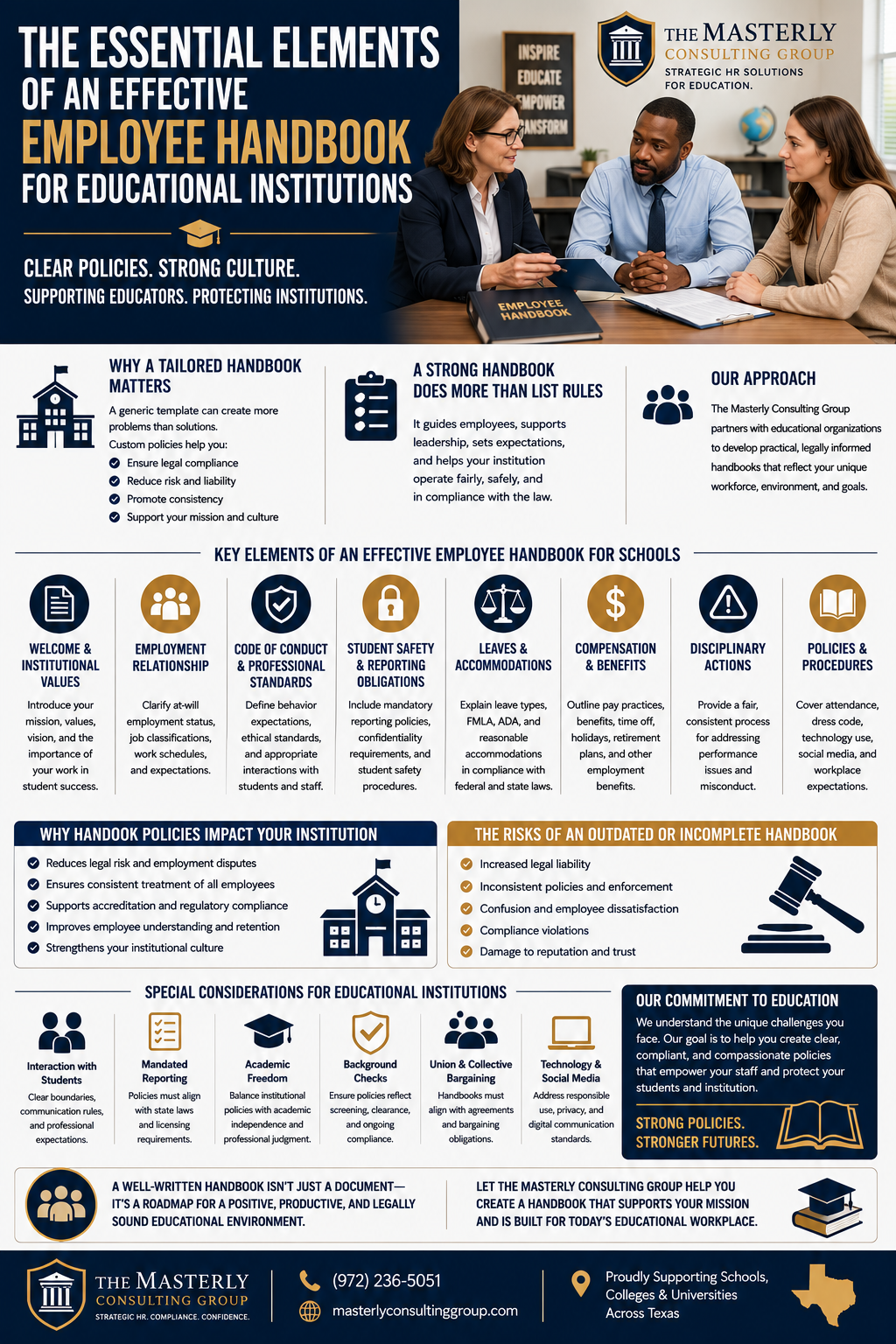
Schools, colleges, and universities operate in environments that are far more complex than many traditional workplaces. Educational institutions manage teachers, administrators, counselors, support staff, coaches, maintenance teams, and academic leadership all under one organizational structure. Because of that complexity, a generic employee handbook downloaded from the internet often creates more problems than solutions. Many institutions mistakenly believe a simple template is enough until they encounter compliance issues, employee disputes, or inconsistent workplace practices.
An effective employee handbook for schools should do far more than list rules. It should guide employees, support leadership, reinforce workplace expectations, and help educational organizations maintain legal compliance. In many situations, outdated handbook policies expose schools to unnecessary legal liability, especially when employment disputes or compliance investigations arise. Educational institutions need policies specifically designed around academic environments, student safety, employee conduct, and evolving employment standards.
At The Masterly Consulting Group, we help educational organizations develop customized handbook solutions designed specifically for their operational needs. Our team understands the unique challenges schools face when balancing workforce management, student-centered environments, and changing compliance obligations. We work closely with educational HR departments to create handbook systems that remain practical, legally informed, and aligned with institutional goals.
The Employee Handbook Is Often the Foundation of Workplace Expectations
Many school leaders underestimate how important the employee handbook becomes during everyday workplace situations. Employees often turn to the handbook first when questions arise regarding scheduling, leave, discipline, reporting procedures, workplace conduct, or organizational expectations.
Without clear guidance, misunderstandings quickly develop between employees and leadership. Inconsistent communication often creates confusion, frustration, and avoidable workplace conflict. A strong handbook helps educational institutions maintain consistency while supporting both administrators and staff members.
An effective handbook also reinforces professionalism and accountability across the organization. Employees are more likely to follow expectations when policies are clearly communicated in writing.
Educational Institutions Face Unique HR Challenges
Unlike many corporate workplaces, educational institutions operate within environments involving students, parents, public accountability, and highly regulated professional standards. Teachers and school employees often work under additional ethical responsibilities and institutional policies not found in other industries.
An educational handbook must address topics such as:
- Student interaction expectations
- Mandatory reporting obligations
- Professional boundaries
- Campus safety procedures
- Technology usage
- Social media conduct
- Academic integrity
- Confidentiality requirements
These unique concerns make customized handbook creation especially important for educational organizations.
Why Schools Cannot Rely on Generic Templates
Many schools attempt to save money by using free templates or outdated handbook documents copied from other institutions. Unfortunately, these generic materials often fail to reflect the organization’s actual operations, workforce structure, or legal obligations.
Educational institutions operating in multiple states face even greater challenges because employment policies may vary significantly across jurisdictions. Policies that appear acceptable in one location may violate requirements elsewhere.
A customized employee handbook writing service helps schools avoid these problems while creating policies specifically tailored to the institution’s workforce and operational structure.
Federal and State Compliance Requirements Continue Changing
One of the biggest challenges educational institutions face is keeping handbook policies aligned with changing laws and compliance obligations. Employment laws change frequently, and schools that fail to update policies may unknowingly expose themselves to compliance problems.
Educational employers must navigate:
- Federal and state laws
- Wage and hour requirements
- Leave policies
- Discrimination protections
- Harassment prevention standards
- Workplace safety expectations
- Employee classification rules
A handbook that was compliant several years ago may no longer reflect current laws today.
Why Handbook Reviews Matter
Many educational institutions create a handbook once and never review it again. Unfortunately, policies become outdated quickly when regulations, workplace expectations, or operational structures change over time.
A professional employee handbook review helps schools evaluate whether existing policies remain legally sound and operationally effective. During the review process, consultants often identify gaps, outdated language, inconsistent procedures, or missing compliance protections.
At The Masterly Consulting Group, our employee handbook review service helps educational institutions evaluate current policies while identifying opportunities for improvement.
The Risk of Outdated Policies
An outdated employee handbook may create serious legal and operational concerns for schools and universities. Policies that conflict with modern standards may expose the organization to employee complaints, compliance investigations, or workplace disputes.
Outdated policies may also weaken leadership authority. Employees are less likely to follow policies when the handbook appears inconsistent, confusing, or disconnected from actual workplace practices.
A properly reviewed handbook helps educational organizations reduce confusion while maintaining stronger policy consistency across departments.
Why Employment Law Matters in Educational Settings
Educational institutions operate under highly regulated workplace standards involving both staff and student interactions. Strong knowledge of employment law becomes essential when developing handbook policies that affect teachers, administrators, and support employees.
Issues involving leave, accommodations, discrimination, employee discipline, and workplace investigations all require careful policy development. Schools that overlook employment law considerations may face avoidable legal challenges later.
At The Masterly Consulting Group, our consultants help educational institutions align handbook policies with applicable legal standards and operational realities.
The Importance of Plain Language Policies
Some handbook documents become so filled with legal terminology that employees struggle to understand them. An effective handbook should communicate expectations clearly without overwhelming employees with unnecessary complexity.
Using plain language improves employee understanding and encourages policy compliance. Staff members are more likely to follow procedures when expectations are explained clearly and practically.
Educational organizations benefit from handbook language that balances professionalism with readability.
Why Educational HR Departments Need Specialized Support
Educational HR departments face constant pressure to balance staffing concerns, compliance obligations, employee relations, and organizational expectations simultaneously. Many schools lack the internal time or resources necessary to manage ongoing handbook development effectively.
This is why many institutions seek HR consulting services for education specifically designed around academic workplaces. Specialized consulting support helps schools create stronger policies while reducing administrative stress.
Our team works closely with school administrators, HR personnel, and institutional leadership to simplify complex handbook projects.
Employee Conduct Policies Are Essential
Every educational institution should maintain clear policies regarding employee behavior and professional expectations. Teachers, administrators, and school staff regularly interact with students, families, and community members, making professional conduct standards especially important.
Conduct policies often address:
- Professional communication
- Social media behavior
- Student interaction boundaries
- Workplace professionalism
- Attendance expectations
- Confidentiality standards
- Technology use
Clear policies help educational organizations protect both employees and students.
Sexual Harassment Policies Must Be Current
Modern educational workplaces require updated policies regarding sexual harassment, discrimination, retaliation, and workplace misconduct. Institutions that fail to maintain clear reporting procedures may face significant legal and reputational consequences.
Strong harassment policies should explain reporting channels, investigation procedures, confidentiality expectations, and anti-retaliation protections. Employees should understand both their rights and responsibilities under organizational policy.
A professionally developed handbook supports safer workplace environments while helping institutions remain compliant.
Why Handbook Development Should Be Strategic
Effective handbook development involves far more than assembling random policies into a single document. Schools need carefully structured handbooks that reflect organizational culture, legal requirements, and operational realities.
An effective handbook should support:
- Employee understanding
- Organizational consistency
- Leadership communication
- Risk reduction
- Workplace professionalism
- Compliance management
At The Masterly Consulting Group, we approach handbook development strategically to support long-term institutional success.
Federal and State Regulations Affect Schools Differently
Educational institutions often face overlapping obligations involving both federal and state regulations. Requirements regarding leave, accommodations, discrimination, wage standards, and reporting procedures may vary significantly depending on location.
Organizations operating in multiple states face even greater complexity because policies may require jurisdiction-specific adjustments. A generic handbook rarely addresses these differences properly.
Customized policies help schools remain compliant while avoiding conflicting guidance across campuses or departments.
Why Multi State Institutions Need Customized Policies
Universities and educational organizations with campuses in several states often struggle to maintain consistent handbook policies across locations. What works operationally in one state may create compliance concerns elsewhere.
Strong multi state handbook planning often requires:
- State-specific leave policies
- Local labor law adjustments
- Reporting procedure variations
- Regional compliance language
- Campus-specific operational standards
Our consultants help educational organizations manage these complex requirements more effectively.
Employee Handbook Review Services Reduce Risk
A professional employee handbook review service allows educational institutions to evaluate whether current policies remain aligned with modern workplace standards and legal expectations.
Review services often help organizations:
- Detect outdated language
- Evaluate compliance concerns
- Improve policy clarity
- Reduce operational inconsistencies
- Strengthen workplace procedures
At The Masterly Consulting Group, our handbook review process focuses on practical improvements designed to support both leadership and employees.
Why Compliance Matters Beyond Legal Protection
Many organizations view handbook compliance only through the lens of avoiding lawsuits. However, strong compliance practices also improve workplace consistency, communication, and employee confidence.
A properly maintained handbook helps employees understand organizational expectations clearly. It also helps administrators apply policies consistently across the workforce.
Strong compliance supports operational stability in addition to legal protection.
Educational Institutions Must Stay Current
Because laws change frequently, educational institutions should review handbook policies regularly instead of waiting for problems to arise. Annual reviews often help organizations maintain stronger compliance and operational consistency.
Policies involving leave, accommodations, technology, employee classification, and harassment standards often require periodic updates. Schools that ignore policy maintenance may unknowingly create compliance risks.
A handbook should never become a forgotten document stored in a filing cabinet for years without review.
Why Custom Policies Matter for Schools
Every educational institution operates differently. Public schools, charter schools, private academies, colleges, and universities each maintain unique operational structures and workforce needs.
Strong custom policies help organizations address their specific environment instead of relying on generalized handbook language. Customized policies often improve clarity while reducing confusion among employees.
Tailored handbook language also better reflects the institution’s culture and operational expectations.
Employee Handbooks Support Workplace Culture
A strong employee handbook does more than communicate rules. It also reinforces organizational values, professionalism, and workplace culture.
Employees often form impressions about the organization based on how policies are written and communicated. Clear, respectful language supports a stronger workplace environment and encourages employee accountability.
Educational institutions benefit when handbook policies align with their mission and educational philosophy.
Why Educational Organizations Need HR Experts
Educational institutions often turn to HR experts when handbook policies become outdated, inconsistent, or difficult to manage internally. Professional guidance helps schools streamline policy development while reducing administrative burdens.
Experienced consultants understand how to balance operational needs, legal considerations, and employee communication within educational environments.
At The Masterly Consulting Group, our HR experts work closely with institutions to develop practical handbook solutions tailored to academic workplaces.
The Importance of Handbook Creation From Scratch
Some organizations inherit incomplete or outdated handbook documents from previous administrations. In these situations, patchwork revisions may no longer be effective.
Creating a handbook from scratch often allows schools to rebuild policies more strategically while eliminating outdated language and inconsistent procedures.
Fresh handbook creation also gives organizations the opportunity to modernize communication and improve overall policy structure.
Why Educational Institutions Need Updated Policies
Schools evolve constantly. New technologies, staffing models, safety concerns, and workplace expectations require ongoing policy adaptation.
Educational organizations should regularly evaluate whether their updated policies reflect current operations, workforce expectations, and compliance obligations. Waiting too long to revise handbook language often creates unnecessary operational confusion.
Modern handbooks should evolve alongside the institution itself.
Legal Compliance Protects the Entire Organization
A strong handbook supports legal compliance while helping educational institutions reduce operational risk. Clear policies help administrators respond more consistently to employee concerns, disciplinary matters, and workplace disputes.
Handbooks that fail to reflect federal and state requirements may expose schools to unnecessary legal liability later. Compliance-focused policy development helps organizations operate more confidently and consistently.
Legal compliance should remain an ongoing priority, not a one-time project.
Why Current Policies Matter for Employees
Employees rely on handbook policies to understand workplace expectations, benefits, reporting procedures, and professional responsibilities. Outdated or inconsistent guidance creates confusion and frustration among staff members.
Clear current policies improve communication and reduce misunderstandings between employees and leadership. Well-maintained handbooks also help employees feel more informed and supported.
Educational institutions function more effectively when expectations remain consistent across the workforce.
Handbook Services Save Time for Leadership Teams
Managing handbook updates internally often becomes extremely time consuming for educational administrators already balancing multiple responsibilities. Leadership teams frequently struggle to monitor changing laws while maintaining day-to-day operations.
Professional handbook services help institutions save time while improving policy consistency and compliance oversight. Outsourcing handbook management also allows school leaders to focus more on educational priorities instead of administrative policy revisions.
At The Masterly Consulting Group, we help streamline handbook management for busy educational organizations.
Why Handbook Review Should Happen Regularly
An annual handbook review allows educational institutions to evaluate whether policies remain aligned with operational realities and current legal standards. Waiting several years between reviews increases the likelihood of outdated language and compliance gaps.
Regular reviews help organizations remain proactive rather than reactive. Institutions that maintain updated handbooks often respond more effectively to workplace issues and employee concerns.
A handbook should evolve continuously alongside the organization.
Federal and State Laws Affect Employee Policies
Educational institutions must carefully monitor changing federal and state laws involving leave, accommodations, employee classification, discrimination protections, and workplace rights.
Because employment laws change frequently, handbook policies require regular attention. Schools that fail to update handbook language may unintentionally violate modern standards or create inconsistent workplace procedures.
Strong policy maintenance helps institutions reduce compliance concerns while supporting clearer employee communication.
Why Educational Institutions Should Avoid Generic Sample Language
Many template handbooks rely heavily on broad sample language that fails to reflect actual organizational practices. While templates may appear convenient initially, they often create problems when policies do not match workplace reality.
Educational institutions need handbook language specifically tailored to their staffing structure, operations, and compliance requirements. Generic language rarely addresses the unique challenges schools face.
Customized handbook development creates stronger long-term results.
State Specific Addendums Matter for Multi State Schools
Organizations operating in multiple states often require state specific addendums to address location-specific employment requirements. Leave laws, wage standards, and reporting obligations frequently vary across jurisdictions.
A properly structured handbook helps schools manage these differences more effectively without creating conflicting guidance for employees.
State-specific planning becomes especially important for universities and educational systems operating across regional campuses.
Why Schools Need Future Updates Built Into Planning
A handbook should never become a static document. Educational institutions need systems for managing future updates as laws, policies, and operational needs evolve over time.
Schools that fail to plan for future revisions often struggle to keep policies current. At The Masterly Consulting Group, we help institutions build flexible handbook systems designed to support long-term policy maintenance.
Ongoing updates help schools remain compliant while reducing operational disruption.
Compliance Risk Increases With Outdated Policies
An outdated handbook increases compliance risk because employees may rely on inaccurate or incomplete information. Conflicting policies often create confusion regarding leave rights, disciplinary procedures, and reporting expectations.
Institutions should regularly evaluate whether handbook policies remain legally sound and operationally accurate. Ignoring handbook maintenance creates unnecessary exposure over time.
A professionally reviewed handbook helps reduce avoidable compliance concerns.
Why Educational Institutions Need Expert Guidance
Handbook development involves much more than formatting policies into a document. Schools need expert guidance regarding legal standards, workforce expectations, operational procedures, and institutional structure.
At The Masterly Consulting Group, we provide strategic support designed specifically for educational organizations. Our consultants understand the operational realities schools face every day.
Strong guidance helps institutions build more effective and sustainable handbook systems.
HR Best Practices Strengthen Workplace Stability
Educational institutions benefit significantly from implementing modern HR best practices within handbook policies. Clear procedures, consistent communication, and structured expectations improve workforce stability and employee confidence.
Strong HR planning also helps organizations manage workplace issues more effectively when conflicts arise.
An effective handbook becomes a foundational tool supporting stronger workforce management.
Why Educational Organizations Must Protect Themselves
Schools and universities face increasing scrutiny regarding employee treatment, workplace investigations, compliance procedures, and organizational accountability. A weak handbook may leave institutions vulnerable to avoidable legal disputes.
Educational organizations should proactively protect themselves through stronger policy development, regular handbook reviews, and updated compliance procedures.
Preventative planning is often far more cost effective than responding to legal problems later.
Handbook Policies Should Reflect Current Date Standards
An effective handbook should always reflect current workplace expectations and up-to-date legal requirements. Policies written years ago may no longer align with modern educational environments.
Educational institutions should regularly verify whether handbook language reflects current operational realities and workforce practices.
Current policies improve both clarity and organizational consistency.
Why Schools Should Implement Consistent Procedures
Educational organizations often struggle when departments apply policies inconsistently. Clear handbook procedures help administrators respond more fairly and predictably across the institution.
Schools should carefully implement procedures that support transparency, accountability, and operational consistency throughout the workforce.
Consistency improves trust while reducing workplace confusion.
A Cost Effective Investment for Educational Institutions
Some organizations hesitate to invest in professional handbook development because they view it as an unnecessary expense. In reality, a professionally developed handbook is often a highly cost effective investment.
Strong policies may help reduce workplace disputes, compliance problems, employee confusion, and administrative inefficiencies over time.
Preventative HR planning often saves institutions significant resources later.
Why Handbook Services Matter for Small Educational Organizations
Even small businesses and smaller educational institutions benefit from professional handbook support. Smaller schools often lack internal legal departments or large HR teams capable of managing complex policy development independently.
Professional handbook services help smaller organizations strengthen compliance while improving workforce communication and operational structure.
Every educational institution deserves policies tailored to its specific needs.
The Importance of Acknowledgment Forms
Strong handbooks often include acknowledgment forms confirming employees received, reviewed, and understood organizational policies.
These forms help institutions document communication while reinforcing employee accountability. Acknowledgment records may also become important during workplace disputes or policy enforcement situations.
Clear documentation supports stronger organizational consistency.
Why Educational Institutions Must Stay Compliant
Educational employers face increasing pressure to stay compliant with changing employment standards and operational regulations. Schools that ignore compliance maintenance often expose themselves to unnecessary risk.
A professionally developed handbook helps institutions monitor changing standards while supporting more effective workforce management.
Compliance planning should remain an ongoing organizational priority.
Updated Regularly Policies Create Stronger Organizations
Handbooks should be updated regularly to reflect evolving operational needs, workforce expectations, and legal developments. Institutions that review policies consistently often maintain stronger internal communication and reduced workplace confusion.
Ongoing policy maintenance supports organizational stability while helping leadership respond more effectively to emerging issues.
Regular updates demonstrate professionalism and accountability.
Why Educational Institutions Need Custom Employee Policies
Every educational environment has unique staffing needs, operational structures, and cultural expectations. Strong custom employee policies help schools address these differences more effectively.
Tailored policies improve clarity, reduce misunderstandings, and better support institutional goals.
At The Masterly Consulting Group, we help schools develop customized handbook systems designed around their specific operational realities.
Why Reviewing Your Current Handbook Matters More Than Ever
Many educational institutions continue relying on a current handbook that was created years ago without realizing how quickly workplace expectations and employment standards evolve. Schools often assume their policies are still effective simply because no major issues have surfaced recently. Unfortunately, outdated handbook language can quietly increase legal risk and create confusion for employees, administrators, and leadership teams. A professionally reviewed handbook helps organizations determine whether policies still align with operational realities, modern workforce expectations, and changing compliance obligations.
At The Masterly Consulting Group, our experienced HR consultants work closely with educational institutions to evaluate existing policies and recommend improvements designed to strengthen organizational stability. Our team collaborates with legal experts and HR professionals to help schools develop a legally compliant handbook tailored to the institution’s workforce and operational structure. We carefully review whether policies reflect current federal standards, evolving employment expectations, and important state specific requirements that may affect educational organizations operating in different jurisdictions.
Many schools discover during the review process that their handbook lacks important policy updates, contains inconsistent procedures, or fails to address modern workplace concerns. In some cases, organizations also realize they need entirely new policies related to technology usage, employee conduct, workplace investigations, or reporting procedures. Our consultants provide practical suggestions and explanatory notes throughout the handbook development process to help leadership understand why specific revisions may be necessary. These insights help educational institutions make informed decisions while improving overall handbook clarity and usability.
Educational organizations also benefit from having customizable policies designed around their specific staffing structure, culture, and operational needs. A generic handbook rarely addresses the unique policies required within schools, colleges, or universities. Whether the institution is a small private academy or a growing educational company operating in multiple locations, tailored handbook planning improves communication and consistency across the workforce.
One of the biggest concerns many institutions face is keeping policies current over time. Because laws and workplace expectations continue changing, schools need systems that ensure the handbook stays current without creating unnecessary administrative burdens. At The Masterly Consulting Group, we help institutions build long-term policy maintenance strategies that may include regular handbook evaluations during a designated subscription period or scheduled review cycle. This proactive approach helps organizations remain compliant while avoiding expensive revisions later.
Many schools hesitate to pursue professional handbook support because they fear revisions will create significant extra cost. In reality, investing in a properly structured and compliant handbook is often far more cost effective than responding to workplace disputes, compliance concerns, or employee misunderstandings after problems arise. A strategic handbook review helps institutions identify issues early while creating stronger policies designed to protect both leadership and employees long term.
If your educational institution relies on outdated policies or inconsistent handbook language, now may be the right time to update your handbook and strengthen your organization’s HR foundation. Modern educational workplaces require clear communication, legally informed policies, and practical workforce guidance that evolves alongside changing operational demands.
Why Educational Small Businesses Need Strong Handbook Policies
Many educational small businesses mistakenly believe employee handbooks are only necessary for large corporations or major university systems. In reality, smaller schools, tutoring centers, private academies, and specialized educational organizations often face the same workplace challenges as larger institutions. Even a growing educational business with a small workforce may encounter employee disputes, compliance concerns, inconsistent workplace expectations, or operational confusion if policies are unclear or outdated. A professionally developed handbook helps smaller educational organizations create structure, improve communication, and reduce unnecessary workplace risk.
At The Masterly Consulting Group, we understand that every educational business operates differently depending on staffing size, organizational goals, and workplace culture. Smaller institutions often have limited internal HR resources, which makes clear handbook policies even more important for day-to-day operations. A well-structured employee handbook helps small educational businesses maintain consistency, communicate expectations effectively, and support stronger workplace accountability as the organization grows.
Speak With The Masterly Consulting Group About Employee Handbook Services
If your educational institution relies on an outdated handbook, inconsistent policies, or generic templates, now is the time to strengthen your workforce documentation and compliance planning. A properly developed employee handbook helps educational organizations reduce confusion, improve consistency, support legal compliance, and create stronger workplace expectations for employees at every level.
The Masterly Consulting Group provides customized employee handbook writing service solutions specifically designed for schools, colleges, universities, and educational organizations. Whether your institution needs a complete handbook from scratch, policy revisions, handbook review services, multi state compliance planning, or updated employment policies, our team is ready to help.
Our consultants understand the unique operational and compliance challenges educational institutions face today. Contact The Masterly Consulting Group at (888) 209-4055 to book a free consultation and learn how our employee handbook services can help your organization build stronger policies, support compliance, and create a more effective workplace for employees and leadership alike.
Disclaimer: This article is for informational and educational purposes only and does not constitute legal advice or HR compliance guarantees. Employment laws and compliance requirements may vary depending on jurisdiction, organizational structure, and workplace circumstances. Educational institutions should consult qualified legal and HR professionals regarding their specific handbook and compliance needs.