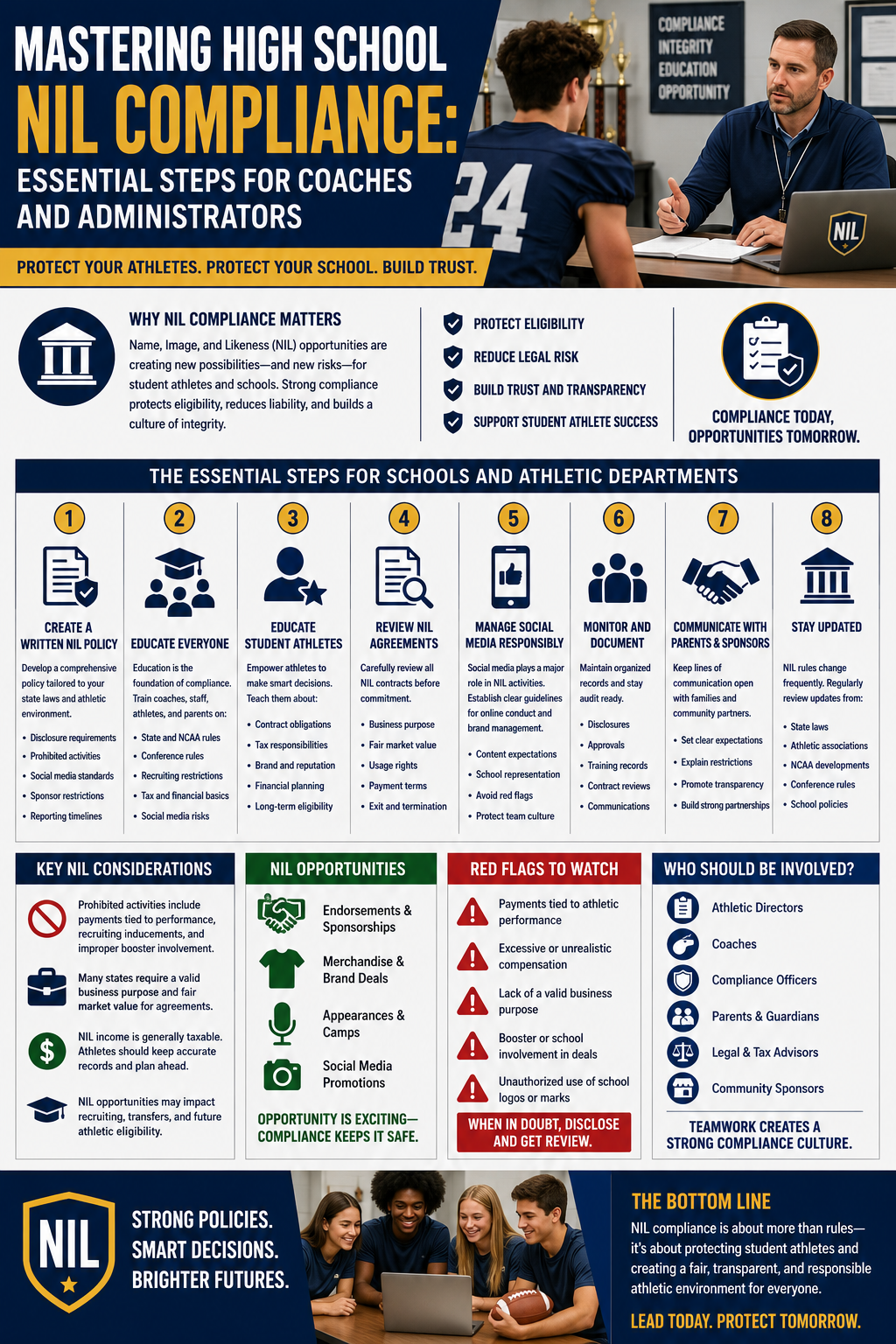
Mastering High School NIL Compliance: Essential Steps for Coaches and Administrators
Why NIL Compliance Has Become a Serious Responsibility for Schools
Only a few years ago, most high school administrators were not discussing endorsement deals, sponsorship agreements, or social media income involving student athletes. Today, those conversations are happening in schools across the country almost every day. The rise of name image and likeness opportunities has changed the landscape of athletics faster than many schools expected.
What once seemed like an issue limited to college sports is now affecting high school programs, athletic departments, coaches, and families at every level. Student athletes are building large online followings, local businesses are offering endorsement opportunities, and parents are asking questions schools never had to answer before. For administrators trying to balance compliance, education, and competitive athletics, the pressure continues growing.
The problem is that many schools still do not fully understand how NIL rules apply to their programs. Some schools have no written nil policy at all. Others rely on outdated guidance that no longer matches current state laws or conference rules. Unfortunately, waiting too long to address NIL compliance can create serious legal, financial, and reputational problems for schools and athletic departments.
At Masterly Consulting Group, we work with schools, coaches, and administrators navigating these rapidly changing NIL regulations. Strong compliance systems are no longer optional. Schools that fail to prepare may expose student athletes, athletic programs, and administrators to unnecessary risk.
Understanding What NIL Actually Means
The term NIL refers to “name image and likeness,” which allows athletes to benefit financially from the commercial use of their identity. This may include endorsements, sponsorship deals, social media promotions, autograph sessions, appearances, merchandise, or other marketing activities.
Name image likeness rights have become one of the biggest changes in modern athletics. For decades, the national collegiate athletic association restricted many opportunities for college athletes to earn money from their personal brand. That changed dramatically once courts, lawmakers, and public pressure pushed for new NIL legislation.
Today, many student athletes can earn income through NIL activities while still maintaining eligibility under certain conditions. However, the rules vary significantly depending on state laws, athletic conferences, school policies, and age level.
Why High School NIL Compliance Is More Complicated Than Many Schools Realize
Many administrators assume NIL issues only affect major universities or nationally recognized college athletics programs. In reality, high school athletes are increasingly entering NIL spaces through social media, local sponsorships, camps, appearances, and online branding opportunities.
Unlike college sports programs that often have large compliance departments, many high school athletic programs operate with limited resources and minimal legal guidance. Coaches and administrators may suddenly find themselves reviewing nil contracts, evaluating endorsement proposals, or responding to parent concerns without proper preparation.
The challenge becomes even greater because state nil laws continue evolving quickly. Some states allow broad NIL opportunities, while others place stricter limits on what high school athletes can do. Schools that fail to stay updated may unintentionally create compliance problems for their student athletes.
Why Schools Need a Written NIL Policy Immediately
One of the most important steps schools can take is creating a detailed nil policy tailored to their state laws and athletic environment. Without clear written policies, confusion spreads quickly among coaches, athletes, parents, and booster groups.
A strong nil policy should address:
- Disclosure requirements
- Prohibited nil activities
- Social media expectations
- Use of school logos or uniforms
- Sponsor restrictions
- Eligibility concerns
- Reporting timelines
- Conflict review procedures
Schools without clear guidance often struggle to respond consistently when student athletes begin signing athlete deals or seeking approval for sponsorship opportunities.
NIL Compliance Starts With Education
Many compliance problems happen simply because people do not understand the rules. Coaches, administrators, parents, and athletes often hear conflicting information online regarding nil rights and eligibility standards.
Schools should educate employees and families about:
- Current nil laws
- NCAA rules
- Conference rules
- State nil laws
- Recruiting concerns
- Tax purposes
- Social media risks
Without education, even well-meaning families may accidentally violate important regulations.
Why Student Athletes Need NIL Education Early
Student athletes today are exposed to NIL opportunities at younger ages than ever before. Some high school athletes already have large social media audiences before entering varsity sports programs.
Young athletes may not fully understand:
- Contract obligations
- Tax responsibilities
- Brand risks
- Long-term eligibility concerns
- Financial considerations
Early education helps athletes make smarter decisions before signing nil agreements or entering sponsorship relationships.
NIL Opportunities Can Create Excitement and Risk
There is no question that NIL opportunities create excitement for many athletes and families. The ability to earn money from social media posts, endorsement deals, camps, or sponsorship agreements can feel life changing for young athletes.
However, NIL money also creates legal and compliance risks that many families underestimate. Poorly structured agreements, unrealistic promises, or improper recruiting influence can create serious complications.
Schools that fail to establish compliance procedures may eventually face disputes involving eligibility, fairness, or improper conduct.
The Recruiting Process Has Changed Dramatically
The recruiting process now looks very different than it did only a few years ago. NIL opportunities increasingly influence where athletes choose to play sports at the college level.
College coaches, collectives, and outside organizations may discuss branding opportunities, sponsorship possibilities, or revenue sharing arrangements during recruiting conversations. Even when discussions remain technically compliant, the environment has changed significantly.
High school administrators should understand how NIL activities may indirectly affect recruiting conversations involving their student athletes.
Why High School Athletes Face Unique Challenges
High school athletes often face greater risks than college athletes because younger students may lack financial experience, legal guidance, or business understanding.
A teenage athlete may sign a contract without fully understanding:
- Payment terms
- Usage rights
- Long-term obligations
- Tax consequences
- Termination clauses
This creates serious concerns for schools trying to protect students while still respecting evolving NIL rights.
NIL Rules Are Different Everywhere
One of the most confusing aspects of NIL compliance is that rules vary significantly between states, conferences, and athletic organizations.
Some states permit broad NIL activities for high school athletes, while others prohibit certain types of compensation entirely. Athletic conferences may also impose separate rules regarding sponsorships, logos, or school involvement.
Because nil rules change frequently, schools should regularly review updates involving:
- State laws
- Conference rules
- NCAA settled developments
- Athletic association guidance
- School-specific procedures
Assuming old rules still apply can create major compliance mistakes.
Understanding the Difference Between High School and College NIL Rules
Many families mistakenly assume high school NIL rules match those governing college athletes. In reality, the standards are often very different.
College athletics programs generally operate under more developed compliance systems influenced by NCAA rules and institutional oversight. High school associations may impose stricter limitations because younger athletes are involved.
Some states allow college athletes to pursue wide-ranging NIL opportunities while still restricting certain activities for high school athletes. Administrators must understand these distinctions clearly.
Schools Should Build an NIL Compliance Checklist
One of the smartest strategies schools can implement is developing a formal nil compliance checklist for administrators, coaches, and athletes.
A strong nil compliance checklist should include:
- NIL disclosure procedures
- Contract review standards
- Sponsorship approval processes
- Training requirements
- Social media guidelines
- Conflict reporting procedures
- Booster restrictions
Clear systems reduce confusion and improve consistency throughout athletic departments.
Why Schools Should Review NIL Contracts Carefully
Nil contracts often contain complicated legal language that young athletes and parents may not fully understand. Schools should strongly encourage families to seek professional review before signing agreements.
Potential concerns may include:
- Exclusivity clauses
- Long-term commitments
- Intellectual property rights
- Payment tied conditions
- Usage restrictions
Improper contracts may create eligibility concerns or financial problems later.
Social Media Has Become a Major NIL Factor
Social media platforms now play a central role in many NIL activities. Athletes with strong online followings may receive offers involving promotions, sponsorships, or endorsements long before reaching college sports programs.
Student athletes should understand that social media posts connected to NIL activities may still affect:
- School reputation
- Team culture
- Recruiting relationships
- Eligibility status
Schools should provide guidance regarding appropriate online conduct and brand management.
NIL Collectives Are Changing College Athletics
The rise of the nil collective model has dramatically changed college athletics in recent years. NIL collectives often organize fundraising efforts to support athletes through sponsorship opportunities and brand partnerships.
Although most collectives focus on college sports teams, high school administrators should still understand how these organizations influence recruiting and athlete expectations.
Student athletes entering college athletics may eventually interact with nil collective organizations, making early education extremely important.
Why Schools Must Understand Prohibited NIL Activities
Not all NIL activities are permitted under current regulations. Certain agreements or arrangements may violate state laws, conference rules, or school policies.
Examples of prohibited nil activities may include:
- Payments directly tied to athletic performance
- Recruiting inducements
- Improper booster involvement
- Unauthorized school logo use
Schools should clearly explain prohibited conduct before problems arise.
Revenue Sharing Is Changing Athletic Conversations
Revenue sharing discussions continue reshaping conversations throughout college athletics. As legal battles and policy changes continue, many schools and conferences are reevaluating how athletes may benefit financially.
High school administrators should monitor these developments carefully because they influence expectations among younger athletes and parents. Many student athletes now enter high school already thinking about future NIL opportunities and compensation structures.
The landscape continues evolving rapidly.
Why Coaches Need Specialized NIL Training
Coaches often become the first people athletes approach with NIL questions. Unfortunately, many coaches never received formal NIL education themselves.
Coaches should understand:
- Basic nil rules
- Disclosure expectations
- Recruiting restrictions
- Booster concerns
- Sponsorship limitations
Without proper training, coaches may unintentionally provide inaccurate guidance that creates compliance issues later.
Schools Should Never Ignore Audit Readiness
One of the most overlooked parts of NIL compliance is audit readiness. Schools should maintain organized systems documenting disclosures, approvals, training participation, and policy enforcement.
Strong documentation may help schools:
- Respond to investigations
- Demonstrate compliance efforts
- Protect administrators
- Reduce liability risks
Schools without organized compliance records often struggle during disputes or reviews.
NIL Agreements Should Have a Valid Business Purpose
Many state nil laws require agreements to involve a valid business purpose rather than disguised recruiting incentives or improper compensation structures.
Schools should educate families about the importance of legitimate commercial activity tied to endorsements, marketing, or promotional services.
Agreements lacking a reasonable business explanation may raise compliance concerns quickly.
Why Financial Education Matters for Athletes
Many student athletes are entering financial situations they have never experienced before. Some teenagers may suddenly receive sponsorship offers, merchandise opportunities, or appearance requests involving substantial nil money.
Athletes should understand:
- Tax purposes
- Payment reporting obligations
- Contract responsibilities
- Financial planning basics
Nil income is generally taxable, and athletes who fail to prepare may face problems later.
NIL Activities Can Affect Amateur Status
One of the biggest concerns in athletics has always involved preserving amateur status. Although NIL rights expanded significantly, certain activities may still create eligibility risks under specific rules or organizations.
Schools should educate student athletes about maintaining compliance while pursuing NIL opportunities responsibly.
Athletes who misunderstand these rules may risk losing eligibility later.
Schools Should Work With Professional Service Providers
Many schools now recognize the importance of involving professional service providers when developing NIL compliance systems.
Professional support may include:
- Legal review
- Tax guidance
- Contract analysis
- Compliance consulting
- Educational programming
Outside expertise often helps schools avoid preventable mistakes.
Why Local Businesses Need NIL Guidance Too
Many local businesses want to support student athletes through sponsorship deals or endorsement opportunities but may not fully understand NIL regulations.
Schools should communicate clearly with community sponsors regarding:
- School restrictions
- Branding limitations
- Advertising rules
- Disclosure expectations
Clear communication helps reduce misunderstandings between businesses and athletic programs.
NIL Compliance Requires Ongoing Monitoring
NIL compliance is not a one-time project. Rules continue evolving rapidly as courts, lawmakers, and athletic organizations adjust policies.
Schools should regularly review:
- New legislation
- Athletic conference updates
- State law changes
- NCAA settled developments
- School policy revisions
Ongoing monitoring helps schools remain prepared as regulations continue shifting.
Why High School Associations Play a Critical Role
Each high school association may establish different expectations regarding NIL activities and athlete eligibility. Schools should never assume national headlines automatically apply to their local environment.
Athletic directors and administrators should review guidance carefully before approving sponsorships or athlete deals.
Failure to follow association standards may create major eligibility concerns for student athletes.
Schools Need Clear Communication With Parents
Parents often become deeply involved in NIL conversations because opportunities may involve substantial money, exposure, or long-term branding opportunities.
Schools should maintain open communication regarding:
- Disclosure expectations
- Compliance procedures
- Contract concerns
- Eligibility risks
Clear communication helps families make informed decisions while reducing conflict later.
Why Schools Must Address Transfer Portal Concerns
The transfer portal has already changed college athletics significantly, and NIL opportunities continue influencing transfer decisions across many sports.
High school athletes increasingly pay attention to:
- Brand opportunities
- Sponsorship potential
- Revenue sharing possibilities
- Recruiting visibility
Schools should understand how these factors influence athlete expectations and long-term planning.
Student Athletes Need to Understand Fair Market Value
Some NIL regulations focus heavily on fair market value principles. Compensation should generally reflect legitimate promotional work rather than disguised recruiting payments.
Athletes and families should understand that:
- Excessive payments may raise red flags
- Services performed should match compensation
- Agreements should reflect realistic business practices
Schools should encourage transparency throughout NIL arrangements.
Why Schools Should Prepare for Future NIL Changes
NIL regulations remain one of the fastest-changing areas in modern athletics. Schools that wait too long to prepare often struggle to catch up once issues emerge.
Administrators should approach NIL compliance proactively rather than reactively. Preparation today may prevent major problems tomorrow.
Schools that develop strong systems early often create smoother experiences for athletes, coaches, and families.
Schools Must Protect Student Athletes and Their Future
At the center of every NIL discussion are young athletes trying to balance academics, athletics, personal branding, and long-term opportunities.
Student athletes need guidance that protects:
- Eligibility
- Financial stability
- Mental well-being
- Educational priorities
- Athletic opportunities
Strong compliance systems help schools support athletes responsibly during this rapidly changing era.
Why NIL Compliance Is About More Than Rules
Compliance is not simply about avoiding penalties. It is also about protecting relationships, preserving trust, and creating fairness within athletic programs.
Schools that handle NIL activities responsibly often build stronger confidence among:
- Parents
- Athletes
- Coaches
- Sponsors
- Community members
Poorly managed NIL situations can damage team culture and create lasting conflict.

Why NIL Deals Are Creating New Challenges for High School Programs
The rise of nil deals has completely changed how many student athletes, parents, and schools think about athletics and financial opportunities. High school administrators are now seeing sponsorship offers, social media promotions, and endorsement opportunities appear much earlier in an athlete’s career than ever before. While these opportunities can help athletes build a personal brand and gain valuable experience, schools also face growing pressure to monitor compliance and eligibility concerns carefully. Without clear procedures in place, nil deals may quickly create confusion regarding school involvement, recruiting influence, and athlete responsibilities.
Why Some States Have Their Own NIL Rules
One of the most difficult parts of NIL compliance is that many states have developed their own nil rules instead of following one national standard. This means schools in different states may face completely different expectations regarding athlete endorsements, sponsorship restrictions, disclosure requirements, and recruiting limitations. Administrators should never assume that rules discussed online or in national headlines automatically apply to their local athletic programs. Schools that regularly review state laws and conference guidance are usually better prepared to avoid misunderstandings and eligibility concerns involving student athletes.
Understanding What NIL Stands For in Modern Athletics
Many families entering NIL discussions for the first time still ask what nil stands for and why it matters so much in sports today. NIL stands for name image and likeness, which refers to an athlete’s ability to benefit financially from the commercial use of their identity, reputation, or online influence. These opportunities may include endorsements, appearances, social media promotions, camps, merchandise, or sponsorship arrangements involving businesses and community organizations. As NIL opportunities continue growing, schools and athletic departments must balance education, compliance, and athlete protection more carefully than ever before.
Why Schools Must Understand Rules About Paying Athletes
One of the biggest compliance concerns schools face involves understanding when opportunities may improperly pay student athletes rather than compensate them for legitimate promotional work. Many NIL laws and conference policies prohibit arrangements where payments are disguised recruiting incentives or tied directly to athletic performance. Schools should educate families and sponsors about the importance of fair compensation connected to actual services, endorsements, or appearances performed by the athlete. Clear education and documentation often help reduce confusion regarding what types of payments may create eligibility concerns.
Student Athletes Should Be Careful Before They Sign NIL Deals
Many student athletes become excited when businesses or sponsors offer endorsement opportunities, but families should be cautious before athletes sign nil deals without reviewing the details carefully. Some agreements may contain exclusivity clauses, long-term commitments, payment conditions, or restrictions that younger athletes may not fully understand. Schools should encourage families to seek professional guidance before entering major sponsorship arrangements or marketing contracts. Early review may help athletes avoid agreements that create legal problems or interfere with future athletic opportunities.
Why Families Need to Understand How Athletes Earn NIL Money
As NIL opportunities continue expanding, more families are asking how athletes can legally earn nil money while still maintaining eligibility under current rules. In many situations, athletes may receive compensation for promotional appearances, social media campaigns, endorsements, autograph sessions, or sponsorship activities connected to their personal brand. However, schools should educate student athletes about reporting obligations, contract review, tax responsibilities, and disclosure requirements before NIL income begins flowing. Proper planning helps athletes avoid financial surprises and compliance problems later.
Collegiate Athletes Have Changed the NIL Conversation Nationwide
The rapid growth of NIL opportunities involving collegiate athletes has dramatically changed how younger student athletes view athletics and long-term career planning. College athletes across the country are now signing endorsement agreements, participating in sponsorship campaigns, and building businesses around their athletic reputation and online influence. As high school athletes watch these opportunities expand, many begin exploring branding and marketing possibilities much earlier than previous generations. Schools that provide education early are often better positioned to guide athletes responsibly through these changing expectations.
How the Interim NIL Policy Changed College Athletics
The introduction of the interim nil policy by the national collegiate athletic association marked one of the biggest turning points in modern college athletics. Before those changes, many athletes faced major restrictions involving endorsements, sponsorships, and commercial opportunities connected to their identity. Once the interim nil policy took effect, athletes gained far greater freedom to pursue business opportunities while maintaining athletic eligibility under certain conditions. High school administrators now operate in a completely different environment because younger athletes increasingly prepare for NIL opportunities long before entering college programs.
Why Schools Must Avoid Improper Efforts to Pay Athletes
One of the most serious compliance risks schools face involves situations where organizations, boosters, or outside groups improperly attempt to pay athletes outside legitimate NIL activities. Payments tied directly to recruitment, athletic performance, or enrollment decisions may create major eligibility and legal concerns under many NIL regulations. Schools should establish clear policies prohibiting improper compensation arrangements while educating families and sponsors about acceptable practices. Transparency and documentation are essential when evaluating any compensation connected to student athletes.
Understanding How NIL Deals Athletes Receive Can Affect Recruiting
The types of nil deals athletes receive often influence how other students, families, and recruiters view athletic programs and opportunities. High-profile sponsorships may increase visibility for certain athletes while also creating questions about recruiting influence or fairness within athletic programs. Schools should monitor how NIL opportunities are discussed publicly to avoid creating impressions that compensation is tied to recruiting decisions or guaranteed athletic participation. Strong compliance systems help schools navigate these sensitive situations more responsibly.
Professional Athletes Have Influenced the NIL Movement
For years, many people compared the earning opportunities of professional athletes to the strict limitations historically placed on college athletes and student athletes. Professional athletes have long benefited from endorsements, sponsorships, merchandise sales, and advertising campaigns connected to their identity and reputation. As public conversations about fairness continued growing, many lawmakers and courts began questioning why younger athletes generating enormous attention could not pursue similar opportunities. Those debates played a major role in accelerating the modern NIL movement across college athletics and eventually high school sports discussions as well.
Why Schools Should Help Athletes Find NIL Deals Responsibly
As NIL opportunities continue expanding, some schools are exploring ways to help student athletes find nil deals while still maintaining compliance with applicable laws and policies. Schools should be careful not to improperly arrange endorsements or create recruiting advantages, but they can still provide educational resources, compliance guidance, and access to professional development opportunities. Helping athletes understand branding, financial literacy, and responsible contract review can support long-term success without violating school policies or conference rules.
The Growing Role of Private Companies in NIL Opportunities
Many private companies are now actively seeking partnerships with student athletes because of the marketing value athletes can bring through social media influence and community recognition. Businesses ranging from local restaurants to national brands are exploring sponsorships, endorsements, and promotional campaigns involving athletes at multiple levels. Schools should educate athletes about evaluating offers carefully and understanding how business partnerships may affect eligibility, taxes, and future branding opportunities. Proper oversight becomes especially important when private companies begin approaching younger athletes directly.
Why Texas Quarterback Arch Manning Became Part of NIL Conversations
The attention surrounding texas quarterback arch manning became one of the most visible examples of how NIL discussions now influence recruiting, branding, and public conversations surrounding young athletes. Even before entering college athletics, his name generated widespread media attention connected to endorsements, marketability, and future NIL potential. High-profile athletes like Manning have helped demonstrate how quickly name image and likeness opportunities can affect athlete visibility and expectations. Schools now recognize that NIL discussions are no longer limited to professional or college sports alone.
Image and Likeness NIL Rules Continue Evolving Quickly
The legal and compliance landscape surrounding image and likeness nil opportunities continues changing rapidly across the country. Courts, lawmakers, athletic conferences, and state associations are constantly adjusting rules in response to new legal challenges and market pressures. Because NIL regulations evolve so frequently, schools should regularly review policies and provide updated education for coaches, athletes, and parents. Staying informed is one of the most important ways schools can reduce confusion and maintain stronger compliance systems.
Why NIL Can Become a Powerful Recruiting Tool
Many schools and athletic programs now recognize that NIL opportunities can become a powerful recruiting tool when athletes compare programs and future opportunities. Even when schools are not directly promising compensation, athletes and families often evaluate the branding potential, sponsorship visibility, and market exposure available within certain athletic environments. Schools should remain extremely careful when discussing NIL opportunities during recruiting conversations to avoid violating conference rules or creating improper inducement concerns. Clear training for coaches and staff members is essential in these situations.
Member Schools Must Stay Updated on NIL Expectations
Athletic associations frequently update guidance for member schools regarding NIL disclosures, sponsorship restrictions, athlete eligibility, and reporting obligations. Schools that fail to monitor these updates may unintentionally rely on outdated policies that no longer match current requirements. Administrators should regularly communicate with athletic conferences, compliance professionals, and legal advisors to ensure their procedures remain current. Strong communication helps member schools avoid preventable compliance mistakes.
Why Many Schools Are Still in the Early NIL Start Phase
Although NIL discussions dominate headlines today, many schools are still in the early nil start phase of developing effective compliance systems and educational programs. Some athletic departments are only beginning to create policies, train staff members, or establish disclosure procedures for student athletes. Because NIL regulations evolved so quickly, many schools are still catching up while trying to balance limited resources and growing compliance expectations. Starting early and building organized systems gradually often creates more sustainable long-term success.
Fair Compensation Should Remain Within a Reasonable Range
Many NIL regulations emphasize that athlete compensation should generally remain within a reasonable range connected to legitimate promotional work or endorsement value. Excessive payments that appear unrelated to actual marketing services may raise concerns about recruiting inducements or improper compensation practices. Schools should educate athletes and sponsors about fair market value expectations and the importance of transparent agreements. Maintaining realistic compensation standards helps reduce legal and compliance risks for everyone involved.
Schools Must Understand How Such Laws Affect Athletics
As NIL opportunities continue expanding, schools must carefully evaluate how such laws affect athletic programs, recruiting conversations, sponsorship discussions, and compliance responsibilities. Laws that seem straightforward at first often contain complicated details involving disclosures, athlete compensation, school involvement, and branding restrictions. Administrators who stay proactive and informed are usually better prepared to protect both their athletic programs and their student athletes. Ignoring legal updates may expose schools to unnecessary risk over time.
Why Brand Deals Are Becoming More Common for Student Athletes
Brand deals involving student athletes are becoming increasingly common as businesses recognize the marketing power of social media influence and local athletic recognition. Athletes with strong online followings may attract opportunities involving apparel companies, restaurants, fitness products, training facilities, or local services. While these partnerships can help athletes build financial and professional experience, schools should still monitor agreements carefully to ensure compliance with school policies and state NIL laws. Clear disclosure procedures help reduce misunderstandings and eligibility concerns.
Student Athletes May Be Treated Like Independent Contractors
In many NIL arrangements, student athletes are treated similarly to independent contractors rather than traditional employees. This distinction often affects taxes, payment structures, contract obligations, and financial reporting requirements connected to NIL income. Athletes and families should understand that receiving endorsement payments may create additional financial responsibilities that younger students are not prepared to handle alone. Schools that provide early financial education often help athletes avoid costly mistakes later.
Why Fairly Compensated NIL Arrangements Matter
One of the most important goals of modern NIL systems is ensuring athletes are fairly compensated for the legitimate value they bring through marketing, endorsements, appearances, and promotional activities. Student athletes who build strong audiences, successful personal brands, or community influence often contribute meaningful exposure for businesses and sponsors. However, schools must still ensure compensation arrangements remain transparent, compliant, and connected to real promotional work rather than disguised recruiting incentives. Fairly compensated NIL opportunities can benefit athletes while still preserving integrity within athletic programs.
The Future of College Sports and High School Athletics Will Keep Evolving
There is little doubt that NIL activities will continue reshaping college sports and high school athletics for years to come. Revenue sharing discussions, legal challenges, sponsorship structures, and recruiting changes will likely continue evolving rapidly.
Schools that remain informed, organized, and proactive will be in much stronger positions moving forward.
Ignoring NIL compliance is no longer realistic for modern athletic programs.
Contact Masterly Consulting Group for Guidance on Name Image and Likeness Compliance
Navigating modern NIL regulations can feel overwhelming for schools, athletic departments, coaches, parents, and student athletes alike. As name image and likeness opportunities continue expanding throughout high school and college athletics, schools need practical systems that help protect eligibility, reduce risk, and support athletes responsibly.
At Masterly Consulting Group, we help schools develop stronger NIL compliance strategies tailored to their specific needs and athletic environments. Whether your program needs assistance creating a nil policy, reviewing nil contracts, training coaches, preparing for audit readiness, or educating student athletes about nil rules and state laws, our team is prepared to help.
The NIL landscape continues changing quickly, and waiting too long to prepare can create unnecessary exposure for schools and athletes. Contact Masterly Consulting Group at (888) 209-4055 to book a free consultation and learn how proactive NIL compliance planning can help your school protect athletes, strengthen policies, and navigate the future of modern athletics with greater confidence.