How Businesses Expose Themselves Without Proper Harassment Training
The Hidden Risks Many Businesses Overlook
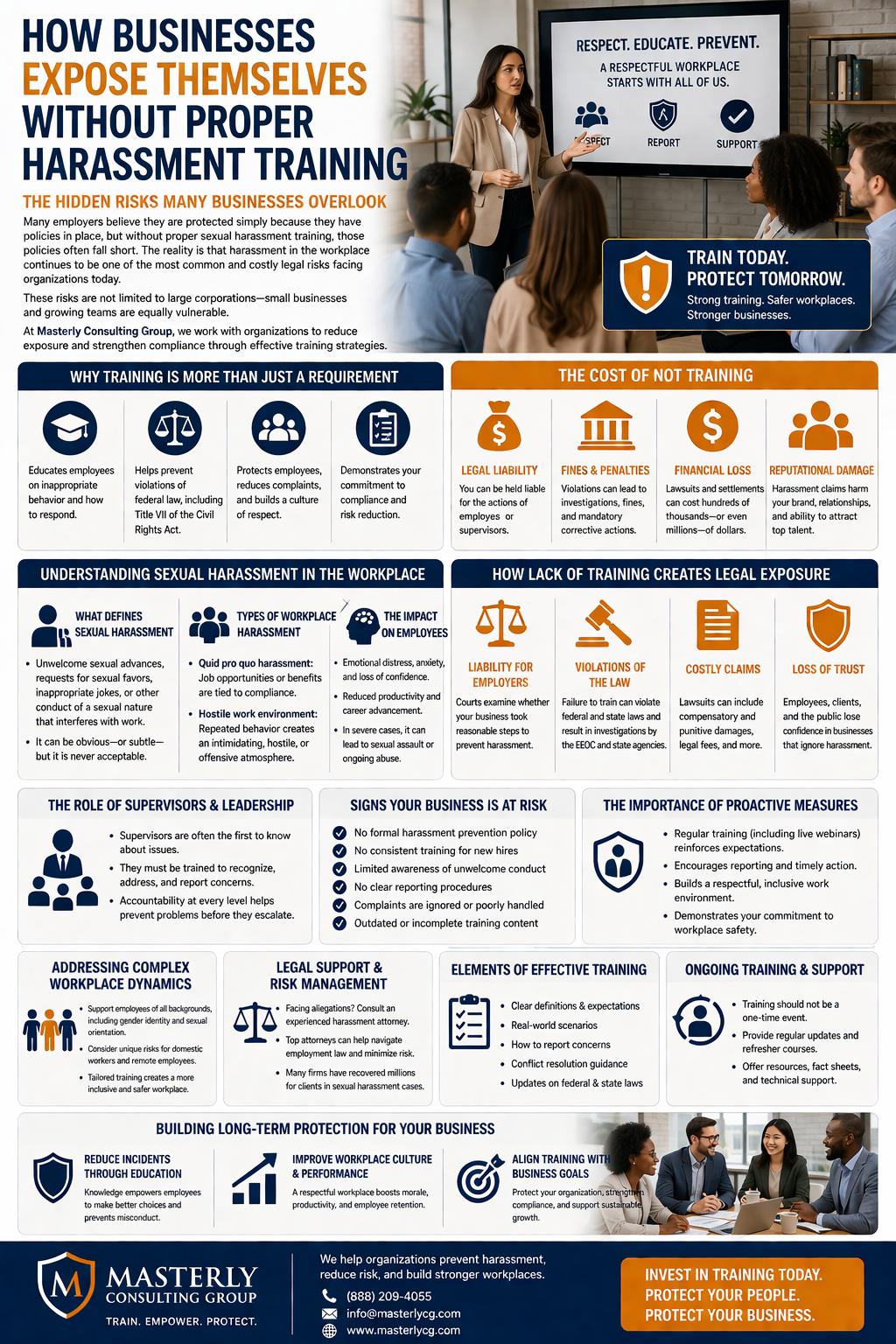
Many employers believe they are protected simply because they have policies in place, but without proper sexual harassment training, those policies often fall short. The reality is that harassment in the workplace continues to be one of the most common and costly legal risks facing organizations today. When employees are not properly educated, even unintentional conduct can lead to serious consequences. These risks are not limited to large corporations—small businesses and growing teams are equally vulnerable. At Masterly Consulting Group, we work with organizations to reduce exposure and strengthen compliance through effective training strategies.
Why Training Is More Than Just a Requirement
Many organizations treat workplace harassment training as a simple checkbox, but it plays a critical role in protecting both the company and its employees. Proper training programs help educate employees on what constitutes inappropriate behavior and how to respond. Without clear instruction, misunderstandings about sexual harassment and discrimination can quickly escalate into legal issues. This is especially important under federal law, including Title VII of the Civil Rights Act, which prohibits unlawful sex discrimination. Businesses that fail to prioritize training often find themselves facing avoidable disputes.
Understanding Sexual Harassment in the Workplace
What Defines Sexual Harassment
Sexual harassment includes a wide range of behaviors, from unwelcome sexual advances to subtle forms of inappropriate conduct that create discomfort. It can involve requests for sexual favors, inappropriate jokes, or actions of a sexual nature that interfere with an individual’s ability to work. These behaviors are not always obvious, which is why consistent sexual harassment training is essential. Without proper education, employees may not recognize when boundaries have been crossed.
Types of Workplace Harassment
There are several forms of workplace harassment, each carrying different risks for employers. One of the most common is quid pro quo harassment, where job opportunities or job benefits are tied to compliance with inappropriate requests. Another is the creation of a hostile work environment, where repeated behavior makes it difficult for employees to perform their duties. Both forms violate federal and state regulations and can result in serious legal consequences.
The Impact on Employees
When individuals are sexually harassed, the effects extend beyond the workplace. Sexual harassment victims often experience significant emotional harm, reduced productivity, and long-term career setbacks. In some cases, incidents escalate into sexual assault or ongoing patterns of abuse. This is why employers must take proactive steps to prevent harassment and ensure a safe and respectful work environment.
How Lack of Training Creates Legal Exposure
Businesses Can Be Held Liable
When companies fail to provide training, they increase the likelihood of facing sexual harassment claims. Courts often examine whether an organization took reasonable steps to prevent misconduct. Without documented training efforts, businesses can be held liable for the actions of their employees or supervisors. This is especially true when there are no clear reporting procedures in place.
Violations of Federal and State Laws
Failure to implement proper sexual harassment prevention training can lead to violations of state and federal law. Agencies like the Equal Employment Opportunity Commission investigate claims related to discrimination and harassment. These investigations can result in fines, penalties, and mandatory corrective actions. In some cases, businesses may face punitive damages for failing to maintain a safe workplace.
Financial and Reputational Damage
Legal issues related to sexual harassment cases can result in significant financial losses. Beyond legal fees, businesses risk losing clients, damaging their reputation, and facing internal disruption. News of harassment in the workplace spreads quickly, making it harder to attract and retain talent. A lack of training not only impacts compliance but also undermines long-term business stability.
The Role of Supervisors and Leadership
Why Supervisors Must Be Trained
Supervisors play a critical role in preventing workplace harassment. They are often the first point of contact when employees experience inappropriate behavior. Without proper training, they may fail to recognize or address issues effectively. This can lead to escalation and increased liability for employers.
Creating Accountability at Every Level
Effective training programs ensure that both leadership and staff understand their responsibilities. Supervisors must know how to respond to complaints, document incidents, and take appropriate action. This level of accountability helps create a respectful environment where issues are addressed promptly.
Signs Your Business Is at Risk
Common Warning Signs of Inadequate Training
Many businesses do not realize they are exposed until it is too late. Some key indicators include:
- Lack of a formal sexual harassment prevention policy
- No consistent training for new hires or new employees
- Limited awareness of unwelcome conduct among staff
- Absence of clear reporting procedures
- Complaints that are ignored or poorly handled
These issues often lead to repeated incidents and increased risk.
Gaps in Training Content
Outdated or incomplete training content can be just as harmful as no training at all. Programs that fail to provide examples of real-world scenarios leave employees unprepared. Effective sexual harassment training programs should address modern workplace challenges, including remote work and diverse teams.
The Importance of Proactive Measures
Preventing Issues Before They Escalate
Taking proactive measures is the most effective way to reduce incidents of harassment. Regular training sessions, including live webinars, help reinforce expectations and keep employees informed. These efforts demonstrate a commitment to workplace safety and compliance.
Building a Respectful Work Environment
A strong work environment is one where employees feel safe and supported. This includes maintaining an environment free from harassment and discrimination. Organizations that prioritize respect and accountability see fewer complaints and higher employee satisfaction.
Addressing Complex Workplace Dynamics
Supporting Diverse Workforces
Modern workplaces include individuals from diverse backgrounds, including different gender identity and sexual orientation. Proper training ensures that all employees understand how to interact respectfully. This reduces the risk of unlawful sex discrimination and promotes inclusivity.
Special Considerations for Unique Roles
Certain groups, such as domestic workers or remote staff, may face unique challenges related to harassment in the workplace. Tailored training programs can address these specific risks and ensure comprehensive coverage.
Legal Support and Risk Management
When to Consult a Harassment Attorney
If your business is facing allegations, it is critical to seek guidance from an experienced harassment attorney. Legal professionals can help navigate employment law and ensure compliance with state regulations. Working with sexual harassment attorneys can also help mitigate risks and protect your organization.
The Value of Experienced Legal Guidance
Top atlanta sexual harassment attorneys and atlanta sexual harassment lawyers understand the complexities of these cases. Many firms have recovered millions for clients, highlighting the seriousness of these claims. Partnering with a knowledgeable harassment attorney ensures your business is prepared to respond effectively.
Strengthening Your Training Strategy
Elements of Effective Training
An effective sexual harassment training program should include:
- Clear definitions of harassment and conduct expectations
- Real-world scenarios and case studies
- Guidance on how to report concerns
- Information on conflict resolution
- Updates on federal and state regulations
These components help employees understand their responsibilities and reduce confusion.
Ongoing Training and Support
Training should not be a one-time event. Regular updates, supported by technical support and accessible fact sheets, ensure that knowledge remains current. Continuous education helps reinforce expectations and maintain compliance.
Creating Long-Term Protection for Your Business
Reducing Incidents Through Education
Consistent training plays a key role in reducing incidents of workplace harassment. When employees understand expectations, they are less likely to engage in inappropriate behavior. This leads to a safer and more productive work environment.
Aligning Training With Business Goals
Strong training programs support overall business success. They protect your organization from legal risks while improving employee morale and retention. This alignment is essential for sustainable growth.
Strengthening Workplace Culture Through Effective Training and Accountability
A strong approach to workplace training is essential in preventing issues that can lead to a hostile environment and potential legal exposure. Businesses must ensure that employees understand that behaviors such as inappropriate touching or misconduct involving co workers are never acceptable under any circumstances. Regulations influenced by regions like York State and broader human rights standards emphasize the importance of maintaining respect and professionalism at all levels. When concerns arise, timely action—often within specific business days—is critical to address complaints properly and protect both the organization and its workforce.
Take the Next Step Toward a Safer Workplace
If your organization lacks a structured approach to sexual harassment prevention training, now is the time to act. Businesses that fail to prioritize training often face serious consequences, including legal action and reputational damage. At Masterly Consulting Group, we help employers develop tailored solutions that address risk, improve compliance, and create a safer workplace for everyone.
If you have questions about your current policies or need guidance from an experienced atlanta sexual harassment attorney, we are here to help. Our team works closely with businesses to strengthen their training strategies and reduce exposure. Contact us at (888) 209-4055 to book a free consultation and learn how we can support your organization in building a compliant and respectful work environment.