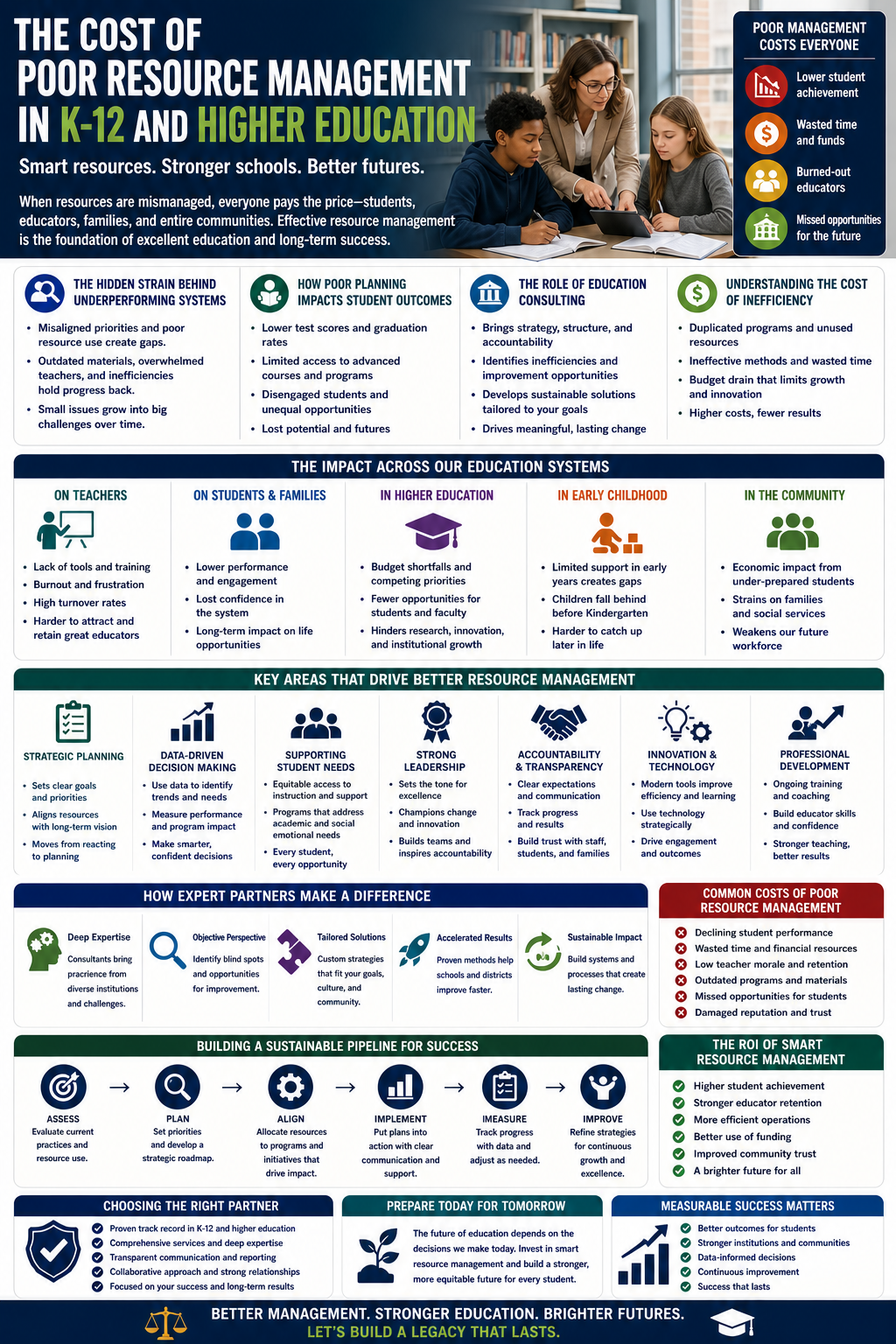
The Cost of Poor Resource Management in K-12 and Higher Education
Why Resource Management Shapes the Future of Education
Every school, district, and university operates within limits. Time, funding, staffing, and tools all play a role in how education is delivered. When these resources are managed effectively, students thrive and institutions grow stronger. But when mismanaged, the consequences ripple through classrooms, communities, and the long-term success of every young person involved. Understanding the real cost of poor resource management is essential for leaders who want to create meaningful change.
The Hidden Strain Behind Underperforming Education Systems
Education systems often struggle not because of a lack of funding, but because of how those resources are used. Misaligned priorities can lead to gaps in instruction, outdated materials, and overwhelmed teachers. These issues rarely appear overnight—they build over time. As a result, schools begin to see declining student performance and disengaged classrooms. Addressing these challenges requires a clear focus on strategy and accountability.
How Poor Planning Impacts Student Outcomes
When schools fail to allocate resources properly, student outcomes suffer. This can include lower test scores, reduced graduation rates, and limited access to advanced opportunities. Students rely on consistent support to learn and grow. Without the right structure in place, even the most motivated learners struggle. Schools must align their efforts with a clear plan to improve outcomes.
The Role of Education Consulting in Modern Institutions
Education consulting has become an essential part of improving school performance. Institutions are increasingly turning to experts for guidance on how to manage resources more effectively. Education consulting services bring structure, insight, and accountability to complex systems. These services help schools identify inefficiencies and develop sustainable solutions. With the right support, institutions can make meaningful progress.
Understanding the Cost of Inefficiency in Schools
Inefficiency in schools often goes unnoticed until it begins to affect performance. This can include duplicated programs, underutilized staff, or ineffective teaching methods. Over time, these inefficiencies drain resources and limit growth. Schools must evaluate how resources are being used and identify areas for improvement. Small adjustments can lead to significant gains.
The Impact on Teachers and Educators
Teachers are often the first to feel the effects of poor resource management. Without proper support, they may lack the tools and training needed to deliver high quality education. This can lead to burnout, frustration, and high turnover rates. Educators play a critical role in student success, and they need the right environment to thrive. Supporting teachers is essential for improving outcomes.
Why Strategic Planning Is Often Overlooked
Strategic planning is one of the most powerful tools for improving education systems, yet it is often underutilized. Many institutions focus on short-term fixes instead of long-term solutions. Without a clear plan, resources are allocated based on immediate needs rather than future goals. This reactive approach limits growth and innovation. A strong strategy provides direction and purpose.
The Ripple Effect on Students and Families
When schools struggle, the impact extends beyond the classroom. Families may lose confidence in the education system, and students may fall behind academically. This creates challenges that can follow a young person throughout their life. Education is not just about academics—it shapes opportunities and future success. Strong resource management helps ensure every student has a fair chance.
Resource Allocation in Higher Education Institutions
Higher education institutions face unique challenges when it comes to resource management. Universities must balance academic programs, research initiatives, and student services. Poor planning can lead to budget shortfalls and limited opportunities for students. Effective management ensures that resources are aligned with institutional goals. This is essential for long-term success.
The Growing Complexity of Education Systems
Modern education systems are more complex than ever before. They must address diverse student needs, integrate technology, and adapt to changing trends. Managing these demands requires careful coordination and planning. Without the right structure, systems can become overwhelmed. Education leaders must be prepared to navigate these challenges.
How Data Drives Better Decision-Making
Data plays a crucial role in improving resource management. Schools and districts can use data to identify trends, measure performance, and evaluate programs. This information helps leaders make informed decisions. When used effectively, data can highlight areas for improvement and guide strategic planning. It is a powerful tool for achieving better outcomes.
The Importance of Supporting Student Needs
Every student has unique needs, and schools must be equipped to support them. This includes access to quality instruction, resources, and support services. When these needs are not met, student performance declines. Schools must focus on creating environments where all students can succeed. This requires thoughtful planning and resource allocation.
Addressing Gaps in Early Childhood Education
Early childhood education is a critical stage in a child’s development. Poor resource management at this level can have long-term consequences. Children who do not receive proper support early on may struggle later in their academic journey. Investing in early education helps build a strong foundation for future success. Schools must prioritize this area.
The Role of Leadership in Driving Change
Strong leadership is essential for improving resource management. Leaders must be willing to evaluate current practices and implement changes. This requires courage, vision, and a commitment to improvement. Effective leaders inspire teams and create a culture of accountability. Their actions set the tone for the entire organization.
Building a Culture of Accountability
Accountability ensures that resources are used effectively and responsibly. Schools must establish clear expectations and monitor progress. This includes evaluating programs, tracking performance, and making adjustments as needed. A culture of accountability supports continuous improvement. It also builds trust within the community.
How Education Consultants Bring Deep Expertise
Education consultants offer deep expertise that can transform struggling systems. They bring knowledge from working with diverse institutions and understand what works. Their insights help schools identify challenges and develop solutions. By partnering with experts, institutions can accelerate progress. This collaboration leads to better outcomes.
The Value of Partnering With Experts
Partnering with an experienced team provides access to valuable insights and strategies. Education consultants work closely with clients to understand their needs and goals. This partnership allows for tailored solutions that address specific challenges. Collaboration is key to achieving success. Schools that work with experts often see faster improvements.
Improving Student Performance Through Better Management
Student performance is directly linked to how resources are managed. Schools that allocate resources effectively can provide better instruction and support. This leads to improved outcomes and greater student success. Focusing on management practices can have a significant impact. It is one of the most effective ways to drive change.
The Role of Innovation in Education
Innovation plays a key role in improving education systems. Schools must be willing to explore new ideas and adopt modern practices. This includes integrating technology and rethinking traditional approaches. Innovation helps schools stay relevant and effective. It also supports long-term growth.
Addressing Challenges in District-Level Management
Districts face unique challenges when managing multiple schools. They must coordinate resources across different locations and ensure consistency. Poor management at this level can lead to disparities in student outcomes. District leaders must focus on creating equitable systems. This requires careful planning and oversight.
Supporting Educators With Training and Development
Training is essential for helping educators develop new skills and improve teaching practices. Without ongoing support, teachers may struggle to adapt to changing demands. Schools must invest in professional development programs. This helps educators stay informed and effective. Strong training programs benefit both teachers and students.
The Impact of Technology on Resource Management
Technology has transformed how schools manage resources. Digital tools can improve efficiency and provide valuable insights. However, technology must be implemented strategically. Without proper planning, it can become another source of inefficiency. Schools must focus on using technology effectively.
Creating Sustainable Growth in Education
Sustainable growth requires a long-term commitment to improvement. Schools must focus on building systems that support ongoing success. This includes investing in resources, developing talent, and refining strategies. Growth is not achieved overnight—it requires consistent effort. A strong foundation supports lasting change.
How Institutions Can Evaluate Their Practices
Evaluation is a critical step in improving resource management. Schools must regularly assess their programs and practices. This helps identify areas for improvement and ensures resources are used effectively. Evaluation provides clarity and direction. It is essential for achieving better outcomes.
The Importance of Community Engagement
Community engagement plays a vital role in education. Schools must work closely with families and local organizations to support students. This collaboration creates a stronger support system. It also helps build trust and accountability. Engaged communities contribute to better outcomes.
Preparing Students for Future Success
Education is about more than academics—it prepares students for life and career opportunities. Schools must focus on developing skills that support long-term success. This includes critical thinking, communication, and adaptability. Preparing students for the future requires thoughtful planning. It also requires effective resource management.
The Role of Universities in Shaping the Future
Universities play a key role in shaping the next generation of leaders. They must manage resources carefully to support research, teaching, and student services. Poor management can limit opportunities for students. Strong leadership ensures that institutions remain competitive. This is essential for long-term success.
Addressing Workforce and Talent Challenges
Education systems must also focus on developing talent within their organizations. This includes recruiting, training, and retaining skilled professionals. Talent strategy is essential for building strong teams. Schools must invest in their people to achieve success. A strong workforce supports better outcomes.
The Benefits of Proactive Planning
Proactive planning allows schools to anticipate challenges and prepare for the future. This approach reduces risk and improves efficiency. Schools that plan ahead are better equipped to handle change. Proactive strategies support long-term growth. They also create a more stable environment.
Helping Leaders Make Informed Decisions
Leaders must have access to accurate information to make informed decisions. This includes data, insights, and expert guidance. Informed decisions lead to better outcomes and more effective use of resources. Schools must prioritize access to information. This supports strong leadership.
Achieving Measurable Success in Education
Success in education is measured by student outcomes, engagement, and growth. Schools must focus on achieving these goals through effective management. This requires a commitment to continuous improvement. Measuring success helps track progress and identify areas for growth. It is essential for long-term impact.
How Education Strategy Consulting Strengthens Long-Term Planning
Education strategy consulting helps schools, districts, and institutions align their goals with practical, long-term solutions. This approach focuses on identifying gaps, improving processes, and creating a clear path forward. With the right strategy in place, leaders can make better decisions about resource allocation and program development. It also ensures that every initiative supports student success. Strong planning leads to more stable and effective education systems.
Expanding Access Through Comprehensive Education Services
Education services go beyond the classroom and include support systems that help students succeed academically and personally. These services may involve counseling, academic support, and community-based programs. When schools invest in well-rounded services, they improve outcomes for students and families. Access to these resources helps create a more balanced and supportive learning environment. It also strengthens the overall impact of education.
The Role of State Education Agencies in System Improvement
State education agencies play a critical role in shaping policies and supporting schools at a broader level. They provide guidance, funding oversight, and accountability measures that influence how education is delivered. These agencies help ensure consistency across districts while addressing local needs. Their involvement is essential for maintaining standards and driving improvement. Schools benefit from aligning their strategies with state-level expectations.
Developing Effective Funding Strategies for Schools
Funding strategies are essential for ensuring that schools can operate efficiently and meet student needs. Proper planning allows institutions to allocate resources where they will have the greatest impact. This includes investing in programs, staff development, and infrastructure. Without a clear funding strategy, schools may struggle to maintain stability. Thoughtful financial planning supports long-term success.
Learning From a Global Leader in Education Innovation
Studying practices from a global leader in education can provide valuable insights for local systems. These leaders often implement innovative approaches that improve teaching and learning outcomes. By analyzing successful models, schools can adapt strategies that fit their unique needs. This exchange of ideas supports growth and development. It also encourages continuous improvement.
Encouraging Students to Discover Their Potential
Education should empower students to discover their strengths and interests. When schools provide opportunities for exploration, students become more engaged in learning. This process helps build confidence and motivation. It also prepares students for future challenges. Supporting discovery is a key part of effective education.
The Role of Parents in Supporting Education Success
Parents play an essential role in the education process by supporting their children’s learning at home. Strong communication between schools and parents creates a more unified approach to education. When parents are involved, students are more likely to succeed. Schools should actively engage families in the learning process. This partnership benefits the entire community.
Building Student Ability Through Structured Learning
Developing student ability requires a structured approach to instruction and support. Schools must provide opportunities for students to build critical skills over time. This includes academic knowledge, problem-solving, and communication. Consistent support helps students reach their full potential. Strong ability development leads to better outcomes.
Preparing Students for College and Beyond
Preparing students for college is an important goal for many education systems. This involves providing the academic foundation and guidance needed for higher education. Schools must also help students understand their options and plan for their future. Effective preparation increases the likelihood of success in college. It also supports long-term career growth.
The Value of Coaching in Education Development
Coaching provides personalized support for both students and educators. It helps individuals improve their skills and overcome challenges. In education, coaching can enhance teaching practices and student performance. This targeted support leads to better outcomes. Investing in coaching strengthens the entire system.
The Influence of Governments on Education Systems
Governments play a significant role in shaping education policies and funding. Their decisions impact how schools operate and what resources are available. Effective collaboration between schools and governments can lead to better outcomes. Policies that support innovation and accountability benefit students. Strong partnerships are essential for progress.
Encouraging Collaboration and Opportunities to Join Initiatives
Collaboration allows schools and organizations to share resources and ideas. When educators and leaders join initiatives, they gain access to new perspectives and strategies. This collaboration supports innovation and continuous improvement. It also creates opportunities for growth across the education system. Working together leads to stronger results.
Contact Masterly Consulting Group for Education Consulting Services
If your school, district, or institution is facing challenges with resource management, you do not have to navigate it alone. At Masterly Consulting Group, we provide education consulting services designed to help leaders create stronger systems, improve student outcomes, and build sustainable strategies for growth. Our team works closely with clients to understand their unique needs and deliver solutions that make a lasting impact.
We offer a free consultation where we can discuss your current challenges, evaluate your systems, and provide guidance on the next steps. Whether you are working to improve performance, support educators, or plan for the future, we are here to help you accomplish your goals.
Contact us today at (888) 209-4055 to book your free consultation and take the first step toward stronger, more effective education systems.