Supporting Your Athletes Without Violating NIL Boundaries: A Strategic Guide

August 1, 2025


Understanding the New NIL Era in College Sports

The name, image, and likeness (NIL) era has reshaped the landscape of college athletics. What was once considered a violation of amateurism is now legally supported by state laws, NCAA rules, and federal discussion. For college athletes, NIL offers access to endorsements, business ventures, and sponsorship deals—but it also introduces complex compliance risks for institutions. Athletic departments must support their student athletes while ensuring they’re not violating NCAA rules related to amateurism or institutional involvement.


At Masterly Consulting Group, we help athletic departments navigate these changes with clarity and precision, keeping both athletes and institutions safe.


NIL Refers to More Than Just Endorsements

Though often associated with major endorsement deals or social media promotions, NIL refers to any situation where student athletes can monetize their personal brand. This includes:

  • Signing NIL agreements with local businesses
  • Receiving compensation for speaking engagements
  • Promoting products on a social media presence
  • Launching branded merchandise or business ventures


Understanding the full scope of NIL activities helps institutions and school employees establish clear support structures without crossing regulatory lines.


Navigating NCAA NIL Rules and Institutional Boundaries

The NCAA NIL rules allow current student athletes to profit from their personal brand but prohibit schools from securing deals or providing NIL payments. Athletic departments must remain neutral facilitators—not direct brokers. Supporting top NIL college athletes requires respecting boundaries while offering resources like legal support, compliance education, and brand-building workshops.


Failing to draw this line risks triggering violations under interim policy guidelines and long-standing NCAA rules.


Differing NIL Laws and State-Specific Requirements

One of the biggest challenges in NIL compliance is navigating the patchwork of state laws. For example, South Carolina, North Dakota, New Hampshire, and South Dakota each have their own NIL rules, and some require strict separation between institutional staff and athlete NIL activities. State high school associations also enforce varying restrictions for high school athletes, which may impact prospective student athletes planning to enroll.


Athletic departments must stay current on school and conference requirements, federal efforts, and pending federal legislation to ensure full compliance.


Maintaining Amateur Status While Encouraging NIL Growth

Protecting the amateur status of student athletes is still a priority. That means schools must avoid any implication of pay for play. Encouraging athletes to explore NIL opportunities is different from offering performance-based incentives tied to athletic performance.

Schools can help athletes understand:

  • The distinction between NIL earnings and scholarships
  • How to report NIL activities consistent with school policies
  • Where to seek professional service providers like legal advisors and tax professionals


Offering NIL Support Without Overstepping

Supporting your own athletes starts with education and infrastructure, not deal-making. Schools should provide educational materials on nil laws, host compliance briefings, and offer access to NIL collectives without directly managing NIL deals.

Athletic departments can also:

  • Develop a central compliance office
  • Host independent NIL workshops
  • Invite legal and branding experts to present on NIL valuation and risks


These measures empower athletes while respecting the boundaries defined by NCAA president Charlie Baker and the interim policy standards.


Empowering Athletes Through Brand Education

The rise of top NIL college athletes underscores the value of personal branding. Schools can equip student athletes interested in maximizing their NIL potential with tools to manage their social media presence, build authentic narratives, and connect with nonprofit organizations or sponsors ethically.

Encouraging athletes to develop a personal brand improves their long-term success while creating space for compliant NIL growth.


NIL Workshops as Strategic Assets for Compliance

Strategically structured NIL seminars offer two-fold benefits: athlete empowerment and institutional protection. These sessions guide athletes directly through legal frameworks, NCAA NIL rules, and state laws, helping them avoid missteps that may impact eligibility.

Topics may include:

  • Tax liability from NIL payments
  • Reading the fine print in NIL agreements
  • Understanding what such laws permit or restrict


Managing Risk Across Member Schools and Conferences

Athletic conferences must ensure all member schools uphold consistent NIL standards. Our team at Masterly Consulting Group assists with school and conference requirements, providing conference-wide NIL education and nil policy formulation. This alignment minimizes risk and ensures each institution is equipped to support athletes within legal boundaries.


Clear communication among athletic programs and compliance personnel is essential for unified success.


Avoiding Legal Pitfalls in NIL Support Structures

There are growing legal risks tied to receiving money, adult entertainment, or NIL-based recruitment efforts. Some top NIL college athletes have drawn attention to blurred lines between monetary value and regulatory violations.

To stay compliant, avoid:

  • Bundling NIL offers with recruitment promises
  • Directing athletes toward specific companies
  • Funding athlete activities with institutional resources


Maintaining ethical separation is key to long-term credibility.


NIL Support Systems as a Recruiting Advantage

Even though schools can’t directly facilitate NIL deals, a strong NIL education infrastructure can become a competitive advantage. High school student athletes and prospective student athletes look for institutions that will help them grow, not just as athletes, but as brands.


By offering workshops, access to professional service providers, and third-party compliance resources, schools demonstrate leadership without risking infractions.


The Role of Institutional NIL Policies

Developing clear institutional NIL policies helps athletic departments communicate boundaries to coaches, athletes, alumni, and boosters. These policies outline what’s permitted, what’s not, and where students can go for help.

Effective NIL policies include:

  • Definitions of NIL rights and protected activities
  • Clear reporting procedures for NIL activities
  • Protocols to safeguard amateur status


Addressing Institutional Liability Under New Rules

The new rules governing NIL increase the pressure on compliance departments. Misinterpretation or inconsistent enforcement can expose a particular school to legal or reputational risks.

Institutions should:

  • Routinely update NIL guidance based on supreme court rulings
  • Create standardized review protocols
  • Audit NIL agreements and public campaigns involving student athletes


Aligning NIL Strategy With Long-Term Athlete Development

Support shouldn’t stop at the transaction. Helping athletes understand the lifecycle of NIL opportunities, from early branding to post-college planning, is a sustainable way to support collegiate sports and career development.

Schools should promote:

  • Smart financial planning
  • Resume-building NIL experiences
  • Marketing strategies that align with post-collegiate goals


Balancing Visibility with Ethical Oversight

While it’s important to spotlight success stories from top NIL college athletes, institutions must avoid glamorizing the NIL market at the expense of transparency. Overhyping nil collectives or downplaying state laws can lead to confusion and potential violations.

Instead, athletic departments should celebrate success while reiterating:

  • The importance of individual responsibility
  • The rules surrounding institutional involvement
  • The educational path behind each NIL milestone


NIL and the Future of Compliance

The conversation around NIL is not static. With ongoing updates, schools must remain agile and vigilant. As the NIL space evolves, so too must the tools used to support student athletes and safeguard college sports.

Masterly Consulting Group stays at the forefront of NIL developments, offering clients:

  • Real-time NIL legislative monitoring
  • Access to updated educational materials
  • Compliance audits aligned with conference and NCAA NIL rules


Strategic Partnerships That Strengthen Your NIL Support

Collaborating with external NIL consultants ensures your department benefits from expert guidance without risking direct involvement. These professional service providers serve as neutral allies in helping athletes grow while you stay compliant.

Partnerships like ours provide:

  • Tailored training for coaches and administrators
  • Regular updates on own NIL rules and court rulings
  • Advisory sessions for strategic program planning


A 2D digital graphic design features a solid dark blue textured background with bold white and orange uppercase text. The top lines in white read: “SUPPORTING YOUR ATHLETES WITHOUT VIOLATING,” followed by “NIL BOUNDARIES:” in bold orange. Below, in white, it says: “A STRATEGIC GUIDE.” The layout uses high contrast and clean typography to emphasize the importance of NIL compliance in college athletics.


Responding to the Massive Shift in NIL and Its Impact on Student Athletes

The introduction of NIL rights has created a massive shift in how institutions engage with athletes and manage compliance. Today, supporting athletes also means student athletes must be prepared to handle their involvement in commercial activities with care and oversight. Bodies like the National Federation of State High School Associations have already expressed concern about premature NIL engagement and the need for clearer rules, particularly at the high school level. For each specific school, establishing internal guidance and boundaries is crucial to avoiding confusion or risk. As schools adapt, clarity and consistency are key to ensuring that all support remains within the scope of current policy frameworks.


Helping College Athletes Navigate NIL Activities Without Crossing Compliance Lines

Supporting top NIL college athletes requires a strategic approach that respects both the spirit and letter of NCAA rules. As more college athletes enter into NIL deals, institutions must understand how to guide them without overstepping boundaries set by the interim policy and long-standing likeness rules. The name, image, and likeness era presents exciting opportunities but also introduces risk if NIL activities are not monitored or reported correctly. This is especially critical as schools interact with high school student athletes who may soon enter the world of college athletics. Ensuring your department promotes growth while staying compliant helps build trust and protects your athletes' eligibility from recruitment through graduation.


Let’s Help You Support Athletes the Right Way

At Masterly Consulting Group, we know that supporting your athletes in the NIL era doesn’t mean blurring boundaries—it means building smart, compliant systems that empower them. Whether your institution needs help with NIL policy, education, or risk mitigation, our team is ready to guide you through every step.


Call us today at (888) 209-4055 to schedule a free consultation. Let’s discuss how your athletic department can support top NIL college athletes while protecting the integrity of your program.

By Angelie Te August 8, 2026
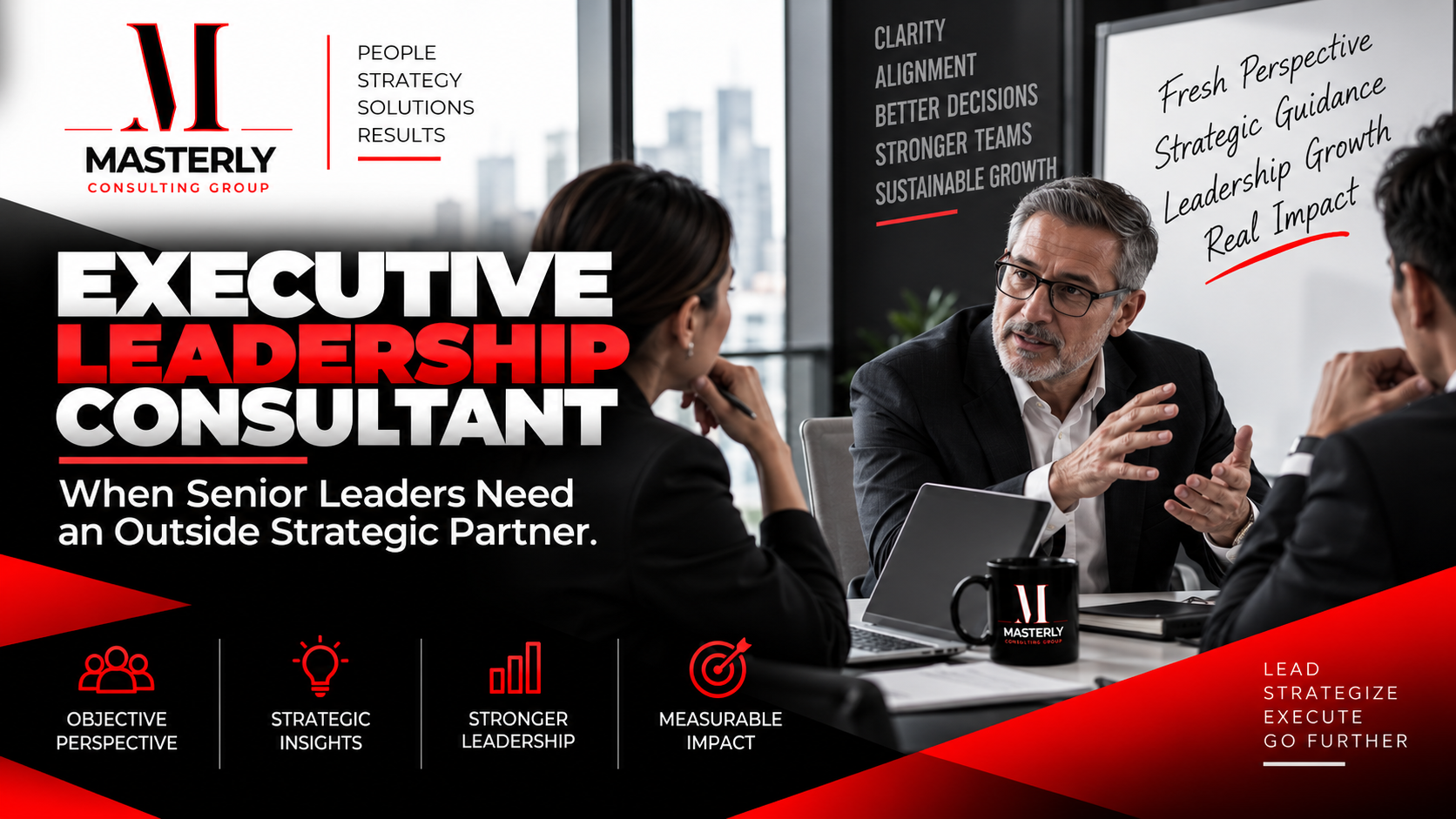
Picture this: your organization invests in a two-day leadership offsite. Participants leave energized, rate the session highly, and talk about it at lunch for a week. Thirty days later, nothing has changed. Managers still default to old habits, team dynamics stay the same, and the binder from the retreat collects dust. This "training high, no behavior change" pattern is one of the most expensive problems in workforce development today. Corporate training refers to structured learning experiences designed for employees and leaders, tied directly to business goals. It is not a generic workshop or a motivational keynote. It is a deliberate program built around specific performance outcomes: reducing risk, improving decision-making, building leadership capabilities, or strengthening organizational culture.  This article is written for companies, associations, universities, and organizations planning professional development training or compliance-related programs for staff, faculty, or executives. Masterly Consulting Group's point of view is straightforward: training must be designed for on-the-job application, not event satisfaction scores. What follows is a practical guide to designing, buying, or improving corporate training programs that deliver measurable results and help you retain talent.
Employee engagement consultant identifying causes of low commitment.
By Amber Aniston August 7, 2026
An employee engagement consultant finds operational root causes behind low commitment. Masterly Consulting Group offers employee engagement consulting tied to retention and execution. Schedule a consultation.
Organizational culture consultant aligning leadership and team behavior.
By Amber Aniston August 7, 2026
Meta Description: Masterly Consulting Group offers organizational culture consulting to align leadership behavior with values and strategy, boosting engagement, accountability, and business success. Request a consultation today.
Business leaders planning organizational transformation strategy
By Amber Aniston August 6, 2026
Masterly Consulting Group turns transformation strategy into an executable operating model with governance, sequencing, and measurable adoption. Request a consultation today.
By Angelie Te August 5, 2026
Why Brand Portfolio Strategy Matters for Multi-Company Founders A founder launches a marketing agency in 2015. By 2019, she spins up a productized service for a specific niche. In 2023, she ships a SaaS product. Three companies, three websites, three logos. Clients ask which company they should hire. Her own team isn't sure which brand to recommend for a given project. The websites overlap. Referrals get lost. This is what happens when a founder builds multiple companies without a brand portfolio strategy. The brands grow, but they grow without a plan for how they relate, who each one serves, and how they move customers between them. A brand portfolio strategy is the deliberate system that decides how all the brands in a company's portfolio work together: which audiences each brand targets, what role each brand plays, and how the set of brands creates more overall value than any single brand could alone. The central tension is real: keep brands distinct enough that customers aren't confused, but connected enough that cross-referrals, trust transfer, and upsell paths still function. This article covers brand portfolio management (how you govern and allocate resources across brands), brand architecture (the structural relationships between brands), and brand roles (the job each brand does). The focus is on roles, clarity, naming, and growth. You'll walk away knowing how to choose between a branded house, house of brands, or hybrid; how to define brand roles; how to avoid brand complexity; and how to set up a governance model that keeps your portfolio sharp. What Is a Brand Portfolio Strategy? (and How It Differs from Just Owning a Bunch of Brands) A brand portfolio strategy is the structured management and organization of a company's brands. It defines how brands relate to each other and target market segments, assigns each brand a unique role, and ensures the portfolio as a whole aims to cover more of the market and drive growth without wasting resources. Owning multiple LLCs, having several logos, or running separate websites is not a strategy. Strategy answers: why does each brand exist? What audience does it serve that the other brands do not? How does the set perform financially? Each brand within a portfolio should have a clear purpose to prevent overlap. For a founder running a core consultancy, a separate training company, and a niche product brand, a brand portfolio strategy defines each brand's unique role and ensures the three entities serve different customer segments rather than competing for the same buyers with similar promises. This differs from product portfolio strategy, which focuses on SKUs and product categories within one brand. It also differs from generic "multi-business group" thinking, which tends to focus on operations and finance. Brand portfolio strategy zeros in on identity, positioning, and market perception. That includes company portfolio positioning: how the parent company is perceived (or whether it is visible at all) relative to its specialist brands. Brand Portfolio, Brand Architecture, and Brand Identity: How the Pieces Fit Founders often blur three concepts that serve different functions. Separating them saves time and prevents misaligned decisions. A brand portfolio is the full set of brands under common ownership. Alphabet owns Google, YouTube, and Waymo. Marriott managed 30 hotel brands after acquiring Starwood in 2016. A founder with an agency, a staffing firm, and a coaching brand has a three-brand portfolio. Brand architecture defines the relationships between brands in a portfolio. It's the structural pattern that determines who endorses whom, what's visible to customers, and how brand names and logos coordinate. There are two main types of brand architecture: mono-brand (one name covers everything) and multi-brand (distinct brands coexist). Brand architecture helps consumers understand product offerings and their relationships, and a well-defined brand architecture enhances brand equity and consumer navigation. It also clarifies brand roles and minimizes internal competition. Brand identity operates at the individual brand level: the name, visuals, tone, promise, and distinctive assets that make one brand recognizable. Brand positioning clarifies how each brand should be perceived in the marketplace. Portfolio management sits above identity work. It decides which brands exist, how they relate, and where investment goes. Architecture and identity then express those decisions in ways customers can see and navigate. Core Brand Portfolio Strategies: Branded House, House of Brands, and Hybrids Most multi-brand ecosystems fall along a spectrum. At one end sits the branded house. At the other, the house of brands. Between them are hybrids and endorsed models. Branded house. A branded house uses a single master brand across all products and services. FedEx (FedEx Express, FedEx Office, FedEx Ground) is a textbook example. A branded house communicates a single identity across all brands, which means equity built in one area transfers to others. The trade-off: if one offering fails publicly, the entire brand absorbs the reputational cost. House of brands. A house of brands consists of distinct standalone brands targeting specific niches. Procter & Gamble owns Tide, Pampers, and Gillette, but most consumers never think about P&G when buying shampoo. A house of brands allows each brand to operate independently, with tailored positioning and flexibility. The cost is real: P&G invests roughly 13% of annual sales into R&D and marketing to sustain its portfolio of powerful brands. Hybrid and endorsed models. A hybrid portfolio combines elements of multiple brand structures. Endorsed brands have sub brands supported by a parent corporate brand for credibility. Marriott operates distinct hotel brands (Ritz-Carlton, Courtyard, W Hotels) while the Marriott Bonvoy loyalty system ties the ecosystem together. Meta keeps Instagram and WhatsApp as different brands with their own audiences, connected by a visible parent.  For founders managing 3-8 companies, a lean hybrid is often the most practical choice: a credible parent brand plus a handful of clearly positioned specialist brands that share some elements but maintain distinct faces to market.
Business continuity consultant leading crisis planning workshop
By Amber Aniston August 5, 2026
Partner with a business continuity consultant to build practical, resilient continuity plans that protect critical operations from disruptions. Learn how expert consulting enhances operational resilience, supply chain management, and crisis response for growing companies and multi-location organizations.
Performance management consultant reviewing KPI dashboard with team
By Amber Aniston August 5, 2026
Masterly Consulting Group offers expert performance management consulting to help organizations set measurable expectations, improve feedback cadence, and enhance leadership accountability for better employee performance and business outcomes.
By Angelie Te August 5, 2026
Introduction: Why Shared Services Matter for Multi-Brand Entrepreneurs Between 2018 and 2024, one founder grew from a single digital marketing agency to a portfolio of five brands spanning creative services, e-commerce, staffing, and consulting. Revenue was climbing. But by year four, she was managing five separate bookkeepers, three different CRM platforms, inconsistent onboarding workflows, and a customer experience that varied wildly depending on which brand someone contacted. Growth had stalled - not because of demand, but because the back office couldn't keep up. This is the exact scenario where a shared services business model becomes essential. In its simplest form, it means creating a centralized support unit that serves multiple brands, entities, or divisions as internal customers - handling functions like finance, HR, marketing operations, and IT under one roof. Why does this matter now? Labor costs have surged since 2020. Remote teams have multiplied complexity. And artificial intelligence tooling has made centralization more feasible than ever. Entrepreneurs are increasingly running ecosystems of brands, and shared services reduce operational costs by eliminating redundancy while enabling scalability so organizations can expand without rebuilding administrative infrastructure each time. This article is written for entrepreneurs and operators managing multiple companies - not Fortune 500 executives. Here's what we'll cover: How the shared services business model works and what it actually includes When centralization makes sense (and when it doesn't) How to design, govern, and implement a shared services unit Risks, trade-offs, and a practical roadmap