Sexual Harassment Training for Managers: Securing a Safer and More Compliant Workplace
Most managers don’t wake up thinking, “Today I might prevent a lawsuit.” They wake up thinking about schedules, deadlines, customer needs, and whether the team is showing up ready to work. But the reality is that a manager’s everyday decisions—what they ignore, what they correct, and what they document—can determine whether a workplace becomes safer or becomes a legal crisis. That’s why sexual harassment training is not just another checkbox for HR. It’s one of the most practical tools employers can use to protect employees, strengthen workplace culture, and reduce exposure under federal law.
At Masterly Consulting Group, we help organizations build harassment training programs that feel real, useful, and easy to apply on the job. We’ve seen what happens when training is too generic, too outdated, or too focused on legal jargon. Employees tune out, supervisors freeze when a complaint happens, and misconduct escalates because no one knows what to do. This article explains why sexual harassment training for managers matters, what strong training includes, and how it supports sexual harassment prevention in real-world scenarios—especially in Washington state, Washington DC, and across Washington workplaces where expectations are high and compliance matters.
When training is done correctly, it doesn’t create fear. It creates clarity. It helps managers recognize inappropriate behavior early, respond with confidence, and protect workers from harassment and retaliation. It also helps employers reduce the risk of sexual harassment cases that lead to investigations, lost wages, emotional distress, and damaging legal outcomes.
Why Managers Carry the Biggest Risk in Sexual Harassment Situations
Managers have authority, and that authority changes everything. A comment that might be brushed off between peers can become coercion when it comes from a supervisor. A joke that seems harmless can be interpreted as sexual discrimination when it becomes repeated or targeted. A manager’s silence can look like approval, especially when employees feel protected only by the people above them.
Sexual harassment is not just about extreme misconduct. It can begin with subtle patterns, power imbalance, and workplace harassment that builds over time. When managers are trained to recognize early warning signs, they can stop harassment before it becomes a formal complaint. That’s one reason mandatory training is becoming more common in Washington and beyond.
Managers also influence whether employees feel safe reporting. If employees believe reporting will lead to retaliation, they often stay silent until the situation becomes unbearable. That silence increases legal exposure and harms workplace culture. Training helps managers become part of the solution instead of part of the problem.
Sexual Harassment Defined in Plain Language
Sexual harassment generally refers to unwelcome conduct related to sex that affects a person’s employment or creates an intimidating or hostile workplace. It can involve unwelcome sexual advances, sexual favors, or behavior of a sexual nature. It can be verbal, physical, digital, or visual. It can happen between coworkers, between supervisors and employees, or even from third parties.
Many employees assume sexual harassment must be physical assault to “count.” That is not true. While sexual assault is a severe form of misconduct, harassment also includes repeated comments, unwanted touching, sexual jokes, or pressure that makes someone uncomfortable. Even a single incident can matter depending on circumstances. The key factor is whether the conduct is unwelcome and impacts the workplace.
Managers should understand that harassment is not always obvious. Victims may laugh nervously, avoid conflict, or try to keep the peace because they need their job. Training helps managers see beyond surface reactions and respond appropriately.
Why Washington Employers Are Paying Closer Attention Than Ever
Washington workplaces operate under heightened expectations for employee protection and compliance. Washington state and Washington DC both have strong employment protections and growing public awareness around harassment. Organizations are under pressure to act quickly when issues arise, and poor responses can damage reputations overnight. This is why sexual harassment training washington programs are becoming a priority for serious employers.
Washington sexual harassment training is not only about compliance. It is about protecting employees and reducing legal exposure. If an organization ignores warning signs, the risk grows. If managers mishandle reports, the risk multiplies. Training gives leaders a consistent process to follow.
For many employers, the goal is not simply avoiding lawsuits. The goal is building a workplace where employees feel safe, respected, and protected. Training is one of the most effective ways to achieve that goal.
How Federal Law Shapes Sexual Harassment Training Expectations
Federal law plays a major role in how organizations address harassment. Title VII of the Civil Rights Act prohibits sex discrimination in employment, including sexual harassment. Title VII applies to many employers and creates expectations around prevention, reporting, and response. It also influences how courts evaluate whether an employer acted responsibly
.
The equal employment opportunity commission provides guidance and enforcement related to workplace harassment. While training alone does not guarantee protection, it can demonstrate that an employer took reasonable steps. Training can also help reduce misconduct and improve reporting processes. In many sexual harassment cases, the employer’s response is just as important as the initial incident.
Managers don’t need to memorize every law. They do need to understand what the law expects them to do in practice. Training bridges that gap by turning legal concepts into everyday actions.
Why “Good Intent” Is Not a Defense for Inappropriate Behavior
Many harassment problems begin with someone claiming they “didn’t mean it that way.” Intent matters emotionally, but it does not erase harm. If behavior makes an employee uncomfortable and continues after boundaries are clear, it becomes a problem. Managers must understand that the impact on the employee is what matters most.
Sexual harassment can also occur in environments where people think they are being friendly. Compliments, teasing, or “office humor” can cross lines quickly. What feels normal to one person may feel threatening to another. Training helps managers understand that different employees experience the workplace differently.
When leaders dismiss concerns as “overreacting,” they create risk. That response can lead to emotional distress, increased conflict, and formal complaints. Managers should learn to respond with respect and seriousness, even when the situation feels minor.
The Hidden Danger of “Workplace Culture” Excuses
Workplace culture can be a strength, but it can also become a shield for misconduct. Some organizations excuse harassment by saying, “That’s just how people talk here.” Others allow inappropriate behavior because top performers bring in money. Over time, employees stop trusting leadership, and harassment becomes normalized.
Training helps managers understand that culture is created through consistent standards. If leaders allow misconduct, they teach employees that harassment is tolerated. If leaders respond quickly and fairly, they teach employees that the workplace is protected. That difference impacts retention, morale, and productivity.
A healthy culture does not happen by accident. It requires training, reinforcement, and clear expectations. Managers play the biggest role in keeping the culture safe.
Mandatory Training vs. Meaningful Training
Mandatory training is common, but meaningful training is what prevents problems. Many organizations provide required training that employees rush through in silence. That kind of training may satisfy a requirement, but it often fails to change behavior. Managers need training that feels practical and real.
Meaningful harassment training includes real world scenarios, clear examples, and step-by-step procedures. It teaches managers what to say, what not to say, and how to document. It also teaches them how to protect victims while respecting due process. When training is interactive and relevant, it sticks.
At Masterly Consulting Group, we focus on training that managers can use the same day. That approach reduces confusion and improves response speed. It also helps prevent misconduct from becoming a bigger crisis.
What Managers Must Know About Reporting and Complaint Handling
Managers are often the first person employees talk to when they have experienced sexual harassment. That means managers must know how to respond without making the situation worse. A poor response can trigger retaliation claims or escalate emotional harm. A good response can stabilize the situation and protect everyone involved.
Managers should understand basic reporting procedures. They should know who to contact, what to document, and what not to promise. They should also understand confidentiality limits and why secrecy cannot always be guaranteed. Training helps managers respond professionally instead of improvising.
Even if the employee says, “Please don’t tell anyone,” managers may still have a duty to report. This is where many supervisors panic and make mistakes. Training provides a clear process that protects both the employee and the organization.
Why Retaliation Is One of the Biggest Legal Risks
Retaliation is one of the most common claims tied to harassment situations. Employees may be punished for reporting, participating in investigations, or supporting another worker. Retaliation can include schedule changes, demotion, threats, isolation, or termination. Even subtle retaliation can create major legal exposure.
Managers must be trained to prevent retaliation intentionally and unintentionally. Sometimes retaliation happens because a supervisor becomes annoyed or defensive. Other times it happens because coworkers treat the victim differently. Managers must recognize retaliation patterns and stop them quickly.
Retaliation damages trust and increases the likelihood of lawsuits. It can also create additional compensatory damages and punitive damages exposure. Training helps managers protect employees and reduce risk at the same time.
Sexual Harassment Prevention Starts With Early Intervention
Sexual harassment prevention is not just about policies—it’s about action. Managers must be trained to notice patterns early. If a coworker repeatedly makes comments about sex, appearance, or relationships, that behavior should be addressed before it escalates. If employees avoid someone or look uncomfortable, managers should pay attention.
Early intervention protects workers and protects the organization. It reduces the chance that someone suffered sexual harassment for months before speaking up. It also reduces the risk of severe outcomes like assault or exploitation. Prevention is cheaper, safer, and more humane than crisis response.
Training gives managers language for intervention. It teaches them how to correct behavior without escalating conflict. That skill is essential for safer workplaces.
The Role of Investigations and Evidence Preservation
When harassment allegations arise, investigations matter. Employers must gather evidence, review statements, and document steps taken. Managers often play a role in preserving evidence and ensuring reporting is accurate. If managers fail to document properly, the organization may lose critical information.
Evidence can include emails, texts, security footage, witness statements, and timeline notes. Managers should never destroy evidence or “handle it quietly.” That can create serious legal problems. Training teaches managers how to preserve evidence and follow the process.
Investigations should be fair to everyone involved. The goal is not to assume guilt or dismiss claims. The goal is to determine what happened and take appropriate action. Proper training supports a professional and defensible investigation process.
Why Third-Party Workers Create Unique Harassment Risks
Many Washington employers rely on third-party staffing, vendors, and contractors. A property services contractor may work inside your building daily. A security guard entity may interact with employees and visitors. These third-party relationships can create harassment risks that are often overlooked.
Harassment can occur between employees and contractors, or between contractors and customers. Employers may still have responsibility to address harassment in their workplace. Managers need training to recognize third-party misconduct and respond correctly. Ignoring it can create liability and damage trust.
Training should include how to report third-party harassment. It should also include how to enforce standards across the organization. A safe workplace includes everyone who works in it.
When Sexual Harassment Becomes Sexual Assault or Violence
Some harassment cases escalate into sexual assault or other forms of violence. These situations require urgent action, safety planning, and coordination with law enforcement when appropriate. Managers should not try to “mediate” serious assault allegations. They must protect the victim and involve the correct internal and external resources.
Training should include how to recognize high-risk situations. It should also include steps for immediate safety and support. This is not only a legal issue—it’s a human issue. Victims may be traumatized and in immediate danger.
Employers must treat these cases seriously and respond with care. A failure to act can lead to severe harm and major legal consequences. Training helps managers respond responsibly in critical moments.
What Happens When Employees Seek Legal Help
Sometimes employees contact a sexual harassment lawyer or harassment lawyer after reporting internally. That may happen when they feel ignored, unsafe, or retaliated against. Employees may also seek a sexual harassment attorney if they experienced sexual discrimination or suffered sexual harassment over time. This does not automatically mean the employer is guilty, but it signals serious concern.
When legal help enters the picture, the organization must be careful. Poor documentation, sloppy procedures, or dismissive behavior can become evidence in court. Employees may seek lost wages, compensatory damages, and punitive damages depending on the facts. This is why strong training is a proactive investment.
Managers don’t need to fear lawyers. They need to understand that every step matters. Training helps managers respond professionally so the organization is protected.
How Training Protects Employers and Employees at the Same Time
Training is often framed as protecting the company, but it also protects employees. When managers know how to respond, victims feel safer. When policies are clear, misconduct is less likely. When reporting is respected, the workplace becomes more stable.
Training also reduces confusion for supervisors. Managers often feel unsure about what is allowed, what is harassment, and what to do when someone complains. That uncertainty causes delays and mistakes. Training turns uncertainty into action.
Employers who invest in harassment training demonstrate leadership. They show employees that safety matters. That builds loyalty and improves performance across the organization.
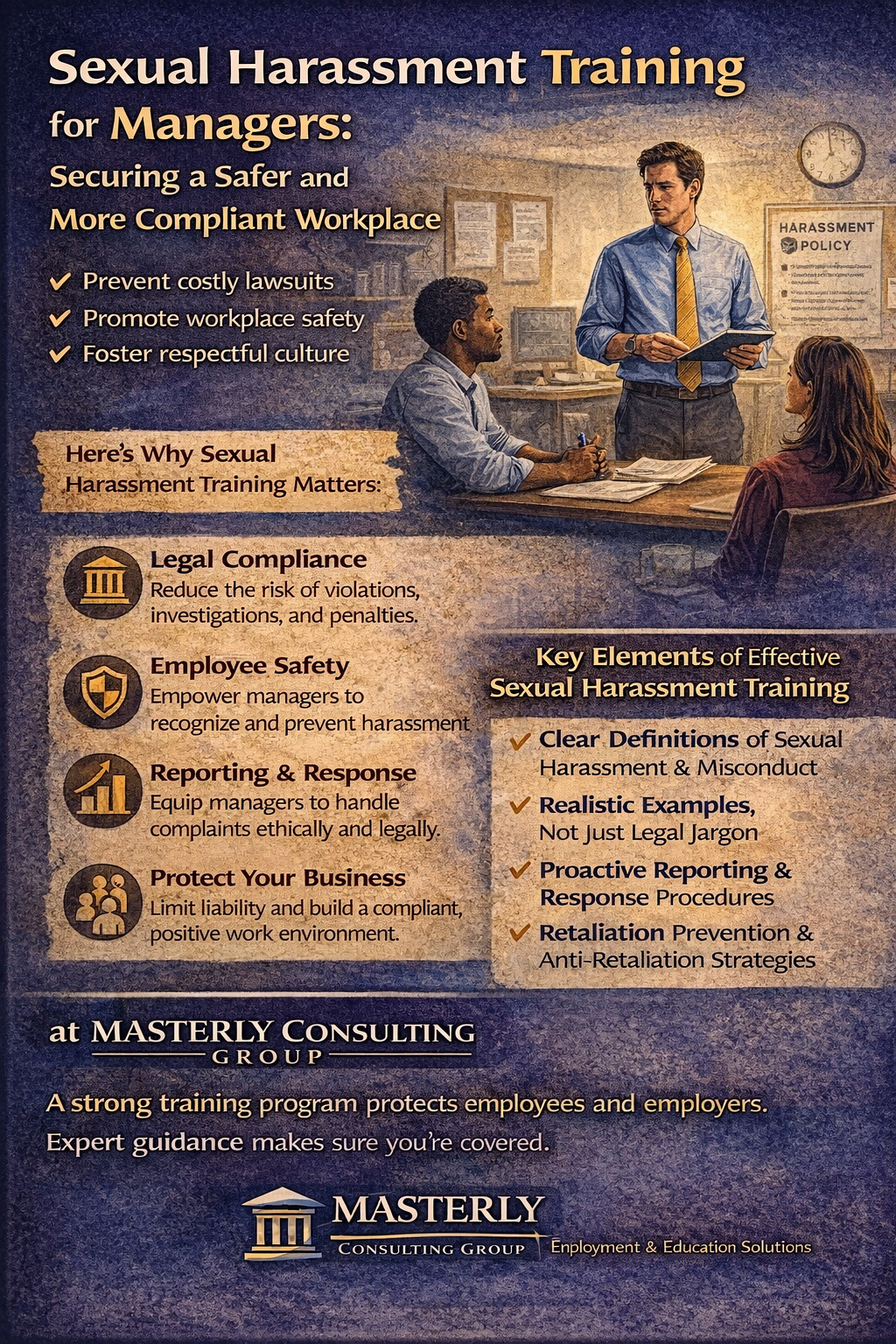
What Strong Harassment Training for Managers Should Include
A strong training program should go beyond definitions. It should provide practical tools managers can use in the moment. It should include legal basics, but it should focus on workplace behavior and response.
Strong harassment training should include:
- Clear definitions of sexual harassment and harassment
- Examples of unwelcome sexual advances and sexual favors
- Guidance for handling complaints and reporting procedures
- How to prevent retaliation and protect workers
- Documentation practices and evidence preservation
- Real world scenarios based on modern workplaces
- Expectations for supervisors and managers with authority
Training should also be updated regularly. Workplace communication changes fast, and new risks appear through apps and digital platforms. Modern training should reflect modern reality.
How Masterly Consulting Group Helps Organizations Build Safer Workplaces
At Masterly Consulting Group, we don’t believe training should feel like punishment. We believe it should feel like leadership development. Our approach helps managers understand the law, understand human behavior, and respond with confidence. We design training that supports compliance while improving workplace culture.
We help employers create training programs that fit their industry. A corporate office has different risks than a retail environment. A hospital has different risks than a property services contractor operation. A security guard entity has unique public-facing concerns. Training should match the organization’s real circumstances.
We also help organizations improve their internal process. Training works best when reporting pathways are clear and investigations are consistent. Our team helps employers build systems that support safety, fairness, and long-term compliance.
Contact Masterly Consulting Group for a Free Consultation
If your organization wants to strengthen compliance, protect employees, and reduce risk tied to sexual harassment, now is the right time to invest in meaningful training. Strong harassment training helps managers respond correctly, prevents retaliation, and supports a safer workplace culture. It also helps employers reduce exposure under federal law, Title VII, and guidance from the equal employment opportunity commission.
Masterly Consulting Group provides professional training programs built for real workplaces and real world scenarios. Whether you need support in Washington state, Washington DC, or across Washington workplaces, we can help you create a program that protects your people and your business. If you’re looking for sexual harassment training washington leaders can trust, we’re ready to help.
Call (888) 209-4055 to book a free consultation. We’ll talk through your goals, your organization’s needs, and the best next step for building a safer, more compliant workplace.