How Sexual Harassment Training Shapes a Respectful and Legally Compliant Workplace
Most organizations don’t wake up one morning and decide they need stronger harassment prevention. It usually happens after a tense incident, a complaint that rattles the team, or a leader realizing morale is slipping for reasons no one wants to say out loud. The truth is, sexual harassment can exist in quiet ways long before it becomes a headline or a lawsuit. And when it finally surfaces, it often exposes gaps in culture, leadership, and accountability.
At Masterly Consulting Group, we work with employers who want real workplace transformation—not panic-driven training that checks a box and gets forgotten. We believe strong sexual harassment training does more than reduce risk. It protects people, sets a clear standard for respectful behavior, strengthens leadership confidence, and builds a workplace where employees feel safe, valued, and supported.
This guide explains how harassment prevention education can reshape culture and create legal safeguards through smart policy, practical leadership training, and consistent follow-through.
Sexual Harassment Training Is About Culture, Not Just Compliance
Many employers start training because they want to comply with the law. That’s a reasonable starting point, but it shouldn’t be the only one. The best sexual harassment prevention training isn’t just a slideshow and a signature. It’s an intentional shift in how people behave, communicate, and hold each other accountable.
When training is taken seriously, teams begin to recognize harmful patterns earlier. Employees become clearer on boundaries, language, and professional expectations. Over time, the organization becomes safer—not only because rules exist, but because people practice them consistently.
The Real Cost of Sexual Harassment in the Workplace
The cost of sexual harassment is not limited to legal claims. It can damage trust, break down teamwork, and cause good employees to quietly leave. Even one incident can lead to emotional stress, fear of retaliation, or a hostile environment that takes years to repair.
Leaders often underestimate how quickly workplace harassment spreads culturally. When people believe nothing will be done, unacceptable behaviors repeat. That’s why training must be paired with a system that responds in a consistent, fair way.
Workplace Harassment Training Builds Safer Professional Habits
Workplace harassment training helps employees understand what professional behavior looks like in real situations. It makes expectations practical, not theoretical. It also helps stop confusion, especially in mixed environments where different generations, cultures, and communication styles overlap.
Training becomes most effective when it includes real examples, clear definitions, and leadership accountability. A strong program helps people recognize harm early and respond appropriately. When done correctly, it strengthens the organization’s reputation internally and externally.
Sexual Harassment Prevention Starts With Clear Standards
The goal of sexual harassment prevention is not to make people afraid to speak. It’s to create an environment where people communicate respectfully and safely. Healthy culture isn’t silent culture—it’s clear culture. Everyone understands what is prohibited, what is appropriate, and what to do if something crosses the line.
The more clarity you build into your workplace, the fewer problems you experience. Prevention works best when leaders act early, consistently, and visibly. Employees notice when the organization means what it says.
How the Law Applies to Workplace Harassment
In many workplaces, leadership assumes harassment rules are vague. In reality, the law applies through well-established standards, and many policies are influenced by federal law frameworks. A core foundation is Title VII, which is connected to the Civil Rights Act and creates expectations for discrimination-free work environments. When employers ignore these expectations, they expose themselves to legal and operational consequences.
Organizations should not wait until a serious event happens to take training seriously. The safest approach is proactive education backed by documented policies and response systems. This creates predictability, fairness, and stronger protection for everyone involved.
Equal Employment Opportunity Commission Expectations
The Equal Employment Opportunity Commission plays a major role in workplace standards and legal enforcement. Employers often hear “EEOC” mentioned only after complaints occur, but strong organizations use training to prevent EEOC-level situations. Prevention reduces legal exposure and protects team stability. It also supports long-term employee retention and trust.
A good training program explains what harassment is, what reporting looks like, and what anti-retaliation protections mean. When employees understand the system, they are more likely to report early rather than waiting until the situation becomes unbearable.
Sexual Harassment Prevention Policy: The Backbone of Safeguards
A sexual harassment prevention policy is not just a PDF stored in a forgotten folder. It is a living standard that should be introduced, taught, reinforced, and applied. If employees don’t understand the policy, it will not protect anyone. If supervisors ignore it, it becomes meaningless.
A strong policy should explain definitions, reporting routes, confidentiality limitations, and investigative steps. It should be easy to access and written in language employees can understand. Policy is the foundation that training brings to life.
Acceptable Behaviors Should Be Easy to Recognize
Training works when it defines acceptable behaviors clearly. Employees shouldn’t have to guess what is professional. They shouldn’t be expected to learn boundaries only after something goes wrong. The clearer the expectations, the fewer misunderstandings occur.
A respectful workplace encourages professionalism in speech, tone, humor, messaging, and power dynamics. What seems “normal” to one person may feel threatening or demeaning to another. Training should help people recognize impact, not just intent.
Supervisors Carry a Higher Responsibility
Supervisors are not simply employees with authority. They are a direct extension of the organization’s standards. When supervisors ignore misconduct, the organization becomes vulnerable. When supervisors handle concerns poorly, employees lose trust fast.
Training must teach supervisors how to respond calmly and correctly. They need to know what to document, when to escalate, and what not to promise. A strong supervisor response can prevent escalation into legal claims and protect morale.
Managers Shape Culture Through Their Choices
Managers influence culture every day through what they tolerate and what they correct. If managers treat harassment complaints as drama, the culture becomes unsafe. If managers treat people with respect and consistency, employees feel protected. Training is essential because most managers were never taught how to handle sensitive complaints professionally.
Harassment prevention becomes stronger when managers understand power dynamics and reporting risks. It also improves daily communication and reduces conflict. A healthier culture is built through leadership behavior, not slogans.
Harassment Prevention Training Reduces Risk and Builds Trust
Harassment prevention training is one of the most effective ways to reduce organizational risk. It sets expectations before a problem occurs and builds a shared language around boundaries. It also protects the organization by showing proactive compliance efforts. But beyond compliance, it builds trust.
Employees want to know their organization takes safety seriously. They want to know they can report concerns without being punished. When a program is consistent, employees stop feeling alone in the process.
Sexual Harassment Training for Employees Creates Clear Reporting Pathways
Sexual harassment training for employees is essential because employees need clarity, not assumptions. Most workers want to do the right thing, but they may not know what the reporting process looks like. Training makes expectations visible and understandable. It also creates confidence that leadership is prepared.
When the reporting process is explained well, employees feel safer coming forward. That early reporting can prevent long-term harm and help the organization respond before problems spread.
Retaliation Fear Can Silence Good People
Retaliation is one of the most damaging parts of workplace harassment. Even when employees experience harassment, they often stay quiet because they fear retaliation. Organizations must treat retaliation as a serious risk factor, not a side issue. If employees believe reporting is dangerous, harassment becomes protected by silence.
Training should make it clear that retaliation is prohibited. It should also explain what retaliation looks like, including subtle behavior such as schedule changes, exclusion, or sudden criticism. A healthy organization protects people who speak up.
The Training Should Teach Employees How to Respond
Employees should not be left guessing on what to do when harassment happens. Training should teach people how to respond in a way that is safe and professional. It should cover reporting options, escalation steps, and documentation guidance. It should also emphasize that reporting is a process, not a punishment.
Employees who feel supported respond earlier. Employees who feel ignored respond later, and the organization faces deeper damage.
Online Training Makes Education Accessible and Repeatable
Online training gives organizations the flexibility to train teams across locations and schedules. It helps new hires complete required education quickly and supports refreshers for long-term staff. Online formats are especially useful for remote teams and fast-growing organizations. It also makes recordkeeping easier.
Online delivery does not mean low quality. With the right program, online learning can be interactive and effective. It can also be paired with live discussions and scenario-based learning to strengthen understanding.
Accessibility Matters More Than Organizations Realize
Training must be usable by everyone, including people with different learning needs. Accessibility is part of culture and compliance. If a program is hard to access, employees may not complete it correctly. Accessibility is also tied to fairness—everyone deserves the same chance to understand expectations.
Online tools can support accessibility through captions, readable formats, and mobile-friendly design. A training program should be designed to include everyone, not frustrate them.
Mobile Device Training Increases Completion Rates
When employees can complete training on a mobile device, completion rates often improve. Many employees prefer learning in small windows of time, especially during busy schedules. Mobile access helps employees stay consistent. It also reduces excuses for missed deadlines.
Mobile options should still preserve training quality. The content should remain clear, interactive, and easy to review. When employees can learn on the device they already use daily, implementation becomes smoother.
Computer-Based Learning Supports Tracking and Documentation
Training on a computer is often preferred for longer courses or interactive modules. It provides screen space for video scenarios, quizzes, and reading material. It also improves documentation and reduces technical issues when employees use stable systems. Computer access helps simplify the process for HR teams and managers.
When both computer and mobile options are available, employees can choose what works best. Flexibility increases compliance without lowering standards.
Web Page Access Makes Training Easier to Find
A dedicated web page for training access creates clarity. Employees should not have to search through emails or folders to find the course. Centralized web access supports consistency and makes training feel like a real priority. It also reduces confusion for new hires.
Employers should also maintain a clear training website environment with minimal steps to login and complete modules. A confusing system discourages completion and creates frustration.
Browser Compatibility Prevents Training Breakdown
Training needs to work across a modern browser environment. If the training only works on certain browsers, employees may get stuck. This can reduce completion rates and create unnecessary delays. A good training provider anticipates these issues and makes the system stable.
Organizations should test training before rollout. This simple step can prevent widespread frustration and support quick program adoption.
Technical Support Keeps Training From Becoming a Headache
Even the best training programs will have occasional user issues. That’s why technical support matters. Employees may forget passwords, have playback issues, or need help downloading certificates. Without support, training becomes frustrating and incomplete.
Employers benefit when the support system is responsive and clear. It keeps the program moving, supports completion, and reduces internal HR workload. A good program should support users without draining leadership time.
Completion Must Be Trackable and Verifiable
Training only helps when it is completed and documented. Employers need a way to confirm training completion and track progress. Employees need proof that they finished, and leadership needs reporting that is accurate. This supports accountability and reduces risk.
Tracking can also reveal trends, such as departments that need extra education or supervisors who require additional support. A strong system turns training into an ongoing process, not a one-time event.
Certificates Reinforce Accountability
A certificate is not just a formality. It’s proof that training was completed and documented. Certificates help employers demonstrate compliance efforts if a complaint arises. They also help employees recognize that this is a serious professional expectation.
Certificates should be easy to download, save, and print. Employees should know where to access them. This also helps HR maintain clean training records over time.
Print, Save, and Store Documentation Correctly
Organizations should create a reliable system to print, save, and store training records. A training program without documentation is hard to defend legally. Records matter during audits, disputes, and investigations. Keeping records organized is a practical legal safeguard.
A smart system also reduces confusion when employees transfer roles or when organizations grow quickly. Clear documentation supports continuity and protects leadership decisions.
Records Support Legal Safeguards Over Time
Training records are a critical part of risk management. Records help organizations show that they took prevention seriously. They also show that the company communicated standards clearly to employees. This matters when disputes are investigated.
Records should be retained consistently across the organization. Organizations often choose a retention timeline based on policy or regulatory guidance. Strong recordkeeping supports long-term stability and compliance.
Three Years of Consistency Builds Real Protection
Many organizations choose to keep training documentation for three years as a practical baseline. This supports consistent record availability and aligns with common compliance expectations. The exact timeline may vary, but consistency matters. A scattered approach creates vulnerability.
Three years of consistent training completion creates culture momentum. It also creates a legal history that strengthens organizational defense. Prevention is strongest when it’s maintained year over year.
Spanish-Language Training Improves Understanding
Offering training in Spanish can be a critical part of workplace clarity, depending on the team. People learn better in the language they process most naturally. Spanish training reduces misunderstanding and increases accuracy. It also supports inclusivity and respect.
Organizations that offer multiple language options often see higher completion and stronger retention of concepts. This is a simple change that can produce major results. Training should meet employees where they are.
Interactive Training Helps Employees Retain the Message
Interactive training helps employees absorb material instead of passively watching slides. Scenarios, quizzes, and practical examples build real learning. Interactive formats also help employees recognize behavior patterns that create risk. This improves real-world response.
Interactive tools are especially useful for supervisors. They help leaders practice response steps and decision-making. A strong interactive program supports long-term behavioral change.
The Organization’s Culture Is Always Teaching Something
Even when training is not happening, the organization is teaching employees what is tolerated. Culture is built by repeated behaviors and unspoken rules. A strong harassment prevention program ensures the culture teaches respect, not fear. It also ensures compliance becomes a shared responsibility.
Employees notice whether leadership responds. They notice whether managers take complaints seriously. Culture is strengthened when training aligns with daily actions.
Respect Is Built Through Consistent Leadership
Respect is not created by policy alone. It’s created through consistent leadership behavior. When leaders treat concerns seriously and respond professionally, employees feel safe. When leaders dismiss concerns or blame victims, the culture collapses quickly.
Training should empower leaders to respond with confidence. It should also teach how to stop issues early without escalating chaos. Respectful workplaces are built by systems and behavior together.
Human Rights and Workplace Safety Are Connected
Organizations that prioritize human rights build stronger loyalty and stability. Workplace safety includes emotional safety, not only physical safety. When harassment is present, employees feel unsafe even if no physical threat exists. That emotional stress reduces performance and increases turnover.
Human rights standards are also connected to legal expectations. Employers who ignore harassment increase risk, legal exposure, and reputation damage. Preventing harassment protects both people and business.
California Regulations Show How Serious Harassment Prevention Has Become
Many organizations look to California as an example of strict workplace training expectations. California has strong rules for supervisor and employee education. Even if you are not operating in California, the trend reflects rising national expectations. Employers should stay ahead, not wait until forced.
Training programs should be designed to scale across states. Multi-state organizations need systems that comply with different standards. This supports long-term growth and reduces risk.
Illinois Requirements Can Impact Multi-State Teams
Illinois is another state with specific expectations around harassment prevention efforts. Employers with distributed teams need to understand regional obligations. A consistent training program helps meet varied requirements. It also keeps standards clear across the organization.
Employers should not treat state variation as an obstacle. It can be managed with the right program structure and documentation. Clear training protects the entire organization.
New York State Rules Are Often Referenced Nationally
New York State has well-known harassment training expectations that many organizations reference as a benchmark. Employers often review New York State guidelines to ensure their program is thorough. A strong program can be aligned to meet New York standards even for businesses based elsewhere. This reduces risk and strengthens compliance confidence.
Training should explain what behaviors are prohibited and what reporting systems exist. New York standards often emphasize clarity, prevention, and anti-retaliation culture. These are useful principles for any organization.
York State Requirements Still Come Up in Business Discussions
Sometimes business leaders informally refer to York State requirements when discussing compliance expectations. Even when the wording is casual, the message is serious: organizations are expected to prevent harassment proactively. Employers who ignore training trends risk falling behind. Staying current is part of responsible leadership.
Following strong benchmarks makes culture stronger. It also builds public trust. The workplace is safer when standards are clear and practiced.
NYC Requirements Add Another Layer of Specificity
Many employers operating in or near NYC must consider NYC requirements that go beyond general state rules. NYC expectations often focus on interactive training and clear reporting channels. Even organizations outside NYC benefit from building training at this level. It creates strong preparedness.
When employers meet higher standards, they reduce risk across the board. They also make it easier to scale operations into other states. Strong compliance systems support growth.
Other States Are Adopting Stronger Expectations Too
Even other states continue adopting stronger harassment prevention expectations. This reflects growing public demand for safer workplaces. Employers should not assume their state will remain lax forever. Legal and cultural standards evolve.
Organizations that stay ahead avoid scrambling later. Prevention programs should be built to adapt. A flexible, modern training system supports future stability.
Workplace Harassment Is Not Always Obvious
Workplace harassment isn’t always aggressive or loud. Sometimes it’s subtle, consistent, and normalized through jokes, comments, or power dynamics. That’s why training must cover gray areas. A lot of harm happens when people rationalize behavior as “not a big deal.”
Training helps employees recognize patterns. It also helps leaders stop behaviors before they become legal issues. The goal is early correction, not punishment after harm.
Conflict Resolution Skills Strengthen Prevention
Harassment prevention improves when teams also build conflict resolution skills. Many harassment situations involve power, boundaries, and unresolved tension. Conflict resolution training helps teams communicate before issues escalate. It also helps managers intervene appropriately.
Conflict resolution does not replace harassment policies. It complements them. Together, they create a stronger workplace foundation.
Harassment Training Should Match Real Workplace Scenarios
Good harassment training uses real examples that reflect the workplace environment. Office settings, remote teams, client interactions, and leadership meetings all carry unique risks. Training should speak to these realities. Generic training feels disconnected and ineffective.
Scenario-based learning improves retention. It helps employees recognize situations quickly. It also gives supervisors a framework for response.
A Workplace Training Program Must Be Developed Intentionally
A strong program should be carefully developed based on organizational needs. Different industries face different pressures. Teams with customer-facing roles face different risks than internal office teams. Training should reflect the actual work environment.
A program should also align with existing HR policies and reporting structures. It should be easy to complete and easy to track. A well-developed program reduces risk and improves confidence.
Workplace Training Must Be More Than a One-Time Course
One-time training often fades. A strong training culture reinforces expectations regularly. This doesn’t mean constant lectures. It means ongoing reminders, updates, leadership messaging, and accountability. A workplace training strategy becomes part of operational excellence.
Workplaces with strong training culture feel safer. Employees feel more stable. And managers feel more prepared to respond appropriately.
Course Design Matters for Engagement and Results
The training course should feel professional, relevant, and easy to navigate. If it feels outdated or confusing, employees disengage. A course should be clear, modern, and built for real understanding. This increases completion and improves retention.
Courses should include definitions, examples, and reporting guidance. They should also clearly explain prohibited behavior. Clarity reduces confusion and increases trust.
The Hour Requirement Is Less Important Than Real Learning
Some jurisdictions focus on training length, such as one hour or a certain time minimum. But the true measure of training success is behavior change. Employees must understand what harassment is and how to respond. The goal is real prevention, not time tracking.
That said, time requirements may exist in certain locations. Employers should ensure they comply. Training should be designed to meet both legal and cultural goals.
Workplace Harassment Prevention Training Builds Better Morale
Strong training improves morale because employees feel protected. Teams work better when they trust leadership. People contribute more confidently when they believe their dignity matters. Morale is not a soft metric—it affects productivity and retention.
Training also reduces workplace tension. It helps people communicate with clearer boundaries. This improves overall workplace stability.
Compliance Requires Process, Not Just Policies
Compliance isn’t achieved by posting a policy. Compliance requires a consistent process: training, reporting, response, documentation, and follow-up. Employers who skip steps create vulnerability. A complete process strengthens legal safeguards.
Employees also learn from process consistency. When reporting is predictable, employees feel safe. When it’s inconsistent, they stay silent.
Employers Must Be Ready to Respond Quickly
When employees report harassment, employers must respond appropriately. That doesn’t mean reacting emotionally. It means investigating, documenting, and taking action based on facts. The organization must respond in a way that protects all parties and maintains fairness.
Training should help leaders understand this responsibility. The faster and more professional the response, the less harm occurs. Prevention includes response readiness.
Responsibilities Should Be Clear at Every Level
Roles and responsibilities should be clearly defined. Employees need to know how to report concerns. Supervisors need to know how to escalate. HR needs to know how to document and investigate. Leadership needs to know how to support the process.
When responsibilities are unclear, problems get delayed. Delays increase risk and harm. Clarity improves protection.
The Workplace Must Support Reporting Without Fear
Training must reinforce that employees will be protected when reporting concerns. Reporting should not result in punishment or exclusion. That is why retaliation prevention is essential. Organizations must build trust through action, not promises.
When employees feel supported, they report early. Early reporting protects the organization and the person. Silence is what allows harassment to grow.
Utilize a System That Works Across the Team
Organizations should utilize systems that are easy for employees to follow. This includes clear training access, defined reporting channels, and documented response procedures. Complicated systems discourage reporting and reduce compliance. Simplicity creates strength.
A strong system also supports managers who feel unsure. It gives them clear steps and reduces fear of making mistakes. Good systems protect everyone.
Tracking Progress Helps Employers Stay Ahead
Employers should track training progress and completion across teams. Tracking helps identify gaps and improve compliance. It also helps ensure supervisors and employees complete requirements on time. Tracking becomes essential when organizations scale.
Good tracking also supports documentation needs. It provides accurate reporting for legal purposes. It reduces organizational risk.
Search Behavior Shows Employees Want Clarity
It’s common for employees to quietly search online to understand what harassment means and what protections exist. This shows employees often don’t feel safe asking internally. Training can change that. When training is clear, employees rely less on outside sources.
A strong internal education system builds trust. It makes employees feel supported. It reduces fear and confusion.
A Strong Website Presence Supports Training Transparency
Organizations should have a clear training website presence where employees can find policies and training access. This reduces confusion and improves consistency. It also shows the organization takes training seriously. Transparency improves credibility.
Even a simple website portal can help. What matters is accessibility and clarity. Employees should know where to go.
Prefer a Training Program That Fits Your Culture
Some organizations prefer in-person sessions. Others need online learning. The best training program fits your team’s size, structure, and workflow. A good program can blend formats. It can also adjust content to your workplace needs.
Choosing the right program improves participation. It also reduces resistance. Fit matters for long-term adoption.
The Role of Labor Standards and Workplace Expectations
The modern workplace is shaped by evolving expectations tied to labor standards and cultural change. Employees expect safer environments. Organizations that ignore these expectations risk turnover and public criticism. Training is a practical way to meet modern standards.
When organizations invest in training, employees feel valued. That strengthens retention. It also strengthens employer reputation.
Discrimination and Harassment Overlap in Many Cases
Discrimination and harassment often overlap in real workplace scenarios. Sexual harassment may involve unequal treatment, biased assumptions, or abuse of power. Training should explain these overlaps clearly. This helps employees recognize patterns sooner.
Understanding overlap improves reporting quality. It also helps managers respond more accurately. A stronger understanding protects everyone involved.
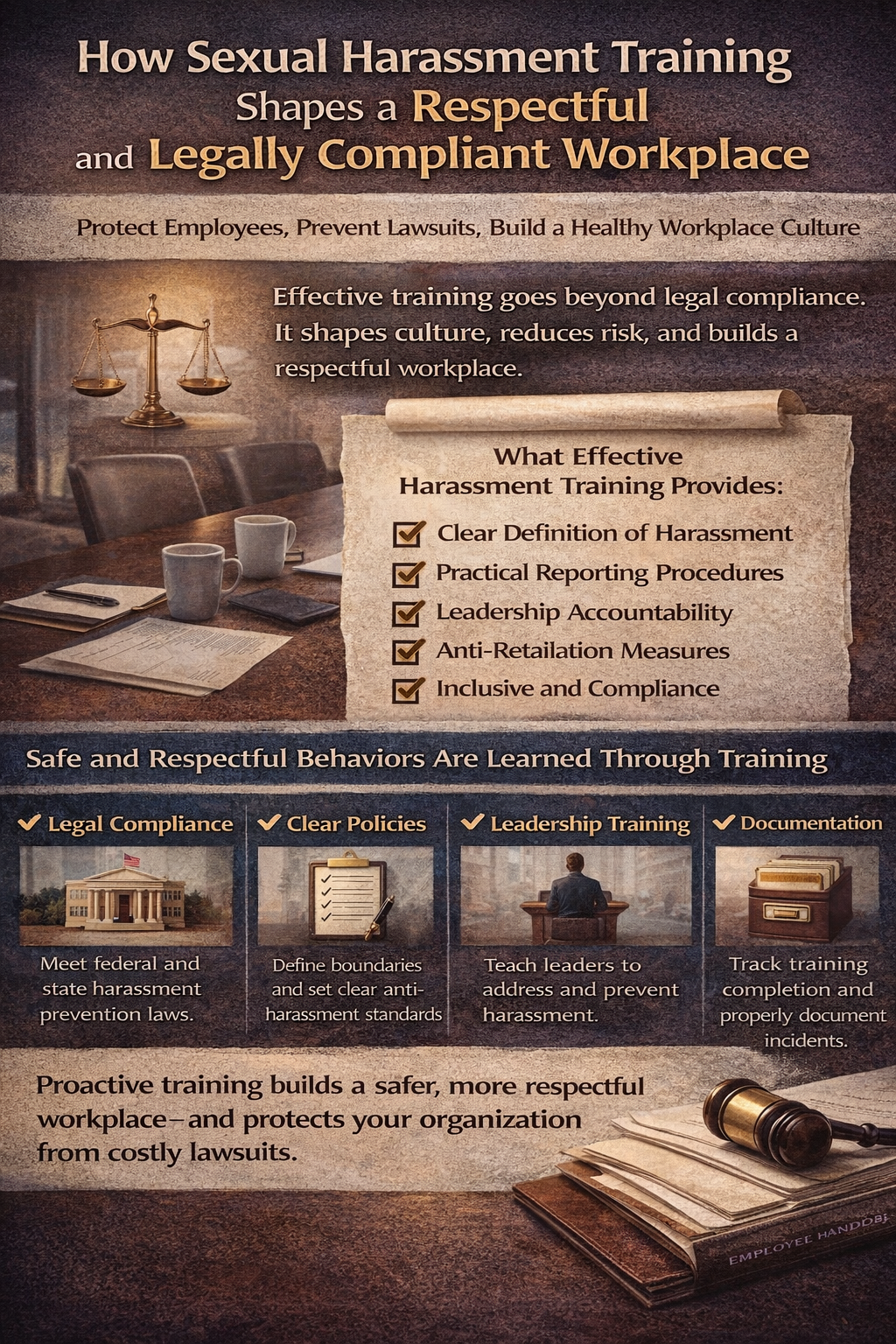
Sexual Harassment Prevention Training That Meets State Regulations and Real-World Risk
Strong sexual harassment prevention training is most effective when it’s built to protect people and align with state regulations that may apply to your industry, location, or workforce size. At Masterly Consulting Group, we help organizations create training that doesn’t feel generic or outdated—because compliance only works when employees actually understand it. A well-designed program also supports consistent documentation, including the right form or acknowledgement record that confirms completion and expectations. Just as importantly, training should include clear tracking details—such as the date of completion—so employers can demonstrate accountability and protect the organization if concerns arise later.
Prohibited Conduct Must Be Clearly Defined
Employees need to understand what is prohibited. Prohibited behavior includes unwanted sexual conduct, coercive behavior, inappropriate comments, and any behavior that creates a hostile environment. Prohibited actions are not always physical. Language and behavior matter too.
When prohibited behavior is defined clearly, fewer people claim ignorance later. It reduces confusion and reduces risk. Clarity protects the organization and employees.
Human Rights Standards Strengthen Organizational Identity
Organizations that honor human dignity build stronger brand identity. Human rights principles reinforce fairness, safety, and respect. Employees want to work in a place where they feel protected. Training supports that expectation.
When people feel respected, they perform better. They stay longer. They contribute more.
A Respectful Workplace Is a Competitive Advantage
A respectful environment is not only ethical—it is strategic. Workplaces with stronger culture attract better talent. They also reduce internal conflict and leadership stress. Respect creates stability.
Sexual harassment prevention strengthens organizational performance. It reduces distractions and protects credibility. It also supports long-term growth.
Masterly Consulting Group Helps Organizations Build Training That Works
At Masterly Consulting Group, we don’t believe in generic training that employees forget by next week. We help employers build a training system that strengthens culture, supports compliance, and prepares supervisors to respond professionally. We focus on clarity, confidence, and real-world application. Our goal is to help organizations reduce risk and build trust.
If your organization needs training that is built for results, not just paperwork, we are ready to help. A strong program can protect your people and your business at the same time. That is what good leadership looks like.
Contact Masterly Consulting Group for a Free Consultation
If your workplace is growing, changing, or simply ready for a higher standard of professionalism, now is the time to strengthen your prevention strategy. Sexual harassment training for employees can help protect your organization, support your supervisors, and create a culture where people know exactly what is expected. When your team understands boundaries, reporting, and accountability, you reduce risk and build stronger long-term stability.
At Masterly Consulting Group, we provide practical, respectful, and compliance-focused training programs that help employers move forward with confidence. We offer online training support, documentation guidance, and tailored programs that fit your workforce. Our goal is culture transformation with real legal safeguards—not fear-driven messaging.
Call
(888) 209-4055
to book a free consultation.
Let’s discuss your goals, your team structure, and the next steps for building a respectful workplace.