Early Education Programs and the Growing Risk of Financial Noncompliance
Early education is often described as the foundation for lifelong learning. In classrooms filled with young students, teachers work tirelessly to build literacy, social skills, and confidence. Families place enormous trust in schools and early childhood education programs to guide students during their most formative years. Yet behind the scenes, a different pressure is mounting—financial noncompliance that can threaten the stability of an entire institution.
Across the country, educational institutions are navigating increasing oversight, tighter budgets, and evolving regulations. Early education programs, in particular, face unique financial and regulatory challenges. Many school leaders are so focused on instruction and student learning outcomes that financial risk can quietly grow unchecked. Without proper strategic planning and oversight, even well-meaning schools can find themselves exposed.
At Masterly Consulting Group, we provide educational consulting and education consulting services designed to help institutions protect their mission while strengthening financial compliance. Our team works closely with schools, districts, colleges, and universities to identify vulnerabilities before they escalate. In this article, we explore the financial risks facing early education programs and how proactive leadership can protect students, families, and the broader community.
The Financial Landscape of Early Childhood Education
Early childhood education programs operate in a complex funding environment. Revenue may come from tuition, state subsidies, federal grants, and private donations. Each funding source carries specific requirements that must be followed carefully.
School leaders often juggle compliance expectations while trying to support students and maintain a strong school culture. Financial reporting, documentation standards, and audit requirements can vary from one district to another. Even minor errors in recordkeeping can raise serious concerns during reviews.
For many schools, the challenge is not a lack of commitment. It is a lack of systems and expertise. Without structured oversight, financial processes can become inconsistent, increasing the risk of noncompliance.
How Financial Noncompliance Develops
Financial noncompliance rarely begins with intentional wrongdoing. More often, it stems from gaps in processes, staffing shortages, or outdated systems. As programs expand and serve more students, financial management can become strained.
In some districts, administrative teams are stretched thin. A vice president overseeing operations at a larger institution may have access to financial analysts, but smaller early education programs often lack that level of support. When responsibilities overlap, errors can occur.
These small oversights can accumulate over time. What begins as a simple documentation gap may later appear as a pattern of noncompliance. By the time leadership discovers the issue, corrective action may require significant effort.
The Impact on Schools and Communities
Financial instability in early education programs affects more than balance sheets. It can disrupt classrooms, limit resources, and undermine trust within the community. Parents depend on programs to provide safe and consistent learning environments.
When funding is questioned or audits reveal discrepancies, families may feel uncertain about the future of their children’s education. Teachers may experience anxiety about job security. Student engagement can decline if instability leads to staff turnover or program cuts.
Educational institutions that fail to address financial risk may also face reputational damage. In competitive regions, even independent schools must maintain strong compliance practices to remain viable.
Why Early Education Is Especially Vulnerable
Early education programs often operate with tight margins. Tuition rates may be capped by market demand, while operational costs continue to rise. Staffing, training, and facility expenses can quickly consume available revenue.
Unlike some higher education institutions, early childhood education programs may not have large endowments or diversified funding streams. This makes financial planning and compliance even more critical. Without a detailed plan, small disruptions can create significant stress.
School leaders must balance nurturing environments with fiscal responsibility. Achieving both goals requires structured leadership and careful oversight.
Compliance Expectations in Modern Education
Regulatory expectations for schools have increased in recent years. Whether in K-12 settings or higher education, compliance standards are more detailed than ever. Documentation, reporting, and transparency are central to maintaining funding.
Colleges and universities have dedicated compliance offices. Many early education programs do not. Yet they are still expected to meet similar standards in certain areas, especially when federal or state funds are involved.
Educational consulting can help bridge this gap. With expert guidance, institutions can align their financial practices with current regulations and reduce risk.
The Role of Leadership in Financial Stability
Leadership sets the tone for compliance. When leaders prioritize transparency and accountability, teams follow. A clear vision for financial integrity positively impact not only budgets but overall school culture.
Strong leadership also ensures that teachers and educators understand how financial decisions support student needs. When staff members see the connection between compliance and classroom stability, they are more likely to engage in responsible practices.
Leadership development is not just about academic excellence. It also involves managing resources wisely and protecting the institution’s long-term growth.
The Importance of Strategic Planning
Strategic planning is a powerful tool for preventing financial noncompliance. A comprehensive plan outlines revenue projections, expense management, and compliance benchmarks. It allows schools to anticipate challenges rather than react to crises.
In early education, strategic planning should align with instructional goals and student centered approach principles. Financial decisions should support student learning outcomes, not compete with them.
Education consulting services can assist in developing customized plans tailored to each institution’s unique needs. With a structured approach, schools can protect their mission and their financial health.
Data-Driven Oversight and Accountability
Data plays a crucial role in modern financial management. Accurate reporting, tracking of expenses, and analysis of trends allow leaders to identify concerns early. Without reliable data, decision-making becomes reactive.
Schools and districts should evaluate whether their current systems provide sufficient visibility. Are leaders receiving timely reports? Can they discover anomalies before audits occur?
Using technology and data effectively strengthens compliance. It also empowers leaders with insights that guide smarter financial strategies.
Supporting Teachers and Educators
Teachers are at the heart of every early education program. Yet they often have limited visibility into financial processes. When instability occurs, they are among the first to feel its effects.
Providing training and transparent communication helps educators understand how financial compliance supports their work. When teachers see that leadership is committed to protecting the institution, morale improves.
A strong team culture depends on trust. By aligning financial practices with instructional priorities, schools create environments where teachers can focus on instruction and student growth.
Families and Community Trust
Families place enormous trust in early education programs. Parents want assurance that tuition dollars and public funds are used responsibly. Transparency builds confidence within the community.
When financial issues arise, communication is critical. Institutions must demonstrate accountability and outline corrective measures clearly. Maintaining open dialogue with families helps protect long-term relationships.
Educational consulting can provide structured communication strategies. Clear messaging reinforces credibility and protects institutional reputation.
Lessons From Higher Education and Higher Ed Institutions
Higher education institutions and colleges have long navigated complex financial oversight. Universities often maintain compliance teams dedicated to monitoring regulations and managing audits. Early education programs can learn from these practices
.
While early childhood programs operate on a smaller scale, the principles of accountability remain the same. Clear documentation, internal reviews, and structured reporting reduce risk.
Drawing insights from higher ed environments allows schools to adopt proven strategies without overcomplicating their operations.
Talent Strategy and Financial Oversight
Effective financial management requires the right talent. Schools must assess whether they have the necessary expertise on staff. In some cases, working closely with external consultants provides access to deep expertise.
Talent strategy involves identifying gaps and investing in training. Leaders may need to create roles focused on compliance and oversight. Even part-time specialists can make a meaningful difference.
By aligning talent with institutional vision, schools strengthen both compliance and operational efficiency.
Addressing Common Financial Challenges
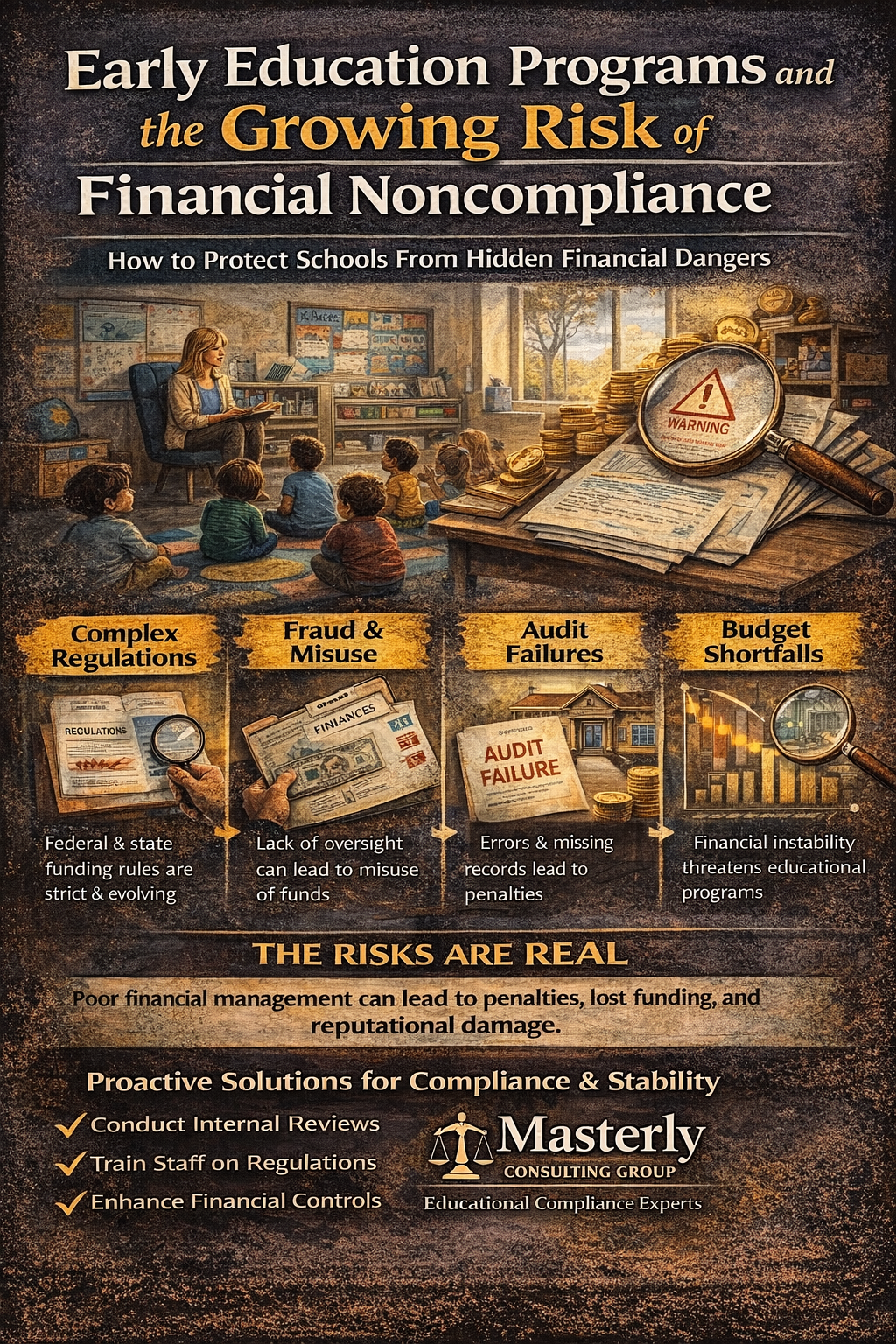
Early education programs face recurring financial challenges, including fluctuating enrollment, rising operational costs, and evolving regulations. Each factor can strain budgets.
Leaders should consider proactive strategies such as:
- Conducting internal compliance reviews
- Updating financial policies regularly
- Providing targeted training for administrative staff
- Monitoring regulatory updates consistently
These steps may seem basic, but they significantly reduce risk. Prevention is far more effective than crisis response.
Building a Collaborative Compliance Culture
Compliance should not feel punitive. Instead, it should be integrated into the institution’s collaborative culture. When everyone understands their role, accountability becomes shared responsibility.
School leaders can create forums where staff ask questions and share concerns. Open dialogue fosters innovation and problem-solving. A supportive environment encourages proactive engagement.
This culture ultimately protects students and strengthens institutional stability.
Innovation and Technology in Financial Management
Technology offers tools that simplify compliance. Automated reporting systems, secure document storage, and integrated accounting platforms reduce manual errors. Investing in these systems demonstrates commitment to excellence.
Innovation is not limited to instruction. It also applies to administrative practices. By embracing technology, schools modernize their financial management.
Educational institutions that adopt forward-thinking systems position themselves for sustainable growth.
Preparing for the Future of Early Education
The future of education will demand greater transparency and accountability. Regulatory scrutiny is unlikely to decrease. Early education programs must prepare for continued oversight.
Strategic partnerships with education consulting experts provide long-term support. Institutions that plan ahead can adapt to new requirements without disruption.
Preparing today protects tomorrow’s students. A strong financial foundation ensures that schools continue to serve families effectively.
Strengthening Strategy Development to Address Learning Differences and Emerging Institutional Risks
Effective strategy development in early education requires leaders to look beyond budgets and consider how financial decisions directly affect students with learning differences. Schools and other educational organizations must align their financial planning with instructional priorities to ensure that every program serves its intended purpose. When concerns arise or questions surface about compliance or resource allocation, timely communication is critical to protect the institution’s long-term interest. At Masterly Consulting Group, we respond promptly—often within one business day—to help leaders assess exposure and determine appropriate next steps. In many cases, we are able to schedule an initial consultation within one business day so schools can move forward with clarity and confidence rather than uncertainty.
Partner With Masterly Consulting Group
At Masterly Consulting Group, we understand the unique pressures facing early education programs, districts, colleges, and universities. Our team has extensive experience working with educational institutions to strengthen compliance, improve leadership, and support sustainable growth. We partner with clients to create tailored strategies that protect both mission and finances.
Our educational consulting services include financial assessments, strategic planning, leadership coaching, and compliance reviews. We bring expertise across early childhood education, K-12 districts, independent schools, and higher education. With proven results and deep insights into regulatory expectations, we help institutions protect what matters most.
If your school, district, or institution is facing financial uncertainty or wants to strengthen compliance, now is the time to act. Delaying action increases risk. Contact
Masterly Consulting Group at (888) 209-4055 to book a free consultation. We work with clients nationally and are ready to provide expert guidance that protects your students, your community, and your future.