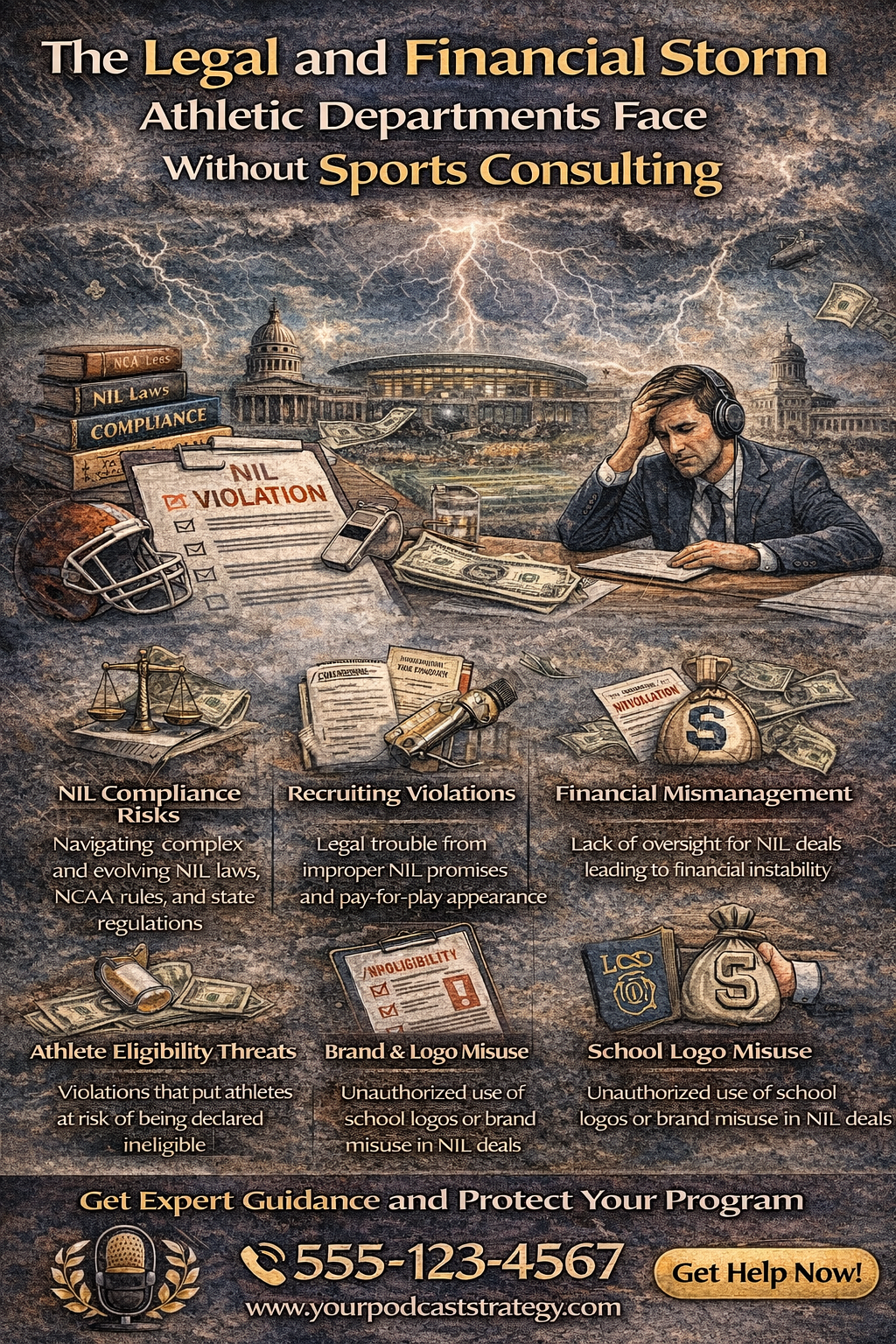
The Legal and Financial Storm Athletic Departments Face Without Sports Consulting
College and high school athletic departments are operating in one of the most complex periods in the history of college sports. The rapid expansion of name image and likeness opportunities has changed the structure of college athletics, forcing schools to rethink compliance, recruiting strategies, and financial oversight. What once seemed like a straightforward system for student athletes has transformed into a web of evolving state laws, new NCAA rules, and institutional policies that vary across conferences and member schools.
For athletic departments that lack professional guidance, these changes can create legal and financial exposure. Without experienced advisors who understand nil laws, nil rules, and the shifting landscape of image and likeness, departments may unintentionally allow activities that place athletes at risk of losing eligibility. The pressure to remain competitive while maintaining compliance has never been greater. This is why many programs are turning to sports consulting experts who help navigate nil activities, protect student athletes, and guide institutions through a major shift in the business of sports.
The Rapid Rise of Name Image and Likeness in College Sports
The introduction of name image and likeness rights has fundamentally altered the economics of college sports. For decades, student athletes were limited by strict amateurism rules that prevented them from profiting from their personal brand. Today, college athletes can participate in nil deals, sign nil agreements, and pursue nil opportunities that allow them to earn money from their visibility.
This transformation created new opportunities but also new legal responsibilities. Schools must ensure that nil activities follow NCAA rules, institutional school rules, and the state nil laws governing their location. Without guidance, athletic departments may struggle to interpret the differences between state laws adopted in different regions.
Programs in states like south carolina, west virginia, and south dakota may operate under entirely different frameworks than schools in rhode island or other jurisdictions. Because rules vary, departments must understand both federal legislation discussions and local legal requirements affecting student athletes.
Understanding NIL Rules and the Compliance Challenge
Athletic departments are responsible for educating current student athletes, prospective student athletes, and even high school athletes about the boundaries of nil rules. The challenge lies in ensuring that every activity connected to image and likeness aligns with NCAA rules and applicable state laws.
In many cases, institutions must implement internal review systems to monitor nil agreements and nil contracts. These agreements often involve brand deals, endorsement deals, or sponsorship agreements that must be reviewed to confirm a valid business purpose.
Without oversight, programs risk allowing prohibited nil activities, such as arrangements that resemble pay for play. Payments that appear tied directly to athletic performance or the recruiting process can violate NCAA rules and trigger investigations.
The Role of NIL Laws in Shaping Athletic Department Policy
Every athletic department must understand the relationship between nil laws, state laws, and institutional regulations. Many states have adopted state nil laws that define what allowed student athletes can do when pursuing nil opportunities.
For example, some states require school approval before a student athlete signs a contract. Others require a third party review of nil agreements to ensure compliance. These regulations affect how college athletes negotiate nil deals, how they earn nil money, and how schools oversee athlete marketing activities.
In regions like south carolina, west virginia, and south dakota, institutions must follow unique regulatory frameworks that determine how nil income can be earned and reported. This patchwork of regulations is why consulting experts often develop a nil compliance checklist tailored to each specific school.
Why High School Athletic Departments Are Also Facing NIL Pressure
While the spotlight often focuses on college athletes, the impact of name image and likeness extends to the high school level as well. Many states now allow high school athletes to explore nil opportunities, provided those opportunities align with state laws and high school association guidelines.
A high school athletic director must often determine whether high school student athletes are permitted to sign nil deals, promote brands through social media posts, or participate in athlete marketing campaigns. Without proper oversight, young athletes could unknowingly jeopardize their future college career.
Programs must also monitor the use of school logos and institutional branding. Many school rules prohibit athletes from using official logos in brand deals without permission. Violations could lead to disciplinary consequences or challenges with maintaining amateur status.
NIL Deals and the Growing Financial Complexity
The explosion of nil deals has introduced financial considerations that athletic departments must manage carefully. When college athletes sign agreements with companies or local businesses, the resulting nil money may fall within a reasonable range based on market value.
However, payments that exceed reasonable limits or appear connected to recruiting promises can raise compliance concerns. Athletic departments must determine whether payment tied to a contract reflects legitimate marketing services or an improper incentive related to athletics participation.
Consultants often assist schools in evaluating whether nil income is generally taxable, ensuring that student athletes understand the financial implications of their agreements.
NIL Collectives and Their Impact on College Athletics
The rise of nil collectives has added another layer of complexity to college athletics. These organizations pool resources from donors and supporters to facilitate nil opportunities for college athletes.
While many nil collectives aim to support athletes responsibly, their involvement can raise questions about pay for play arrangements or recruiting incentives. Schools must ensure these organizations operate independently and comply with NCAA rules and conference rules.
Consulting professionals help athletic departments develop oversight strategies that protect both the institution and its student athletes.
School Logos, Branding, and Image Rights
The use of school logos within image and likeness deals is one of the most misunderstood issues in nil activities. Many agreements require strict limitations on how logos and trademarks are used.
Athletic departments must review contracts to confirm that school logos are not used improperly. Unauthorized usage could create legal disputes between athletes, sponsors, and the institution.
Consultants help departments create policies that clearly define how image and likeness rights intersect with institutional branding.
Protecting Student Athletes From Losing Eligibility
One of the greatest risks in the NIL era is losing eligibility due to noncompliant activities. When student athletes sign agreements that conflict with NCAA rules, they may face suspension or disqualification from competition.
This risk is particularly significant during high-profile events like march madness, when media attention on college athletes intensifies. A single violation could disrupt a season or damage an athlete’s personal brand.
Sports consulting experts help athletic departments educate student athletes about the boundaries of nil activities so they can earn money while maintaining compliance.
The Recruiting Process in the NIL Era
The recruiting process has changed dramatically with the rise of name image and likeness opportunities. Many prospective student athletes now evaluate potential programs based on available nil opportunities and local business partnerships.
Athletic departments must ensure that recruiting conversations do not imply guaranteed nil deals or financial incentives tied to enrollment. Promises that resemble pay for play could violate NCAA rules and undermine the integrity of the program.
Consulting advisors help schools establish recruiting guidelines that respect both state nil laws and institutional policies.
NIL Policy, Federal Legislation, and the Future of College Sports
The legal framework surrounding name image and likeness continues to evolve. Lawmakers have proposed various forms of federal legislation that could standardize regulations across states.
Currently, the ncaa's nil policy operates alongside a complex network of state laws adopted by individual legislatures. The ongoing ncaa settlement discussions could further reshape how college athletes interact with brands and sponsors.
Athletic departments must stay informed about these developments to ensure their nil policy aligns with both current regulations and potential future changes.
The Strategic Role of Sports Consulting for Athletic Departments
Sports consulting professionals provide guidance that goes far beyond compliance. Their work often includes policy development, risk management, and strategic planning related to name image and likeness.
Consultants may assist schools in developing:
- Institutional NIL education programs for student athletes
- Compliance monitoring systems for nil activities
- Policies governing the use of school logos
- Review procedures for nil agreements and nil contracts
These services help athletic departments manage risk while allowing college athletes to pursue legitimate nil opportunities.
Supporting Student Athletes While Protecting Institutions
The NIL era has created new opportunities for student athletes to build their personal brand and earn money through partnerships. However, these opportunities must be balanced with responsible oversight.
Athletic departments must ensure that student athletes understand the implications of signing nil deals, promoting brands, and using institutional trademarks.
With the right consulting support, schools can protect both their athletes and their reputation within the broader landscape of collegiate athletics.
How Some Schools Create Their Own NIL Rules
As name image and likeness regulations continue to evolve, some institutions develop internal policies that function almost like their own NIL rules. These guidelines help athletic departments clarify how student athletes can participate in NIL activities while still complying with broader NCAA rules and state laws. Schools often design these frameworks to protect both the athlete and the institution from compliance mistakes. By establishing internal standards, athletic departments can better monitor agreements and ensure that NIL participation aligns with institutional expectations. Without structured oversight, confusion around policies can create compliance risks for programs and athletes alike.
Understanding NIL Rights for Student Athletes
One of the most significant developments in modern college sports is the recognition of NIL rights for student athletes. These rights allow athletes to profit from their image and likeness through marketing partnerships, endorsements, and other promotional opportunities. While this creates new opportunities to earn money, these activities must still follow nil rules, state laws, and NCAA policies. Athletic departments must educate athletes about their rights so they understand how to protect their personal brand while maintaining eligibility. Consulting guidance can help ensure those rights are exercised responsibly.
What NIL Stands For and Why It Matters
Many people entering the world of college athletics ask what NIL stands for and how it affects the future of sports. NIL refers to the ability of student athletes to benefit from their name image and likeness through legitimate business opportunities. This change represents a dramatic shift from traditional amateurism rules that once prevented athletes from receiving compensation. Today, NIL policies allow athletes to engage in marketing, endorsements, and partnerships while continuing to compete. Understanding what NIL stands for is essential for both athletes and athletic departments navigating modern compliance requirements.
How NIL Deals Connect Athletes With Opportunities
The rapid growth of nil deals athletes participate in has created a new business ecosystem in college sports. These deals often involve partnerships with brands, companies, or local businesses that want to collaborate with athletes who have strong public recognition. From sponsored posts to appearance agreements, NIL deals allow athletes to monetize their popularity responsibly. However, these agreements must be structured carefully to avoid violating NCAA rules related to recruiting or pay for play. Proper review and guidance ensure these opportunities remain legitimate and beneficial for all parties.
Preparing Athletes for Professional Sports Opportunities
For many college athletes, NIL opportunities are a stepping stone toward careers in professional sports. Learning how to manage contracts, endorsements, and public appearances prepares athletes for the business side of athletics. Through NIL participation, athletes gain experience in brand management, financial planning, and marketing partnerships. These skills become extremely valuable when transitioning from college sports into professional competition. Athletic departments that offer strong guidance help athletes build skills that extend beyond the playing field.
Supporting Student Athletes Who Want to Play Sports and Build a Brand
Modern student athletes want to do more than simply play sports. Many want to develop a recognizable personal brand while competing at a high level. NIL opportunities allow athletes to promote businesses, participate in community initiatives, and share their experiences through social media. When structured correctly, these opportunities enhance the athlete’s visibility without interfering with athletic performance. Schools that understand this balance are better positioned to support their athletes while maintaining compliance.
How the NIL Era Began and What Sparked the NIL Start
The NIL start marked one of the most significant changes in the history of college athletics. Years of legal challenges and public debate eventually led to reforms allowing athletes to profit from their image and likeness. As these reforms took effect, athletic departments had to quickly adapt to new regulatory frameworks. Schools began developing policies, education programs, and oversight systems to support athletes pursuing NIL opportunities. The start of NIL created an entirely new environment that continues to evolve today.
Monitoring Signed Deals to Protect Student Athlete Eligibility
Athletic departments must carefully review signed deals involving student athletes to ensure compliance with institutional policies and NCAA rules. These agreements may include endorsements, marketing partnerships, or promotional appearances. Without proper oversight, contracts could unintentionally violate state laws or school regulations. A structured review process helps ensure that agreements meet compliance standards while protecting athlete eligibility. Consulting professionals often assist schools in developing procedures for monitoring signed deals.
The Role of the Compliance Office in NIL Oversight
A university compliance office plays a critical role in managing NIL activities within an athletic department. Compliance professionals review contracts, educate athletes, and help interpret NCAA rules and state laws. Their role is to identify potential conflicts before agreements are finalized. By working closely with athletes, administrators, and coaches, the compliance office ensures that NIL participation remains within the boundaries of institutional policy. Strong compliance oversight reduces the risk of eligibility violations.
Understanding Which NIL Activities Are NCAA Approved
Not every NIL opportunity is automatically NCAA approved, which is why oversight and education are essential. Some activities may appear legitimate but could still conflict with recruiting restrictions or pay for play prohibitions. Athletic departments must evaluate each opportunity to confirm that it aligns with NCAA policies and institutional standards. When agreements are reviewed carefully, athletes can confidently pursue opportunities without risking penalties. Professional consulting guidance can help programs navigate this approval process effectively.
NIL Opportunities That Provide Extra Money for Student Athletes
For many student athletes, NIL participation provides an opportunity to earn extra money while competing at the collegiate level. These earnings may come from endorsements, public appearances, social media partnerships, or promotional campaigns. While these opportunities can be valuable, they must remain within a reasonable range and reflect legitimate marketing services. Payments that appear tied directly to athletic performance may raise compliance concerns. With proper education and oversight, athletes can responsibly benefit from these financial opportunities while continuing their athletic careers.
Speak With Masterly Consulting Group About NIL Strategy
The legal environment surrounding name image and likeness continues to evolve, and athletic departments must stay ahead of the curve. Without experienced guidance, programs may face compliance challenges that affect student athletes, recruiting strategies, and institutional reputation.
Masterly Consulting Group works with athletic departments, college coaches, and administrators to develop strategic solutions for the NIL era. Our team provides guidance on nil rules, state laws, nil agreements, and institutional policy development so schools can protect their athletes while maximizing legitimate opportunities.
If your institution has questions about name image and likeness, nil deals, or compliance strategies, we invite you to speak with our team. Contact us at (888) 209-4055 to book a free consultation and discuss how expert sports consulting can help your program navigate this rapidly evolving landscape.