HIPAA Training for Business Associates: Meeting Legal Standards Before It’s Too Late
Why Compliance Can’t Be an Afterthought
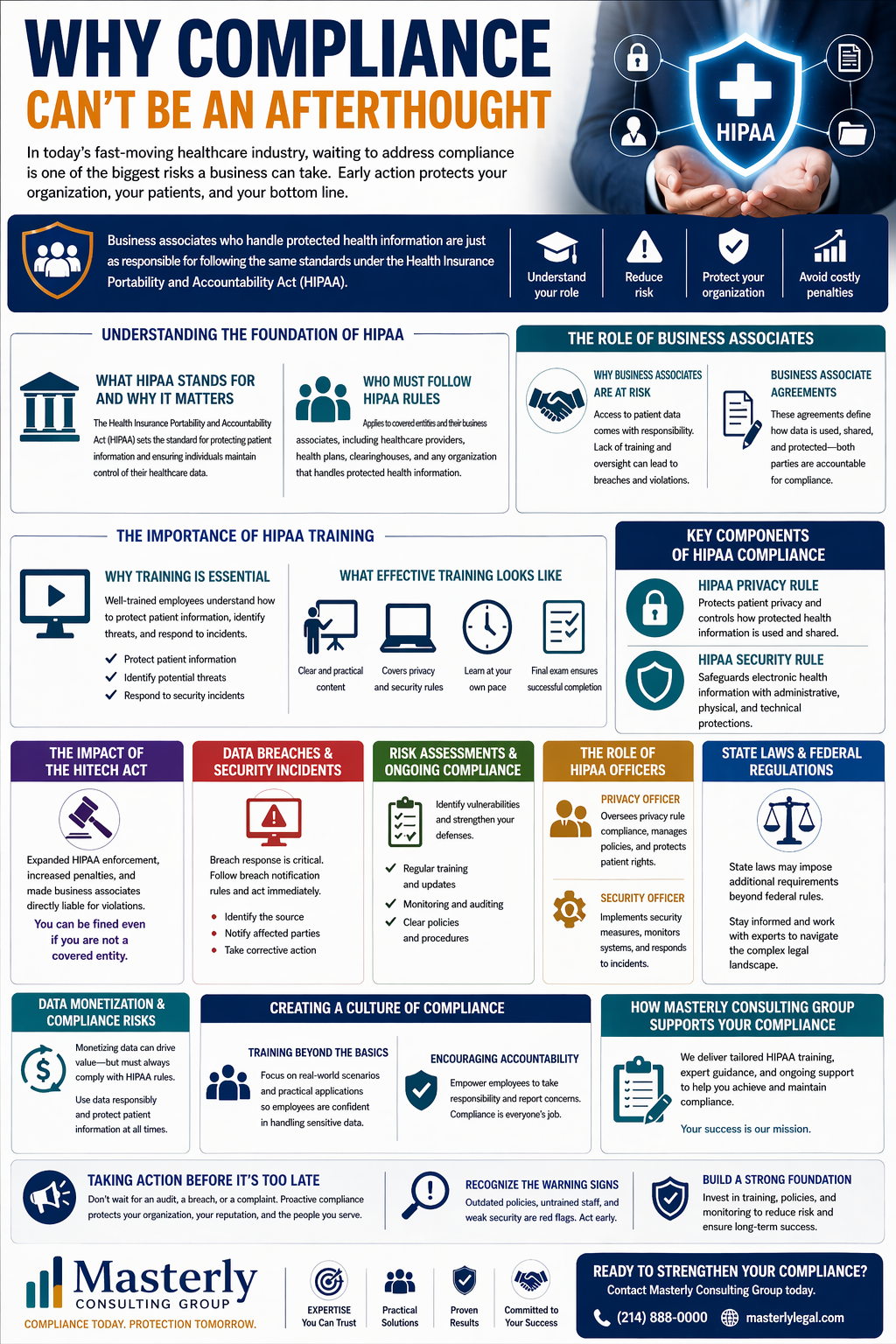
In today’s fast-moving healthcare industry, waiting to address compliance is one of the biggest risks a business can take. Many organizations assume that HIPAA only applies to healthcare providers, but that is not the full picture. Business associates who handle protected health information are just as responsible for following the same standards under the Health Insurance Portability and Accountability Act.
At Masterly Consulting Group, we have advised clients across multiple industries who did not realize their exposure until it was too late. Whether you are a billing company, a third party administrator, or a technology provider working with electronic health records, HIPAA compliance is not optional. The right HIPAA training for business associates helps you understand your role, reduce risk, and protect your organization before problems arise.
Understanding the Foundation of HIPAA
What HIPAA Stands For and Why It Matters
The Health Insurance Portability and Accountability Act, or HIPAA, is a federal statute intended to safeguard private patient information. It sets the standard for how protected health information is handled, stored, and shared. The portability and accountability act ensures that individuals maintain control over their medical records and healthcare information.
The accountability act HIPAA framework applies not only to covered entities but also to business associates who support health care operations. This includes anyone who has access to patient information through services or partnerships.
Who Must Follow HIPAA Rules
HIPAA rules apply to a wide range of organizations, including:
- Healthcare providers and health care providers
- Health plans and healthcare plans
- Healthcare clearinghouses
- Business associates and subcontractors
Covered entities rely on business associates to perform essential functions, which means both parties share responsibility for protecting patient data.
The Role of Business Associates in Healthcare
Why Business Associates Are at Risk
Business associates are often the weakest link in HIPAA compliance because they may not have the same internal training as healthcare organizations. However, they still handle electronic health information and are subject to the same privacy and security rules.
For example, billing companies, IT vendors, and financial institutions that process health insurance data must comply with HIPAA privacy and security requirements. Failing to do so can lead to serious consequences, including data breaches and legal penalties.
Understanding Business Associate Agreements
Business associate agreements outline the responsibilities of each party when handling protected health information. These agreements define how data should be used, disclosed, and safeguarded.
Without proper training, employees may unintentionally violate these agreements, increasing the risk of security incidents and compliance failures.
The Importance of HIPAA Training
Why Training Is Essential
HIPAA training is not just a checkbox—it is a critical part of risk management. Employees who understand HIPAA privacy, security rules, and breach notification rules are better equipped to handle sensitive information responsibly.
Complete HIPAA training ensures that your team understands:
- How to protect patient information
- How to identify potential threats
- How to respond to security incidents
This knowledge helps create a culture of compliance within your organization.
What Effective Training Looks Like
Effective HIPAA training should be clear, practical, and tailored to your organization’s needs. It should cover both the HIPAA privacy rule and the HIPAA security rule, along with real-world examples.
Training programs that allow employees to learn at their own pace and include a final exam can help ensure successful completion and better retention of information.
Key Components of HIPAA Compliance
Understanding the HIPAA Privacy Rule
The HIPAA privacy rule focuses on protecting patient privacy and controlling how protected health information is shared. It establishes guidelines for authorization forms, patient consent, and disclosure limitations.
Healthcare professionals and business associates must understand how to apply the privacy rule in daily operations. This includes knowing when patient data can be shared and when additional authorization is required.
Exploring the HIPAA Security Rule
The HIPAA security rule focuses on safeguarding electronic health information. It sets standards for data security, including administrative, physical, and technical safeguards.
Organizations must implement security standards that protect electronic media and prevent unauthorized access. This includes encryption, access controls, and monitoring systems.
The Impact of the HITECH Act
Strengthening HIPAA Enforcement
The HITECH Act expanded the reach of HIPAA by increasing enforcement and introducing stricter penalties. It also emphasized the importance of breach response and transparency.
Under the HITECH Act, business associates are directly liable for compliance failures. This means they can face penalties for violations, even if they are not a covered entity.
Addressing Data Breaches and Security Incidents
Data breaches are one of the most significant risks in healthcare compliance. When a breach occurs, organizations must follow breach notification rules and take immediate action.
A strong breach response plan includes:
- Identifying the source of the breach
- Notifying affected parties
- Implementing corrective measures
Proper HIPAA training ensures that employees know how to respond quickly and effectively.
Risk Assessments and Ongoing Compliance
Why Risk Assessments Matter
Risk assessments are a critical part of maintaining HIPAA compliance. They help identify vulnerabilities in your systems and processes before they lead to problems.
Regular assessments allow organizations to stay ahead of potential threats and ensure that security compliance measures are effective.
Building a Strong Compliance Strategy
A successful compliance strategy includes:
- Regular training and updates
- Monitoring and auditing systems
- Clear policies and procedures
This proactive approach reduces the likelihood of violations and supports long-term success.
The Role of HIPAA Officers
Responsibilities of a Privacy Officer
A HIPAA privacy officer is responsible for overseeing compliance with the privacy rule. This includes managing policies, handling complaints, and ensuring that patient data is protected.
The privacy officer plays a key role in maintaining trust and ensuring that patient privacy is respected.
Duties of a Security Officer
A HIPAA security officer focuses on protecting electronic health information. This includes implementing security measures, monitoring systems, and responding to incidents.
Together, these roles help ensure that organizations meet privacy and security requirements.
Navigating State Laws and Federal Regulations
Understanding the Legal Landscape
Organizations must abide by state laws, which may impose extra obligations, in addition to federal rules.. This creates a complex legal environment that requires careful attention.
Understanding both federal and state laws is essential for maintaining compliance and avoiding penalties.
Accessing Legal Resources
Having access to legal resources can help organizations stay informed and address compliance challenges. Working with experienced consultants ensures that you have the support needed to navigate these complexities.
Data Monetization and Compliance Risks
Balancing Opportunity and Responsibility
Data monetization is becoming more common in the healthcare industry, but it comes with significant risks. Organizations must ensure that any use of patient data complies with HIPAA rules.
Improper use of data can lead to violations, fines, and damage to your reputation.
Protecting Patient Information
Protecting patient information should always be the top priority. This includes implementing strong data security measures and ensuring that all employees understand their responsibilities.
Creating a Culture of Compliance
Training Beyond the Basics
HIPAA training should go beyond basic requirements. It should focus on real-world scenarios and practical applications.
Employees should feel confident in their ability to handle sensitive information and respond to potential issues.
Encouraging Accountability
Accountability is key to maintaining compliance. Organizations should encourage employees to take responsibility for their actions and report concerns when they arise.
This creates a culture where compliance is a shared responsibility.
How Masterly Consulting Group Supports Your Compliance
Tailored Training Solutions
At Masterly Consulting Group, we provide customized HIPAA training programs designed to meet the unique needs of your organization. Our training covers all aspects of HIPAA privacy and security, ensuring that your team is fully prepared.
We work with clients across industries, including healthcare providers, billing companies, and financial institutions, to deliver effective training solutions.
Expert Guidance and Support
Our team brings years of experience and knowledge in healthcare compliance. We provide guidance on risk assessments, breach response, and regulatory requirements.
We are committed to helping you achieve and maintain HIPAA compliance.
Taking Action Before It’s Too Late
Recognizing the Warning Signs
Many organizations wait until a problem arises before addressing compliance. However, this approach can lead to serious consequences.
Early detection of the warning signs will enable you to take appropriate action and stop problems from getting worse.
Building a Strong Foundation
A strong compliance foundation includes training, policies, and ongoing monitoring. By investing in these areas, you can protect your organization and reduce risk.
The Role of Health and Human Services in HIPAA Oversight
The Department of Health and Human Services plays a central role in enforcing HIPAA regulations and ensuring organizations follow proper standards. This federal agency oversees how health care entities manage protected health information and respond to potential violations. Their guidance helps shape how organizations approach compliance, privacy, and security across the healthcare landscape. Understanding their expectations is essential for maintaining a strong compliance framework.
How Health Information Technology Impacts Compliance
Health information technology has transformed how patient data is stored, accessed, and shared. While these systems improve efficiency, they also introduce new risks related to data security and privacy. Organizations must ensure that their technology systems align with HIPAA requirements and support secure handling of electronic health information. Proper training helps teams navigate these systems while maintaining compliance.
Why HIPAA Certification Strengthens Your Organization
Achieving HIPAA certification demonstrates a commitment to protecting patient data and meeting legal standards. While certification itself is not mandated, it provides reassurance that your team understands HIPAA rules and best practices. Organizations that invest in certification often build stronger trust with clients and partners. It also helps reduce the likelihood of costly compliance violations.
Ensuring Your Organization Remains HIPAA Compliant
Being HIPAA compliant requires more than a one-time effort. It involves ongoing training, monitoring, and updates to policies and procedures. Health care entities must regularly review their practices to ensure they meet evolving standards. A proactive approach helps prevent issues and supports long-term success.
Understanding the Connection to Civil Rights and Privacy
HIPAA is closely tied to civil rights protections, particularly when it comes to safeguarding sensitive health information. Ensuring healthcare privacy is not just about compliance—it is about respecting the rights of individuals. Organizations must handle data responsibly and ensure that patient information is not misused or disclosed improperly.
Building a Culture of Regulatory Compliance
Regulatory compliance is an ongoing process that requires commitment from every level of an organization. This includes training employees, implementing strong policies, and conducting regular assessments. A culture focused on compliance helps reduce risk and ensures that everyone understands their role in protecting data.
The Value of Being HIPAA Certified
When employees become HIPAA certified, they gain a deeper understanding of how to handle sensitive information. This knowledge supports better decision-making and reduces the likelihood of errors. Certification also demonstrates professionalism and dedication to maintaining high standards within the organization.
Applying HIPAA Principles Across Human Services
HIPAA purposes extend beyond traditional healthcare settings and often apply to human services organizations as well. These entities may handle sensitive data that requires the same level of protection as medical records. Understanding how HIPAA applies in these environments ensures that all information is handled appropriately.
Supporting Other Clients Through Strong Compliance Practices
Organizations that maintain strong HIPAA practices are better equipped to serve other clients effectively. By prioritizing data security and privacy, businesses can build trust and establish long-term relationships. This commitment not only protects sensitive information but also enhances the overall reputation of the organization.
Speak With Masterly Consulting Group Today
If your organization handles protected health information, now is the time to take action. At Masterly Consulting Group, we are here to help you understand your obligations and build a compliance strategy that works for you.
We invite you to contact us for a free consultation so we can answer your questions and discuss how HIPAA training for business associates can benefit your organization. Our team is ready to provide the guidance and support you need to move forward with confidence.
Call us today at (888) 209-4055 to book your free consultation. Let us help you protect your business, your data, and your future.