Creating Accountability: How Leadership Sets the Tone for Harassment-Free Workplaces
Why Leadership Defines Workplace Culture From the Start
Every workplace reflects the tone set by its leadership. When employers take accountability seriously, they create an environment where employees feel safe, respected, and supported. On the other hand, when leadership ignores issues like sexual harassment, it sends a message that inappropriate conduct may go unchecked. This is why proactive leadership is not optional—it is essential.
At Masterly Consulting Group, we work with organizations to build systems that prevent harassment before it starts. Leaders must go beyond basic policies and focus on consistent action, clear communication, and meaningful workplace training. The result is a workplace where employees understand expectations and feel confident speaking up.
Understanding Sexual Harassment in Today’s Workplace
Sexual harassment remains one of the most challenging issues organizations face. It can take many forms, from subtle comments to overt misconduct, and it affects employees at every level. When harassment is not addressed, it can damage morale, increase turnover, and expose employers to legal risk.
Federal and state regulations, including guidance from the equal employment opportunity commission, require employers to take steps to prevent harassment. In new york and other states, the law places clear responsibilities on employers to provide training and maintain safe workplaces. Understanding these obligations is the first step toward compliance.
The Role of Accountability in Preventing Harassment
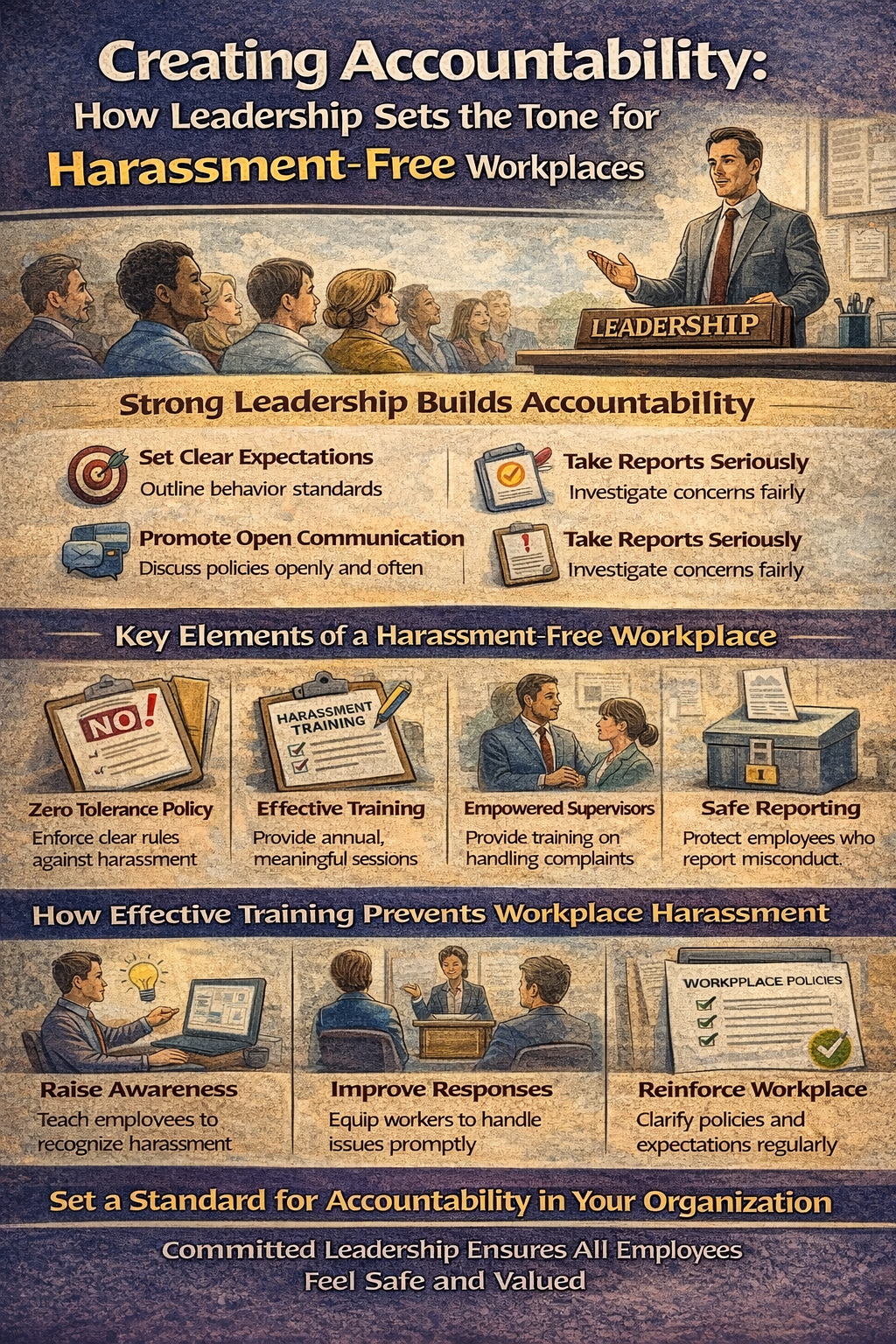
Accountability is more than a policy—it is a daily commitment. Leaders must ensure employees understand what is expected of them and what consequences exist for violations. This includes setting standards for behavior and reinforcing those standards through consistent action.
When organizations prioritize accountability, they create a culture where harassment is less likely to occur. Employees are more likely to report concerns, and supervisors are more equipped to address issues early. This proactive approach helps prevent harassment before it escalates.
Why Training Is the Foundation of Prevention
Training is one of the most effective tools for addressing workplace harassment. A well-designed sexual harassment training program provides employees with the knowledge they need to recognize and respond to inappropriate behavior.
Effective training goes beyond basic information. It should include real life situations, interactive elements, and opportunities for participants to engage with the material. This ensures employees understand not just the rules, but also how to apply them in their daily work.
Building an Effective Sexual Harassment Prevention Training Program
A strong sexual harassment prevention training program is tailored to the organization’s needs. It should reflect the company’s culture, industry, and workforce while meeting training requirements under the law.
Key elements of effective training programs include:
- Clear explanations of what constitutes sexual harassment
- Guidance on how to report concerns
- Information on retaliation and how it is prohibited
- Practical examples that reflect real life situations
By focusing on these areas, employers can create training that resonates with employees and drives meaningful change.
The Importance of Annual Training and Continuous Learning
Annual training is required in many jurisdictions, including new york city employers and york state law requires organizations to provide ongoing education. However, training should not be treated as a one-time event.
Continuous learning ensures employees stay informed about policies and expectations. It also reinforces the organization’s commitment to maintaining a harassment-free workplace. Regular training helps employees understand that prevention is an ongoing priority.
How Online Training Expands Accessibility
Online training has become a valuable tool for organizations of all sizes. It allows employees to complete sexual harassment training from any location, using a mobile device or computer.
This flexibility is especially important for organizations with remote teams or multiple locations. Online training also provides consistent training content, ensuring all employees receive the same information.
Interactive Training Creates Lasting Impact
Interactive training is more effective than passive learning methods. When participants engage with the material, they are more likely to retain information and apply it in real situations.
Interactive training can include:
- Scenario-based exercises
- Group discussions
- Role-playing activities
These methods help employees develop practical skills and confidence in addressing harassment.
Meeting Training Requirements Across States
Different states have different training requirements. For example, new york state and california both have specific mandates for sexual harassment prevention training.
Employers must stay informed about these regulations to ensure compliance. This includes understanding requirements for supervisory employees, domestic workers, and new employees.
The Role of Supervisors and Managers in Prevention
Supervisors and managers play a critical role in preventing harassment. They are often the first point of contact when employees report concerns.
Leaders must ensure supervisors receive additional training focused on:
- Recognizing signs of harassment
- Responding appropriately to complaints
- Supporting employees throughout the process
This specialized training helps supervisors handle situations effectively and maintain trust within the workplace.
Creating a Respectful and Inclusive Environment
A respectful workplace does not happen by accident. It requires intentional effort from leadership and employees alike.
Organizations can promote respect by:
- Encouraging open communication
- Addressing inappropriate behavior immediately
- Reinforcing positive conduct
These actions create an environment where employees feel valued and supported.
Addressing Retaliation and Protecting Employees
Retaliation is a serious concern in harassment cases. Employees may hesitate to report issues if they fear negative consequences.
Employers must make it clear that retaliation will not be tolerated. Training should include examples of retaliation and explain how employees can report concerns safely.
Using Real-Life Scenarios to Improve Training
Training programs that include real life situations are more effective. These scenarios help employees understand how harassment can occur and how to respond.
For example, a scenario might involve inappropriate comments during a meeting or behavior that crosses professional boundaries. Discussing these situations helps employees recognize issues early.
Ensuring Employees Understand Their Rights
Employees must understand their rights under federal and state regulations. This includes knowing how to report harassment and what protections are in place.
Providing resources such as fact sheets and clear reporting procedures ensures employees have the information they need.
Tracking Completion and Maintaining Compliance
Tracking training completion is essential for compliance. Employers should maintain records of who has completed training and when.
Providing a certificate of completion for each participant helps document compliance. This is especially important for organizations operating in regulated environments.
Leveraging Technology for Better Training Outcomes
Technology can enhance training programs by providing tools for tracking, reporting, and engagement. Platforms that offer live webinars, interactive modules, and technical support can improve the overall experience.
Using technology also allows organizations to update training materials quickly, ensuring they remain current with changing laws.
The Impact of Strong Leadership on Workplace Culture
Leadership sets the tone for the entire organization. When leaders prioritize harassment prevention, it sends a clear message that the company values respect and accountability.
This commitment influences every aspect of the workplace, from hiring practices to daily interactions. Strong leadership creates a culture where employees feel safe and supported.
How Organizations Can Stay Ahead of Compliance
Staying ahead of compliance requires proactive planning. Employers should regularly review their policies, training programs, and procedures.
Working with experts can help organizations identify gaps and implement effective solutions. This approach reduces risk and ensures ongoing compliance with the law.
The Value of Industry-Focused Training Programs
Industry focused training ensures that content is relevant to the organization’s operations. Different industries face unique challenges, and training should reflect those realities.
Tailoring training programs to specific industries helps employees connect with the material and apply it effectively.
Supporting Employees Through Resources and Guidance
Providing resources is an important part of supporting employees. This includes access to training materials, reporting tools, and guidance on handling situations.
Organizations should also ensure employees know where to turn for help. This may include internal contacts or external resources.
Partnering With Experts for Better Results
Partnering with experienced consultants can help organizations build stronger training programs. At Masterly Consulting Group, we specialize in creating customized solutions that meet the needs of each client.
Our expertise ensures that training programs are effective, compliant, and aligned with organizational goals.
Strengthening Workplace Policies Through Training and Legal Awareness
A strong sexual harassment prevention policy is one of the most important tools employers can use to create a safe and respectful workplace. When paired with effective workplace harassment training and consistent employee training, organizations can reduce the risk of discrimination and improve overall workplace culture. Employers must understand their employer responsibilities under labor laws and human rights standards, especially in highly regulated areas like nyc. A well-structured course should include topics such as conflict resolution and bystander intervention, helping employees respond appropriately in real situations. Many organizations now offer training in english and spanish to ensure accessibility, with programs designed to be completed within two hours and tracked for completion within two business days or a set date.
Beyond compliance, these efforts demonstrate a genuine commitment to preventing discrimination and protecting employees. Companies that actively comply with regulations and invest in ongoing education create stronger, more resilient teams. When legal concerns arise, consulting with a charlotte sexual harassment lawyer can provide additional insight into policy development and risk management. By combining clear policies with engaging training programs, employers can build a workplace that prioritizes respect, accountability, and long-term success.
Building a Consistent Sexual Harassment Training Program That Delivers Results
A well-structured sexual harassment training program is essential for organizations that want to create lasting change and maintain compliance. Effective employee training should not feel rushed or disconnected from daily operations; instead, it should be designed to engage employees and reinforce expectations over time. Many companies implement training schedules that allow employees to complete required modules within a set number of business days, ensuring accountability without disrupting workflow. In some cases, organizations track completion within two business days after onboarding or policy updates to maintain accurate records and demonstrate compliance. By creating a consistent and timely approach to employee training, employers can strengthen awareness, reduce risk, and build a more respectful workplace environment.
Building a Consistent Sexual Harassment Training Program That Delivers Results
A well-structured sexual harassment training program is essential for organizations that want to create lasting change and maintain compliance. Effective employee training should not feel rushed or disconnected from daily operations; instead, it should be designed to engage employees and reinforce expectations over time. Many companies implement training schedules that allow employees to complete required modules within a set number of business days, ensuring accountability without disrupting workflow. In some cases, organizations track completion within two business days after onboarding or policy updates to maintain accurate records and demonstrate compliance. By creating a consistent and timely approach to employee training, employers can strengthen awareness, reduce risk, and build a more respectful workplace environment.
Contact Masterly Consulting Group for Guidance
Creating a harassment-free workplace starts with leadership and a commitment to accountability. If your organization is looking to improve its sexual harassment prevention training or ensure compliance with federal and state regulations, we are here to help.
Our team works closely with employers to design training programs that engage employees and address real workplace challenges. We provide the resources and support needed to build a respectful and compliant environment.
Contact Masterly Consulting Group today at (888) 209-4055 to book a free consultation. Whether you are reviewing your current program or building one from the ground up, we are ready to assist.