Clery Act Training: What Campus Teams Need to Understand
Colleges and universities work hard to provide safe learning environments for students, faculty, staff, and visitors. Yet many institutions struggle with one common challenge. Employees may not fully understand what they are expected to report, when information becomes reportable, or how campus procedures should work together. Even one misunderstanding can create confusion, delayed reporting, and unnecessary institutional risk.
Professional clery act training helps colleges and universities build confidence across campus by giving employees practical knowledge about their responsibilities. Instead of relying on assumptions, institutions can prepare their teams with consistent guidance that supports accurate reporting, stronger communication, and better campus safety practices.
At Masterly Consulting Group, we provide customized education consulting and Clery compliance training designed for colleges and universities that want practical instruction for campus security authorities, administrators, responsible employees, and leadership teams.
Why Clery Act Training Matters
Every institution wants employees to know what to do when they receive important information. Without proper training, employees may unintentionally overlook incidents, misunderstand reporting expectations, or delay sharing information with the appropriate campus offices.
Quality clery act training creates a shared understanding of responsibilities across the institution. Employees become more confident because they understand what information matters and how campus reporting systems work together.
Strong training also demonstrates an institution's commitment to student safety, accountability, and transparency.
Campus Safety Depends on Well-Informed Employees
Campus safety is not the responsibility of one office alone.
Faculty members, athletic staff, student affairs professionals, housing personnel, administrators, and many other employees may receive information that requires attention. When everyone understands their responsibilities, institutions are better positioned to respond consistently.
Professional training helps employees recognize situations that require reporting while reinforcing established institutional procedures.
Clery Act Training Helps Reduce Confusion
One of the greatest challenges institutions face is inconsistency.
Different departments may interpret policies differently. Employees may not know who should receive reports or what details should be documented. Institutions should also update training each calendar year when policies change or compliance reviews identify gaps.
Customized clery act training provides clear expectations that help departments work together more effectively. It helps each person understand their role under the law, including when a CSA should register a report, access the right guidance, and complete the correct course or module. Instead of uncertainty, employees gain practical knowledge they can apply in their daily responsibilities.
Campus Security Authorities Training Builds Confidence
Many colleges designate individuals as Campus Security Authorities (CSA) without providing enough practical guidance about the role.
Our campus security authority training explains responsibilities in a clear and practical way so designated employees understand:
- Who qualifies as a Campus Security Authority, since CSAs can include employees, students, and volunteers depending on institutional roles, and a person may be designated based on specific duties
- What information should be reported
- When reports should be submitted
- How institutional reporting procedures work
- Why consistency matters across departments
Many institutions require CSAs to complete training each calendar year; for example, Penn State requires CSAs to complete annual Clery Act training, often through an online course or module.
Training focuses on helping employees understand expectations rather than memorizing complicated regulations.
Clery Compliance Training Supports Consistent Reporting
Every institution develops reporting processes that fit its organizational structure. Training helps employees understand how their role connects with those procedures.
Our Clery compliance training emphasizes:
- Clear communication
- Consistent reporting
- Practical decision making
- Institutional accountability
- Professional documentation
Employees leave with greater confidence because they understand both their responsibilities and the institution's expectations.
Understanding Reportable Crimes
Many employees worry about making the wrong decision when receiving information from students or colleagues.
Training helps participants better understand reportable crimes and why prompt reporting supports institutional awareness. In clery act training, employees learn which offenses are reportable under the law, including crimes such as sexual assault and hate crimes, while following institutional policies. That includes the definition of criminal homicide as murder or manslaughter by negligence; robbery as taking property by force or threat of violence; burglary as unlawful entry to commit a felony or theft; aggravated assault as causing serious injury or involving a weapon; rape as non-consensual penetration of any body part with any body part or object; motor vehicle theft as theft of any motor vehicle; and stalking or related violence based on a course of conduct.
Rather than relying on assumptions, participants gain practical guidance that supports consistent reporting across departments.
Why Geography Matters
One area that often creates confusion involves geography.
Employees may not always understand whether an incident occurred within areas that affect institutional reporting responsibilities.
Our training explains why geography is important within the broader campus reporting process while helping employees recognize when information should be forwarded for institutional review.
This practical approach reduces uncertainty and encourages timely communication.
Timely Warnings Require Strong Internal Communication
Institutions cannot make informed decisions without receiving information quickly.
Training helps employees understand why prompt reporting supports campus leaders when evaluating situations that may require timely warnings or other institutional communications.
When employees understand their role in the reporting process, campus leadership receives better information for informed decision making.
Documentation Supports Better Institutional Decisions
Good documentation creates consistency throughout the reporting process, and each document should have a clear purpose.
Our training discusses the importance of documenting:
- Reported concerns
- Dates and timelines
- Individuals involved
- Available facts
- Follow-up actions according to institutional procedures
Consistent documentation helps institutions maintain organized records while supporting effective communication among appropriate campus offices, and clear words in each document improve institutional review and communication.
Education Consulting Designed for Higher Education
Every college and university has its own organizational structure, reporting procedures, and campus culture.
Our clery act training curriculum is designed for Clery Act compliance oversight and core concepts for teams responsible for implementation or anyone interested in the topic.
Masterly Consulting Group develops customized education consulting programs for in-person, virtual, or self-paced delivery, with 12 hours of recorded content available in the self-paced option; sessions can also include case studies, group activities, and other practical elements.
Masterly Consulting Group develops customized education consulting programs for:
Colleges
Support faculty, staff, student affairs professionals, athletics personnel, housing teams, and leadership with practical reporting education.
Universities
Provide institution-wide training that promotes consistency across multiple departments and campuses.
Campus Leadership
Equip administrators and decision makers with practical guidance that strengthens institutional communication and reporting practices.
Responsible Employees
Help employees understand their reporting responsibilities while supporting institutional policies and campus safety initiatives.
Why Institutions Choose Masterly Consulting Group
Generic presentations rarely address the unique challenges colleges and universities experience every day.
Masterly Consulting Group provides practical education consulting led by experienced instructors and focused on real campus situations instead of generic presentations.
Our clients value training that is:
- Customized for higher education
- Easy to understand
- Professionally delivered
- Practical and engaging through case-based learning
- Focused on real campus scenarios
- Appropriate for employees and leadership
Participants leave with greater confidence because the training connects directly to their everyday responsibilities.
What Our Clery Act Training Covers
Every institution has different needs, but our training commonly includes:
- Clery Act reporting responsibilities
- Campus security authority training
- Clery compliance training
- Reportable crimes, with the definitions and concepts employees need to make sound reporting decisions
- Geography considerations
- Timely warnings
- Documentation expectations
- Campus communication procedures
- Institutional reporting processes
- Employee responsibilities
- Leadership awareness
- dating violence
- domestic violence
- stalking
- hazing, including reporting obligations tied to student organization conduct and hazing incidents
Programs can be customized for campus security authorities, responsible employees, administrators, faculty, athletics departments, housing professionals, student affairs teams, and executive leadership.
Build Confidence Across Your Campus
The strongest institutions prepare employees before questions become problems.
Professional clery act training helps create consistency across departments, improves communication, supports accurate reporting, and strengthens confidence throughout the institution.
When employees understand their responsibilities, colleges and universities are better positioned to support campus safety and informed institutional decision making.
Comprehensive Clery Act Training That Supports Federal Law Requirements
Effective training campus security authorities goes beyond explaining reporting responsibilities. It helps colleges and universities understand how federal law connects with campus public safety, Title IX, and institutional reporting obligations, including information that may appear in a campus hazing transparency report when applicable.
Masterly Consulting Group delivers practical training that can be implemented across departments while addressing important requirements related to communication, documentation, and campus response. Training can also cover critical incident reporting, campus event responsibilities, and operational considerations involving the maintenance and purchase of safety devices that support institutional preparedness.
Programs are designed to serve employees with responsibilities that may be limited or extensive, helping each participant understand their role regardless of the length of employment. Whether the discussion involves protecting a child participating in campus programs or reviewing institution-specific procedures developed by campus leadership such as Paul or other designated administrators, our customized education consulting provides clear, practical guidance that strengthens institutional readiness and supports a safer campus environment.
Frequently Asked Questions
What is Clery Act training?
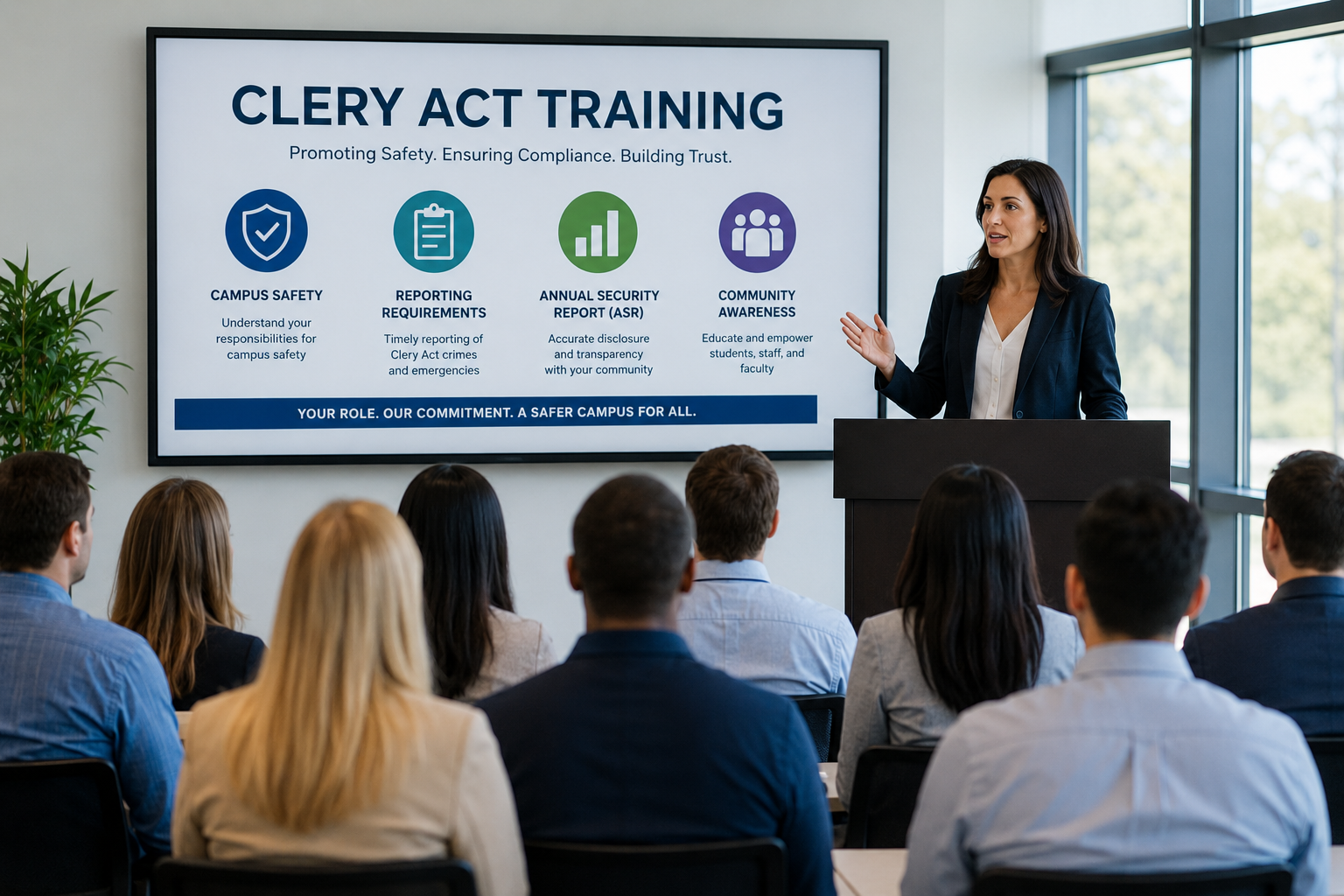
Clery Act training helps college and university employees understand campus reporting responsibilities, institutional procedures, and their role in supporting campus safety. This course explains key Clery Act concepts and the purpose of reporting obligations under the law.
Who should attend campus security authority training?
Employees designated as Campus Security Authorities (CSA), along with administrators, student affairs professionals, housing staff, athletics personnel, and other responsible employees, benefit from role-specific training. Depending on institutional assignments, these roles may include employees, students, and volunteers.
What does Clery compliance training cover?
Clery compliance training commonly addresses reporting responsibilities, reportable crimes, geography, timely warnings, documentation, and institutional reporting procedures. Depending on institutional responsibilities, it may also cover the definition of criminal homicide, robbery, burglary, aggravated assault, rape, motor vehicle theft, dating violence, domestic violence, stalking, and hazing.
Can training be customized for our institution?
Yes. Masterly Consulting Group tailors every training program to your institution's structure, employee roles, policies, and operational needs. Institutions can choose in-person, virtual, or self-paced delivery options, so participants can access the format that best fits their schedules. Where self-paced delivery is offered, learners complete the training through recorded module content.
Why is documentation important?
Accurate documentation helps institutions maintain consistent reporting practices, improve communication, and support informed decision making throughout the reporting process. It also helps create a clear document for institutional review and supports consistent use of facts, timelines, and clear written words.
Request a Clery Act Training Consultation
Prepare your institution with practical clery act training that helps campus security authorities, responsible employees, administrators, and leadership understand their reporting responsibilities with confidence. Institutions interested in customized training can contact the team to register a consultation.
Masterly Consulting Group provides customized campus security authority training and Clery compliance training designed specifically for colleges and universities seeking practical education consulting that strengthens communication, documentation, and campus reporting practices, with in-person, virtual, or self-paced delivery and clear access to program options.
Contact Masterly Consulting Group today to request a Clery Act
Masterly Consulting Group
Website: https://www.masterlygroup.com/
Phone: (972) 236-5051