How Colleges Can Strengthen NIL Education to Support the Highest NIL College Athletes on Campus
A New Era in College Athletics
The NIL era has reshaped college sports in ways few anticipated. What began as a major shift in how student athletes could earn money has now become a defining factor in recruiting, retention, and long-term success. Colleges are no longer just developing talent on the field; they are now responsible for preparing student athletes to navigate complex name image and likeness opportunities.
For many institutions, the challenge is not whether NIL exists, but how well they educate their student athletes about it. Without structured guidance, even the highest NIL college athletes on campus can face confusion, compliance risks, or missed opportunities. This is where education becomes essential, not optional.
Why NIL Education Is Now a Competitive Advantage
Colleges that invest in NIL education gain a measurable advantage in today’s landscape. Student athletes are actively seeking programs that not only support their performance but also help them understand NIL rules and maximize their earning potential. This demand has changed the expectations placed on athletic departments.
An effective NIL program goes beyond explaining policies. It equips student athletes with the tools to understand NIL agreements, evaluate nil deals, and protect their eligibility. Schools that fail to prioritize this education risk falling behind competitors who are better prepared to support their athletes.
Understanding Name Image and Likeness Fundamentals
Name image and likeness refers to the ability of student athletes to profit from their personal brand. This includes activities such as endorsements, sponsorships, and social media posts. While the concept may seem straightforward, the legal and compliance aspects are far more complex.
NIL laws vary by state, and each institution may have its own nil policy. Student athletes must understand how these rules interact with NCAA rules and conference rules. Without proper education, they may unknowingly engage in prohibited nil activities or sign agreements that could lead to losing eligibility.
The Role of Colleges in the NIL Ecosystem
Colleges play a critical role in shaping how NIL operates on campus. From compliance offices to college coaches, every stakeholder must be aligned in supporting student athletes. This includes providing clear guidance on nil activities and ensuring that all NIL contracts meet legal standards.
Institutions must also establish processes for school approval and required disclosure. These steps help maintain transparency and protect both the athlete and the university. A strong foundation ensures that NIL stands as a benefit rather than a risk.
Common Gaps in NIL Education
Despite the importance of NIL, many programs still lack comprehensive education. Student athletes often rely on informal advice or outside sources, which can lead to misunderstandings. This is especially true for high school athletes transitioning into college sports.
Some common gaps include:
- Limited understanding of nil compliance checklist requirements
- Confusion about fair market value in athlete deals
- Lack of awareness about prohibited nil activities
- Uncertainty about how nil income is generally taxable
Addressing these gaps is essential for protecting both student athletes and institutions.
Supporting High School Athletes Before They Arrive
The NIL journey often begins before college. High school athletes and high school student athletes are increasingly exposed to NIL opportunities. In some states, high school association rules now allow limited participation in NIL activities.
However, rules vary significantly between states like South Carolina, North Dakota, South Dakota, and Rhode Island. High school athletic directors must ensure that high school athletes understand these differences. Early education helps prevent mistakes during the recruiting process.
Preparing Student Athletes to Sign NIL Deals
One of the most important aspects of NIL education is preparing student athletes to sign NIL deals. This requires a clear understanding of contract terms, compensation structures, and compliance requirements.
Colleges should teach athletes how to evaluate deals athletes receive by focusing on:
- Whether the agreement serves a valid business purpose
- If payment is tied to legitimate services
- Whether the compensation falls within a reasonable range
This knowledge helps student athletes make informed decisions and avoid risky agreements.
The Importance of NIL Compliance and Oversight
Compliance is a central component of NIL success. Colleges must ensure that all NIL activities align with state laws, NCAA rules, and institutional policies. This includes monitoring endorsement deals and reviewing contracts through a third party review process when necessary.
A dedicated compliance office can provide guidance and support. By maintaining oversight, institutions can reduce the risk of violations and protect their athletes from potential penalties.
Balancing NIL Opportunities With Amateurism Rules
Even in the NIL era, amateurism rules still apply. Student athletes must understand how to balance earning NIL money while maintaining their eligibility. This includes avoiding pay for play arrangements and ensuring that all activities are compliant.
Colleges should emphasize that NIL opportunities must not be tied directly to athletic performance. This distinction is critical for maintaining compliance with NCAA approved guidelines.
The Growing Influence of NIL Collectives
NIL collectives have become a significant force in college athletics. These organizations help facilitate NIL deals and provide additional opportunities for student athletes. While they can be beneficial, they also introduce new complexities.
Colleges must educate student athletes on how NIL collectives operate. This includes understanding funding sources, contractual obligations, and potential risks. Transparency is key to ensuring these partnerships remain compliant.
Revenue Sharing and Its Impact on NIL
Revenue sharing is another evolving aspect of NIL. As discussions around the NCAA settlement continue, colleges must prepare for potential changes in how athletes are compensated.
Understanding how revenue sharing interacts with NIL agreements is essential. Student athletes need to know how these developments may affect their earning potential and long-term opportunities.
Building a Personal Brand in the NIL Era
A strong personal brand is at the heart of successful NIL activities. Student athletes must learn how to present themselves professionally and consistently. This includes managing social media posts and engaging with local businesses.
Colleges can support athlete marketing efforts by providing training and resources. Building a personal brand not only enhances NIL opportunities but also prepares athletes for future careers.
Leveraging Local Businesses for NIL Success
Local businesses play a key role in NIL opportunities. Partnerships with community organizations can provide valuable exposure and income for student athletes. These collaborations often benefit both parties.
Colleges should encourage relationships between student athletes and local businesses. This creates a supportive ecosystem that drives growth and engagement.
The Role of School Logos and Branding
Using school logos in NIL activities requires careful consideration. Many institutions have strict guidelines regarding how their branding can be used. Student athletes must obtain proper approval before including school logos in their deals.
Failure to follow these rules can lead to compliance issues. Clear education helps prevent misunderstandings and protects the institution’s reputation.
Navigating State Laws and NIL Legislation
State laws are a critical factor in NIL education. Each state has its own regulations governing NIL activities. Colleges must stay informed about these laws and ensure their policies align accordingly.
For example, differences between states like South Carolina and Rhode Island can significantly impact how NIL operates. Understanding these nuances is essential for compliance.
The Risks of Losing Eligibility
One of the most serious consequences of improper NIL activity is losing eligibility. Student athletes who violate NIL rules may face penalties that impact their careers.
Education is the best defense against these risks. By providing clear guidance, colleges can help athletes avoid mistakes and protect their future.
Preparing for the Future of NIL
The NIL landscape is constantly evolving. New policies, regulations, and opportunities continue to emerge. Colleges must remain proactive in updating their education programs.
This includes staying informed about changes in NIL legislation and adapting strategies accordingly. A forward-thinking approach ensures long-term success.
Creating a Structured NIL Education Program
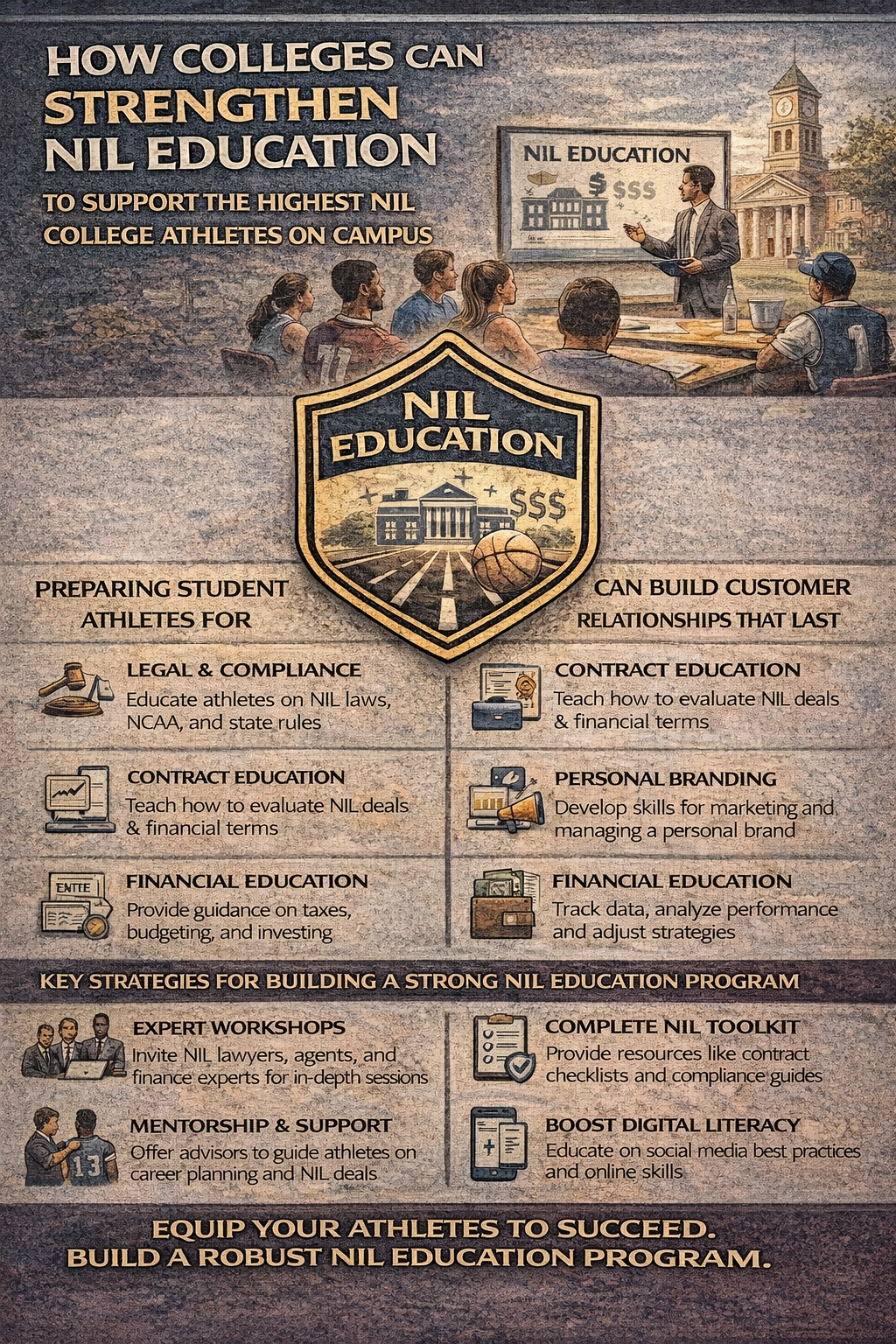
A successful NIL education program should be structured and comprehensive. It should cover all aspects of NIL, from basic concepts to advanced strategies.
Key components may include:
- Workshops on NIL rights and compliance
- Training on evaluating NIL contracts
- Guidance on building a personal brand
- Support for understanding tax implications
This structured approach ensures that student athletes are fully prepared.
The Value of Partnering With Experts
Partnering with experienced consultants can enhance NIL education efforts. Experts bring knowledge and insights that may not be available internally.
Masterly Consulting Group works with colleges to develop tailored NIL programs. Our expertise helps institutions provide meaningful support to their student athletes.
Strengthening Campus Support Systems
Support systems are essential for NIL success. This includes collaboration between compliance offices, coaches, and administrators.
By working together, these groups can create a cohesive approach to NIL education. This ensures that student athletes receive consistent and accurate information.
Empowering Student Athletes for Long-Term Success
Ultimately, the goal of NIL education is to empower student athletes. By providing the right tools and knowledge, colleges can help them succeed both on and off the field.
This empowerment leads to better decision-making, stronger personal brands, and greater opportunities. It also strengthens the institution’s reputation as a leader in college athletics.
Take the Next Step in Strengthening Your NIL Program
The NIL landscape is moving quickly, and colleges that act now will be better positioned to support their student athletes. Without a clear education strategy, even the most talented athletes may miss opportunities or face compliance risks that could impact their future.
At Masterly Consulting Group, we help colleges build structured NIL education programs that align with current laws and campus needs. From compliance guidance to athlete development, our team provides the tools and expertise needed to support the highest NIL college athletes on your campus.
Contact us at (888) 209-4055 to book a free consultation. Let’s work together to strengthen your approach to name image and likeness and ensure your student athletes are prepared to succeed in this evolving landscape.