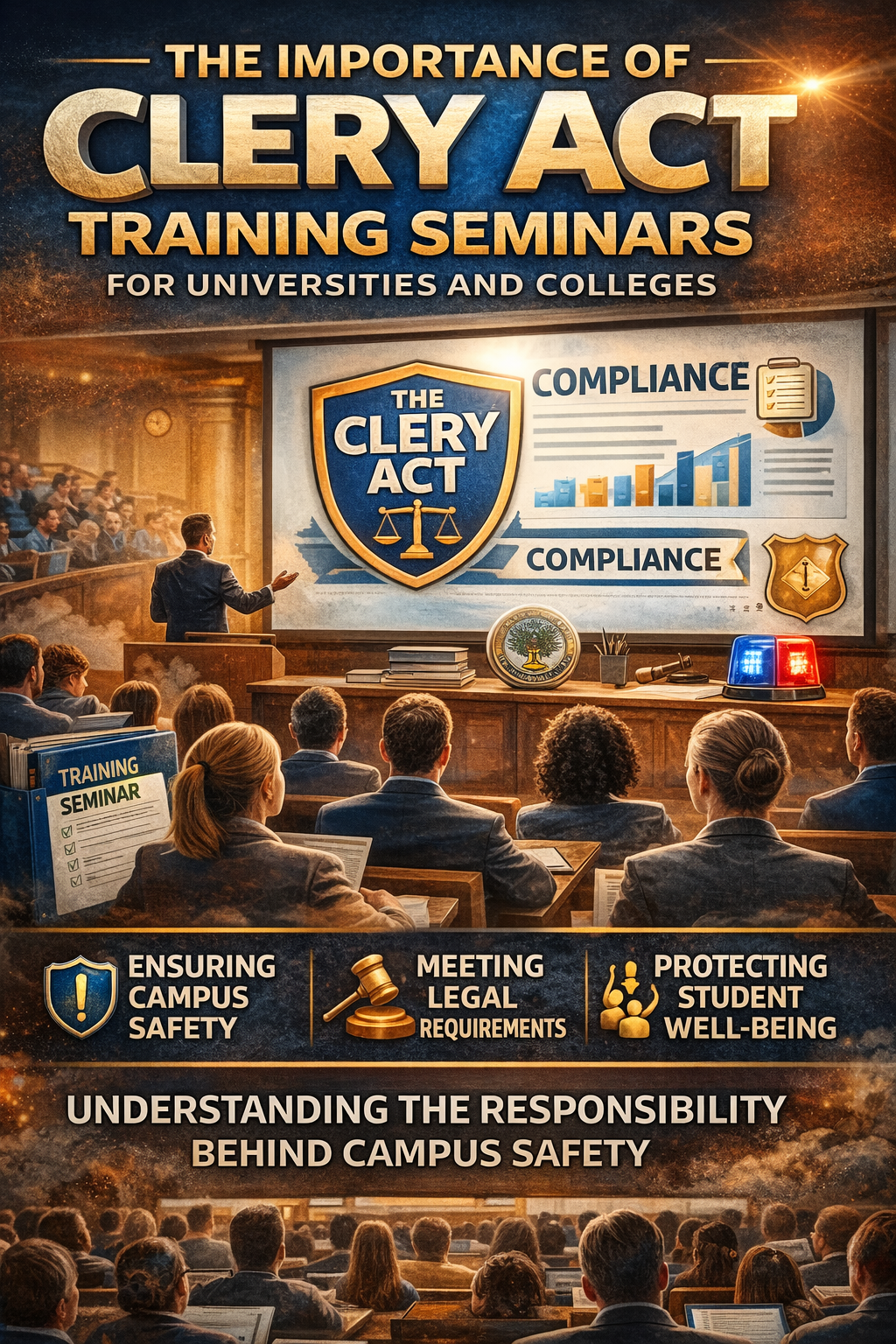
The Importance of Clery Act Training Seminars for Universities and Colleges
Understanding the Responsibility Behind Campus Safety
In today’s evolving landscape of higher education, safety and transparency are no longer optional—they are essential. Universities and colleges across the country are expected to provide not only high quality education but also a secure environment where students can learn, grow, and thrive. The Clery Act stands at the center of this responsibility, requiring institutions to report campus crime data and maintain clear safety procedures.
For many educational institutions, compliance can feel complex and overwhelming. However, the real challenge is not just meeting regulations, but building systems that truly protect students and foster trust within the community. This is where professional education consulting and structured training seminars become critical.
What the Clery Act Means for Higher Education Institutions
The Clery Act is a federal law that requires colleges and universities to disclose information about crime on and around their campuses. Its goal is to ensure transparency and empower students, parents, and the community with accurate safety information.
In higher education, compliance involves much more than submitting reports. Institutions must create policies, train staff, and maintain systems that consistently capture and report data. This requires coordination across departments, from campus security to administration and even classroom environments.
Why Compliance Is More Than a Legal Requirement
Many institutions initially approach Clery Act compliance as a regulatory obligation. However, the impact goes far beyond avoiding penalties. Proper compliance supports student success by creating a safe environment where students can focus on learning.
When schools invest in compliance, they also strengthen trust with their community. Parents, students, and stakeholders want to know that safety is a priority. By demonstrating transparency and accountability, institutions can build long-term credibility.
The Risks of Non-Compliance in Higher Education
Failing to comply with the Clery Act can lead to serious consequences. These risks affect not only the institution but also the students and community it serves.
Some of the most significant risks include:
- Financial penalties that can impact financial sustainability
- Damage to institutional reputation and loss of public trust
- Increased scrutiny from state education agencies
- Legal exposure related to unreported incidents
- Negative effects on student outcomes and enrollment
These challenges can create long-term setbacks for universities and colleges, making proactive compliance essential.
The Growing Complexity of Compliance Requirements
As higher education continues to evolve, compliance requirements are becoming more complex. Institutions must stay ahead of changing regulations while managing multiple priorities, including instruction, student engagement, and operational growth.
Educational leaders often face competing demands, making it difficult to dedicate the necessary time and resources to compliance efforts. This is why structured strategies and professional guidance are so important.
The Role of Clery Act Training Seminars
Clery Act training seminars provide institutions with the tools and knowledge needed to navigate compliance effectively. These programs are designed to help staff understand their responsibilities and implement best practices.
Training goes beyond theory. It equips teams with practical insights that can be applied in real-world situations. This includes identifying reportable incidents, maintaining accurate records, and ensuring timely reporting.
How Training Supports Educational Leaders
Educational leaders play a critical role in ensuring compliance. They must lead their teams, set expectations, and create systems that support consistent reporting.
Through targeted training, leaders gain the expertise needed to guide their institutions. They also learn how to align compliance efforts with broader goals, such as improving education and supporting student success.
Building a Culture of Accountability on Campus
Compliance is most effective when it becomes part of the institution’s culture. This means that everyone—from administrators to teachers—understands their role in maintaining safety and transparency.
Training seminars help create this culture by fostering awareness and accountability. When staff members are informed and engaged, they are more likely to follow procedures and report incidents accurately.
Strengthening Systems Across Schools and Districts
Clery Act compliance often requires coordination across multiple departments and campuses. For larger institutions and districts, this can be especially challenging.
Education consulting services can help schools develop systems that streamline communication and reporting. By working closely with institutions, consultants can identify gaps and implement strategies that improve efficiency.
The Connection Between Safety and Student Success
A safe campus environment is directly linked to student success. When students feel secure, they are more likely to engage in learning and participate in campus life.
Safety also supports student learning outcomes by reducing stress and creating a positive environment. This allows students to focus on their studies and achieve their academic goals.
Addressing the Needs of Diverse Student Populations
Higher education institutions serve a diverse range of students, each with unique needs and experiences. Compliance efforts must take these differences into account.
Training programs can help staff understand how to address these needs effectively. This includes recognizing potential risks and ensuring that all students have access to a safe and supportive environment.
The Importance of Accurate Data Collection
Accurate data collection is a cornerstone of Clery Act compliance. Institutions must gather and report information consistently to ensure transparency.
This requires clear processes and well-trained staff. Without proper training, errors can occur, leading to incomplete or inaccurate reports.
Leveraging Innovation in Compliance Strategies
Innovation plays a key role in modern compliance efforts. Technology can streamline data collection, improve reporting accuracy, and enhance communication across departments.
By embracing innovation, institutions can stay ahead of compliance challenges. This also allows them to allocate resources more effectively and focus on improving education.
Supporting Teachers and Staff Through Training
Teachers and staff are often on the front lines of campus safety. They interact with students daily and are in a position to identify potential issues.
Providing training ensures that they understand their responsibilities and feel confident in their roles. This support is essential for maintaining a safe and compliant environment.
Enhancing Collaboration Across Departments
Effective compliance requires collaboration across multiple departments. This includes campus security, administration, and academic teams.
Training seminars encourage collaboration by bringing stakeholders together. This creates a shared understanding of responsibilities and promotes consistent practices.
The Role of Leadership in Driving Compliance
Strong leadership is essential for successful compliance efforts. Leaders must set the tone and ensure that policies are implemented effectively.
By participating in training, leaders can develop the skills needed to guide their teams. They also gain insights into best practices and emerging trends in higher education.
Identifying Root Causes of Compliance Challenges
Understanding the root causes of compliance issues is key to addressing them effectively. This may include gaps in communication, lack of training, or outdated systems.
Education consulting can help institutions identify these challenges and develop targeted solutions. This proactive approach leads to more sustainable outcomes.
Aligning Compliance With Strategic Planning
Compliance should not exist in isolation. It must be integrated into the institution’s broader strategic planning efforts.
By aligning compliance with long-term goals, institutions can create a more cohesive approach. This supports sustainable growth and ensures that safety remains a priority.
The Impact on Financial Sustainability
Non-compliance can have significant financial implications. Penalties, legal costs, and reputational damage can strain institutional resources.
Investing in training and consulting services can help mitigate these risks. This supports financial sustainability and allows institutions to focus on their core mission.
Supporting Early Childhood and Future Pathways
While the Clery Act primarily applies to higher education, its principles of safety and transparency extend to early childhood education and beyond. Building a culture of accountability early can shape the future of education.
By focusing on safety at all levels, institutions can create pathways that support long-term success for students.
Expanding Access to Safe Educational Opportunities
Access to education is closely tied to safety. Students are more likely to pursue opportunities when they feel secure.
Compliance efforts help expand access by creating environments where students can thrive. This supports economic mobility and long-term success.
Developing Skills for Compliance and Leadership
Training seminars help staff develop essential skills for compliance and leadership. These skills are valuable not only for meeting regulations but also for driving institutional growth.
By investing in professional development, institutions can build stronger teams and improve overall performance.
The Value of Partnering With Experts
Partnering with experts in education consulting provides institutions with access to deep expertise and proven strategies. These professionals understand the complexities of higher education and can offer tailored solutions.
Working with a trusted partner allows institutions to focus on their mission while ensuring compliance.
Empowering School Leaders to Shape a Strong School Culture
School leaders play a critical role in building a positive school culture that supports both academic achievement and student well being. With extensive experience in education consulting, our team works closely with educators and administrators to guide strategy development that aligns with clear educational goals. Many of our consultants are former teachers, bringing real classroom insight into every recommendation. By focusing on a student centered approach, school leaders can better understand student needs, support teaching excellence, and create environments where every young person has the opportunity to succeed.
Driving Positive Change Through Strategic Talent and Education Initiatives
Creating meaningful and lasting positive change in education requires a clear vision and a commitment to informed decisions. As a global leader in education consulting services, Masterly Consulting Group helps organizations develop a strong talent strategy that supports educators, strengthens teaching practices, and enhances student outcomes. Our initiatives are designed to improve the health of educational environments while ensuring that children receive the support they need to thrive. By aligning talent, resources, and leadership efforts, institutions can do an amazing job in reaching their ultimate goal of delivering high quality education and long-term success for students and communities alike.
How Masterly Consulting Group Supports Institutions
At Masterly Consulting Group, we specialize in helping educational institutions navigate complex challenges. Our team includes experienced professionals, including a senior partner with deep expertise in higher education compliance.
We work closely with our clients to develop strategies that support compliance, improve student outcomes, and drive meaningful change.
Customized Strategies for Universities and Colleges
Every institution is unique, and a one-size-fits-all approach does not work. We create customized strategies that align with each institution’s goals and needs.
Our approach focuses on practical solutions that can be implemented effectively. This ensures that institutions achieve lasting results.
Empowering Institutions to Stay Ahead
Staying ahead of compliance challenges requires continuous effort and adaptation. Our services are designed to help institutions remain proactive and prepared.
By leveraging our insights and expertise, institutions can navigate changes with confidence.
Creating Lasting Impact in Higher Education
Our mission is to create lasting impact in higher education. We believe that strong compliance practices contribute to safer campuses and better outcomes for students.
Through our work, we aim to support institutions in achieving their goals and making a positive difference in their communities.
Let’s Build a Safer Future for Your Institution
If your institution is ready to strengthen its compliance efforts and enhance campus safety, now is the time to take action. Masterly Consulting Group offers comprehensive education consulting services designed to support universities, colleges, and districts.
Contact us at (888) 209-4055 to schedule a free consultation. Our team is here to answer your questions, provide guidance, and help you develop strategies that protect your students, support your staff, and position your institution for long-term success.