How to Confidently Transition into a New Career with Executive Coaching Support
Changing careers can feel both exciting and overwhelming. Many professionals reach a moment when they realize their current path no longer reflects their values, goals, or potential. At that stage, guidance becomes essential. Executive coaching provides structure, insight, and support for professionals who want to move forward with clarity rather than uncertainty.
For many professionals, the idea of transitioning careers raises questions about identity, financial stability, and long-term direction. A thoughtful coaching process can help individuals explore these concerns while building confidence in their next step. With support from experienced professional coaches, career transitions can become opportunities for meaningful personal growth and stronger leadership development.
At Masterly Consulting Group, our executive coaching services focus on helping professionals navigate complex career decisions. Whether someone is stepping into a leadership role or pursuing a completely new direction, the right coaching support can transform uncertainty into a clear plan.
Why Career Transitions Feel Challenging
Career changes often involve more than updating a résumé. They affect both personal and professional lives, relationships, and long-term ambitions. Professionals who have spent years developing expertise in one field may question whether their skills translate into a new environment.
A common challenge during career transitions is the emotional aspect of change. Professionals must examine their motivations, expectations, and fears. This process requires self awareness and an honest evaluation of personal goals. Without guidance, these questions can lead to hesitation rather than action.
Through executive leadership coaching, individuals gain a structured environment to examine their strengths and aspirations. Coaching allows professionals to think more strategically about their future while maintaining confidence in their abilities.
The Role of Executive Coaching in Career Transformation
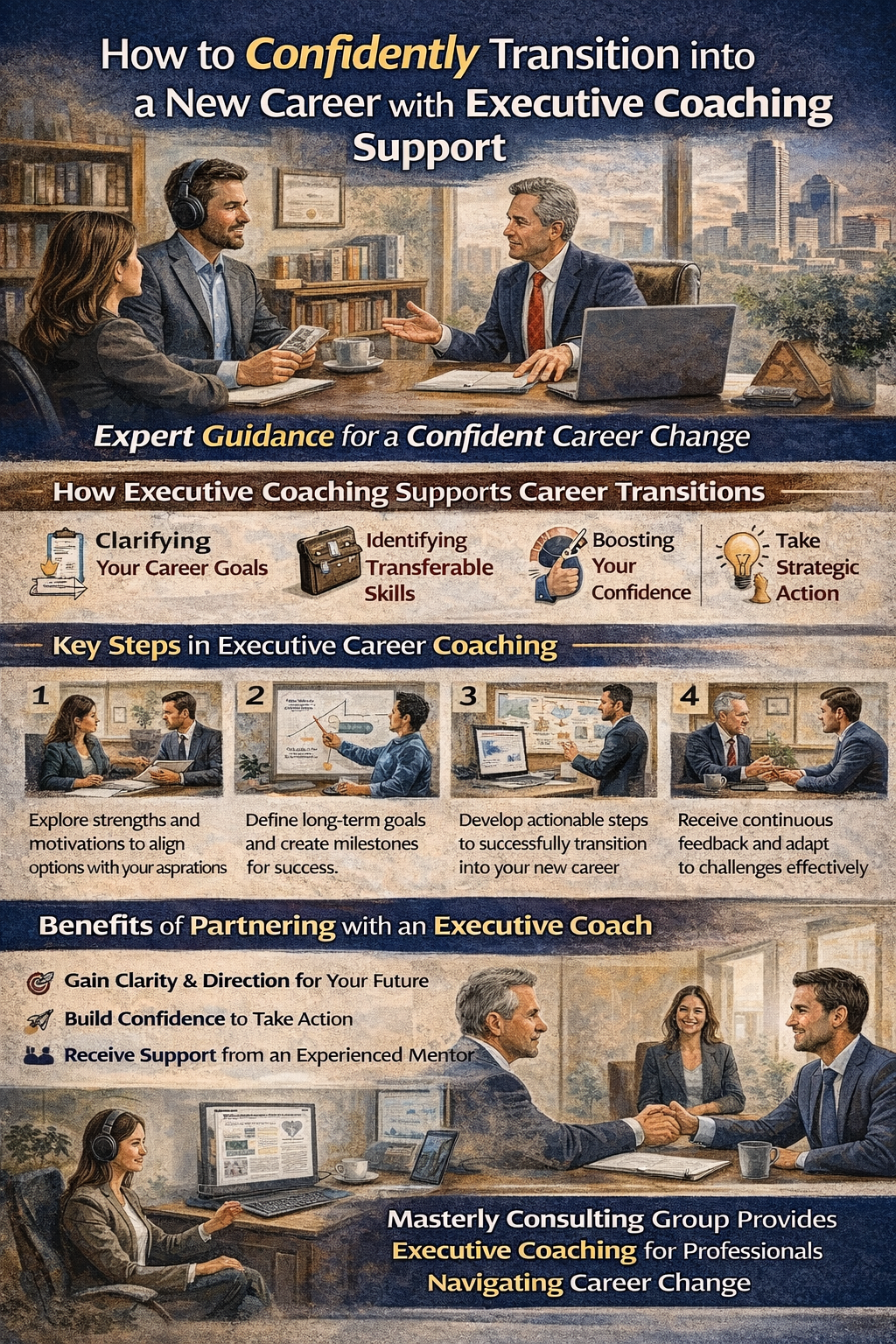
A career shift becomes more manageable when professionals have access to a supportive coaching relationship. Through guided coaching conversations, individuals can examine their values, identify transferable skills, and clarify long-term goals.
Executive coaching is not simply about giving advice. Instead, it focuses on helping clients explore possibilities and make thoughtful decisions. A certified executive coach provides insight, accountability, and an external perspective that allows professionals to see their situation more clearly.
The coaching process is designed to help individuals move from uncertainty to action. By developing a structured coaching program, professionals gain confidence in their ability to pursue meaningful change.
Understanding the Coaching Process
The coaching process is designed to support thoughtful reflection and forward momentum. It involves collaboration between the coach and the client, ensuring that each conversation supports the client’s professional objectives.
Through coaching engagements, professionals explore their ambitions while identifying areas for skill development. The goal is to help clients align their strengths with new career opportunities.
A well-structured coaching experience often includes:
- Clarifying career goals and professional values
- Identifying leadership strengths and growth areas
- Creating a roadmap for career transitions
- Strengthening decision-making and communication skills
These steps allow professionals to approach career changes with clarity and confidence.
Executive Leadership Coaching for Career Growth
Many career transitions involve stepping into leadership roles. Executive leadership coaching helps professionals strengthen the skills required to guide teams and influence organizational direction.
Strong executive leadership requires more than technical knowledge. It also requires emotional intelligence, strategic thinking, and the ability to inspire others. Through targeted coaching, professionals can enhance these qualities while developing stronger leadership effectiveness.
For executive leaders, leadership coaching provides the tools necessary to navigate complex responsibilities. This support allows individuals to step into leadership positions with confidence.
The Importance of Self Awareness in Career Decisions
A successful career transition begins with deeper self awareness. Professionals must understand their motivations, values, and long-term goals before pursuing a new direction.
Through thoughtful coaching conversations, clients explore questions such as:
- What type of work provides genuine fulfillment?
- What strengths can be applied to new roles?
- What environment supports long-term success?
Developing this deeper self awareness allows professionals to make decisions aligned with their personal vision rather than external expectations.
Developing Leaders Through Coaching
Organizations increasingly recognize the value of developing leaders internally. Coaching supports this process by strengthening communication, decision-making, and strategic thinking.
Leadership coaching often focuses on improving leadership effectiveness and helping organization's leaders align their actions with broader organizational goals. By developing these capabilities, professionals can make a stronger organizational impact.
Through consistent coaching support, emerging leaders gain the confidence needed to guide teams and influence organizational strategy.
Emotional Intelligence and Leadership Success
Strong leadership depends heavily on emotional intelligence. Leaders must understand their own emotions while responding thoughtfully to others.
Coaching helps professionals build emotional awareness, empathy, and communication skills. These abilities are essential when navigating team dynamics or managing complex challenges.
When leaders develop emotional intelligence, they improve relationships with colleagues, strengthen trust, and create more productive workplaces.
How Executive Coaching Supports Organizational Change
Career transitions often occur during periods of organizational change. Professionals must adapt to evolving responsibilities and shifting priorities.
Coaching helps leaders navigate these changes with confidence. By strengthening strategic thinking and communication skills, coaching enables leaders to guide teams through transformation.
This approach contributes to systemic and sustainable change within organizations.
Coaching and Talent Development
Effective organizations invest in talent development to strengthen their leadership pipeline. Coaching supports this effort by preparing professionals for greater responsibilities.
Through structured coaching programs, emerging leaders develop the foundational skills necessary to guide teams and support long-term organizational growth.
This focus on development ensures that organizations continue building strong leadership at every level.
The Value of an External Perspective
One of the greatest benefits of executive coaching is gaining an external perspective. Leaders often operate within complex environments where objective feedback is difficult to obtain.
A coach offers insight that helps professionals recognize patterns in human behavior, decision-making, and communication. This awareness allows leaders to improve their approach to management and collaboration.
An external perspective also encourages leaders to challenge assumptions and consider new strategies.
Building Strong Coaching Relationships
A productive coaching relationship depends on trust, transparency, and mutual commitment. Clients must feel comfortable discussing challenges and exploring new ideas.
Coaches provide guidance while encouraging clients to take ownership of their decisions. This collaborative dynamic creates a supportive environment where meaningful progress can occur.
Over time, the coaching relationship becomes a powerful catalyst for professional growth.
Coaching for C-Suite Leaders
C suite executives and c suite leaders face unique pressures when guiding organizations. Their decisions influence strategy, culture, and performance.
Executive coaching provides these leaders with confidential support and strategic insight. Coaches help leaders evaluate complex decisions while maintaining alignment with organizational goals.
This support strengthens leadership effectiveness and promotes thoughtful decision-making.
Leadership Coaching Across Multiple Industries
Professionals across multiple industries benefit from executive coaching. Whether working in finance, technology, healthcare, or education, leaders often encounter similar challenges related to communication, strategy, and leadership.
Coaches with broad consulting experience can offer valuable insights based on their work with other organizations. This exposure allows them to share proven methodologies that support meaningful change.
The Impact of Coaching on Organizational Outcomes
Effective coaching produces measurable organizational outcomes. Leaders who develop stronger communication and strategic thinking skills often improve team performance and collaboration.
Coaching also strengthens change management capabilities. Leaders learn how to guide teams through uncertainty while maintaining focus on long-term goals.
These improvements contribute to sustainable success for both individuals and organizations.
Coaching and Succession Planning
Many organizations use coaching to support succession planning. Preparing future leaders ensures continuity and stability within the leadership pipeline.
Through coaching engagements, emerging leaders gain the experience needed to assume greater responsibilities. They learn how to manage teams, communicate effectively, and support organizational strategy.
The Role of the International Coaching Federation
The International Coaching Federation establishes professional standards for coaching practices worldwide. Many professional coaches pursue credentials through the International Coaching Federation ICF to demonstrate their commitment to ethical and effective coaching.
These certifications reflect a high level of training and adherence to professional coaching standards.
Professional Credentials in Executive Coaching
Many coaches hold certifications such as:
- Associate Certified Coach
- Professional Certified Coach
- Certified Professional Coach
These credentials demonstrate that the coach has completed rigorous training and developed the foundational skills necessary for effective coaching.
Coaching Experience and Industry Expertise
An experienced coach brings valuable insight to the coaching process. Professionals who have worked as a management consultant or advisor to industry leaders often possess a deep understanding of organizational challenges.
With twenty five years of professional experience, many coaches combine leadership knowledge with proven methodologies to support meaningful transformation.
Supporting Personal Growth and Professional Success
Career transitions involve both personal reflection and professional planning. Coaching helps individuals align their career ambitions with their broader life goals.
This alignment ensures that career changes contribute to both professional satisfaction and personal fulfillment.
Real Time Feedback and Continuous Improvement
During coaching engagements, clients often receive real time feedback that helps them refine their leadership approach. This feedback encourages reflection and ongoing improvement.
Over time, professionals develop stronger decision-making abilities and greater confidence in their leadership style.
How Executive Coaching Creates Transformational Change
When professionals engage deeply in coaching, the results can lead to transformational change. Leaders gain clarity about their purpose and develop strategies that align with their values.
This transformation extends beyond the workplace, influencing both personal and professional development.
Guiding Professionals Toward New Opportunities
Career transitions represent opportunities to explore new paths and redefine professional goals. Coaching helps professionals navigate these transitions while maintaining confidence and direction.
Through structured guidance and strategic reflection, professionals gain the clarity needed to pursue meaningful opportunities.
Take the Next Step with Executive Coaching
Making a career transition is a significant decision, but it does not have to be overwhelming. With the right support, professionals can move forward with clarity, confidence, and a clear strategy for success.
At Masterly Consulting Group, we work with professionals across the country who want to grow as leaders, explore new opportunities, and strengthen their long-term career direction. Our executive coaching services are designed to help clients explore possibilities, develop leadership skills, and achieve meaningful progress in their careers.
If you are considering a career change or looking to strengthen your leadership potential, we invite you to connect with our team.
Contact Masterly Consulting Group at (888) 209-4055 to schedule a free consultation. We work with professionals nationally and help leaders create clear strategies for career growth, leadership success, and lasting professional impact.