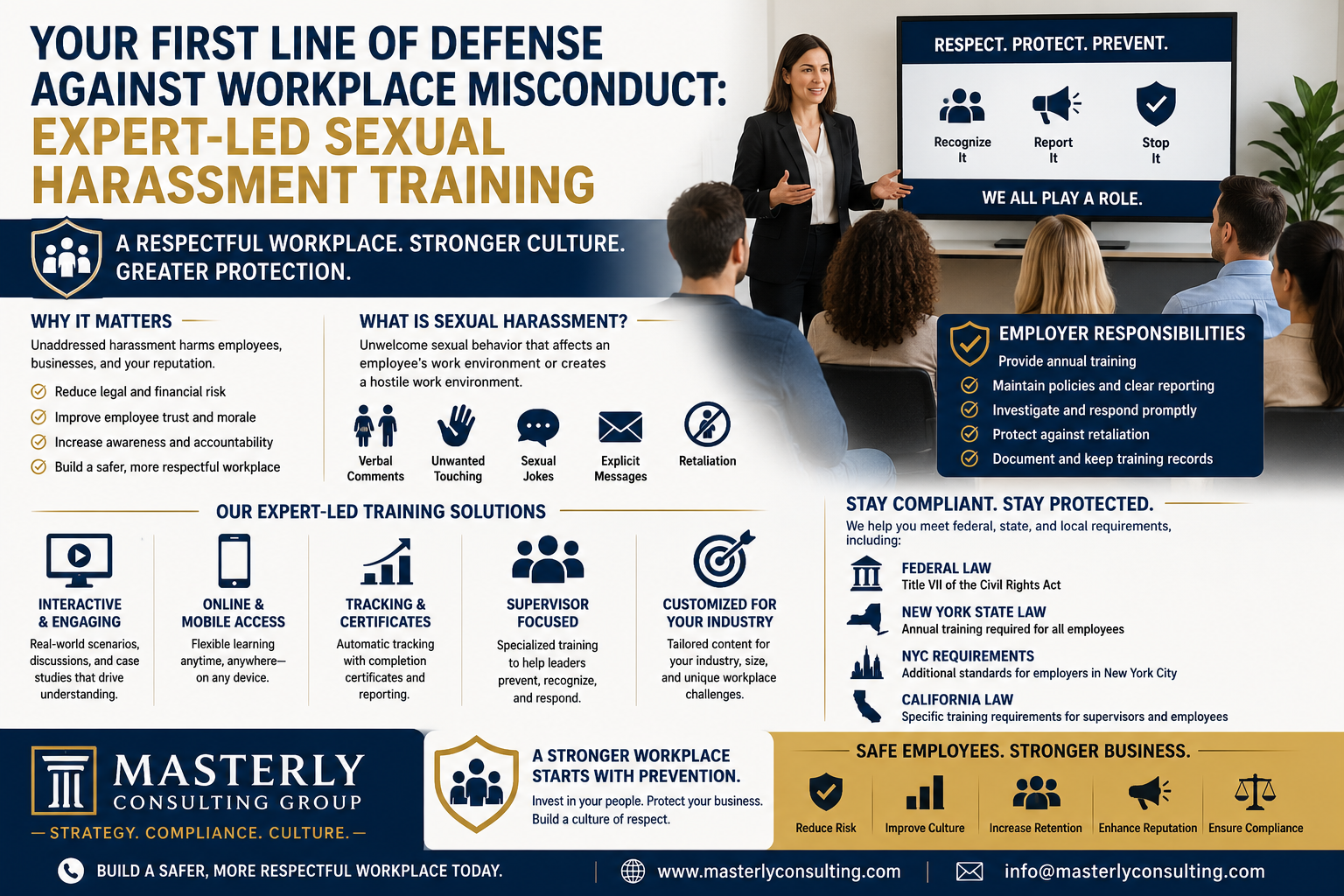
Your First Line of Defense Against Workplace Misconduct: Expert-Led Sexual Harassment Training
Why Businesses Can No Longer Ignore Workplace Misconduct
Every organization wants a professional and productive workplace, but many companies underestimate how quickly misconduct can damage morale, productivity, reputation, and legal standing. One complaint involving sexual harassment can affect an entire business, especially if employers failed to implement proper workplace training or ignored warning signs before problems escalated.
Today’s employees expect workplaces built on professionalism, accountability, and respect. Companies that fail to provide meaningful sexual harassment training often place themselves at significant legal and financial risk. Beyond lawsuits and public reputation damage, unresolved harassment in the workplace can create lasting emotional harm for employees and long-term operational problems for employers.
Modern businesses also face growing legal expectations regarding harassment prevention training. State law, federal regulations, and workplace compliance standards continue evolving across the country. Employers who fail to stay current may expose themselves to avoidable legal claims, penalties, and organizational instability.
At Masterly Consulting Group, we help organizations create safer, more professional workplaces through expert-led sexual harassment prevention training designed to improve awareness, reduce liability, strengthen compliance, and support healthier workplace culture.
Why Sexual Harassment Training Matters More Than Ever
Many business owners assume harassment issues only happen in large corporations. In reality, sexual harassment affects organizations of every size and industry. Small businesses, nonprofits, healthcare providers, construction companies, schools, and corporate offices all face potential workplace harassment concerns.
Effective sexual harassment training helps employees understand appropriate conduct, reporting procedures, workplace expectations, and professional boundaries. More importantly, it helps prevent problems before they escalate into formal complaints or litigation.
Companies that invest in harassment training demonstrate a serious commitment to workplace safety, professionalism, and accountability. This commitment often improves trust between employers and employees while reducing organizational risk.
Understanding What Sexual Harassment Includes
Unwelcome sexual behavior that negatively impacts an employee's workplace, employment circumstances, or emotional health is referred to as sexual harassment. Harassment may involve verbal comments, physical actions, digital communication, inappropriate jokes, gestures, or repeated behavior that creates discomfort.
Examples of sexual harassment may include:
- Unwanted sexual advances
- Inappropriate touching
- Offensive comments
- Sexual jokes
- Explicit messages
- Requests for sexual favors
- Repeated inappropriate behavior
- Harassment based on gender
- Retaliation after complaints
Harassment does not always involve direct physical behavior. A hostile work environment may develop through repeated comments, intimidation, humiliation, or ongoing inappropriate conduct.
Why Harassment Prevention Requires Ongoing Training
Many employers make the mistake of treating sexual harassment prevention training as a one-time obligation rather than an ongoing workplace priority. However, effective prevention requires consistency, communication, and reinforcement over time.
Annual training helps employees remain informed about workplace expectations, reporting procedures, compliance obligations, and legal responsibilities. It also allows organizations to address changing laws, evolving workplace culture, and emerging communication challenges involving technology and remote work environments.
Ongoing training strengthens organizational awareness while helping employers demonstrate proactive efforts to prevent harassment in the workplace.
How Workplace Harassment Affects Organizations
Workplace harassment creates problems far beyond individual complaints. When misconduct goes unaddressed, entire teams may suffer from low morale, reduced productivity, communication breakdowns, and increased employee turnover.
Organizations experiencing harassment concerns often face:
- Decreased employee trust
- Increased legal risk
- Higher turnover
- Reduced workplace morale
- Negative public attention
- Internal conflict
- Lower productivity
- Increased absenteeism
Even one unresolved issue can damage company culture significantly.
The Role of Employers in Preventing Harassment
Employers have a responsibility to create safe and respectful workplace environments. This includes implementing clear policies, responding appropriately to complaints, providing employee training, and maintaining consistent accountability standards.
Strong harassment prevention policy programs help ensure employees understand what conduct is unacceptable and how concerns should be reported. Employers who ignore complaints or fail to provide proper workplace training often increase their exposure to legal claims and reputational harm.
Preventing harassment requires leadership involvement and organizational commitment at every level.
Why Federal and State Laws Matter
Federal law and state law both play important roles in regulating workplace harassment prevention. Under Title VII of the Civil Rights Act, employers may face liability for failing to address sexual harassment or workplace discrimination appropriately.
The equal employment opportunity commission enforces federal protections involving workplace harassment, retaliation, and discrimination claims. State regulations may also impose additional training requirements depending on where the organization operates.
Employers should understand that compliance obligations often vary across jurisdictions.
How New York State Training Requirements Affect Employers
New york state has implemented some of the most recognized workplace harassment prevention requirements in the country. York state law requires employers to provide annual sexual harassment prevention training to employees working within the state.
New york state regulations emphasize interactive training programs that educate employees regarding reporting procedures, legal rights, prohibited conduct, and retaliation protections.
Employers operating in multiple states should pay close attention to how state regulations differ between jurisdictions.
Understanding NYC Requirements for Harassment Prevention
NYC employers face additional obligations beyond broader new york state requirements. NYC requirements may involve more detailed compliance expectations regarding documentation, training records, reporting procedures, and employee participation.
New york city employers are expected to maintain training records and demonstrate compliance with applicable workplace harassment prevention standards. Organizations operating within nyc should carefully review local regulations and implementation requirements regularly.
Why York City Employers Must Take Training Seriously
York city employers face increasing scrutiny regarding workplace culture, harassment prevention efforts, and organizational accountability. Failure to comply with training requirements or respond properly to complaints may expose employers to lawsuits, fines, and reputational damage.
Many organizations now recognize that strong sexual harassment prevention training protects both employees and the business itself. Prevention is almost always less costly than responding to litigation after misconduct occurs.
The Importance of Interactive Training Programs
Interactive training creates stronger employee engagement and better learning outcomes than passive presentations or outdated compliance videos. Employees absorb information more effectively when they participate actively during training sessions.
Interactive harassment training may include:
- Real-world scenarios
- Group discussion
- Policy reviews
- Question-and-answer sessions
- Case studies
- Reporting simulations
Interactive learning helps employees better understand how harassment affects workplace culture and professional relationships.
Why Online Training Has Become More Popular
Many organizations now rely on online training platforms to deliver sexual harassment prevention training more efficiently across multiple locations and teams. Online training allows employees to complete required programs using a computer, tablet, or mobile device.
Digital platforms also help organizations track completion records, generate certificates, and monitor training progress more effectively. This flexibility makes compliance easier for businesses managing remote employees or multiple offices.
Mobile Device Accessibility Improves Completion Rates
Modern employees expect flexibility when completing workplace training requirements. Allowing staff to complete training using a mobile device often improves participation and accessibility.
Employees working remotely, traveling, or balancing busy schedules may complete training more efficiently using phones or tablets instead of traditional office computers.
Convenient access increases completion rates while supporting broader compliance goals across the organization.
Why Supervisors Need Specialized Harassment Training
Supervisors and managers play a critical role in preventing workplace harassment and responding appropriately to complaints. Because leadership personnel influence workplace culture directly, many state regulations require specialized supervisor training.
Supervisors should understand:
- Reporting responsibilities
- Documentation requirements
- Retaliation prevention
- Investigation procedures
- Appropriate workplace conduct
- Legal obligations
Organizations that fail to train supervisors properly often increase their liability exposure significantly.
Retaliation Is One of the Biggest Risks for Employers
Retaliation occurs when employees experience negative treatment after reporting harassment, discrimination, or misconduct. Retaliation claims often become just as serious as the original harassment complaint itself.
Employers must ensure employees feel safe reporting concerns without fear of punishment, intimidation, or professional consequences. Effective sexual harassment prevention policy programs should clearly explain retaliation protections and reporting procedures.
Why Respectful Workplace Culture Matters
Harassment prevention involves more than legal compliance. Organizations must also build respectful workplace environments where employees feel valued, heard, and protected.
Respectful communication, professional boundaries, accountability, and leadership consistency all contribute to a healthier workplace culture. Training programs should reinforce these values while encouraging employees to engage professionally with coworkers and clients.
How Industry Focused Training Improves Effectiveness
Different industries face unique workplace risks and communication challenges. Industry focused training allows organizations to address scenarios directly relevant to their work environment.
Healthcare providers, hospitality businesses, construction companies, schools, retail employers, and corporate offices all experience different workplace dynamics. Customized harassment training improves relevance and helps employees connect training material to real-world situations.
Why Compliance Is About More Than Avoiding Lawsuits
Many organizations approach sexual harassment prevention training only from a compliance perspective. While avoiding lawsuits matters, effective workplace training also improves communication, morale, professionalism, and employee trust.
Organizations with strong prevention programs often experience better retention, healthier culture, and stronger internal communication overall.
Understanding the Importance of Documentation
Documentation plays an important role in workplace compliance efforts. Employers should maintain records showing employee participation, certificate completion, policy distribution, and annual training compliance.
Many jurisdictions require organizations to preserve records for multiple years. In new york state, employers may retain documentation for at least three years to demonstrate compliance if complaints arise later.
Why Certificates Matter for Compliance
Certificate tracking helps organizations demonstrate that employees completed required harassment prevention training. Digital certificate systems simplify recordkeeping while improving accountability internally.
Completion certificates may include:
- Employee name
- Training date
- Program details
- Completion confirmation
- Compliance verification
Maintaining accurate records helps employers respond more effectively during audits, claims, or investigations.
Why Harassment Prevention Training Protects Employees
Employees deserve workplaces free from harassment, intimidation, discrimination, and inappropriate conduct. Effective sexual harassment prevention training helps employees recognize problematic behavior and understand available reporting procedures.
Training also reinforces that harassment based on gender, sexual orientation, race, or protected characteristics will not be tolerated within the organization.
How Organizations Benefit From Strong Training Programs
Organizations investing in strong harassment prevention programs often experience measurable operational benefits over time. These benefits may include improved retention, stronger morale, reduced complaints, and healthier workplace culture.
Additional benefits may include:
- Lower legal risk
- Improved communication
- Stronger accountability
- Better employee trust
- Enhanced professionalism
- Greater organizational consistency
Prevention efforts support both compliance and long-term business stability.
Why Employees Need Clear Reporting Procedures
Employees should understand exactly how workplace concerns should be reported internally. Confusing or inaccessible reporting systems often discourage employees from speaking up when misconduct occurs.
Effective programs explain:
- Who to contact
- How complaints are documented
- Investigation procedures
- Confidentiality expectations
- Anti-retaliation protections
Clear procedures help organizations respond faster and more effectively when concerns arise.
How Sexual Harassment Training Reduces Organizational Risk
Training reduces risk by educating employees and supervisors about appropriate workplace conduct before problems escalate into formal complaints or litigation. Employees who understand workplace expectations are less likely to engage in problematic behavior.
Prevention efforts also help employers demonstrate good-faith compliance efforts if legal claims occur later.
Why California Employers Face Strict Requirements
California employers also face extensive workplace harassment training obligations under state law. California regulations require harassment prevention training for supervisors and employees under specific timelines and compliance standards.
Businesses operating across multiple states should carefully review differences between california requirements, new york state obligations, and federal expectations.
Why Human Rights Protections Matter in the Workplace
Human rights protections exist to ensure employees are treated fairly, respectfully, and professionally regardless of protected characteristics. Workplace harassment and discrimination undermine these protections while creating emotional and professional harm.
Training programs should reinforce the importance of dignity, professionalism, and equal treatment across all organizational levels.
Why Employees Need Annual Training Refreshers
Annual training reinforces expectations while helping employees remain informed about evolving workplace standards and legal obligations. Repetition improves retention and helps normalize respectful communication within the workplace.
Annual harassment training also allows organizations to address policy updates, legal developments, and emerging workplace concerns more consistently.
The Importance of Conflict Resolution Skills
Not every workplace disagreement rises to the level of harassment. However, unresolved conflict can contribute to unhealthy workplace dynamics if left unmanaged.
Conflict resolution training helps employees address concerns professionally before situations escalate further. Communication skills, accountability, and leadership involvement all contribute to healthier workplace culture.
Why New Employees Need Immediate Training
New employees should receive harassment prevention training as early as possible during onboarding. Early education establishes expectations immediately and helps integrate new team members into the organization’s culture.
Waiting too long to provide training may increase organizational risk unnecessarily.
Why Harassment Training Should Be Easy to Access
Employees are more likely to complete training successfully when programs are easy to access and navigate. Online platforms, mobile compatibility, technical support, and flexible scheduling improve participation significantly.
Accessibility also helps organizations manage larger teams more efficiently across multiple locations and time zones.
How Technical Support Improves Training Completion
Technical problems can delay training progress and reduce employee participation. Reliable technical support helps organizations resolve login issues, platform questions, and accessibility concerns quickly.
Smooth implementation improves overall program effectiveness while reducing frustration among employees.
Why Employers Should Explore Customized Training Options
Every organization has unique workplace culture, operational risks, and employee demographics. Employers should explore training options tailored to their industry, structure, and organizational goals.
Customized programs create stronger engagement because employees see direct relevance to their work environment.
The Role of Labor Regulations in Harassment Prevention
Labor regulations continue evolving regarding harassment prevention, workplace discrimination, and employee protections. Employers should remain informed about changing federal, state, and local requirements affecting workplace training obligations.
Failing to comply with evolving regulations may increase legal exposure significantly.
Why Sexual Harassment Claims Can Damage Businesses
Sexual harassment claims often create financial, operational, and reputational damage for organizations. Even unresolved allegations may negatively affect morale, retention, recruiting, and public perception.
Strong prevention programs help reduce these risks while demonstrating organizational accountability and professionalism.
Why Employers Must Take Complaints Seriously
Every complaint involving harassment in the workplace deserves careful attention and professional handling. Employers who dismiss concerns or retaliate against employees may face significant legal consequences later.
Proper investigations, documentation, and communication are critical when responding to workplace complaints.
How Training Encourages Employees to Engage Professionally
Effective training programs encourage employees to engage professionally with coworkers, supervisors, and clients. Clear expectations improve communication and reduce misunderstandings that may contribute to inappropriate workplace conduct.
Professional interaction standards help strengthen organizational culture overall.
Why Organizations Need Ongoing Progress Tracking
Tracking progress allows organizations to monitor completion rates, participation, compliance records, and employee understanding throughout the training process.
Progress monitoring also helps employers identify departments or teams requiring additional support or education.
Why Effective Harassment Prevention Requires Leadership Commitment
Prevention efforts only succeed when leadership demonstrates genuine commitment to professionalism and accountability. Employees pay close attention to how supervisors and executives respond to complaints, policy enforcement, and workplace culture concerns.
Leadership consistency reinforces the seriousness of harassment prevention expectations internally.
Why Businesses Across the Country Are Prioritizing Training
Organizations throughout the country increasingly recognize that prevention-focused workplace training protects employees, improves culture, and reduces long-term legal risk.
Employers no longer view sexual harassment prevention training as optional. It has become an essential part of responsible organizational leadership and workplace compliance strategy.
How Masterly Consulting Group Helps Organizations Strengthen Workplace Culture
At Masterly Consulting Group, we provide professional sexual harassment prevention training designed to help organizations create safer, stronger, and more respectful workplaces. Our programs focus on practical education, compliance awareness, employee engagement, and long-term prevention strategies.
We work with businesses, nonprofits, healthcare providers, schools, corporate offices, and organizations seeking effective harassment training solutions tailored to their operational needs. Our team understands the importance of compliance, professionalism, communication, and leadership accountability within modern workplace environments.
Our programs include interactive learning opportunities, online training accessibility, completion tracking, certificates, supervisor education, and customized content designed to support organizational goals and state law compliance obligations.
Why Professional Guidance Makes a Difference
Organizations often underestimate the complexity of harassment prevention requirements across multiple jurisdictions. Professional guidance helps employers understand training requirements, reporting obligations, documentation expectations, and workplace compliance standards more effectively.
Strong prevention programs protect both employees and the organization itself.
Why Many States Require At Least Two Hours of Harassment Prevention Training
Several workplace compliance laws now require employees and supervisors to complete at least two hours of sexual harassment prevention training depending on the organization’s size, industry, and location. These training sessions are designed to educate staff about workplace expectations, reporting procedures, retaliation protections, and appropriate professional conduct. Employers who fail to meet required training timelines may increase their legal exposure and workplace risk significantly. Comprehensive training programs also help employees better recognize warning signs before harassment situations escalate further. Consistent education plays a major role in building safer and more respectful workplace environments.
Choosing the Right Training Course for Your Organization
Not every harassment prevention course provides the same level of education, engagement, or workplace relevance. Some organizations make the mistake of selecting outdated programs that fail to address modern workplace communication challenges, remote work environments, or evolving compliance standards. A high-quality course should include interactive learning, practical workplace scenarios, reporting guidance, and clear explanations of employer expectations. Employees are more likely to remain engaged when training material feels realistic and directly connected to their day-to-day work environment. Effective training should educate employees while also helping organizations strengthen workplace culture and reduce long-term risk.
Why Offering Training in Spanish Improves Workplace Accessibility
Many organizations now provide harassment prevention training in spanish to ensure employees fully understand workplace expectations, reporting procedures, and compliance standards regardless of language barriers. Clear communication is essential when discussing sensitive workplace topics involving harassment, retaliation, discrimination, and professional conduct. Employees who receive training in a language they understand are often more confident participating in discussions and reporting concerns appropriately. Multilingual training options also demonstrate an employer’s commitment to inclusion, accessibility, and workplace professionalism. Providing educational resources in multiple languages helps create stronger communication across the organization.
Why Proper Documentation and Reporting Forms Matter
Organizations should maintain organized documentation and reporting forms related to workplace harassment prevention, employee complaints, and training completion records. Proper documentation helps employers track compliance efforts while also creating clearer internal procedures for addressing workplace concerns. Employees are more likely to report misconduct when reporting systems feel organized, accessible, and professional. Forms used during investigations, complaints, acknowledgments, and training participation should remain consistent across the organization whenever possible. Strong recordkeeping practices also help businesses respond more effectively if legal questions or workplace disputes arise later.
How Harassment Can Affect a Person Professionally and Emotionally
Workplace harassment can affect a person far beyond the office environment. Employees experiencing repeated misconduct often struggle with stress, anxiety, reduced confidence, emotional exhaustion, and declining job performance. In many situations, employees begin feeling isolated or uncomfortable simply coming to work each day. Harassment may also damage professional relationships, career advancement opportunities, and long-term trust within the workplace. This is why prevention-focused training and leadership accountability are so important for maintaining a healthier organizational culture.
Supporting the Victim During Workplace Investigations
When workplace complaints arise, employers must take appropriate steps to support the victim while conducting a professional and unbiased review of the situation. Employees who report harassment often fear retaliation, embarrassment, or damage to their career if concerns are ignored or mishandled. Organizations should ensure employees understand reporting procedures, confidentiality expectations, and available workplace protections throughout the process. Leadership responses during investigations significantly influence overall workplace trust and morale. Compassionate and professional handling of complaints helps create a safer environment for everyone involved.
Why Employers Must Understand That Harassment Is Illegal
Sexual harassment and workplace discrimination are illegal under various federal and state employment laws designed to protect employees from misconduct and unfair treatment. Employers who fail to respond appropriately to complaints may face lawsuits, financial penalties, reputational damage, and increased employee turnover. Workplace misconduct should never be dismissed as harmless jokes, personality conflicts, or temporary misunderstandings when employee safety and professionalism are involved. Strong prevention policies and consistent training programs help reinforce organizational expectations while reducing legal exposure. Companies that take harassment prevention seriously often build stronger and more stable workplace cultures overall.
Establishing Clear Workplace Guidelines for Employees and Supervisors
Clear workplace guidelines help employees and supervisors understand professional expectations, acceptable behavior, reporting procedures, and organizational standards regarding harassment prevention. Without consistent guidelines, employees may become confused about how complaints should be handled or what conduct violates company policy. Effective workplace policies should explain reporting channels, retaliation protections, investigation procedures, and accountability expectations in straightforward language. Organizations that communicate expectations clearly often experience fewer misunderstandings and stronger internal consistency. Well-defined guidelines also support better compliance efforts and healthier workplace communication overall.
Why Employee Training Is Essential for Preventing Workplace Harassment
Strong employee training programs play a critical role in helping organizations prevent harassment, improve communication, and create safer workplace environments for everyone involved. Many employees are unaware of how certain comments, actions, or behaviors may violate workplace policies or create discomfort for coworkers. Comprehensive training helps employees understand professional boundaries, reporting procedures, retaliation protections, and organizational expectations regarding workplace conduct. Effective employee training also reinforces accountability across every level of the organization, from entry-level staff to supervisors and leadership teams. Businesses that invest in ongoing workplace education often experience stronger morale, improved professionalism, and reduced legal risk over time.
Speak With Masterly Consulting Group About Sexual Harassment Training
If your organization wants to strengthen workplace culture, reduce legal risk, and improve compliance efforts, Masterly Consulting Group is prepared to help. Our expert-led sexual harassment prevention training programs are designed to support organizations seeking professional, interactive, and effective workplace education solutions.
Whether your business operates in nyc, california, new york state, or other states with evolving workplace regulations, our team can help ensure employees receive high-quality training aligned with current compliance expectations and organizational needs.
We work closely with employers, supervisors, HR departments, and leadership teams to provide practical training solutions that support respectful workplace culture, reduce harassment claims, and improve long-term organizational accountability.
Contact Masterly Consulting Group at (888) 209-4055 to book a free consultation and learn how our training programs can help protect your workplace, employees, and organization from unnecessary risk.
If your organization is facing concerns involving workplace harassment, retaliation, discrimination, or legal compliance questions, speaking with a charlotte sexual harassment lawyer may also help clarify legal responsibilities and reporting obligations. Businesses seeking additional guidance often work with a charlotte sexual harassment lawyer to better understand how federal and state law may affect workplace policies and prevention strategies.
Disclaimer:This article is intended for informational and educational purposes only and should not be considered legal advice. Reading this article does not create an attorney-client relationship with Masterly Consulting Group. Organizations should consult with qualified legal counsel regarding compliance obligations, workplace investigations, harassment claims, or employment law matters specific to their jurisdiction and business operations.