What Athletic Departments Should Cover in NIL Compliance Training
Expert NIL Compliance Guidance and Management Services
Navigate the complex world of Name, Image, and Likeness regulations with confidence. Our compliance services protect student-athlete eligibility and support collegiate athletes in maximizing NIL opportunities - ensuring full alignment with NCAA, state, and institutional requirements. From individual deal review to comprehensive institutional programs, we provide professional NIL deal approval processes that give student-athletes the oversight long familiar in work with professional athletes while keeping you on the right side of every regulation.
Why NIL Compliance is Essential for Your Success
Since NIL became effective on July 1, 2021, for NCAA athletes, college sports have undergone a seismic transformation. NIL rights allow athletes to profit from their personal brand through endorsements, social media posts, brand appearances, and more. But with these NIL opportunities comes a complex web of rules that can jeopardize eligibility, institutional standing, and long-term success if not properly managed.
- Protect Eligibility: Failure to comply with NIL rules can result in loss of eligibility. A single unreported deal or improper arrangement can sideline a student-athlete's entire career. NIL compliance ensures that college athletes adhere to rules for financial gain without risking their ability to participate.
- Maximize Earning Potential: Professional compliance guidance helps student athletes enter deals confidently, knowing every agreement meets regulatory standards. NIL deals allow athletes to earn money from endorsements, social media, promoting brands, and appearances - but only when structured correctly, and compensation must reflect fair market value.
- Reduce Institutional Risk: Failure to comply with NIL regulations may lead to sanctions against institutions. Compliance helps mitigate legal risks for companies and universities, including the growing concern that institutions risk Title IX litigation due to inequitable NIL opportunities.
- Build Stakeholder Trust: Transparent compliance practices build credibility with families, brands, local businesses, and athletic programs alike.
- Stay Current: With approximately 32 states now maintaining formal NIL statutes and state laws on NIL varying by location and school, staying updated on evolving nil laws and NCAA policy changes is critical. The NCAA is increasing staff focused on identifying NIL noncompliance, making proactive compliance management more important than ever.
- Long-Term Program Success: Professional compliance management protects the competitive integrity of your athletic program and positions your institution for sustainable success in the new era of college sports.
NIL Training Helps Create Consistent Decision-Making
Compliance is most effective when coaches, staff, and school policies are supported by the same information.
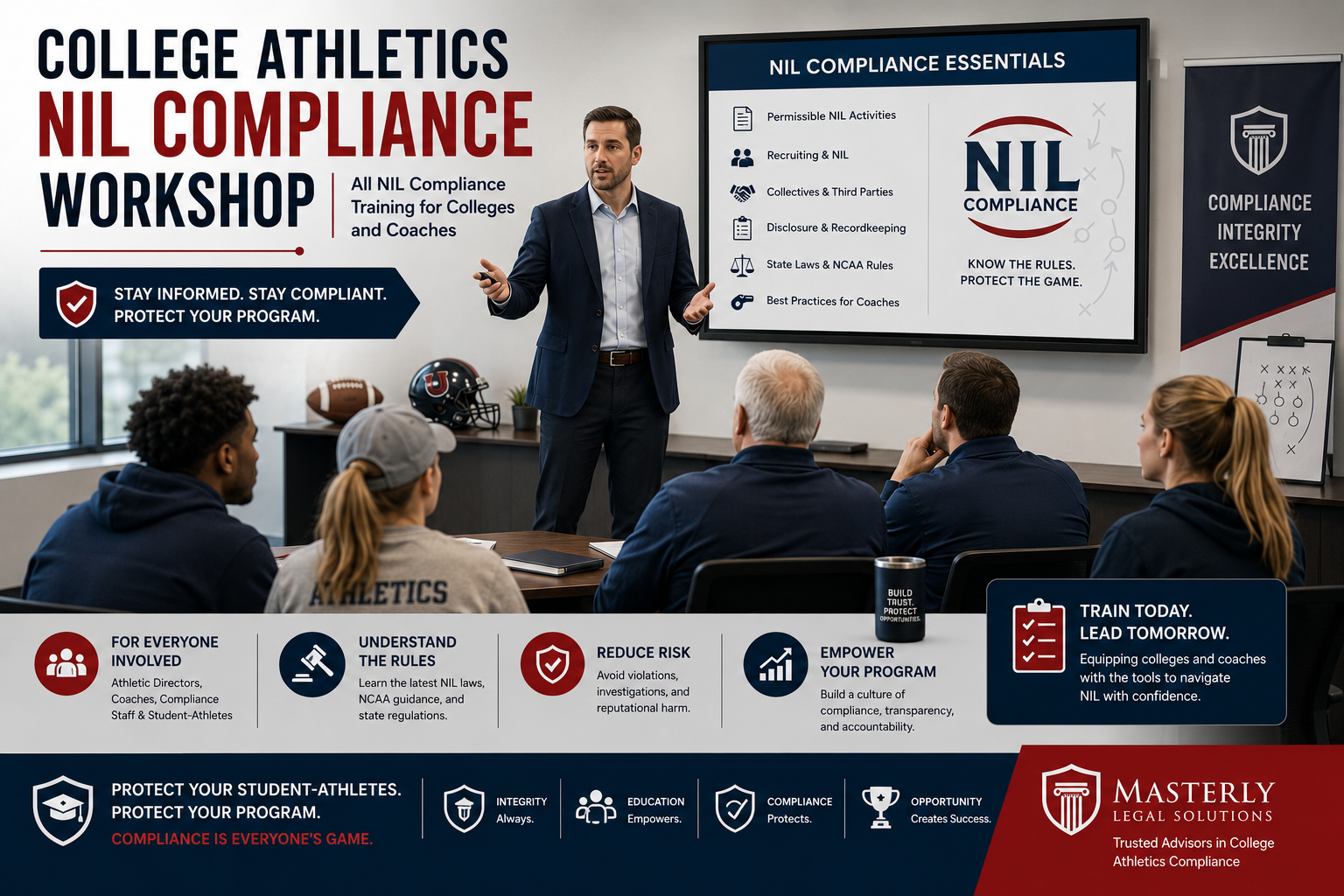
Professional NIL training helps coaches, administrators, compliance personnel, boosters, and athlete support staff understand institutional expectations and their individual responsibilities.
Training programs often focus on:
- Institutional and campus-level school policies
- Reporting procedures
- Documentation requirements
- Roles and responsibilities
- Communication standards
- Decision-making processes
Consistent education helps reduce confusion while supporting better collaboration across athletic departments.
NIL Education for Student Athletes Supports Better Choices
NIL student athletes face important decisions regarding opportunities involving their name, image, and likeness.
Comprehensive NIL education for athletes helps participants understand how NIL works before reviewing institutional expectations, disclosure requirements, contractual obligations, and available campus resources.
Educational programs also encourage athletes to seek guidance when questions arise rather than making important decisions without appropriate support.
Providing consistent education benefits both the athlete and the institution.
College Athletics Compliance Training Strengthens Institutional Programs
Effective college athletics compliance training extends beyond compliance offices.
Athletic directors, coaches, operations staff, administrators, boosters, collectives, and athlete support professionals all play important roles in maintaining institutional compliance.
Customized training helps organizations:
- Improve policy awareness
- Strengthen internal communication
- Promote consistent decision-making
- Clarify institutional expectations
- Reduce avoidable compliance risks
- Support ongoing education
When everyone understands the same standards, institutions operate with greater consistency.
Top 10 NIL Compliance Requirements and State NIL Laws
- Report All Qualifying Deals: Report all third party nil deals valued at $600 or more within five business days via NIL Go, the NCAA's centralized clearinghouse.
- Obtain Pre-Approval: Secure approval for NIL deals through your institution's compliance systems before finalizing agreements, especially deals involving institutional marks or facilities.
- Maintain Detailed Records: Complete records of all NIL activities are required for compliance - including contracts, compensation details, deliverables completed, communications, and tracked earnings.
- Comply with State-Specific Laws: State nil laws vary based on jurisdiction. Know the requirements in your state, as rules on agent registration, prohibited industries, and disclosure obligations differ significantly.
- Follow Institutional Policies: Each specific school may maintain its own nil rules. Institutions may restrict athletes' uses of logos and trademarks, prohibit certain sponsorship categories, and require internal review of deals.
- Report NIL Income Accurately: NIL income is generally taxable for student-athletes. Use proper documentation, track all nil money received, and file taxes correctly to avoid IRS complications.
- Avoid Pay-for-Play and Inducements: NIL deals cannot serve as recruiting inducements. Compensation must reflect fair market value for legitimate services - not for athletic performance or enrollment promises.
- Respect Intellectual Property: Avoid unauthorized use of school marks, logos, or facilities in NIL activities. Institutions often require explicit approval before their brand appears in any endorsement.
- Disclose Conflicts of Interest: Identify and report potential conflicts between NIL partnerships and existing institutional sponsorship agreements. Undisclosed conflicts can invalidate deals and trigger penalties.
- Stay Updated on Policy Changes: The NCAA approved rule changes in October 2025 increasing penalties for unreported deals, and stricter reporting requirements for high-school and transfer student-athletes are planned. Monitor evolving ncaa rules and enforcement actions continuously.
Our NIL Compliance Process
Step 1: Initial Compliance Assessment
We evaluate your current NIL activities and identify potential compliance gaps. This includes a thorough review of existing likeness deals and agreements for regulatory compliance, an assessment of institutional policies, and a comparison against current NCAA and state requirements. Whether you're a student-athlete with active deals or an institution building a program from scratch, this assessment provides a clear compliance baseline.
Step 2: Compliance Strategy Development
We create customized compliance plans based on your specific needs and goals. For student athletes, this means a personalized compliance checklist and deal evaluation framework. For institutions, we develop policies and procedures aligned with NCAA and state regulations, design monitoring systems for ongoing oversight, and identify areas where your program can save time and resources while maintaining full compliance.
Step 3: Implementation and Training
We implement compliance systems and approval processes across your organization. Student athletes receive comprehensive education on nil regulations, deal structures, and reporting obligations. Institutional staff - from the compliance office to coaching personnel - receive hands-on training. We establish clear communication channels so compliance questions are answered quickly and accurately.
Step 4: Ongoing Monitoring and Support
NIL compliance is not a one-time course - it requires continuous attention. We monitor all nil activities and regulatory changes in real time, conduct regular compliance reviews, and update policies as needed. The NCAA plans to create a centralized database to track NIL trends, and federal bills like the SAFE Act and the Protect College Sports Act continue to reshape the landscape. We provide ongoing support for urgent compliance questions and deal approvals to keep you protected.
Frequently Asked Questions
What happens if I don't report my NIL deals?
Non-compliance with NIL regulations can lead to legal and reputational consequences for both student athletes and institutions. Failure to report qualifying nil deals can result in loss of eligibility, meaning you may not be able to participate in NCAA competition. Invalidated NIL deals can arise from failing to meet compliance standards, and the NCAA has increased enforcement resources to identify noncompliance. Institutions face potential sanctions, investigation costs, and damage to their program's reputation. Timely reporting for all deals meeting the $600 threshold is essential - even for high school athletes and prospective student athletes considering Division I programs.
How quickly do NIL deals need to be reported?
Under current NCAA Division I rules, all non-institutional nil deals valued at $600 or more must be reported within five business days of execution via NIL Go. This includes aggregate payments from the same payer that total $600 or more. Certain types of NIL agreements - particularly those involving institutional marks, facilities, or associated entities - may require pre-approval. For time-sensitive opportunities, we offer expedited review processes to ensure you don't miss a deal while maintaining full compliance.
Do you provide ongoing compliance monitoring?
Yes. NIL rights are rooted in the legal principle of right of publicity, and the regulatory landscape governing those rights is constantly shifting. We provide comprehensive monitoring services that include regular compliance check-ins, proactive policy updates when ncaa rules or state law changes take effect, and continuous review of your nil activities. Our team tracks pending federal legislation, court rulings, and NCAA enforcement trends so you can focus on your sport, your education, and building your personal brand - while we handle the compliance details. Agents involved in NIL deals may need to be registered and certified, and we monitor those requirements on your behalf as well.
Request a Customized NIL Compliance Training Program
Managing NIL responsibilities requires clear policies, consistent education, and practical guidance for everyone involved in collegiate athletics.
Whether your institution is strengthening an existing compliance program or developing one for the first time, Masterly Consulting Group provides customized NIL compliance consulting and training tailored to your organization's needs.
Masterly Consulting Group
Website:
https://www.masterlygroup.com/
Phone:
(972) 236-5051
Contact Masterly Consulting Group today to request a customized NIL compliance training program and strengthen your institution's approach to NIL education, compliance, and organizational accountability.