The Future of College Athletics How Athletic Departments Can Stay Ahead with Strategic Consulting
College athletics is changing faster than many athletic departments were designed to manage.
New financial pressures, evolving governance expectations, NIL, changing student-athlete needs, technology, conference dynamics, staffing demands, and growing expectations from university leadership are forcing athletic departments to make decisions that affect far more than the next season.
The challenge is not simply responding to each new development.
Athletic departments need to decide what kind of organization they are becoming, which priorities deserve resources, what needs to change internally, and how leadership will move those decisions from strategy into execution.
That is where college athletics strategic planning becomes critical.
A strong strategic plan gives athletic directors and university leaders a structured way to evaluate where the department stands today, define where it needs to go, and organize the people, resources, systems, and decisions required to get there.
For departments facing significant change, strategic planning can also become the foundation for broader athletic department transformation.
The Future of College Athletics Requires More Than Reactive Decisions
Athletic departments have always operated in complex environments. What has changed is the number of major issues competing for leadership attention at the same time.
An athletic director may need to consider financial sustainability while evaluating staffing structures, student-athlete services, competitive priorities, compliance responsibilities, facilities, revenue opportunities, technology, and institutional expectations.
When those decisions are handled separately, departments can become reactive.
One initiative receives funding without considering another priority. New responsibilities are added without examining staff capacity. Technology is purchased before processes are defined. Leadership announces goals without establishing clear ownership or measures of progress.
Over time, the department can become busy without becoming more strategically aligned.
College athletics strategic planning creates a framework for making those decisions together.
Instead of asking only, “What should we do about this issue?” leadership can ask larger questions:
- Where is the athletic department trying to go?
- Which priorities matter most over the next three to five years?
- What capabilities will the department need?
- Where are current structures creating friction?
- What should receive additional investment?
- What should be redesigned, consolidated, or stopped?
- Who owns each strategic priority?
- How will leadership know whether transformation is working?
Those questions move the conversation from reacting to change toward deliberately managing it.
Strategic Planning Should Start With the Current State
Transformation should not begin with a list of new initiatives.
It should begin with an accurate understanding of the department as it operates today.
Athletic departments can have strong people and successful programs while still carrying structural problems that make future growth difficult. Responsibilities may overlap. Decision authority may be unclear. Departments may depend heavily on informal processes or individual employees. Strategic priorities may compete for the same limited resources.
A current-state assessment can examine areas such as:
Leadership and governance: Who makes important decisions? Where does authority sit? Which decisions require university involvement?
Organizational structure: Do roles and reporting relationships support current priorities, or were they built for an earlier version of the department?
Operations: Where do processes, handoffs, approvals, or communication repeatedly create delays?
Financial priorities: How are limited resources allocated across competitive performance, student-athlete support, staffing, facilities, technology, and revenue initiatives?
People and capacity: Does the department have the staff capacity and capabilities required for its strategic priorities?
Technology and data: Are systems helping leaders make decisions, or creating fragmented information and duplicated work?
Performance measurement: Does leadership have meaningful measures for determining whether major initiatives are producing results?
This assessment establishes the starting point for a realistic transformation plan.
College Athletics Strategic Planning Requires Clear Choices
A strategic plan should not become a long document containing every possible improvement.
Strategy requires choices.
If everything is a priority, leadership has no practical framework for deciding where money, staff time, and executive attention should go.
Athletic departments may identify priorities involving areas such as:
- financial sustainability
- student-athlete experience
- competitive performance
- organizational effectiveness
- revenue development
- governance and compliance
- staff development and retention
- technology modernization
- facilities and capital planning
- community and stakeholder engagement
The specific priorities will differ by institution.
The important part is determining which outcomes matter most and establishing the sequence in which the organization should pursue them.
A department with major operational problems may need to strengthen its internal structure before launching several new initiatives. Another may have solid operations but need a clearer financial model. A growing program may need new governance and staffing structures before expansion creates additional complexity.
Strategic planning connects those decisions instead of treating them as unrelated projects.
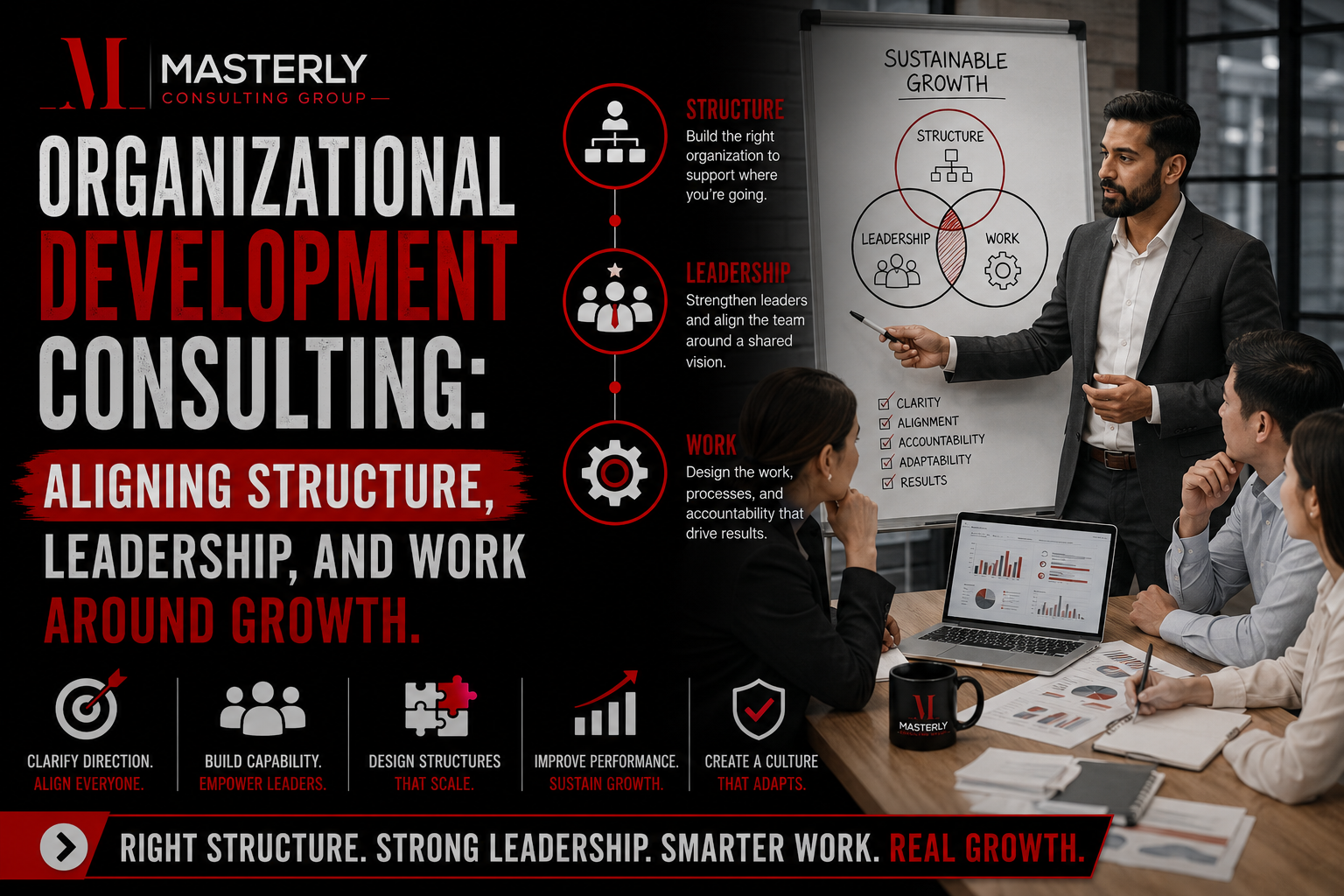
Athletic Department Transformation Often Requires an Operating-Model Review
Sometimes the strategic destination is clear, but the existing organization is not structured to reach it.
That creates an operating-model problem.
The athletic department may need to evaluate how work, authority, accountability, information, and resources move across the organization.
For example, leadership might discover that several departments share responsibility for an important initiative but nobody has final ownership.
Another department may find that senior leaders are spending too much time resolving routine operational issues because decision authority has not been delegated clearly.
Transformation planning can examine whether the department needs changes in:
- organizational structure
- reporting relationships
- role clarity
- decision rights
- meeting cadence
- cross-functional coordination
- performance reporting
- resource allocation
- leadership accountability
The objective is not organizational change for its own sake.
Any structural change should support a clearly defined strategic need.
Resource Allocation Must Follow Strategy
Athletic departments operate with real constraints.
Even departments with significant resources must make choices about staffing, facilities, technology, programs, student-athlete support, marketing, fundraising, and other priorities.
Strategic planning helps leadership connect spending decisions to institutional priorities.
Instead of evaluating investments individually, leaders can ask whether each investment supports the department's larger transformation agenda.
That distinction becomes increasingly important when multiple initiatives are competing for funding.
A new platform might be valuable. Additional staff may be justified. A facility improvement may support recruitment or the student-athlete experience.
But each decision should be evaluated within the same strategic framework.
Leadership should understand what the investment is intended to accomplish, how it supports a priority, who owns the outcome, and what tradeoffs are being made.
Transformation Needs an Implementation Roadmap
A strategic plan has limited value if the department cannot execute it.
One of the most common gaps between strategy and transformation is the absence of an implementation structure.
Once priorities are established, leadership needs to translate them into specific initiatives.
Each major initiative should have:
Clear ownership. Someone must be accountable for moving the work forward.
Defined outcomes. Leadership should understand what success looks like.
Milestones. Large transformation efforts need intermediate measures of progress.
Dependencies. Some initiatives cannot begin until staffing, funding, technology, approvals, or other projects are addressed.
Resources. Leaders should understand what people, funding, and external support will be required.
Performance measures. Progress should be evaluated against meaningful indicators rather than activity alone.
This creates a strategic roadmap that leadership can actually manage.
Leadership Alignment Is Essential to Athletic Department Transformation
Transformation becomes difficult when senior leaders agree that change is necessary but disagree about what should change first.
Athletic directors, university executives, coaches, administrators, boards, and other stakeholders may view departmental priorities differently.
Those differences are not necessarily a problem.
They become a problem when they remain unresolved.
Strategic planning creates a structured environment for leadership to clarify priorities, evaluate tradeoffs, establish decision criteria, and determine who is responsible for execution.
That alignment matters because employees notice when leadership sends conflicting signals.
If one leader emphasizes cost control while another continues expanding initiatives, staff may struggle to determine the real priority.
If leadership announces transformation but existing processes, incentives, and decision structures remain unchanged, employees may reasonably continue operating the way they always have.
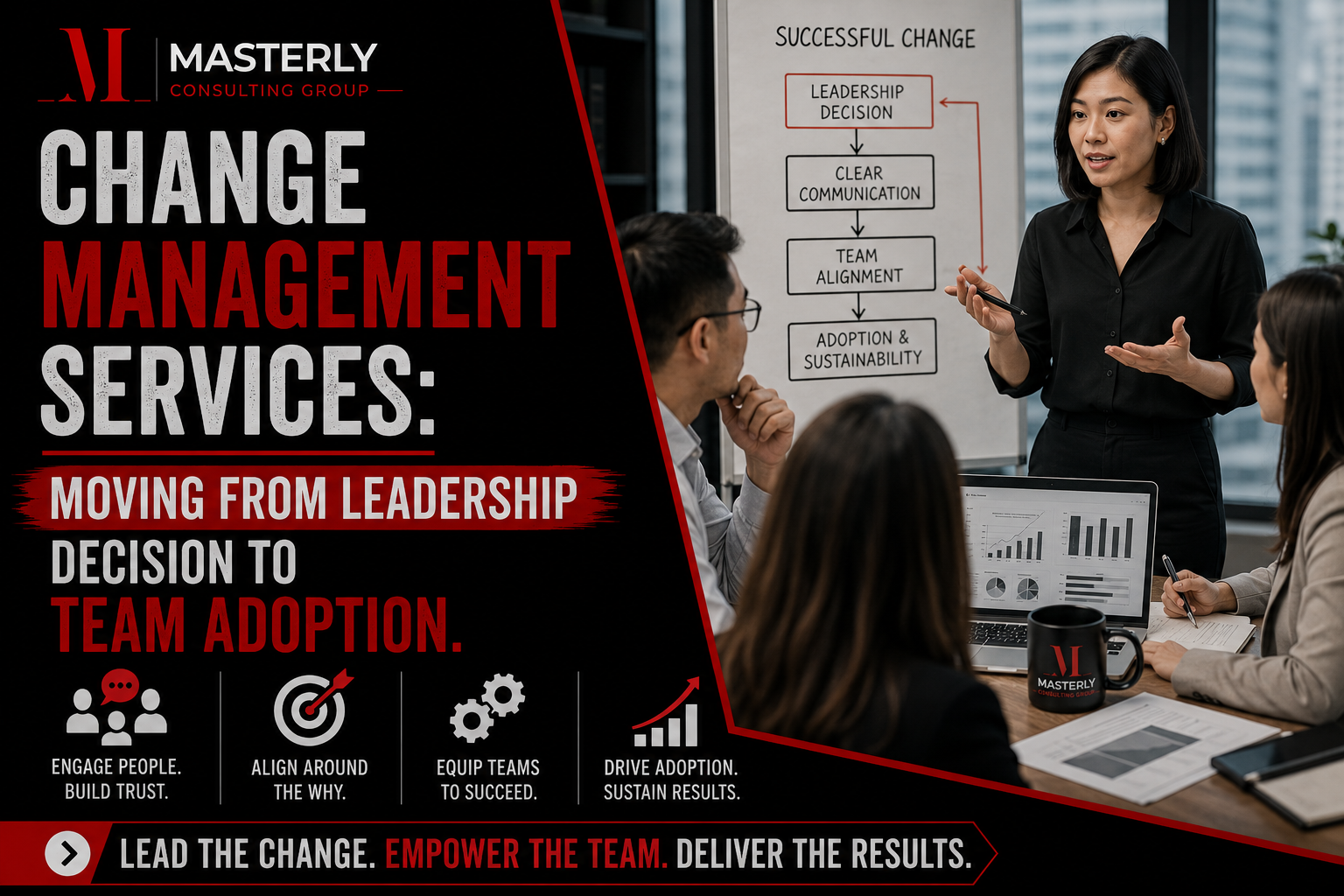
Successful transformation requires consistency between what leadership says and how the department actually operates.
Strategic Plans Should Be Built to Adapt
A five-year strategic plan should not assume that college athletics will remain unchanged for five years.
The plan should provide direction without preventing adaptation.
Leadership can establish a longer-term strategic destination while reviewing assumptions and priorities at regular intervals.
That may include quarterly implementation reviews and deeper annual strategic reviews.
The department can ask:
Are our original assumptions still valid?
Have financial or regulatory conditions changed?
Are strategic initiatives producing the expected results?
Have new risks emerged?
Does leadership need to adjust sequencing or resource allocation?
Are we adding projects that do not support the established strategy?
This keeps the strategic plan active rather than allowing it to become a document that is discussed once and rarely revisited.
When Outside Strategic Support Can Help
Some athletic departments can manage strategic planning primarily through their internal leadership team.
Others benefit from an outside strategic partner when the transformation involves significant complexity, competing stakeholder priorities, organizational redesign, or difficult decisions.
External support can provide structure and independent analysis without replacing institutional leadership.
A strategic consulting engagement may help leadership:
- assess the department's current state
- facilitate leadership and stakeholder discussions
- clarify strategic priorities
- evaluate organizational and operational gaps
- define decision rights and accountability
- develop transformation initiatives
- sequence major priorities
- establish implementation milestones
- create performance measures
- build a management cadence for reviewing progress
The department still owns the strategy.
The consultant helps leadership develop a clearer process for making and executing the decisions behind it.
How Masterly Consulting Group Supports Athletic Department Strategic Planning
Masterly Consulting Group works with organizations that need to move from broad goals to clearer strategy, operating priorities, and execution.
For athletic departments, that can mean helping leadership examine how the department needs to evolve and building a practical roadmap for that transformation.
Our work can support areas including strategic assessment, organizational alignment, operating-model evaluation, leadership decision-making, governance, implementation planning, and performance measurement.
The objective is not to produce a larger strategic plan.
It is to help leadership create a strategy the organization can actually execute.
That means connecting the department's future direction with the decisions being made today about people, resources, systems, priorities, and accountability.

Frequently Asked Questions About College Athletics Strategic Planning
What is college athletics strategic planning?
College athletics strategic planning is the process of defining an athletic department's future priorities and connecting those priorities to organizational structure, resources, operations, leadership decisions, and measurable outcomes.
When should an athletic department update its strategic plan?
A department should consider reviewing its strategy when major financial, regulatory, leadership, organizational, competitive, or institutional changes make existing assumptions or priorities less useful.
What is the difference between strategic planning and athletic department transformation?
Strategic planning defines where the department intends to go and the choices required to get there. Athletic department transformation is the broader organizational change required to execute that strategy.
Can strategic planning include organizational structure?
Yes. When existing roles, reporting relationships, decision rights, or processes prevent the department from executing its priorities, organizational design can become an important part of the strategic planning process.
Does an outside consultant make decisions for the athletic department?
No. Institutional leadership retains responsibility for strategic decisions. An outside strategic partner can provide analysis, facilitation, frameworks, and implementation support that help leaders make those decisions more effectively.
Build the Next Version of Your Athletic Department Deliberately
The future of college athletics will continue to create new pressures, opportunities, and decisions.
Athletic departments cannot control every external change.
They can control how deliberately they prepare for it.
A clear strategy can help leadership determine what matters most, where resources should go, how the organization needs to evolve, and how major priorities will move from discussion into execution.
If your department is preparing for significant change, college athletics strategic planning can provide the structure needed to turn uncertainty into a manageable transformation agenda.
Masterly Consulting Group can help athletic and university leaders assess the current state, establish strategic priorities, align the operating model, and develop an actionable transformation roadmap.
Call (972) 236-5051 to discuss strategic planning and transformation support for your athletic department.