HIPAA Compliance for Law Firms | HIPAA Privacy Lawyer
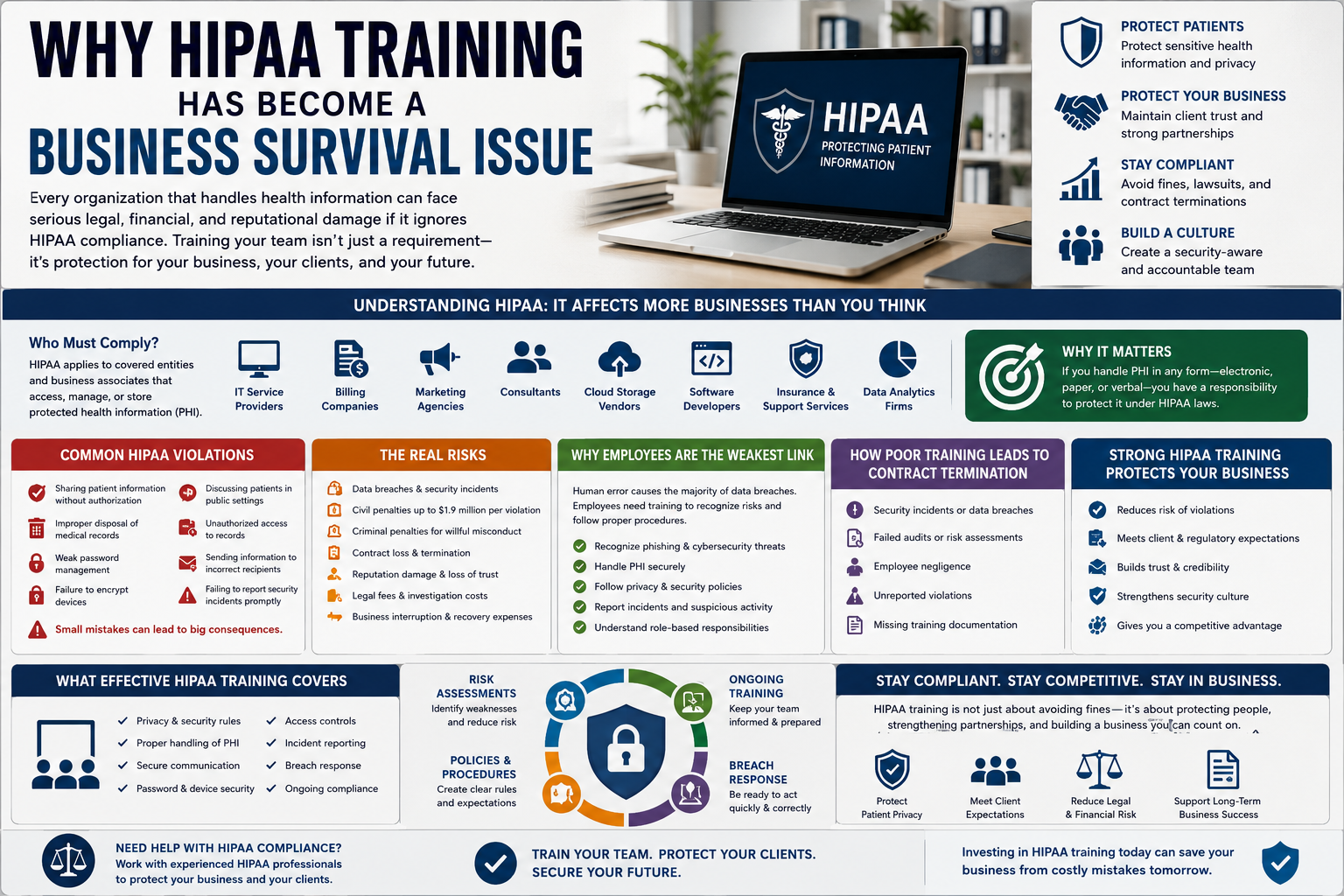
Why HIPAA Training Has Become a Business Survival Issue
Many companies working in the healthcare industry assume HIPAA training is only important for hospitals, doctors, and large healthcare providers. That belief has created major legal and financial problems for countless organizations over the years. Today, almost every organization that handles health information in any form can face liability under HIPAA laws if proper compliance measures are ignored.
Business associates often underestimate the seriousness of HIPAA compliance until a contract is terminated or a data breach occurs. By that point, the damage has already started. Clients may lose trust, healthcare organizations may end partnerships, and regulatory investigations can create expensive complications that affect the future of the organization.
The Health Insurance Portability and Accountability Act was designed to protect sensitive patient information and establish standards for privacy and security throughout the healthcare industry. The portability and accountability act continues to evolve as technology changes and new threats emerge. Organizations that fail to adapt often expose themselves to unnecessary risk.
Modern healthcare depends heavily on outside vendors, consultants, software providers, billing companies, and third party administrator services. These business associates regularly access protected health information through electronic media, cloud systems, communication platforms, and patient databases. Without proper training and compliance practices, even small mistakes can create major HIPAA violations.
Many organizations believe cybersecurity tools alone are enough to avoid liability. However, technology cannot replace employee awareness, internal training, and strong compliance systems. Human error remains one of the most common causes of data breaches and security incidents across the healthcare sector.
Companies that invest in consistent HIPAA training create safer environments for patients, employees, healthcare professionals, and business partners. They also reduce the risk of civil penalties, criminal penalties, and contract disputes that can severely damage business operations.
Understanding HIPAA and Why It Matters for Business Associates
Understanding HIPAA begins with recognizing that the law affects far more than hospitals and medical offices. The health insurance portability and accountability act applies to covered entities and business associates that access, manage, transmit, or store health information.
A business associate can include:
- IT service providers
- Billing companies
- Marketing agencies
- Consultants
- Cloud storage vendors
- Software developers
- Insurance support companies
- Data analytics firms
These organizations may handle patient records, medical records, insurance claims, appointment scheduling information, or other forms of protected health information. Even indirect access to patient information can create HIPAA obligations.
HIPAA regulations require organizations to establish privacy and security safeguards that protect patient privacy and healthcare privacy. The law was created to ensure that patients maintain confidence in how their health information is handled and protected.
The accountability act hipaa framework also works alongside the HITECH Act, which strengthened enforcement standards and expanded breach notification requirements. As digital systems became more common, the federal law evolved to address electronic records and growing cybersecurity concerns
.
Business associates who fail to understand their responsibilities under HIPAA rules can quickly expose themselves to lawsuits, investigations, and terminated contracts. Many organizations discover too late that their compliance gaps created significant liability.
The Growing Risk Facing Healthcare Vendors
The healthcare industry depends heavily on outside support services. Billing platforms, software systems, telehealth vendors, consultants, and data management companies now play major roles in patient care operations.
As healthcare technology expands, more organizations gain access to sensitive health information. Unfortunately, that expansion has also increased security incidents, ransomware attacks, phishing schemes, and accidental disclosures involving patient data.
Healthcare organizations are becoming more selective about the vendors they choose. They expect vendors to demonstrate HIPAA compliance before entering contracts. If a vendor lacks proper training, documentation, or privacy and security protocols, the healthcare provider may view that company as a liability.
Contract terminations often happen quietly. A hospital or healthcare organization may simply choose another vendor with stronger compliance systems rather than risk future HIPAA violations. Losing one contract can also damage relationships with other clients who become concerned about security practices.
Business associates that ignore HIPAA training may struggle to compete in modern healthcare environments where trust and security are critical. Organizations with stronger compliance programs often gain a major advantage during contract negotiations.
Common HIPAA Violations That Lead to Liability
Many HIPAA violations happen because employees never received proper training. Staff members may unintentionally expose protected health information through careless communication, weak passwords, or improper handling of records.
Some of the most common HIPAA violations include:
- Sharing patient information without authorization
- Improper disposal of medical records
- Weak password management
- Failure to encrypt devices
- Discussing patients in public settings
- Unauthorized access to records
- Sending information to incorrect recipients
- Failing to report security incidents quickly
These common violations may appear small at first, but they can trigger major investigations from health and human services regulators. In some cases, organizations face both civil penalties and criminal penalties depending on the severity of the conduct.
The Office for Civil Rights within health and human services investigates many HIPAA violations involving healthcare organizations and business associates. Investigations can become expensive, stressful, and damaging to a company’s reputation.
Organizations that invest in HIPAA training significantly reduce the likelihood of preventable mistakes. Employees who understand privacy requirements are more likely to recognize risks before serious problems occur.
Why Employees Are Often the Weakest Link
Technology alone cannot guarantee security. Many data breaches occur because employees make avoidable mistakes while handling health information.
An employee may click a phishing email, leave patient records visible on a desk, or improperly share login credentials. These situations happen every day across healthcare environments. Without training, employees may not understand the consequences of their actions.
HIPAA training helps employees understand how privacy and security rules apply to their daily responsibilities. Training should explain:
- Proper handling of patient records
- Secure communication methods
- Password protection
- Device security
- Reporting procedures
- Access limitations
- Privacy rule expectations
Organizations that treat training as a one-time event often struggle with long-term compliance. Employees need continuous education as HIPAA regulations and cybersecurity threats evolve.
Regular training sessions also demonstrate that the organization takes compliance seriously. This can become important during investigations or contract reviews.
How Poor Training Leads to Contract Terminations
Healthcare providers expect vendors to protect patient information responsibly. When a vendor experiences repeated HIPAA violations or fails to maintain strong compliance systems, healthcare clients may terminate contracts immediately.
In many cases, the problem is not intentional misconduct. Instead, the issue comes from weak training programs, outdated policies, or poor internal oversight.
Healthcare organizations want reassurance that their vendors understand HIPAA privacy obligations and security rules. If a vendor cannot demonstrate proper HIPAA compliance, trust quickly disappears.
Contract terminations may happen after:
- Security incidents
- Data breaches
- Failed audits
- Employee negligence
- Unreported violations
- Missing training documentation
Losing a major healthcare client can create financial strain and reputational damage that affects future business opportunities. Some organizations never fully recover after a serious compliance failure becomes public.
The Financial Impact of HIPAA Violations
Many business associates underestimate how expensive HIPAA violations can become. Regulatory fines are only one part of the problem.
Organizations may also face:
- Legal defense costs
- Contract losses
- Reputation damage
- Investigation expenses
- Business interruptions
- Cybersecurity recovery costs
- Client notification expenses
The HITECH Act increased enforcement authority and strengthened penalties tied to HIPAA laws. Organizations can face substantial civil penalties when compliance failures expose patient information.
In severe situations involving intentional misconduct or fraud, criminal penalties may also apply. The financial impact can threaten the future of an organization, especially smaller businesses without strong compliance protections.
Proper HIPAA training is often far less expensive than dealing with the aftermath of a serious security failure.
Why HIPAA Compliance Is About More Than Avoiding Fines
Some companies approach compliance only as a legal requirement. While avoiding penalties matters, HIPAA compliance also helps organizations build trust and professionalism.
Patients expect healthcare organizations and vendors to respect health privacy. When organizations fail to protect patient information, public confidence suffers.
Strong compliance practices help organizations:
- Improve client relationships
- Protect brand reputation
- Build trust with healthcare providers
- Reduce operational risks
- Improve internal accountability
- Strengthen security culture
Healthcare organizations often prefer working with vendors who demonstrate professionalism and reliability through documented training and compliance efforts.
The Role of Risk Assessments in HIPAA Compliance
Risk assessments are a critical part of HIPAA compliance programs. Organizations cannot fix vulnerabilities they fail to identify.
A proper risk assessment evaluates:
- Security weaknesses
- Employee practices
- Access controls
- Data storage methods
- Device protections
- Communication systems
- Third-party risks
Risk assessments help organizations understand where protected health information may be vulnerable. They also help prioritize improvements before security incidents occur.
Healthcare providers increasingly expect vendors to conduct regular risk assessments as part of their compliance obligations.
Why HIPAA Training Should Be Ongoing
One of the biggest compliance mistakes organizations make is assuming one training session is enough. HIPAA regulations evolve constantly as technology changes and new cybersecurity risks emerge.
Employees need ongoing training to stay informed about:
- Latest HIPAA regulations
- Emerging threats
- Updated policies
- New technologies
- Reporting obligations
- Security procedures
Ongoing training also reinforces organizational expectations and strengthens accountability. Employees who receive consistent education are more likely to recognize suspicious behavior or risky situations.
Organizations should create training schedules that support long-term compliance rather than treating training as a one-time checklist item.
The Importance of Privacy and Security Culture
Strong compliance programs depend heavily on organizational culture. Employees are more likely to follow privacy and security expectations when leadership actively supports compliance efforts.
Organizations should encourage employees to report concerns without fear of retaliation. Open communication helps identify problems before they escalate into serious HIPAA violations.
Leadership should also model strong compliance behavior. Employees pay attention to whether managers follow the same standards expected of everyone else.
A culture focused on health information privacy creates stronger protection for patients and reduces organizational liability.
HIPAA Training for Remote Employees
Remote work has created new compliance challenges across the healthcare industry. Employees accessing systems from home may expose patient information through unsecured networks or personal devices.
Organizations must ensure remote employees understand how HIPAA regulations apply outside traditional office environments. Training should address:
- Secure Wi-Fi usage
- Device encryption
- Password security
- Remote access protections
- Physical document security
- Video conferencing risks
Remote work does not eliminate HIPAA obligations. Organizations remain responsible for protecting protected health information regardless of where employees perform their work.
Why Healthcare Organizations Demand Better Vendor Compliance
Healthcare providers face significant pressure to protect patient information. Because of that responsibility, many organizations now conduct extensive vendor reviews before signing contracts.
Healthcare organizations may request:
- Training records
- Compliance documentation
- Security policies
- Risk assessment reports
- Breach response plans
- Cybersecurity procedures
Vendors unable to provide this information may lose opportunities to competitors with stronger compliance systems.
Business associates who invest in compliance often gain a competitive advantage in the healthcare marketplace.
The Relationship Between HIPAA and State Laws
HIPAA is not the only law organizations must consider. Many state laws create additional privacy obligations that may be stricter than federal requirements.
Organizations operating across multiple states often face complex regulations involving both HIPAA laws and state laws. This can create confusion for employees and management teams.
Proper training helps organizations understand how state laws interact with federal law requirements. Ignoring local regulations can create additional liability even when organizations believe they are following HIPAA standards.
Compliance strategies should account for both federal and state-level privacy obligations.
How Data Monetization Creates Compliance Risks
Many organizations now use data analytics and health information technology to improve operations and business performance. However, data monetization strategies can create serious HIPAA risks when organizations fail to understand legal limitations.
Using patient data improperly for marketing, analytics, or commercial purposes may violate HIPAA privacy protections. Organizations must carefully evaluate how patient information is collected, stored, shared, and analyzed.
Data monetization practices should always be reviewed through a compliance and legal lens before implementation.
Healthcare organizations are becoming increasingly cautious about vendors involved in data monetization because of growing regulatory scrutiny.
The Importance of Breach Response Planning
No organization can eliminate every risk completely. Even strong compliance programs may eventually face security incidents or cyberattacks.
A proper breach response plan helps organizations respond quickly and professionally when problems occur. Delayed responses often make situations worse.
Breach response planning should include:
- Incident reporting procedures
- Internal investigation steps
- Client communication protocols
- Legal response coordination
- Notification obligations
- Security containment measures
Organizations without clear breach response procedures often struggle during emergencies.
Why HIPAA Training Matters for Employers
Employers working with healthcare organizations may also face HIPAA responsibilities depending on the type of health information involved.
Human resources departments, employee wellness programs, and insurance administration teams often handle sensitive health information tied to employees and health plans.
Improper handling of employee health information can create major compliance issues. Employers should ensure staff members understand how privacy obligations apply within workplace settings.
Training helps employees recognize the difference between general workplace information and protected health information governed by HIPAA.
HIPAA Compliance in Nursing Homes and Long-Term Care
Nursing homes and long-term care facilities face unique HIPAA challenges because employees regularly interact with vulnerable patients and sensitive records.
Staff members in these environments often manage:
- Patient records
- Medication information
- Billing data
- Insurance documentation
- Family communications
Without proper training, accidental disclosures can happen easily. Facilities must ensure employees understand privacy requirements and patient rights.
Healthcare professionals working in nursing homes should receive specialized HIPAA training tailored to their responsibilities.
Why Healthcare Professionals Need Specialized Training
Doctors, nurses, consultants, administrators, and other healthcare professionals often interact with protected health information daily. Generic compliance programs may not address the unique risks tied to different roles.
Specialized training helps employees understand:
- Role-specific obligations
- Access limitations
- Documentation standards
- Communication procedures
- Reporting responsibilities
Customized training programs are often more effective than broad generic presentations.
The Growing Importance of Cybersecurity in HIPAA Compliance
Cybersecurity threats continue increasing across healthcare environments. Ransomware attacks, phishing scams, and hacking attempts target organizations handling valuable health information.
HIPAA compliance now requires organizations to think beyond paper records and physical file cabinets. Digital security plays a major role in protecting patient privacy.
Organizations should combine HIPAA training with cybersecurity education to strengthen protection efforts.
Employees who understand both compliance and cybersecurity risks are better equipped to identify suspicious behavior before damage occurs.
Why Organizations Need Legal Guidance
HIPAA compliance involves complex situations that many organizations struggle to navigate alone. Regulations change regularly, and enforcement standards continue evolving.
Organizations often benefit from working with professionals who have significant experience handling HIPAA matters. Legal guidance can help organizations identify vulnerabilities, improve policies, and reduce liability risks.
A hipaa law lawyer may assist organizations with:
- Compliance audits
- Breach response
- Policy development
- Training programs
- Investigation defense
- Contract reviews
Experienced advisors can also help organizations understand how HIPAA interacts with other privacy laws and healthcare regulations.
The Value of Proper Documentation
Documentation plays a major role in HIPAA compliance. Organizations should maintain records showing successful completion of training programs, risk assessments, policy updates, and compliance activities.
During investigations, documentation helps demonstrate that the organization made reasonable efforts to follow HIPAA rules and protect patient information.
Poor documentation can create additional problems even when organizations believe they followed proper procedures.
Why Leadership Involvement Matters
HIPAA compliance cannot succeed without leadership support. Executives and managers must actively participate in compliance efforts rather than delegating responsibility entirely to IT or HR departments.
Employees are more likely to prioritize compliance when leadership demonstrates commitment to privacy and security standards.
Leadership involvement also improves accountability throughout the organization.
Building Stronger Compliance Practices for the Future
Healthcare technology will continue evolving rapidly. Artificial intelligence, cloud systems, remote healthcare, and digital communication tools create new opportunities and new compliance risks.
Organizations that invest in strong training and compliance systems today will be better prepared for future challenges.
Long-term success depends on building adaptable compliance programs capable of evolving alongside changing regulations and technology.
Protecting Your Organization From Preventable Liability
Many HIPAA violations are preventable with the right education, policies, and oversight. Organizations that ignore compliance often discover problems only after patients, regulators, or clients raise concerns.
Preventive training helps organizations reduce risks before security incidents occur. It also creates stronger trust with healthcare providers, health plans, patients, and other clients.
Strong compliance programs demonstrate professionalism, accountability, and commitment to patient privacy.
Partner With Masterly Consulting Group for HIPAA Training and Compliance Support
Navigating HIPAA compliance can feel overwhelming, especially for business associates handling sensitive health information across multiple systems and departments. Between evolving regulations, cybersecurity concerns, employee training requirements, and growing pressure from healthcare organizations, many companies struggle to keep their compliance programs current and effective.
At Masterly Consulting Group, we help organizations develop practical HIPAA training programs designed to reduce liability, strengthen privacy and security protections, and improve long-term compliance performance. Whether your organization needs guidance with risk assessments, employee training, breach response planning, healthcare privacy policies, or understanding complex regulations tied to the healthcare industry, our team is ready to help.
We have advised clients across a wide range of healthcare environments, helping organizations create stronger compliance systems that support patient privacy, operational efficiency, and long-term business growth. Our goal is to help your organization avoid costly HIPAA violations while building trust with healthcare providers, employers, patients, and business partners.
If your organization wants to improve HIPAA compliance, reduce security risks, and strengthen employee awareness through effective training, contact Masterly Consulting Group at (888) 209-4055 to book a free consultation. We would be happy to answer your questions and discuss strategies tailored to your organization’s specific compliance needs.