Meeting Cadence: How Leadership Teams Set an Operating Rhythm
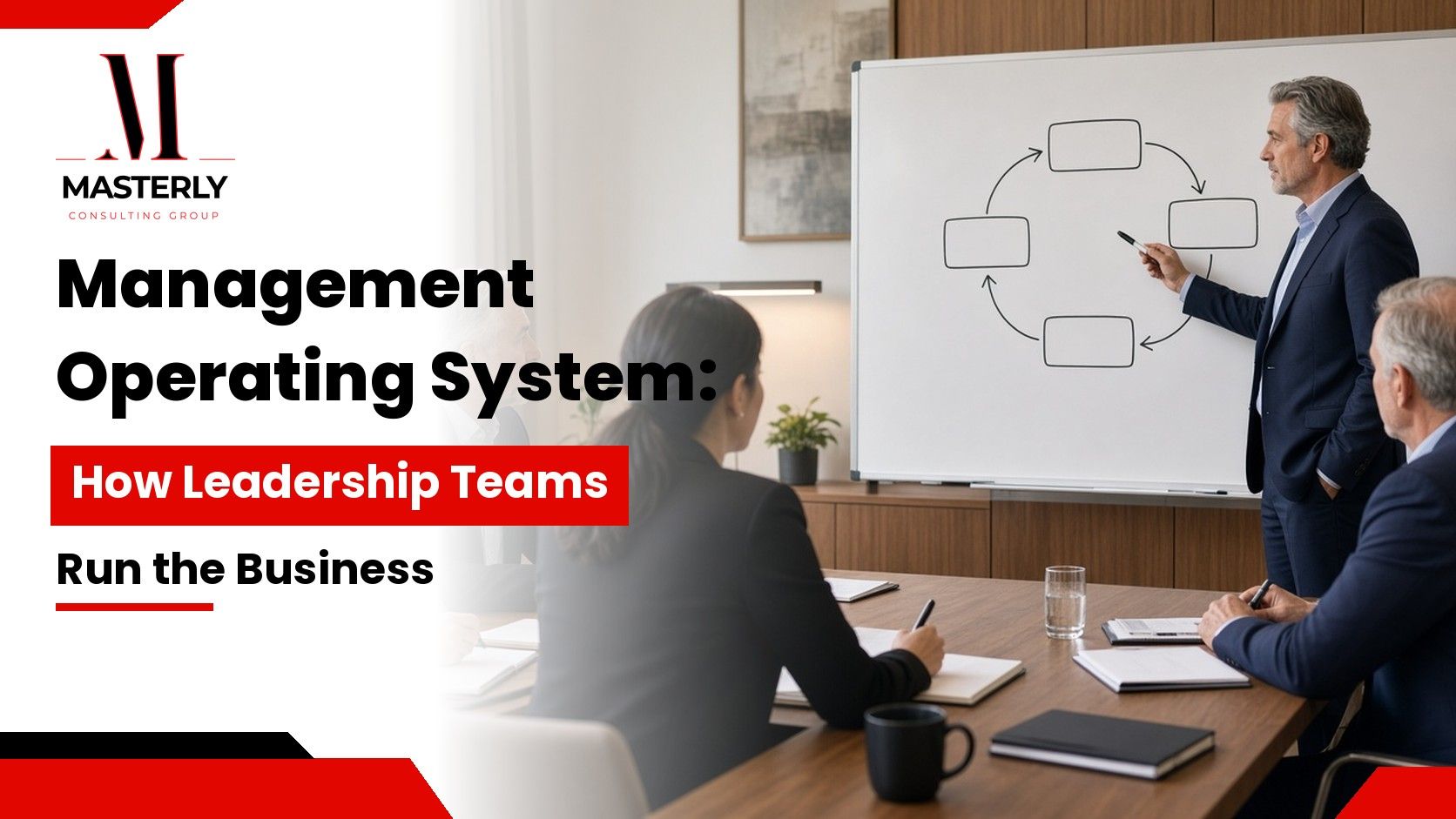
A meeting cadence is the planned schedule and frequency of a team's recurring meetings, with a clear purpose for each one. For a leadership team, the right meeting cadence usually layers a short weekly meeting, a deeper monthly review, and a quarterly session, so decisions get made on time and work is checked between meetings.
A good meeting cadence is not a longer calendar of status updates. Done well, it reduces ad hoc meetings because every important question already has a place to land. This guide explains how to design a meeting cadence for leadership teams, who should attend, how to protect focus time, and how to tell when the rhythm needs to change.

What a Meeting Cadence Is, and What It Is Not
Meeting cadence refers to the operating rhythm of a team: which meetings happen, how often, who attends, and what each one is expected to produce. Many organizations also call it an operating cadence, a management rhythm, or a meeting schedule.
Cadence and schedule are related but not identical. A schedule says when a meeting happens and puts it on a recurring schedule. A cadence says why it happens at that interval, how it connects to the meetings above and below it, and what decision or output it is responsible for.
A cadence is also not the same thing as a goal framework. Goals describe what the team is trying to achieve. The cadence is how the team reviews progress, removes blockers, and makes decisions on time. For goal setting, see our OKR framework article. For how priorities become measurable work, see strategy execution.
Why Leadership Teams Need a Deliberate Meeting Cadence
Meeting load has grown for decades. In a 2017 Harvard Business Review article, researchers Leslie Perlow, Constance Noonan Hadley, and Eunice Eun reported that executives spend an average of nearly 23 hours a week in meetings, up from less than 10 hours in the 1960s.
The problem is not only volume. It is meeting effectiveness. In Microsoft's 2023 Work Trend Index, a survey of 31,000 workers in 31 markets, people ranked inefficient meetings as their number one productivity disruptor, and 68 percent said they do not have enough uninterrupted focus time during the workday. More than half reported that next steps at the end of a meeting are unclear.
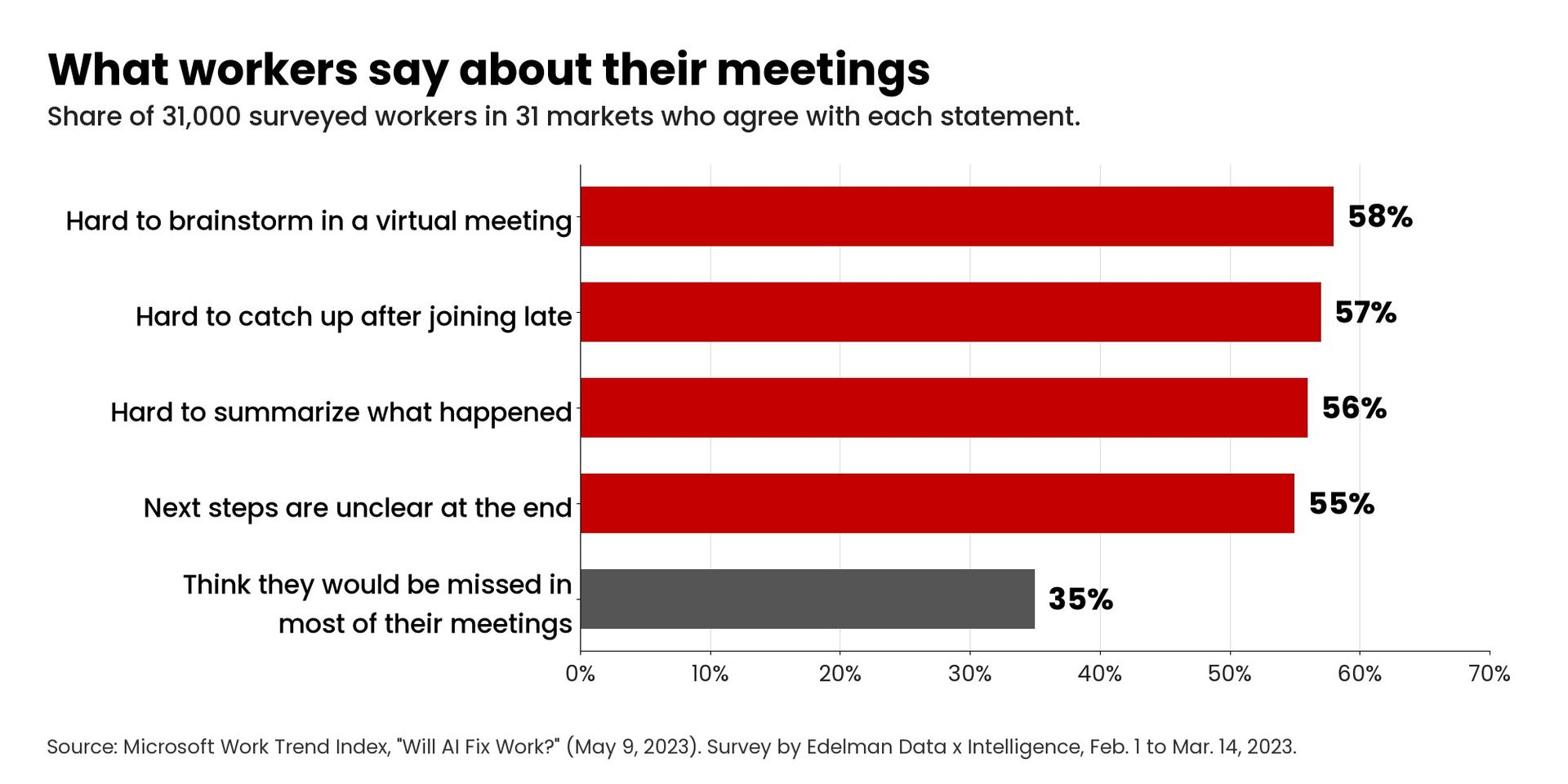
Those findings point to the same fix. A leadership team does not need more meetings. It needs fewer meetings, each with a defined job, plus a reliable way to carry decisions from one meeting to the next.
The Layers of a Leadership Meeting Cadence
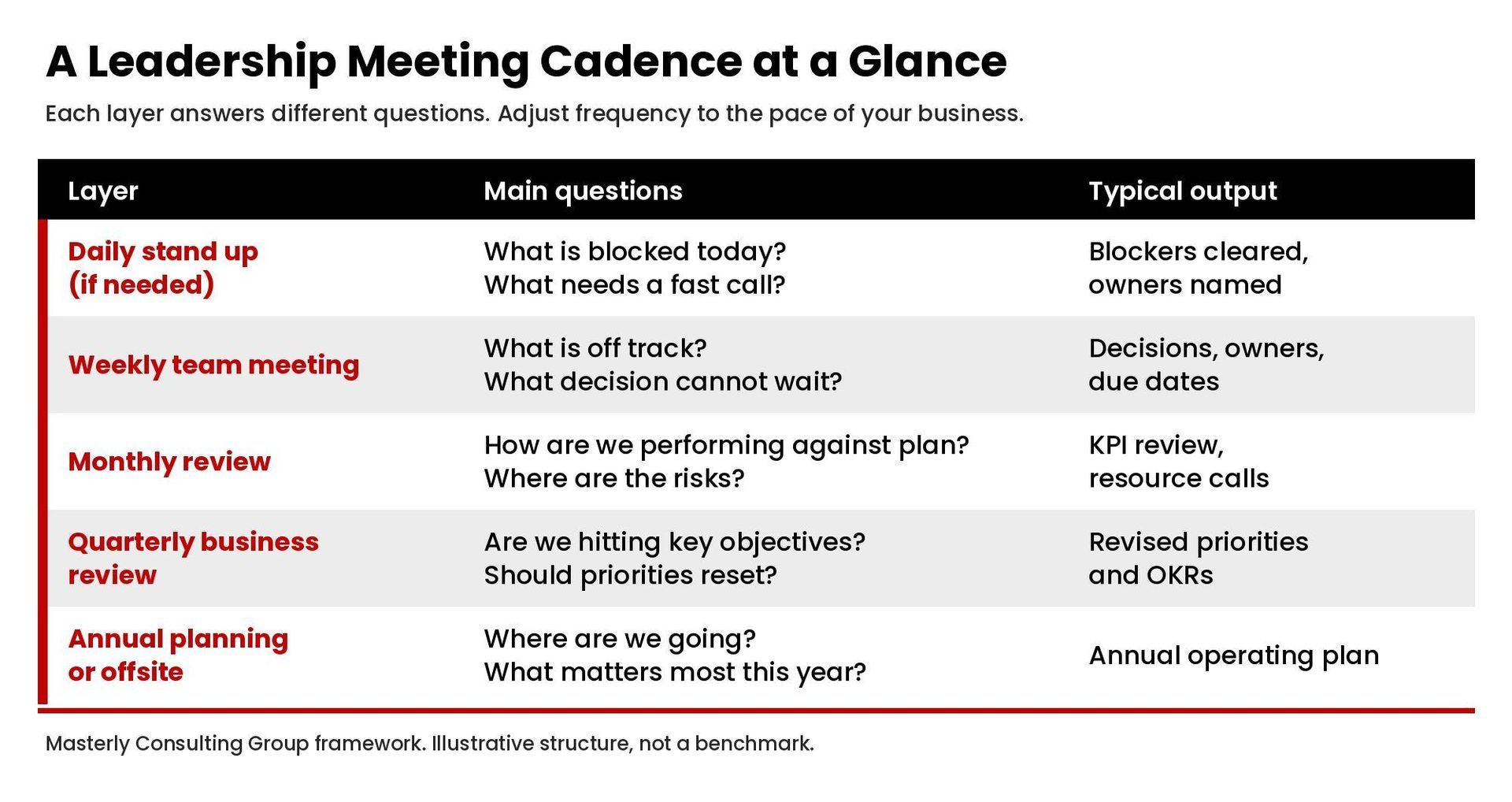
Most leadership teams need more than one layer, but they do not need many. Each layer should answer different questions.
Daily Stand Ups (Only Where the Work Demands Them)
Daily stand ups are common in fast-moving operating and project teams, where blockers can stall work within hours. Many teams keep them to about 15 minutes. Most executive teams do not need a daily meeting; if the leadership team holds one, it should be limited to urgent exceptions.
The Weekly Team Meeting
The weekly team meeting is the core of most cadences, and the weekly cadence is where team members raise immediate priorities. It handles exceptions, decisions that cannot wait, commitments that are off track, and priorities for the upcoming week. It should be short enough to protect, and disciplined enough that people trust it as the place where issues get resolved.
Monthly Meetings
Monthly meetings go deeper on performance against plan, cross-functional dependencies, resourcing, and risks. This is where a leadership team looks at trends rather than single data points, and where the KPI review and progress reviews usually live. A monthly cadence gives enough time for meaningful progress to show up in the numbers.
Quarterly Meetings and Business Reviews
Quarterly meetings step back to strategy: results against key objectives, what changed in the market, and whether priorities should reset. Many companies run this as a quarterly business review, and many tie it to their OKR cycle. Quarterly meetings are also where major strategic shifts should surface, rather than in a rushed weekly agenda.
Annual Planning and Offsites
Once a year, the annual cadence gives the team time for vision setting, often over half a day or more. The team sets direction, approves the annual operating plan, and decides which few priorities matter most. The annual session sets the agenda for every quarterly, monthly, and weekly meeting that follows.
How to Design the Right Meeting Cadence
Start with the decisions the team must make, not with the calendar.
- List the recurring decisions. Write down the questions that already consume leadership time: performance against plan, customer or delivery risk, resource allocation, hiring, pricing, and issues that need a cross-functional call.
- Group them by speed. Decisions that cannot wait more than a few days belong in the weekly meeting. Decisions that need data over several weeks belong in the monthly review. Direction and priorities belong in the quarterly and annual sessions.
- Write one purpose sentence per meeting. If you cannot describe a meeting's purpose in one sentence, it is probably trying to do two jobs.
- Set a consistent agenda. Each meeting type gets a standing agenda that matches its purpose. Items that do not fit go to a different forum or to a written update.
- Define the output. Every meeting should produce something specific: decisions, owners, due dates, or a revised priority list.
- Match frequency to the pace of the business. A team that closes work in short cycles may need a tighter weekly rhythm. A team whose results move more slowly may do better with a stronger monthly and quarterly cycle and a lighter weekly meeting.
There is no single perfect meeting cadence or ideal meeting cadence for every company. The test is practical: issues should not wait too long for a decision, and the same issue should not be discussed in every meeting.
Adjust the Cadence for Team Size, Remote Teams, and the Board
Team size changes the math. A leadership team of five can decide in the room; a team of twelve usually needs tighter pre-reads and a smaller decision group, or the meeting turns into a briefing. Meeting frequency should rise for fast moving projects and fall once work stabilizes; a more frequent meeting cadence is a temporary tool, not a permanent setting.
For a remote team, the cadence has to work across time zones. Rotate meeting times when the burden falls on the same people, and move status into written updates so live time is spent on real time discussion. Distributed teams often keep a lighter weekly meeting and lean harder on the monthly and quarterly sessions.
The leadership cadence should also connect to the meetings above and below it. Board meetings usually follow a quarterly rhythm, so schedule the leadership team's quarterly review early enough to prepare the board. All hands meetings and department planning meetings should follow leadership decisions, so team members hear priorities once, clearly, and on the same page as their managers.
Who Should Be in the Room
Attendance should follow decision rights, not habit. Meeting attendees should be chosen for the decisions on the agenda. The people who can make or materially shape the decision should attend. People who only need to be informed can receive the notes.
When too many people attend, the conversation becomes a briefing. When the wrong people attend, decisions get deferred to a later meeting that may not exist. If a topic regularly requires a specialist, invite that person for that item rather than adding a permanent seat.
Assign one owner for the cadence itself. That person keeps the calendar stable, sends a short pre-read, and keeps the decision log. Without an owner, the rhythm depends on whoever has time that week, and meetings drift.
Synchronous Meetings Versus Asynchronous Communication
Not everything needs a meeting. Status updates, metric snapshots, and FYI items usually work better as asynchronous communication: a short written update, a dashboard, or a recorded walkthrough that people review before the meeting. That keeps synchronous meetings for discussion and decision making, which is the work that actually requires people together.
This matters even more for remote and distributed teams working across time zones. A cadence that relies on written pre-reads and a decision log lets people contribute without forcing everyone onto the same late or early call, and it reduces meeting fatigue.
Protect Focus Time
A cadence should protect focus time as deliberately as it schedules meetings. Cluster recurring meetings on the same days where possible, keep at least some blocks free of meetings, and resist adding a new recurring meeting without retiring one. The Work Trend Index finding on focus time is a reminder that every recurring meeting has a cost in deep work, which is where much of a leader's strategic thinking happens.
How to Keep Follow-Through From Slipping
A cadence fails in the gap between meetings, not only in the room.
- End with a decision log. Each session closes with decisions, owners, and due dates.
- Open with the log. The next session starts by checking those items, not by reopening the last debate.
- Send pre-reads. A one to two page note, sent in time to be read, lets the meeting start on the decision instead of on a recap.
- Protect the calendar. Moving the weekly meeting every other week teaches the team that the rhythm is optional. If an emergency forces a change, put the meeting back on the calendar immediately.
Signs Your Meeting Cadence Needs a Reset
- Side meetings keep relitigating issues that were supposedly decided.
- One meeting keeps growing because it has become the only place work gets attention.
- Leaders cannot say what decision a recurring meeting produced last month.
- Too many meetings crowd out focus time, or teams wait weeks for a decision that should take days.
- Attendance has grown without anyone deciding it should.
Audit your team's meeting cadence at least once a year, and gather feedback from the people in each meeting. An effective meeting cadence is one that people respect because it respects everyone's time. Retire any meeting that no longer has a clear purpose, and adjust frequency when the business changes pace. For a broader view of how a management rhythm supports results, see our perspective on business performance consulting.
Frequently Asked Questions
What Is a Meeting Cadence?
A meeting cadence is the planned schedule and frequency of a team's recurring meetings, with a defined purpose and output for each. It tells the team which meetings happen, how often, who attends, and what each one decides.
What Does Cadence Mean at Work?
At work, cadence means a predictable rhythm for recurring activities, such as weekly team meetings, monthly reviews, quarterly planning, and annual goal setting. A steady cadence helps teams stay aligned without constant ad hoc meetings.
Is a Meeting Cadence the Same as a Meeting Schedule?
Not quite. A schedule sets dates and times. A cadence explains why each meeting happens at its interval, how the meetings connect, and what each one is responsible for producing.
What Is Another Way to Say Meeting Cadence?
Common alternatives include operating cadence, operating rhythm, management rhythm, and meeting rhythm.
How Many Meetings Should a Leadership Team Have?
Only as many as the work requires. Most leadership teams need a short weekly forum, a deeper monthly review, a quarterly session, and annual planning. If the team still needs frequent extra meetings, the existing forums are probably not doing their job.
How Is a Meeting Cadence Different From a Quarterly Business Review?
A quarterly business review is one layer of the cadence, not the whole system. Weekly and monthly meetings handle current decisions and course corrections. The quarterly review looks at results against the plan and resets priorities.
Build an Operating Rhythm That Produces Decisions
If your leadership team is spending more time in meetings without making clearer decisions, Masterly Consulting Group can help you examine the current rhythm and tighten it. Contact the firm to discuss a working session on your meeting cycle, decision rights, and follow-through.
Sources: Leslie A. Perlow, Constance Noonan Hadley, and Eunice Eun, "Stop the Meeting Madness," Harvard Business Review, July to August 2017. Microsoft, "Will AI Fix Work?" 2023 Work Trend Index, May 9, 2023.