Sexual Harassment Training for Managers: Addressing Gray Areas Before They Become Claims
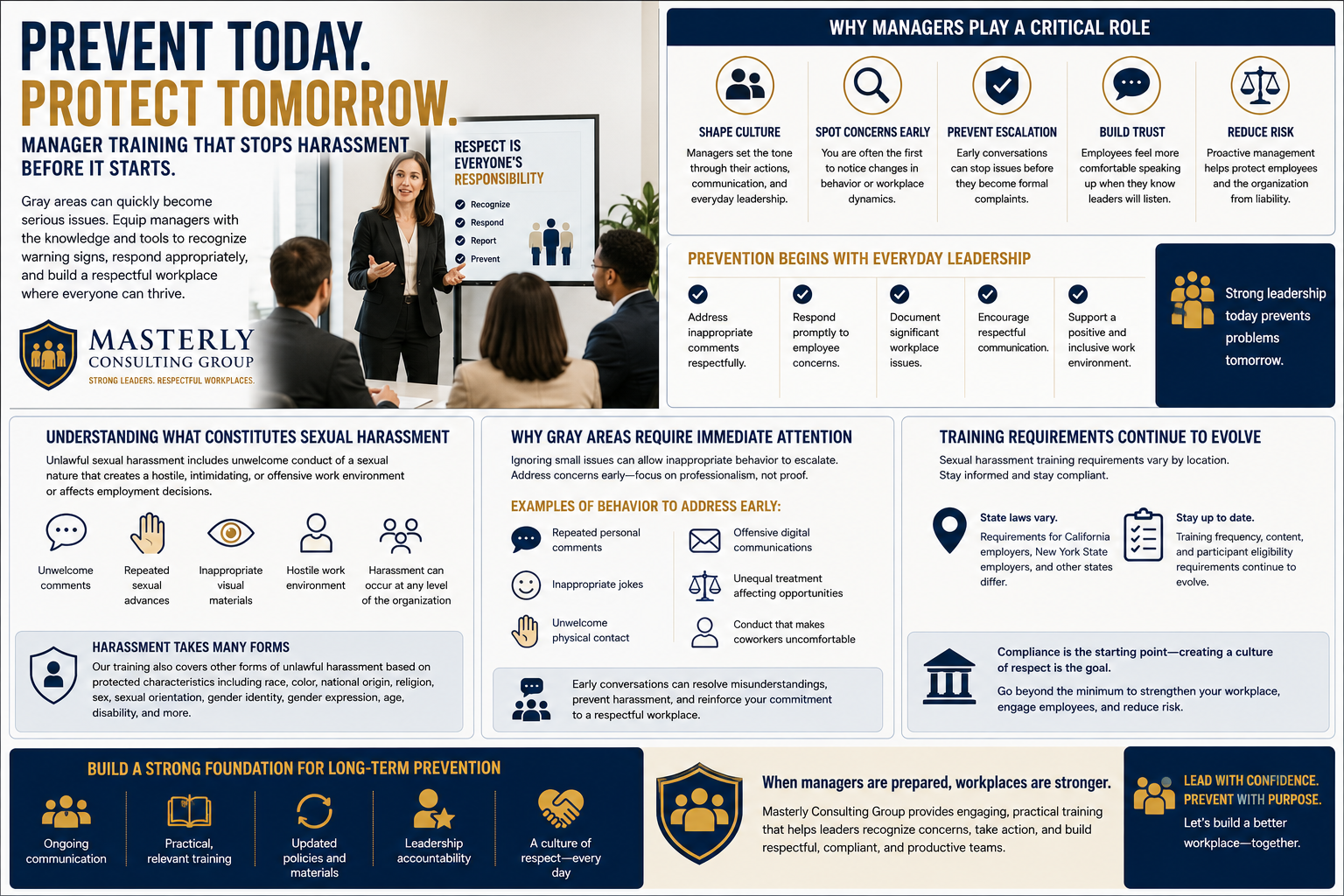
Creating a respectful workplace does not happen by accident. It develops through consistent leadership, clear expectations, and a commitment to helping employees understand appropriate workplace behavior before problems arise. While most organizations recognize the importance of sexual harassment prevention training, many still focus primarily on responding to complaints instead of preventing situations that can escalate into costly disputes. Managers are often the first to notice changes in workplace dynamics, making their ability to recognize and respond to potential concerns essential.
Gray areas are often where the greatest risks begin. A comment intended as a joke, repeated personal messages outside of work, or inconsistent treatment of employees may not immediately appear serious, yet these situations can gradually develop into allegations of workplace harassment if left unaddressed. Effective harassment prevention training helps managers recognize these warning signs early, respond appropriately, and create a culture where employees feel respected and supported.
At Masterly Consulting Group, we believe organizations should view sexual harassment training as more than a legal obligation. A well-designed training program helps managers strengthen communication, improve decision-making, and reinforce professional standards throughout the organization. When leaders understand how to address difficult situations before they grow into formal complaints, they help protect employees, strengthen workplace culture, and reduce organizational risk.
Why Managers Play a Critical Role in Harassment Prevention
Managers influence workplace culture every day through their actions, communication, and leadership decisions. Employees often look to supervisors for guidance about acceptable behavior, making management involvement one of the most important components of successful harassment prevention efforts.
When managers receive comprehensive sexual harassment prevention training, they become better equipped to identify concerns, respond consistently, and support employees who raise questions. Rather than waiting for situations to worsen, trained leaders can intervene early while maintaining professionalism and fairness.
Prevention Begins With Everyday Leadership
Many workplace concerns develop gradually rather than through a single dramatic event. Leaders who pay attention to team interactions often recognize subtle changes before they become formal sexual harassment complaints or broader harassment in the workplace concerns.
Effective managers understand how to:
- Address inappropriate comments respectfully.
- Respond promptly to employee concerns.
- Document significant workplace issues.
- Encourage respectful communication.
- Support a positive workplace culture.
These everyday actions contribute directly to stronger sexual harassment prevention efforts.
Understanding What Constitutes Sexual Harassment
One of the most important goals of sexual harassment training is helping employees and managers understand what constitutes sexual harassment under applicable policies and federal law. Not every uncomfortable interaction violates organizational policy, but ignoring inappropriate conduct can create unnecessary risk for both employees and employers.
Training should explain that unlawful sexual harassment may involve unwelcome comments, repeated sexual advances, offensive jokes, inappropriate visual materials, or conduct that creates a hostile work environment. It should also emphasize that harassment can occur regardless of an individual's position within the organization.
Harassment Can Take Many Forms
Organizations should educate employees about other forms of unlawful harassment that may occur alongside or separate from sexual harassment. Respectful workplaces require protection against inappropriate conduct involving sexual orientation, gender identity, gender expression, national origin, race, religion, disability, age, and other legally protected characteristics.
Providing this broader understanding helps employees recognize inappropriate behavior earlier while reinforcing the organization's commitment to human rights and professional conduct.
Why Gray Areas Require Immediate Attention
Many managers hesitate to respond because they are unsure whether a situation violates policy. Unfortunately, waiting too long can allow misunderstandings or inappropriate conduct to become more serious. Early conversations often resolve concerns before they develop into formal investigations.
Strong harassment training encourages leaders to address behavior based on professionalism rather than waiting for clear evidence of unlawful discrimination or unlawful harassment. This proactive approach helps organizations reduce risk while demonstrating a genuine commitment to employee well-being.
Addressing Behavior Before It Escalates
Examples of situations managers should never ignore include:
- Repeated personal comments.
- Inappropriate jokes.
- Unwelcome physical contact.
- Offensive digital communications.
- Unequal treatment affecting workplace opportunities.
- Conduct that makes coworkers uncomfortable.
Responding promptly helps prevent harassment while reinforcing organizational expectations.
Sexual Harassment Training Requirements Continue to Evolve
Employers should understand that sexual harassment training requirements differ depending on jurisdiction. Various state law provisions, federal and state laws, and industry regulations establish different expectations regarding frequency, content, and participant eligibility.
For example, California employers and York State employers may be subject to specific training requirements that differ from those in other locations. Organizations operating across multiple states should regularly review their obligations to ensure compliance with applicable laws.
Why Compliance Is Only the Beginning
Meeting minimum legal obligations is important, but effective prevention training should extend beyond compliance checklists. Organizations that simply satisfy mandatory requirements may miss opportunities to strengthen workplace culture and reduce future risks.
Comprehensive workplace harassment prevention training helps employees recognize concerns earlier while encouraging respectful communication throughout the organization. When organizations provide harassment prevention training that exceeds minimum expectations, they often experience stronger employee engagement and greater confidence in internal reporting processes.
Building a Strong Foundation for Long-Term Prevention
Effective sexual harassment prevention is not achieved through a single seminar or annual presentation. It develops through ongoing communication, practical discussions, updated training materials, and leadership accountability. Managers who regularly reinforce organizational expectations help create workplaces where respect becomes part of everyday operations rather than an occasional reminder.
At Masterly Consulting Group, we encourage organizations to view harassment prevention training as an investment in leadership development rather than simply another compliance requirement. When managers understand both their responsibilities and the practical skills needed to address workplace concerns, they are better prepared to lead with confidence and professionalism.
Understanding Federal and State Training Requirements
Organizations operating across different jurisdictions often discover that sexual harassment training requirements are not identical from one location to another. While federal law establishes important protections against discrimination and harassment, many states have adopted additional standards that employers must follow. Understanding both federal and state laws helps organizations create consistent policies while remaining compliant with local requirements.
Employers should regularly review applicable regulations because training obligations may change over time. A proactive approach allows organizations to update policies, improve training materials, and avoid unnecessary compliance risks before new requirements take effect.
Why Compliance Requires Ongoing Attention
Laws and workplace expectations continue to evolve, making periodic reviews essential. Organizations that rely on outdated policies may unintentionally overlook important changes involving training requirements, reporting procedures, or documentation standards.
Regular policy reviews also demonstrate a commitment to maintaining a respectful workplace rather than simply responding after problems occur.
California and New York Continue to Shape Workplace Standards
Several states have established detailed rules governing sexual harassment prevention training, including California employers and organizations operating in York State. These jurisdictions often require employers to provide training at specific intervals while addressing topics identified under applicable state law.
Businesses with employees in multiple states should recognize that compliance in one location does not automatically satisfy requirements elsewhere. Reviewing both federal and state obligations helps reduce confusion and supports consistent implementation throughout the organization.
Understanding State-Specific Expectations
For example, California sexual harassment training requirements include mandatory instruction for qualifying employers and designated employee groups. Likewise, many York City employers and organizations throughout York State must comply with state-specific standards addressing policy distribution, employee education, and annual instruction.
Organizations should also remain aware of evolving state statutory provisions, which may introduce new obligations as workplace laws continue to develop.
Employer Responsibilities Go Beyond Compliance
Meeting legal obligations is only one aspect of creating a safe and professional work environment. Strong sexual harassment employer responsibilities include establishing clear reporting procedures, communicating expectations consistently, and ensuring employees understand how concerns will be addressed.
Organizations that actively provide sexual harassment training demonstrate a commitment to prevention rather than reaction. This proactive approach encourages employees to raise concerns early while strengthening confidence in organizational leadership.
Building Accountability Throughout the Organization
Successful organizations recognize that employer responsibilities extend beyond management alone. Leaders should provide training, reinforce workplace expectations, and ensure supervisors understand how to respond appropriately when concerns arise.
Clear accountability helps organizations maintain consistency while supporting a workplace culture built on professionalism, respect, and trust.
Online Training Makes Education More Accessible
Technology has transformed how organizations deliver harassment training. Modern online training platforms allow employees to complete educational programs regardless of location while providing employers with convenient methods for documenting participation.
Well-designed online training should remain interactive rather than simply presenting slides or lengthy policy documents. Engaging examples, scenario-based discussions, and practical exercises help employees better understand workplace expectations.
Blending Technology With Practical Learning
Although online training offers flexibility, organizations should also consider opportunities for discussion and follow-up conversations. Managers benefit from exploring realistic workplace scenarios where gray areas require thoughtful judgment rather than simple rule memorization.
Combining digital instruction with leadership discussions strengthens both prevention training and long-term retention.
Supervisory and Non-Supervisory Employees Need Different Training
Not every employee has the same workplace responsibilities. Individuals in supervisory positions often require additional instruction because they are responsible for responding to employee concerns, documenting incidents, and supporting organizational policies.
At the same time, non supervisory employees should receive practical guidance that helps them recognize inappropriate conduct, understand reporting options, and contribute to a respectful workplace. Tailoring instruction to different audiences improves the effectiveness of every training program.
Supporting New and Existing Employees
Organizations should ensure new employees receive timely education as part of onboarding while also providing opportunities for existing employees to remain informed as policies evolve. Employees recently hired, including employees hired into leadership positions, should understand expectations from the beginning of their employment.
Providing ongoing instruction creates consistency while reinforcing organizational values across every department.
Annual Training Reinforces Expectations
Even organizations with strong workplace cultures benefit from regular education. Annual training reminds employees of organizational expectations while introducing policy updates, legal developments, and lessons learned from emerging workplace issues.
Rather than repeating identical presentations every year, organizations should refresh training materials with new examples and updated guidance. This approach keeps learning relevant while encouraging continued engagement.
Refresher Training Strengthens Long-Term Awareness
In addition to annual instruction, organizations may benefit from refresher training throughout the year. Short supplemental sessions addressing new policies, workplace trends, or common management challenges help reinforce important concepts without overwhelming participants.
Regular supplemental training also gives managers opportunities to discuss real-world scenarios, answer employee questions, and strengthen confidence when responding to workplace concerns before they escalate.
Human Resources Plays a Vital Role in Prevention
An effective harassment prevention program depends on more than written policies. Human resources professionals help ensure that concerns are addressed consistently, employees understand available reporting options, and managers receive guidance when difficult situations arise. By working closely with leadership, human resources helps organizations strengthen accountability while supporting a culture of professionalism and respect.
When employees trust the reporting process, they are more likely to raise concerns before problems become more serious. This early communication gives employers an opportunity to respond promptly and reduce the likelihood of escalating workplace conflicts.
Clear Grievance Procedures Build Confidence
Every organization should establish understandable grievance procedures that explain how employees can report concerns without fear of retaliation. Employees should know who to contact, what information may be requested, and how investigations are generally handled.
Transparent procedures help reinforce confidence in the organization's commitment to fairness while supporting stronger harassment prevention efforts.
Federal Law Continues to Shape Workplace Expectations
Employer policies should reflect both organizational values and applicable federal law. Regulations addressing sexual harassment, unlawful harassment, and unlawful discrimination continue to influence how organizations develop training programs and respond to complaints.
The Equal Employment Opportunity Commission provides guidance that helps employers understand their obligations under the Civil Rights Act and other employment laws. Organizations that remain informed about these developments are better prepared to update their policies and improve workplace education.
Aligning Policies With Federal and State Requirements
Successful organizations recognize that compliance requires understanding both federal and state expectations. Policies should be reviewed regularly to ensure they remain consistent with changing legal standards and workplace best practices.
Keeping training current helps managers make informed decisions while reducing uncertainty when workplace concerns arise.
Respecting Human Rights in Every Workplace
Creating a respectful workplace means recognizing the dignity and value of every employee. Strong sexual harassment prevention efforts also reinforce broader human rights principles by promoting fairness, inclusion, and professional conduct.
Training should address inappropriate behavior involving sexual orientation, gender identity, gender expression, national origin, and other protected characteristics. Reinforcing these expectations helps reduce misunderstandings while encouraging respectful interactions across diverse teams.
Creating an Inclusive Culture
Organizations that prioritize inclusion often experience stronger collaboration and employee engagement. Managers play an important role by modeling respectful behavior, responding consistently to concerns, and ensuring workplace decisions remain fair for everyone.
When employees feel respected, organizations strengthen both morale and long-term performance.
Addressing Abusive Conduct Before It Escalates
Not every workplace concern involves sexual harassment, yet abusive conduct can still damage morale, productivity, and employee well-being. Repeated intimidation, humiliation, or disrespectful treatment may contribute to a negative work environment even when specific legal standards have not been violated.
Effective anti harassment training helps managers recognize harmful behavior early while encouraging constructive intervention. Addressing concerns promptly often prevents misunderstandings from developing into more serious workplace disputes.
Prevention Is More Effective Than Reaction
Waiting until problems become formal complaints can increase organizational risk. Leaders who address inappropriate conduct respectfully and consistently help prevent harassment while demonstrating the organization's commitment to professionalism.
This proactive approach supports healthier working relationships and reinforces expectations for respectful communication.
Industry-Specific Training Improves Results
Every workplace has unique challenges. For example, the restaurant and bar industry often experiences fast-paced environments, customer interactions, irregular schedules, and high employee turnover. These factors can create situations where clear expectations and ongoing employee training become especially important.
Organizations should adapt their training program to reflect the realities of their industry rather than relying solely on generic examples. Customized education helps employees recognize situations they are more likely to encounter during daily work.
Tailoring Training to Your Organization
A one-size-fits-all approach rarely provides the best results. Employers should evaluate whether they need own training materials designed around their specific workplace culture, operational structure, and employee responsibilities.
Practical scenarios that reflect real workplace situations improve engagement while helping employees apply what they learn more effectively.
Strong Training Creates Stronger Workplaces
An effective training program does more than satisfy compliance obligations. It helps employees recognize warning signs, understand reporting procedures, and contribute to a more respectful workplace every day.
At Masterly Consulting Group, we believe organizations achieve the greatest success when harassment prevention training becomes part of ongoing leadership development rather than an annual compliance exercise. Through customized education, updated training materials, and practical guidance, organizations can strengthen workplace culture while reducing the likelihood of future claims.
Common Management Mistakes That Increase Risk
Even organizations with well-written policies can experience workplace issues when managers are uncertain about how to respond. One of the most common mistakes is assuming that an uncomfortable situation will resolve itself without intervention. Delayed action often allows misunderstandings to grow into formal concerns that could have been addressed much earlier through clear communication and consistent leadership.
Another common issue is inconsistent enforcement of workplace standards. When similar situations receive different responses, employees may begin to question whether policies are applied fairly. Consistency is one of the strongest foundations of effective harassment prevention, and managers should be trained to apply organizational expectations objectively regardless of job title or department.
Documentation Supports Fair Decision-Making
Managers should maintain appropriate records when workplace concerns arise. Clear documentation helps establish timelines, supports internal reviews, and provides valuable context if additional action becomes necessary.
Accurate records also demonstrate that leaders responded promptly and responsibly rather than ignoring concerns. Good documentation protects both employees and the organization while supporting a fair decision-making process.
Supplemental Training Keeps Knowledge Current
A single training session cannot prepare employees for every situation they may encounter throughout their careers. As workplace expectations, laws, and organizational policies evolve, supplemental training helps reinforce important concepts while addressing new challenges that emerge over time.
Organizations should consider providing shorter educational sessions throughout the year rather than relying exclusively on annual programs. These additional opportunities help employees remain engaged while giving managers practical guidance for handling evolving workplace situations.
Refresher Training Reinforces Good Habits
Periodic refresher training reminds employees and supervisors of organizational expectations without requiring a complete restart of the learning process. These sessions can focus on recent legal developments, workplace trends, or recurring questions raised by employees.
Combining annual training with targeted supplemental training helps strengthen long-term awareness while improving confidence throughout the organization.
Going Beyond Minimum Compliance
Meeting legal obligations is important, but organizations should avoid treating compliance as the final goal. Following only the following minimum standards required by law may satisfy basic obligations, yet it may not fully prepare managers to recognize and address complex workplace situations.
Organizations that invest in comprehensive sexual harassment prevention training often create stronger workplace cultures because they emphasize leadership, communication, and accountability alongside legal compliance. This broader approach encourages employees to recognize concerns early while reinforcing professional expectations.
Building Policies That Support Everyday Decisions
Effective policies should help managers make practical decisions during everyday workplace interactions rather than simply outlining disciplinary procedures. Clear guidance reduces uncertainty and encourages leaders to respond consistently whenever concerns arise.
When managers understand both organizational expectations and legal responsibilities, they are better equipped to protect employees and strengthen workplace culture.
Appropriate Responses Strengthen Workplace Trust
Responding appropriately to workplace concerns is essential for maintaining employee confidence. Organizations should establish procedures that allow leaders to investigate concerns fairly while applying appropriate sanctions when policy violations occur.
Employees are more likely to report concerns when they believe the organization will respond professionally, consistently, and respectfully. Trust grows when leadership demonstrates accountability through meaningful action rather than inconsistent enforcement.
Learning From Legal Developments
Employment law continues to evolve through legislation and court decisions. Guidance from courts, including the New Jersey Supreme Court and the Jersey Supreme Court, has influenced how many organizations evaluate workplace conduct, employer responsibilities, and preventive education.
Staying informed about significant legal developments helps organizations review policies proactively while adapting training programs to reflect current expectations.
Building a Workplace Where Respect Is the Standard
Organizations achieve their strongest results when respect becomes part of everyday workplace culture rather than a topic discussed only during mandatory training. Managers who communicate clearly, respond consistently, and model professional behavior help create an environment where employees feel valued and supported.
At Masterly Consulting Group, we believe the most effective sexual harassment prevention training equips managers to recognize gray areas before they become formal claims. Through customized training programs, practical workplace scenarios, leadership development, and ongoing support, we help organizations strengthen compliance while building healthier and more productive workplaces.
If your organization is ready to improve its approach to sexual harassment prevention training, we're here to help. Contact Masterly Consulting Group today at (888) 209-4055 to schedule your free consultation. We'll answer your questions, evaluate your current training program, and develop a customized solution that supports your workforce, strengthens compliance, and helps prevent workplace issues before they become costly claims.