Dental Business Consulting: Building Better Operations Around a Growing Practice
Most dental practices don't struggle because they lack patients. They struggle because growth outpaced their operations. Dental business consulting exists to close that gap-helping practice owners build the systems, routines, and accountability structures that turn a busy office into a successful dental practice.
What is dental business consulting for growing dental practices?
Dental business consulting focuses on the business side of a dental practice: operations, workflows, team roles, metrics, and growth planning. It does not involve clinical care, legal advice, or HR law. Instead, it addresses how your dental office runs day to day-from scheduling and patient flow to financial visibility and staff training.
Effective consulting connects dental practice management, patient experience, and revenue performance into one operating system. Because dental practice management integrates administrative and clinical functions, consultants work to reduce errors and improve coordination across both sides. Hiring a dental business consultant helps dental practices improve operational efficiency by replacing ad hoc habits with repeatable systems. Consultants help transform practices into organizations with repeatable systems that hold up as volume, providers, and locations grow.
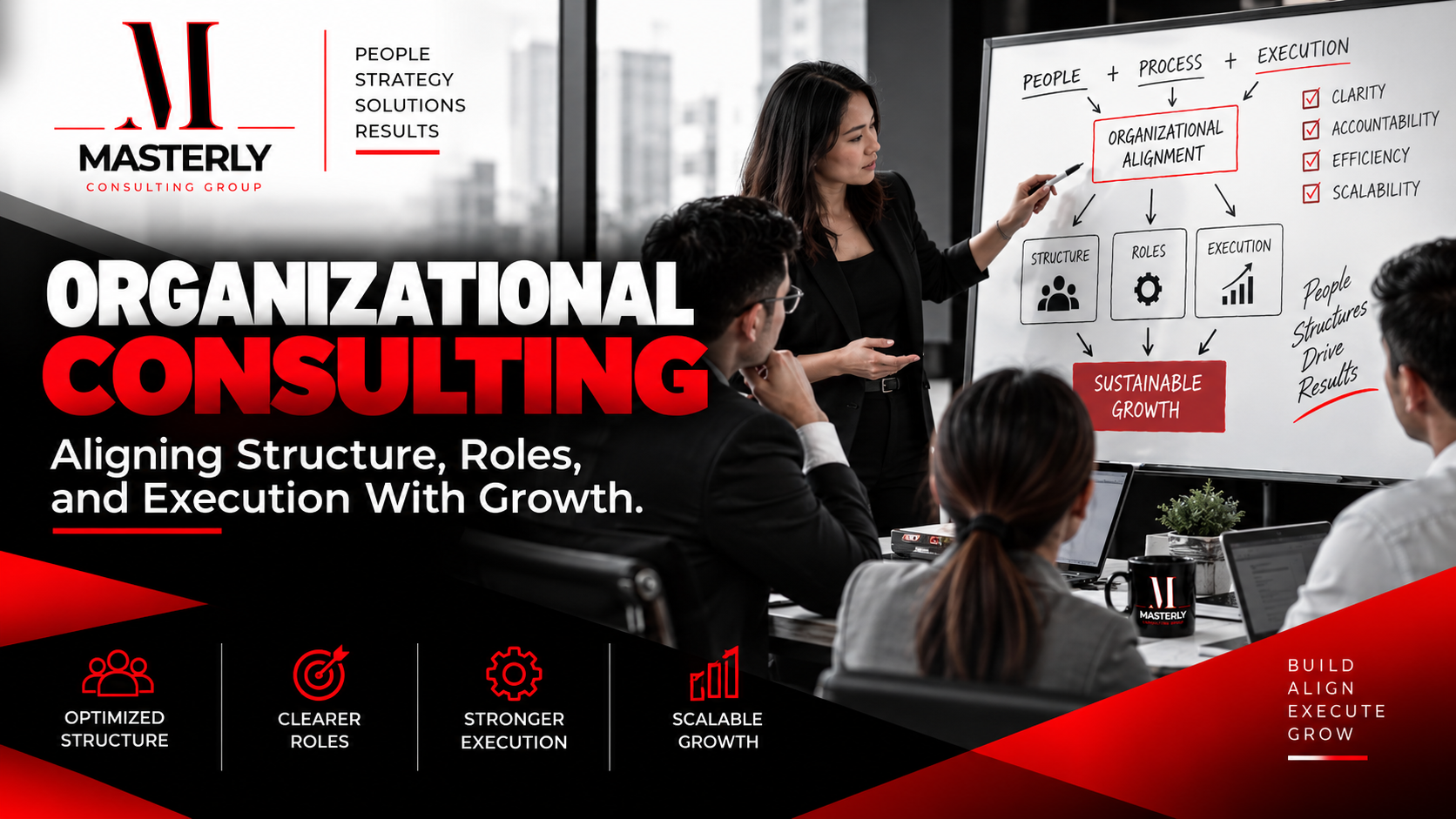
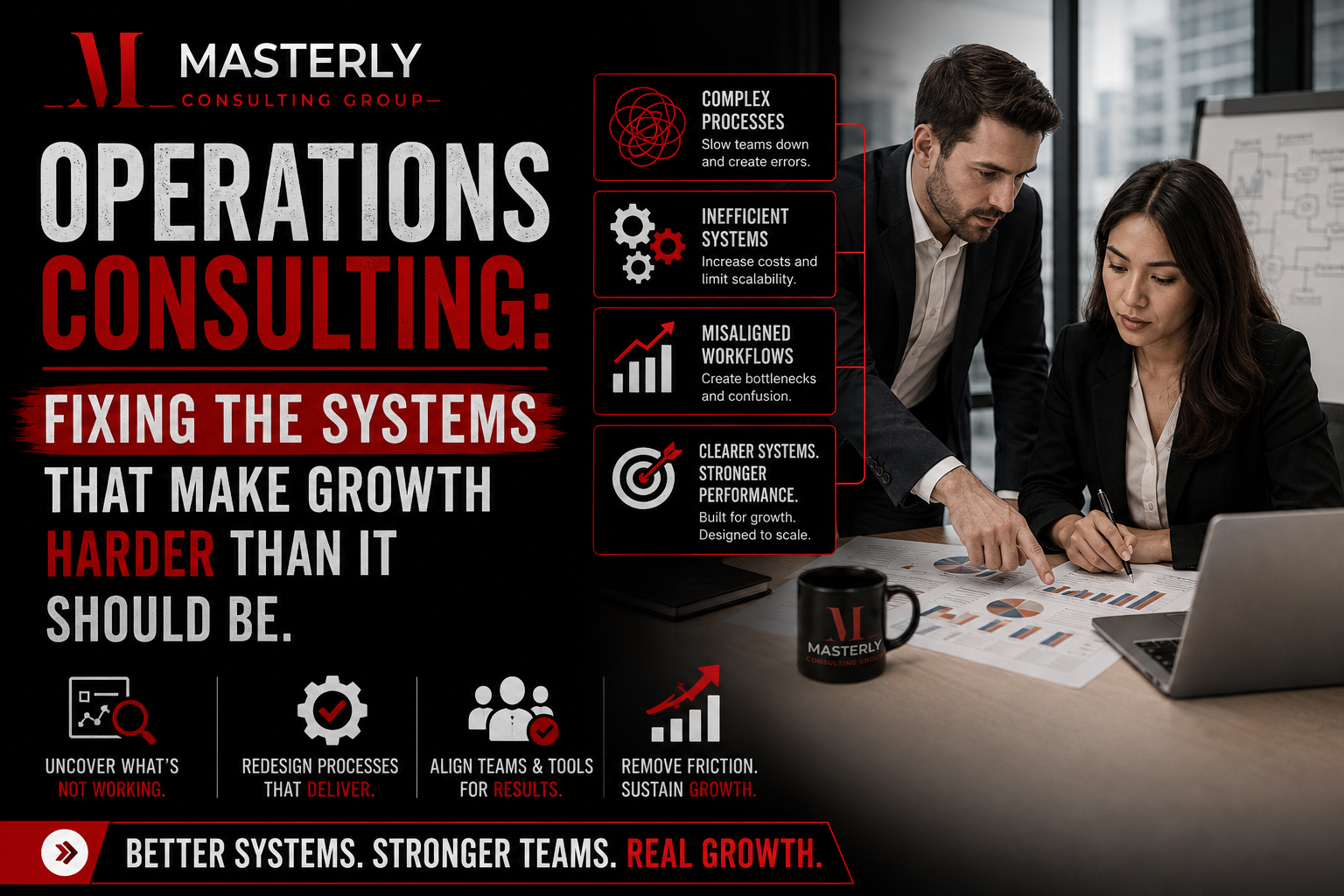
Consultants like Masterly Consulting Group specialize in private practices and multi-location groups that are already busy but feel strained. Consulting outcomes are measured in operational efficiency, patient satisfaction, and predictable dental business growth-not just more marketing. The primary focus is making what you already have work better before layering on anything new.
When does a dental practice need business consulting support?
Not every practice needs consulting at the same stage, but certain trigger points signal it's time. Here are the scenarios that come up most often:
- Schedule is full but margins are tight. Production is strong, but overhead, supply costs, and daily operations inefficiencies eat into profitability. Consultants help identify hidden profit leaks and inefficient overhead costs that erode cash flow.
- Constant firefighting at the front desk. Appointment overlaps, billing backlogs, unanswered calls, and emergency scheduling disrupt every day. Tracking income and identifying overspending improves financial efficiency and stops the bleeding.
- Roles grew without definition. A practice that doubled operatories between 2019 and 2024 but never updated role definitions, workflows, or systems to match growth. Effective team management is crucial due to staffing challenges in the dental industry-the single biggest constraint on practice growth today.
- High team turnover or low morale. Unclear accountability, unevenly distributed workloads, and no management routines lead to burnout and finger-pointing.
- Revenue swings month to month. No defined dashboards, delayed collections, inconsistent new patient flow. Consultants provide objective outside evaluations of dental practice financials to identify patterns and stabilize revenue.
- Owners doing non-owner work. If you're filling in at the front desk, managing insurance denials, or taking work home every night just to keep the office running, something is structurally broken.
Early-stage single-location practices often need foundational systems-basic role definitions, SOPs, and simple metrics. Maturing multi-location groups need standardization, leadership routines, and performance parity across sites.
Core focus areas of dental business consulting
Dental business consulting covers several interlinked advisory areas. Every engagement emphasizes different levers depending on the practice's pain points, but these are the categories that matter most.
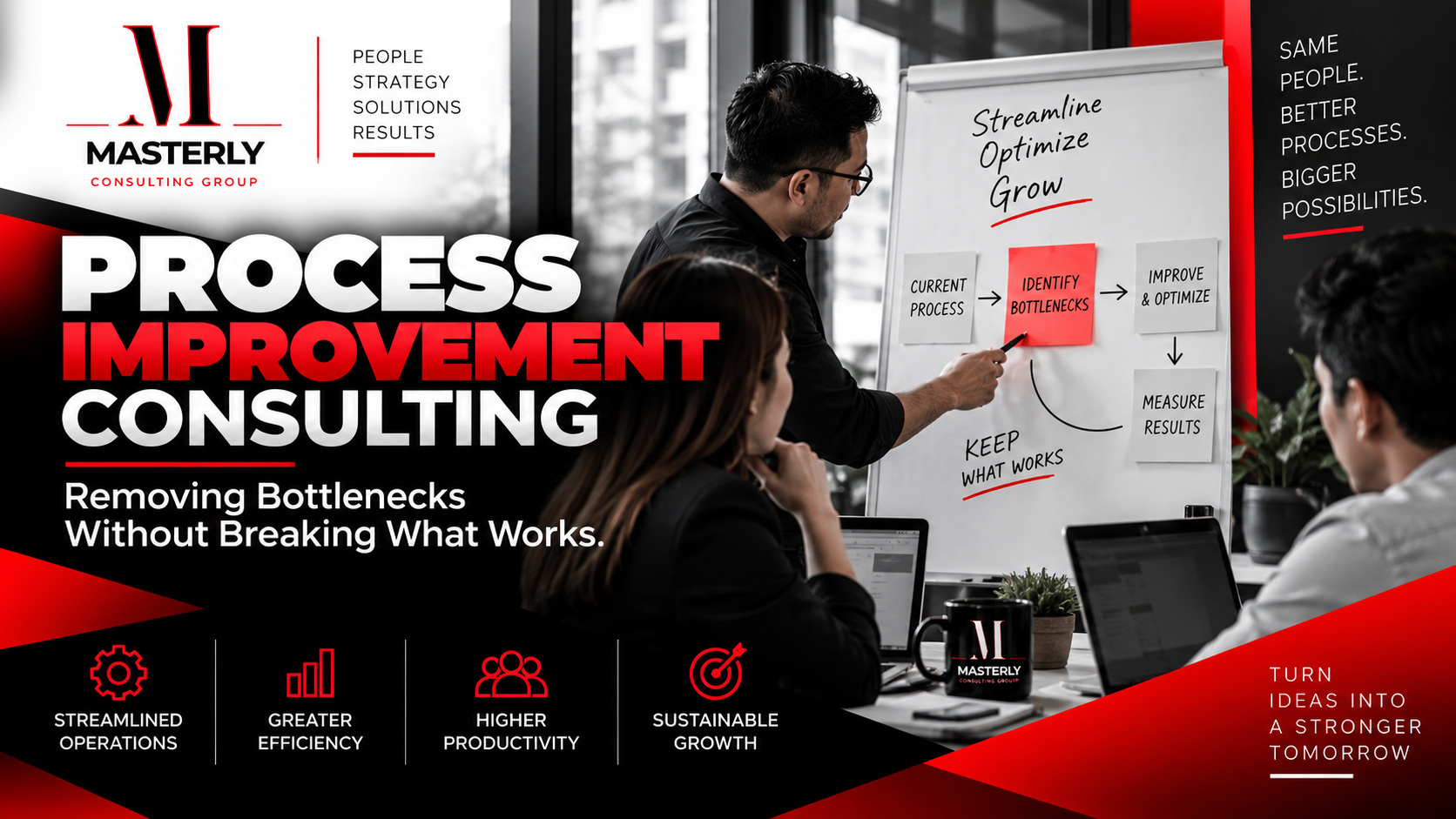
- Operations and workflow optimization. Consultants streamline scheduling and operations in dental practices by redesigning schedule templates, room turnover procedures, handoffs between clinical and administrative teams, and daily huddles. Workflow mapping helps identify bottlenecks in dental practice operations-from hygiene blocks to treatment chair gaps. Consultants analyze appointment schedules to increase productive dentistry and reduce wasted chair time. Efficient scheduling reduces missed appointments and improves patient care.
- Practice management systems and SOPs. Aligning practice-management software, billing workflows, and standard operating procedures so every team member follows the same process. Consultants create systems for billing, new-patient intake, and recalls. Insurance verification should be completed before treatment to avoid claim rejections-a step many practices still handle inconsistently.
- Team roles and accountability. Duty delegation and role clarity enhance team performance in dental practices. Consultants help establish performance expectations and key performance indicators for each role. Accountability in practice management can lead to measurable results when every person knows exactly what they own.
- Financial visibility and metrics. Dental business consultants optimize financial management in practices by tying daily operations to KPIs. Revenue per chair hour indicates scheduling efficiency. Overhead control audits ensure costs align with industry standards (healthy overhead is often 58–65% of revenue). Effective financial management includes managing expenses and billing cycles. Analyzing insurance participation helps determine profitable plans for practices, clarifying which payers actually support your margins.
- Patient experience and patient satisfaction. Better workflows, scripting, and communication standards are what truly enhance patient satisfaction-not just décor. This is a measurable outcome of tighter operations and will be covered in the next section.

Improving patient experience without sacrificing operational efficiency
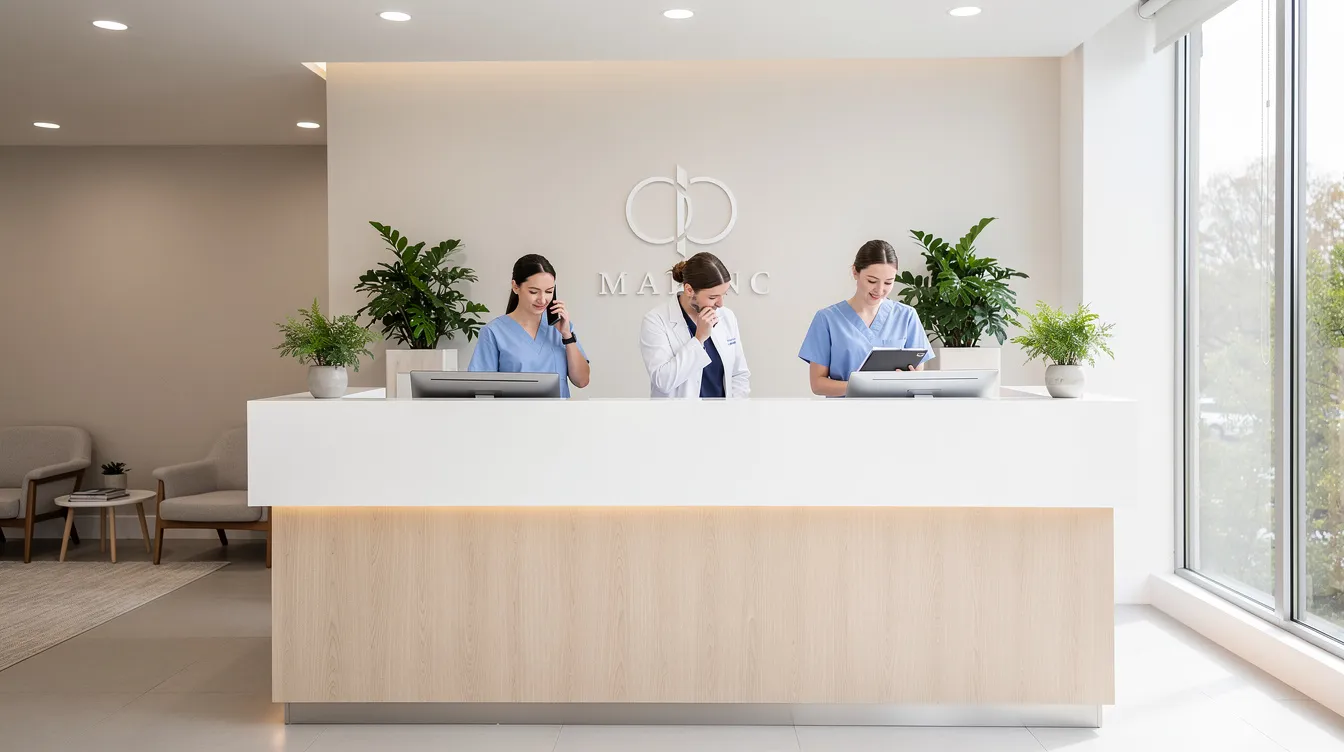
Patient experience drives practice growth. Happy patients refer others, leave positive online reviews, and return for recalls. Improving patient experience can enhance retention and referrals without requiring more marketing spend. Here's how consultants approach it:
- Map the full patient journey. Optimization of the patient journey identifies improvement opportunities in clinics-from the first phone call or web inquiry through check-in, clinical interaction, financial conversation, and follow up. Each handoff is a potential friction point.
- Standardize communication. Effective patient communication enhances satisfaction and retention. Consultants design consistent scripts for how teams explain insurance, present treatment plans, and discuss costs. Financial arrangements should ease patient treatment acceptance rather than create confusion or sticker shock.
- Reduce friction in scheduling. Streamlined booking systems enhance patient experience and practice efficiency. Flexible scheduling options can significantly improve patient retention. Industry data shows 38% of practices report that patients find it hard to schedule or reschedule-an easy win for most practices.
- Build feedback loops. Patient feedback surveys help identify barriers to service improvement. Online reviews, post-visit surveys, and complaint tracking feed directly into operational adjustments. Regularly responding to online reviews builds patients trust over time.
- Maintain the environment. A well-maintained office reduces dental anxiety and improves loyalty. This isn't about luxury-it's about cleanliness, timeliness, and predictable processes that signal professionalism.
These improvements save time for your team by reducing rework, repeat calls, and misunderstandings. The result is a dental office where both patients and staff experience less stress.
Aligning your team: roles, responsibilities, and routines
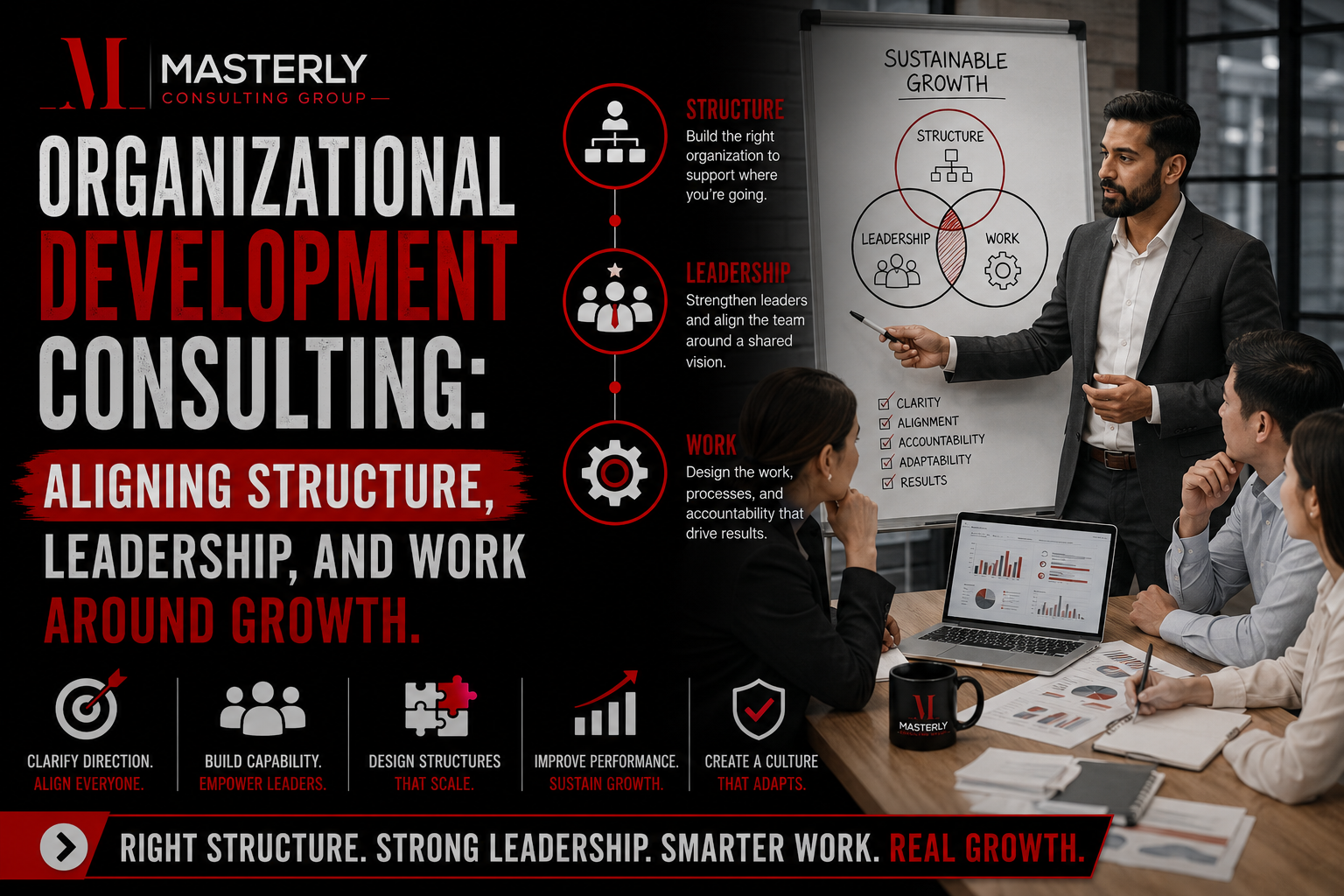
People and systems need to move together. In fast-growing dental practices, responsibilities tend to overlap or fall through gaps. Dental business consulting addresses this by clarifying what each team member owns and how accountability is tracked.
- Define every role clearly. Front desk, treatment coordinator, lead hygienist, clinical assistants, office manager, and practice owner each get a documented scope. Consultants conduct staff training to improve communication and team culture so that expectations are shared, not assumed.
- Create simple role scorecards. Each position gets 3–5 key responsibilities and 3–5 metrics (e.g., reactivation calls completed, same-day case acceptance, unscheduled treatment follow up). Tracking staff productivity metrics helps identify inefficiencies in workflows before they compound.
- Design recurring routines. Daily huddles, weekly leadership meetings, and monthly review sessions keep the team focused. Regular training sessions reinforce standards and give staff a forum to flag challenges early.
- Reduce burnout. Regular staff training improves workflow and patient care quality. When roles are clear and check-ins are consistent, staff spend less energy on confusion and more on the work that matters. This is equally important to any technology investment.
Using data and metrics to guide dental practice decisions
Data should be a decision tool, not a reporting burden. Most practices already generate the numbers they need-they just aren't reviewing them in a useful way.
Key metrics suited to a dental office include:
- Collection ratio: target 98% or higher of production collected
- Case acceptance rate: healthy benchmarks fall between 75–85% for general dentistry
- Hygiene reappointment rate: aim for 85–95% to protect preventive revenue
- Overhead percentage: many practices target 58–65% of revenue
- Production per provider per day: general practitioners often range from $3,000–$5,000
- No-show and cancellation rates: target 5% or less
- New patients per month: 25–50 is common for general practices
A consultant helps build a simple monthly dashboard from existing practice-management software rather than adding new tools. Consultants improve case acceptance and patient engagement strategies by tying each metric to a specific question: "Do we need more new patients or better case acceptance?" "Is our hygiene schedule healthy?" "Where is overtime really coming from?"
Benchmarking local market pricing ensures competitive yet profitable fees. Budgeting allows projection of potential expenses and income. Real time data should be reviewed monthly and quarterly, and used to adjust staffing levels, scheduling templates, and marketing efforts.
Technology, AI tools, and workflow integration in dental practices
Many practices already run multiple systems for scheduling, imaging, billing, and communication. The challenge isn't finding new technologies-it's making existing ones work together.
- Prioritize adoption of current tools. Consulting starts with full utilization of what you own. Digital tools streamline scheduling, billing, and patient management processes when staff actually use them consistently. If one system handles scheduling and another handles billing, integration matters more than adding a third.
- Use AI tools and automation for non-clinical workflows. Automated reminders reduce no-shows and improve patient care time. AI tools can support recall campaigns, eligibility checks, post-visit follow up, and predictive scheduling. Most practices have adopted at least one AI-assisted diagnostic tool recently-the key is governance around accuracy and privacy.
- Review your stack periodically. Dental practices should review technology every 2–3 years to ensure tools still match operational needs. Avoid adding new tools before maximizing existing ones.
- Set governance rules. Consultants help define who can update templates, how changes are tested, and how to avoid shadow systems in personal email or messaging apps. This prevents version drift and protects patient data.

Planning for sustainable dental business growth
Growth without systems creates chaos. More patients, more staff, more operatories-but inefficiencies multiply at every layer. Sustainable practice growth requires intentional planning.
- Build a 12-month growth roadmap. Break it into quarterly focus areas: patient experience, workflow optimization, financial visibility, and capacity expansion. Each quarter has clear priorities and measurable goals.
- Forecast staffing, operatories, and equipment early. Understand at what point adding a hygiene chair or associate becomes necessary. Set realistic targets for new patients, hygiene volume, and profitability.
- Align marketing efforts with operational capacity. Strategic marketing plans help attract high-value dental patients, but only if your operations can handle the volume. Digital marketing strategies enhance patient acquisition and retention when paired with strong intake systems. Optimizing Google Business Profile increases local search visibility. A strong online presence attracts new patients effectively. Community partnerships through community events can lower marketing costs and increase referrals.
- Revisit the plan quarterly. Use metrics and team feedback to adjust. This turns growth into a managed process instead of reactive decisions. Over time, this approach helps the practice reach its full potential without burning out the team.
How Masterly Consulting Group partners with dental practices
Masterly Consulting Group works with private dental practices and multi-location groups across the U.S., focusing on business operations, workflows, and leadership alignment. Engagements are customized to fit each practice's stage and challenges.
- Flexible scope. From focused workshops on schedule redesign or front-desk workflows to comprehensive operating-system builds across multiple locations, the approach helps practices at any scale.
- Hands-on project work. Typical projects include mapping existing workflows, clarifying roles, defining service standards, building practical dashboards, and training the team on new routines.
- Lasting assets. The group emphasizes leaving behind documented procedures, playbooks, and simple measurement tools so practices can maintain improvements long after the engagement ends. The goal is long term success, not dependency.
FAQ: Dental business consulting for practice owners
How is dental business consulting different from hiring a marketing agency? Marketing agencies focus on patient acquisition-ads, SEO, social media. Dental business consulting focuses on what happens after the phone rings: workflows, scheduling, team accountability, and the systems that convert inquiries into retained patients. Both matter, but consulting addresses the internal capacity that marketing alone cannot fix.
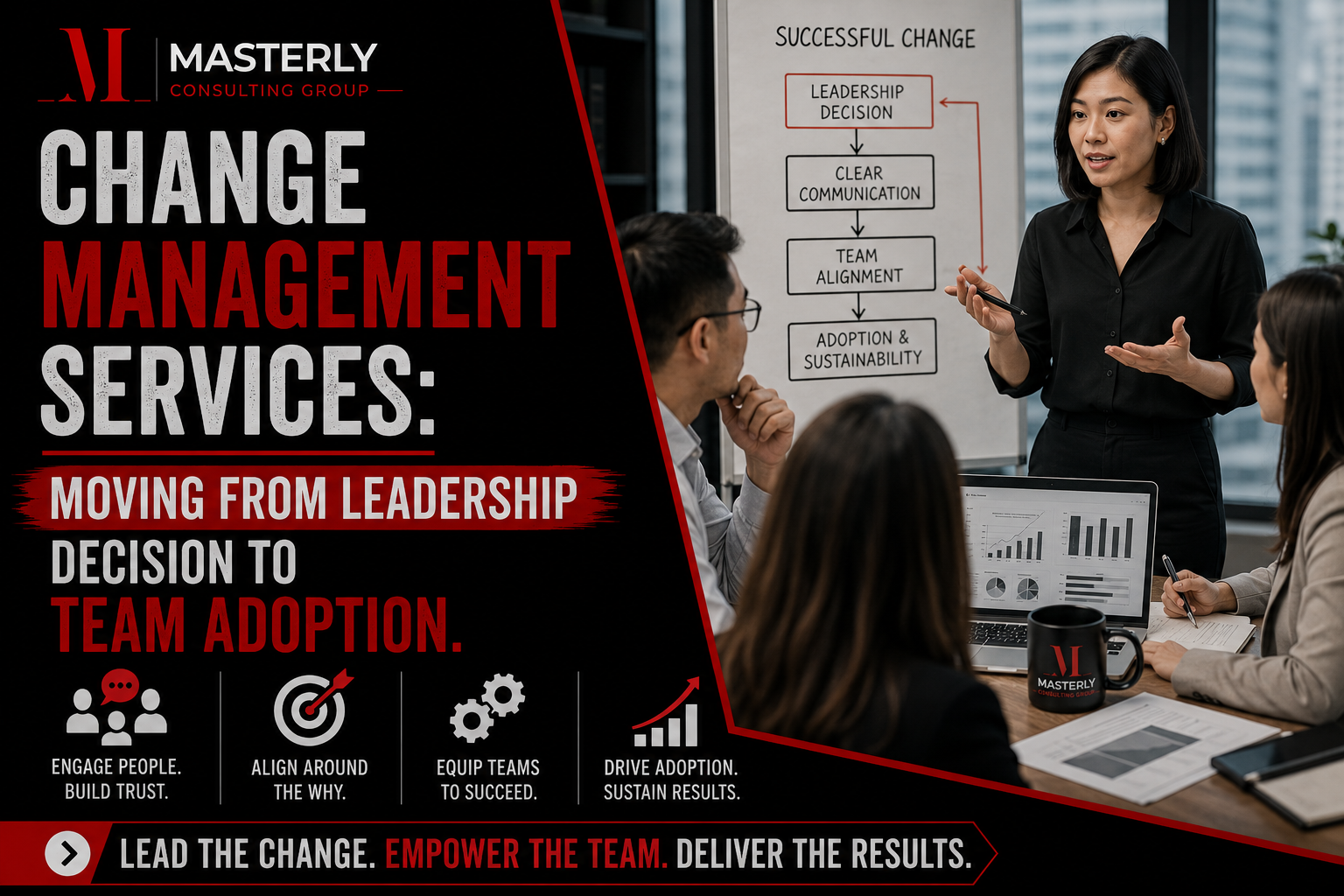
How long does it take to see operational improvements? Changes in scheduling and handoffs can show impact within weeks. Culture shifts, metric maturity, and fully embedded routines typically develop over several months. Consultants usually prioritize high-impact, low-disruption changes first.
Will consulting disrupt my daily schedule? Engagements are designed around clinical hours. Changes are phased-pilot tested with small teams before full rollout. This approach minimizes risk to daily operations while letting you save time on implementation.
Can dental business consulting help multi-location practices standardize systems? Yes. Common workflows, scorecards, and reporting templates support consistent performance across sites. Standardization is what allows dentists and leadership to compare locations, identify underperformance early, and scale without reinventing procedures at each site.
What resources should I prepare before a consultation? Gather recent production and scheduling reports, a list of your main challenges, and any notes on staffing or patient base concerns. The more specific your input, the more useful the consultation.
Next steps: Request a business-operations consultation
If your dental practice is growing but your operations aren't keeping pace, a focused consultation can clarify where to start. Masterly Consulting Group works with practice owners and leadership teams to review workflows, metrics, and growth plans with a clear, practical lens.
- The consultation centers on understanding the current state of your practice, identifying 2–3 priority bottlenecks, and outlining next steps to improve operations, oral health service delivery, and patient outcomes.
- You'll walk away with a clearer picture of where your systems need attention and what to prioritize in the competitive landscape you operate in.
- Prepare by gathering recent production and scheduling reports, fixed costs and variable costs summaries, and a brief description of your main challenges.
Contact Masterly Consulting Group:
- Website: https://www.masterlygroup.com/
- Phone: (972) 236-5051
Take the first step toward building the operations your practice deserves. Whether you need help retaining existing patients, improving dental care delivery, managing necessary supplies and costs, or unlocking the latest advancements in practice workflow-Masterly Consulting Group is ready to help you create a strategic plan that supports where your practice is headed in dentistry today.