Rebuilding Team Confidence After Disruption: Training That Restores Performance
The Aftermath of Disruption: Understanding the Impact on Teams
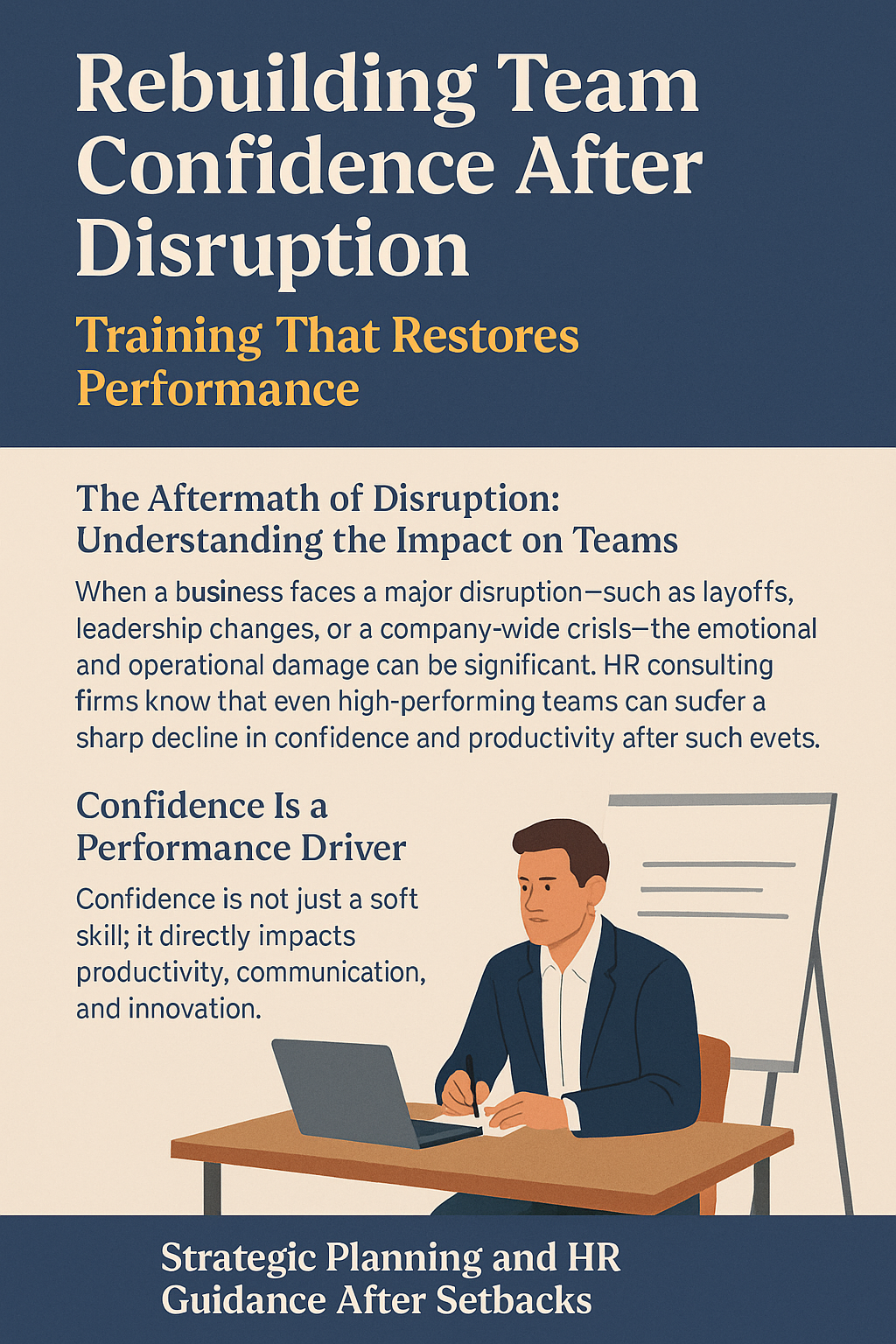
When a business faces a major disruption—such as layoffs, leadership changes, compliance investigations, or a company-wide crisis—the emotional and operational damage can be significant. Employees often feel uncertain, disconnected, and overwhelmed. HR consulting firms know that even high-performing teams can suffer a sharp decline in confidence and productivity after such events. Without a structured recovery plan, morale can deteriorate, causing long-term challenges for the entire organization.
Confidence Is a Performance Driver
Confidence is not just a soft skill; it directly impacts productivity, communication, and innovation. When employee confidence is low, performance management suffers and talent retention becomes more difficult. An HR consulting firm can guide companies through rebuilding this essential quality with a mix of coaching, communication, and targeted training. The goal is to restore a sense of purpose and alignment between employees and the organization’s goals.
Recognizing the Signs of a Disrupted Team
After a crisis or shift, HR consultants are trained to spot key warning signs that a team is struggling. These may include increased absenteeism, poor communication, low engagement scores, and declining collaboration. Human resources teams must be ready to take proactive steps to re-engage their workforce. That begins with identifying issues and then delivering training that addresses them head-on.
The Role of Training in Recovery
Customized training is one of the most effective tools for repairing damaged team dynamics. HR consulting services often include programs designed to rebuild trust, improve employee relations, and align teams around a shared mission. This type of training restores not only skill sets but emotional investment—something that is crucial in post-disruption recovery.
Key Training Areas That Restore Confidence
To be effective, post-crisis training must address both emotional and functional needs. Some focus areas may include:
- Conflict resolution and communication
- Emotional resilience and wellness
- Role clarity and task reorientation
- Leadership development and coaching
By offering training in these areas, HR consulting firms help companies reignite team synergy.
Strategic Planning and HR Guidance After Setbacks
Following disruption, strategic planning is essential. HR professionals must evaluate what broke down and how to build a stronger structure going forward. Partnering with a human resource consulting team allows companies to redesign their hr processes with a renewed focus on alignment, engagement, and accountability. This leads to a measurable improvement in employee satisfaction and productivity.
Rebuilding the HR Foundation
Recovery starts with a stable HR foundation. That means reviewing hr policies, updating compliance procedures, and ensuring employee benefits are clearly communicated. HR consulting firms can conduct comprehensive hr audits to find gaps in hr operations and rebuild from the inside out. When your HR department is functioning smoothly, your team can focus on results.
The Value of Expert-Led Employee Engagement
One of the primary goals of post-crisis HR consulting is to elevate employee engagement. When employees feel ignored or left out of recovery plans, morale continues to drop. Expert-led consulting services re-engage staff through feedback loops, recognition programs, and training sessions that focus on the employee experience.
Improving Trust Through Transparent HR Functions
Trust is fragile after disruption. Transparency, consistency, and fairness are essential for rebuilding it. HR consultants help businesses reestablish trust by training managers on fair treatment, clarifying employee relations protocols, and encouraging open communication. These HR functions create a reliable environment where teams feel supported.
Performance Management Systems That Build Confidence
Once trust begins to return, performance management must follow. HR services can implement systems that align personal growth with business goals. By involving employees in goal setting and giving them tools to track their progress, companies can rebuild a culture of ownership and accountability.
Managing Employee Benefits with Clarity and Compassion
During times of disruption, misunderstandings about employee benefits can fuel anxiety. HR consultants ensure that benefits administration is streamlined, accessible, and aligned with the company’s messaging. Clear communication around benefits packages helps ease tension and shows the HR team is in touch with employee needs.
Aligning Training With Business Needs
Training after disruption must align with both current performance gaps and long-term business needs. HR consulting services develop tailored programs that reflect the organization’s values, industry expectations, and strategic goals. When training is aligned with the future, employees regain motivation and feel like they’re building something that matters.
The Impact of HR Strategy on Team Recovery
A successful recovery isn’t just about fixing what's broken—it’s about creating a better path forward. A well-crafted HR strategy includes ongoing training, clear roles, strong onboarding for new hires, and tools for employee development. With the right guidance, companies can move from disruption to momentum.
Enhancing Retention Through Post-Crisis Support
After a crisis, top talent may be at risk of leaving. Effective HR management focuses on retention strategies that recognize individual contributions and support professional growth. HR consulting firms help employers identify the pain points that drive turnover and replace them with retention-focused solutions.
HR Outsourcing as a Smart Recovery Tool
Some organizations may lack the internal bandwidth to manage recovery on their own. HR outsourcing allows companies to bring in specialized hr consultants to handle training, audits, compliance, and more. This ensures recovery doesn’t get delayed by internal resource shortages.
Building Emotional Resilience with the Right HR Support
Training that strengthens emotional resilience can dramatically improve recovery timelines. HR services may include wellness programs, mental health resources, and empathy training for managers. With proper hr support, employees learn how to navigate stress without disengaging.
Strengthening Communication Through Targeted HR Solutions
Communication often breaks down during organizational change. HR solutions should include communication training, feedback sessions, and tools that foster openness. HR professionals can help teams adopt better habits that prevent miscommunication and encourage cross-functional collaboration.
The Role of Leadership in Rebuilding Culture
Leaders play a critical role in how quickly and effectively teams recover. HR consulting supports leadership development to ensure managers are equipped with the tools to lead with confidence and clarity. A strong leadership presence boosts morale and encourages team unity.
Measuring Progress and Adjusting the HR Strategy
It’s not enough to launch a recovery plan—HR teams must measure success along the way. Metrics such as employee engagement, retention, and satisfaction provide clear insights into what’s working. HR consulting firms help companies analyze this data and adjust their HR strategy as needed.
Supporting Managers Through Change Management
Managers often feel isolated during periods of upheaval. HR consulting includes change management tools and training to support mid-level leaders. When managers are supported, they pass that confidence onto their teams.
Identifying Hidden Risks During Recovery
Not all problems are visible. HR audits and risk assessments help uncover potential risks before they become major issues. HR consultants provide due diligence and help mitigate challenges related to compliance requirements, employee relations, or policy gaps.
Customizing Solutions for Unique HR Challenges
Every business is different, and recovery plans must be too. A reputable hr consulting firm offers customized solutions based on culture, industry, and team dynamics. Personalized training and HR services make recovery more effective and sustainable.
Fast-Paced Environments Require Agile HR Functions
In a fast-paced industry, companies can’t afford to lose momentum. HR professionals must be agile, responsive, and focused on the long haul. Recovery strategies must be flexible enough to evolve with the company’s growth.
Empowering Employees With Clear Direction
When employees understand what’s expected of them, they feel empowered. HR management teams can facilitate role clarity through updated job descriptions, check-ins, and training sessions. Clear direction reduces anxiety and improves employee experience.
Restoring Confidence in the HR Department
Sometimes, the disruption stems from within HR itself. When that happens, it’s critical to reestablish confidence in the HR department. This may include staff changes, retraining, or bringing in third-party hr consulting experts to restore trust and credibility.
Building Culture Through Training and Consistency
A strong culture doesn’t happen by accident. It’s built through consistent messaging, values-driven policies, and ongoing training. HR consultants help create alignment between leadership and employees so that everyone is moving in the same direction.
From Disruption to Competitive Edge
Companies that invest in recovery don’t just bounce back—they often come back stronger. HR consulting helps organizations turn adversity into opportunity by optimizing hr processes, retraining talent, and strengthening team performance. That investment leads to a long-term competitive edge.
Strengthening Confidence With Strategic HR Support That Drives Retention and Growth
In the aftermath of disruption, rebuilding team confidence requires more than a motivational message—it demands a strategic HR approach that supports employee retention, ensures HR compliance, and mitigates risk. By streamlining HR tasks and reinforcing benefits management, companies can foster stability and trust. Whether you're handling talent acquisition, performance rebuilding, or offering new in-house training, your recovery plan should be guided by deep expertise and backed by reliable HR consulting. At Masterly Tech Group, we offer strategic guidance tailored to business growth and long-term success. Our clients benefit from quick answers, risk management insights, and access to other services that help them stay compliant, rebuild faster, and perform stronger.
Rebuilding Confidence Through Purposeful Talent Management
After disruption, effective talent management becomes essential to restoring team performance and morale. It’s not just about rehiring or reorganizing—it’s about aligning the right people with the right roles and equipping them to thrive. Strategic talent management helps teams regain direction, builds leadership from within, and ensures your workforce feels supported and valued. At Masterly Tech Group, our HR consulting services include customized strategies that rebuild confidence, reduce turnover, and strengthen long-term organizational health. With the right structure in place, talent becomes your most powerful asset in recovery.
How an HR Consulting Firm Restores Trust and Fuels Growth After Disruption
Post-crisis recovery isn’t just about moving forward—it’s about moving forward with a stronger foundation. A skilled HR consulting firm brings clarity to complex issues like employee relations, HR compliance, and employee retention. Through tailored consulting services, experienced HR consultants conduct detailed HR audits, identify breakdowns in communication, and implement strategies that improve employee satisfaction. Consulting firms like Masterly Tech Group are instrumental in aligning people with purpose, helping organizations reestablish trust, increase engagement, and drive measurable business growth. With the right guidance, even the most disrupted teams can rebuild stronger than before.
Rebuild Your Team With Expert HR Support
If your company is recovering from disruption and struggling to regain stability, we’re here to help. At Masterly Tech Group, our HR consulting firm specializes in customized recovery strategies that align with your organization’s values, culture, and goals. From training programs to performance management and employee engagement, we design solutions that restore team confidence and drive performance.
Contact us at (888) 209-4055 to book a free consultation and learn how our HR consulting services can support your post-crisis recovery, build lasting resilience, and reignite your team’s success.