Creating NIL Awareness on Campus: Educating Students, Coaches, and Administrators

March 15, 2025

The Name, Image, and Likeness (NIL) landscape has introduced significant changes to college athletics, requiring universities to provide student-athletes, coaches, and administrators with proper NIL education. With state NIL laws and NCAA NIL rules constantly evolving, institutions must integrate NIL training programs to ensure compliance while helping athletes maximize their opportunities.


Understanding what NIL refers to and how it impacts college sports is crucial for institutions that want to protect their athletic programs and ensure that student-athletes interested in NIL opportunities make informed decisions. Schools must also align their policies with specific NCAA NIL rules, school and conference requirements, and state laws to avoid compliance violations.


This article explores how universities can create a structured NIL education program, guiding athletes, faculty, and administrators in navigating NIL rights, sponsorship deals, and NIL contracts without jeopardizing eligibility or violating institutional policies.


Understanding NIL: What It Means for Universities and Student-Athletes

1. What NIL Refers to in College Athletics

NIL refers to the ability of student-athletes to earn compensation from endorsement deals, brand deals, sponsorships, and NIL contracts while maintaining their amateur status. The National Collegiate Athletic Association (NCAA) initially restricted such agreements but later introduced the NIL interim policy following legal pressure and the implementation of state NIL laws.


Unlike professional athletes, collegiate athletes must comply with NCAA rules and institutional policies regarding NIL activities. This means universities must educate their students on:

  • Permitted and prohibited NIL agreements under state laws
  • How to report NIL activities consistent with school compliance standards
  • Restrictions that vary between different states and conferences


By integrating NIL training programs, universities can ensure that student-athletes interested in monetizing their personal brand understand how to do so legally.


2. The Importance of NIL Awareness for Student-Athletes

Many prospective student-athletes and high school athletes lack awareness of how NIL compensation works. Without proper education, they risk entering NIL agreements that could:

  • Violate NCAA rules and jeopardize eligibility
  • Conflict with school sponsorships or policies
  • Create financial or tax liabilities due to poor NIL contract structuring


Providing NIL education during the recruiting process ensures that athletes and their families make informed decisions before signing with a university.


Integrating NIL Education into University Programs

3. NIL Training for Student-Athletes

Effective NIL education should focus on:

  • Personal brand development and monetization through social media accounts
  • Navigating NIL contracts and NIL valuation
  • Understanding financial responsibilities, including taxes and budgeting
  • Recognizing unethical NIL collectives and avoiding exploitation


Since not all college athletes will have equal NIL earning potential, training should be customized for athletes from revenue-generating sports like football and basketball, as well as women's sports and lesser-known programs.


4. Educating Coaches and Administrators on NIL Rules

Coaches and administrators must be well-versed in NIL policies to provide accurate guidance to athletes. This includes:

  • Recognizing permissible NIL activities under NCAA NIL rules
  • Ensuring athletes sign sponsorship deals in compliance with institutional policies
  • Helping athletes understand their NIL rights and financial obligations


Athletic conferences and member schools must align their NIL stands to ensure consistency in policy enforcement.


5. Compliance Training for Universities

Compliance officers play a crucial role in ensuring that schools report NIL activities consistent with regulations. Universities should:

  • Conduct NIL audits to assess risk and policy gaps
  • Work with professional service providers for legal and compliance support
  • Provide ongoing education on NIL laws and contract structuring


By maintaining clear NIL guidelines, institutions can ensure that their own athletes do not unknowingly violate compliance rules.


Navigating NIL Challenges in University Athletics

6. Addressing NIL in Recruiting and Compensation Models

The NIL landscape has significantly impacted how schools recruit athletes. Some key challenges include:

  • NIL collectives influencing the recruiting process by offering incentives
  • State NIL laws creating disparities in athlete earning potential
  • Schools determining how to compensate athletes while maintaining fairness


By addressing these challenges, universities can provide more transparent recruiting experiences.


7. Supporting Male and Female Athletes in NIL Opportunities

While male athletes in revenue-generating sports often receive higher NIL valuations, there is growing attention on ensuring female athletes also benefit from NIL opportunities. Universities should:

  • Provide training on social media growth and branding strategies
  • Encourage participation in NIL collective programs
  • Ensure fairness in NIL accessibility across all sports programs


By promoting NIL across women's sports, universities can foster equal opportunities for all athletes.


The Role of Universities in NIL Policy Development

8. Establishing Clear NIL Policies for Institutional Compliance

Each university must establish an NIL policy that aligns with:

  • State NIL laws and NCAA NIL rules
  • School and conference requirements
  • Legal concepts such as athlete contracts and intellectual property rights


By having well-defined policies, universities can avoid potential legal conflicts.


9. Working with Professional Service Providers for NIL Compliance

Many universities partner with professional service providers to help navigate NIL complexities. These experts provide:

  • Legal guidance on NIL agreements and NIL contracts
  • Support in structuring NIL deals for compliance
  • Advisory services for athletic directors and compliance officers


By leveraging professional expertise, universities can stay ahead of NCAA-approved regulations.
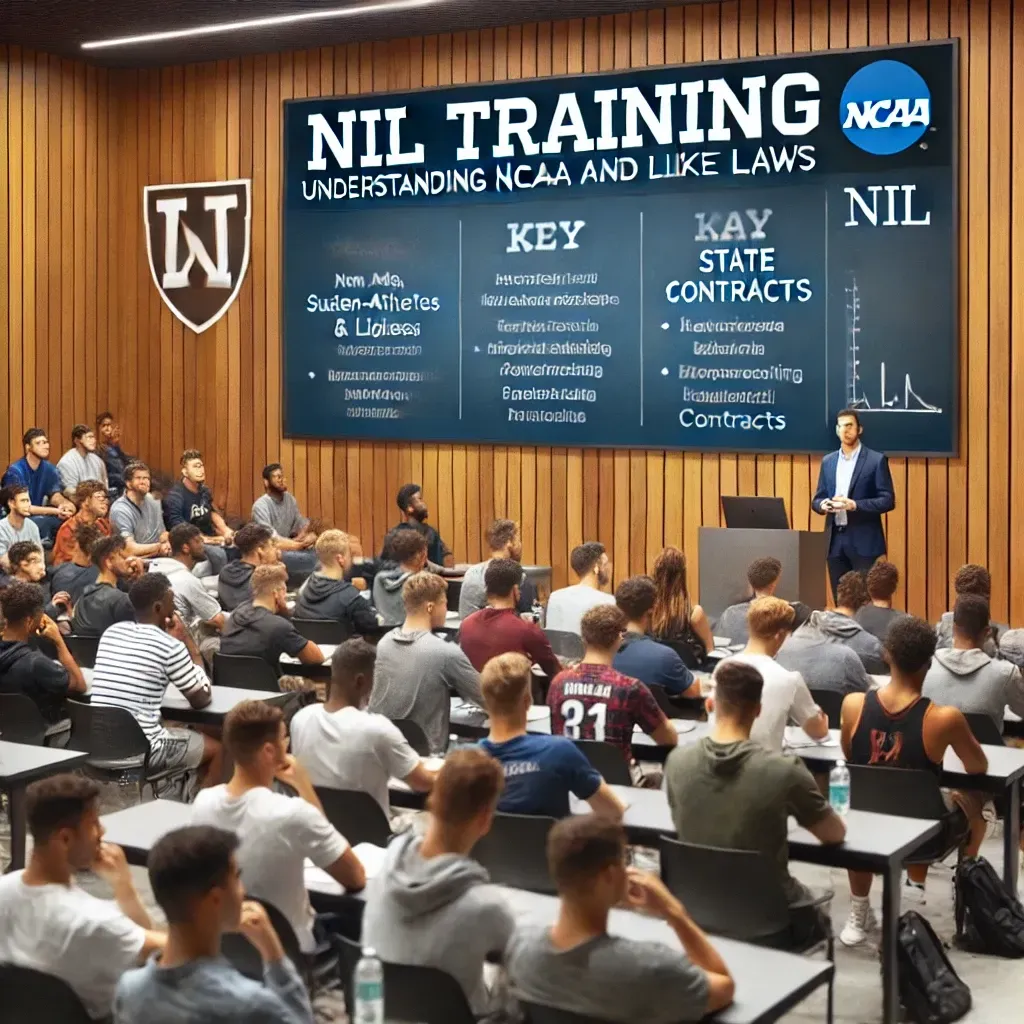
A professional university workshop focused on Name, Image, and Likeness (NIL) education. A diverse group of student-athletes, coaches, and administrators are seated in a modern lecture hall, attentively listening to a presenter. The presenter, a legal expert, stands next to a large screen displaying 'NIL Training: Understanding NCAA and State Laws' with key bullet points and a university logo. The setting is engaging, with students taking notes and some raising questions about NIL sponsorships and contracts.


How Universities Can Lead in NIL Awareness and Compliance

10. Ensuring Ongoing NIL Education and Policy Updates

Since restrictions vary across different NIL policies, universities must:

  • Update NIL training materials to reflect new rules and NCAA-approved policies
  • Conduct regular NIL compliance audits
  • Collaborate with athletic conferences to share best practices


Through continuous education, universities can safeguard their athletes and institutional reputation.


11. The Future of NIL in College Athletics

The NIL landscape will continue evolving, with potential federal legislation and greater NCAA oversight. Institutions must remain proactive in:

  • Adapting NIL policies to legal changes
  • Providing educational resources for student-athletes and faculty
  • Working with compliance experts to ensure smooth NIL implementation


By prioritizing NIL education and policy development, universities can position themselves as leaders in responsible athlete compensation.


Ensuring NIL Compliance and Education: Understanding Institutional Responsibilities and Athlete Rights

As Name, Image, and Likeness (NIL) legislation continues to reshape college athletics, universities must take an active role in educating their students, coaches, and administrators on the latest policies and compliance requirements. The Supreme Court's decision in NCAA v. Alston played a pivotal role in influencing the NIL start, allowing student-athletes to earn compensation for their personal brands. However, schools must navigate such laws carefully to avoid compliance risks.


The NCAA Division and NCAA President Charlie Baker have emphasized the need for universities to establish their own NIL rules while ensuring they align with state NIL laws and institutional policies. Critics, including some lawmakers and industry professionals, have expressed concern that the current system allows student-athletes to enter agreements without enough oversight, creating disparities in enforcement. As a student-athlete receives compensation, universities must ensure these deals comply with NCAA rules to avoid jeopardizing eligibility.


Additionally, basketball players, football players, and athletes in other revenue-generating sports must consider how NIL impacts their athletic performance and long-term careers. The case of the Colorado quarterback who secured multiple NIL deals early in his collegiate career is a prime example of how NCAA takes advantage of NIL's rapid growth while leaving individual universities responsible for oversight. Schools must ensure that every person’s legal rights are protected while enforcing policies that promote fairness and compliance in the NIL space.


Partner with NIL Experts to Strengthen Your University’s NIL Program

Navigating Name, Image, and Likeness (NIL) policies requires a strategic and well-informed approach. Universities must ensure that every student-athlete, coach, and administrator understands their NIL rights, responsibilities, and compliance obligations.


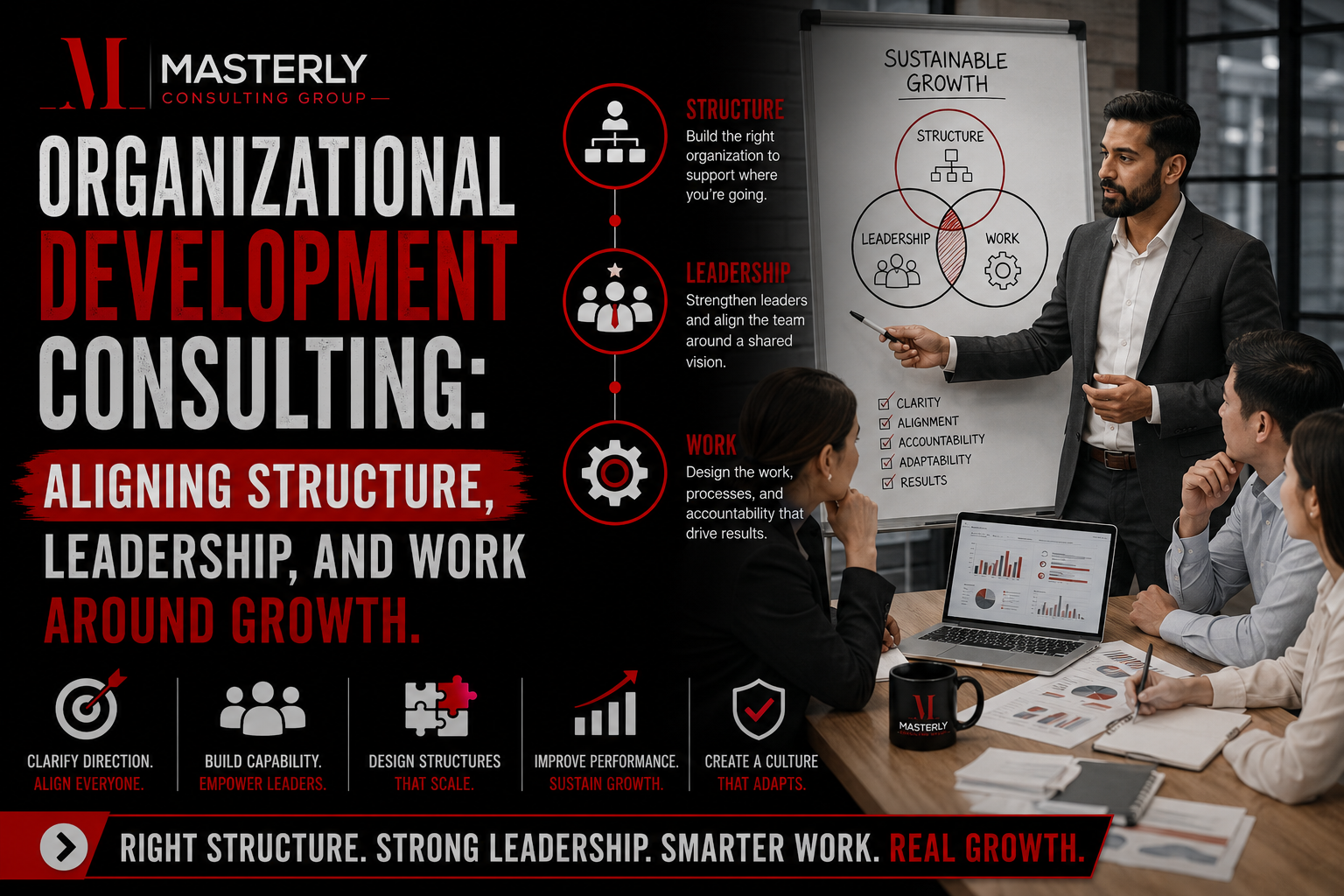
At Masterly Consulting Group, we provide comprehensive NIL training, compliance audits, and policy development services to help universities, athletic conferences, and member schools stay ahead in the evolving NIL space. Our customized programs equip institutions with the tools they need to support their college athletes while ensuring full compliance with state and NCAA NIL rules.


Contact us today at (888) 209-4055   to book a free consultation and discover how we can help your university navigate the complexities of NIL.



By Angelie Te August 8, 2026
Picture this: your organization invests in a two-day leadership offsite. Participants leave energized, rate the session highly, and talk about it at lunch for a week. Thirty days later, nothing has changed. Managers still default to old habits, team dynamics stay the same, and the binder from the retreat collects dust. This "training high, no behavior change" pattern is one of the most expensive problems in workforce development today. Corporate training refers to structured learning experiences designed for employees and leaders, tied directly to business goals. It is not a generic workshop or a motivational keynote. It is a deliberate program built around specific performance outcomes: reducing risk, improving decision-making, building leadership capabilities, or strengthening organizational culture.  This article is written for companies, associations, universities, and organizations planning professional development training or compliance-related programs for staff, faculty, or executives. Masterly Consulting Group's point of view is straightforward: training must be designed for on-the-job application, not event satisfaction scores. What follows is a practical guide to designing, buying, or improving corporate training programs that deliver measurable results and help you retain talent.
Employee engagement consultant identifying causes of low commitment.
By Amber Aniston August 7, 2026
An employee engagement consultant finds operational root causes behind low commitment. Masterly Consulting Group offers employee engagement consulting tied to retention and execution. Schedule a consultation.
Organizational culture consultant aligning leadership and team behavior.
By Amber Aniston August 7, 2026
Meta Description: Masterly Consulting Group offers organizational culture consulting to align leadership behavior with values and strategy, boosting engagement, accountability, and business success. Request a consultation today.
Business leaders planning organizational transformation strategy
By Amber Aniston August 6, 2026
Masterly Consulting Group turns transformation strategy into an executable operating model with governance, sequencing, and measurable adoption. Request a consultation today.
By Angelie Te August 5, 2026
Why Brand Portfolio Strategy Matters for Multi-Company Founders A founder launches a marketing agency in 2015. By 2019, she spins up a productized service for a specific niche. In 2023, she ships a SaaS product. Three companies, three websites, three logos. Clients ask which company they should hire. Her own team isn't sure which brand to recommend for a given project. The websites overlap. Referrals get lost. This is what happens when a founder builds multiple companies without a brand portfolio strategy. The brands grow, but they grow without a plan for how they relate, who each one serves, and how they move customers between them. A brand portfolio strategy is the deliberate system that decides how all the brands in a company's portfolio work together: which audiences each brand targets, what role each brand plays, and how the set of brands creates more overall value than any single brand could alone. The central tension is real: keep brands distinct enough that customers aren't confused, but connected enough that cross-referrals, trust transfer, and upsell paths still function. This article covers brand portfolio management (how you govern and allocate resources across brands), brand architecture (the structural relationships between brands), and brand roles (the job each brand does). The focus is on roles, clarity, naming, and growth. You'll walk away knowing how to choose between a branded house, house of brands, or hybrid; how to define brand roles; how to avoid brand complexity; and how to set up a governance model that keeps your portfolio sharp. What Is a Brand Portfolio Strategy? (and How It Differs from Just Owning a Bunch of Brands) A brand portfolio strategy is the structured management and organization of a company's brands. It defines how brands relate to each other and target market segments, assigns each brand a unique role, and ensures the portfolio as a whole aims to cover more of the market and drive growth without wasting resources. Owning multiple LLCs, having several logos, or running separate websites is not a strategy. Strategy answers: why does each brand exist? What audience does it serve that the other brands do not? How does the set perform financially? Each brand within a portfolio should have a clear purpose to prevent overlap. For a founder running a core consultancy, a separate training company, and a niche product brand, a brand portfolio strategy defines each brand's unique role and ensures the three entities serve different customer segments rather than competing for the same buyers with similar promises. This differs from product portfolio strategy, which focuses on SKUs and product categories within one brand. It also differs from generic "multi-business group" thinking, which tends to focus on operations and finance. Brand portfolio strategy zeros in on identity, positioning, and market perception. That includes company portfolio positioning: how the parent company is perceived (or whether it is visible at all) relative to its specialist brands. Brand Portfolio, Brand Architecture, and Brand Identity: How the Pieces Fit Founders often blur three concepts that serve different functions. Separating them saves time and prevents misaligned decisions. A brand portfolio is the full set of brands under common ownership. Alphabet owns Google, YouTube, and Waymo. Marriott managed 30 hotel brands after acquiring Starwood in 2016. A founder with an agency, a staffing firm, and a coaching brand has a three-brand portfolio. Brand architecture defines the relationships between brands in a portfolio. It's the structural pattern that determines who endorses whom, what's visible to customers, and how brand names and logos coordinate. There are two main types of brand architecture: mono-brand (one name covers everything) and multi-brand (distinct brands coexist). Brand architecture helps consumers understand product offerings and their relationships, and a well-defined brand architecture enhances brand equity and consumer navigation. It also clarifies brand roles and minimizes internal competition. Brand identity operates at the individual brand level: the name, visuals, tone, promise, and distinctive assets that make one brand recognizable. Brand positioning clarifies how each brand should be perceived in the marketplace. Portfolio management sits above identity work. It decides which brands exist, how they relate, and where investment goes. Architecture and identity then express those decisions in ways customers can see and navigate. Core Brand Portfolio Strategies: Branded House, House of Brands, and Hybrids Most multi-brand ecosystems fall along a spectrum. At one end sits the branded house. At the other, the house of brands. Between them are hybrids and endorsed models. Branded house. A branded house uses a single master brand across all products and services. FedEx (FedEx Express, FedEx Office, FedEx Ground) is a textbook example. A branded house communicates a single identity across all brands, which means equity built in one area transfers to others. The trade-off: if one offering fails publicly, the entire brand absorbs the reputational cost. House of brands. A house of brands consists of distinct standalone brands targeting specific niches. Procter & Gamble owns Tide, Pampers, and Gillette, but most consumers never think about P&G when buying shampoo. A house of brands allows each brand to operate independently, with tailored positioning and flexibility. The cost is real: P&G invests roughly 13% of annual sales into R&D and marketing to sustain its portfolio of powerful brands. Hybrid and endorsed models. A hybrid portfolio combines elements of multiple brand structures. Endorsed brands have sub brands supported by a parent corporate brand for credibility. Marriott operates distinct hotel brands (Ritz-Carlton, Courtyard, W Hotels) while the Marriott Bonvoy loyalty system ties the ecosystem together. Meta keeps Instagram and WhatsApp as different brands with their own audiences, connected by a visible parent.  For founders managing 3-8 companies, a lean hybrid is often the most practical choice: a credible parent brand plus a handful of clearly positioned specialist brands that share some elements but maintain distinct faces to market.
Business continuity consultant leading crisis planning workshop
By Amber Aniston August 5, 2026
Partner with a business continuity consultant to build practical, resilient continuity plans that protect critical operations from disruptions. Learn how expert consulting enhances operational resilience, supply chain management, and crisis response for growing companies and multi-location organizations.
Performance management consultant reviewing KPI dashboard with team
By Amber Aniston August 5, 2026
Masterly Consulting Group offers expert performance management consulting to help organizations set measurable expectations, improve feedback cadence, and enhance leadership accountability for better employee performance and business outcomes.
By Angelie Te August 5, 2026
Introduction: Why Shared Services Matter for Multi-Brand Entrepreneurs Between 2018 and 2024, one founder grew from a single digital marketing agency to a portfolio of five brands spanning creative services, e-commerce, staffing, and consulting. Revenue was climbing. But by year four, she was managing five separate bookkeepers, three different CRM platforms, inconsistent onboarding workflows, and a customer experience that varied wildly depending on which brand someone contacted. Growth had stalled - not because of demand, but because the back office couldn't keep up. This is the exact scenario where a shared services business model becomes essential. In its simplest form, it means creating a centralized support unit that serves multiple brands, entities, or divisions as internal customers - handling functions like finance, HR, marketing operations, and IT under one roof. Why does this matter now? Labor costs have surged since 2020. Remote teams have multiplied complexity. And artificial intelligence tooling has made centralization more feasible than ever. Entrepreneurs are increasingly running ecosystems of brands, and shared services reduce operational costs by eliminating redundancy while enabling scalability so organizations can expand without rebuilding administrative infrastructure each time. This article is written for entrepreneurs and operators managing multiple companies - not Fortune 500 executives. Here's what we'll cover: How the shared services business model works and what it actually includes When centralization makes sense (and when it doesn't) How to design, govern, and implement a shared services unit Risks, trade-offs, and a practical roadmap