Strengthening Campus Culture Through Sexual Harassment Training for School Managers
Creating a safe and inclusive learning environment requires more than policies—it demands proactive leadership. Sexual harassment training for managers is a critical part of shaping campus culture and setting expectations from the top down. As cases of harassment, discrimination, and retaliation continue to affect K-12 schools and universities, the role of school managers and supervisors in prevent harassment becomes increasingly urgent.
At The Masterly Consulting Group, we help employers navigate changing state regulations, conduct effective compliance training, and empower school leaders to lead with integrity and accountability. This article explores how equipping managers with expert-led harassment training builds trust, reduces risk, and strengthens your institution's overall workplace culture.
The Role of Managers in Campus Safety and Culture
Managers and supervisors in educational settings are more than administrators—they are frontline defenders of a safe workplace. When leaders understand their responsibilities in identifying and stopping sexual harassment, they become key agents in shifting the culture of a school.
They are often the first to:
- Hear complaints from employees and students
- Witness inappropriate conduct firsthand
- Model respectful behavior in meetings and classrooms
Comprehensive sexual harassment training ensures that school leaders are prepared to respond appropriately, escalate when needed, and protect their teams from harm and liability.
The Importance of Workplace Harassment Prevention Training
Every campus has a duty to maintain a respectful work environment free from harassment, unlawful harassment, and offensive jokes. Workplace harassment prevention training gives managers the tools to recognize signs of discrimination, communicate expectations clearly, and apply consistent disciplinary action.
This training also reinforces:
- Awareness of state regulations and Title VII
- Legal obligations when managing employees across multiple states
- Techniques for conflict resolution and de-escalation
By prioritizing prevention, organizations can reduce risk and foster a more inclusive campus.
Why School Managers Need More Than Basic Compliance Training
While annual compliance training may meet legal requirements, it is not always enough to address the realities of workplace harassment in school environments. School managers must go beyond the basics to deeply understand training content, context, and evolving standards.
At Masterly Consulting Group, we offer:
- In-depth sexual harassment prevention training
- Scenario-based exercises for responding to real-life incidents
- Guidance for crafting a strong sexual harassment prevention policy
Our training aligns with federal and state laws, ensuring your staff knows how to stay compliant.
Online Training That Supports Busy School Schedules
We recognize that administrators, non supervisory employees, and new employees all have packed calendars. That’s why our online training options are designed for flexibility without sacrificing quality. Each course includes real-world examples, key concepts, and legally accurate guidance tailored for the education sector.
Benefits of our online training include:
- Accessibility across devices
- Built-in assessments for learning retention
- Technical support for smooth access
Whether your team prefers live instruction or digital self-paced modules, our platform supports consistent and effective training.
Connecting Harassment Training to Campus-Wide Culture
One of the most overlooked benefits of harassment training is its influence on employee engagement and workplace culture. When managers receive proper harassment prevention training, they are better equipped to:
- Encourage open communication
- Address inclusion and diversity
- Lead by example to create a safe and equitable environment
This ripple effect fosters stronger connections among faculty, students, and staff.
Prevent Harassment Before It Becomes a Crisis
Ignoring inappropriate behavior sends a dangerous message. Through targeted sexual harassment training, school managers learn to act quickly and decisively before a situation escalates.
Key focus areas include:
- Documenting and responding to incidents
- Understanding how to comply with internal and external regulations
- Establishing clear boundaries with employees
Proactive measures reduce risk and minimize potential liability for your institution.
Ensuring Compliance in Every State You Operate
Many universities and school districts operate across multiple states, making continuous compliance a major challenge. Our programs are designed to meet the specific compliance needs of districts and campuses, whether they are located in California, New York, or other states.
We help your HR and legal teams navigate:
- Jurisdictional differences in compliance training
- Varying mandates around annual training and one or more employees
- Deadlines based on start date of new employees
This ensures you stay ahead of evolving regulations.
Inclusion Training as Part of a Broader Culture Strategy
Training that only focuses on stopping sexual harassment misses the opportunity to build something stronger. Our programs integrate inclusion training, which encourages understanding across lines of race, gender, national origin, and ability.
This approach complements:
- Traditional harassment training
- DEI goals within your organizations
- Broader efforts to promote equity and human rights
True change requires more than awareness—it requires action.
Building Confidence in Managers to Handle Difficult Situations
It’s not uncommon for managers to feel unprepared when faced with sensitive workplace situations. Through our expert-led sessions, we equip leaders with real skills for handling conflict, addressing harassment, and conducting investigations.
Our training includes:
- Role-playing exercises
- Scripts for initial conversations
- Resources for legal guidance and follow-up
When managers feel empowered, the whole campus benefits.
Aligning with Title VII and Employment Law Requirements
Title VII of the Civil Rights Act prohibits discrimination and harassment in the workplace, especially for institutions receiving federal funding. That includes schools and universities of all sizes.
Our compliance training covers:
- How sexual harassment relates to Title VII and school policy
- What employers need to document
- How to comply with reporting obligations
Staying current with employment law is not optional—it’s critical.
Reinforcing Key Concepts Through Ongoing Training
Harassment prevention training isn’t a one-and-done effort. Just like curriculum, your training should evolve. We recommend:
- Refreshers each semester or annual training
- Updates based on legislative changes
- Periodic reviews of your sexual harassment prevention policy
This approach supports continuous compliance and improves retention of key concepts.
Training for All Employee Levels and Roles
To truly prevent harassment, everyone must be involved—from executives to non supervisory employees. Our programs are tailored to meet the needs of:
- Frontline employees who interact with students
- HR professionals managing harassment claims
- Supervisors overseeing multiple departments
Our courses are effective, engaging, and built for real results.
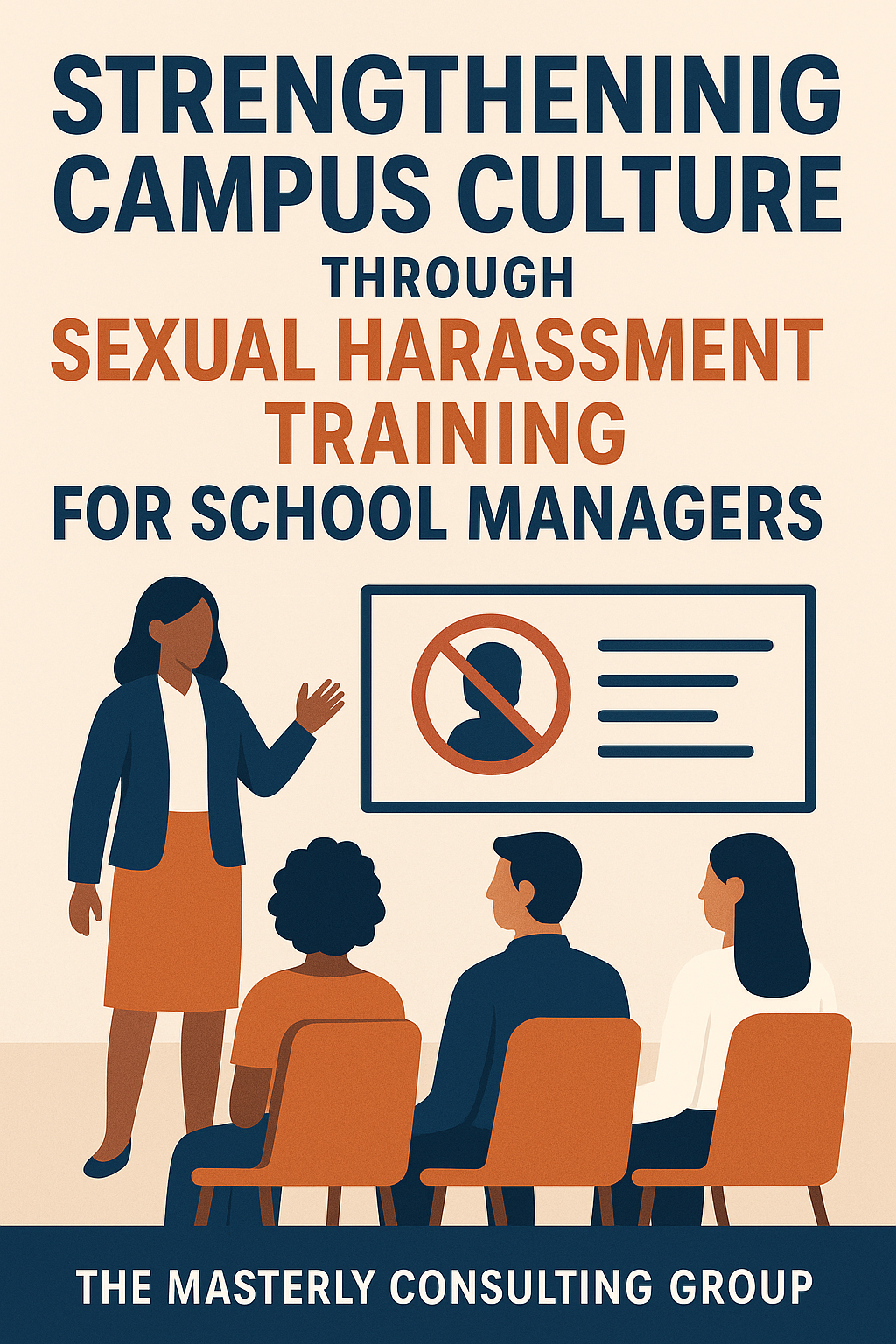
Making Harassment Training Engaging and Actionable
Let’s face it: too many training sessions are passive and forgettable. At Masterly Consulting Group, we prioritize engaging delivery that keeps participants alert and involved.
Expect:
- Interactive case studies
- Multimedia presentations
- Open discussions that invite reflection
Employees learn best when the material feels real and relevant to their daily lives.
Protecting Your Institution from Legal and Reputational Risk
Lawsuits and public exposure are not rare. One unresolved case of sexual harassment or workplace harassment can damage your school’s reputation and drain resources.
Our expert-led compliance training and harassment training help you:
- Limit exposure
- Show documented good-faith efforts
- Build a record of timely training and response
When you invest in training, you invest in long-term protection.
Sexual Harassment Training That Goes Beyond the Basics
Our programs are more than a check-the-box course. We dig deeper to ensure your team understands not just what sexual harassment is, but how to recognize, report, and stop it.
We also address:
- Intersection with workplace violence training
- Prevention strategies for new employees
- How to support victims without bias
This level of care sets us apart.
Building a Culture of Respect and Accountability
Workplace harassment doesn’t disappear overnight. But with consistent, targeted training, your managers can create a new standard—one rooted in respect, inclusion, and professionalism.
Through intentional leadership and expert guidance, we help schools:
- Strengthen trust within teams
- Reduce future incidents
- Promote long-term institutional growth
A safe school is a strong school.
Key Features of Effective Workplace Harassment Training for School Leaders
Not all workplace harassment training is created equal—especially in educational settings where the stakes are high. Programs that deliver real results include key features such as scenario-based learning, role-specific modules, and tools for policy implementation. At The Masterly Consulting Group, we tailor each training session to address the specific responsibilities of school managers, ensuring alignment with institutional values and legal obligations. Our sessions also include guidance on how to access additional information, ongoing support, and resources that reinforce the material over time. The goal is not just to check a box—but to empower leaders to take meaningful action in shaping a respectful, harassment-free campus culture.
Elevating Campus Standards with Sexual Harassment Training for Employees
Creating a respectful academic environment requires more than leadership-level guidance—it also means providing consistent sexual harassment training for employees at every level. From faculty and support staff to part-time aides and student workers, everyone must understand how to recognize, report, and prevent inappropriate behavior. Effective training ensures that employees are aware of their rights, understand the school's policies, and know how to respond when they witness or experience workplace harassment. At Masterly Consulting Group, our training is tailored to meet the needs of diverse campus roles, helping schools create a unified front against sexual harassment and misconduct.
Prioritizing Workplace Training on Harassment in Education
Educational institutions are not exempt from the legal and ethical demands of maintaining a safe environment. Implementing harassment training workplace programs tailored to schools helps ensure that both leadership and staff understand how to prevent, recognize, and respond to misconduct. These trainings go beyond legal compliance—they reinforce shared values and foster a climate of mutual respect. When schools treat harassment training as an essential workplace standard, they build trust, reduce liability, and empower all team members to contribute to a safer campus. Masterly Consulting Group delivers effective, evidence-based training designed specifically for the education sector.
Take the Next Step Toward a Safer, Compliant Campus
If your school or university hasn’t reviewed its sexual harassment training for managers recently, now is the time to act. Delayed training invites greater risk, potential legal consequences, and damage to your campus reputation.
Call The Masterly Consulting Group today at (888) 209-4055 to schedule a free consultation. We’ll review your existing harassment prevention training efforts and design a customized program that helps you stay compliant, educate employees, and build a safe and inclusive school environment.