Sexual Harassment Training for Managers: Why Leadership Accountability Starts With You
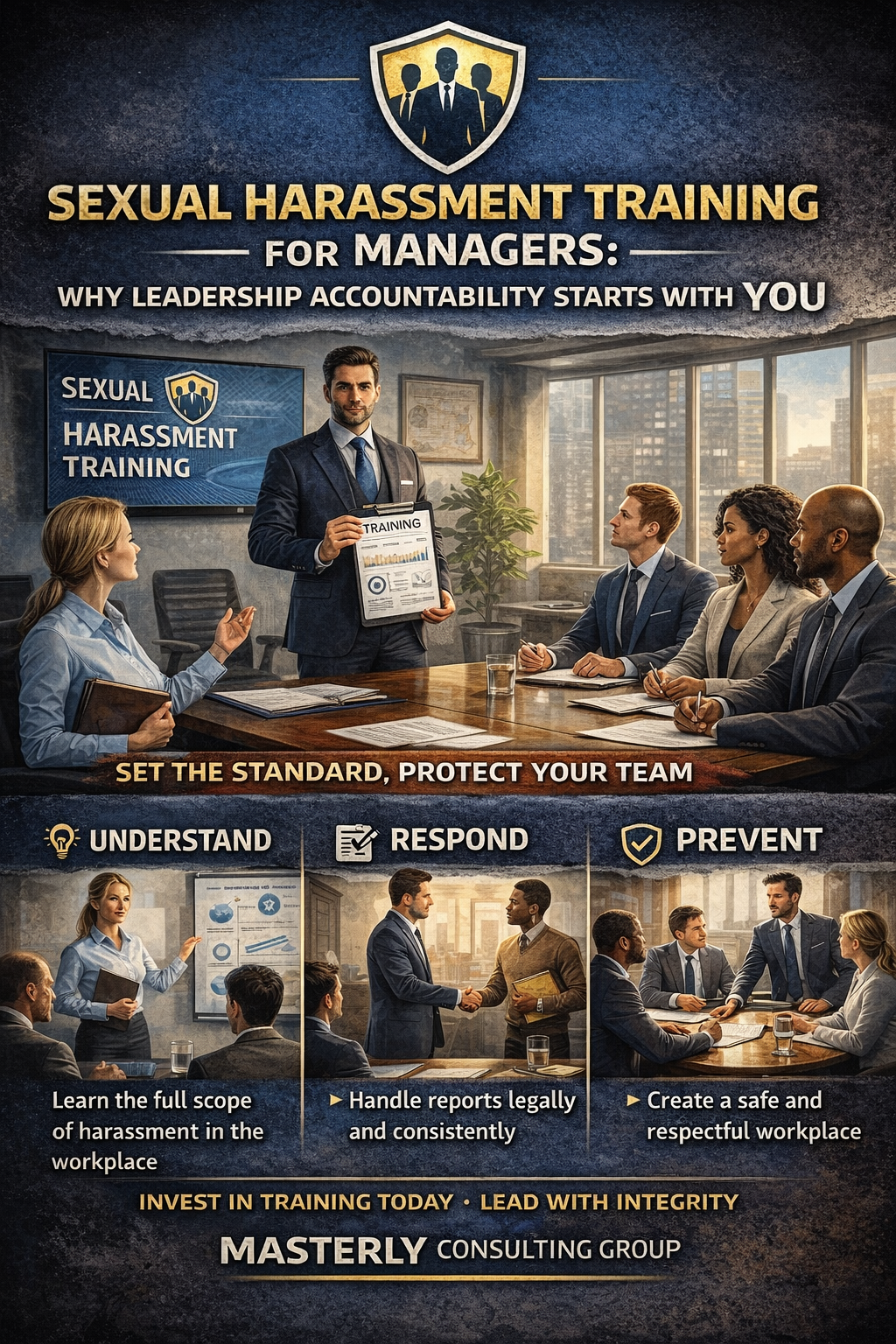
Managers often step into leadership roles focused on performance, productivity, and results. Yet one of the most critical responsibilities of leadership is creating a safe and respectful workplace. Sexual harassment training for managers is not just a compliance checkbox; it is a leadership obligation that directly affects employees, culture, and legal risk. At Masterly Consulting Group, we work with managers who want clarity, confidence, and real-world guidance. This article speaks directly to leaders who understand that accountability starts at the top.
Why Managers Set the Tone for the Workplace
Every workplace reflects its leadership. Employees observe how managers speak, respond, and act when issues arise. When leaders take harassment prevention seriously, employees are more likely to do the same. Workplace harassment thrives in environments where leadership is silent or inconsistent. Effective managers recognize that their actions shape daily behavior across the workplace.
Understanding Sexual Harassment Beyond Definitions
Sexual harassment is not limited to obvious misconduct. It can include offensive jokes, inappropriate behavior, or comments tied to sexual orientation, gender identity, gender expression, or national origin. Many incidents occur because employees do not recognize unlawful harassment when it happens. Sexual harassment training helps managers understand the full scope of illegal harassment. This understanding allows leaders to act before situations escalate.
The Legal Responsibility Managers Carry
Federal laws such as the Civil Rights Act and guidance from the Equal Employment Opportunity Commission place responsibility on employers and leaders. Supervisory employees often become the first line of response when harassment occurs. When managers fail to act appropriately, organizations face increased liability. Sexual harassment training requirements exist to reduce this risk and ensure compliance. Leadership awareness is essential to meeting legal obligations.
Why Sexual Harassment Training for Managers Is Different
Sexual harassment training for managers is not the same as training for non supervisory employees. Managers are responsible for receiving reports, documenting concerns, and addressing instances of harassment in the workplace. Training must prepare leaders to respond appropriately and consistently. Without this preparation, even well-intentioned managers may mishandle complaints. Specialized training ensures leaders understand their elevated role.
How Workplace Harassment Impacts Daily Operations
Workplace harassment affects more than legal exposure. It damages employee morale, increases turnover, and erodes trust. Employees who feel unsafe or ignored disengage from their work. A respectful work environment improves collaboration, productivity, and retention. Harassment prevention is directly connected to business performance.
The Importance of Early Intervention
Managers often notice warning signs before formal complaints are filed. These signs may include tension, withdrawal, or repeated conflicts. Sexual harassment prevention training helps managers recognize early indicators. Addressing workplace harassment early reduces harm and prevents escalation. Early action also demonstrates leadership accountability.
Compliance Training Is Only the Starting Point
Many organizations focus on compliance training to meet minimum requirements. While compliance training is important, it is not enough on its own. Effective training goes beyond rules and focuses on real workplace scenarios. Managers need practical tools they can apply immediately. Masterly Consulting Group emphasizes training that changes behavior, not just checks boxes.
Understanding Harassment Training Requirements
Harassment training requirements vary by jurisdiction. Some local laws require annual training, initial training for new employees, or training once a company reaches five or more employees. Other laws apply to three or more employees or one or more employees depending on location. Managers must stay up to date on training requirements. Failure to comply creates unnecessary risk.
Sexual Harassment Training Requirements for Leaders
Sexual harassment training requirements often include specific content for supervisory employees. This may include at least one hour of instruction focused on leadership responsibilities. Managers must understand how to report harassment, document concerns, and support employees. Such training ensures leaders are prepared to act appropriately. Training requirements are designed to protect both employees and organizations.
Workplace Harassment Training Builds Confidence
Managers often hesitate because they fear saying the wrong thing. Workplace harassment training provides clarity and confidence. Leaders learn what to say, what not to say, and how to escalate concerns. Confidence reduces delays and mistakes. Training empowers managers to act decisively and professionally.
Addressing Harassment in the Workplace Effectively
Addressing harassment in the workplace requires consistency and fairness. Managers must follow company policies and sexual harassment prevention policy guidelines. Training helps leaders apply policies correctly and uniformly. Consistent responses build trust and credibility. Employees are more likely to report harassment when they believe managers will respond appropriately.
Why Online Training Alone Is Often Insufficient
Online training can be convenient, but it often lacks interaction. Managers benefit from discussion, scenario-based learning, and questions. Interactive training allows leaders to explore real challenges they face. While online training has value, it should be part of a broader training program. Effective training blends flexibility with engagement.
Workplace Harassment Training Course Content Matters
A workplace harassment training course must cover more than definitions. Training content should include real examples, role-playing, and bystander intervention training. Managers need to practice responding to difficult situations. Training that feels realistic is more likely to stick. Quality content drives meaningful change.
The Role of Bystander Intervention Training
Bystander intervention training teaches managers how to step in safely and effectively. Leaders learn how to interrupt inappropriate behavior before it escalates. This approach helps combat workplace harassment proactively. It also reinforces shared responsibility across the workplace. Managers who model intervention encourage others to do the same.
Sexual Harassment Prevention Training as Risk Management
Sexual harassment prevention training reduces legal exposure and reputational harm. Organizations that provide sexual harassment training demonstrate good faith efforts to prevent harassment. This can be critical in investigations or litigation. Prevention-focused training protects both people and businesses. Managers play a central role in this effort.
Supporting Employees Who Report Harassment
When employees report harassment, they are often anxious or fearful. Managers must support employees without judgment or retaliation. Training helps leaders respond with empathy and professionalism. Proper responses encourage reporting and reduce silence. Supporting employees strengthens trust and workplace culture.
The Importance of Clear Reporting Channels
Employees need to know how to report harassment. Managers must understand reporting procedures and next steps. Training ensures leaders communicate options clearly and accurately. Clear reporting channels reduce confusion and delays. This clarity is essential for effective harassment prevention.
Addressing Unlawful Harassment and Discrimination
Unlawful harassment often overlaps with unlawful discrimination. Issues may involve protected characteristics such as sexual orientation or national origin. Managers must understand how harassment and discrimination intersect. Discrimination training helps leaders recognize and address these issues appropriately. Proper training prevents costly mistakes.
Preventing Retaliation Through Training
Retaliation is one of the most common legal risks following harassment complaints. Managers may unintentionally engage in retaliatory behavior. Harassment prevention training educates leaders on what retaliation looks like. Preventing retaliation protects employees and organizations alike. Training reinforces fair treatment throughout the process.
Creating a Respectful and Inclusive Workplace
An inclusive workplace does not happen by accident. It is built through intentional leadership and workplace training. Inclusion training helps managers foster respect and belonging. A respectful work environment supports diversity and collaboration. Harassment prevention is a key component of inclusion.
Workplace Violence and Harassment Are Connected
Workplace violence often escalates from unresolved conflict or harassment. Workplace violence training complements harassment training by addressing safety concerns. Managers learn how to recognize warning signs and respond appropriately. Addressing workplace violence early protects everyone. Training creates safer workplaces.
Educating Employees Through Leadership
Managers play a critical role in educating employees. When leaders reinforce training concepts daily, employees understand expectations. Educating employees consistently strengthens harassment prevention efforts. Leadership involvement makes training meaningful. Employees recognize when leaders take these issues seriously.
Training Programs Must Evolve Over Time
Training programs should not remain static. Laws change, workplace dynamics shift, and new risks emerge. Additional training keeps managers up to date and effective. Regular updates ensure compliance with local laws and federal laws. Continuous learning supports long-term prevention.
Initial Training and Ongoing Development
Initial training introduces key concepts, but ongoing development reinforces them. New employees benefit from early education on harassment prevention. Managers need refresher training to stay current. Ongoing training builds confidence and consistency. Prevention is an ongoing process.
The Role of Conflict Resolution Skills
Conflict resolution skills help managers address issues before they escalate. Training teaches leaders how to manage difficult conversations. Effective conflict resolution reduces harassment risk. These skills support healthier workplace interactions. Managers become problem-solvers rather than bystanders.
Ensuring Compliance Across the Organization
Ensuring compliance requires coordination between leadership and policy. Managers must understand their role in compliance efforts. Training aligns leadership actions with organizational goals. Compliance training supports consistent enforcement. This alignment reduces risk and confusion.
Why Generic Training Falls Short
Generic training often fails to address real workplace challenges. Managers need guidance tailored to their responsibilities. Anti harassment training should reflect actual scenarios leaders face. Customized training is more effective and engaging. Masterly Consulting Group focuses on practical relevance.
Helping Managers Prevent Harassment Proactively
Prevent harassment by empowering managers with tools and knowledge. Training teaches leaders how to set expectations clearly. Proactive leadership reduces incidents and complaints. Prevention-focused strategies save time and resources. Managers become advocates for safe workplaces.
How Masterly Consulting Group Supports Leaders
Masterly Consulting Group works directly with managers to build confidence and competence. Our training programs are designed for real-world leadership challenges. We help leaders understand harassment training requirements and apply them effectively. Our approach emphasizes accountability and clarity. Managers leave prepared to lead responsibly.
Leadership Accountability Builds Trust
Employees trust leaders who act consistently and fairly. Leadership accountability strengthens workplace culture. Training helps managers align actions with values. Trust improves communication and engagement. Accountability begins with informed leadership.
Moving From Obligation to Ownership
Sexual harassment training should not feel like a burden. When managers understand its value, they take ownership. Ownership leads to proactive behavior and stronger prevention. Leaders who embrace training set a powerful example. This mindset shift changes workplaces.
Take the Next Step Toward Confident Leadership
If you are a manager, your actions matter more than you may realize. Sexual harassment training equips you to lead responsibly and protect your team. It strengthens compliance, culture, and confidence. Waiting until a complaint arises is too late. Preparation is the key to accountability.
Talk With Masterly Consulting Group About Training
If you have questions about sexual harassment training for managers or want guidance on building effective training programs, we invite you to reach out. A free consultation allows us to discuss your needs and explain how we can assist. At Masterly Consulting Group, we help leaders create safer, more respectful workplaces through practical training and expert support.
Contact us at (888) 209-4055 to book a free consultation and take the next step toward leadership accountability.