Employee Retention Strategies: Fixing the Operational Problems That Push Strong Employees Out
A strong employee resigns. Leadership approves a replacement, recruiting begins, and the position is eventually filled.
Then another good employee leaves.
When this pattern continues, the problem may not be recruiting. It may be what employees experience after they join the organization.
Unclear responsibilities, inconsistent managers, unreasonable workload, weak communication, limited advancement, and frustrating internal processes can gradually turn a good job into one an employee wants to leave. Effective employee retention strategies should identify those sources of friction rather than treating every resignation as an isolated event.
For schools, universities, businesses, and other organizations, retention is also an operational concern. Masterly Consulting Group provides education, business, HR, organizational effectiveness, strategic planning, and leadership consulting services. Its current education-consulting content recognizes staffing challenges, leadership vacancies, increased workloads, and workforce development as issues affecting educational institutions.
Employee Retention Strategies Should Look Beyond the Exit Interview
An exit interview can provide useful information, but it happens after the organization has already lost the employee.
The better question is what was happening before the resignation.
Perhaps responsibilities expanded while authority remained unclear. Maybe a manager handled expectations differently for each team member. An employee interested in growth saw no visible path forward. Another person spent so much time working around inefficient systems that ordinary responsibilities became exhausting.
Individually, these problems may appear manageable.
Together, they shape the employee experience.
Professional retention consulting can help leadership look for patterns across the organization instead of assuming that every departure comes down to compensation, personality, or an employee finding another opportunity.
High Turnover Can Be a Symptom of Operational Friction
Turnover tells leadership that employees are leaving. By itself, it does not explain why.
That distinction matters.
Imagine two departments with similar turnover levels.
In the first, employees regularly leave because responsibilities are poorly defined and people are held accountable for work they did not know they owned. In the second, employees understand their roles but see few opportunities for professional growth.
The numbers may look similar.
The underlying problems are different.
Applying the same retention initiative to both departments could miss what is actually driving employees away.
Masterly Consulting Group's current organizational effectiveness services focus on issues such as unclear ownership, duplicated work, role clarity, accountability, and execution. Its HR consulting content also identifies clearer career paths and stronger talent management as factors relevant to retaining employees.
Role Clarity Can Affect Job Satisfaction and Whether Good Employees Want to Stay
Employees should understand what they are responsible for, what decisions they can make, and how their work connects with others.
Weak role clarity can make even capable employees feel ineffective and increase stress.
An employee may receive conflicting instructions from two leaders. Another may discover that three people believe they own the same decision. Someone else may regularly receive work that falls outside the role without understanding whether the change is temporary or permanent.
This creates friction.
Role ambiguity can also undermine mental health when employees are unsure what they own or how success is judged.
Masterly Consulting Group's organizational effectiveness guidance identifies role uncertainty as a source of duplicated effort, dropped responsibilities, and cross-functional friction. It approaches role clarity in terms of authority, decision ownership, and collaboration rather than relying only on job descriptions.
For retention, that distinction is important.
Employees are more likely to understand their place in an organization when expectations and responsibilities are clear.
Manager Effectiveness Shapes the Daily Employee Experience
Employees experience the organization through their managers.
A company can have excellent policies and a thoughtful mission while employees encounter inconsistent expectations at the team level.
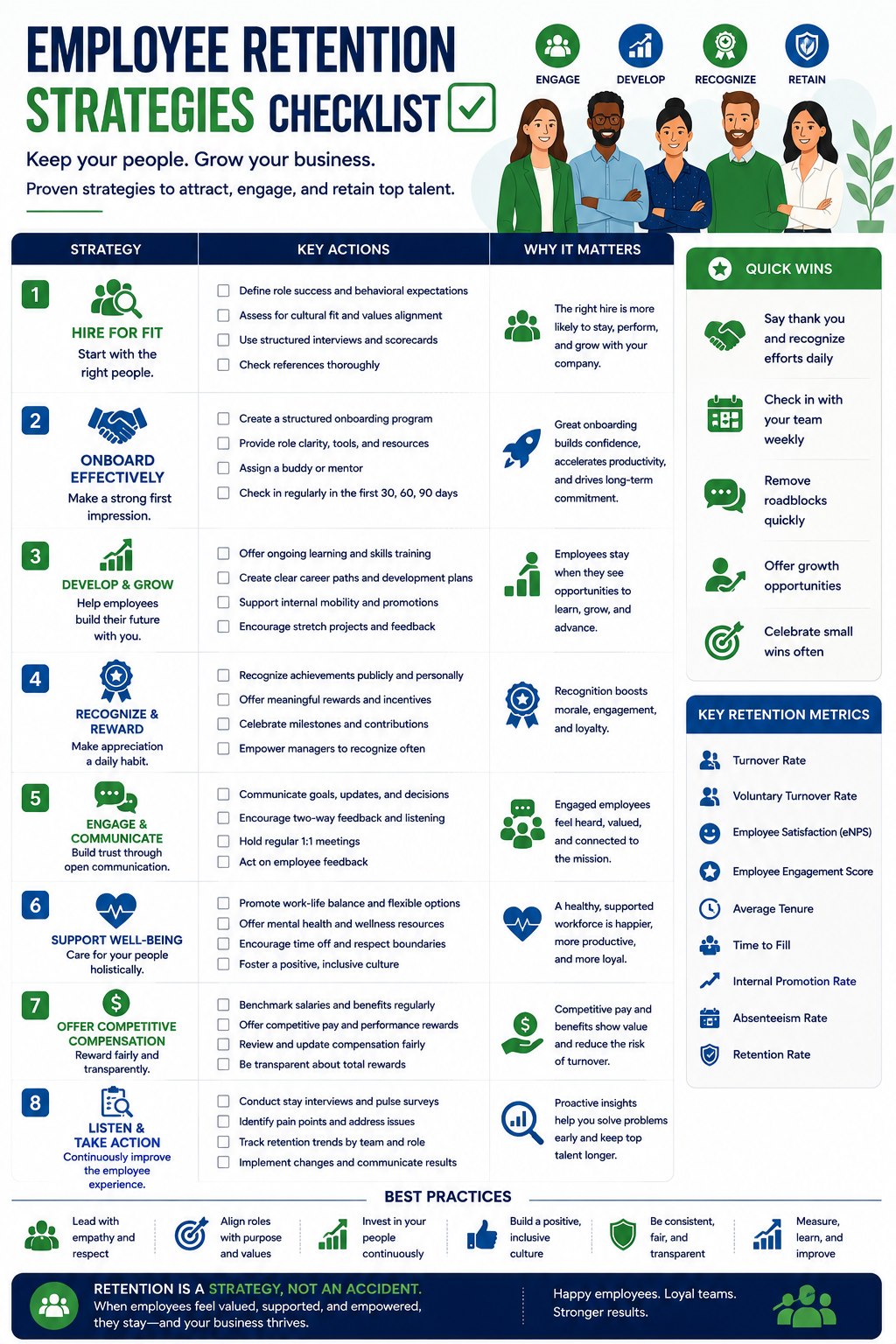
That makes manager effectiveness an important retention issue. Around 60% of HR leaders prioritize manager effectiveness.
One manager may communicate priorities clearly. Another may change expectations without explanation. Some supervisors provide useful feedback, while others communicate only when something goes wrong.
Employees notice these differences, and effective managers boost employee engagement by fostering trust.
A retention strategy should therefore consider whether managers have clear expectations, appropriate support, manageable numbers of direct reports, and the ability to lead employees consistently.
Masterly Consulting Group's current corporate-training approach emphasizes training tied to real workplace performance, including leadership development and manager effectiveness, rather than training that ends when the session is over.
Retention Problems May Be Concentrated, Not Company-Wide
Organization-wide turnover numbers can hide local problems.
If employees repeatedly leave one department while similar teams remain stable, leadership may need to examine what is different.
The answer could involve management, workload, responsibilities, communication, scheduling, processes, or another factor.
This is why diagnosing retention problems should come before prescribing solutions.
Workload and Work Life Balance Problems Are Not Always Headcount Problems
When employees report excessive workload, the immediate response may be to hire more people.
Sometimes that is appropriate.
Other times, the real issue is how work moves through the organization. Chronic workload pressure can drive burnout, and employee wellness initiatives help protect productivity when capacity is strained.
Duplicated approvals, unclear ownership, unnecessary meetings, outdated processes, poor communication, or repeated rework can consume employee capacity without producing additional value. Where the role allows, flexible work arrangements can improve work life balance and reduce burnout.
Adding another employee to a broken process may spread the frustration across one more person.
A professional organizational review can help leadership distinguish genuine staffing pressure from process friction.
Masterly Consulting Group currently provides process optimization and organizational effectiveness support alongside its HR and strategic consulting services.
Advancement Needs to Feel Real, Not Theoretical
Good employees often want to understand what comes next.
That does not mean every employee expects an immediate promotion.
It means people may want to see how greater responsibility, professional development, new skills, leadership opportunities, or career progression can fit into their future and support their long term goals.
When advancement feels invisible, strong employees may begin looking elsewhere for it.
Employees at companies that hire from within stay 41% longer.
Masterly Consulting Group's HR consulting materials identify clear growth paths and talent-management structures as important parts of engagement and retention. Its executive coaching services also connect leadership development with employee retention and organizational performance. Mentoring can make a big impact here, and 91% of employees with a mentor are satisfied with their jobs, reinforcing the link to job satisfaction.
Organizations should therefore consider whether employees understand the opportunities that actually exist.
Promises should not replace structure.
Employee Experience Is Built Through Everyday Systems
The employee experience is built through everyday systems and company culture, not just company events, recognition programs, or surveys.
It is also the experience of trying to get work done.
Can employees get decisions when they need them?
Do they know who owns a process?
Are policies applied consistently?
Do systems support their work or make it harder?
Can employees raise concerns appropriately?
Do managers communicate changes clearly to team members?
Stable teams tend to maintain higher morale and better collaboration.
These everyday experiences can influence whether talented people view the organization as a place where they can succeed long term.
A positive work environment helps employees thrive because psychological safety supports day-to-day work and fosters loyal employees.
That is why retention should not become a collection of disconnected perks.
If employees are frustrated by management inconsistency or broken processes, adding another benefit may not address the reason they are considering leaving.
Retention Problems Can Affect the Organization's Reputation
Persistent turnover does not stay inside HR.
Customers may experience changing points of contact. Projects can lose continuity. Managers spend time filling vacancies instead of leading. Remaining employees may absorb additional responsibilities.
In education, staffing instability can also affect institutional operations and continuity.
Masterly Consulting Group's education consulting materials identify teacher shortages, leadership vacancies, increased workloads, and changing workforce expectations among the pressures currently facing educational institutions.
Over time, repeated departures can also affect how current employees and prospective candidates view the organization.
Employee retention is therefore connected with operational stability and the organization's broader reputation.
Retention Strategy Should Match the Actual Problem
Organizations sometimes respond to turnover with a broad initiative before understanding what is wrong.
They introduce recognition programs.
They schedule engagement activities.
They revise onboarding.
Any of those actions could be useful in the right situation. If turnover is being driven by pay, competitive compensation reduces turnover driven by financial dissatisfaction, and competitive salaries are essential for retaining top talent.
But if employees are leaving because their roles are unclear, the organization needs to address role clarity.
If inconsistent management is the issue, leadership needs to examine manager effectiveness.
If workload is being created by broken processes, the workflow deserves attention.
If strong employees cannot see advancement opportunities, career structure may require review.
The most useful employee retention strategies connect the response to the source of the friction. High retention reduces hiring costs by up to 50%.
What a Retention Diagnostic Should Help Leadership Understand
A professional retention conversation should help leadership move beyond the question, "How do we stop people from leaving?"
A better set of questions includes:
- Where is turnover concentrated?
- What patterns appear across departments or roles?
- What is the replacement cost for the roles being lost, knowing it can run roughly 40% to 200% of salary?
- Are responsibilities and decision rights clear?
- Is workload reasonable, or are inefficient systems creating unnecessary work?
- Are managers applying expectations consistently?
- Do employees understand available advancement opportunities?
- Are total rewards competitive, including compensation, benefits, recognition, and wellbeing?
- Are communication gaps creating avoidable frustration?
- Which parts of the employee experience require organizational attention?
This is not a DIY checklist for fixing retention.
These questions show why retention can require an organizational diagnosis rather than a single HR initiative, and why the business case often rests on measurable benefits rather than a single HR initiative.
Masterly Consulting Group Can Examine the Friction Behind Turnover
Retention problems can cross several areas of an organization.
That is where an outside perspective can be valuable.
Masterly Consulting Group provides education consulting alongside HR consulting, organizational effectiveness, business consulting, strategic planning, corporate training, and executive coaching. Its current services address areas that can intersect with retention, including employee relations, talent management, leadership development, process optimization, role clarity, organizational performance, resources, and leadership skills.
For educational institutions specifically, Masterly Consulting Group's education practice addresses institutional leadership and workforce challenges affecting schools, colleges, and universities. Its current team includes professionals with backgrounds in educational leadership and higher education.
A retention engagement should be customized to the organization and the problems leadership is trying to understand. The appropriate scope may involve examining workforce patterns, management practices, processes, role structure, professional development, communication, or other organizational conditions, including expectations and support from senior leaders.
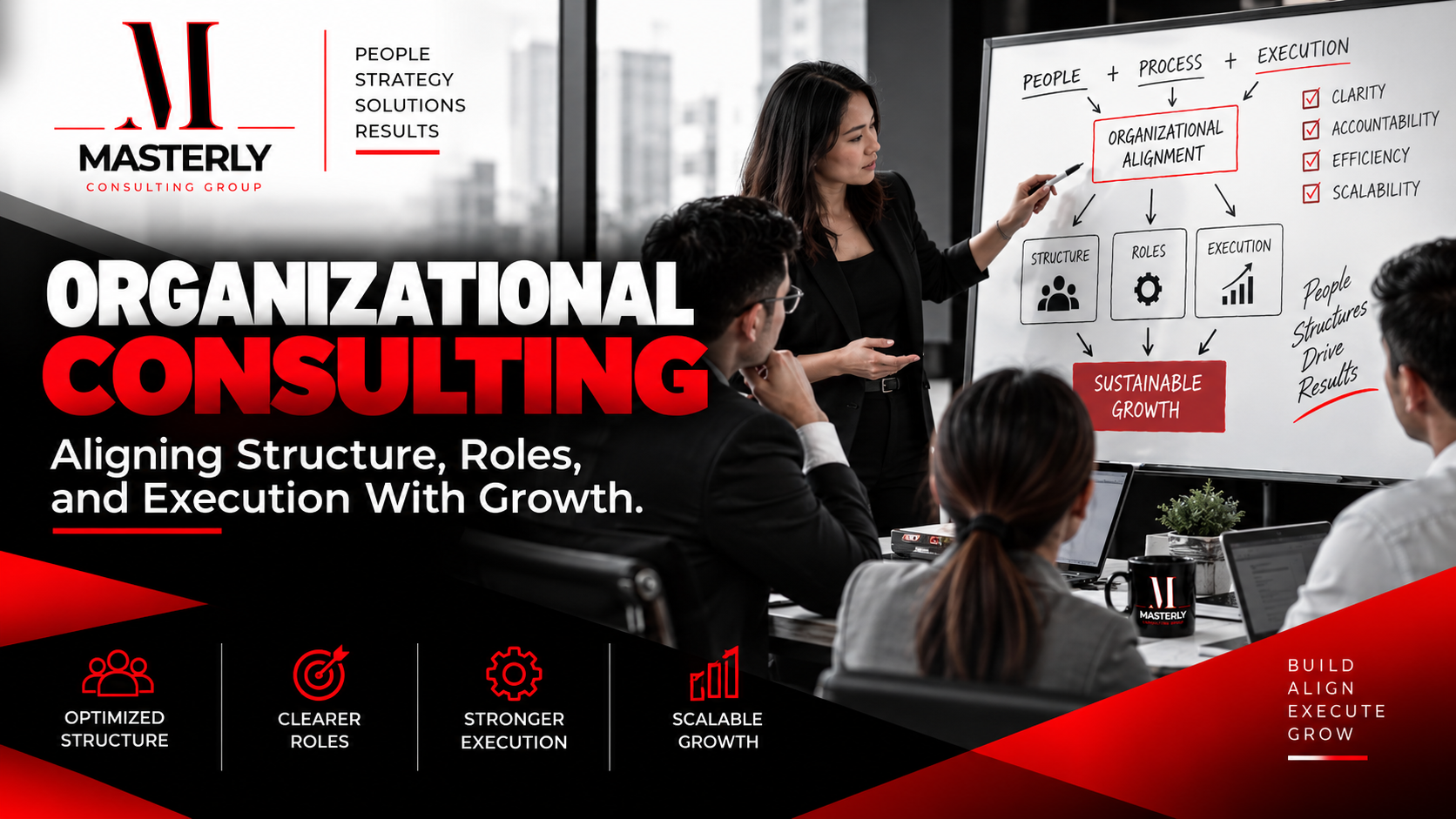
For organizations experiencing broader operational friction, Masterly Consulting Group's existing Organizational Effectiveness Consulting resource provides related information about role clarity, accountability, decision-making, and execution.
Retention Improves When Experienced Employees Can Contribute and Grow
Strong retention efforts should encourage employees to contribute ideas, support improvement, and help team members learn from experienced employees who understand the organization. This can strengthen team performance while reducing role conflict around who owns a particular task or decision. Retention should not be treated as a one and done project, especially in a competitive job market where high value employees may have other opportunities. Leadership should consider the full employment experience, including development, meaningful work, appropriate benefits such as retirement plans, and clear expectations. These factors can become critical when an organization wants to retain capable people and build a more stable workforce.
Frequently Asked Questions About Employee Retention Strategies
What are employee retention strategies?
Employee retention strategies are organizational approaches intended to address conditions that influence whether valuable employees remain with an organization. Their importance lies in supporting organizational success, so effective strategies should reflect the actual causes of turnover rather than rely on one standard solution.
What causes high employee turnover?
Turnover can have many causes, but high turnover is also expensive because replacing employees adds recruitment, onboarding, and training costs. By contrast, high retention reduces hiring costs by up to 50%, making it a direct lever for lowering those expenses.
Can role clarity affect employee retention?
Yes. Clear roles also give employees a stronger sense of progress and ownership. Poor role clarity can create confusion about responsibilities, authority, accountability, and collaboration. Masterly Consulting Group's organizational effectiveness services specifically address role clarity and decision ownership.
How does manager effectiveness affect retention?
Managers influence expectations, communication, feedback, workload, and everyday working relationships. Managers need strong communication, feedback, and emotional intelligence to deal with everyday people issues effectively, so inconsistent management can become part of a larger retention problem.
Can excessive workload cause employees to leave?
Workload can contribute to employee frustration, but leadership should determine whether the problem is insufficient staffing, inefficient processes, unclear responsibilities, unrealistic expectations, or another operational issue before choosing a response.
When operationally feasible, flexible work arrangements can improve work-life balance and reduce burnout.
Does career advancement matter for employee retention?
It can. Employees may value visible opportunities for development, increased responsibility, and professional growth, and clear advancement paths can improve employee satisfaction while helping employees feel valued. Masterly Consulting Group's HR consulting content identifies career paths and talent development as relevant to retention.
Is employee retention the same as employee engagement?
No. The concepts overlap, but they are different. Employee retention concerns keeping valuable employees, while engagement addresses employees' connection with and involvement in their work and organization.
Can Masterly Consulting Group help educational institutions with retention challenges?
Masterly Consulting Group provides education consulting and related organizational, HR, leadership, and strategic consulting. Its current education materials specifically address staffing challenges, workforce development, leadership, and retention-related institutional concerns, including issues with role clarity and integration during the onboarding process for new employees.
Request a Masterly Consulting Diagnostic Conversation About Retention and Organizational Friction
Replacing good employees without understanding why they leave can keep an organization trapped in the same cycle.
Effective employee retention strategies begin by identifying whether turnover is connected with manager effectiveness, role clarity, workload, advancement, communication, organizational systems, or another part of the employee experience, and are essential to long-term success and stronger high performing teams. The goal is to create conditions where the entire team can succeed.
Masterly Consulting Group works with schools, universities, businesses, and other organizations on education, HR, leadership, strategic, and organizational challenges.
Call Masterly Consulting Group at (972) 236-5051 or visit MasterlyGroup.com to request a diagnostic conversation about retention and organizational friction.