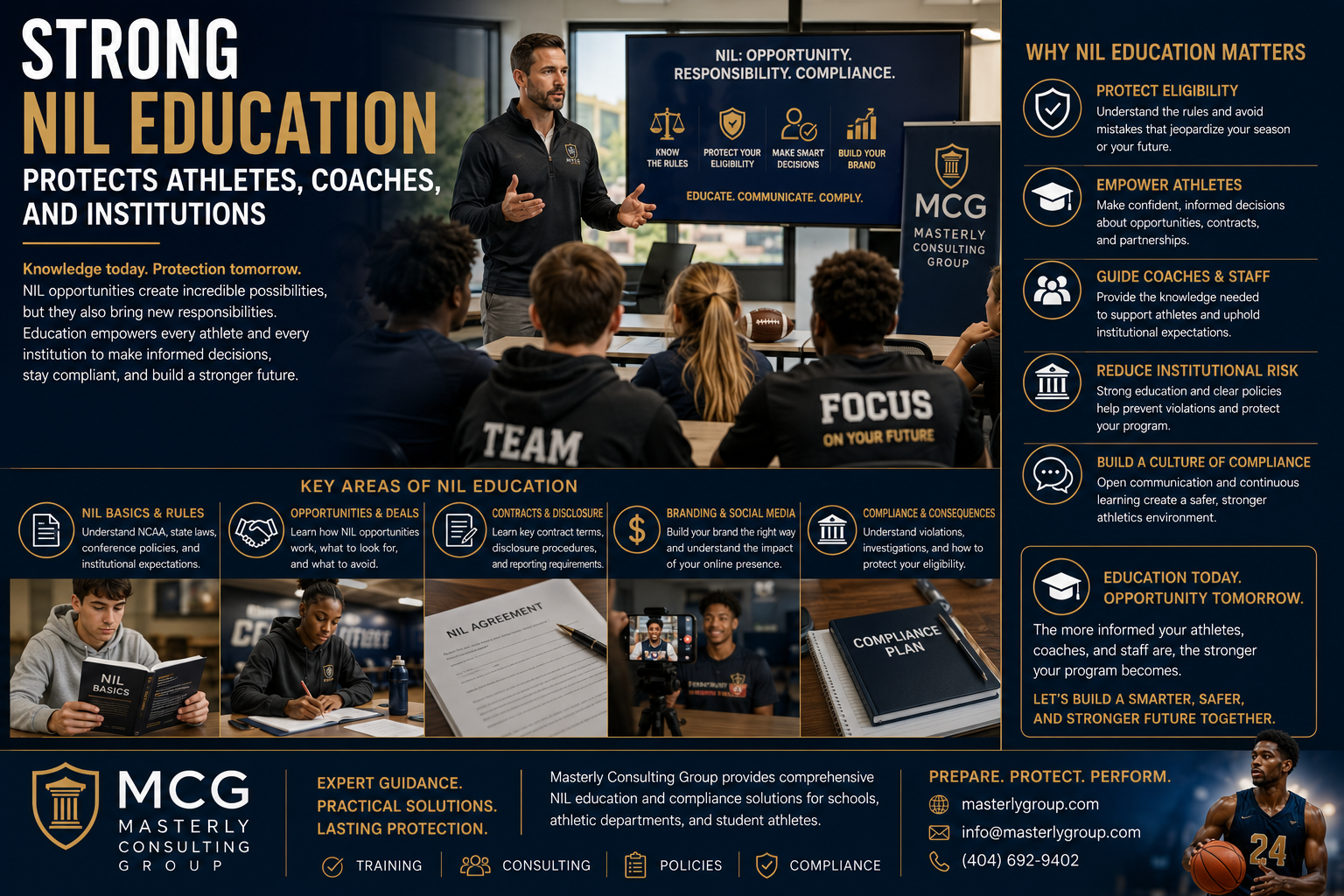
Strong NIL Education Protects Athletes, Coaches, and Institutions
The landscape of athletics has changed dramatically over the past few years. Conversations about name image and likeness are now part of daily operations for schools, athletic departments, coaches, compliance professionals, and student athletes. Opportunities that did not exist just a short time ago are now shaping recruiting, branding, financial decisions, and institutional responsibilities. While these changes create exciting possibilities, they also introduce new risks that require careful education and planning.
Many schools focus on responding to issues only after they arise. Unfortunately, waiting until questions become problems can expose institutions and student athletes to unnecessary compliance concerns. Strong education helps prevent misunderstandings before they become violations. It gives everyone involved a clearer understanding of expectations while promoting responsible decision-making.
At Masterly Consulting Group, we believe effective NIL education is one of the strongest investments an institution can make. Our consulting and training programs help athletic departments, administrators, coaches, and student athletes understand the rapidly changing NIL environment while reducing institutional risk. Through proactive guidance, schools can better protect their athletes, preserve eligibility, and build sustainable compliance programs.
NIL Has Changed the Landscape of College Sports
The introduction of name image and likeness opportunities represents a major shift throughout college sports. Athletes now have opportunities to benefit from their personal brands in ways that were previously unavailable. While these opportunities are significant, they also require institutions to understand changing regulations and evolving expectations.
Schools can no longer assume athletes will learn these responsibilities on their own. Every athletic department should provide structured education that explains current requirements, institutional expectations, and the practical realities surrounding NIL participation. The more informed student athletes become, the better prepared they are to make responsible decisions.
Education Creates Confidence
Clear communication helps reduce uncertainty for everyone involved. When schools provide ongoing NIL education, athletes and staff are less likely to misunderstand institutional expectations or applicable rules.
Strong education creates confidence because everyone understands both the opportunities and the responsibilities that come with NIL participation.
Student Athletes Need More Than Excitement
The opportunity to benefit from NIL can be exciting for student athletes, but excitement alone should never replace education. Every athlete should understand that opportunities also come with responsibilities.
Many young athletes are approached by businesses, marketing representatives, or organizations offering partnerships before fully understanding the legal and institutional implications. Without guidance, they may unknowingly create situations that affect eligibility or institutional compliance.
Helping student athletes understand contracts, disclosure requirements, branding, and financial responsibilities allows them to make better-informed decisions throughout their athletic careers.
Education Supports Better Decisions
Knowledge helps athletes evaluate opportunities carefully instead of reacting emotionally.
Well-informed student athletes are more likely to ask questions, seek guidance, and make decisions that support both their athletic careers and long-term futures.
High School Athletes Are Entering the NIL Conversation Earlier
Today's high school athletes are hearing about NIL opportunities long before they compete at the collegiate level. Social media, recruiting services, and online discussions expose younger athletes to concepts that were once reserved for college competitors.
As a result, many high school athletic programs are discovering the importance of early education. Students, parents, and coaches benefit from understanding basic NIL principles before significant opportunities begin appearing.
Preparing high school student athletes early allows them to enter college with realistic expectations and stronger decision-making skills.
Early Education Builds Better Habits
Introducing NIL education during high school helps athletes develop responsible habits before major opportunities emerge.
Rather than reacting under pressure later, athletes begin building thoughtful decision-making processes that continue throughout their careers.
NIL Rules Continue to Evolve
One of the greatest challenges facing athletic departments is that NIL rules continue changing. Federal discussions, state laws, conference policies, institutional procedures, and organizational guidance all contribute to a constantly evolving environment.
Because rules vary depending on jurisdiction and governing organizations, schools cannot assume yesterday's guidance remains accurate today. Institutions should regularly review educational materials to ensure athletes and staff receive current information.
Keeping pace with evolving NIL laws requires ongoing attention rather than one-time training.
Staying Current Protects Everyone
Athletic departments that review their educational materials regularly place themselves in stronger positions.
Current information helps athletes, coaches, administrators, and compliance professionals make informed decisions with greater confidence.
Every Institution Needs a Clear NIL Policy
Every school should establish a written NIL policy that explains expectations, reporting procedures, and institutional responsibilities. Clear policies reduce confusion while creating consistency throughout the athletic department.
A strong policy should explain disclosure requirements, prohibited conduct, institutional resources, and available support. It should also help athletes understand how school procedures interact with conference expectations and applicable regulations.
Effective policies provide structure without discouraging legitimate NIL participation.
Written Expectations Matter
Athletes perform better when expectations are clearly communicated.
Providing accessible policies allows student athletes, coaches, and staff to understand responsibilities before opportunities arise rather than after mistakes occur.
Coaches Play an Important Educational Role
Although compliance offices often lead institutional education, college coaches also influence athlete decision-making every day. Athletes frequently seek advice from coaches they trust before pursuing new opportunities.
Providing coaches with current NIL education helps ensure they share accurate information while understanding institutional boundaries. This consistency benefits both athletes and athletic departments.
Coaches who understand evolving NIL expectations become valuable resources throughout the educational process.
Consistent Messaging Reduces Confusion
Athletes receive information from many different sources.
When coaches, administrators, and compliance personnel communicate consistent expectations, athletes gain greater confidence in the guidance they receive.
Compliance Begins With Communication
Strong compliance programs rely on ongoing communication rather than isolated training sessions. Athletes should feel comfortable asking questions before signing agreements or accepting opportunities.
Regular meetings, educational workshops, digital resources, and open communication help build trust between athletes and institutional leadership.
Schools that encourage questions often identify concerns before they become significant compliance challenges.
Questions Should Always Be Welcome
No athlete should hesitate to ask about NIL opportunities.
Creating an environment where NIL questions are encouraged allows institutions to provide guidance before decisions create unnecessary complications.
Understanding NIL Opportunities Beyond Social Media
Many people associate NIL exclusively with influencer marketing, but NIL opportunities extend far beyond social media platforms. Athletes may participate in appearances, instructional events, autograph sessions, speaking engagements, camps, clinics, promotional activities, or other legitimate business relationships.
Understanding the variety of available opportunities helps student athletes evaluate partnerships more carefully while recognizing potential risks.
Not every opportunity fits every athlete, and thoughtful evaluation remains essential.
Every Opportunity Deserves Careful Review
Athletes should consider the long-term impact of every opportunity.
Building a strong personal brand often depends on selecting partnerships that align with individual values, institutional expectations, and future goals.
Education Helps Protect Eligibility
One of the greatest concerns for both athletes and institutions is losing eligibility because of avoidable mistakes. Many compliance issues arise not from intentional misconduct but from misunderstanding requirements.
Strong education helps athletes recognize situations requiring additional review before agreements are finalized. It also encourages communication with institutional resources whenever uncertainty exists.
Protecting eligibility should remain one of the primary objectives of every NIL education program.
Prevention Is Always Better Than Correction
Correcting mistakes after agreements have already been signed is often much more difficult than preventing them altogether.
Thoughtful education allows schools to reduce unnecessary risk while helping athletes make informed decisions.
NIL Education Should Never Stop
The NIL environment continues evolving as legislation, institutional policies, court decisions, and industry practices develop. One orientation session at the beginning of the year is rarely enough to prepare athletes for every future situation.
Effective education becomes an ongoing process rather than a single event. Regular updates help student athletes, coaches, administrators, and support staff remain informed throughout every academic year.
Institutions that invest in continuous education often create stronger cultures of compliance while giving athletes greater confidence to pursue opportunities responsibly.
Continuous Learning Creates Stronger Programs
The strongest athletic departments understand that education is never truly finished.
Ongoing training helps everyone remain prepared as NIL continues changing throughout college sports and beyond.
NIL Deals Require More Than Good Intentions
The excitement surrounding NIL deals can sometimes cause athletes to move too quickly. A sponsorship opportunity may appear attractive on the surface, but every agreement should be reviewed carefully before any commitment is made. Understanding expectations before signing protects both the athlete and the institution.
Schools should encourage student athletes to ask questions before entering into business relationships. Education helps athletes recognize potential concerns while understanding the importance of disclosure, documentation, and institutional procedures. A proactive approach often prevents unnecessary compliance challenges.
Every Agreement Deserves Careful Review
Not every opportunity is automatically beneficial. Some NIL deals may involve complicated obligations, exclusivity provisions, or long-term commitments.
Helping athletes slow down and evaluate each opportunity supports better decision-making while reducing unnecessary risk.
Understanding NIL Contracts Protects Everyone
Signing NIL contracts should never become a routine administrative task. Every agreement creates legal responsibilities that deserve careful attention.
Athletes should understand payment terms, performance expectations, intellectual property rights, cancellation provisions, and disclosure requirements before accepting any opportunity. Schools also benefit when athletes understand these responsibilities because fewer misunderstandings occur later.
Educational programs that explain common contract concepts help athletes make informed business decisions while protecting institutional interests.
Reading Every Document Matters
Many agreements contain language that may not be immediately obvious to young athletes.
Encouraging athletes to review contracts carefully and seek appropriate guidance before signing promotes responsible participation throughout the NIL environment.
State Laws Continue to Shape NIL Programs
Although national discussions receive significant attention, state laws remain an important part of NIL compliance. Different jurisdictions have adopted different approaches, meaning institutional guidance should reflect applicable legal requirements.
Athletes transferring between schools or competing in different states may encounter different expectations. This makes ongoing education especially valuable for athletic departments working with diverse student populations.
Schools should regularly review applicable NIL laws and communicate meaningful updates to coaches, administrators, and student athletes.
Local Requirements Matter
There is no universal approach that applies everywhere.
Because state laws continue evolving, institutions should monitor changes carefully while updating educational materials whenever appropriate.
High School Athletic Departments Face New Responsibilities
The NIL conversation is no longer limited to colleges and universities. Many high school programs now receive questions from athletes, parents, coaches, and community members regarding emerging opportunities.
A high school athletic director often becomes one of the first people families contact when questions arise. Having accurate educational resources available allows administrators to provide appropriate guidance while recognizing the limits of institutional authority.
As NIL continues expanding, high school athletes benefit from early education focused on responsible decision-making rather than unrealistic expectations.
Preparing Young Athletes Early
Introducing NIL concepts before graduation allows athletes to understand opportunities in a realistic way.
Education helps high school student athletes enter collegiate athletics with stronger awareness and greater confidence.
Understanding Prohibited NIL Activities
Not every business opportunity is permitted under applicable policies. Schools should educate athletes regarding prohibited NIL activities, institutional expectations, and circumstances that require additional review.
Helping athletes recognize restricted conduct before opportunities develop is one of the most effective ways to reduce institutional risk. Education also reinforces the importance of asking questions whenever uncertainty exists.
Clear communication allows everyone involved to better understand where opportunities end and prohibited conduct begins.
Clarity Prevents Confusion
Athletes should never feel pressured to guess whether something is acceptable.
Providing examples of prohibited NIL activities helps reduce misunderstandings while strengthening institutional compliance efforts.
Revenue Sharing Adds Another Layer of Complexity
Recent discussions surrounding revenue sharing have introduced additional questions throughout collegiate athletics. Athletic departments are working to understand how evolving developments may interact with existing NIL opportunities, institutional policies, and athlete expectations.
Because these conversations continue changing, education remains essential. Schools should explain the differences between NIL compensation and other developing financial models so athletes understand that different rules and considerations may apply.
Helping student athletes distinguish between these concepts reduces confusion while promoting informed decision-making.
Transparency Builds Trust
Athletes appreciate honest communication regarding evolving issues.
Providing clear information about revenue sharing discussions helps institutions maintain credibility while preparing athletes for future developments.
Personal Brand Development Requires Responsibility
A strong personal brand can create meaningful opportunities throughout an athlete's career. However, reputation is built gradually through consistent decisions rather than isolated promotional campaigns.
Athletes should understand that every appearance, interview, endorsement, and communication contributes to public perception. Responsible branding supports long-term credibility while strengthening future opportunities beyond athletics.
Education helps athletes recognize how thoughtful decisions today may influence future careers.
Reputation Is Built Every Day
Strong brands grow through consistency.
Helping athletes understand this concept encourages thoughtful participation throughout every stage of their NIL experience.
Social Media Can Influence NIL Opportunities
Many athletes receive initial contact regarding brand deals through social media posts or digital communication. While these platforms provide valuable opportunities, they also require careful judgment.
Athletes should understand that online activity can influence both reputation and future partnerships. Schools benefit by teaching responsible digital communication alongside broader NIL education.
Thoughtful social media use strengthens professionalism while reducing unnecessary risk.
Digital Decisions Matter
Everything shared publicly contributes to an athlete's reputation.
Helping athletes understand responsible online communication supports stronger long-term outcomes.
Schools Need Consistent Internal Procedures
Every institution should establish reliable internal processes for reviewing disclosures, documenting activity, and communicating expectations. A well-organized compliance office becomes an important resource for athletes, coaches, and administrators.
Consistent procedures reduce confusion while improving institutional efficiency. Athletes are more likely to comply when reporting requirements remain clear and accessible.
Strong administrative systems also help schools respond effectively as regulations continue evolving.
Organization Supports Compliance
Consistency benefits everyone involved.
When procedures remain straightforward, athletes are more comfortable seeking guidance before making important decisions.
The Transfer Portal Creates New NIL Questions
The modern transfer portal has changed many aspects of collegiate athletics, including NIL planning. Athletes considering new opportunities often have questions about existing agreements, institutional expectations, and future possibilities.
Educational programs should prepare athletes to think carefully before making significant decisions. Understanding how different schools may approach NIL education and school policies encourages thoughtful planning rather than rushed decisions.
Preparation reduces uncertainty during periods of transition.
Planning Before Moving
Major athletic decisions deserve careful evaluation.
Helping athletes understand the relationship between the transfer portal and NIL creates stronger long-term outcomes for both individuals and institutions.
Every Institution Benefits From Professional Sports Consulting
Strong NIL education requires more than distributing written materials once a year. Athletic departments need ongoing training, updated resources, policy reviews, leadership development, and practical guidance that evolves with changing regulations.
At Masterly Consulting Group, we provide sports consulting services designed to help institutions strengthen their NIL education programs while reducing institutional risk. Our training supports administrators, coaches, compliance professionals, and student athletes through practical education that encourages informed decision-making.
Whether your institution serves high school athletes, collegiate programs, or broader athletic organizations, proactive education helps create stronger programs for everyone involved.
Build Confidence Through Preparation
The most successful athletic departments prepare before problems develop.
Professional guidance helps schools create educational programs that support athletes, coaches, administrators, and institutional leadership throughout the continuing evolution of name image and likeness.
NIL Collectives Continue to Shape the Conversation
The growth of NIL collectives has added another layer of complexity to the NIL landscape. These organizations often create additional opportunities for college athletes, but they also introduce important compliance considerations for institutions. Athletic departments should help student athletes understand how collectives operate and what questions should be asked before participating.
Education should emphasize that every opportunity deserves careful evaluation. While NIL collectives may create meaningful opportunities, athletes should understand applicable institutional expectations, disclosure requirements, and evolving regulations before accepting participation.
Understanding Every Opportunity
Athletes benefit from learning how different organizations operate and how opportunities may differ.
Providing ongoing education helps schools prepare athletes for conversations that continue changing throughout the NIL era.
Amateurism Still Matters in an Evolving Environment
Although NIL has changed many aspects of collegiate athletics, amateurism rules continue to play an important role. Schools should help athletes understand how evolving NIL opportunities interact with existing institutional and governing expectations.
Educational sessions should explain that NIL does not remove every restriction. Instead, athletes must understand how current NCAA rules, conference requirements, and institutional expectations continue to influence participation.
Helping student athletes understand these relationships strengthens compliance while reducing confusion.
Education Reduces Risk
Strong educational programs explain both opportunities and limitations.
Understanding amateurism rules helps athletes make responsible decisions while protecting their eligibility and their institution.
Recruiting Requires Greater NIL Awareness
Today's recruiting process often includes questions about NIL education, available resources, and institutional support. Prospective student athletes increasingly want to know how schools prepare them for long-term success rather than simply discussing athletics.
Athletic departments that invest in comprehensive education demonstrate a commitment to athlete development beyond competition. Parents, recruits, and coaches often recognize the value of structured guidance before enrollment even begins.
Providing meaningful education can strengthen institutional credibility while supporting informed recruiting conversations.
Education Becomes a Recruiting Advantage
Families appreciate transparency.
Schools that clearly explain their educational approach often create greater confidence throughout the recruiting experience.
Understanding Financial Responsibilities
Many athletes become excited about opportunities to earn money, but financial education should accompany every discussion about NIL participation. Income earned through legitimate NIL activities may create tax obligations and other financial responsibilities.
Athletes should understand that NIL income is generally taxable, making early financial education extremely valuable. Helping student athletes understand budgeting, taxes, and long-term financial planning supports success well beyond athletics.
Responsible financial education protects both athletes and institutions.
Financial Knowledge Supports Long-Term Success
Learning to manage extra money responsibly is an important life skill.
Strong education helps athletes make thoughtful financial decisions while preparing for opportunities that may continue after graduation.
School Identity and Institutional Resources
Athletes should understand how school logos, trademarks, facilities, and institutional branding may be governed by separate policies. Simply participating in NIL does not automatically authorize every use of institutional intellectual property.
Educational programs should explain that schools may establish approval procedures regarding institutional marks, uniforms, or branding. Understanding these expectations helps athletes avoid unnecessary misunderstandings.
Clear communication protects both athletes and institutions.
Respecting Institutional Branding
Every institution should explain how its branding policies interact with NIL participation.
Helping athletes understand the appropriate use of school logos encourages responsible decision-making from the beginning.
Policies Continue to Evolve
Every institution should regularly review its likeness policy, internal procedures, and educational materials. Because regulations continue changing, policies that were appropriate one year may require updates the next.
Schools should also monitor conference guidance, legislative developments, and institutional priorities. Remaining proactive allows athletic departments to adapt more effectively as new information becomes available.
Ongoing education supports stronger compliance over time.
Continuous Improvement Matters
Strong programs continue improving rather than remaining static.
Regular policy reviews help institutions remain prepared for future developments throughout the NIL environment.
Institutions Should Prepare for Future Changes
The NIL landscape continues developing through legislation, court decisions, organizational guidance, and policy updates. Topics including the NCAA settlement, evolving NIL legislation, and future governance discussions demonstrate that change remains constant.
Schools should avoid viewing compliance as a one-time project. Instead, athletic departments should build adaptable educational systems capable of responding as expectations evolve.
Preparation today reduces uncertainty tomorrow.
Flexibility Creates Stronger Programs
Institutions that remain adaptable are better positioned for future developments.
Strong education helps administrators, coaches, and student athletes respond confidently to ongoing change.
Every Athlete Benefits From Ongoing Guidance
NIL education should not end after orientation or a single compliance meeting. Every academic year presents new questions, evolving regulations, and changing opportunities.
Athletes who receive continuing education are better prepared to evaluate opportunities, ask informed questions, and recognize situations requiring additional guidance. Institutions also benefit because ongoing communication strengthens trust throughout the athletic department.
The goal is not simply compliance but long-term athlete development.
Education Extends Beyond Athletics
The lessons learned through NIL education often apply far beyond sports.
Financial responsibility, communication, professionalism, branding, and decision-making remain valuable throughout every stage of an athlete's career and personal life.
Strong Sports Consulting Builds Stronger Athletic Programs
Successful athletic departments recognize that education protects far more than eligibility. It safeguards institutional reputation, supports informed decision-making, strengthens relationships, and prepares athletes for opportunities both during and after competition. Effective sports consulting helps transform compliance into an educational advantage rather than simply a regulatory requirement.
At Masterly Consulting Group, we partner with schools, athletic departments, conferences, and educational organizations to strengthen name image and likeness education through practical training, policy development, leadership guidance, and risk management strategies. Our goal is to help institutions create confident athletes, informed coaches, and well-prepared administrators who understand the responsibilities that accompany modern NIL participation.
Whether your institution serves high school, collegiate, or multi-level athletic programs, proactive education remains one of the most effective investments you can make.
Preparation Creates Long-Term Confidence
Athletic departments that invest in education today position themselves more effectively for tomorrow.
Well-informed athletes, coaches, and administrators build stronger programs that can adapt confidently as NIL continues to evolve.
Strong NIL Policies Help Athletes and Institutions Navigate a Changing Landscape
As the NIL start of college athletics continues to evolve, schools must prepare athletes with practical education that reflects current expectations rather than outdated assumptions. Although the highest NIL college athletes often receive the most media attention, every athlete deserves to understand their NIL rights, how to responsibly earn NIL money, and the responsibilities that come with participating in NIL opportunities. Schools should recognize that conference rules, state laws, and even a specific school may establish their own NIL rules, meaning requirements can differ among member schools and athletic organizations. Some states, including South Carolina and North Dakota, have adopted their own approaches to NIL laws, demonstrating that regulations continue to evolve across the country.
Institutions should educate athletes on NIL agreements, athlete deals, endorsement deals, and relationships with private companies or local businesses, emphasizing that compensation should always serve a valid business purpose and never become pay for play or a payment tied directly to athletic performance.
Schools should also explain any required disclosure, institutional school approval, third party review, or NCAA approved reporting procedures that may apply under an interim NIL policy or updated institutional guidance.
A comprehensive NIL compliance checklist should help athletes understand when they may sign NIL deals, participate in NIL activities, engage in athlete marketing, or receive NIL money, while reinforcing the steps necessary to remain eligible throughout college athletics.
Educational sessions should also explain where NIL stands today, how deals athletes receive should fall within a reasonable range of legitimate market value, and how branding partnerships—even with a recognizable candy brand—must still satisfy applicable institutional and legal expectations. Finally, schools should coordinate with their high school association, collegiate partners, and college sports teams to promote consistent education that prepares athletes for responsible participation throughout every stage of their athletic careers.
Contact Masterly Consulting Group for NIL Education and Sports Consulting
The world of name image and likeness continues to evolve, and waiting until compliance issues arise can place unnecessary pressure on athletes, coaches, and institutions. Investing in professional sports consulting today can help your athletic department strengthen education, reduce institutional risk, and prepare everyone involved to navigate NIL with greater confidence.
Masterly Consulting Group provides customized training, policy development, leadership education, compliance support, and strategic guidance for schools, colleges, universities, athletic departments, and educational organizations. Whether you are developing your first NIL program or enhancing an existing one, our team is ready to help create practical solutions that protect your institution while supporting your student athletes.
Contact Masterly Consulting Group today at (888) 209-4055 to book your free consultation. We work with educational institutions, athletic departments, and organizations throughout the country, providing comprehensive guidance on name image and likeness, athlete education, and long-term compliance strategies. Let us help you build a stronger NIL program that supports athletes, coaches, administrators, and your institution for years to come.