The Future of HR: How Consulting Firms Are Redefining Workforce Management
The Workplace Is Changing Faster Than Ever
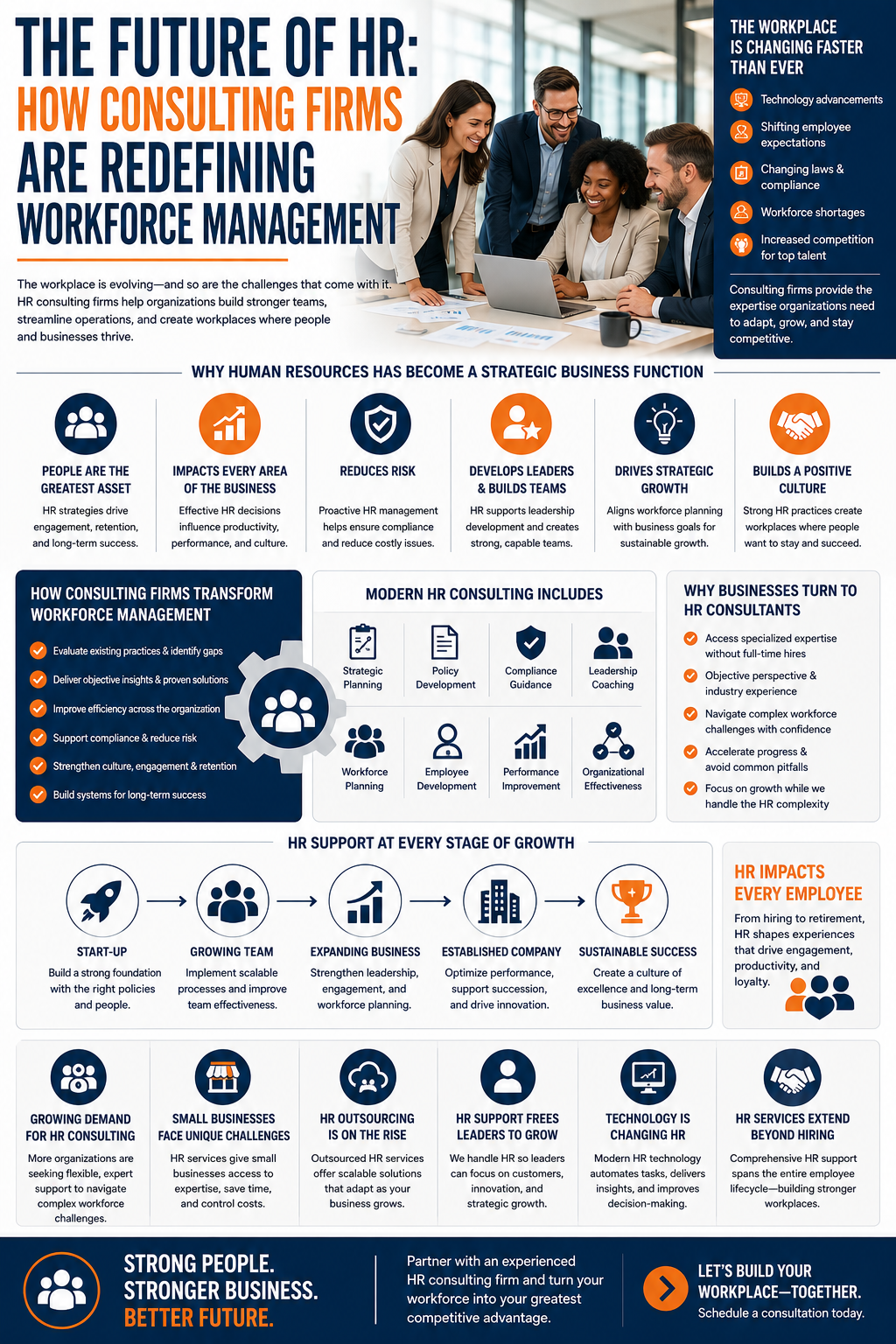
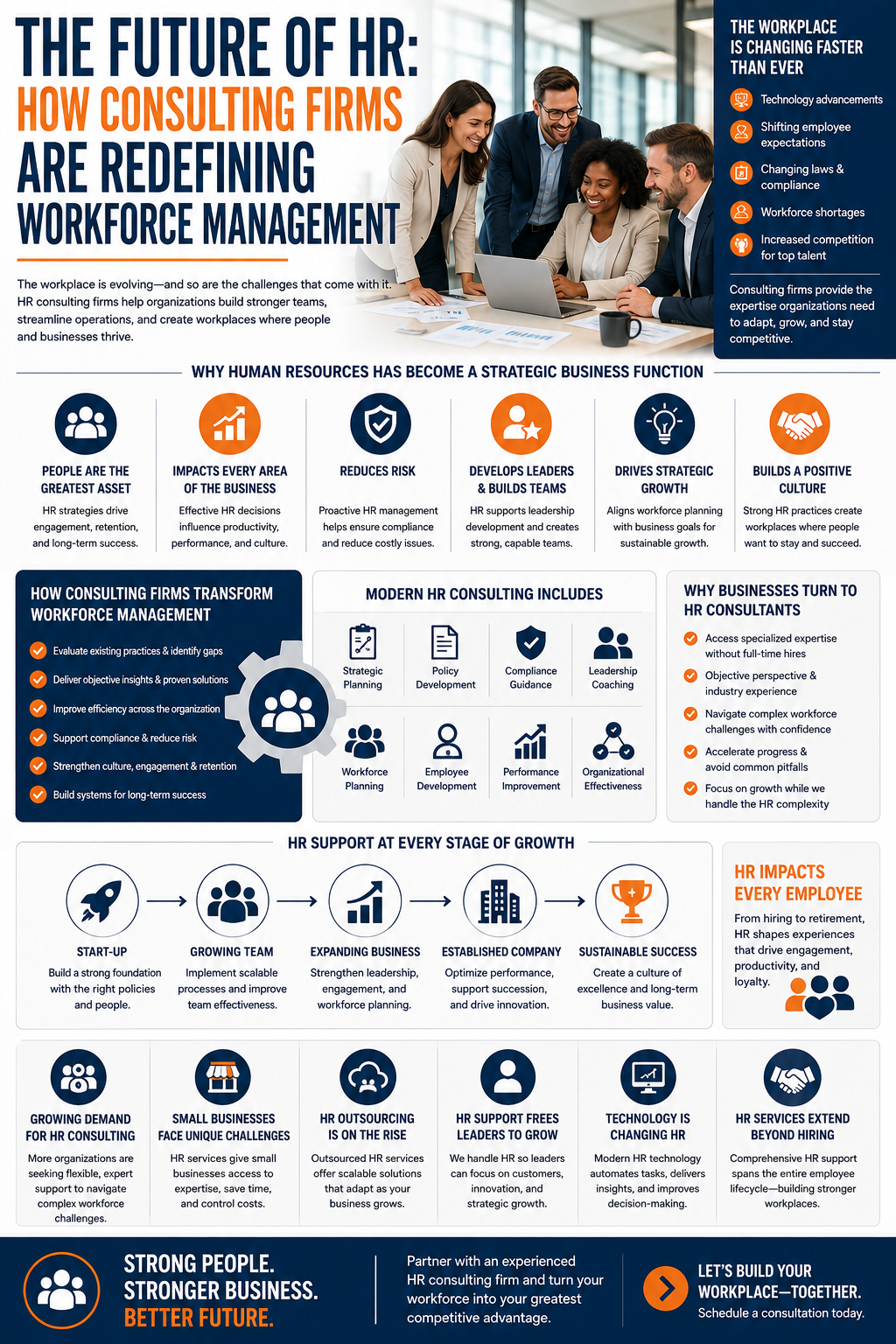
The modern workplace looks very different from what it did even a few years ago. Technology, shifting employee expectations, changing employment laws, and increased competition for top talent have transformed how organizations manage their people. Companies of every size are realizing that successful human resources strategies require more than simply filling open positions or processing payroll.
Today's employees expect meaningful careers, flexible work environments, opportunities for growth, and supportive leadership. At the same time, employers must navigate increasing regulatory requirements, workforce shortages, and evolving business goals. Balancing these priorities can be overwhelming without the right guidance.
This is where consulting firms have become valuable strategic partners. Instead of providing only temporary assistance, many organizations now rely on experienced HR advisors to improve operations, strengthen workplace culture, and build long-term success. Through modern hr consulting, businesses gain access to specialized knowledge that helps them adapt to constant change while remaining competitive.
For organizations looking to strengthen their workforce, partnering with an experienced hr consulting firm is no longer viewed as an expense. It has become a strategic investment that supports both employees and business growth.
Why Human Resources Has Become a Strategic Business Function
For many years, human resources was primarily associated with hiring paperwork, payroll coordination, and employee records. While those responsibilities remain important, today's HR professionals play a much broader role within successful organizations.
Modern human resources departments help shape company culture, improve productivity, reduce turnover, support leadership, and create systems that encourage long-term employee success. Effective HR decisions now influence nearly every aspect of organizational performance.
Business owners increasingly recognize that people are their greatest asset. As a result, consulting firms are helping organizations shift from reactive HR practices toward proactive workforce planning that supports sustainable business success.
This transformation has elevated hr management into a core component of strategic planning rather than simply an administrative function.
How Consulting Firms Are Transforming Workforce Management
Businesses today face challenges that often require specialized expertise beyond their internal capabilities. Rather than hiring multiple full-time specialists, many organizations partner with experienced consulting firms that provide customized HR guidance.
An experienced hr consulting firm helps businesses evaluate existing practices, identify operational gaps, and implement solutions that improve efficiency across the organization. These services often extend well beyond recruiting to include compliance, leadership development, workforce planning, and employee engagement.
The value of hr consulting lies in providing objective recommendations based on industry experience and proven best practices. Instead of reacting to problems after they occur, organizations learn how to prevent many issues before they become costly.
As workplace expectations continue evolving, more organizations are discovering that professional consulting creates stronger, healthier, and more productive workplaces.
Understanding Modern HR Consulting
Many people assume hr consulting focuses only on hiring employees. In reality, today's consultants provide guidance across nearly every stage of workforce management.
Modern human resources consulting includes strategic planning, policy development, compliance guidance, leadership coaching, organizational restructuring, workforce planning, employee development, and performance improvement initiatives.
Rather than offering one-size-fits-all advice, experienced human resources consultants evaluate each organization individually before recommending solutions that align with its specific goals.
This personalized approach allows businesses to strengthen operations while maintaining flexibility as organizational needs continue changing.
Why Businesses Turn to HR Consultants
Every organization eventually encounters workplace situations requiring specialized guidance. Whether addressing employee concerns, updating policies, improving recruitment, or managing organizational growth, outside expertise often provides valuable perspective.
Experienced hr consultants help companies navigate complex workforce decisions while minimizing unnecessary risk. Because they work across multiple industries, they bring practical experience that internal teams may not possess.
Many organizations also appreciate the objective viewpoint outside consultants provide. Internal leaders sometimes become too close to workplace issues, making independent recommendations especially valuable.
For growing businesses, partnering with knowledgeable human resources consultants often accelerates progress while avoiding common mistakes.
The Growing Demand for HR Consulting Services
The demand for hr consulting services has increased significantly as organizations face increasingly complex workforce challenges. Businesses must balance employee expectations with compliance obligations, operational efficiency, and long-term strategic planning.
Whether serving startups, nonprofit organizations, healthcare providers, manufacturers, or professional service firms, consulting firms continue expanding their role within workforce management.
Companies increasingly seek flexible support rather than maintaining large in-house HR departments. This trend has contributed to rapid growth within the hr consulting profession.
As workplace expectations continue evolving, businesses that invest in expert guidance often position themselves for stronger long-term performance.
Small Businesses Face Unique HR Challenges
Every small business begins with ambitious goals, but many owners quickly discover that managing employees requires significant time and specialized knowledge. As companies grow, HR responsibilities become increasingly complex.
Business owners frequently juggle hiring, onboarding, payroll coordination, compliance, employee concerns, and performance discussions while also managing daily operations. These responsibilities can become overwhelming.
Professional hr services allow a small business to access experienced expertise without hiring multiple internal specialists. This approach provides flexibility while controlling operating costs.
For many growing organizations, outsourcing HR support becomes one of the smartest long-term business decisions.
HR Consulting Supports Every Stage of Growth
As organizations expand, their workforce needs change considerably. Policies that worked with ten employees may no longer support a team of one hundred.
An experienced hr consulting firm helps organizations develop scalable systems that support future growth rather than simply solving immediate problems.
From recruiting strategies to leadership development and workforce planning, effective consulting services help organizations prepare for future success instead of constantly reacting to new challenges.
This proactive approach allows businesses to grow with confidence while maintaining consistency throughout the organization.
Human Resources Impacts Every Employee
Every employee interacts with human resources throughout their career, whether during hiring, onboarding, training, evaluations, promotions, or career development.
Strong HR practices create positive experiences that encourage employees to remain engaged and committed to organizational success. Weak HR practices often contribute to frustration, turnover, and declining morale.
Experienced human resources consultants help organizations improve these interactions by creating systems that support both employees and leadership.
The result is a healthier workplace built upon communication, accountability, and trust.
HR Strategy Drives Long-Term Success
Many businesses focus heavily on short-term staffing needs without developing a long-term workforce plan. Effective hr strategy helps organizations align people management with broader business objectives.
A thoughtful workforce strategy addresses hiring, leadership development, succession planning, training, compensation, and organizational culture.
Rather than making isolated HR decisions, organizations benefit from a coordinated approach that supports future growth.
Professional hr consulting helps companies build strategies that remain effective even as business priorities evolve.
HR Outsourcing Is Becoming More Common
Businesses of all sizes increasingly recognize the advantages of hr outsourcing. Instead of attempting to manage every HR responsibility internally, organizations partner with experienced providers for specialized support.
Professional outsourced hr services allow companies to access experienced advisors while reducing internal workload. This flexibility is particularly valuable for organizations experiencing rapid growth or seasonal fluctuations.
Whether businesses require full-service support or assistance with specific projects, hr outsourcing offers scalable solutions that adjust as organizational needs change.
Many companies discover that outsourcing improves efficiency while allowing internal leaders to focus on revenue-generating activities.
HR Support Frees Business Leaders to Focus on Growth
Business owners often wear multiple hats, especially during periods of growth. Spending excessive time resolving HR concerns can reduce the attention available for customer service, innovation, and strategic planning.
Professional hr support allows leaders to delegate complex workforce responsibilities to experienced professionals who understand employment regulations and best practices.
Rather than becoming consumed by administrative concerns, executives gain additional time to strengthen their core business and pursue growth opportunities.
This balance often improves decision-making while reducing unnecessary stress for organizational leadership.
Technology Is Changing Human Resources
Digital innovation continues transforming how organizations manage employees. Modern hr technology allows businesses to automate repetitive processes, improve reporting, streamline communication, and enhance workforce planning.
Technology also provides valuable insights that help organizations make informed decisions regarding hiring, retention, employee performance, and organizational development.
While technology improves efficiency, experienced hr consultants ensure these tools support organizational goals rather than replacing meaningful human interaction.
The future of human resources combines advanced technology with thoughtful leadership to create more productive and engaged workplaces.
HR Services Extend Beyond Hiring
Many business owners mistakenly believe hr services begin and end with recruiting new employees. In reality, professional HR guidance extends throughout the entire employment relationship.
Comprehensive HR support includes onboarding, policy development, employee training, conflict resolution, leadership coaching, compliance management, compensation planning, and organizational development.
By addressing workforce needs proactively, organizations reduce costly disruptions while creating stronger employee relationships.
This broader perspective explains why more businesses continue investing in professional hr consulting services.
Employee Relations Are the Foundation of a Healthy Workplace
Strong employee relations do not happen by chance. They develop when organizations create an environment built on trust, respect, communication, and accountability. Employees who feel heard and valued are more likely to remain committed to the organization's mission.
Experienced hr consultants help businesses strengthen employee relations by developing fair workplace policies, improving communication, and resolving concerns before they become larger problems. This proactive approach reduces workplace conflict while supporting a more positive culture.
Healthy employee relations also encourage collaboration between managers and staff, creating stronger teams that work toward common goals. As organizations continue to evolve, maintaining positive workplace relationships remains one of the most valuable investments a business can make.
HR Compliance Is More Important Than Ever
Businesses today operate in an environment shaped by constantly changing employment laws and workplace regulations. Failing to keep policies current can expose organizations to unnecessary legal and financial risks.
Professional hr compliance services help companies understand changing requirements while reducing the possibility of costly mistakes. From wage and hour regulations to workplace documentation and employee classifications, compliance affects nearly every aspect of workforce management.
An experienced hr consulting firm works with organizations to establish practical procedures that support legal compliance and reduce potential liability. Staying ahead of regulatory changes helps businesses focus on growth rather than reacting to preventable compliance issues.
Outsourced HR Gives Businesses Greater Flexibility
Every organization has different workforce needs, and those needs often change as the company grows. Outsourced HR provides businesses with the flexibility to receive expert guidance without maintaining a large internal HR staff.
Whether a company needs assistance during rapid expansion, seasonal hiring, or organizational restructuring, outsourced HR provides scalable support that adapts to changing business demands.
Many organizations also appreciate the ability to access experienced human resources consultants whenever specialized expertise is needed. This flexible approach improves decision-making while helping leadership focus on long-term objectives.
HR Operations Support Business Efficiency
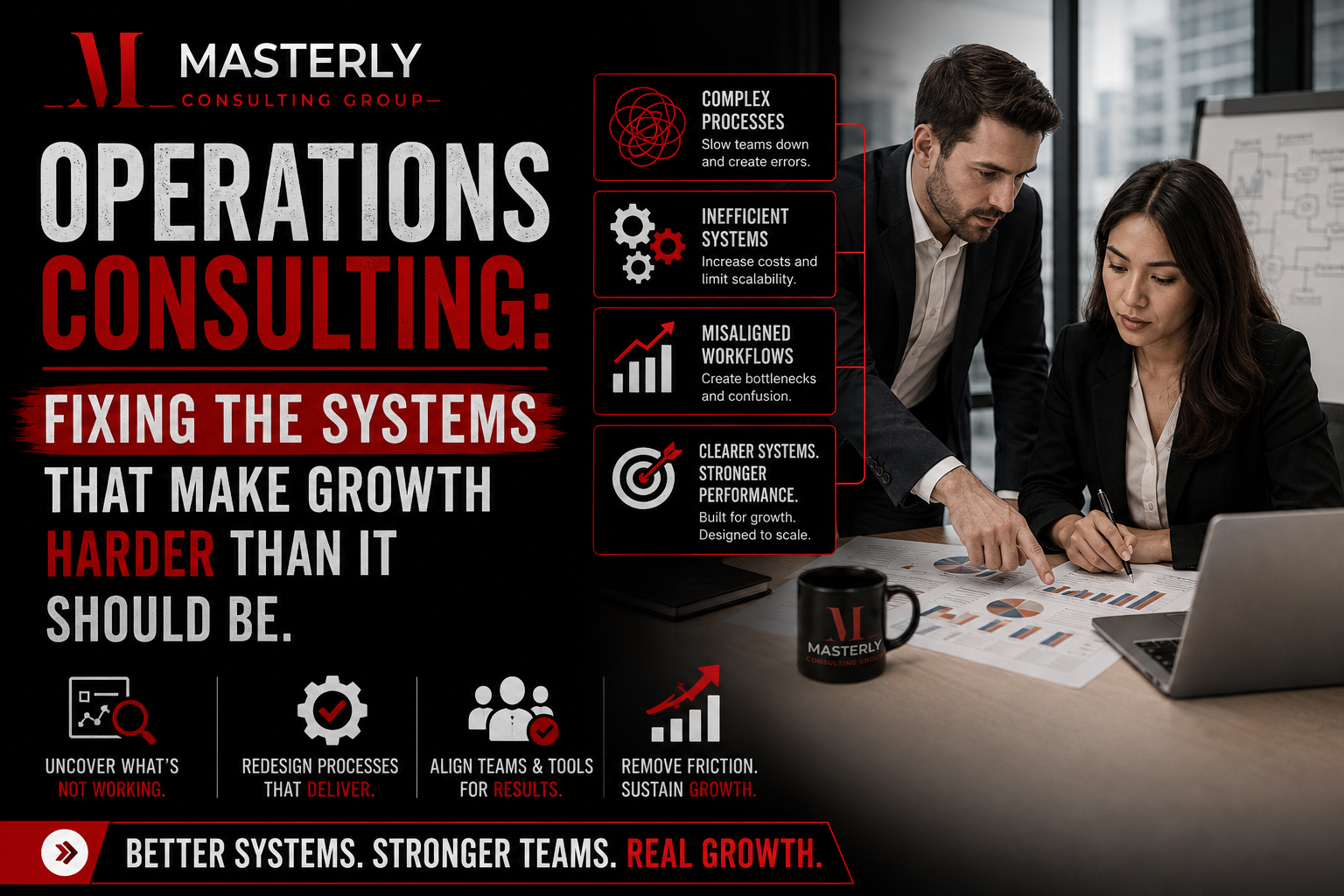
Well-organized hr operations help businesses function more efficiently by creating consistent processes throughout the organization. When HR systems are organized and clearly documented, managers spend less time solving administrative problems and more time leading their teams.
Professional hr consulting helps organizations evaluate existing workflows and identify opportunities to improve efficiency. Streamlined operations also reduce confusion for employees while creating a more consistent workplace experience.
Improving hr operations benefits the entire organization by supporting stronger communication, better documentation, and smoother day-to-day management.
Reducing the Administrative Burden on Leadership
Business owners and executives often find themselves overwhelmed by paperwork, policy questions, and personnel concerns. This growing administrative burden can distract leadership from strategic priorities and business development.
Partnering with an experienced hr consulting firm helps reduce that administrative burden by transferring many time-consuming responsibilities to knowledgeable professionals. Leaders gain more time to focus on innovation, customer relationships, and organizational growth.
This approach creates greater efficiency while ensuring important HR responsibilities continue receiving the attention they deserve.
Performance Management Builds Stronger Teams
Effective performance management goes far beyond annual performance reviews. It involves setting clear expectations, providing ongoing coaching, recognizing achievements, and helping employees continue developing their skills.
Experienced hr professionals help organizations design performance systems that encourage accountability while supporting professional growth. Employees who understand expectations are generally more engaged and motivated to succeed.
Strong performance management practices also provide managers with valuable opportunities to address concerns early, reducing misunderstandings and improving overall workplace performance.
Employee Benefits Influence Recruitment and Retention
Competitive employee benefits remain one of the most effective tools for attracting and retaining talented employees. Today's workforce often evaluates benefit packages just as carefully as salary when considering employment opportunities.
Professional benefits administration ensures organizations offer competitive programs while managing enrollment, compliance, and communication efficiently. Well-managed employee benefits improve both recruitment efforts and long-term employee satisfaction.
An experienced hr consulting firm can help organizations evaluate benefit options that align with both workforce expectations and financial objectives.
Employee Engagement Creates Better Business Results
Employees who feel connected to their work often contribute more effectively to organizational success. High levels of employee engagement encourage stronger teamwork, increased productivity, and improved customer service.
Professional hr consulting helps organizations identify factors that influence engagement, including leadership communication, career development, recognition, and workplace culture.
By investing in employee engagement, businesses strengthen morale while creating an environment where employees are motivated to contribute their best work every day.
Improving the Employee Experience From Day One
The employee experience begins long before an individual's first day of work. Recruitment, onboarding, training, communication, and leadership all influence how employees view their organization.
Experienced human resources consultants evaluate every stage of the employee journey to improve the overall employee experience. Small improvements made throughout the employment relationship often create meaningful long-term results.
Organizations that prioritize a positive employee experience frequently experience stronger engagement, higher productivity, and lower turnover.
Supporting the Entire Employee Lifecycle
Successful organizations understand that workforce management extends beyond hiring and onboarding. Every stage of the entire employee lifecycle deserves thoughtful planning and consistent support.
Professional hr services help businesses strengthen each phase, including recruitment, development, promotions, performance evaluations, career advancement, and successful transitions.
By improving every stage of the employment journey, organizations create a more positive experience for both employees and leadership.
Talent Management Strengthens Future Leadership
Building future leaders requires more than filling open positions. Effective talent management identifies high-potential employees, develops leadership skills, and prepares organizations for long-term success.
Experienced hr consultants help businesses create succession plans that reduce disruptions while supporting continued organizational growth.
Investing in talent management ensures businesses remain prepared for future opportunities and leadership transitions.
HR Policies Create Consistency Throughout the Organization
Well-written hr policies help employees understand expectations while providing managers with clear guidance for making consistent decisions. Policies also reduce confusion and improve workplace accountability.
Professional consulting services assist organizations with developing customized hr policies that reflect current business needs while supporting regulatory compliance.
Keeping policies current allows organizations to respond confidently as workplace expectations and legal requirements continue changing.
HR Professionals Help Solve Complex Workplace Issues
Modern workplaces present increasingly complex personnel challenges that require thoughtful solutions. Experienced hr professionals bring specialized expertise that helps organizations resolve sensitive situations fairly and professionally.
Whether addressing workplace investigations, performance concerns, policy interpretation, or employee relations issues, knowledgeable advisors help leadership make informed decisions.
Having experienced professionals available provides businesses with confidence when navigating difficult workplace conversations.
HR Functions Continue Expanding
The responsibilities handled by today's HR departments continue growing every year. Traditional hr functions such as recruiting and onboarding now exist alongside leadership coaching, workforce planning, compliance management, and organizational development.
Professional hr consulting helps organizations strengthen these expanding hr functions while maintaining operational efficiency.
As workforce expectations evolve, businesses benefit from HR systems that remain flexible and responsive to future needs.
Employee Retention Requires More Than Competitive Pay
Keeping talented employees has become one of the biggest challenges facing organizations today. Competitive compensation is important, but it is only one piece of the puzzle. Employees are also looking for opportunities to grow, supportive leadership, meaningful work, and a positive workplace culture.
An experienced hr consulting firm helps organizations improve employee retention by identifying the factors that influence long-term commitment. From career development programs to recognition initiatives and better communication, small improvements can have a significant impact. Businesses that invest in retention often reduce hiring costs while creating stronger, more stable teams.
Employee Satisfaction Fuels Long-Term Success
When employees feel appreciated and supported, they are more likely to remain engaged in their work. High levels of employee satisfaction often lead to improved productivity, stronger collaboration, and better customer service.
Professional hr consulting helps organizations evaluate workplace culture, leadership practices, and communication strategies that influence employee satisfaction. Creating an environment where employees feel respected benefits both the workforce and the organization as a whole.
Satisfied employees often become advocates for the company, strengthening recruitment efforts and improving the organization's reputation.
Employee Handbooks Provide Clarity and Consistency
Well-written employee handbooks establish expectations while helping employees understand workplace policies and procedures. They also provide managers with guidance for handling workplace situations consistently and fairly.
Professional employee handbook creation ensures organizations develop documents that reflect current employment laws, organizational values, and operational needs. An experienced hr consulting firm can review existing handbooks or develop new ones that support both compliance and workplace consistency.
Keeping employee handbooks updated reduces confusion while helping organizations maintain clear communication across the workforce.
HR Outsourcing Supports Growing Organizations
As organizations expand, internal HR responsibilities often become more demanding. HR outsourcing allows businesses to receive expert guidance without hiring additional full-time personnel, making it an effective solution for companies experiencing growth.
Professional outsourced hr services provide businesses with flexible expertise while reducing administrative demands on internal leadership. Whether an organization needs ongoing guidance or project-specific assistance, outsourced hr creates opportunities to improve efficiency while controlling costs.
This flexible approach helps organizations adapt as workforce needs continue evolving.
On-Demand HR Support Helps Solve Immediate Challenges
Not every business requires full-time HR assistance, but many organizations benefit from immediate access to experienced professionals when unexpected situations arise. On demand hr support allows companies to receive expert advice exactly when they need it.
This type of outsourced hr support is especially valuable for businesses handling employee concerns, policy questions, disciplinary matters, or compliance issues that require prompt attention.
Having experienced advisors available provides confidence during difficult situations while reducing unnecessary delays.
Workforce Analytics Improve Decision-Making
Modern organizations increasingly rely on workforce analytics to make informed business decisions. Rather than relying solely on assumptions, leaders can evaluate hiring trends, turnover rates, productivity, and employee performance using meaningful data.
An experienced hr consulting team helps organizations interpret workforce information and identify opportunities for improvement. These insights support better planning while helping businesses respond proactively to changing workforce needs.
Using reliable data strengthens strategic decision-making across the organization.
Leadership Development Shapes the Future
Strong organizations require strong leaders. Leadership transformation begins by helping managers develop communication skills, accountability, emotional intelligence, and the ability to inspire others.
Experienced consulting firms work closely with executive teams to strengthen leadership capabilities while preparing future managers for greater responsibility. A successful leadership team creates stability throughout the organization and encourages employees to perform at their highest level.
Developing effective leaders remains one of the most valuable long-term investments a business can make.
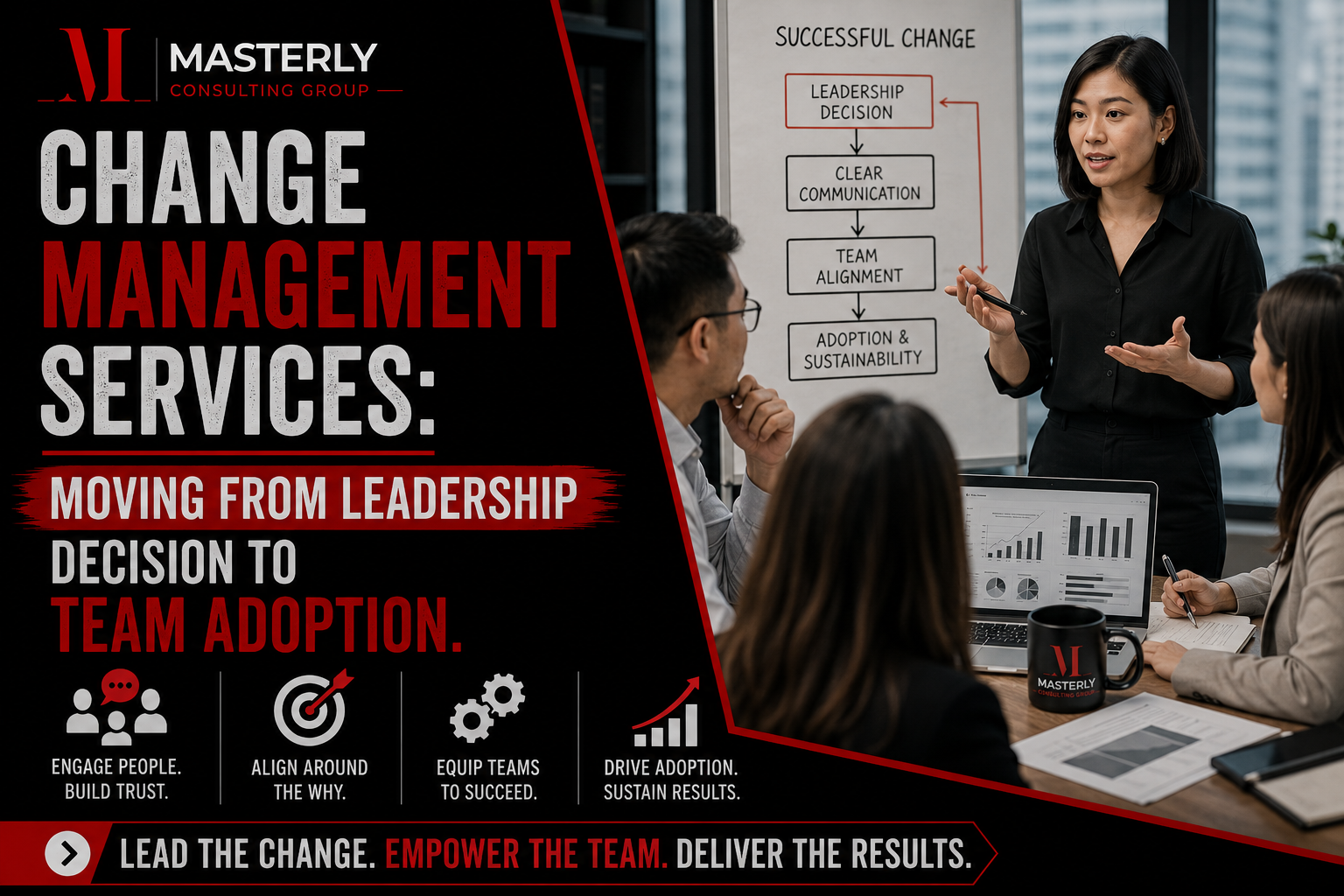
Supporting HR Teams Through Change
Periods of organizational growth, restructuring, or rapid hiring often place significant pressure on internal hr teams. Managing changing priorities while maintaining daily responsibilities can quickly become overwhelming.
Professional hr support provides additional resources that allow hr teams to remain productive without sacrificing quality or employee service. Experienced consultants work alongside internal staff to strengthen operations rather than replace them.
This collaborative approach helps organizations navigate change with greater confidence.
Compliance Should Never Be an Afterthought
Changing regulations require organizations to remain proactive rather than reactive. Strong compliance support helps businesses reduce unnecessary risk while maintaining confidence in their workplace practices.
An experienced hr consulting firm assists organizations with legal compliance, regulatory compliance, policy reviews, documentation, and ongoing education. Businesses that address compliance proactively are often better prepared for future regulatory changes.
Preventive planning is almost always more effective than responding after problems arise.
HR Leaders Create Strong Organizational Culture
Today's hr leaders play a significant role in shaping workplace culture. They help establish expectations, encourage accountability, and create programs that support employee development and organizational success.
Professional human resources guidance enables leaders to align workforce initiatives with business goals while maintaining strong employee relationships. Effective leadership creates consistency throughout the organization and strengthens long-term performance.
Organizations that invest in leadership development often experience stronger collaboration and improved business outcomes.
Comprehensive HR Solutions Support Every Business
Every organization has unique workforce challenges, which is why customized support is so valuable. Comprehensive HR solutions allow businesses to receive guidance tailored to their size, industry, and long-term objectives.
Whether an organization needs recruiting assistance, policy development, compliance reviews, or organizational planning, professional hr solutions provide practical recommendations based on real-world experience.
Customized support allows businesses to solve current challenges while preparing for future growth.
Consulting Firms Help Businesses Focus on Their Core Responsibilities
As businesses expand, leaders often spend increasing amounts of time handling personnel concerns instead of driving strategic growth. Partnering with experienced consulting firms allows organizations to focus on their core responsibilities while trusted advisors manage critical HR initiatives.
This partnership creates greater efficiency and allows executives to dedicate more attention to innovation, customer relationships, and long-term planning. By reducing distractions, organizations strengthen performance throughout the entire workforce.
The right HR partner becomes an extension of the business rather than simply an outside vendor.
Industry Expertise Delivers Better Business Outcomes
Organizations benefit from working with experienced consultants who understand workforce challenges across multiple industries. A strong track record demonstrates an advisor's ability to deliver practical recommendations that improve both operational performance and employee satisfaction.
Professional consulting firms provide tailored solutions designed to support measurable business outcomes rather than generic recommendations. Whether serving a growing small business, established corporations, healthcare providers, manufacturers, or federal contractors, experienced advisors bring valuable insight to every engagement.
Businesses that work with knowledgeable professionals are better positioned for sustainable growth, improved operational efficiency, and long-term success.
HR Consulting Supports Every Part of the Organization
Modern hr consulting influences much more than hiring and onboarding. It strengthens employee benefits, improves employee relations, supports workplace safety, enhances hr management, and helps businesses manage critical organizational change.
Professional advisors also assist with complex hr issues, benefits administration, employee wellness, organizational planning, and critical functions that support long-term stability. They understand how HR decisions affect productivity, morale, customer satisfaction, and financial performance.
As organizations continue evolving, partnering with an experienced hr consulting team provides the guidance necessary to build stronger workplaces and achieve lasting success.
Streamlining HR Processes With Experienced Guidance
Successful organizations understand that effective human resources management depends on well-organized hr processes that support employees from recruitment through long-term career development. Daily hr tasks such as onboarding, policy implementation, performance tracking, and documentation may seem routine, but they play an essential role in strengthening the employer employee relationship and creating a positive workplace culture. An efficient hiring process, combined with guidance from certified hr professionals and other seasoned professionals, helps businesses attract qualified talent while reducing compliance risk associated with changing employment regulations. This is where hr works best—when proactive planning, consistent policies, and ongoing support come together to help organizations focus on growth instead of administrative challenges. Even businesses managing complex operations or a large supply chain benefit from organized HR systems that improve communication, support employees, and create a stronger foundation for long-term success.
Partner With Masterly Consulting Group for Forward-Thinking HR Solutions
The future of human resources belongs to organizations that are willing to adapt, invest in their people, and embrace strategic workforce planning. Whether you're a growing small business or an established organization seeking to improve operations, the right HR partner can help you overcome workforce challenges while positioning your company for continued success.
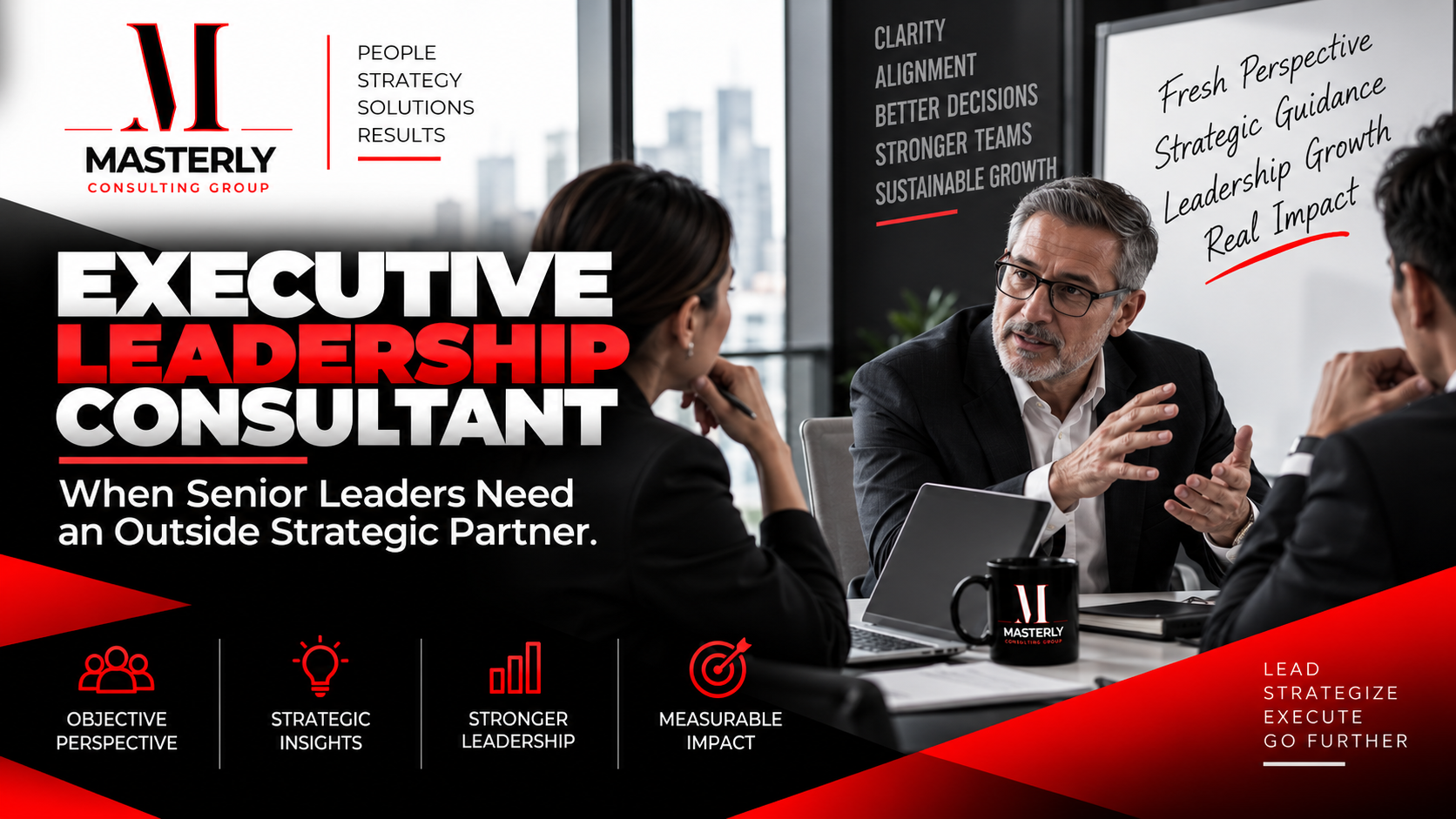
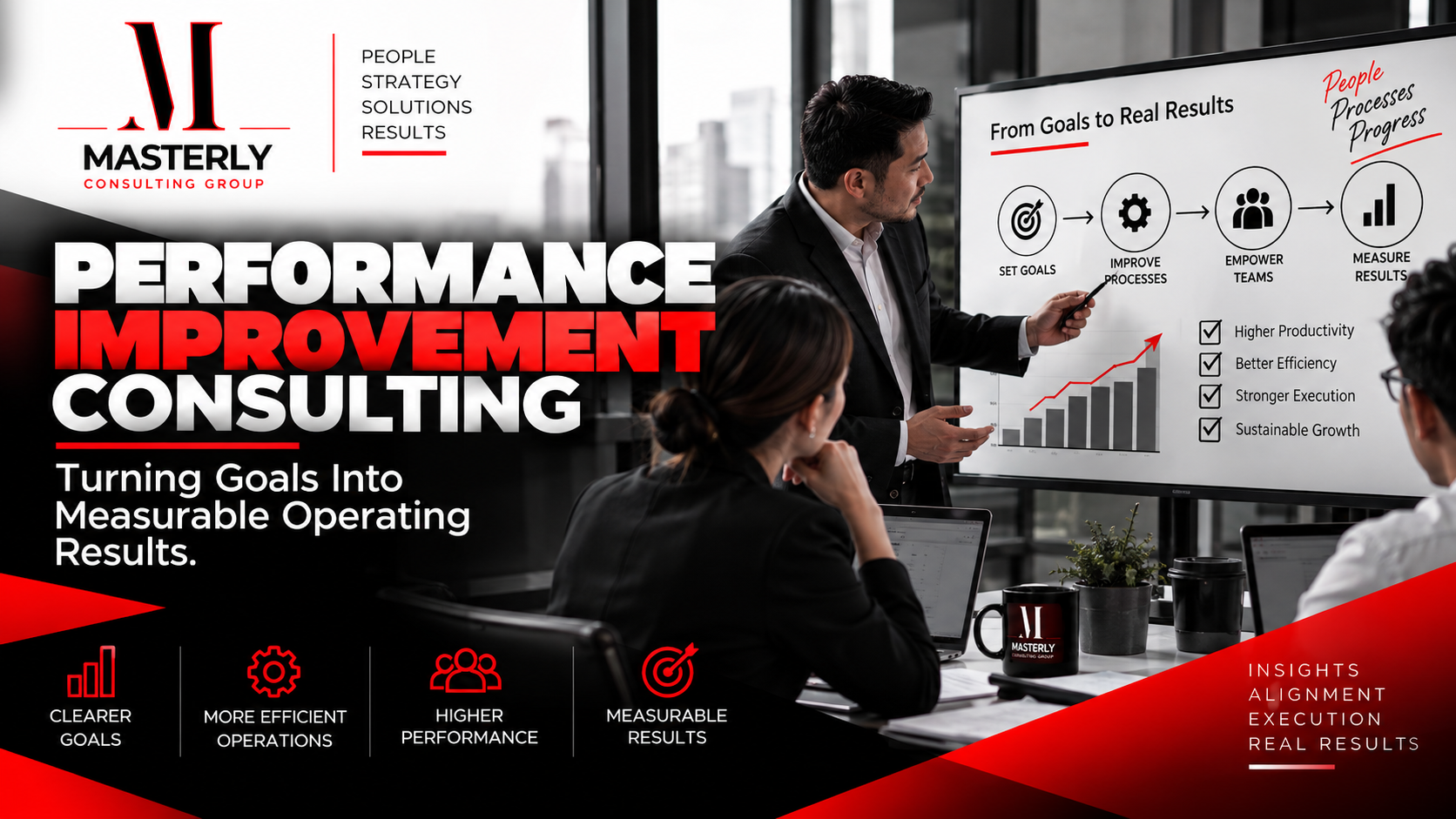
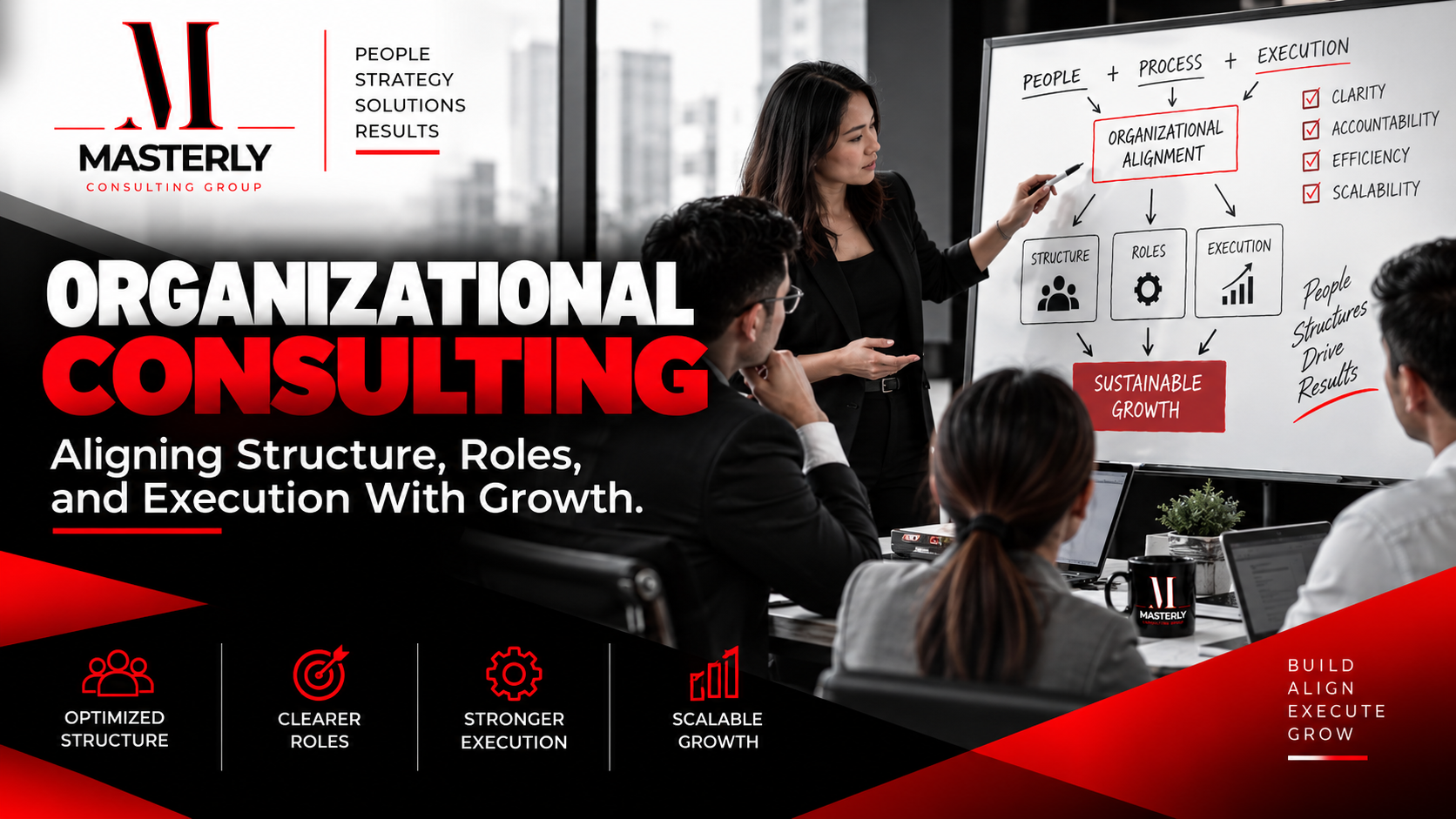
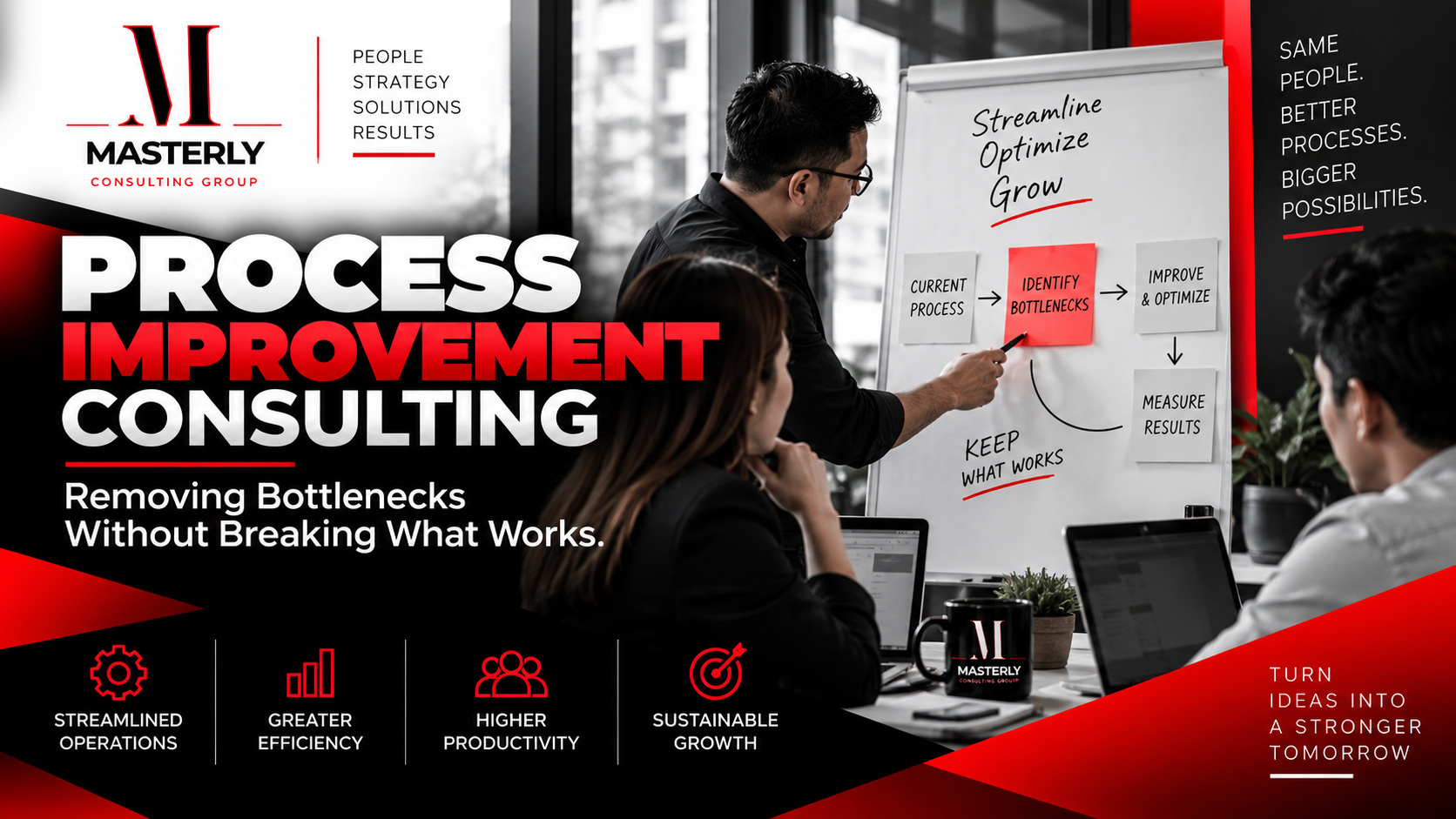
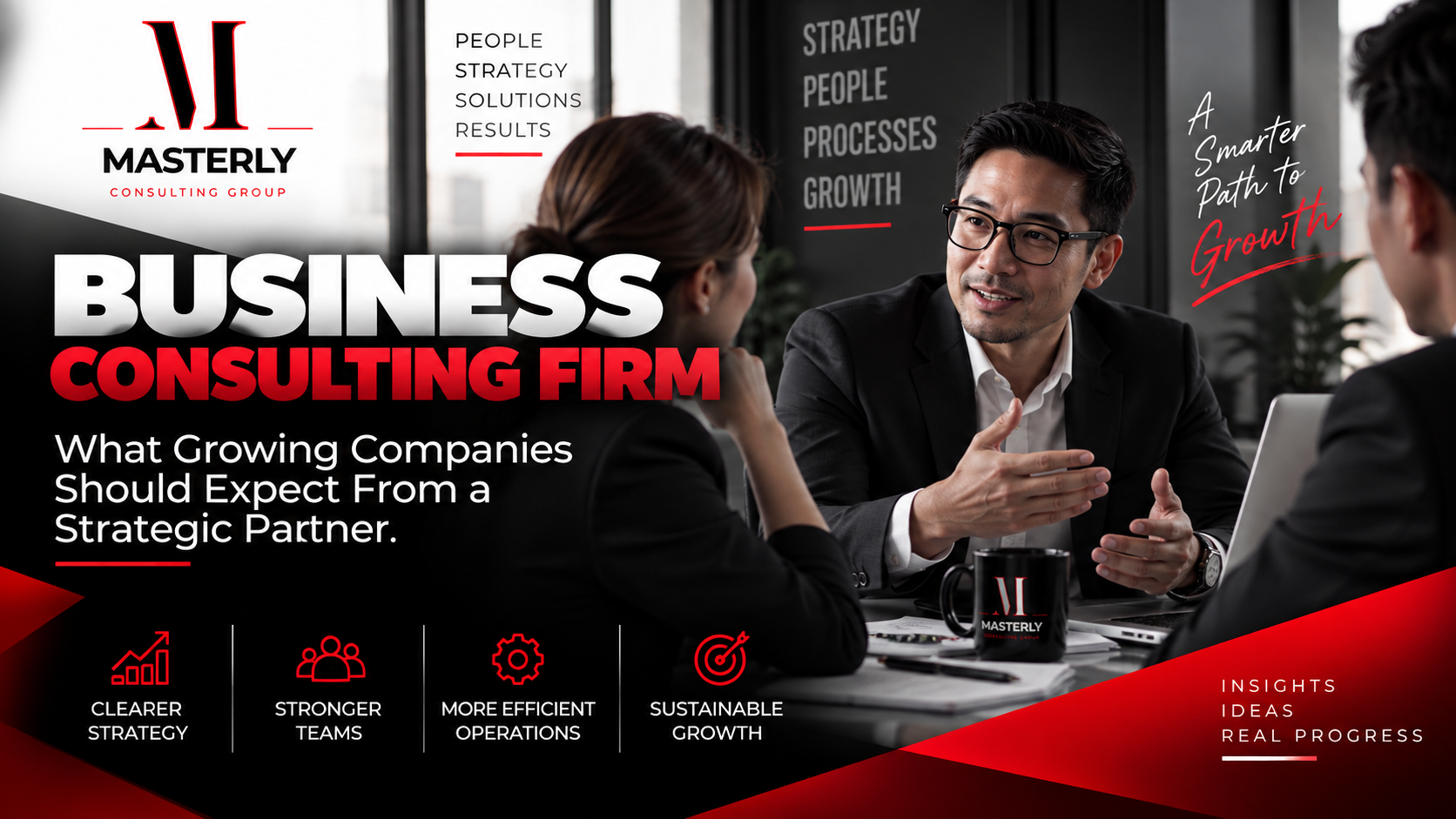
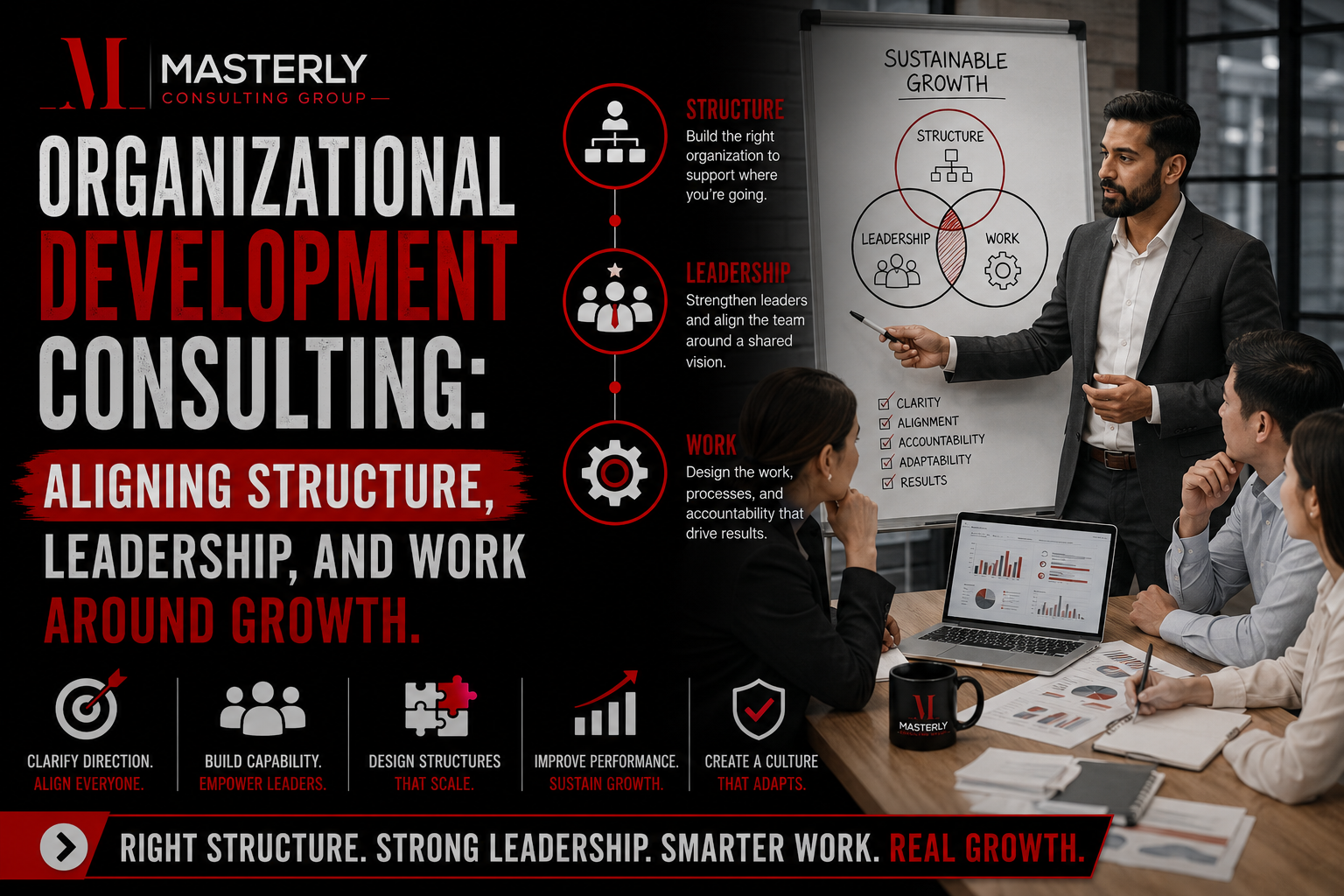
At Masterly Consulting Group, we provide consulting hr, strategic hr consulting services, and customized consulting services designed to strengthen your workforce and simplify complex HR responsibilities. Our experienced hr consultants and human resources consultants work closely with businesses to improve hr management, strengthen employee relations, enhance employee benefits, resolve complex hr issues, and develop practical hr solutions that support long-term organizational growth.
If you're ready to build a stronger workforce, improve compliance, and create a better employee experience, we're here to help. Contact Masterly Consulting Group today at (888) 209-4055 to book your free consultation. We'll take the time to understand your business, answer your questions, and develop customized HR strategies that support your people, your leadership, and your future success.
Employee Relations Are the Foundation of a Healthy Workplace
Strong employee relations do not happen by chance. They develop when organizations create an environment built on trust, respect, communication, and accountability. Employees who feel heard and valued are more likely to remain committed to the organization's mission.
Experienced hr consultants help businesses strengthen employee relations by developing fair workplace policies, improving communication, and resolving concerns before they become larger problems. This proactive approach reduces workplace conflict while supporting a more positive culture.
Healthy employee relations also encourage collaboration between managers and staff, creating stronger teams that work toward common goals. As organizations continue to evolve, maintaining positive workplace relationships remains one of the most valuable investments a business can make.
HR Compliance Is More Important Than Ever
Businesses today operate in an environment shaped by constantly changing employment laws and workplace regulations. Failing to keep policies current can expose organizations to unnecessary legal and financial risks.
Professional hr compliance services help companies understand changing requirements while reducing the possibility of costly mistakes. From wage and hour regulations to workplace documentation and employee classifications, compliance affects nearly every aspect of workforce management.
An experienced hr consulting firm works with organizations to establish practical procedures that support legal compliance and reduce potential liability. Staying ahead of regulatory changes helps businesses focus on growth rather than reacting to preventable compliance issues.
Outsourced HR Gives Businesses Greater Flexibility
Every organization has different workforce needs, and those needs often change as the company grows. Outsourced HR provides businesses with the flexibility to receive expert guidance without maintaining a large internal HR staff.
Whether a company needs assistance during rapid expansion, seasonal hiring, or organizational restructuring, outsourced HR provides scalable support that adapts to changing business demands.
Many organizations also appreciate the ability to access experienced human resources consultants whenever specialized expertise is needed. This flexible approach improves decision-making while helping leadership focus on long-term objectives.
HR Operations Support Business Efficiency
Well-organized hr operations help businesses function more efficiently by creating consistent processes throughout the organization. When HR systems are organized and clearly documented, managers spend less time solving administrative problems and more time leading their teams.
Professional hr consulting helps organizations evaluate existing workflows and identify opportunities to improve efficiency. Streamlined operations also reduce confusion for employees while creating a more consistent workplace experience.
Improving hr operations benefits the entire organization by supporting stronger communication, better documentation, and smoother day-to-day management.
Reducing the Administrative Burden on Leadership
Business owners and executives often find themselves overwhelmed by paperwork, policy questions, and personnel concerns. This growing administrative burden can distract leadership from strategic priorities and business development.
Partnering with an experienced hr consulting firm helps reduce that administrative burden by transferring many time-consuming responsibilities to knowledgeable professionals. Leaders gain more time to focus on innovation, customer relationships, and organizational growth.
This approach creates greater efficiency while ensuring important HR responsibilities continue receiving the attention they deserve.
Performance Management Builds Stronger Teams
Effective performance management goes far beyond annual performance reviews. It involves setting clear expectations, providing ongoing coaching, recognizing achievements, and helping employees continue developing their skills.
Experienced hr professionals help organizations design performance systems that encourage accountability while supporting professional growth. Employees who understand expectations are generally more engaged and motivated to succeed.
Strong performance management practices also provide managers with valuable opportunities to address concerns early, reducing misunderstandings and improving overall workplace performance.
Employee Benefits Influence Recruitment and Retention
Competitive employee benefits remain one of the most effective tools for attracting and retaining talented employees. Today's workforce often evaluates benefit packages just as carefully as salary when considering employment opportunities.
Professional benefits administration ensures organizations offer competitive programs while managing enrollment, compliance, and communication efficiently. Well-managed employee benefits improve both recruitment efforts and long-term employee satisfaction.
An experienced hr consulting firm can help organizations evaluate benefit options that align with both workforce expectations and financial objectives.
Employee Engagement Creates Better Business Results
Employees who feel connected to their work often contribute more effectively to organizational success. High levels of employee engagement encourage stronger teamwork, increased productivity, and improved customer service.
Professional hr consulting helps organizations identify factors that influence engagement, including leadership communication, career development, recognition, and workplace culture.
By investing in employee engagement, businesses strengthen morale while creating an environment where employees are motivated to contribute their best work every day.
Improving the Employee Experience From Day One
The employee experience begins long before an individual's first day of work. Recruitment, onboarding, training, communication, and leadership all influence how employees view their organization.
Experienced human resources consultants evaluate every stage of the employee journey to improve the overall employee experience. Small improvements made throughout the employment relationship often create meaningful long-term results.
Organizations that prioritize a positive employee experience frequently experience stronger engagement, higher productivity, and lower turnover.
Supporting the Entire Employee Lifecycle
Successful organizations understand that workforce management extends beyond hiring and onboarding. Every stage of the entire employee lifecycle deserves thoughtful planning and consistent support.
Professional hr services help businesses strengthen each phase, including recruitment, development, promotions, performance evaluations, career advancement, and successful transitions.
By improving every stage of the employment journey, organizations create a more positive experience for both employees and leadership.
Talent Management Strengthens Future Leadership
Building future leaders requires more than filling open positions. Effective talent management identifies high-potential employees, develops leadership skills, and prepares organizations for long-term success.
Experienced hr consultants help businesses create succession plans that reduce disruptions while supporting continued organizational growth.
Investing in talent management ensures businesses remain prepared for future opportunities and leadership transitions.
HR Policies Create Consistency Throughout the Organization
Well-written hr policies help employees understand expectations while providing managers with clear guidance for making consistent decisions. Policies also reduce confusion and improve workplace accountability.
Professional consulting services assist organizations with developing customized hr policies that reflect current business needs while supporting regulatory compliance.
Keeping policies current allows organizations to respond confidently as workplace expectations and legal requirements continue changing.
HR Professionals Help Solve Complex Workplace Issues
Modern workplaces present increasingly complex personnel challenges that require thoughtful solutions. Experienced hr professionals bring specialized expertise that helps organizations resolve sensitive situations fairly and professionally.
Whether addressing workplace investigations, performance concerns, policy interpretation, or employee relations issues, knowledgeable advisors help leadership make informed decisions.
Having experienced professionals available provides businesses with confidence when navigating difficult workplace conversations.
HR Functions Continue Expanding
The responsibilities handled by today's HR departments continue growing every year. Traditional hr functions such as recruiting and onboarding now exist alongside leadership coaching, workforce planning, compliance management, and organizational development.
Professional hr consulting helps organizations strengthen these expanding hr functions while maintaining operational efficiency.
As workforce expectations evolve, businesses benefit from HR systems that remain flexible and responsive to future needs.
Employee Retention Requires More Than Competitive Pay
Keeping talented employees has become one of the biggest challenges facing organizations today. Competitive compensation is important, but it is only one piece of the puzzle. Employees are also looking for opportunities to grow, supportive leadership, meaningful work, and a positive workplace culture.
An experienced hr consulting firm helps organizations improve employee retention by identifying the factors that influence long-term commitment. From career development programs to recognition initiatives and better communication, small improvements can have a significant impact. Businesses that invest in retention often reduce hiring costs while creating stronger, more stable teams.
Employee Satisfaction Fuels Long-Term Success
When employees feel appreciated and supported, they are more likely to remain engaged in their work. High levels of employee satisfaction often lead to improved productivity, stronger collaboration, and better customer service.
Professional hr consulting helps organizations evaluate workplace culture, leadership practices, and communication strategies that influence employee satisfaction. Creating an environment where employees feel respected benefits both the workforce and the organization as a whole.
Satisfied employees often become advocates for the company, strengthening recruitment efforts and improving the organization's reputation.
Employee Handbooks Provide Clarity and Consistency
Well-written employee handbooks establish expectations while helping employees understand workplace policies and procedures. They also provide managers with guidance for handling workplace situations consistently and fairly.
Professional employee handbook creation ensures organizations develop documents that reflect current employment laws, organizational values, and operational needs. An experienced hr consulting firm can review existing handbooks or develop new ones that support both compliance and workplace consistency.
Keeping employee handbooks updated reduces confusion while helping organizations maintain clear communication across the workforce.
HR Outsourcing Supports Growing Organizations
As organizations expand, internal HR responsibilities often become more demanding. HR outsourcing allows businesses to receive expert guidance without hiring additional full-time personnel, making it an effective solution for companies experiencing growth.
Professional outsourced hr services provide businesses with flexible expertise while reducing administrative demands on internal leadership. Whether an organization needs ongoing guidance or project-specific assistance, outsourced hr creates opportunities to improve efficiency while controlling costs.
This flexible approach helps organizations adapt as workforce needs continue evolving.
On-Demand HR Support Helps Solve Immediate Challenges
Not every business requires full-time HR assistance, but many organizations benefit from immediate access to experienced professionals when unexpected situations arise. On demand hr support allows companies to receive expert advice exactly when they need it.
This type of outsourced hr support is especially valuable for businesses handling employee concerns, policy questions, disciplinary matters, or compliance issues that require prompt attention.
Having experienced advisors available provides confidence during difficult situations while reducing unnecessary delays.
Workforce Analytics Improve Decision-Making
Modern organizations increasingly rely on workforce analytics to make informed business decisions. Rather than relying solely on assumptions, leaders can evaluate hiring trends, turnover rates, productivity, and employee performance using meaningful data.
An experienced hr consulting team helps organizations interpret workforce information and identify opportunities for improvement. These insights support better planning while helping businesses respond proactively to changing workforce needs.
Using reliable data strengthens strategic decision-making across the organization.
Leadership Development Shapes the Future
Strong organizations require strong leaders. Leadership transformation begins by helping managers develop communication skills, accountability, emotional intelligence, and the ability to inspire others.
Experienced consulting firms work closely with executive teams to strengthen leadership capabilities while preparing future managers for greater responsibility. A successful leadership team creates stability throughout the organization and encourages employees to perform at their highest level.
Developing effective leaders remains one of the most valuable long-term investments a business can make.
Supporting HR Teams Through Change
Periods of organizational growth, restructuring, or rapid hiring often place significant pressure on internal hr teams. Managing changing priorities while maintaining daily responsibilities can quickly become overwhelming.
Professional hr support provides additional resources that allow hr teams to remain productive without sacrificing quality or employee service. Experienced consultants work alongside internal staff to strengthen operations rather than replace them.
This collaborative approach helps organizations navigate change with greater confidence.
Compliance Should Never Be an Afterthought
Changing regulations require organizations to remain proactive rather than reactive. Strong compliance support helps businesses reduce unnecessary risk while maintaining confidence in their workplace practices.
An experienced hr consulting firm assists organizations with legal compliance, regulatory compliance, policy reviews, documentation, and ongoing education. Businesses that address compliance proactively are often better prepared for future regulatory changes.
Preventive planning is almost always more effective than responding after problems arise.
HR Leaders Create Strong Organizational Culture
Today's hr leaders play a significant role in shaping workplace culture. They help establish expectations, encourage accountability, and create programs that support employee development and organizational success.
Professional human resources guidance enables leaders to align workforce initiatives with business goals while maintaining strong employee relationships. Effective leadership creates consistency throughout the organization and strengthens long-term performance.
Organizations that invest in leadership development often experience stronger collaboration and improved business outcomes.
Comprehensive HR Solutions Support Every Business
Every organization has unique workforce challenges, which is why customized support is so valuable. Comprehensive HR solutions allow businesses to receive guidance tailored to their size, industry, and long-term objectives.
Whether an organization needs recruiting assistance, policy development, compliance reviews, or organizational planning, professional hr solutions provide practical recommendations based on real-world experience.
Customized support allows businesses to solve current challenges while preparing for future growth.
Consulting Firms Help Businesses Focus on Their Core Responsibilities
As businesses expand, leaders often spend increasing amounts of time handling personnel concerns instead of driving strategic growth. Partnering with experienced consulting firms allows organizations to focus on their core responsibilities while trusted advisors manage critical HR initiatives.
This partnership creates greater efficiency and allows executives to dedicate more attention to innovation, customer relationships, and long-term planning. By reducing distractions, organizations strengthen performance throughout the entire workforce.
The right HR partner becomes an extension of the business rather than simply an outside vendor.
Industry Expertise Delivers Better Business Outcomes
Organizations benefit from working with experienced consultants who understand workforce challenges across multiple industries. A strong track record demonstrates an advisor's ability to deliver practical recommendations that improve both operational performance and employee satisfaction.
Professional consulting firms provide tailored solutions designed to support measurable business outcomes rather than generic recommendations. Whether serving a growing small business, established corporations, healthcare providers, manufacturers, or federal contractors, experienced advisors bring valuable insight to every engagement.
Businesses that work with knowledgeable professionals are better positioned for sustainable growth, improved operational efficiency, and long-term success.
HR Consulting Supports Every Part of the Organization
Modern hr consulting influences much more than hiring and onboarding. It strengthens employee benefits, improves employee relations, supports workplace safety, enhances hr management, and helps businesses manage critical organizational change.
Professional advisors also assist with complex hr issues, benefits administration, employee wellness, organizational planning, and critical functions that support long-term stability. They understand how HR decisions affect productivity, morale, customer satisfaction, and financial performance.
As organizations continue evolving, partnering with an experienced hr consulting team provides the guidance necessary to build stronger workplaces and achieve lasting success.
Streamlining HR Processes With Experienced Guidance
Successful organizations understand that effective human resources management depends on well-organized hr processes that support employees from recruitment through long-term career development. Daily hr tasks such as onboarding, policy implementation, performance tracking, and documentation may seem routine, but they play an essential role in strengthening the employer employee relationship and creating a positive workplace culture. An efficient hiring process, combined with guidance from certified hr professionals and other seasoned professionals, helps businesses attract qualified talent while reducing compliance risk associated with changing employment regulations. This is where hr works best—when proactive planning, consistent policies, and ongoing support come together to help organizations focus on growth instead of administrative challenges. Even businesses managing complex operations or a large supply chain benefit from organized HR systems that improve communication, support employees, and create a stronger foundation for long-term success.
Partner With Masterly Consulting Group for Forward-Thinking HR Solutions
The future of human resources belongs to organizations that are willing to adapt, invest in their people, and embrace strategic workforce planning. Whether you're a growing small business or an established organization seeking to improve operations, the right HR partner can help you overcome workforce challenges while positioning your company for continued success.
At Masterly Consulting Group, we provide consulting hr, strategic hr consulting services, and customized consulting services designed to strengthen your workforce and simplify complex HR responsibilities. Our experienced hr consultants and human resources consultants work closely with businesses to improve hr management, strengthen employee relations, enhance employee benefits, resolve complex hr issues, and develop practical hr solutions that support long-term organizational growth.
If you're ready to build a stronger workforce, improve compliance, and create a better employee experience, we're here to help. Contact Masterly Consulting Group today at (888) 209-4055 to book your free consultation. We'll take the time to understand your business, answer your questions, and develop customized HR strategies that support your people, your leadership, and your future success.