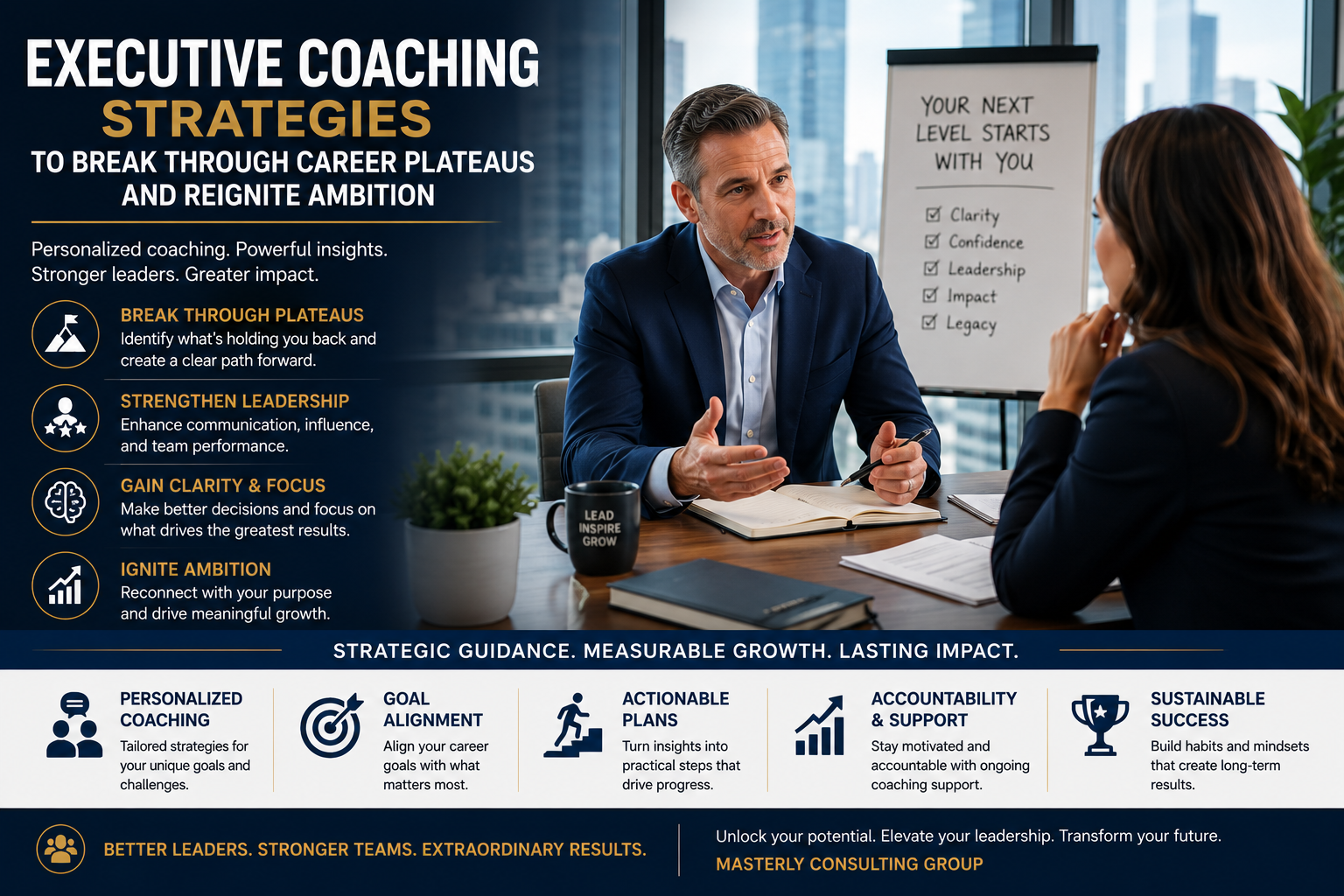
Executive Coaching Strategies to Break Through Career Plateaus and Reignite Ambition
There comes a point in many successful careers when progress seems to slow. Promotions become less frequent, motivation begins to fade, and daily responsibilities start feeling repetitive instead of inspiring. Reaching this stage does not mean you've reached your limit—it often signals that it's time for a different approach to professional growth. At Masterly Consulting Group, we believe executive coaching provides the guidance, perspective, and accountability professionals need to move beyond career plateaus and unlock their next level of success.
Many accomplished professionals mistakenly assume career stagnation is simply part of long-term success. In reality, growth often slows because priorities change, responsibilities expand, and new leadership challenges emerge. The same strategies that helped someone earn a leadership position may not be enough to excel at higher levels. Through personalized executive coaching services, leaders gain practical insights that help them overcome obstacles, strengthen decision-making, and rediscover the ambition that originally fueled their careers.
Career Plateaus Often Signal New Opportunities
Feeling stuck can be frustrating, but it also presents an opportunity to reassess priorities and redefine long-term goals. Many executives experience periods where professional growth feels slower despite continued hard work. Instead of viewing these moments as setbacks, successful leaders recognize them as opportunities for meaningful development.
An experienced executive coach helps professionals evaluate where they are today and where they want to go next. Rather than offering generic advice, executive coaching creates a structured process that helps identify obstacles while building practical strategies for continued advancement.
Growth Requires a Different Perspective
Career advancement often slows because familiar habits become comfortable. While experience remains valuable, long-term success frequently requires fresh thinking and a willingness to adapt.
One of the greatest advantages of executive coaching is gaining an objective viewpoint. An experienced coach provides honest feedback, identifies opportunities for improvement, and helps professionals recognize patterns they may overlook on their own.
Leadership Development Never Stops
Reaching a senior position does not mean leadership growth is complete. In many cases, leadership responsibilities become more complex as careers progress.
Strong leadership development encourages continuous learning, improved communication, and greater adaptability. Through consistent coaching sessions, executives strengthen their ability to guide teams, navigate uncertainty, and make thoughtful decisions under pressure.
Great Leaders Continue Learning
The most respected senior leaders understand they never stop developing. They actively seek opportunities to improve their communication, expand their perspective, and strengthen their decision-making abilities.
Professional leadership coaching creates an environment where experienced executives continue refining the skills that contribute to long-term success. Growth becomes an ongoing process rather than a destination.
Executive Coaching Creates Greater Self-Awareness
Many career obstacles develop gradually. Communication habits, decision-making patterns, and leadership styles often evolve over time without leaders recognizing their impact.
Developing stronger self awareness allows executives to better understand how their actions influence colleagues, employees, and organizational performance. Increased awareness often leads to better relationships, stronger collaboration, and more confident leadership.
Blind Spots Limit Professional Growth
Every leader has blind spots. These unseen habits may influence communication, delegation, conflict resolution, or strategic thinking without the individual realizing it.
One of the primary goals of executive coaching services is identifying these hidden obstacles. Honest conversations create opportunities for meaningful improvement while helping leaders build stronger relationships throughout their organization.
Leadership Effectiveness Influences Every Team
Leadership extends far beyond assigning responsibilities or managing projects. Every decision made by an executive influences employee engagement, organizational culture, and overall performance.
Improving leadership effectiveness strengthens communication while helping leaders create environments where employees feel supported and motivated. As leaders become more effective, entire teams often benefit from improved collaboration and clearer direction.
Coaching Helps Leaders Build Confidence
Periods of uncertainty can affect even highly experienced professionals. Organizational change, increased responsibilities, and complex business decisions often require leaders to make difficult choices.
Professional coaching helps executives build lasting confidence by improving preparation, strengthening communication, and encouraging thoughtful decision-making. This increased confidence allows leaders to approach challenges with greater clarity and resilience.
Executive Coaching Strengthens Decision-Making
Senior leadership positions require constant decision-making. Executives regularly balance competing priorities while considering both short-term demands and long-term organizational goals.
Effective executive coaching provides structured opportunities to evaluate these decisions before action is taken. Rather than reacting impulsively, leaders learn to examine options carefully while considering broader organizational implications.
Focus Creates Better Results
Distractions often prevent talented professionals from reaching their full potential. Competing priorities, constant communication, and increasing responsibilities make it difficult to maintain consistent direction.
Coaching encourages leaders to improve focus by identifying the activities that create the greatest impact. Concentrating on meaningful priorities often produces stronger professional outcomes while reducing unnecessary stress.
Executive Coaching Supports Organizational Success
Organizations benefit when leaders continue growing throughout their careers. Individual development often creates positive effects that extend across departments, projects, and leadership teams.
Strong executive leadership coaching helps executives align their personal growth with the organization's goals. This alignment supports stronger collaboration while creating more consistent leadership across the business.
Strong Leaders Build Strong Organizations
An organization's future depends heavily on the strength of its leadership team. Leaders who communicate effectively, solve problems confidently, and encourage accountability create healthier workplace cultures.
Masterly Consulting Group helps leaders develop practical strategies that improve individual performance while supporting the long-term success of the entire organization.
Coaching Programs Create Lasting Change
Short-term motivation often fades without ongoing accountability. Sustainable improvement requires consistent effort supported by thoughtful planning and regular evaluation.
A structured coaching program provides executives with continuous guidance throughout their professional development. Regular coaching sessions help participants measure progress, adjust strategies, and remain committed to meaningful long-term growth.
Every Coaching Journey Is Unique
No two executives share identical career experiences. Leadership responsibilities, organizational challenges, and professional goals differ from one individual to another.
For that reason, every coaching journey should reflect the client's unique objectives. Masterly Consulting Group tailors every engagement to help clients overcome challenges, strengthen leadership capabilities, and continue advancing throughout their careers.
Leadership Coaching Helps Leaders Navigate Complex Challenges
As professionals move into senior leadership positions, the decisions they make often affect entire departments and long-term business direction. Those responsibilities require more than technical expertise—they demand sound judgment, adaptability, and the ability to guide others through uncertainty. Leadership coaching gives executives a structured environment to examine difficult situations before they become larger organizational challenges.
At Masterly Consulting Group, our executive coaching services help leaders approach challenges with greater clarity and purpose. Through thoughtful discussions and practical action plans, clients gain valuable insights that improve both personal performance and organizational impact. Every coaching engagement is designed to strengthen decision-making while supporting long-term leadership growth.
New Insights Lead to Better Decisions
Even experienced executives can become accustomed to approaching problems the same way. Over time, familiar routines may prevent leaders from seeing new opportunities or recognizing emerging risks.
Executive coaching introduces new insights that encourage broader thinking. By examining situations from different perspectives, leaders become better equipped to evaluate options, communicate effectively, and make decisions that support lasting business results.
Executive Leadership Coaching Supports Organizational Growth
Successful organizations rarely grow by chance. They invest in leadership development because strong leadership influences employee engagement, operational performance, and long-term stability. When leaders continue learning, the entire organization benefits.
Our executive leadership coaching programs are designed to help leaders align personal growth with strategic priorities. This creates stronger alignment between individual performance and the organization's success, allowing executives to contribute more effectively across every level of the business.
Developing Leaders for the Future
Organizations that prioritize developing leaders build stronger succession plans and healthier workplace cultures. Future executives need opportunities to expand their knowledge before assuming greater responsibilities.
Executive coaching creates a structured environment where emerging leaders can develop communication skills, improve strategic thinking, and prepare for more complex leadership roles. This investment strengthens the organization's leadership pipeline while supporting sustainable growth.
Coaching Builds Stronger Teams
Leadership is not measured only by individual accomplishments. Great executives help others perform at their best by creating an environment built on trust, accountability, and collaboration.
Professional coaching encourages executives to strengthen team collaboration by improving communication, delegation, and conflict resolution. As leaders become more effective, teams often become more engaged, productive, and confident in their shared direction.
Helping Leaders Communicate More Effectively
Communication influences every aspect of leadership. Whether presenting organizational priorities, resolving workplace concerns, or inspiring employees, executives rely on strong interpersonal skills every day.
Executive coaching helps leaders improve active listening, constructive feedback, and transparent communication. These improvements strengthen workplace relationships while creating greater alignment around shared priorities.
Emotional Intelligence Strengthens Leadership
Technical expertise alone does not create exceptional leaders. The ability to understand emotions, manage stress, and respond thoughtfully during difficult situations often distinguishes outstanding executives from average managers.
Developing stronger emotional intelligence allows leaders to build trust, resolve conflict more effectively, and foster healthier workplace relationships. These qualities become increasingly important as leadership responsibilities continue expanding.
Self-Awareness Improves Leadership Effectiveness
Meaningful leadership growth begins with understanding personal strengths and areas for improvement. Executives who develop greater self awareness become more intentional in the way they communicate, delegate, and motivate others.
Improved awareness also contributes to greater leadership effectiveness because leaders recognize how their actions influence the people around them. Small adjustments often create significant improvements throughout the organization.
Executive Coaches Provide an External Perspective
Internal leadership teams often share similar experiences and organizational assumptions. While this familiarity has advantages, it can also make it difficult to identify opportunities for improvement.
Experienced executive coaches work by providing an objective, external perspective that encourages leaders to think differently. Independent feedback helps executives challenge assumptions, explore alternative solutions, and make more informed decisions.
The Right Coach Helps Leaders Reach Their Full Potential
Selecting the right coach is one of the most important decisions an executive can make. Successful coaching relationships depend on trust, communication, and a genuine understanding of each client's professional goals.
At Masterly Consulting Group, every coaching engagement begins with building a deep understanding of each client's challenges, leadership style, and long-term aspirations. This personalized approach allows coaching to remain practical, relevant, and results-oriented.
Coaching Supports Organizational Change
Periods of organizational change often place extraordinary pressure on executive teams. Mergers, restructuring, rapid growth, and market shifts require leaders to communicate clearly while maintaining employee confidence.
Executive coaching provides practical support during these transitions. By strengthening communication, decision-making, and strategic planning, leaders are better prepared to guide their teams through uncertainty while maintaining organizational momentum.
Supporting Key Stakeholders
Major organizational decisions rarely affect only one department. Employees, investors, board members, and key stakeholders all depend on thoughtful leadership during periods of change.
Coaching helps executives evaluate how important decisions influence different groups while improving their ability to communicate effectively across the organization. This balanced approach supports stronger relationships and better long-term outcomes.
Coaching Engagements Produce Measurable Progress
Professional development becomes more valuable when progress can be evaluated objectively. Well-designed coaching engagements include clear expectations, measurable milestones, and regular opportunities to assess growth.
At Masterly Consulting Group, our coaching process emphasizes accountability alongside continuous improvement. Clients develop practical action plans that encourage consistent progress while creating measurable outcomes aligned with organizational priorities.
Focus on Meaningful Results
Every executive invests valuable time in professional development. Coaching should therefore produce results that extend beyond temporary motivation.
Our coaching programs emphasize practical application by helping executives strengthen communication, improve strategic thinking, expand their skills, and enhance overall leadership performance. These improvements often contribute to improved leadership effectiveness throughout the organization.
Executive Coaching Creates Long-Term Value
Leadership growth is not achieved through isolated workshops or one-time seminars. Lasting improvement develops through consistent reflection, guided practice, and ongoing support.
Masterly Consulting Group designs executive coaching services that encourage continuous development rather than short-term inspiration. As executives continue learning, they become better prepared to lead organizations, inspire teams, and navigate future challenges with confidence.
Executive Coaching Helps Organizations Build Stronger Leadership Cultures
Exceptional organizations understand that leadership excellence is never accidental. It is the result of continuous learning, intentional development, and a commitment to helping executives grow alongside the organization. Investing in executive coaching demonstrates that leadership is viewed as an ongoing responsibility rather than a title that no longer requires improvement.
Masterly Consulting Group partners with organizations that want to create sustainable leadership cultures. Our executive coaching services are designed to help leaders strengthen decision-making, improve communication, and lead with greater confidence while supporting the organization's long-term objectives.
Leadership Development Creates Lasting Business Value
Organizations that invest in leadership development often experience stronger collaboration, improved employee engagement, and healthier succession planning. As senior leaders continue expanding their capabilities, they create opportunities for future leaders to grow as well.
A commitment to leadership excellence also contributes to stronger organizational stability. When executives continue learning, the entire team benefits from better communication, clearer priorities, and more consistent decision-making.
Coaching Helps Leaders Adapt to Changing Business Environments
Today's executives face constant change. Market conditions evolve, customer expectations shift, and organizations regularly encounter new operational and strategic challenges. The ability to adapt has become one of the most valuable leadership qualities.
Professional executive coaching provides structured support during periods of uncertainty by helping leaders remain focused while evaluating changing priorities. Through regular coaching sessions, clients gain practical insights that improve adaptability and strengthen long-term leadership performance.
Building Confidence During Change
Periods of transition often test even highly experienced executives. Expanding responsibilities, organizational restructuring, or increased expectations can create uncertainty if leaders attempt to navigate those changes alone.
Coaching helps executives strengthen confidence by encouraging thoughtful preparation and objective evaluation. With experienced guidance, leaders improve their ability to respond strategically while continuing to inspire their teams.
Experienced Coaches Help Leaders Reach Their Full Potential
Every executive possesses strengths that contribute to organizational success, but nearly every professional also has opportunities for growth. Identifying those opportunities requires honest feedback and objective evaluation.
Our certified executive coaches combine practical leadership experience, business expertise, and personalized coaching methods to help executives maximize their full potential. Each coaching relationship focuses on sustainable improvement rather than temporary motivation.
Coaching Built on Professional Standards
Masterly Consulting Group believes professional coaching should reflect recognized industry standards and ethical practices. Our approach is inspired by principles associated with the International Coaching Federation, widely recognized as the gold standard for professional coaching excellence.
This commitment ensures every coaching engagement emphasizes trust, confidentiality, accountability, and measurable progress. Clients receive guidance built upon proven methodologies while benefiting from individualized attention.
Coaching Strengthens Organizations at Every Level
Executive development should never benefit only one individual. Strong leadership creates positive effects throughout the entire organization by improving communication, strengthening collaboration, and encouraging accountability.
Our programs are designed to enable leaders to make decisions that positively influence departments, employees, and long-term organizational performance. As executives continue growing, they also create opportunities for others to succeed.
Helping Organizations Develop Top Talent
Organizations that consistently invest in top talent are better prepared for future growth. Coaching provides emerging and established leaders with opportunities to strengthen their capabilities before greater responsibilities arise.
Whether supporting department managers, directors, or C-suite executives, our coaching programs help organizations build stronger internal leadership while reducing dependence on external recruitment.
Coaching Supports Long-Term Organizational Development
Strong leadership influences every aspect of organizational performance. Decision-making, innovation, communication, employee engagement, and strategic planning all improve when executives continue developing their capabilities.
Executive coaching also contributes to broader organizational development by encouraging leaders to think beyond immediate challenges. As leadership teams become more aligned, organizations gain greater flexibility to respond to future opportunities.
Research Continues Supporting Executive Coaching
Numerous leadership studies have demonstrated the long-term value of structured executive development. Research shows that organizations investing in coaching frequently experience stronger communication, increased engagement, and improved decision-making among senior leadership teams.
While every organization is unique, one common pattern remains clear: executives who commit to continuous learning often produce stronger long-term results than those who rely solely on past experience.
A Global Perspective Creates Stronger Leaders
Modern organizations operate within increasingly connected markets. Executives frequently manage distributed teams, international partnerships, and rapidly changing business environments that require broader perspectives.
Masterly Consulting Group brings a global network of knowledge, experience, and practical leadership strategies to every coaching engagement. This broader viewpoint helps executives develop adaptable leadership approaches that remain effective across different industries and organizational structures.
Helping Top Leaders Continue Growing
Even the most accomplished executives continue facing new responsibilities. Top leaders recognize that professional growth never truly ends and that continuous learning strengthens long-term success.
Executive coaching provides experienced leaders with ongoing opportunities to evaluate decisions, refine strategies, and continue improving their leadership capabilities throughout every stage of their careers.
Coaching Creates Transformational Change
Meaningful improvement rarely happens overnight. Sustainable success develops through consistent effort, thoughtful reflection, and practical application over time.
Our coaching programs are designed to support transformational change by helping executives build stronger habits, improve communication, expand leadership capabilities, and strengthen organizational influence. This structured approach creates lasting improvements that continue benefiting both the individual and the organization.
Business Coaching Complements Executive Development
While business coaching often focuses on operational growth, executive coaching emphasizes leadership growth that influences the entire organization. Together, these approaches create stronger executives who are prepared to guide organizations through changing business conditions.
Whether you're advancing your coaching career, strengthening your internal coaching practice, or simply looking to become a more effective leader, personalized coaching provides practical tools that support continuous professional development.
Contact Masterly Consulting Group for a Free Consultation
If you've reached a point where your career feels stagnant or your leadership growth has slowed, now is the ideal time to invest in professional executive coaching. Career plateaus do not have to define your future. With experienced guidance, thoughtful planning, and personalized coaching strategies, you can regain momentum, strengthen your leadership capabilities, and move confidently toward your next professional milestone.
Masterly Consulting Group proudly provides executive coaching services, executive leadership coaching, leadership coaching, and customized leadership programs for executives, senior leaders, business owners, and organizations seeking long-term growth. Our experienced coaches partner with clients to overcome complex challenges, expand their expertise, develop stronger leadership skills, and create meaningful, measurable progress that supports both individual careers and organizational performance.
If you're ready to invest in your future, contact Masterly Consulting Group today at (888) 209-4055 to schedule your free consultation. We'll answer your questions, discuss your goals, and help you determine which coaching approach best fits your leadership journey. Together, we'll create a personalized strategy that empowers you to lead with greater purpose, unlock new opportunities, and achieve lasting professional success.