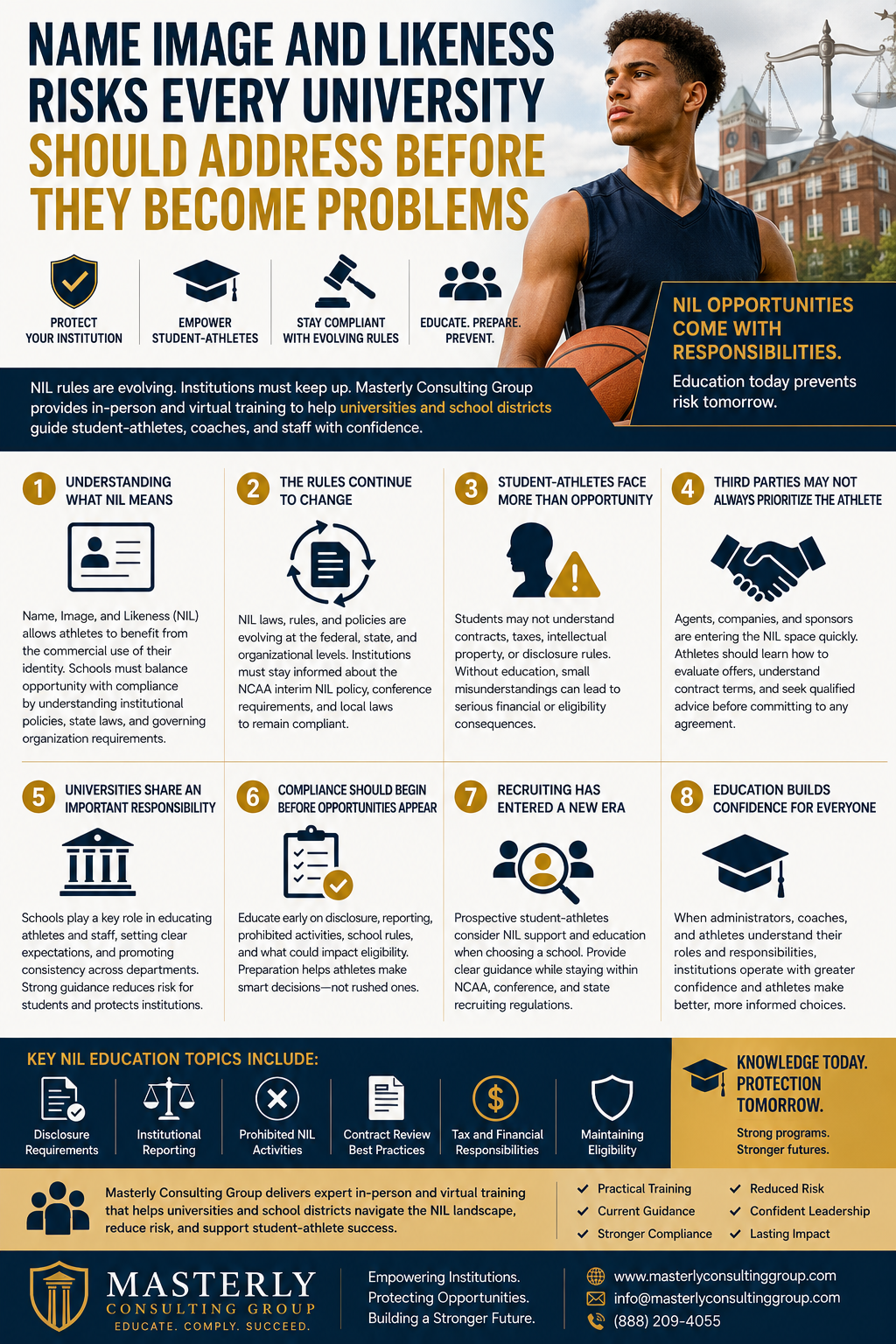
Name Image and Likeness Risks Every University Should Address Before They Become Problems
The landscape of name image and likeness has changed faster than many educational institutions expected. What began as a new opportunity for student athletes has quickly become a complex environment filled with evolving regulations, business relationships, and legal responsibilities. Universities and school districts are now expected to provide guidance that helps students make informed decisions while protecting both the institution and the athlete. Without proper education and structured policies, small mistakes can quickly develop into significant challenges.
At Masterly Consulting Group, we understand that many administrators, coaches, and compliance professionals are navigating unfamiliar territory. The rules surrounding NIL continue to evolve, and institutions must remain prepared to respond. Our in-person and virtual training programs help universities and school districts confidently guide college athletes, high school athletes, and staff members through this rapidly changing environment. Proactive education today can prevent costly problems tomorrow.
Understanding What Name Image and Likeness Means
The phrase name image and likeness refers to an individual's ability to benefit from the commercial use of their identity. In simple terms, NIL refers to opportunities that allow athletes to earn compensation from endorsements, appearances, promotional activities, and similar business arrangements. These opportunities have created exciting possibilities while also introducing new responsibilities for educational institutions.
Although NIL stands for Name, Image, and Likeness, understanding the concept requires much more than knowing the definition. Schools must consider institutional policies, state laws, governing organization requirements, and the interests of their students. Every decision should balance opportunity with compliance to help reduce unnecessary risk.
The Rules Continue to Change
One of the greatest challenges facing universities is the pace of regulatory change. NIL rules, NIL laws, and institutional policies continue to evolve as legislatures, conferences, and governing bodies respond to new developments. A policy that reflects today's expectations may require updates tomorrow.
The National Collegiate Athletic Association has introduced guidance through its interim NIL policy, while many institutions have also established their own NIL rules. Because these standards vary depending on jurisdiction and organizational oversight, universities benefit from ongoing education rather than relying on outdated information.
Student-Athletes Face More Than Opportunity
The excitement surrounding NIL opportunities often focuses on financial potential, but there are equally important risks that deserve attention. Third-party organizations, inexperienced advisors, and unfamiliar contract terms can place current student athletes in difficult situations. Many students have never negotiated agreements or managed business relationships before entering college.
Without appropriate training, students may misunderstand contract obligations, tax responsibilities, intellectual property rights, or disclosure requirements. Helping student athletes understand these topics before they enter agreements reduces unnecessary confusion while encouraging responsible decision-making.
Third Parties May Not Always Prioritize the Athlete
As the NIL marketplace expands, more organizations seek relationships with athletes. Marketing agencies, sponsors, professional service providers, and private companies may all present opportunities that appear attractive at first glance. However, not every offer reflects the student's best interests.
Universities should educate athletes about evaluating NIL contracts, identifying warning signs, and seeking qualified guidance before signing agreements. Teaching these skills allows students to make informed choices while protecting their long-term interests.
Universities Share an Important Responsibility
Educational institutions play an essential role in helping students understand this evolving environment. While schools cannot control every decision an athlete makes, they can provide education that encourages responsible participation. Strong institutional guidance helps reduce confusion while promoting consistency across athletic departments.
Comprehensive NIL education also benefits administrators, coaches, compliance staff, and high school athletic director leadership teams. When everyone understands institutional expectations, communication becomes clearer and compliance becomes more manageable.
Compliance Should Begin Before Opportunities Appear
Many schools wait until a student receives an endorsement offer before discussing NIL responsibilities. By then, important decisions may already be underway. Instead, institutions should introduce NIL education early so athletes understand expectations before opportunities arise.
Training should include topics such as disclosure requirements, institutional reporting procedures, identifying prohibited NIL activities, understanding school rules, and recognizing situations that could risk losing eligibility. Early preparation helps students respond thoughtfully instead of reacting under pressure.
Recruiting Has Entered a New Era
The arrival of NIL has also influenced the recruiting process. Many prospective student athletes now ask questions about institutional support, available educational resources, and campus guidance before deciding where to attend college. Schools that demonstrate strong compliance education often provide greater reassurance to students and families.
While NIL opportunities may influence recruiting conversations, institutions must remain mindful of applicable NCAA rules, conference requirements, and applicable state NIL laws. Responsible guidance helps schools avoid misunderstandings while maintaining institutional integrity.
Education Builds Confidence for Everyone
The most effective NIL programs focus on preparation rather than reaction. Administrators gain confidence knowing policies are clearly communicated. Coaches better understand appropriate conversations with athletes. Most importantly, students develop the knowledge needed to navigate opportunities responsibly.
At Masterly Consulting Group, our in-person and virtual training programs help universities and school districts prepare for today's NIL environment while remaining adaptable for tomorrow's changes. We provide practical education designed to strengthen compliance, reduce uncertainty, and support long-term success for institutions and their student-athletes.
Building a Strong NIL Education Program Before Problems Arise
The most effective NIL programs begin long before an athlete signs an agreement. Universities that invest in education create an environment where student athletes understand their responsibilities as well as their opportunities. Instead of reacting to questions after they arise, institutions can prepare students with practical knowledge that supports better decision-making throughout their college career.
Training should address more than regulations alone. Athletes also need guidance on financial planning, personal branding, communication, contract awareness, and responsible online behavior. A well-rounded education helps them understand both the rewards and responsibilities that come with participating in the modern NIL era.
Personal Branding Requires Responsible Decision-Making
Building a personal brand has become an important part of many athletes' careers. Strong branding can open doors to brand deals, endorsement deals, and long-term professional opportunities beyond graduation. However, building a recognizable public image also creates additional responsibilities.
Student-athletes should understand how their online activity, interviews, public appearances, and social media posts influence future opportunities. Every public interaction contributes to their reputation, making thoughtful communication an important part of NIL education.
NIL Agreements Should Be Carefully Reviewed
Many athletes become excited when they receive their first opportunity, but not every offer serves their long-term interests. Some NIL agreements include obligations that students may not fully understand without proper guidance. Universities should encourage athletes to seek qualified advice before signing important documents.
Reviewing agreements carefully helps students better understand payment terms, performance expectations, exclusivity provisions, and termination clauses. It also allows athletes to recognize whether proposed NIL compensation reflects fair market value and supports a valid business purpose rather than creating compliance concerns.
Financial Opportunities Should Be Managed Responsibly
The ability to earn NIL money creates exciting opportunities, but financial education should accompany every discussion about compensation. Athletes receiving NIL income may encounter tax obligations, reporting requirements, and budgeting responsibilities they have never experienced before.
Helping students understand how to manage NIL money encourages responsible financial habits that extend beyond college. Educational workshops can prepare athletes to make informed decisions while avoiding costly mistakes that may affect their future.
Coaches and Administrators Need Ongoing Training
Student-athletes are not the only individuals who benefit from NIL education. College coaches, athletic administrators, compliance officers, and support staff also require regular updates as regulations continue to evolve. A shared understanding of institutional expectations promotes consistency across athletic departments.
Ongoing education also reduces the likelihood of conflicting guidance being provided to athletes. When coaches understand current NIL policy requirements and institutional procedures, they are better prepared to answer questions while directing students toward appropriate resources.
School Policies Should Support Compliance
Every institution should establish a clear NIL compliance checklist that helps athletes understand reporting expectations and institutional procedures. Clear policies reduce confusion while encouraging consistent communication between students and administrators.
An effective compliance program may include:
- Reporting procedures for proposed athlete deals
- Disclosure timelines for sponsorship activities
- Institutional review processes for NIL activities
- Guidance regarding prohibited NIL activities
- Educational resources explaining evolving regulations
Providing this information before opportunities arise allows athletes to respond confidently rather than making rushed decisions.
The Balance Between Opportunity and Eligibility
One of the greatest concerns surrounding NIL involves protecting athletic eligibility. Students naturally want to pursue valuable opportunities, but they also want to preserve their ability to compete in college sports. Proper education helps them understand where opportunities exist without creating unnecessary risks.
Universities should explain how certain arrangements could affect eligibility if they conflict with institutional policies, conference guidance, or governing organization expectations. Helping athletes understand these boundaries reduces the likelihood of losing eligibility because of avoidable misunderstandings.
Universities Should Prepare for Continued Change
The NIL landscape continues to evolve through new NIL legislation, updated institutional policies, and ongoing legal developments. Topics such as revenue sharing, athlete compensation models, and future regulatory changes remain active discussions throughout collegiate athletics.
Educational institutions that regularly update training materials place themselves in a stronger position to respond effectively. Remaining informed allows schools to adjust policies while continuing to support both compliance and student success.
Strong Education Protects Everyone Involved
Effective NIL education benefits far more than individual athletes. Universities strengthen institutional confidence, coaches receive clearer guidance, and compliance professionals gain more consistent procedures. Parents also appreciate knowing their children have access to reliable educational resources before making important decisions.
At Masterly Consulting Group, we believe preparation is the strongest form of protection. Our in-person and virtual training programs help universities and school districts navigate changing NIL expectations with practical guidance, real-world examples, and up-to-date educational content. By investing in comprehensive education today, institutions can better protect their students while creating a stronger foundation for the future of college athletics.
The High School NIL Landscape Deserves Equal Attention
While much of the national conversation focuses on universities, high school programs are increasingly affected by changing NIL expectations. In many states, high school student athletes now have opportunities that were unavailable only a few years ago. As regulations continue to evolve, administrators, coaches, and parents must understand how local requirements interact with broader NIL developments.
Because each state approaches NIL differently, schools should avoid assuming that policies from one location apply everywhere else. For example, South Carolina and other states have adopted their own approaches to student-athlete participation, making it important for institutions to remain informed about applicable state NIL laws and school rules.
Supporting Student-Athletes Before Opportunities Become Risks
Many athletes are excited to sign NIL deals, but enthusiasm should always be balanced with preparation. Universities and school districts should teach students how to evaluate opportunities before making commitments. Understanding contracts, disclosure obligations, financial responsibilities, and institutional procedures helps reduce unnecessary risk.
Students should also understand that not every opportunity is appropriate. Some arrangements may appear attractive financially but conflict with institutional policies or fail to demonstrate a valid business purpose. Comprehensive education helps athletes make informed decisions that support both their academic goals and athletic future.
NIL Collectives Continue to Influence College Athletics
The growth of NIL collectives has added another layer of complexity to the NIL environment. These organizations often connect athletes with businesses, donors, and promotional opportunities that may result in compensation. While these arrangements may provide valuable opportunities, institutions should help athletes understand how these relationships operate.
Universities should educate students about reviewing agreements carefully, understanding compensation expectations, and recognizing the difference between legitimate opportunities and arrangements that may raise compliance concerns. Clear education reduces confusion while supporting responsible participation.
Universities Should Address Recruiting Questions Early
Today's families frequently ask detailed questions during the recruiting process. They want to understand available educational resources, institutional support, and how schools help athletes responsibly find NIL deals. A university that provides structured NIL education often demonstrates a stronger commitment to student success than one relying solely on informal conversations.
Providing clear answers early in the recruiting journey also builds trust with families. Parents appreciate knowing that their children will receive guidance before navigating complicated business relationships on their own.
Compliance Is an Ongoing Process
NIL education should never be viewed as a one-time presentation. Policies continue to change as courts, legislators, athletic organizations, and governing bodies respond to new developments. Topics such as pay student athletes, compensating student athletes, pay athletes, and future revenue sharing models continue to evolve across college athletics.
Schools that schedule regular training sessions are better prepared to adapt as expectations change. Continuous education also helps administrators respond consistently whenever new guidance becomes available.
Preparing for Future Legal Developments
Legal developments surrounding NIL continue to shape the future of amateur athletics. Discussions involving class action lawsuit decisions, conference policies, and evolving NIL legislation may influence how schools operate in the years ahead. Institutions that stay informed place themselves in a stronger position to respond responsibly.
Universities should also monitor updates from athletic conferences, governing organizations, and legal professionals who follow these developments closely. Remaining proactive helps reduce uncertainty while strengthening institutional confidence.
Universities Can Strengthen Student Success Through Education
The purpose of NIL education extends beyond compliance alone. Well-informed athletes make better financial decisions, communicate more effectively with advisors, and develop stronger professional habits that serve them long after graduation. These life skills remain valuable regardless of whether students eventually pursue professional sports or careers outside athletics.
Education also helps athletes recognize that successful NIL participation requires planning, responsibility, and ethical decision-making. Institutions that invest in comprehensive training demonstrate their commitment to supporting students both on and off the field.
Preparing Student-Athletes for Responsible NIL Participation
As the NIL landscape continues to evolve, universities and school districts have an important role in helping students understand both the opportunities and responsibilities that come with participation. Modern student athlete compensation models have created new possibilities, but they also require a clear understanding of NIL rights, institutional expectations, and applicable regulations. While the current environment allows student athletes to benefit from their personal brand, schools must also explain that NCAA's NIL policy, conference requirements, and state regulations remain important considerations. Educational programs should help athletes understand how sponsorship deals, endorsement opportunities, and other deals athletes receive may affect their future while protecting their amateur status and preserving athletic scholarships.
Universities should also emphasize that NIL opportunities are not intended to become pay for play arrangements. Instead, compensation should reflect a reasonable range of fair market value for legitimate promotional activities that serve a valid business purpose. Whether students play sports for nationally recognized college sports teams or compete at smaller institutions, every athlete deserves practical guidance before entering business relationships. Schools should also prepare athletes to evaluate partnerships with local businesses, especially during high-profile events like March Madness, when visibility and commercial opportunities often increase. Collaboration with the appropriate high school association, athletic department, and institutional leadership helps schools communicate the many NIL benefits while promoting compliance, protecting competitive integrity, and supporting competitive balance across collegiate athletics.
Contact Masterly Consulting Group for a Free Consultation
The NIL landscape will continue to evolve, but your institution does not have to navigate those changes alone. Masterly Consulting Group provides comprehensive in-person and virtual training programs that help universities, school districts, athletic departments, administrators, coaches, and student-athletes better understand name image and likeness, compliance expectations, and emerging risks before they become costly problems.
If your institution wants to strengthen its NIL education program, improve compliance awareness, and better prepare student-athletes for today's rapidly changing environment, we're here to help. Contact Masterly Consulting Group today at (888) 209-4055 to schedule your free consultation. We'll answer your questions, discuss your institution's goals, and recommend customized training solutions designed to help your students, coaches, and staff confidently navigate the evolving world of Name, Image, and Likeness. We proudly work with universities and school districts across the country, delivering practical NIL education that supports compliance, reduces uncertainty, and protects the future of your athletic programs.