Strategic Management: Turning Long-Term Direction Into Operating Decisions
A leadership team can have a strong strategy and still struggle to explain what it means.
The CEO talks about growth. Department leaders hear new priorities. Employees want to know what changes Monday morning. Board members want evidence of progress. Customers and outside stakeholders may hear yet another version of the story.
The problem is not always the strategy itself. The gap is often between long-term direction and the decisions people are expected to make.
That is where strategic management becomes important.
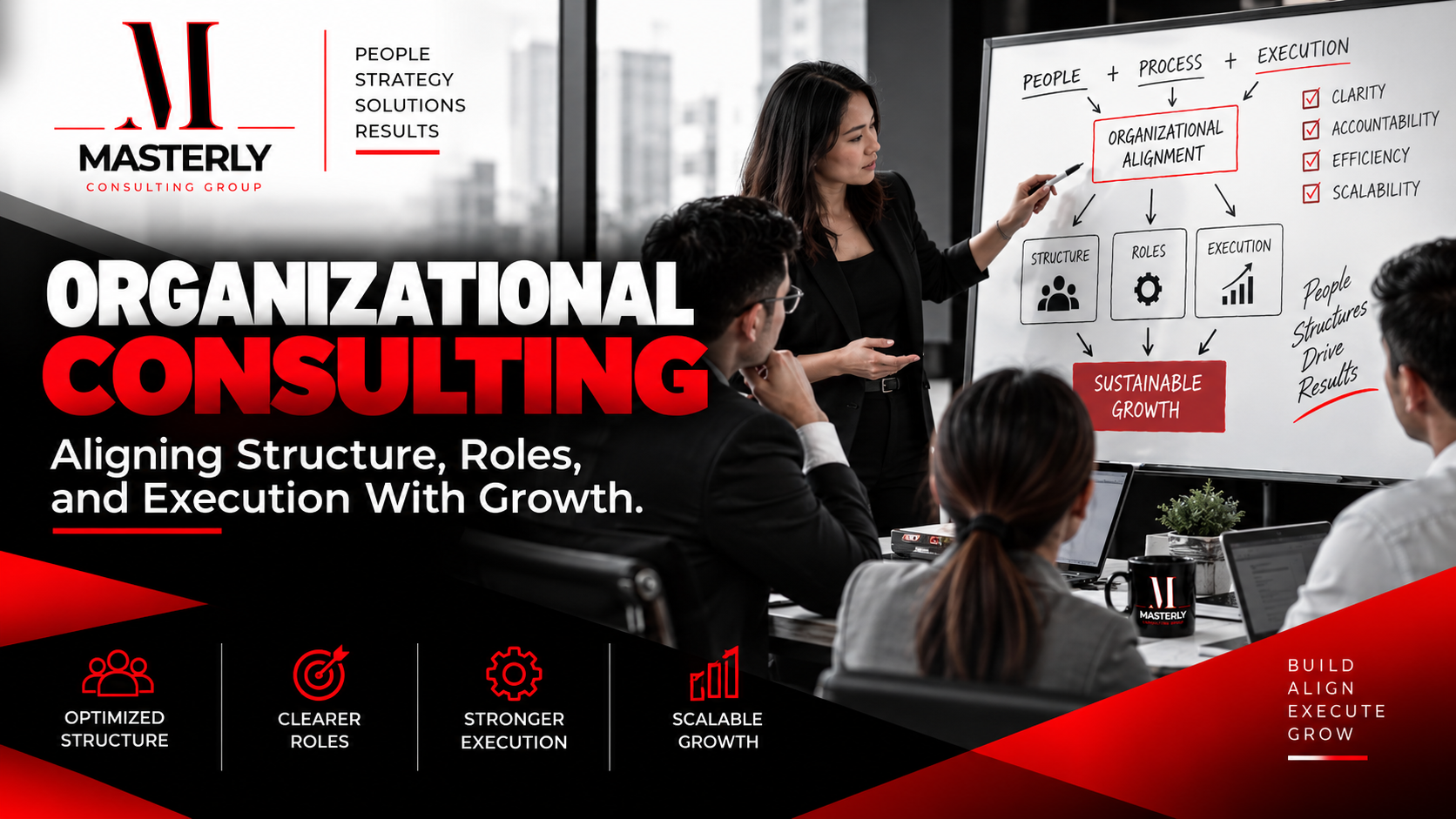
Strategic management connects the organization's direction to strategic priorities, resource allocation, operating goals, accountability, performance measures, and execution. It helps leadership move beyond describing where the organization wants to go and establish what that direction means for actual decisions.
It also gives executives and spokespersons something clearer to communicate.
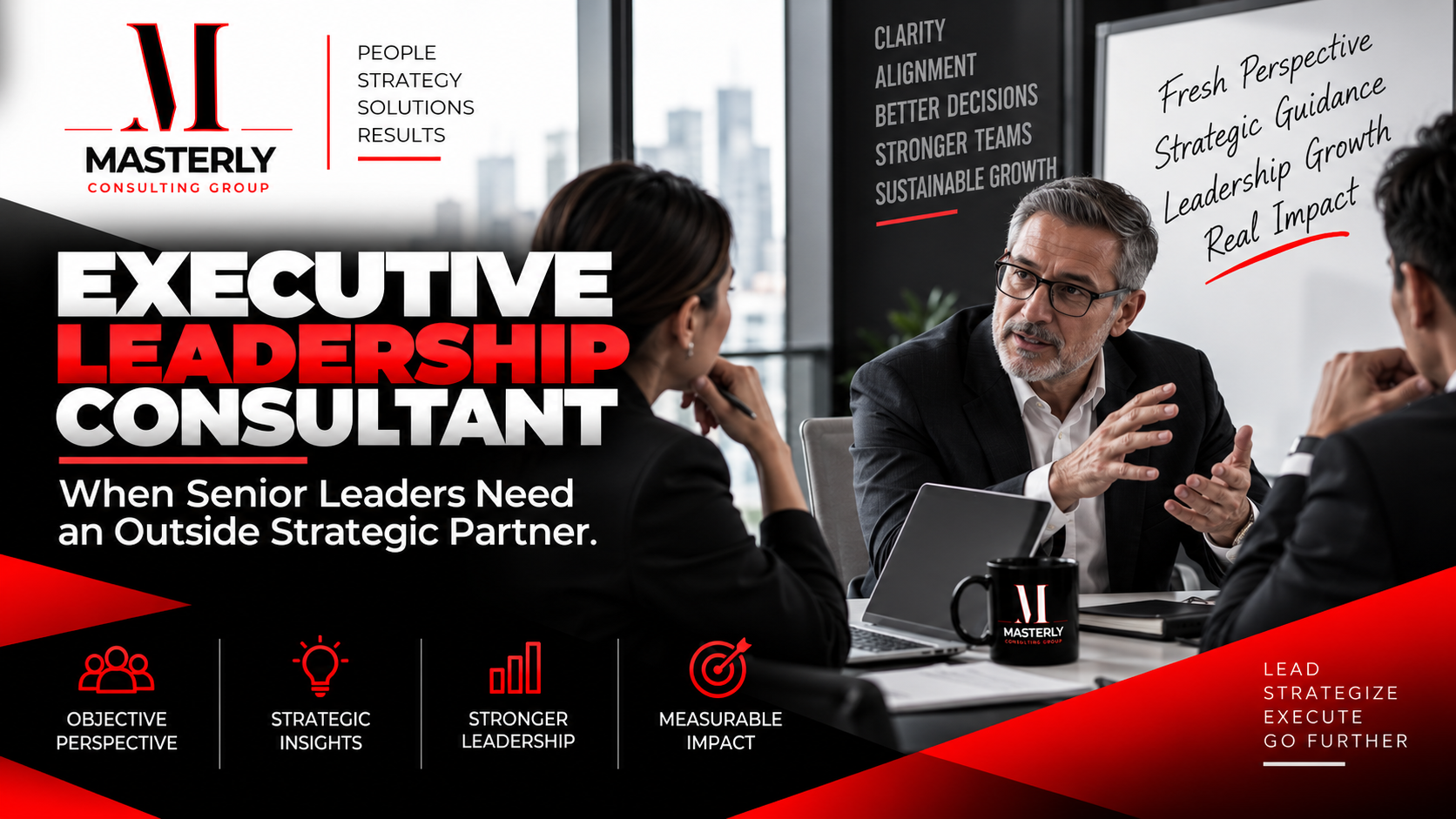
Masterly Consulting Group works with organizations on strategic planning, business consulting, executive coaching, implementation, and executive communication. Its executive media training is designed for leaders whose communication can affect organizational reputation, stakeholder confidence, and public trust.
Strategic Management Solves the Gap Between Direction and Execution
Many organizations do not lack ideas.
They lack translation.
Leadership may decide that the company needs to improve customer experience, expand into another market, modernize technology, control costs, or strengthen its competitive position.
Those are useful directions.
But employees cannot execute "improve customer experience" without additional decisions.
Which customer problems receive priority?
Which departments are responsible?
What resources will move?
What work becomes less important?
How will leadership measure progress?
Who is accountable when execution falls behind?
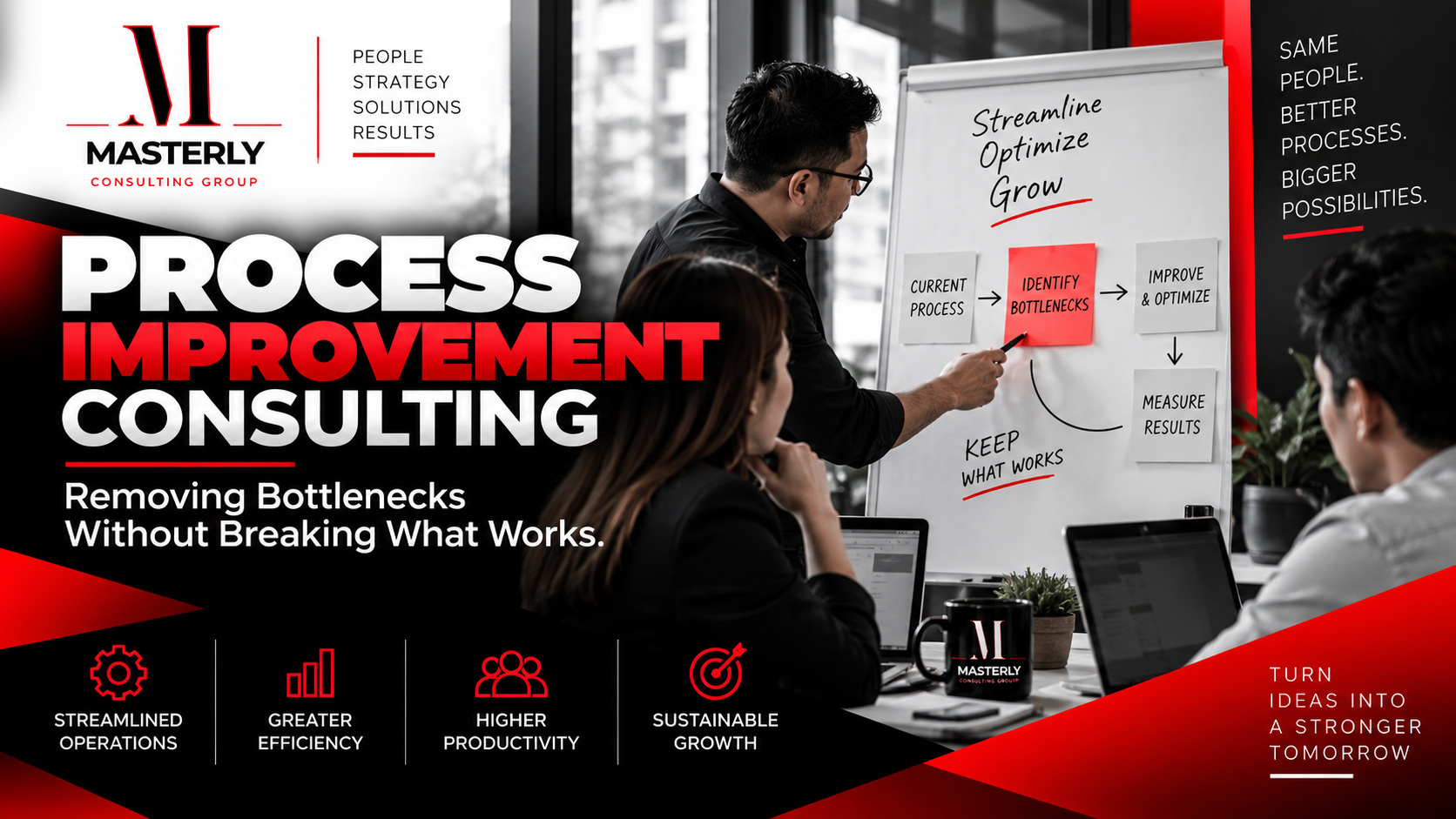
A practical strategic management process connects broad direction with these operating questions.
Without that connection, strategy can become something leaders discuss while the rest of the organization continues working from yesterday's priorities.
Strategic Priorities Tell the Organization What Matters Most
A long list of priorities is often a sign that leadership has not actually prioritized.
Organizations have limited time, money, talent, technology, and leadership attention.
That means strategy involves choices.
Strategic priorities identify which objectives deserve focused attention because they support the organization's larger direction.
Consider a growing professional services company that wants to expand geographically, improve customer retention, implement new technology, hire more employees, develop new services, and reduce operating costs.
Each goal may have value.
Trying to treat every goal as equally urgent can divide resources and create conflicting instructions.
Strategic management forces a harder conversation.
What matters most now?
What can wait?
What depends on something else happening first?
What should the organization stop doing?
These decisions create a clearer foundation for execution and communication.
Resource Allocation Reveals What the Organization Really Prioritizes
A strategy becomes more meaningful when resources follow it.
Leadership may describe an initiative as a top priority, but employees will notice when it receives little budget, insufficient staffing, or limited executive attention.
That disconnect can weaken confidence in the strategy.
Resource allocation connects priorities with practical capacity, and Strategic goals sit above day-to-day operating priorities when leaders decide what deserves focused attention.
Resources can include money, employees, technology, outside expertise, leadership attention, and time.
For example, a company may say digital transformation is a strategic priority.
That statement becomes more concrete when leadership decides which systems require investment, which managers will own implementation, what skills are needed, what other project work may be delayed, and how progress will be evaluated.
Effective planning also depends on assessing capacity, defining the resources required, and using the right tools to track usage as conditions change.
Teams also need clear expectations, because it is vital that budget, staffing, and timelines are communicated early.
Masterly Consulting Group currently identifies budgeting and resource allocation optimization within its consulting work for educational institutions and strategic planning among its broader consulting areas.
The larger principle applies across organizations.
Strategy becomes operational when leaders make choices about where resources will go.
Operating Goals Give Teams Something They Can Act On
Long-term direction provides purpose.
Operating goals bring that direction closer to daily work.
Suppose leadership wants to improve the customer experience.
Sales may need one set of goals.
Operations may need another.
Technology may need to address system problems.
Management may need to change processes or responsibilities.
The strategic objective remains shared, but each part of the organization needs enough clarity to understand its contribution.
This is also where executive communication matters.
A leader who tells employees, "Customer experience is our priority," has communicated a direction.
A leader who can explain what is changing, why it matters, who owns the work, and how progress will be evaluated has communicated something people can use.
Accountability Keeps Strategy From Becoming Everyone's Job and Nobody's Job
A strategic initiative can involve many people while still requiring clear ownership.
That is the role of accountability.
Who owns the result?
Who makes the important decisions?
Who provides support?
Who tracks progress?
Who addresses problems when execution falls behind?
Without clear accountability, teams can spend significant time discussing work without knowing who has authority to move it forward.
Masterly Consulting Group's current strategic-planning content emphasizes connecting priorities with ownership, timing, and decision-making rather than allowing strategy to stop with the planning document.
This becomes especially important when work crosses departments.
Shared participation should not mean unclear ownership.
Performance Measures Help Leaders Separate Activity From Progress
Busy teams can create the appearance of execution.
Meetings happen.
Reports are produced.
Projects are launched.
Employees complete tasks.
But activity alone does not tell leadership whether the strategy is working as intended.
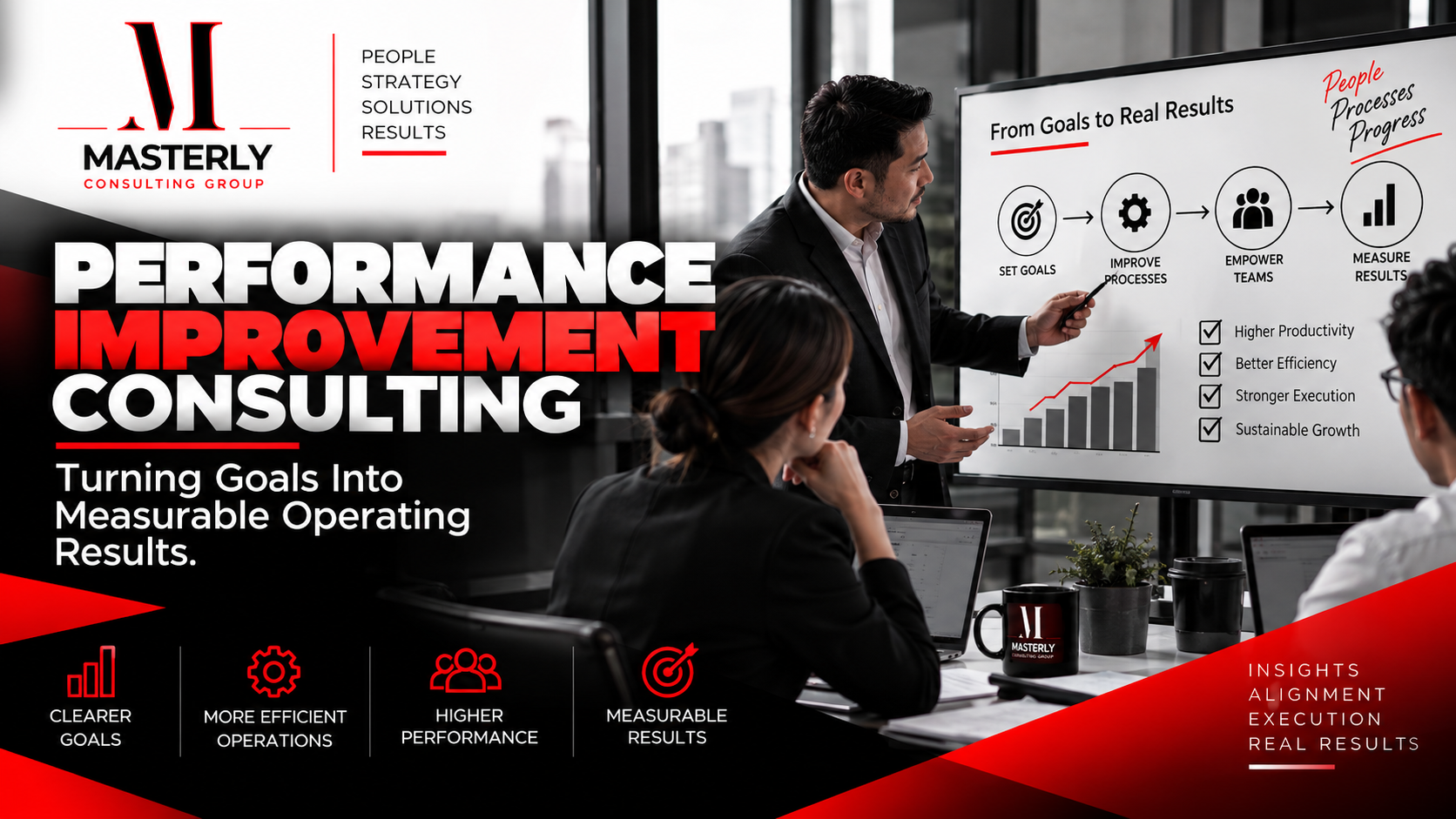
Useful performance measures connect work with the outcomes leadership needs to evaluate.
The appropriate measures depend on the organization and strategic objective. A growth initiative may require different measures from an operational-efficiency initiative or customer-experience program.
The important question is not how many metrics the company can collect.
It is whether leadership has enough useful information to evaluate progress and make decisions.
Performance measures should help answer questions such as:
Are we moving toward the intended objective?
Where is execution falling behind?
Are resources producing the expected progress?
Has something changed that requires leadership to reconsider the plan?
Measurement becomes useful when it supports decisions rather than simply filling a dashboard.
Execution Is Where Strategic Management Becomes Visible
Strategy can sound impressive in a leadership presentation.
Execution reveals whether the organization can actually use it.
Masterly Consulting Group's published consulting process currently moves from an initial consultation to strategic planning, implementation and support, and ongoing evaluation. Its strategic-planning work also emphasizes moving organizational priorities toward decisions, ownership, and execution.
That sequence matters.
Organizations operate in changing environments.
A plan created six months ago may encounter new customer demands, staffing challenges, competitive changes, technology issues, or financial pressures.
Strategic management gives leadership a structure for evaluating those developments against the organization's priorities.
The question becomes more useful than "Are we following the plan?"
Leadership can ask, "Does this decision still support the strategy?"
Strategic Management Also Improves Executive Communication
Executives often communicate strategy to several audiences.
Employees want practical direction.
Boards want confidence in leadership decisions.
Customers may want stability.
Partners may need to understand changing priorities.
Journalists may ask why the organization made a major decision.
A spokesperson who only knows the headline strategy may struggle when questions move beneath the surface.
Why this priority?
Why now?
What changes?
What is leadership doing differently?
How will the organization know whether the decision is working?
These questions require more than polished delivery.
They require strategic understanding.
Masterly Consulting Group's executive media training includes communication strategy, key messages, talking points, audience expectations, crisis communication, stakeholder communication, camera presence, and realistic practice
.
That makes media preparation especially valuable when executives need to communicate important strategic decisions clearly and consistently.
A Strategy Can Lose Credibility When Leaders Tell Different Stories
Imagine a company announcing a major expansion.
The CEO describes it as a growth strategy.
The CFO emphasizes efficiency.
An operations leader says the change is primarily about improving service.
Employees hear that the initiative will change internal responsibilities.
None of those statements must be false for the overall message to become confusing.
The organization may simply lack a shared understanding of the strategic decision.
This is where strategic management and executive communication meet.
Leaders should understand the strategic priorities, operating implications, accountability, and intended outcomes well enough to explain them consistently.
That does not mean every executive needs identical wording.
It means the underlying organizational story should remain coherent.
High-Visibility Communication Can Expose Weak Strategic Management
Media interviews and public appearances can reveal strategic gaps that internal meetings have allowed leaders to avoid.
A journalist may ask why resources were shifted.
A board member may ask who owns the initiative.
Employees may want to know what the strategy means for their roles.
A reporter may ask how leadership will measure success.
If those questions produce conflicting answers, the communication problem may reflect a deeper management problem.
Executive media preparation provides a controlled environment for identifying these weaknesses before they become public.
Masterly Consulting Group states that its executive media training begins with understanding the organization, communication goals, upcoming interviews, and sensitive issues. It then works with leadership on communication priorities, messages, audience expectations, and realistic preparation.
The purpose is not simply to make leaders sound polished.
It is to help them communicate with authority because they understand the organizational decisions behind the message.
Strategic Management Requires a Repeatable Operating Rhythm
A strategy should not disappear between annual planning sessions.
Leadership needs a reasonable way to revisit priorities, examine performance, resolve problems, and make new decisions.
That creates an operating rhythm around the strategy.
The organization can evaluate whether priorities remain appropriate, whether resources need to change, whether performance measures show progress, and whether accountability remains clear.
Masterly Consulting Group's current consulting process includes ongoing evaluation after implementation, while its recently published operating-model guidance emphasizes governance, accountability, decision ownership, and management rhythms that keep priorities moving.
This helps prevent strategy from becoming a static document.
Strategic management is an ongoing leadership responsibility.
Masterly Consulting Group Connects Strategy, Leadership, and Execution
Organizations do not always need another planning exercise.
Sometimes they need help translating the direction they already have into priorities and decisions that leaders and teams can use.
Masterly Consulting Group currently provides consulting across strategic planning, business growth, operational improvement, executive coaching, and related organizational challenges. Its process includes customized strategic planning followed by implementation support and ongoing evaluation.
For leaders preparing to communicate high-stakes organizational decisions, Masterly Consulting Group also provides customized executive media training. The program can include communication strategy, interview preparation, realistic practice, crisis communication, camera presence, and stakeholder communication.
The combination matters when an organization needs both operational clarity and leaders capable of explaining that direction with confidence.
The objective is not more strategy language.
It is a clearer connection between direction, decisions, ownership, communication, and execution.
Connecting Company Strategy to Operational Objectives
A strong company strategy connects the organization's vision and mission with clear business objectives and operational objectives that teams can understand and achieve. Leaders need a practical framework for setting goals that remain aligned with the organization's goals, available resources, and core competencies. This is especially essential when market conditions, competitive threats, changing industry demands, and other external factors create uncertainty or risk. Leadership should be able to analyze relevant data and business insights so decisions reflect both the present environment and the organization's long-term direction. The importance of this connection extends beyond planning because it helps leaders explain the benefits of strategic decisions while giving teams clearer direction for execution.

Frequently Asked Questions About Strategic Management
What is strategic management?
Strategic management connects an organization's long-term direction with priorities, resource decisions, operating goals, accountability, measurement, and execution.
What is the strategic management process?
A strategic management process creates a continuing connection between organizational direction, priorities, implementation, performance review, and leadership decisions. The exact process should reflect the organization's circumstances.
How are strategic priorities different from general goals?
Strategic priorities identify the objectives leadership has decided deserve focused attention. General goals may describe desired outcomes without establishing the same level of organizational priority.
Why does resource allocation matter to strategy?
Resource allocation determines where the organization commits time, money, talent, technology, and leadership attention. A stated priority without adequate resources may be difficult to execute.
What role does accountability play?
Accountability clarifies ownership. Teams should understand who owns important outcomes, decisions, and follow-through.
What are performance measures?
Performance measures provide information leadership can use to evaluate whether execution is moving toward intended objectives. The right measures depend on the strategy and organization.
Is strategic management the same as strategic planning?
No. Strategic planning helps establish direction and priorities. Strategic management extends into operating decisions, resource choices, accountability, measurement, and ongoing execution.
Can executive media training support strategic communication?
Yes. Masterly Consulting Group's current executive media training includes communication strategy, audience expectations, stakeholder communication, interview preparation, and realistic practice for leaders and organizational spokespersons.
Who does Masterly Consulting Group's executive media training serve?
The current service is designed for executives, attorneys, university leaders, organizational spokespersons, subject-matter experts, and other leaders whose communication affects organizational reputation, stakeholder confidence, or public trust.
Discuss How to Translate Strategy Into an Operating Plan Leaders and Teams Can Execute
Your organization may already know where it wants to go.
The harder challenge is turning that direction into strategic priorities, resource allocation, operating goals, accountability, performance measures, and consistent execution.
That is where strategic management creates business value.
Masterly Consulting Group works with organizations on strategic planning, implementation, executive coaching, and business consulting. For leaders who must explain important organizational decisions publicly, the company also provides executive media training built around strategic preparation, communication priorities, audience expectations, realistic practice, and stakeholder communication.
If your strategy makes sense in the boardroom but becomes unclear when leaders must explain what happens next, it may be time to connect planning, operating decisions, and executive communication more closely.
Call Masterly Consulting Group at (972) 236-5051 to discuss how to translate strategy into an operating plan leaders and teams can execute. The current contact page confirms this number.