Protect Your School’s Reputation With Expert Employee Handbook Services
Why a School’s Reputation Depends on More Than Academic Performance
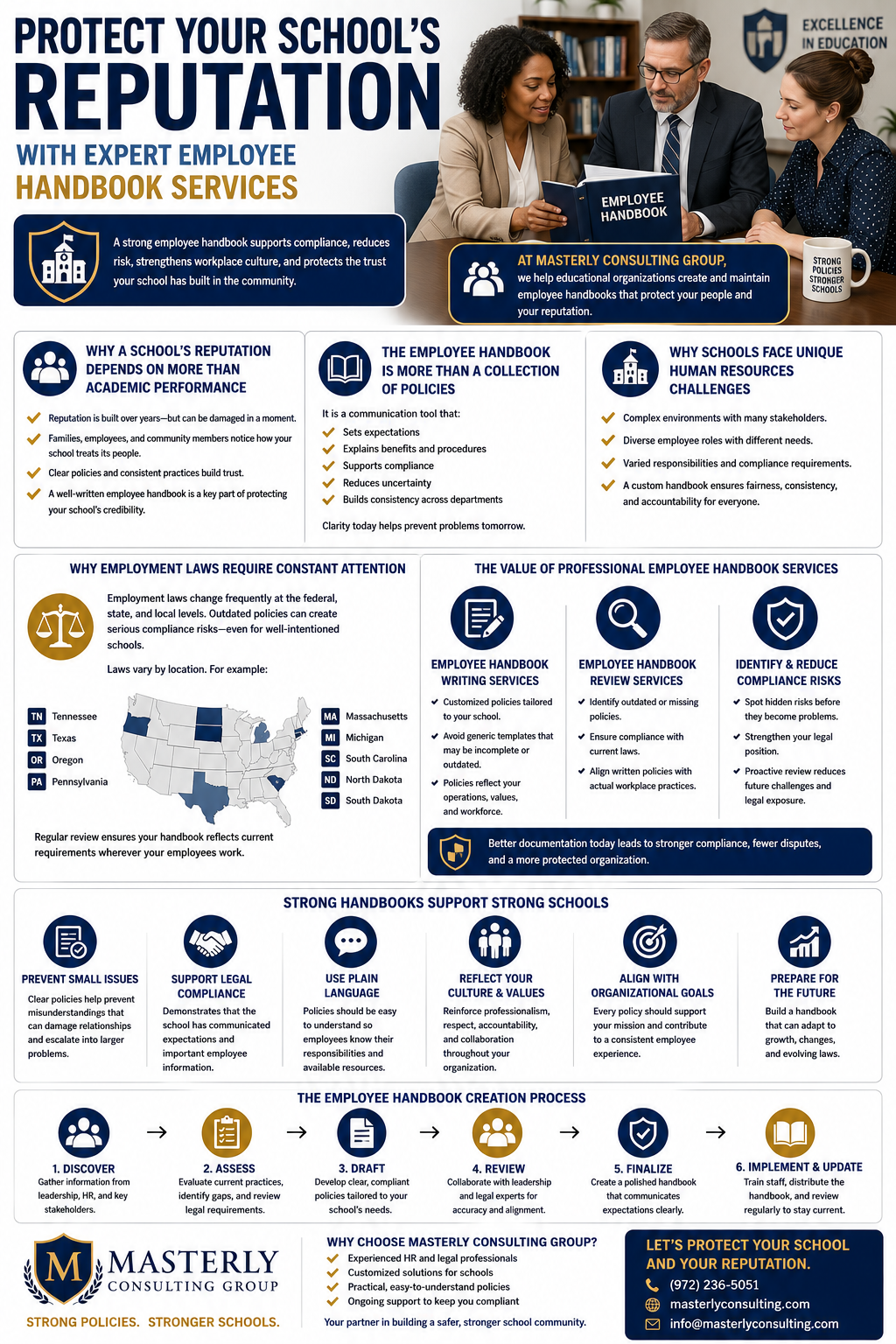
A school's reputation is built over many years but can be damaged much faster than most leaders expect. Families, employees, students, and community members often judge an organization not only by educational outcomes but also by how it manages workplace concerns, employee expectations, and internal operations. When confusion exists regarding workplace policies, misunderstandings can quickly develop into larger issues that affect trust and credibility.
Many school administrators focus heavily on academics, student programs, and community engagement. While those priorities are important, effective human resources management plays a major role in protecting relationships and supporting long-term success. One of the most valuable tools available to educational organizations is a well-written employee handbook.
An employee handbook does much more than provide rules. It establishes expectations, communicates values, supports legal compliance, and helps employees understand their responsibilities. When created properly, a handbook becomes an important part of a school's risk management strategy.
At Masterly Consulting Group, we help educational organizations strengthen their operations through professional employee handbook services designed to support compliance, consistency, and workplace culture.
The Employee Handbook Is More Than a Collection of Policies
Some organizations treat their handbook as a document that sits on a shelf and is rarely reviewed. In reality, a comprehensive handbook serves as one of the most important communication tools within an organization.
Employees often look to the handbook when questions arise about benefits administration, attendance, workplace conduct, leave policies, disciplinary procedures, and other employment-related matters. A detailed employee handbook can help reduce uncertainty while creating greater consistency across departments.
When expectations are communicated clearly, employees are better equipped to make informed decisions. This clarity can help reduce misunderstandings and strengthen workplace relationships.
Why Schools Face Unique Human Resources Challenges
Educational organizations operate in environments that are often more complex than many private businesses. Schools must balance the needs of employees, students, parents, governing bodies, and community stakeholders.
These competing responsibilities create unique challenges when developing workplace policies. Administrators must ensure that policies support educational goals while remaining aligned with legal requirements and operational realities.
Because schools often employ professionals with varying responsibilities, a one-size-fits-all approach may not adequately address organizational needs.
Diverse Employee Roles Require Clear Guidance
Schools employ teachers, administrators, support staff, maintenance personnel, transportation teams, and many other professionals. Each group may encounter different workplace situations and compliance requirements.
Without clear guidance, inconsistencies can develop in how policies are interpreted and applied. Over time, those inconsistencies may contribute to employee dissatisfaction or potential disputes.
A custom employee handbook helps establish a common framework that supports fairness and accountability throughout the organization.
The Connection Between HR Documentation and Reputation Management
Reputation is often influenced by internal operations just as much as public perception. Employees who understand policies and expectations are generally more likely to feel supported and informed.
When workplace concerns arise, administrators can refer to established procedures outlined within the handbook. This consistency helps demonstrate professionalism and organizational stability.
Strong documentation also signals to employees, parents, and community members that leadership takes compliance and accountability seriously.
Preventing Small Issues From Becoming Larger Problems
Many workplace disputes begin with simple misunderstandings. Employees may interpret expectations differently or remain unaware of certain workplace policies.
A compliant employee handbook can help address these challenges before they escalate. By providing clear explanations and practical guidance, organizations reduce the likelihood of confusion that can damage relationships.
Proactive communication is often one of the most effective ways to protect a school's reputation.
Why Employment Laws Require Constant Attention
One of the biggest challenges facing employers today is the fact that employment laws change frequently. Regulations that affect workplace policies may evolve at the federal, state, and local levels.
Schools that rely on outdated policies may unknowingly expose themselves to compliance risk. Even well-intentioned organizations can encounter problems if their documentation no longer reflects current requirements.
Regular handbook review helps organizations identify gaps before they create operational or legal concerns.
Federal and State Requirements Continue to Evolve
Federal regulations frequently impact workplace obligations involving leave, wages, accommodations, discrimination, and employee rights. At the same time, state laws may impose additional responsibilities.
Organizations operating across multiple states often face even greater complexity. Requirements in Tennessee Texas operations may differ significantly from obligations in Oregon Pennsylvania locations.
Similarly, organizations with employees in Massachusetts Michigan, South Carolina, North Dakota, or South Dakota may need policies tailored to local employment laws and regulatory requirements.
The Value of Professional Employee Handbook Writing Service Solutions
Many administrators attempt to create policies internally using templates or generic online resources. While these materials may appear helpful initially, they often fail to address organization-specific concerns.
A professional employee handbook writing service provides customized guidance based on the organization's structure, operations, and workforce needs. This approach helps ensure that policies reflect actual workplace practices.
Professional development of a custom handbook can also reduce the likelihood of conflicting or outdated provisions.
Avoiding Generic Handbook Templates
Templates may contain language that is irrelevant to the organization's operations or inconsistent with applicable laws. In some cases, generic documents include provisions that create unintended obligations.
Experienced HR professionals understand how to adapt policies to fit a specific industry and organizational environment. This level of customization often provides greater protection than relying on generic language.
The goal is to create a handbook that accurately reflects the employer's expectations and workplace realities.
How Employee Handbook Review Service Programs Add Value
Even organizations that already have documentation in place may benefit from an employee handbook review service. Existing policies often contain outdated language or fail to address recent legal developments.
A current employee handbook should be reviewed periodically to ensure continued compliance and operational effectiveness. Regular reviews help identify areas that require updates or clarification.
This proactive approach can reduce future challenges while supporting stronger HR operations.
Identifying Hidden Compliance Risks
Certain risks are not immediately obvious when reviewing policies internally. Legal experts and HR consultants often recognize issues that may otherwise go unnoticed.
An employee handbook review may reveal inconsistencies between written policies and actual workplace practices. Addressing those issues early can help strengthen organizational compliance efforts.
Identifying concerns before they become problems is one of the most valuable aspects of professional review services.
Supporting Legal Compliance Through Better Documentation
Legal compliance is one of the primary reasons organizations invest in employee handbook services. Proper documentation helps demonstrate that the employer has established expectations and communicated important workplace information.
While a handbook cannot eliminate all risk, it can help support compliance efforts when developed and maintained appropriately. This is particularly important for schools that must navigate a variety of employment-related obligations.
A compliant handbook serves as an important foundation for broader HR solutions and organizational governance.
The Importance of Plain Language Policies
Policies should be written in plain language whenever possible. Employees are far more likely to understand expectations when policies are clear and easy to follow.
Overly technical language can create confusion and reduce the effectiveness of the document. Clear communication helps employees understand both their responsibilities and available resources.
The best policies are often those that communicate complex requirements in a practical and accessible manner.
Building a Handbook That Reflects Workplace Culture
A handbook should do more than satisfy compliance requirements. It should also reinforce the values and workplace culture that leadership wants to promote.
Schools often strive to create environments built on professionalism, respect, accountability, and collaboration. The handbook provides an opportunity to communicate those principles consistently.
When employees understand organizational values, they are better positioned to contribute positively to the workplace environment.
Aligning Policies With Organizational Goals
Policies should support the organization's mission rather than simply satisfy administrative requirements. Every section of the handbook should contribute to a consistent employee experience.
This alignment helps ensure that workplace expectations support educational objectives and organizational priorities.
A handbook that reflects the school's values often becomes a stronger tool for employee engagement.
Understanding the Employee Handbook Creation Process
The handbook creation process involves more than compiling policies into a single document. Effective development requires thoughtful planning, legal review, and collaboration between stakeholders.
Organizations must evaluate current practices, identify operational needs, and determine how policies should be structured. This process often uncovers opportunities for improvement that extend beyond documentation.
The result is a more organized and comprehensive handbook that supports both compliance and operational consistency.
Gathering Information From Key Stakeholders
Successful handbook development often involves input from leadership, human resources personnel, department managers, and other decision-makers.
These conversations help ensure that policies accurately reflect workplace realities. They also help identify areas where expectations may need clarification.
Collaboration strengthens the final document and promotes greater organizational alignment.
Why Experienced HR Professionals Make a Difference
Creating a compliant employee handbook requires more than basic policy knowledge. Experienced HR professionals understand how employment practices, compliance requirements, and workplace culture interact.
They can evaluate whether policies support both the employer and employees while addressing practical operational concerns. Their expertise helps organizations avoid common mistakes that may increase risk.
Professional guidance often leads to stronger documentation and more effective implementation.
Combining Human Resources Knowledge With Legal Expertise
The most effective handbook services often combine HR best practices with legal expertise. This integrated approach helps ensure that policies remain practical while addressing relevant laws.
Employment attorneys, HR consultants, and compliance professionals each bring valuable perspectives to the process. Together, they help create documentation that supports long-term organizational success.
Schools benefit when policies are both legally informed and operationally realistic.
Preparing for Growth and Future Changes
Organizations evolve over time. New programs, staffing changes, technological developments, and legal updates can all affect workplace expectations.
A handbook should be designed with flexibility in mind. Administrators should have the ability to update policies as organizational needs change.
Maintaining a handbook current and relevant helps ensure that documentation continues to support the school's goals well into the future.
Why Schools Need More Than a Basic Handbook
Many organizations begin with a basic handbook that covers only a limited number of workplace topics. While this may seem sufficient initially, schools often discover that simple templates fail to address the complexities of modern employment practices.
A comprehensive handbook provides greater clarity and support for employees and administrators alike. It helps address expectations regarding conduct, communication, benefits, workplace procedures, and compliance obligations.
The more detailed and relevant the handbook becomes, the more useful it is as a practical workplace resource.
Moving Beyond Generic Policies
Generic policies often leave room for interpretation. When employees interpret expectations differently, inconsistencies can emerge throughout the organization.
A custom employee handbook allows schools to create policies that reflect their unique environment, values, and operational goals. This customization helps reduce confusion and improve consistency.
Clear expectations support stronger working relationships and a more predictable workplace experience.
The Importance of State Specific Handbooks
Employment requirements can vary significantly from one jurisdiction to another. Organizations with operations in multiple states frequently encounter different compliance obligations.
State specific handbooks help ensure that workplace policies align with local requirements. What works in one location may not satisfy legal requirements elsewhere.
Schools operating across multiple states often benefit from customized documentation that reflects the unique obligations of each jurisdiction.
Addressing Local Employment Laws
Local employment laws can affect hiring practices, leave policies, wage requirements, workplace accommodations, and numerous other employment-related matters.
A handbook should account for applicable local policies and compliance requirements rather than relying solely on broad federal standards.
This attention to detail helps reduce compliance risk and supports more effective human resources management.
Staying Ahead of Federal and State Regulations
Federal and state regulations continue to evolve, making ongoing handbook maintenance essential. Policies that were compliant a few years ago may no longer reflect current expectations.
Organizations that fail to update documentation may inadvertently expose themselves to unnecessary risk. Regular reviews help ensure that policies remain aligned with relevant laws.
A proactive approach often proves far more effective than responding to issues after they arise.
Why Ongoing Updates Matter
Employment laws change frequently, and organizations must adapt accordingly. Waiting too long to review policies can create gaps between written expectations and legal requirements.
Keeping a handbook current demonstrates a commitment to compliance and responsible governance. Employees also benefit from having access to accurate and up-to-date information.
Consistent updates help preserve the handbook's value as a trusted workplace resource.
The Role of Handbook Builders in Modern HR Management
Technology has introduced new tools that support employee handbook creation and maintenance. An employee handbook builder can help organizations organize content and manage revisions more efficiently.
However, technology alone cannot replace professional review. Automated systems may assist with formatting and organization, but they do not provide the same level of legal expertise or strategic guidance.
The most effective approach often combines technology with experienced professional support.
Understanding the Limits of Automation
A handbook builder can be a useful starting point, but organizations should be cautious about relying exclusively on automated solutions.
Templates and software programs may not fully account for industry-specific concerns, local employment laws, or unique workplace practices.
Professional oversight helps ensure that documentation remains accurate, relevant, and tailored to organizational needs.
Employee Handbook Services Support Consistency
Consistency is one of the most important benefits provided by quality employee handbook services. Employees perform better when expectations are communicated clearly and applied fairly.
A handbook creates a common reference point that helps managers and employees understand workplace standards. This consistency can reduce disputes and strengthen workplace relationships.
Schools that maintain consistent policies often experience fewer misunderstandings and greater organizational stability.
Helping Managers Apply Policies Fairly
Managers frequently rely on handbook guidance when making employment-related decisions. Clear documentation helps ensure that policies are applied consistently throughout the organization.
Consistency not only supports employee trust but also strengthens the organization's position when questions arise.
Fair treatment contributes to a healthier workplace culture and improved employee morale.
Strengthening HR Operations Through Better Documentation
Strong documentation supports effective HR operations in countless ways. Human resources professionals often use handbook policies to guide onboarding, performance management, and employee communications.
A well-developed handbook serves as an important foundation for daily operations. It helps ensure that employees receive consistent information regarding workplace expectations.
This consistency improves efficiency and supports better organizational outcomes.
Supporting New Employees From Day One
New employees often rely heavily on handbook materials during their first weeks with an organization. The handbook helps introduce workplace expectations and organizational values.
Providing clear guidance early helps employees feel informed and supported. It also establishes a foundation for future success.
Organizations that invest in onboarding resources often experience stronger employee engagement and retention.
The Importance of Acknowledgment Forms
A handbook is most effective when employees understand its contents and acknowledge receiving it. Acknowledgment forms provide documentation that employees have received important workplace information.
These forms help demonstrate that policies were communicated appropriately. They can also support organizational consistency during future discussions involving workplace expectations.
Documentation remains an important component of effective risk management.
Creating Clear Communication Channels
Acknowledgment forms are not simply administrative paperwork. They serve as an opportunity to encourage communication and answer questions.
Employees who understand workplace expectations are better positioned to comply with policies and procedures.
This clarity benefits both the employer and the employees.
Addressing Complex Policies With Expert Guidance
Some workplace topics require more detailed attention than others. Issues involving leave administration, accommodations, benefits administration, technology use, and employee conduct often involve complex policies.
Professional guidance helps organizations develop policies that are practical, understandable, and aligned with legal requirements.
Schools frequently benefit from having experienced HR professionals review these areas carefully.
Balancing Clarity and Compliance
Policies should be comprehensive without becoming overwhelming. Employees are more likely to use handbook resources when information is presented clearly.
The best documentation balances compliance needs with practical usability. This approach helps improve understanding while supporting organizational objectives.
Clear policies contribute to a stronger employee experience.
How Employee Handbook Review Protects Reputation
A school's reputation is closely connected to its internal operations. Employees often form opinions about leadership based on how workplace issues are handled.
An employee handbook review can help identify gaps, outdated language, and areas where policies no longer align with actual practices. Addressing these concerns proactively helps strengthen organizational credibility.
Strong documentation demonstrates professionalism and attention to detail.
Building Trust Through Transparency
Employees appreciate transparency regarding workplace expectations. Clear policies help eliminate uncertainty and create greater confidence in leadership decisions.
When organizations communicate openly and consistently, they foster stronger workplace relationships.
Trust remains one of the most valuable assets any educational organization can possess.
Why Small Businesses and Private Schools Benefit From Professional Services
Some leaders assume that employee handbook services are only necessary for large organizations. In reality, small businesses and private schools often face many of the same compliance challenges as larger employers.
Limited internal HR resources can make policy development particularly difficult. Professional support helps smaller organizations access expertise that may not exist internally.
This guidance often provides significant value while reducing administrative burdens.
Access to Specialized Knowledge
Professional handbook services provide access to experienced HR professionals, legal experts, and employment attorneys who understand evolving workplace requirements.
This knowledge helps organizations address challenges more effectively while maintaining compliance with applicable laws.
Access to specialized expertise can be especially valuable when resources are limited.
The Value of Ongoing Support
A handbook should not be viewed as a one-time project. Organizational needs change, regulations evolve, and workplace practices develop over time.
Ongoing support helps ensure that policies remain relevant and effective. Organizations that maintain regular review schedules are often better prepared to adapt to change.
Continuous improvement supports both compliance and operational success.
Maintaining Documentation Throughout the Year
Ongoing support may include handbook review, policy updates, renewal notice assistance, compliance monitoring, and guidance regarding emerging workplace issues.
These services help organizations stay compliant while reducing the likelihood of unexpected problems.
Regular attention to documentation strengthens long-term organizational resilience.
Unlimited Revisions Can Improve Long-Term Value
Workplace policies frequently require refinement as organizations grow and evolve. Unlimited revisions can provide flexibility when updates become necessary.
Rather than treating policies as static documents, schools can view them as living resources that support changing operational needs.
This approach helps maintain accuracy and relevance over time.
Adapting to Organizational Growth
Growth often introduces new responsibilities, technologies, and workplace expectations. Policy updates may become necessary as new programs or departments are introduced.
Flexible revision options allow organizations to adjust documentation without unnecessary delays.
Adaptability helps ensure continued alignment between policies and actual workplace practices.
Protecting Relationships Through Proactive Planning
Strong employee relationships rarely develop by accident. They are often the result of thoughtful communication, clear expectations, and consistent leadership.
A compliant employee handbook helps support these goals by creating a shared understanding of workplace standards. Employees who know what is expected of them are more likely to feel confident and supported.
Proactive planning helps reduce uncertainty while strengthening organizational culture.
Supporting a Positive Workplace Experience
Employees want to work in environments where expectations are clear and policies are applied fairly. Effective documentation contributes to that experience.
Schools that invest in professional handbook services often create stronger foundations for collaboration, accountability, and trust.
These benefits extend far beyond compliance alone.
A Strong Handbook Supports Long-Term Success
Educational organizations face countless responsibilities, from serving students to managing employees and maintaining community trust. Amid these demands, workplace documentation can sometimes be overlooked.
Yet a custom handbook remains one of the most valuable investments a school can make. It supports legal compliance, strengthens workplace culture, improves communication, and helps protect organizational reputation.
When developed thoughtfully and maintained consistently, a handbook becomes a practical tool that supports long-term success.
Keeping Handbook Policies Aligned With Changing Regulations
An effective employee handbook should reflect current state and federal regulations as well as applicable federal and state laws that affect workplace operations. Schools and educational organizations face evolving compliance requirements, making regular policy reviews essential. A well-maintained handbook helps ensure the company's policies remain consistent with legal expectations while providing employees with clear guidance. Staying informed about changes in federal law can help reduce compliance concerns and strengthen organizational accountability.
Addressing Wage Requirements and Local Compliance Needs
Employment policies should clearly explain compensation practices, including minimum wage requirements that may vary based on location. In some cases, organizations must account for city specific policies that impose additional obligations beyond state standards. A comprehensive handbook includes federal requirements while also addressing local regulations that may affect employees. Taking a proactive approach helps schools remain compliant while creating a more consistent workplace experience.
Providing Flexible and Accessible Documentation
Many organizations prefer receiving handbook materials in an editable Word document format so future updates can be implemented efficiently. This flexibility allows administrators to revise policies as regulations change or operational needs evolve. During a subscription period that includes ongoing support, organizations can often make updates more easily and maintain current documentation. Accessible formats help ensure the handbook remains a practical resource rather than a document that becomes outdated over time.
Partner With Masterly Consulting Group for Employee Handbook Writing Services
Protecting your school's reputation starts with clear expectations, strong policies, and proactive planning. Whether you need a complete employee handbook writing service, an employee handbook review service, state specific handbooks, compliance updates, or guidance through the handbook creation process, having experienced support can make a meaningful difference.
At Masterly Consulting Group, we help educational organizations create comprehensive handbook solutions tailored to their unique needs. Our team works with schools to develop custom employee handbook documentation that supports workplace culture, legal compliance, HR management goals, and operational consistency. From policy development and handbook review to ongoing support and compliance guidance, we are committed to helping organizations build stronger foundations for success.
If you have questions about your current handbook, need assistance creating a compliant employee handbook, or want professional guidance regarding workplace policies, contact Masterly Consulting Group today. Call
(888) 209-4055 to book a free consultation. We are ready to answer your questions, discuss your goals, and help you create documentation that protects your organization and supports positive workplace relationships.