Level 10 Meeting: Agenda, Timing, and How to Run One Well
A Level 10 Meeting is a weekly 90-minute leadership team meeting from the Entrepreneurial Operating System (EOS®) that follows a fixed seven-part agenda: Segue, Scorecard, Rock Review, Customer/Employee Headlines, To-Do List, IDS (Identify-Discuss-Solve), and Rating/Wrap-Up. The format exists to drive focus, create accountability, and solve issues instead of circling around them.
Level 10 Meeting: The Short Answer
The name "Level 10" comes from how the meeting ends. Every participant rates the meeting from 1 to 10. Teams aim for consistent scores of 8 or above. When a rating drops below 8, someone asks, "What would have made this a 10?" That single question turns a weekly meeting into a built-in continuous improvement loop for leadership team communication.
Most meetings at growing companies follow a loose format: someone presents slides, discussion meanders, and decisions get deferred. A Level 10 Meeting replaces that pattern with a structured agenda that keeps reporting short and dedicates the bulk of meeting time to resolving issues. The result is ninety minutes that feel productive because they are.
EOS is the Entrepreneurial Operating System, a management operating system for growth companies. EOS® is a registered trademark of its respective owner. This article does not cover EOS basics in depth; for a broader overview of how the system works, see the EOS Worldwide overview.
The Standard Level 10 Meeting Agenda and Timing
The Level 10 meeting agenda includes seven sections, each with a fixed timebox. The same agenda runs every week. That consistency is what separates it from traditional meetings, where agenda items shift and priorities blur. A precise agenda reduces operational friction in meetings because everyone knows exactly what to expect before they walk in.
Here is the standard breakdown:
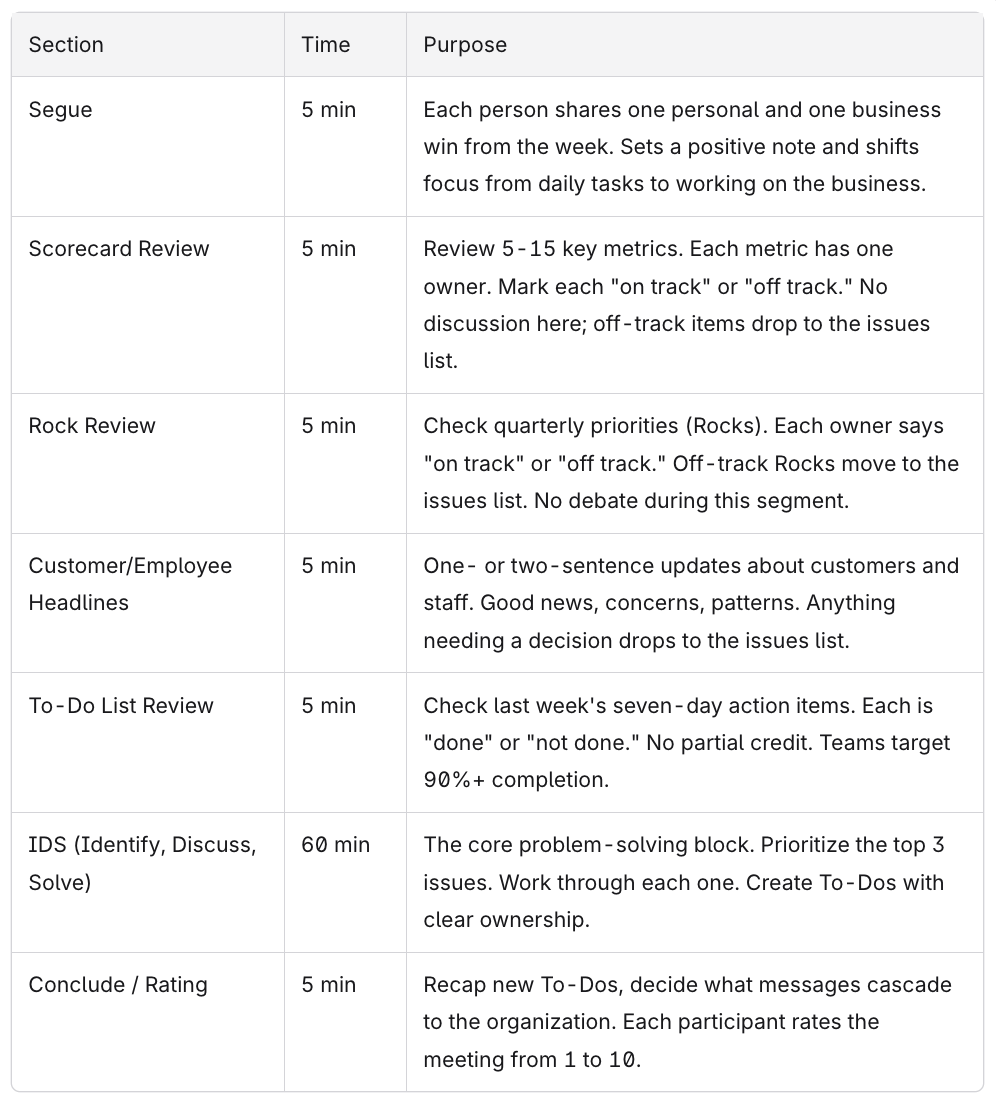
A structured agenda improves meeting productivity and focus because the first 30 minutes handle reporting fast, leaving 60 full minutes for time solving real issues. As teams mature, they sometimes shorten Segue or Headlines to three minutes and push extra time into IDS. The 60-minute IDS block is non-negotiable; cutting it undermines the meeting's purpose.
Compare this to an unstructured weekly leadership meeting: no fixed agenda, status updates that expand into 45-minute tangents, and a vague sense that "we'll follow up offline." The Level 10 format eliminates that drift by giving every topic a home in the agenda and a timebox to match.
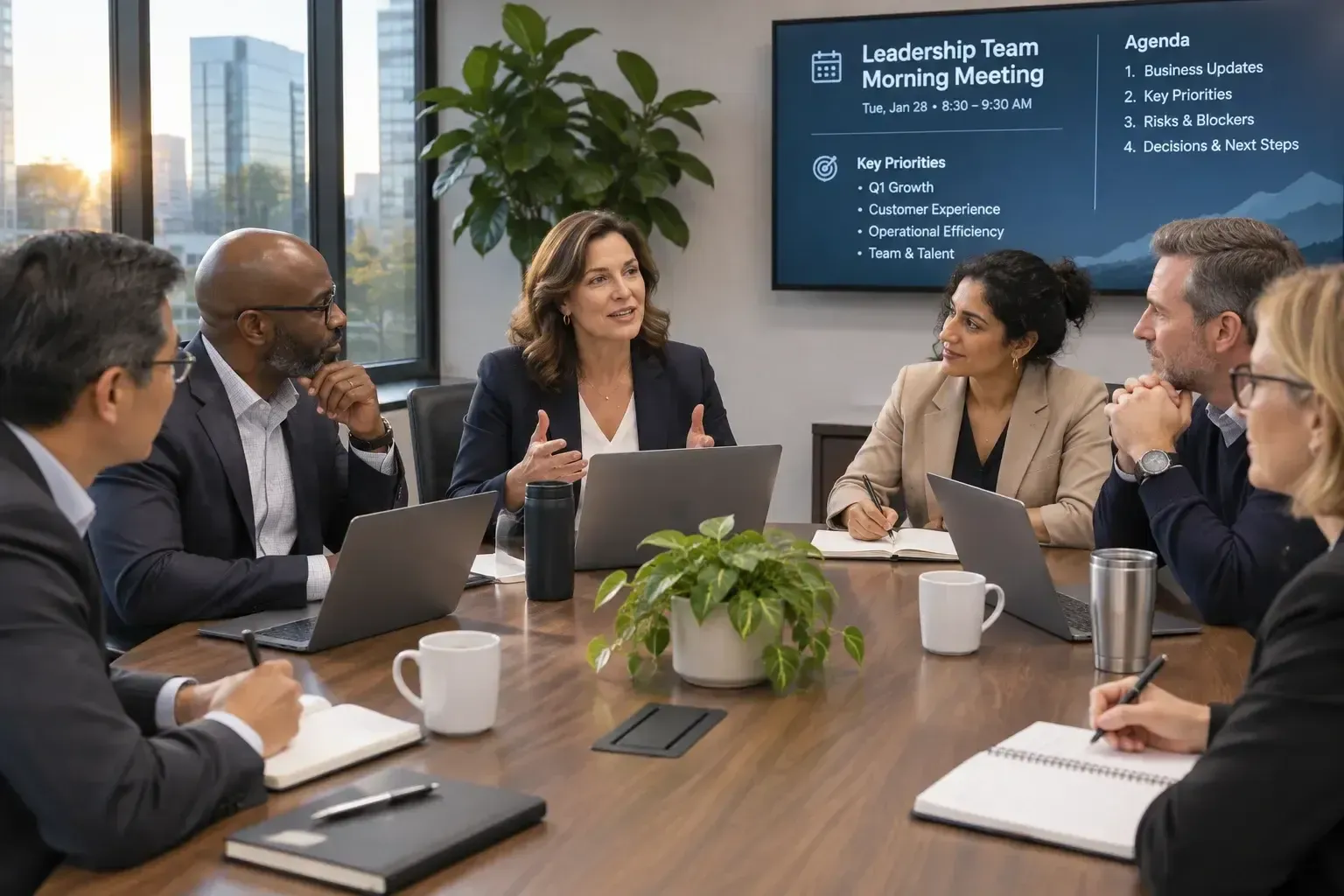
Using the Issues List and IDS: Identify, Discuss, Solve
The issues list and IDS process are the heart of every EOS Level 10 Meeting. This is where the team moves from reporting into effective problem solving, turning discussion into decisions and decisions into tasks.
What belongs on the issues list:
- Off-track scorecard metrics where root cause is unclear
- Rocks that are stuck or behind schedule
- Customer escalations or employee headlines that need a decision
- Cross-functional constraints or process blocks
- Any topic raised during earlier agenda sections that needs deeper discussion
How IDS works in practice:
Identify. The person who raised the issue states the root cause in one sentence. Not "sales are down," but "inbound demo requests have dropped 30% since July 2026 due to weaker paid traffic campaigns." The facilitator probes until the team agrees they are looking at the real issue, not a symptom.
Discuss. Everyone with a relevant perspective speaks. The facilitator keeps the conversation on topic and prevents anyone from repeating a point already made. No monologues; just clarity about what the options are.
Solve. The team commits to a specific action: who will do what by when. That commitment becomes a To-Do for next week's meeting. The issue either comes off the list or, if it needs longer work, converts into a Rock or process change.
At the start of IDS, review the full issues list and rank the top 3 most important issues. Tackle them in order. If time remains, move to issue four. Resist the urge to round-robin through low-impact topics. Solving one high-impact issue is worth more than touching five that do not matter.
A second example: "Customer escalations increasing" gets reframed to "product bugs rose 25% in the last two releases because QA staffing dropped by 40%." That reframing points directly at root cause and makes the solve step concrete.
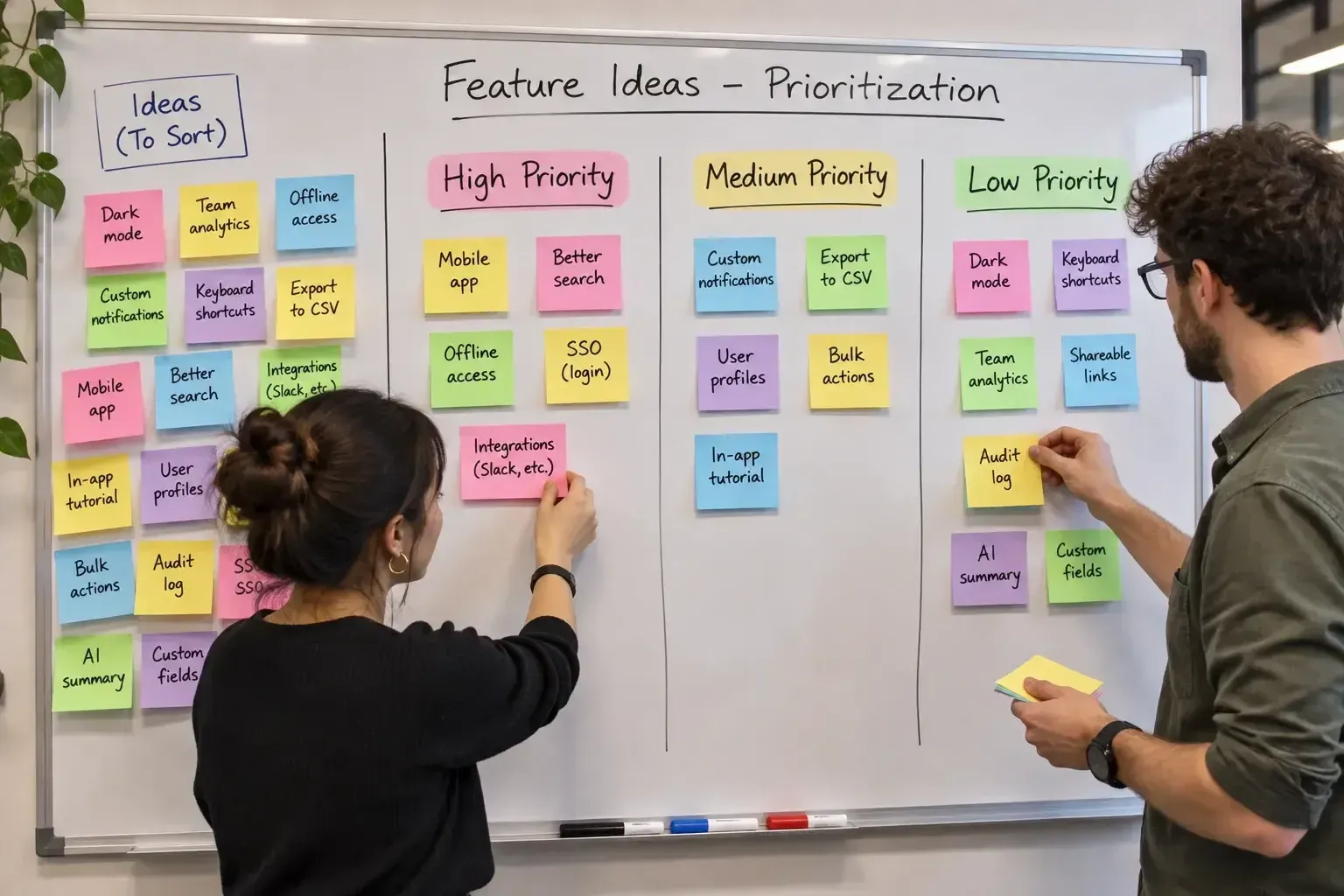
Roles, Scorecards, Rocks, and To-Dos That Keep the Meeting on Track
Strong Level 10 Meetings depend on clearly defined roles and a tight set of practical tools. To maintain the meeting's structure, it is essential to have designated roles such as facilitator and scribe.
Key roles:
- Meeting leader / facilitator: Often the Integrator or operations leader. Moves the team through the agenda, enforces timeboxes, redirects tangents.
- Timekeeper: Watches the clock and signals when segments approach their limit. Can be the facilitator or a separate person.
- Scribe / recorder: Updates the scorecard, rocks sheet, issues list, and to-do list in real time. Records ownership and deadlines for every new commitment.
Scorecard: The meeting includes a scorecard review of 5-15 key metrics that give a weekly pulse on business health: cash on hand, sales pipeline, customer NPS, employee engagement, on-time delivery. Each metric has one clear owner. The scorecard differs from a full KPI dashboard because it surfaces only what matters for a fast on/off track check.
Rocks: These are quarterly priorities, usually three to seven per company. Rock review creates accountability by marking each one on track or off track. No explaining, no debating. Off-track Rocks drop straight into the issues list for IDS.
To-do list: Seven-day action items created from IDS decisions. Each is checked "done" or "not done" the following week. Teams that consistently hit 90%+ completion are executing well; rates below 80% signal vague tasks or weak follow through.
Every team member must prepare metrics beforehand to ensure efficient use of meeting time. When leaders show up with their numbers updated, their Rock status noted, and their To-Dos recorded, the meeting stays focused on decision making rather than data gathering.
Running the Meeting: Discipline, Timing, and Cadence
The power of a Level 10 Meeting comes from running the same agenda, at the same time, with the same discipline every week. Consistent timing helps teams prepare and stay aligned. A consistent meeting cadence prevents operational friction because it removes the question of "when are we meeting?" from the conversation entirely.
Practical rules:
- Start exactly on time. End at 90 minutes. No exceptions.
- Never let early segments expand and steal from IDS. If a discussion starts during scorecard review, the facilitator says, "Let's park that on the issues list and decide if it's top 3 today."
- Same day and time every week. Many teams choose Monday morning to set priorities for the week. Same room or virtual link. Rarely cancelled; acceptable exceptions are limited to vacations or emergencies.
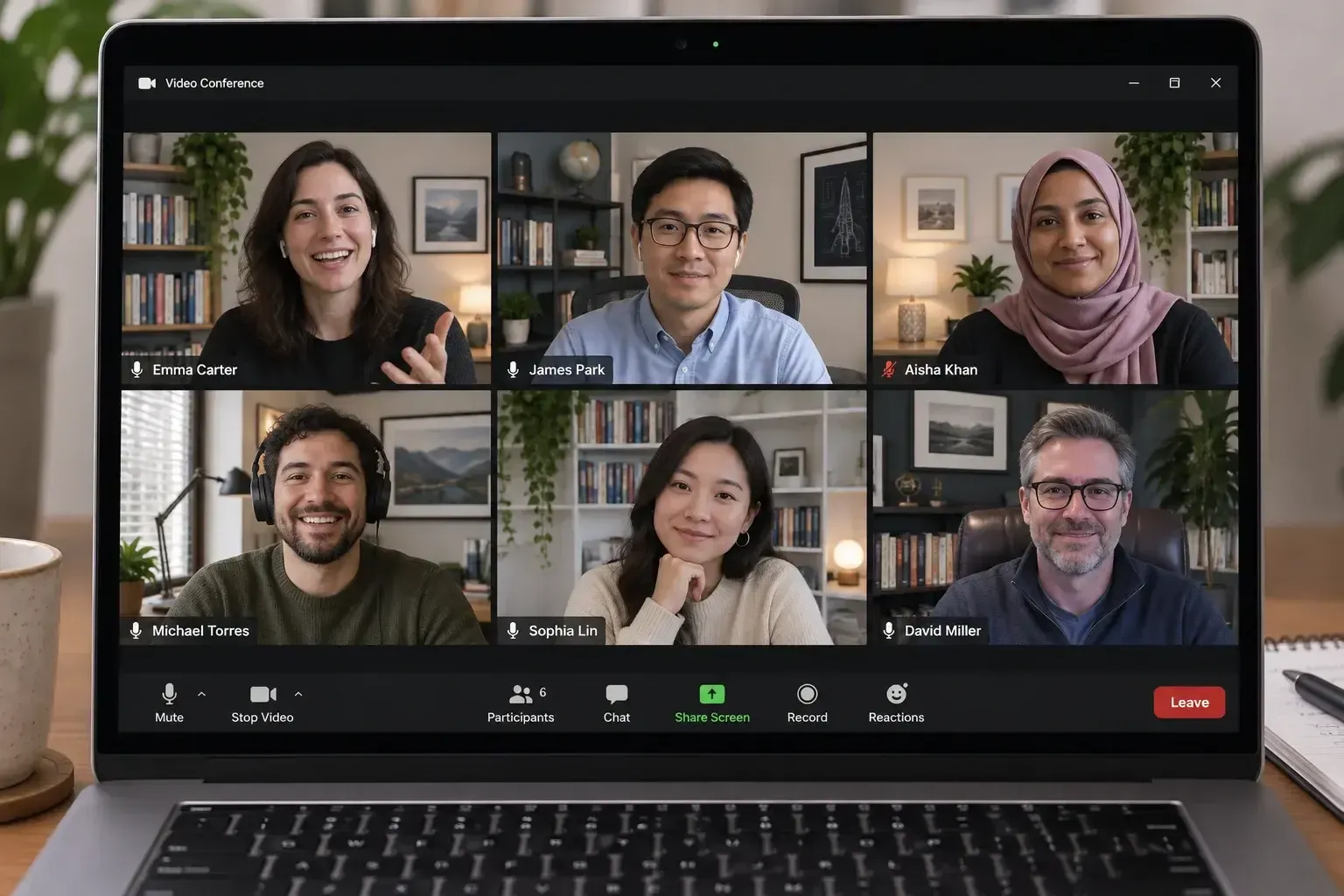
For virtual Level 10 Meetings: cameras on, shared screen for the agenda and scorecard, mute notifications, and rotate who facilitates if energy dips. Meeting notes, decisions, and to dos should be captured live in a shared document or Level 10 Meeting template (tools like Ninety, Notion, or Google Docs work well) so nothing is lost after the call.
Adapting Level 10 Meetings for Departments and Remote Teams
Once the senior leadership team masters the weekly meeting rhythm, departments can adopt their own L10s. Sales, operations, finance, marketing, HR, and customer support each run the same structure but with content specific to their function.
Departmental L10s narrow the scorecard to team-specific metrics: sales conversion rate, average support ticket resolution time, days sales outstanding, or hiring pipeline progress. Rocks reflect department-level quarterly priorities. Issues stay local unless they require cross-functional input, in which case they escalate to the company-level leadership team L10.
The format promotes alignment across departments by sharing key updates and priorities regularly. Issues flow up and decisions cascade down, keeping everyone pulling in the same direction.
For remote or hybrid teams, best practices include using a consistent platform (Zoom, Teams), displaying a shared Level 10 Meeting template on screen, and having the facilitator actively manage turn-taking. A short daily huddle of 10-15 minutes can complement the weekly L10 by handling quick operational updates, while the Level 10 remains the main forum for issue solving and strategic discussion.
How Level 10 Meetings Create Accountability and Better Execution
Level 10 Meetings create accountability by making commitments visible and inspecting them every week. Visible metrics and progress reviews improve follow through without micromanagement. The full leadership team, not just the CEO, holds each other to what was promised.
Public review of To-Dos ("done" or "not done") removes grey areas. When someone marks "not done" in front of their peers, the conversation shifts from blame to root cause: what blocked it, and what needs to change. Over time, accountability becomes cultural in Level 10 Meetings.
Regular scorecard review and Rock inspection help leaders spot problems early, turn them into issues, and solve them through IDS before they escalate. Level 10 Meetings help prevent small problems from becoming crises by catching them within a week instead of a quarter.
The cultural impact compounds over six months: clearer expectations, faster decision making, fewer side meetings. Level 10 Meetings help eliminate unnecessary ad-hoc meetings by providing a dedicated forum for addressing the most important issues. One leadership team of six that moved from loosely structured check-in calls to weekly Level 10 Meetings saw To-Do completion climb from roughly 70% to above 90% within a quarter. Rocks on track rose from 60% to 80%. The team stopped scheduling extra meetings because the important work was already getting done.
Common Level 10 Meeting Mistakes and How to Fix Them
Many self-implementing teams struggle with Level 10 Meetings because they loosen the structure or treat the meeting like a status report. Here are the most common mistakes and what to do about them.
Turning early sections into deep dives. Scorecard and Rock Review are reporting segments, not discussion. Fix: the facilitator enforces the timebox and redirects any debate to the issues list. Use a visible timer.
Skipping IDS or leaving too little time. When earlier segments run long, IDS gets squeezed to 30 minutes and the most important issues go unsolved. Fix: protect those 60 minutes. If you consistently run over in reporting, shorten Segue or Headlines.
One person dominating discussion. Fix: the facilitator calls on quieter members by name. Rotate who states each issue. Set a norm that no one speaks twice on the same issue until everyone has spoken once.
Failing to maintain the issues list. Without a living, shared list, issues get forgotten between meetings. Fix: keep the issues list in a shared tool that anyone can add to during the week.
Low To-Do completion rates. Below 80% completion signals vague tasks or overcommitment. Fix: scope each To-Do as a single, completable action with one owner and a seven-day deadline.
Skipping the meeting rating. The 1-10 score at the end is not optional. It is the team's built-in mechanism for meeting health. If someone gives a 6, ask "what would have made this a 10?" and capture the answer as a To-Do.
A well-run Level 10 reduces meeting fatigue across the organization. When the weekly leadership meeting is where real issues get solved, leaders stop scheduling extra calls to rehash the same topics.
FAQs About Level 10 Meetings
Here are answers to common questions leadership teams ask when running or implementing Level 10 Meetings.
How long is a Level 10 Meeting? Level 10 Meetings last exactly 90 minutes each week. That duration is considered the minimum effective dose for a leadership team to report, review progress, and solve problems. Shorter meetings cut into IDS time. Longer meetings lose meeting discipline and focus.
Who should attend a Level 10 Meeting? Level 10 Meetings are designed for the leadership team only: the heads of major functions (operations, finance, sales, marketing, HR) plus the Visionary and Integrator if the company uses those roles. Each leader then runs a separate departmental L10 with their direct reports.
Can a Level 10 Meeting be held virtually? Yes. Many companies run virtual or hybrid L10s. Best practices: cameras on, agenda and scorecard shared on screen, strong facilitation to manage turn-taking, and stable audio/video. Virtual meetings work when the meeting discipline stays intact.
How is a Level 10 Meeting different from a daily huddle? A daily huddle is 5-15 minutes for quick operational updates. The weekly Level 10 is 90 minutes of structured problem solving, scorecard review, and Rock review. A huddle feeds information into the L10 but cannot replace it.
What tools or templates support Level 10 Meetings? EOS provides official agenda templates. Software platforms like Ninety offer built-in Level 10 Meeting templates with scorecard tracking, issues lists, and To-Do management. Google Docs and Notion also work if set up with the right structure.
How soon will we see results? Most teams report improved alignment and higher To-Do completion within the first quarter. Full cultural embedding of the weekly meeting rhythm takes two to three quarters as the team builds the habits of preparation, honest discussion, and follow through.
Next Steps: Implementing Level 10 Meetings With Expert Support
A disciplined Level 10 Meeting can transform how a leadership team executes, but installing the rhythm and avoiding early pitfalls is easier with experienced guidance. Many teams benefit from working with a consultant who has seen what works across dozens of organizations.
For background on how EOS fits together as a system, see the Masterly Consulting Group Entrepreneurial Operating System overview. For building the right team structure, the accountability chart guide walks through seat-by-seat clarity.
If your leadership team wants help setting up or improving your Level 10 Meeting agenda, scorecard, quarterly Rocks, and issues list, schedule a consultation. Visit the Masterly Consulting Group contact page, fill out the inquiry form, or call (888) 209-4055 to start the conversation.
Commit to ninety disciplined minutes each week. That single habit builds the weekly pulse your business needs to stay aligned, solve problems early, and turn quarterly priorities into results.