How In-Person Sexual Harassment Training for Managers Improves Workplace Accountability
Why Workplace Accountability Matters More Than Ever
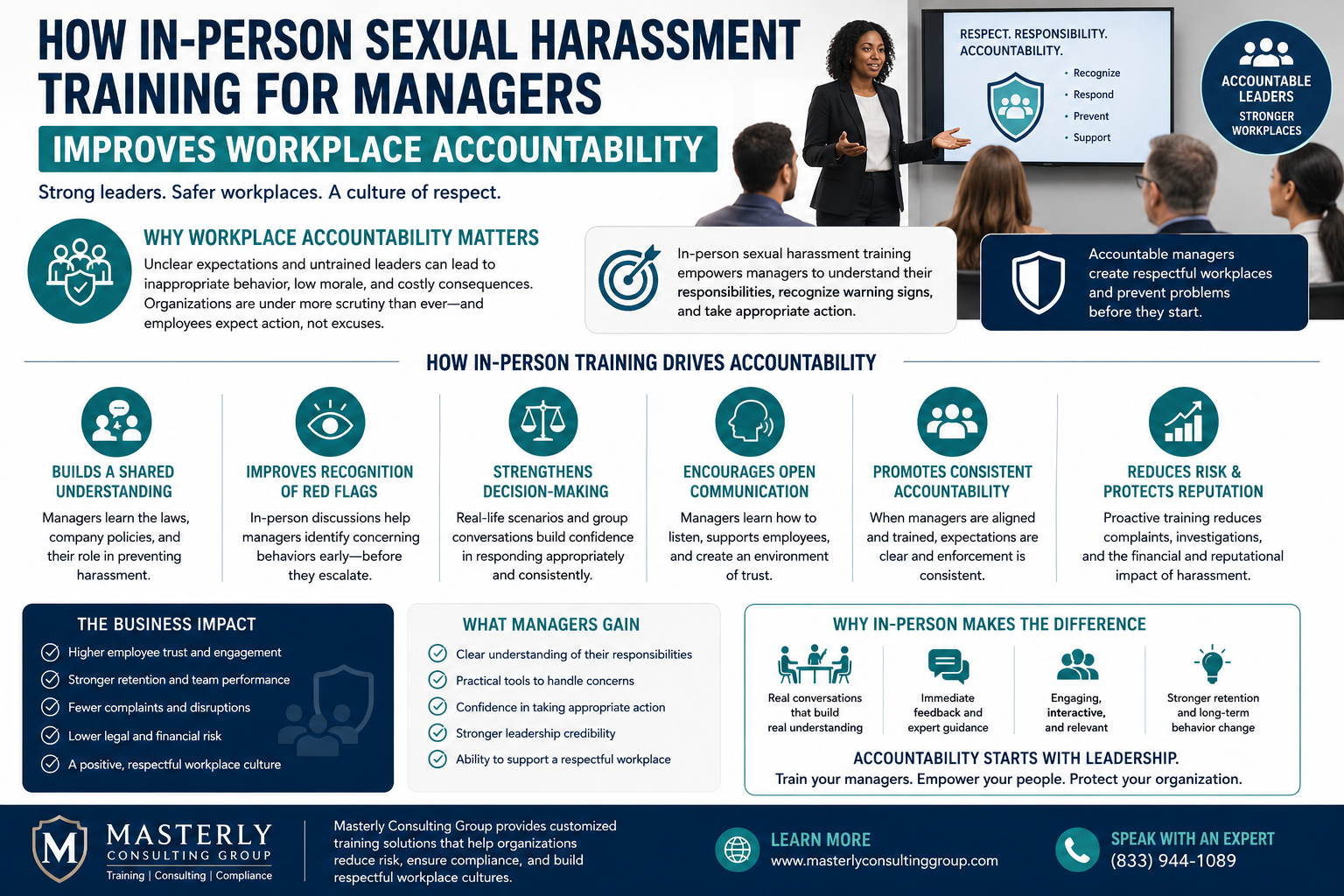
Every organization wants to create a workplace where employees feel safe, respected, and valued. Yet many businesses underestimate how quickly problems can develop when expectations are unclear or when leaders are not properly trained to address inappropriate behavior. A single complaint can affect morale, productivity, retention, and even a company's reputation.
Today, employers face increasing scrutiny regarding how they respond to harassment concerns. Employees expect organizations to take workplace harassment seriously, and regulatory agencies continue to strengthen enforcement efforts. As a result, companies that fail to invest in effective training may expose themselves to unnecessary legal and operational risks.
One of the most effective ways to build accountability is through sexual harassment training for managers. When supervisors understand their responsibilities and recognize warning signs early, they are better equipped to address issues before they escalate into larger problems.
At Masterly Consulting Group, we help organizations develop proactive workplace cultures through customized training solutions designed to support compliance, reduce risk, and improve employee confidence.
Understanding the Impact of Sexual Harassment in the Workplace
Sexual harassment continues to be one of the most significant workplace issues facing organizations across industries. While many companies have policies in place, policies alone are rarely enough to change behavior or prevent misconduct.
Employees often look to supervisors and leadership teams for guidance. When managers fail to recognize inappropriate conduct or respond effectively to complaints, problems can grow quickly. This creates challenges not only for affected employees but also for employers attempting to maintain a productive and professional environment.
Effective sexual harassment prevention begins with education. Training provides leaders with the knowledge and confidence necessary to address concerns appropriately and consistently.
Why Managers Play a Critical Role
Managers occupy a unique position within an organization. They interact directly with employees, observe workplace behavior, and often become the first individuals to receive complaints or concerns.
Because of these responsibilities, supervisors must understand how harassment can occur and how to respond when issues arise. Their actions often determine whether employees feel comfortable reporting concerns or whether problems remain hidden.
When managers receive comprehensive harassment prevention training, they become better prepared to support employees while protecting the organization from unnecessary risk.
The Difference Between Policy and Training
Many organizations assume that distributing a handbook satisfies their obligations. While policies are important, employees frequently need practical instruction regarding how those policies apply in real-world situations.
Training bridges the gap between written expectations and daily workplace conduct. It provides opportunities to discuss examples, answer questions, and clarify responsibilities.
Without proper training, employees and supervisors may interpret policies differently, leading to confusion and inconsistent enforcement.
What Constitutes Sexual Harassment?
One of the most important objectives of sexual harassment prevention training is helping participants understand what constitutes sexual harassment. Many individuals assume harassment only involves extreme or obvious behavior.
In reality, sexual harassment can take many forms. It may involve inappropriate comments, unwelcome touching, repeated requests for dates, offensive jokes, or other conduct that creates an offensive work environment.
Understanding what constitutes sexual harassment helps employees recognize concerns early and encourages appropriate intervention before situations become more serious.
Common Examples of Workplace Harassment
Workplace harassment is not limited to one specific type of behavior. Harassment may involve actions, comments, gestures, written communications, or electronic messages.
Examples may include:
- Unwanted sexual advances
- Inappropriate jokes
- Offensive comments
- Repeated unwanted attention
- Inappropriate images
- Hostile workplace behavior
Discussing real-world examples during harassment training helps employees recognize unacceptable conduct and understand organizational expectations.
The Value of In-Person Training
Many organizations rely exclusively on online training because it is convenient. While online training can be useful, in-person sessions often create deeper engagement and more meaningful discussions.
Participants are able to ask questions, discuss workplace scenarios, and receive immediate feedback. These conversations often uncover concerns that might never surface during a self-paced course.
In-person sexual harassment training creates opportunities for active participation, making the learning experience more memorable and impactful.
Why Accountability Begins With Leadership
Employees often follow the example set by leadership. If supervisors ignore inappropriate conduct, employees may conclude that organizational policies are not taken seriously.
Conversely, when managers demonstrate accountability and professionalism, employees are more likely to follow those expectations. This leadership influence makes harassment prevention training particularly important for supervisors.
Strong leadership helps reinforce a respectful work environment where employees understand both expectations and consequences.
How Sexual Harassment Prevention Training Supports Compliance
Many employers view training primarily as a compliance requirement. While compliance is certainly important, the benefits extend far beyond regulatory obligations.
Sexual harassment prevention training helps organizations:
- Reduce liability exposure
- Improve workplace culture
- Strengthen employee trust
- Encourage reporting
- Promote accountability
When implemented effectively, training becomes a valuable business tool rather than simply a legal requirement.
Understanding Federal Law Requirements
Federal law prohibits various forms of discrimination and harassment in the workplace. These protections apply to many employers and create obligations regarding employee treatment and workplace conduct.
Title VII of the Civil Rights Act remains one of the most significant federal protections addressing workplace discrimination and harassment. Organizations must understand how federal requirements affect their policies, procedures, and training efforts.
Failure to address harassment concerns appropriately can expose employers to significant legal and financial consequences.
State Law Requirements Continue to Expand
In addition to federal requirements, many states have adopted their own workplace training mandates. State law requirements often differ depending on location, industry, and employer size.
For example, California has established extensive training requirements for supervisors and employees. Similarly, New York State has implemented mandatory sexual harassment prevention training requirements that affect many organizations.
Employers operating in multiple states must remain aware of applicable laws and ensure their programs remain compliant.
What Employers Need to Know About New York State Requirements
New York State has become a leader in workplace harassment prevention initiatives. Employers throughout New York State are required to implement sexual harassment prevention measures that meet specific standards.
These requirements often include annual training, written policies, and complaint procedures. Organizations operating in York State should carefully review their obligations to ensure compliance.
Failure to meet New York State requirements may expose businesses to increased legal risk and enforcement actions.
Understanding NYC Requirements
Some York City employers are required to meet additional training requirements in addition to those imposed by New York State. NYC requirements may differ from statewide mandates and often include specific recordkeeping obligations.
Employers should ensure that their programs address both local and state regulations. Understanding these overlapping requirements helps organizations avoid compliance gaps.
Effective planning allows businesses to satisfy obligations while maintaining a positive workplace culture.
Why California Employers Must Pay Attention
California law contains some of the most comprehensive workplace training requirements in the country. Employers operating in California often face detailed compliance obligations regarding harassment prevention training.
California regulations generally require supervisors and employees to receive training at designated intervals. These requirements are designed to improve awareness and reduce incidents of workplace harassment.
Organizations should regularly review California requirements to ensure continued compliance with evolving standards.
Annual Training Creates Long-Term Benefits
Some organizations view annual training as a repetitive obligation. However, regular reinforcement often improves knowledge retention and accountability.
Annual training allows employers to address emerging issues, review policy updates, and reinforce organizational expectations. It also provides opportunities to discuss recent developments involving employment law and workplace conduct.
Consistent education helps create a culture where respect and professionalism remain priorities year after year.
Why New Employees Need Immediate Training
New employees often arrive with different experiences and expectations. Providing harassment prevention training early helps establish organizational standards from the beginning.
Waiting too long to educate employees can create confusion regarding acceptable behavior and reporting procedures. Early instruction promotes consistency and supports a positive onboarding experience.
Organizations that prioritize training for new employees often experience fewer workplace misunderstandings and stronger compliance outcomes.
Supervisors Set the Tone for Workplace Culture
Supervisors have a tremendous influence on how employees perceive workplace expectations. Employees often watch leadership closely to determine whether policies are actively enforced or simply exist on paper.
When supervisors receive harassment prevention training, they gain a clearer understanding of their responsibilities and how their actions impact workplace culture. Their ability to respond appropriately can influence whether employees feel comfortable reporting concerns.
Strong leadership helps create an environment where professionalism, accountability, and respect become part of daily operations.
Understanding Additional Responsibilities for Supervisors
Supervisors often carry additional responsibilities that extend beyond those assigned to non supervisory employees. They may be required to document complaints, notify human resources, and participate in investigations.
Because of these responsibilities, managers need specialized workplace harassment training that goes beyond basic employee instruction. They must understand how to recognize concerns, respond appropriately, and follow organizational procedures.
Providing targeted training helps supervisors navigate difficult situations while minimizing risk for both employees and employers.
Why Retaliation Is a Serious Concern
One of the most overlooked aspects of harassment prevention training involves retaliation. Employees who report concerns must feel confident that they will not face punishment for speaking up.
Retaliation may occur when an employee experiences negative treatment after reporting harassment, discrimination, or other workplace concerns. This can include reduced opportunities, disciplinary actions, exclusion, or other adverse treatment.
Organizations that fail to address retaliation concerns may face significant legal exposure and damage employee trust.
Teaching Managers How to Recognize Retaliation
Many retaliation claims arise because supervisors fail to recognize how certain actions may be perceived. Even well-intentioned decisions can create problems if employees believe they are being punished for reporting concerns.
Training helps supervisors understand how retaliation occurs and how to avoid actions that may appear retaliatory. This awareness supports fairness and consistency throughout the workplace.
When managers understand these issues, they are better prepared to protect both employees and the organization.
Addressing Discrimination Alongside Harassment
Harassment and discrimination often overlap. Effective harassment training should address both topics because many workplace complaints involve multiple concerns.
Discrimination may occur based on race, religion, sex, disability, national origin, age, or other protected characteristics. These issues can affect morale, productivity, and legal compliance.
A comprehensive program helps employees understand how discrimination and harassment impact workplace culture and organizational success.
Human Rights Principles Support Workplace Accountability
Human rights principles form the foundation of many workplace protections. Every employee deserves the opportunity to work in an environment free from harassment, discrimination, and intimidation.
When organizations embrace human rights values, they create stronger relationships between leadership and employees. These values also support compliance with applicable laws and organizational policies.
Training helps employees understand how human rights concepts apply in everyday workplace situations.
Recognizing Other Forms of Workplace Harassment
Many employees immediately think of sexual harassment when discussing workplace misconduct. However, workplace harassment can involve many other forms of inappropriate behavior.
Examples may include harassment based on disability, national origin, religion, age, genetic information, or other protected characteristics. Employees should understand that all forms of harassment can create significant workplace problems.
Comprehensive harassment prevention training helps organizations address these concerns proactively.
Why Inclusion Training Complements Harassment Prevention
Inclusion training and harassment prevention training often work together to create healthier workplace environments. While harassment training focuses on unacceptable conduct, inclusion training emphasizes positive behaviors and respectful interactions.
Organizations that invest in both approaches often experience stronger employee engagement and improved workplace relationships. Employees are more likely to collaborate effectively when they feel valued and respected.
A workplace culture built on inclusion often experiences fewer harassment-related issues.
Building a Respectful Work Environment
A respectful work environment does not happen by accident. It requires consistent effort from leadership, supervisors, and employees at every level of the organization.
Training provides opportunities to discuss communication, professionalism, accountability, and workplace expectations. These conversations help establish shared standards for behavior.
When employees understand what respect looks like in practice, organizations often experience stronger teamwork and reduced conflict.
The Importance of Conflict Resolution Skills
Not every workplace issue rises to the level of harassment. However, unresolved conflicts can sometimes escalate if they are not addressed appropriately.
Conflict resolution training helps supervisors and employees manage disagreements professionally. Learning how to address concerns early often prevents larger problems from developing later.
Organizations that prioritize conflict resolution frequently experience improved communication and stronger workplace relationships.
Understanding Unlawful Harassment
Employees should understand that not all inappropriate behavior meets the legal definition of unlawful harassment. However, organizations often choose to prohibit conduct that falls below legal thresholds in order to maintain professionalism.
Training helps participants distinguish between unacceptable workplace behavior and unlawful harassment under applicable laws. This understanding improves reporting accuracy and policy enforcement.
Clarifying these distinctions reduces confusion and supports more effective workplace management.
What Creates an Offensive Work Environment?
An offensive work environment can develop when inappropriate conduct becomes severe or pervasive enough to interfere with an employee's ability to perform their job.
Examples may include repeated offensive comments, inappropriate jokes, exclusionary behavior, or ongoing harassment. These situations often affect productivity, morale, and employee retention.
Training helps employees recognize warning signs before issues become deeply embedded within workplace culture.
Why Employers Must Stay Current With Training Requirements
Training requirements continue to evolve as laws and regulations change. Employers must remain informed regarding state regulations, federal requirements, and industry-specific obligations.
Failing to stay current may create compliance gaps that increase organizational risk. Regular program reviews help ensure training materials remain accurate and effective.
Employers who proactively monitor legal developments are often better prepared to adapt to changing expectations.
The Role of Online Training in Modern Organizations
Online training has become increasingly popular because it offers flexibility and convenience. Employees can often complete training from various locations and at times that fit their schedules.
Many online training platforms also provide automated tracking and completion records. These features can simplify compliance efforts and reduce administrative burdens.
However, organizations should carefully evaluate whether online training alone provides the level of engagement necessary to address complex workplace issues.
Comparing Online Training and In-Person Learning
While online training offers convenience, in-person instruction often creates deeper learning opportunities. Participants can ask questions, discuss real scenarios, and engage directly with instructors.
These interactions frequently lead to stronger understanding and greater retention of key concepts. Employees may feel more comfortable raising concerns and seeking clarification during live discussions.
For many organizations, combining online training with in-person programs provides a balanced approach.
Mobile Access Improves Training Participation
Today's employees frequently access information through smartphones and tablets. Training programs that support mobile device access often improve participation and completion rates.
Mobile-friendly learning options provide flexibility while allowing employees to complete required training more efficiently. This convenience can be especially valuable for organizations with distributed workforces.
Employers should ensure that mobile training solutions remain engaging and effective rather than simply convenient.
Why Completion Tracking Matters
Organizations should carefully monitor completion rates to ensure employees receive required instruction. Completion records often become important during audits, investigations, or legal disputes.
Accurate documentation helps demonstrate compliance with training requirements and organizational policies. It also allows employers to identify employees who may need additional instruction.
Strong recordkeeping practices support both accountability and risk management efforts.
Using Spanish Language Training to Improve Accessibility
Organizations with diverse workforces may benefit from providing training materials in Spanish and other languages. Employees are more likely to understand important concepts when instruction is delivered in a language they are comfortable using.
Providing Spanish-language training demonstrates a commitment to accessibility and inclusion. It also helps ensure that critical information is communicated effectively.
Accessible training supports stronger participation and better learning outcomes across the organization.
Why Employers Need Clear Reporting Procedures
Even the best harassment prevention training program can fall short if employees do not know how to report concerns. Effective reporting procedures help ensure that complaints are addressed quickly, consistently, and professionally.
Employees should understand who they can contact, what information may be requested, and how investigations are handled. Clear reporting channels often increase confidence in the process and encourage employees to speak up when concerns arise.
When employers establish transparent reporting systems, they strengthen accountability and reduce the likelihood that workplace issues will remain hidden.
The Importance of Prompt Investigations
When a complaint is made, employers must respond appropriately. Delayed responses can undermine employee confidence and create additional legal concerns.
Investigations should be conducted fairly, thoroughly, and with respect for all individuals involved. Managers who receive harassment prevention training are often better prepared to recognize when immediate action is necessary.
Prompt responses demonstrate that the organization takes workplace harassment seriously and is committed to maintaining a safe workplace.
Creating a Consistent Investigation Process
Consistency is critical when addressing complaints involving harassment in the workplace. Employees should know that concerns will be evaluated using the same standards regardless of position or department.
A structured process helps employers gather information, document findings, and make informed decisions. Consistency also helps reduce claims of favoritism or unequal treatment.
Training provides supervisors with a better understanding of how investigations should be handled and when additional resources may be needed.
Why Documentation Protects Employers and Employees
Accurate documentation plays an important role in workplace accountability. Training records, complaint reports, investigation notes, and policy acknowledgments may all become important if disputes arise.
Employers that maintain thorough records are often better positioned to demonstrate compliance with applicable laws and training requirements. Documentation can also help identify patterns that may require additional attention.
Strong recordkeeping practices support transparency and help organizations make informed decisions.
Understanding One Hour and Two Hours Training Requirements
Different jurisdictions impose different training requirements. In some locations, employees may be required to complete one hour of harassment prevention training, while supervisors may be required to complete two hours of instruction.
These requirements often reflect the additional responsibilities assigned to managers and supervisors. Because leadership personnel frequently serve as the first point of contact for complaints, they need a deeper understanding of workplace obligations.
Employers should review applicable laws to ensure that required training durations are being satisfied.
Why Annual Training Strengthens Compliance
Many organizations conduct training once and assume the issue has been addressed permanently. However, annual training helps reinforce expectations and keep employees informed regarding policy updates and legal developments.
Annual training also provides opportunities to review emerging workplace issues and discuss new examples that may not have existed during previous sessions. These ongoing conversations help keep accountability at the forefront.
Organizations that invest in annual training often create stronger workplace cultures and reduce long-term risk.
The Benefits of a Comprehensive Training Program
A successful harassment prevention program involves more than a single presentation. Effective programs combine education, policy awareness, accountability, and ongoing communication.
A comprehensive program may include:
- Sexual harassment prevention training
- Workplace harassment prevention training
- Inclusion training
- Conflict resolution education
- Leadership development
- Policy reviews
This broader approach helps organizations address workplace concerns from multiple angles.
Using a Model Training Approach
Many organizations benefit from adopting a model training structure that can be customized to their specific workplace environment. A model training approach ensures consistency while allowing flexibility to address industry-specific concerns.
Standardized materials help maintain quality across multiple locations and departments. At the same time, customization allows employers to address unique workplace challenges.
A well-designed model training framework often improves engagement and learning outcomes.
The Role of Technical Support in Modern Training Programs
Technology plays an important role in today's workplace training initiatives. Whether organizations utilize online training, hybrid learning, or digital recordkeeping systems, reliable technical support is essential.
Employees should be able to access materials, complete required coursework, and obtain assistance when issues arise. Technical problems can reduce participation and delay completion if not addressed promptly.
Employers that provide strong technical support often experience higher engagement and more successful training outcomes.
Addressing Sexual Harassment Complaints Effectively
How an organization responds to sexual harassment complaints often shapes employee perceptions regarding fairness and accountability. Employees want to know that concerns will be taken seriously and investigated appropriately.
Training helps managers understand how to receive complaints professionally and how to avoid common mistakes during the reporting process. It also reinforces the importance of confidentiality and impartiality.
A thoughtful response can help build trust even during difficult situations.
Why Sexual Harassment Prevention Requires Ongoing Commitment
Sexual harassment prevention is not a one-time initiative. Workplace cultures evolve, employees change, and new challenges emerge over time.
Organizations that remain committed to sexual harassment prevention often experience stronger employee engagement and improved workplace morale. Ongoing education helps reinforce expectations while ensuring employees remain aware of their responsibilities.
Long-term commitment demonstrates that the organization views accountability as a core value rather than a temporary project.
How Employers Can Provide Harassment Prevention Training Successfully
Employers that provide harassment prevention training effectively often focus on engagement rather than simply checking a compliance box. Employees learn more when they are encouraged to participate, ask questions, and discuss real workplace situations.
Successful training programs emphasize practical application, realistic examples, and clear guidance regarding organizational expectations. These elements help transform training from a mandatory requirement into a meaningful learning experience.
Organizations that provide training consistently often see stronger cultural improvements over time.
Why Compliance Is Only the Beginning
Compliance is important, but it should not be the ultimate goal. Organizations that focus solely on meeting legal requirements may miss opportunities to create healthier and more productive workplace environments.
The most successful employers view training as an investment in their employees and their organizational culture. By promoting accountability, respect, and professionalism, businesses often improve employee satisfaction and retention.
True workplace accountability extends beyond compliance and becomes part of daily operations.
Why Employers Need Clear Reporting Procedures
Even the best harassment prevention training program can fall short if employees do not know how to report concerns. Effective reporting procedures help ensure that complaints are addressed quickly, consistently, and professionally.
Employees should understand who they can contact, what information may be requested, and how investigations are handled. Clear reporting channels often increase confidence in the process and encourage employees to speak up when concerns arise.
When employers establish transparent reporting systems, they strengthen accountability and reduce the likelihood that workplace issues will remain hidden.
The Importance of Prompt Investigations
When a complaint is made, employers must respond appropriately. Delayed responses can undermine employee confidence and create additional legal concerns.
Investigations should be conducted fairly, thoroughly, and with respect for all individuals involved. Managers who receive harassment prevention training are often better prepared to recognize when immediate action is necessary.
Prompt responses demonstrate that the organization takes workplace harassment seriously and is committed to maintaining a safe workplace.
Creating a Consistent Investigation Process
Consistency is critical when addressing complaints involving harassment in the workplace. Employees should know that concerns will be evaluated using the same standards regardless of position or department.
A structured process helps employers gather information, document findings, and make informed decisions. Consistency also helps reduce claims of favoritism or unequal treatment.
Training provides supervisors with a better understanding of how investigations should be handled and when additional resources may be needed.
Why Documentation Protects Employers and Employees
Accurate documentation plays an important role in workplace accountability. Training records, complaint reports, investigation notes, and policy acknowledgments may all become important if disputes arise.
Employers that maintain thorough records are often better positioned to demonstrate compliance with applicable laws and training requirements. Documentation can also help identify patterns that may require additional attention.
Strong recordkeeping practices support transparency and help organizations make informed decisions.
Understanding One Hour and Two Hours Training Requirements
Different jurisdictions impose different training requirements. In some locations, employees may be required to complete one hour of harassment prevention training, while supervisors may be required to complete two hours of instruction.
These requirements often reflect the additional responsibilities assigned to managers and supervisors. Because leadership personnel frequently serve as the first point of contact for complaints, they need a deeper understanding of workplace obligations.
Employers should review applicable laws to ensure that required training durations are being satisfied.
Why Annual Training Strengthens Compliance
Many organizations conduct training once and assume the issue has been addressed permanently. However, annual training helps reinforce expectations and keep employees informed regarding policy updates and legal developments.
Annual training also provides opportunities to review emerging workplace issues and discuss new examples that may not have existed during previous sessions. These ongoing conversations help keep accountability at the forefront.
Organizations that invest in annual training often create stronger workplace cultures and reduce long-term risk.
The Benefits of a Comprehensive Training Program
A successful harassment prevention program involves more than a single presentation. Effective programs combine education, policy awareness, accountability, and ongoing communication.
A comprehensive program may include:
- Sexual harassment prevention training
- Workplace harassment prevention training
- Inclusion training
- Conflict resolution education
- Leadership development
- Policy reviews
This broader approach helps organizations address workplace concerns from multiple angles.
Using a Model Training Approach
Many organizations benefit from adopting a model training structure that can be customized to their specific workplace environment. A model training approach ensures consistency while allowing flexibility to address industry-specific concerns.
Standardized materials help maintain quality across multiple locations and departments. At the same time, customization allows employers to address unique workplace challenges.
A well-designed model training framework often improves engagement and learning outcomes.
The Role of Technical Support in Modern Training Programs
Technology plays an important role in today's workplace training initiatives. Whether organizations utilize online training, hybrid learning, or digital recordkeeping systems, reliable technical support is essential.
Employees should be able to access materials, complete required coursework, and obtain assistance when issues arise. Technical problems can reduce participation and delay completion if not addressed promptly.
Employers that provide strong technical support often experience higher engagement and more successful training outcomes.
Addressing Sexual Harassment Complaints Effectively
How an organization responds to sexual harassment complaints often shapes employee perceptions regarding fairness and accountability. Employees want to know that concerns will be taken seriously and investigated appropriately.
Training helps managers understand how to receive complaints professionally and how to avoid common mistakes during the reporting process. It also reinforces the importance of confidentiality and impartiality.
A thoughtful response can help build trust even during difficult situations.
Why Sexual Harassment Prevention Requires Ongoing Commitment
Sexual harassment prevention is not a one-time initiative. Workplace cultures evolve, employees change, and new challenges emerge over time.
Organizations that remain committed to sexual harassment prevention often experience stronger employee engagement and improved workplace morale. Ongoing education helps reinforce expectations while ensuring employees remain aware of their responsibilities.
Long-term commitment demonstrates that the organization views accountability as a core value rather than a temporary project.
How Employers Can Provide Harassment Prevention Training Successfully
Employers that provide harassment prevention training effectively often focus on engagement rather than simply checking a compliance box. Employees learn more when they are encouraged to participate, ask questions, and discuss real workplace situations.
Successful training programs emphasize practical application, realistic examples, and clear guidance regarding organizational expectations. These elements help transform training from a mandatory requirement into a meaningful learning experience.
Organizations that provide training consistently often see stronger cultural improvements over time.
Why Compliance Is Only the Beginning
Compliance is important, but it should not be the ultimate goal. Organizations that focus solely on meeting legal requirements may miss opportunities to create healthier and more productive workplace environments.
The most successful employers view training as an investment in their employees and their organizational culture. By promoting accountability, respect, and professionalism, businesses often improve employee satisfaction and retention.
True workplace accountability extends beyond compliance and becomes part of daily operations.
Building a Culture of Accountability
Accountability starts when employees understand expectations and leaders consistently enforce them. Harassment prevention training helps establish a shared understanding of acceptable conduct throughout the organization.
When accountability becomes part of workplace culture, employees are more likely to address concerns early, support one another, and contribute to a positive environment. This benefits both the workforce and the organization as a whole.
Creating a culture of accountability requires effort, but the long-term rewards are substantial.
Why In-Person Sexual Harassment Training for Managers Remains Valuable
While technology continues to expand training options, in-person sexual harassment training for managers remains one of the most effective methods for building workplace accountability. Live instruction allows participants to engage directly with instructors, discuss workplace scenarios, and gain a deeper understanding of complex issues.
These conversations often reveal concerns that may never surface during online training alone. Managers leave with greater confidence, stronger communication skills, and a clearer understanding of their responsibilities.
For organizations committed to reducing workplace harassment and improving accountability, in-person training remains a powerful tool.
Partner With Masterly Consulting Group
Every organization deserves a workplace where employees feel respected, supported, and safe. Achieving that goal requires more than policies—it requires education, leadership, and ongoing commitment.
At Masterly Consulting Group, we help employers develop customized harassment prevention training programs that support compliance, reduce risk, and strengthen workplace culture. Our training solutions are designed to address real-world challenges while helping supervisors and employees understand their responsibilities under federal law, state law, and applicable regulations.
Whether your organization needs workplace harassment training, sexual harassment prevention training, leadership education, or compliance support, our team is ready to help.
Contact Masterly Consulting Group for a Free Consultation
Creating a respectful and accountable workplace begins with the right training program. If your organization has questions about sexual harassment prevention training, workplace harassment prevention training, compliance obligations, or supervisor education, Masterly Consulting Group is here to assist.
Our team works with employers across a variety of industries to develop effective training programs that promote professionalism, accountability, and long-term organizational success. We will take the time to understand your goals, answer your questions, and recommend solutions tailored to your workplace.
Contact Masterly Consulting Group at (888) 209-4055 to book a free consultation. We are ready to help your organization strengthen workplace accountability, reduce risk, and build a culture where employees can thrive.