Financial Sustainability Strategies for Colleges Facing Enrollment Declines
Why Enrollment Declines Have Become a Defining Challenge for Higher Education
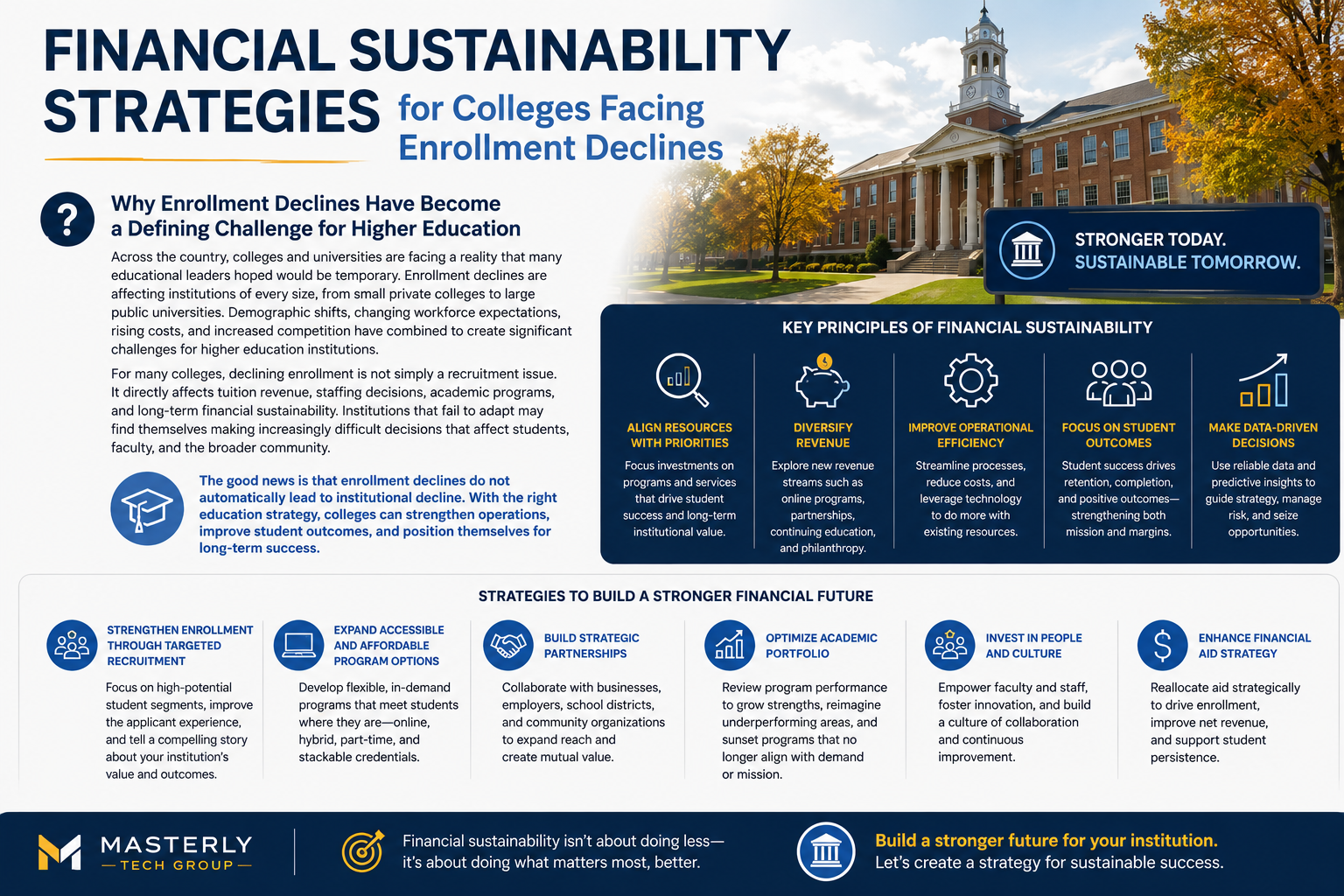
Across the country, colleges and universities are facing a reality that many educational leaders hoped would be temporary. Enrollment declines are affecting institutions of every size, from small private colleges to large public universities. Demographic shifts, changing workforce expectations, rising costs, and increased competition have combined to create significant challenges for higher education institutions.
For many colleges, declining enrollment is not simply a recruitment issue. It directly affects tuition revenue, staffing decisions, academic programs, and long-term financial sustainability. Institutions that fail to adapt may find themselves making increasingly difficult decisions that affect students, faculty, and the broader community.
The good news is that enrollment declines do not automatically lead to institutional decline. With the right education strategy, colleges can strengthen operations, improve student outcomes, and position themselves for long-term success.
Understanding the Financial Impact of Enrollment Declines
Most colleges rely heavily on tuition revenue to fund daily operations. When enrollment decreases, the financial effects are often immediate. Reduced tuition income can place pressure on budgets, staffing, facilities, technology investments, and student support programs.
Many universities attempt to offset losses through short-term measures such as hiring freezes or spending reductions. While these actions may provide temporary relief, they rarely address the underlying challenges affecting institutional growth.
Sustainable solutions require a broader focus on organizational strategy, financial planning, and innovation.
Why Financial Sustainability Requires Strategic Thinking
Financial sustainability involves much more than balancing an annual budget. It requires institutions to develop systems, processes, and funding models capable of supporting long-term goals.
Educational institutions that thrive during periods of uncertainty often share several characteristics:
- Strong leadership.
- Effective strategic planning.
- Data-informed decision making.
- Diverse revenue sources.
- Student-centered operations.
- A willingness to embrace change.
These qualities help institutions navigate challenges while continuing to serve students effectively.
The Importance of Education Consulting During Periods of Change
Periods of financial uncertainty often create difficult decisions for college leaders. Questions involving staffing, program offerings, enrollment strategies, and operational efficiency can become increasingly complex.
Education consulting helps institutions evaluate challenges objectively while identifying opportunities for improvement. Experienced education consultants bring expertise, insights, and practical solutions that can help colleges navigate changing circumstances.
Rather than reacting to immediate problems, institutions can develop comprehensive strategies designed to create lasting change.
Why Higher Education Institutions Need Long-Term Solutions
Short-term fixes may temporarily stabilize finances, but they rarely solve deeper structural challenges. Higher education institutions facing enrollment declines must evaluate long-term trends affecting student behavior, demographics, and workforce demands.
Many colleges continue operating under assumptions that no longer reflect current realities. Students increasingly expect flexible learning options, career-focused programs, and strong return-on-investment outcomes.
Institutions that recognize these shifts are often better positioned to adapt successfully.
Rethinking Traditional Revenue Models
For decades, many colleges relied primarily on tuition revenue as their primary financial engine. Enrollment declines have demonstrated the risks associated with depending too heavily on a single revenue source.
Universities should explore alternative funding strategies that reduce dependence on tuition alone. Revenue diversification can strengthen institutional stability while creating opportunities for future growth.
Developing new revenue streams often requires creativity, strategic planning, and collaboration across multiple departments.
Exploring Alternative Funding Strategies
Successful funding strategies frequently involve expanding beyond traditional enrollment models. Colleges may consider:
- Corporate partnerships.
- Workforce development programs.
- Continuing education offerings.
- Professional certification programs.
- Grant opportunities.
- Alumni engagement initiatives.
These approaches can generate additional resources while supporting institutional goals.
Why Workforce Development Creates New Opportunities
Employers increasingly seek workers with specialized skills that can be applied immediately in the workplace. Colleges that align programs with workforce demands often create stronger value propositions for prospective students.
Workforce development initiatives allow institutions to serve both traditional students and adult learners. These programs frequently attract individuals seeking career advancement, reskilling opportunities, or industry certifications.
By strengthening workforce connections, colleges can create new pathways for enrollment and community engagement.
Building Stronger Relationships With Employers
Partnerships between colleges and employers can provide significant benefits for both parties. Employers gain access to trained talent, while institutions gain insights into workforce needs and employment trends.
These partnerships often support curriculum development, internships, apprenticeships, and job placement opportunities. They also help institutions better understand the skills employers value most.
Strong employer relationships can improve student outcomes while enhancing institutional relevance.
Why Student Outcomes Matter More Than Ever
Prospective students and families increasingly evaluate colleges based on outcomes rather than reputation alone. Graduation rates, employment outcomes, career placement, and earning potential often influence enrollment decisions.
Institutions that focus on improving student outcomes frequently experience stronger retention and recruitment results. Success stories become powerful tools for attracting future students.
Improving outcomes requires coordinated efforts across academic programs, student services, and institutional leadership.
Supporting Students Beyond the Classroom
Student success depends on more than academic instruction. Financial pressures, personal challenges, and external responsibilities often affect a student's ability to complete a degree.
Institutions that provide comprehensive support services often see stronger retention rates. Effective support may include academic advising, tutoring, mental health resources, career counseling, and financial guidance.
When students feel supported, they are more likely to persist and graduate.
Retention May Be More Valuable Than Recruitment
Many colleges focus significant resources on attracting new students while overlooking retention opportunities. Yet retaining current students is often more cost-effective than recruiting replacements.
Improving retention requires institutions to identify barriers affecting student success and address them proactively. Data can help leaders identify patterns that contribute to attrition.
A strategic focus on retention can significantly improve financial sustainability.
Using Data to Identify Enrollment Risks
Modern institutions have access to more data than ever before. Enrollment trends, academic performance metrics, engagement indicators, and financial information can all provide valuable insights.
Educational leaders who use data effectively can identify challenges before they become larger problems. Early intervention strategies often help improve retention and student success.
Data-driven decision making should be a core component of any financial sustainability plan.
Why Digital Transformation Is Essential
Digital transformation is no longer optional for higher education institutions seeking long-term growth. Students expect seamless digital experiences in nearly every aspect of their educational journey.
From admissions and advising to learning management systems and student services, technology affects how institutions operate and compete. Colleges that embrace digital transformation often improve efficiency while enhancing the student experience.
Modern systems also provide valuable information that supports strategic decision making.
Investing in New Systems That Improve Efficiency
Many institutions continue relying on outdated systems that create inefficiencies and increase administrative costs. Investing in new systems may require upfront resources, but the long-term benefits can be substantial.
Improved systems can streamline operations, reduce duplication, improve communication, and enhance data management. These efficiencies often allow institutions to redirect resources toward mission-critical priorities.
Technology investments should support both operational goals and student needs.
Creating a Student-Centered Experience
Students today have more educational options than ever before. Colleges must compete not only with other universities but also with alternative credential providers, online platforms, and workforce training programs.
Institutions that focus on student needs often create stronger enrollment and retention outcomes. This requires listening to students, understanding expectations, and continuously improving the educational experience.
A student-centered approach supports both institutional success and financial sustainability.
The Role of Educational Leaders During Times of Change
Educational leaders play a critical role in guiding institutions through uncertainty. Effective leadership requires balancing financial realities with the institution's mission and values.
Leaders must communicate clearly, build trust, and create alignment across departments. Difficult decisions are often easier to implement when stakeholders understand the rationale behind them.
Strong leadership helps institutions remain focused on long-term goals rather than short-term pressures.
Why Strategic Planning Cannot Be Delayed
Enrollment challenges often create urgency, but urgency should not replace thoughtful planning. Strategic planning helps institutions evaluate priorities, allocate resources effectively, and establish measurable objectives.
A well-developed strategic planning process creates a roadmap for future success. It helps institutions focus on initiatives that support growth, student success, and financial sustainability.
Without a strategic framework, colleges may struggle to respond effectively to changing circumstances.
Higher Education Consulting Provides Valuable Perspective
Many colleges benefit from outside expertise during periods of transformation. Higher education consulting allows institutions to access specialized knowledge that may not exist internally.
Consultants can help identify opportunities, evaluate challenges, and facilitate difficult conversations. Their external perspective often reveals issues that internal stakeholders may overlook.
The most effective higher education consulting engagements focus on practical solutions that produce measurable outcomes.
Building a Foundation for Long-Term Success
Colleges facing enrollment declines must think beyond immediate financial concerns. Sustainable success requires a combination of innovation, leadership, data-informed decision making, and a commitment to serving students effectively.
Institutions that adapt thoughtfully often emerge stronger and more resilient. By focusing on student outcomes, operational efficiency, workforce alignment, and strategic growth, colleges can position themselves for a stronger future despite enrollment challenges.
Why Innovation Must Become Part of Institutional Strategy
Innovation is often discussed in higher education, but many institutions struggle to move from discussion to action. Enrollment declines require colleges to think differently about how they deliver programs, engage students, and create value.
Innovation does not always mean launching entirely new academic programs. Sometimes it involves improving existing services, simplifying processes, or identifying better ways to support students. Small changes can often produce meaningful outcomes when implemented consistently.
Institutions that embrace innovation are generally better prepared to respond to changing market conditions and student expectations.
Creating New Academic Pathways for Students
Today's students are looking for flexible educational opportunities that align with career goals and personal responsibilities. Traditional degree programs remain important, but many learners also seek certificates, micro-credentials, and specialized training.
Colleges that create alternative pathways can attract broader student populations. These opportunities often appeal to working adults, career changers, and individuals seeking professional advancement.
Expanding educational options can help institutions reach new audiences while supporting enrollment growth.
Why Adult Learners Represent a Major Opportunity
Many colleges continue focusing primarily on recent high school graduates. However, adult learners represent a significant and often underserved population within higher education.
Working professionals frequently return to education to improve skills, change careers, or pursue advancement opportunities. Flexible scheduling, online learning, and workforce-focused programs can make institutions more attractive to these students.
Developing programs for adult learners can strengthen enrollment and diversify revenue sources.
The Growing Importance of Online Learning
Online learning has become a permanent part of the higher education landscape. Students increasingly expect access to flexible educational options that fit their schedules and responsibilities.
Universities that invest in high-quality online programs often expand their geographic reach and improve access for nontraditional learners. These programs also provide opportunities to serve students who may never attend classes on campus.
Strong online offerings can support both enrollment goals and financial sustainability.
Improving Access Through Flexible Learning Models
Access remains a critical issue throughout education. Many potential students face barriers related to work schedules, transportation, family responsibilities, or financial limitations.
Flexible learning models help institutions expand access while serving a broader range of student needs. Evening courses, hybrid programs, online learning, and accelerated pathways can help remove barriers to participation.
Expanding access often supports both equity goals and enrollment objectives.
Equity and Student Success Go Hand in Hand
Educational institutions that prioritize equity often improve student outcomes across multiple populations. Equity initiatives focus on ensuring that students have the resources and support necessary to succeed.
This may involve targeted advising, academic support services, financial assistance programs, or efforts designed to improve access for underrepresented groups.
A commitment to equity can strengthen institutional performance while advancing the broader mission of education.
Supporting Multilingual Learners in Higher Education
Many colleges serve increasingly diverse student populations, including multilingual learners. These students bring valuable perspectives and experiences to campus communities.
Institutions that provide appropriate support for multilingual learners often improve retention and academic success. Language support services, tutoring programs, and culturally responsive practices can make a significant difference.
Creating inclusive learning environments benefits both students and institutions.
Why Community Engagement Matters
Strong relationships with the community can help colleges strengthen enrollment, improve visibility, and create meaningful partnerships. Educational institutions do not operate in isolation; they are often deeply connected to the communities they serve.
Community engagement initiatives may include workforce programs, partnerships with local organizations, public events, and collaborative projects.
These efforts can help institutions build trust while creating opportunities for future growth.
Building Partnerships That Create Value
Successful colleges often view partnership development as a strategic priority. Partnerships can provide access to resources, expertise, and opportunities that would otherwise be unavailable.
Institutions may partner with employers, nonprofit organizations, government agencies, and other educational entities. These collaborations often support student success, workforce development, and financial sustainability.
The right partner can help an institution accelerate progress toward important goals.
Why Collaboration Supports Institutional Growth
Collaboration allows colleges to leverage collective expertise and resources. Rather than addressing challenges independently, institutions can work together to create solutions.
Collaborative efforts may involve shared services, joint academic programs, research initiatives, or regional partnerships. These arrangements often improve efficiency while expanding opportunities for students.
Collaboration can become a powerful tool for promoting long-term growth.
The Role of Teachers in Student Success
Teachers remain central to the educational experience. Their ability to engage students, foster learning, and support development has a direct impact on outcomes.
Institutions that invest in teachers often see benefits extending far beyond the classroom. Professional development, mentoring programs, and instructional support can improve both teaching effectiveness and student performance.
Supporting educators is an important component of institutional success.
Why Educators Need Ongoing Support
The demands placed on educators continue to evolve. New technologies, changing student expectations, and emerging instructional methods require continuous adaptation.
Providing support for educators helps ensure they have the resources necessary to succeed. This support may include training, coaching, collaboration opportunities, and access to instructional technology.
Strong educator support contributes to stronger student outcomes.
Leadership Development for Institutional Success
Leadership development is often overlooked during periods of financial pressure. However, developing future leaders is essential for long-term sustainability.
Effective leadership helps institutions navigate uncertainty, implement change, and maintain organizational focus. Leadership programs can prepare administrators, faculty members, and staff to take on expanded responsibilities.
Investing in leadership development strengthens the institution's future capacity.
Why Organizational Strategy Matters
Financial sustainability depends on more than budget management. Institutions must align resources, priorities, and decision-making processes with long-term objectives.
An effective organizational strategy helps colleges identify strengths, address weaknesses, and focus resources where they will have the greatest impact.
Institutions with a clear organizational strategy are often better equipped to adapt to changing conditions.
Using Data to Drive Better Decisions
Data should inform every major institutional decision. Enrollment trends, retention rates, student performance metrics, and financial indicators provide valuable insights into organizational health.
Leaders who use data effectively can identify opportunities, evaluate strategies, and measure progress more accurately. Data-driven approaches reduce uncertainty and support more informed decision making.
The ability to interpret and apply data effectively has become increasingly important in higher education.
Why Student Performance Should Remain a Priority
Financial pressures can sometimes cause institutions to focus heavily on budgets and operations. While these concerns are important, student performance should remain a central priority.
Strong academic outcomes improve retention, graduation rates, and institutional reputation. They also influence enrollment by demonstrating value to prospective students and families.
Improving student performance supports both educational and financial goals.
Developing Systems That Support Growth
Many colleges operate with systems that were designed for different circumstances and enrollment levels. As conditions change, these systems may no longer provide the flexibility needed for future success.
Developing modern systems can improve efficiency, strengthen communication, and support institutional growth. Effective systems help colleges respond more quickly to emerging challenges and opportunities.
Strong systems create a foundation for sustainable improvement.
Preparing Students for the Future Workforce
One of the most important responsibilities of higher education is preparing students for success in the workforce. Employers increasingly seek graduates who possess both technical expertise and transferable skills.
Institutions that align programs with workforce needs often achieve stronger employment outcomes. Career readiness initiatives, experiential learning opportunities, and employer partnerships can help students develop relevant skills.
Preparing students for the future workforce enhances both institutional value and student success.
The Importance of Developing Future-Ready Skills
Rapid changes in technology and industry expectations continue to reshape workforce demands. Students need more than subject-matter knowledge to succeed in today's environment.
Critical thinking, communication, collaboration, adaptability, and problem-solving skills have become increasingly valuable. Colleges should focus on helping students learn these competencies alongside technical content.
Future-ready skills contribute to long-term career success.
How Education Consultants Help Institutions Navigate Change
Education consultants often provide specialized expertise during periods of transition. Their role extends beyond identifying challenges; they help institutions develop practical strategies for improvement.
Experienced education consultants bring insights gained from working with diverse schools, colleges, districts, and universities. This broad perspective allows them to recommend solutions tailored to specific institutional needs.
Their expertise can support both immediate initiatives and long-term transformation efforts.
Creating Positive Change That Lasts
Lasting change rarely happens through isolated initiatives. Sustainable improvement requires commitment, leadership, collaboration, and strategic execution.
Institutions that focus on positive change often build cultures that support innovation and continuous improvement. These efforts help create stronger outcomes for students, educators, and the broader community.
Long-term success depends on the ability to adapt while remaining focused on the institution's mission.
Why K 12 Partnerships Can Strengthen College Enrollment Pipelines
Colleges and universities often focus their recruitment efforts on students who are already preparing to graduate from high school. However, stronger collaboration with K 12 schools can create more sustainable enrollment pipelines.
Partnerships with K 12 districts allow institutions to engage students earlier in their educational journeys. These relationships can increase awareness, improve college readiness, and strengthen enrollment opportunities over time.
Institutions that build strong connections with K 12 partners often develop a more predictable flow of prospective students.
Supporting School Districts Through Collaborative Initiatives
Many districts face challenges similar to those confronting colleges, including changing demographics, budget pressures, and evolving student expectations. Collaborative programs can benefit both institutions and districts.
Joint initiatives may include dual-credit opportunities, college readiness programs, career exploration activities, and educator development efforts. These programs help students better understand their educational options while strengthening relationships between institutions.
Supporting districts can create long-term benefits for colleges and universities alike.
Why Educational Institutions Must Remain Adaptable
The educational landscape continues to evolve at a rapid pace. Demographic shifts, economic pressures, workforce changes, and technological advancements all influence how educational institutions operate.
Institutions that remain adaptable are often better equipped to respond to challenges and seize new opportunities. Flexibility allows colleges to adjust programs, services, and operational strategies when conditions change.
Adaptability has become a key component of institutional resilience.
The Importance of Developing Strategic Enrollment Strategies
Enrollment management should be viewed as a strategic function rather than a reactive process. Colleges must continually evaluate recruitment efforts, retention initiatives, and market conditions.
Developing strategic enrollment strategies helps institutions identify opportunities for growth while addressing potential risks. These strategies should align with broader institutional goals and financial objectives.
A proactive approach often produces stronger outcomes than responding to challenges after they emerge.
Why Educational Leaders Need Reliable Insights
Educational leaders face increasingly complex decisions involving finances, operations, academics, and student services. Reliable insights help leaders make informed choices and allocate resources effectively.
Data analysis, market research, and stakeholder feedback can all contribute valuable perspectives. Institutions that use insights strategically often make better decisions regarding enrollment, programming, and resource allocation.
Strong decision-making supports long-term financial sustainability.
Leveraging Deep Expertise to Address Complex Challenges
Enrollment declines rarely have a single cause. Most institutions face a combination of demographic, financial, operational, and competitive factors.
Addressing these challenges requires deep expertise across multiple areas of higher education. Institutions often benefit from working with professionals who understand enrollment management, finance, operations, technology, and student success.
A multidisciplinary approach frequently produces more comprehensive solutions.
Why Higher Education Requires a Strategic Focus
The challenges facing higher education today are unlikely to disappear in the near future. Institutions must remain focused on long-term objectives while addressing immediate concerns.
A strategic focus helps leaders prioritize initiatives that generate meaningful impact. Rather than pursuing numerous disconnected projects, successful institutions concentrate resources on efforts aligned with institutional goals.
Strategic thinking creates greater clarity and organizational alignment.
The Role of Technology in Financial Sustainability
Technology plays a critical role in modern higher education operations. Institutions rely on technology to support instruction, student services, enrollment management, communication, and data analysis.
Strategic technology investments often improve efficiency while enhancing the student experience. Technology can also reduce administrative burdens and provide valuable information for decision-makers.
Colleges that leverage technology effectively often gain competitive advantages.
How Digital Transformation Supports Institutional Growth
Digital transformation extends beyond implementing new software. It involves rethinking processes, improving systems, and creating more effective ways of serving students and stakeholders.
Successful digital transformation initiatives often improve access, strengthen communication, and enhance operational efficiency. These improvements support both financial sustainability and institutional growth.
Digital transformation should be viewed as an ongoing journey rather than a one-time project.
Creating Systems That Promote Long-Term Success
Strong systems help institutions manage complexity while maintaining consistency. Whether focused on enrollment, advising, finance, or student support, effective systems improve performance across the organization.
Institutions that invest in modern systems often experience better coordination, stronger outcomes, and improved resource utilization. These benefits contribute directly to financial sustainability.
Well-designed systems support long-term success by reducing inefficiencies and improving decision-making.
Why Universities Must Prepare for the Future
The future of higher education will likely look different from its past. Universities must prepare for continued changes in demographics, technology, workforce expectations, and student behavior.
Forward-thinking institutions evaluate emerging trends and adjust accordingly. They seek opportunities to innovate while remaining committed to their educational mission.
Preparation today helps institutions navigate uncertainty tomorrow.
Supporting Families Throughout the Student Journey
Families continue to play an important role in educational decision-making. Many students rely on guidance and support from families when evaluating college options.
Institutions that engage families effectively often strengthen recruitment and retention efforts. Clear communication, accessible resources, and meaningful engagement opportunities can improve relationships with prospective and current students.
Supporting families contributes to a more positive educational experience.
Why Parents Influence Enrollment Decisions
Parents frequently participate in discussions regarding college affordability, academic quality, career preparation, and institutional reputation. Their perspectives often influence enrollment decisions.
Colleges that communicate value effectively are often better positioned to earn the confidence of both students and parents. Transparency and responsiveness can help build trust.
Strong relationships with families support enrollment goals and institutional success.
Building Strong Teams to Drive Change
Successful transformation efforts require strong teams working toward shared objectives. No single leader can address every challenge facing an institution.
Effective teams combine diverse perspectives, expertise, and experiences. Collaboration across departments helps ensure that strategies are implemented successfully.
Building strong teams strengthens institutional capacity for change.
Why Leadership and Teamwork Must Work Together
Leadership provides direction, but teamwork drives execution. Institutions facing enrollment declines need both visionary leaders and committed teams.
When leadership and teamwork are aligned, organizations often achieve better outcomes. Clear communication, shared goals, and mutual accountability support progress.
Successful institutions recognize the importance of both leadership and collaboration.
The Value of Education Strategy Consulting
Education strategy consulting helps institutions navigate complex challenges while identifying opportunities for improvement. Consultants provide objective perspectives that can be difficult to obtain internally.
Education strategy consulting engagements often focus on enrollment management, financial sustainability, operational effectiveness, and student success initiatives. These efforts help institutions align resources with strategic priorities.
A thoughtful consulting approach supports both immediate needs and long-term objectives.
Why Consulting Education Services Continue to Grow
The increasing complexity of higher education has contributed to growing demand for consulting education services. Colleges and universities often seek outside expertise to address specialized challenges.
Consulting education services provide access to experienced professionals who understand the unique dynamics of educational institutions. These services can support planning, implementation, evaluation, and organizational improvement efforts.
Institutions frequently benefit from external perspectives during periods of transformation.
How Education Consulting Services Support Lasting Change
Effective education consulting services focus on more than recommendations. They help institutions implement strategies, measure outcomes, and build internal capacity.
The goal is not simply to solve immediate problems but to create lasting change that strengthens the organization over time. Sustainable improvement requires commitment, execution, and ongoing evaluation.
Strong consulting partnerships help institutions move from planning to action.
A Partner for Colleges Navigating Enrollment Challenges
Enrollment declines create difficult decisions, but they also create opportunities for innovation, growth, and transformation. Institutions that respond strategically often emerge stronger and more resilient.
Working with the right partner can help colleges identify opportunities, develop effective strategies, and implement solutions that support long-term financial sustainability. External expertise often provides valuable guidance during periods of uncertainty.
The most successful institutions view change not as a threat, but as an opportunity to evolve.
Why Early Childhood Education Investments Influence Long-Term Enrollment Trends
Although colleges often focus on immediate enrollment challenges, long-term educational success begins much earlier. Strong early childhood education programs help establish the academic foundations that support future learning, college readiness, and career development. Students who receive quality educational opportunities at an early age are often better prepared for success throughout their academic journey. Educational institutions that understand the connection between early childhood education and long-term student achievement are better positioned to support sustainable growth across the education continuum.
How School Leaders Can Drive Institutional Transformation
Periods of change require strong leadership, clear communication, and a willingness to make difficult decisions. School leaders play a critical role in guiding educational institutions through financial challenges, enrollment shifts, and organizational transformation. Effective leaders help align resources, build trust among stakeholders, and maintain focus on long-term priorities. By creating a shared vision for the future, school leaders can help institutions navigate uncertainty while continuing to serve students effectively.
Developing a Growth Strategy for Long-Term Sustainability
Enrollment declines often require institutions to rethink how they approach recruitment, retention, partnerships, and program development. A comprehensive growth strategy helps colleges identify opportunities to expand enrollment, diversify revenue sources, and strengthen institutional performance. Rather than relying solely on traditional approaches, institutions should evaluate emerging markets, workforce demands, and changing student expectations. A well-executed growth strategy supports both financial sustainability and long-term success.
Why Talent Strategy Matters in Higher Education
Faculty, administrators, and staff are among the most valuable assets any educational institution possesses. A strong talent strategy helps colleges attract, retain, and develop professionals who contribute to student success and organizational effectiveness. As higher education continues to evolve, institutions must ensure that employees have the skills, support, and leadership opportunities necessary to thrive. Investing in talent strategy can improve institutional performance while strengthening the overall educational experience.
Supporting Every Young Person Through Educational Opportunity
Education has the power to transform lives by opening doors to opportunity, personal growth, and economic mobility. Every young person deserves access to learning environments that encourage curiosity, development, and achievement. Colleges and universities play an important role in helping students build knowledge, develop skills, and prepare for meaningful careers. By remaining focused on student success, institutions contribute to stronger communities and a brighter future.
Helping Clients Navigate Complex Educational Challenges
Many educational institutions seek outside guidance when facing enrollment declines, operational pressures, or strategic planning concerns. Our clients often include colleges, universities, districts, and other educational organizations looking for practical solutions and measurable results. Through collaborative planning and data-driven decision-making, institutions can identify opportunities for improvement and implement sustainable strategies. Strong partnerships help clients address current challenges while preparing for future growth.
Preparing Students for Success in a Changing World
The world continues to evolve rapidly as technology, workforce expectations, and economic conditions change. Educational institutions must prepare students not only for today's opportunities but also for challenges they may encounter in the future. This requires a commitment to innovation, adaptability, and continuous improvement. Colleges that remain responsive to changes in the world are often better equipped to help students achieve long-term success.
Contact Us for a Free Consultation
Colleges and universities facing enrollment declines do not have to navigate these challenges alone. Whether your institution is evaluating enrollment strategies, exploring financial sustainability initiatives, improving student outcomes, implementing digital transformation projects, or developing a long-term organizational strategy, our team is ready to help.
Our consulting services are designed to support educational institutions, universities, districts, schools, and educational leaders seeking practical solutions to complex challenges. We combine expertise, data-driven insights, and proven strategies to help institutions strengthen operations and position themselves for future success.
If your institution would like to discuss consulting education opportunities, higher education consulting solutions, education strategy consulting services, or enrollment management initiatives, contact us at (888) 209-4055 to book a free consultation. We would be happy to answer your questions, discuss your goals, and explore strategies tailored to your institution's unique needs.