Crisis Management Training Before an Organization Faces a Public Problem
Crisis Management Training Helps Organizations Respond With Confidence When Every Decision Matters
No organization expects a crisis, but every organization should prepare for one. A workplace incident, leadership issue, operational disruption, cybersecurity event, public controversy, or unexpected emergency can quickly place an organization's operations and reputation under intense scrutiny. Without preparation, leaders may struggle to make timely decisions, communicate consistently, and coordinate an effective response.
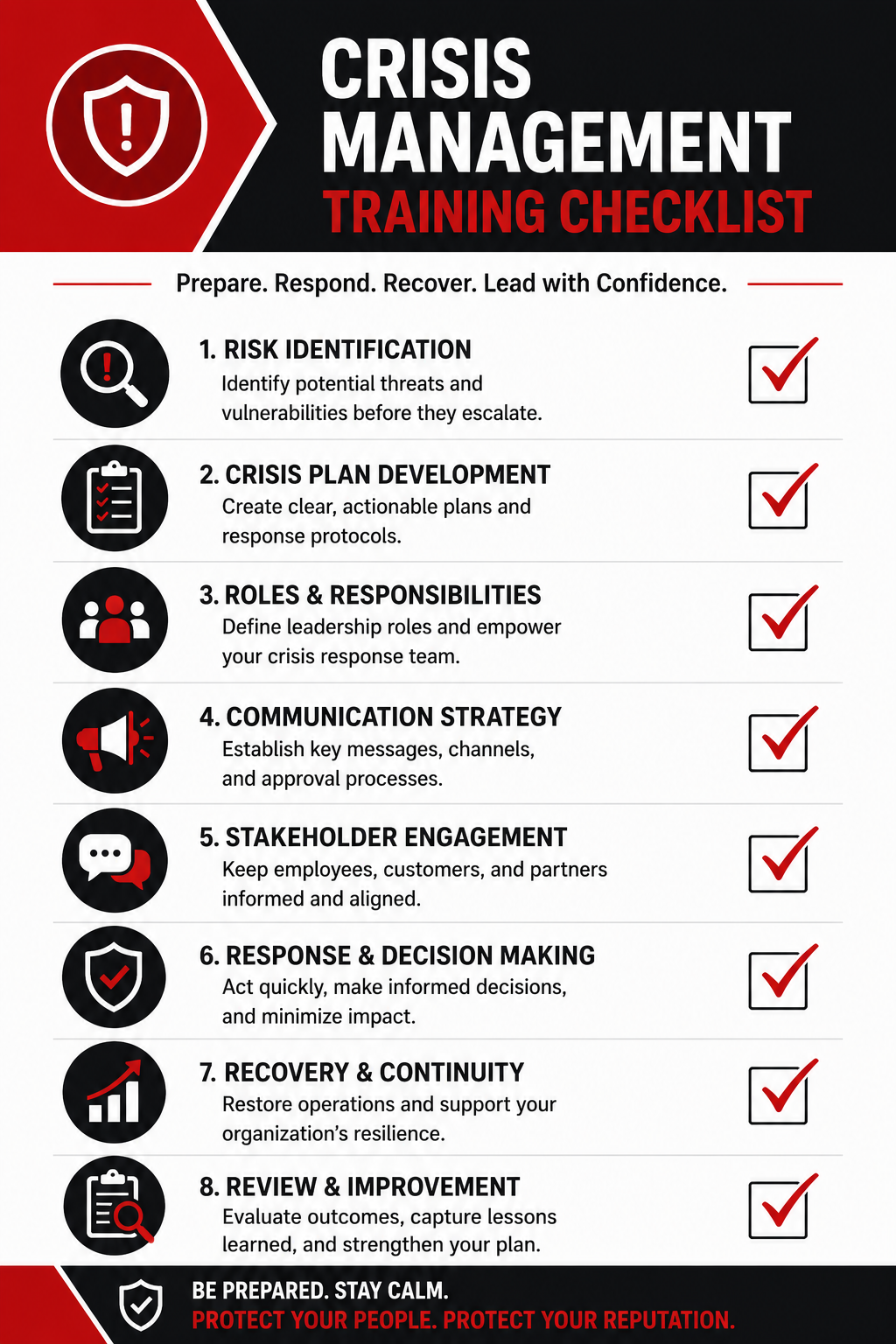
Crisis management training helps organizations prepare before a crisis occurs. Companies, universities, associations, and leadership teams benefit from structured planning that helps leaders identify and assess operational, financial, cyber, and health-related vulnerabilities before a crisis, strengthens decision-making, improves communication, and reduces organizational risk during any situation.
Masterly Consulting Group provides customized crisis management training that helps leadership teams prepare for operational and public crises through practical planning, realistic scenarios, and organization-specific strategies that build practical skills and the ability to adapt as threats evolve.
Why Crisis Preparation Matters
A crisis affects more than daily operations.
How leadership responds can influence employee confidence, customer trust, public perception, regulatory relationships, and long-term organizational stability. Delayed decisions or inconsistent communication may increase uncertainty and make recovery more difficult.
Preparing leadership before a crisis allows organizations to respond with greater confidence, coordination, and professionalism.
What Is Crisis Management and Crisis Intervention Training?
Crisis management training prepares executive leaders, managers, and response teams to make informed decisions during high-pressure situations.
Rather than relying on generic presentations, a customized course or program focuses on the organization's structure, leadership responsibilities, communication needs, and operational risks. It should use a mix of workshops, online modules, drills, tabletop exercises, simulations, functional exercises, and scenario discussions, so participants learn through practice and complete the training with skills they can apply during unexpected events.
Every organization faces different risks, making customized training far more valuable than standardized instruction.
Crisis Response Training and Practical Skills Strengthen Leadership Readiness
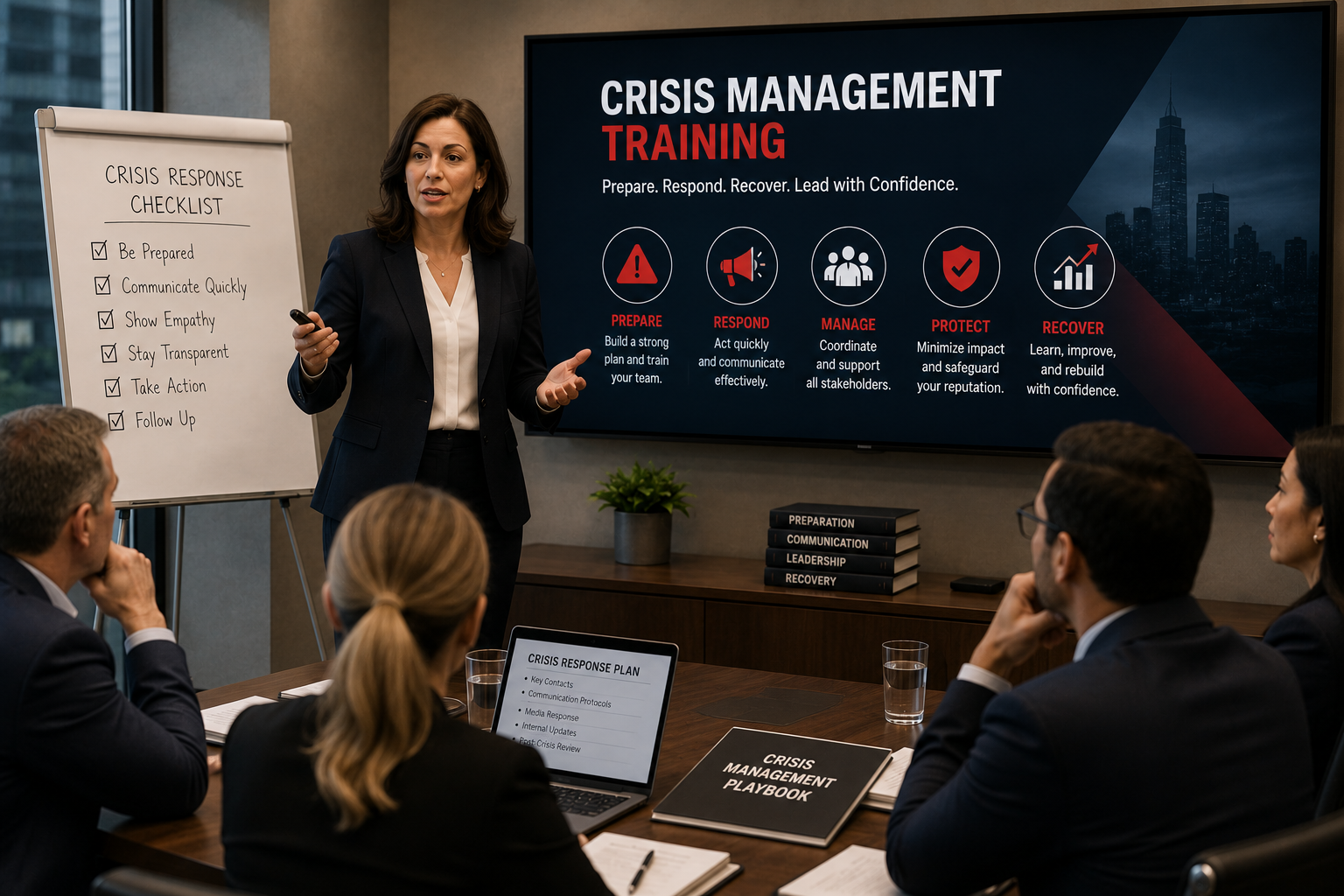
Effective crisis response training prepares leaders to respond quickly while maintaining organizational control.
Training often addresses situations involving:
- Operational disruptions
- Workplace emergencies
- Leadership transitions
- Public relations concerns
- Cybersecurity incidents
- Employee matters
- Regulatory inquiries
- Business continuity challenges
It may also cover behavioral health crises and mental health situations where leaders need to assist a person in crisis, including cases involving trauma or substance-related concerns and the aid available through proven response techniques.
Some crisis response course formats also emphasize de-escalation, officer safety, and more intensive 40-hour intervention training, such as Crisis Response and Intervention Training.
Leaders who understand their responsibilities before a crisis can respond more effectively when time-sensitive decisions must be made.
Organizational Crisis Training Supports Every Level of Leadership
Successful organizations rely on coordinated leadership during difficult situations.
Organizational crisis training helps executives, department leaders, managers, and response teams understand how to work together while maintaining clear communication and consistent decision-making. It also helps leaders recognize the role each function plays in protecting organizational culture and the work employees do to create value.
Organizations often include:
- Executive leadership
- Human resources
- Operations leaders
- Communications teams
- Legal advisors
- Department managers
- Safety personnel
- Board leadership
Clearly defined responsibilities improve coordination when challenges arise, and coordinated leadership should serve employees, clients, and the communities the organization supports.
Response Protocols Reduce Confusion During Behavioral Health Crises and Emergencies
Strong response protocols provide structure when organizations face unexpected events.
Training helps organizations develop procedures for:
- Leadership communication
- Internal notifications
- External messaging
- Incident escalation
- Decision approval
- Documentation
- Team coordination
- Recovery planning
Clear protocols help reduce uncertainty while improving organizational consistency during a crisis.
Leadership Roles Should Be Clearly Defined Before a Crisis
During a crisis, every leader should understand their responsibilities.
Clearly defined leadership roles help organizations avoid confusion by establishing who is responsible for decision-making, communication, operational oversight, and coordination with internal and external stakeholders.
Training supports leadership development by strengthening accountability and improving collaboration across roles, from manager to director, while helping those leading a response connect decisions across functions and assess the time spent in each role during a crisis.
Protecting Reputation Risk Through Better Preparation
Every crisis has the potential to affect public confidence.
Managing reputation risk requires thoughtful communication, consistent leadership, and well-coordinated organizational responses. Decisions made during the first hours of a crisis often influence how employees, customers, business partners, and the public view the organization.
Preparing leadership before problems occur helps organizations protect the trust they have worked hard to build.
Customized Crisis Training for Your Organization
Every organization has different operational challenges and leadership structures.
Masterly Consulting Group develops customized crisis management programs based on your:
- Industry
- Organizational structure
- Leadership responsibilities
- Operational risks
- Existing policies
- Communication challenges
- Strategic priorities
Our programs emphasize practical planning and realistic preparation that leaders can immediately apply within their organizations. Attendees can register for a program tailored to their organization and complete training aligned to their operational needs. Each customized program focuses on delivering instruction in the format that fits your team, including workshops or online sessions with video participation when needed.
Why Organizations Choose Masterly Consulting Group
Masterly Consulting Group partners with corporations, universities, nonprofit organizations, associations, healthcare organizations, and executive leadership teams seeking stronger crisis preparedness.
Our training programs help organizations strengthen leadership decision-making, improve coordination, reduce organizational risk, and protect their ability to deliver services, support partners, and keep operations secure during crises.
Our services include:
- Crisis management training
- Crisis response training
- Organizational crisis training
- Executive leadership coaching
- Crisis communication planning
- Leadership workshops
- Organizational preparedness consulting
Every engagement is customized to reflect the client's operational environment, leadership structure, organizational goals, and the needs of clients.
Building a Strong Foundation for Crisis Readiness
Effective crisis preparation creates a strong foundation for confident leadership when unexpected events occur. Masterly Consulting Group helps organizations work with internal teams, first responders, emergency responders, and outside agencies by providing practical tools and training materials that support coordinated decision-making. Whether a crisis is already happening or leaders are implementing preparedness plans for the future, organizations benefit from clear communication and defined responsibilities. Our programs bring leadership teams together to strengthen coordination, maintain stakeholder interest, and continue improving crisis readiness over time. We also encourage key decision-makers to join training sessions so every leader understands their role before a critical situation develops.
Frequently Asked Questions
What is crisis management training?
Crisis management training prepares leaders to respond effectively to operational, organizational, and public challenges through structured planning, communication, and decision-making. It is typically delivered as a structured program or course focused on practical skills for high-pressure situations.
Who should participate in crisis response training?
Crisis response training is valuable for executives, managers, human resources professionals, department leaders, communications teams, board members, and other individuals responsible for organizational leadership during emergencies, including leaders from businesses, nonprofits, healthcare organizations, schools, and other public-serving teams. Some organizations also include adults responsible for supporting employees or the public during emergencies.
What is organizational crisis training?
Organizational crisis training helps leadership teams coordinate responsibilities, improve communication, and strengthen organizational readiness before unexpected events occur, helping teams identify vulnerabilities, assess readiness, and adapt procedures over time.
Why are response protocols important?
Response protocols establish consistent procedures that help organizations communicate clearly, coordinate leadership actions, guide employee and leadership conduct, clarify the right action for each situation, and support a more complete response during a crisis.
Why should leadership roles be defined before a crisis?
Clearly defined leadership roles help ensure that decision-making responsibilities, communication duties, and operational oversight remain organized during time-sensitive situations. Built into training, leadership development helps leaders recognize their roles, connect decisions across teams, and serve the organization effectively.
Why is reputation risk important during a crisis?
Managing reputation risk helps organizations protect public trust, maintain stakeholder confidence, and support long-term organizational stability during and after a crisis, since poor conduct or service failures can undermine trust among employees, clients, and local communities.
Schedule a Crisis-Preparedness Consultation
Preparing before a crisis occurs gives your organization the opportunity to respond with confidence when leadership matters most. Professional crisis management training helps organizations strengthen communication, clarify leadership responsibilities, and improve organizational readiness before unexpected challenges arise.
Masterly Consulting Group provides customized crisis management training, crisis response training, and organizational crisis training designed to strengthen response protocols, define leadership roles, and reduce reputation risk for companies, universities, associations, and leadership teams.
Organizations may also request related mental health or crisis-response course options, including Mental Health First Aid and Youth Mental Health First Aid at 5.5 hours, Crisis Call Training for Emergency Call Centers at 16 hours, and a certificate of completion with a three-year certification period for eligible programs.
Masterly Consulting Group
Website: https://www.masterlygroup.com/
Phone: (972) 236-5051