NIL Compliance Training for Colleges, Coaches, and Athletic Departments
Build a Strong NIL Compliance Program Before Small Mistakes Become Major Risks
Name, Image, and Likeness opportunities have transformed college athletics since NCAA NIL policies took effect in July 2021, and all NCAA divisions now support NIL opportunities for student-athletes. NIL compliance means helping colleges and universities build policies, training, and procedures that support NIL deals—allowing student-athletes to earn compensation—while meeting institutional, regulatory, and legal requirements. Universities, athletic departments, coaches, athletic directors, compliance offices, conference leadership, booster organizations, support staff, student-athletes, and institutional leadership all face new responsibilities that require careful planning, clear communication, and consistent oversight. Without clear guidance, misunderstandings about NIL activities can create compliance concerns, harm institutional reputation, and expose athletic programs to avoidable risk.
Professional NIL compliance training helps educational institutions set expectations, educate stakeholders, and support informed decisions across leadership communication, student-athlete education, booster guidance, policy development, and risk reduction. A proactive approach combines training with ongoing monitoring and consistent oversight so colleges and athletic departments can respond to changing legal standards, reduce operational uncertainty, and manage compliance risk more effectively.
Masterly Consulting Group provides customized NIL training programs designed to help colleges, universities, conferences, and athletic departments strengthen compliance while protecting their programs and student-athletes.
Why Name, Image, and Likeness (NIL) Compliance Matters
The rules surrounding Name, Image, and Likeness continue to evolve. Since NIL policies took effect in July 2021 across NCAA, all NCAA divisions support NIL opportunities for student-athletes, and athletic departments must balance institutional policies, NCAA guidance, conference requirements, and state laws in a landscape shaped by legal changes while supporting student-athletes as NIL deals allow student-athletes to earn compensation.
Without consistent education, organizations may experience:
- Confusion about institutional responsibilities
- Inconsistent decision-making
- Increased compliance risk
- Unclear communication
- Operational uncertainty
- Damage to institutional credibility
Policies also change with user behavior and legal developments, so reviewing current practices helps institutions adjust their approach and measure progress through clearer outcomes. Effective risk reduction also leads to stronger operational efficiency and greater financial stability, creating long-term benefits for the business.
Professional NIL compliance training helps create consistency throughout the organization while reducing avoidable risk.
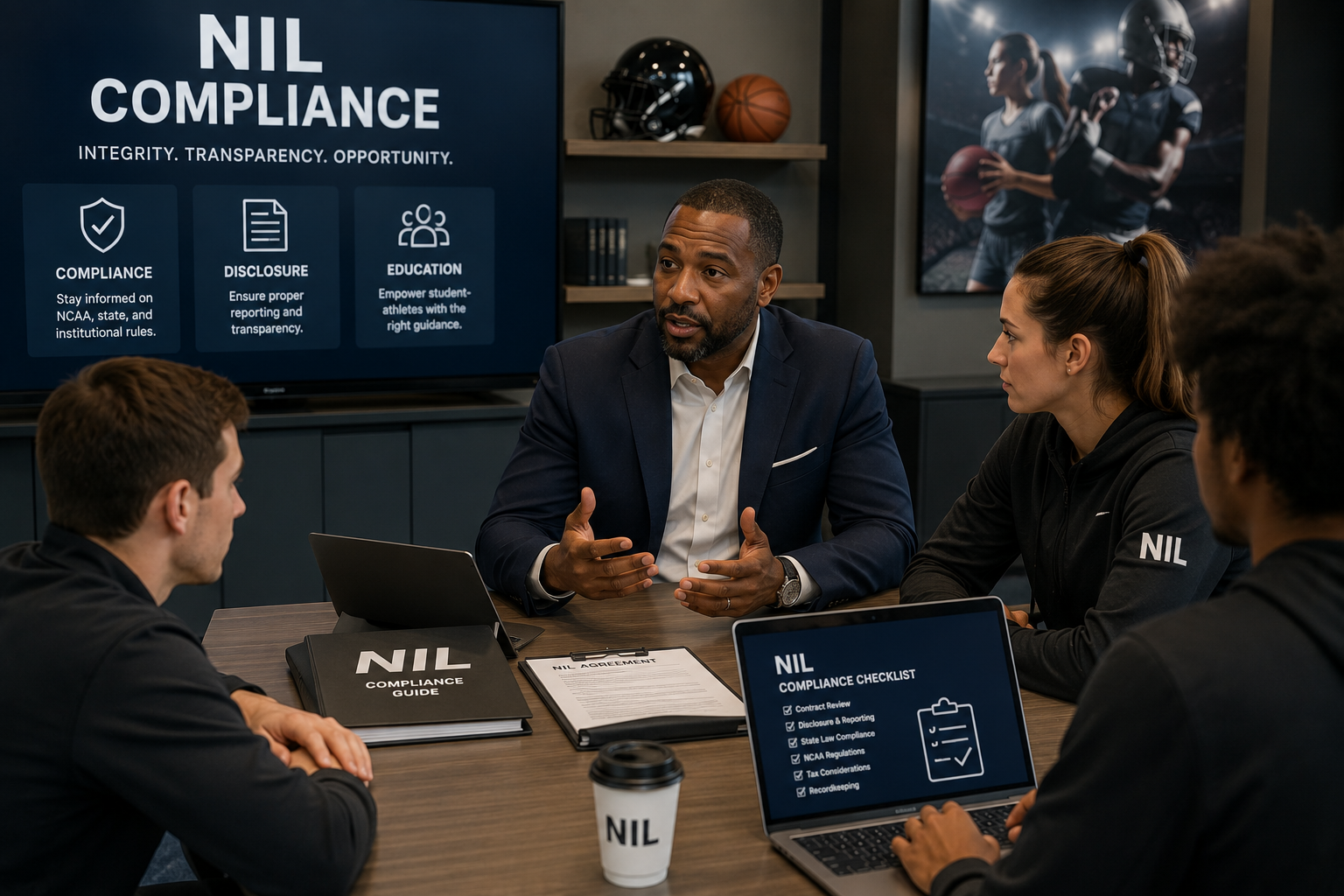
NIL Compliance Training Designed for Higher Education
Every institution has different compliance responsibilities.
Our NIL compliance training programs are customized to reflect your institution's structure, athletic programs, and organizational goals, recognizing that each school, the companies it works with, and key partners may play a role in the institution’s NIL process.
Masterly Consulting Group works with:
- Universities
- Colleges
- Athletic departments
- Athletic directors
- Compliance offices
- Coaches
- Conference leadership
- Booster organizations
- Student-athlete support staff
- Institutional leadership
Institutions often coordinate with outside services and partners that support NIL activities.
Each training engagement is designed around the institution's specific compliance priorities, since policies evolve due to user behavior and legal changes, and a defined process helps control responsibility across the organization while supporting effective risk reduction, operational efficiency, and financial stability.
NIL Training for Athletic Leaders
Effective NIL training provides more than a review of current rules.
It helps leaders understand how policies affect everyday decisions, makes them aware of compliance responsibilities and how those choices shape long-term outcomes, while promoting consistency across athletic departments.
Training topics may include:
- Institutional responsibilities
- NIL program expectations
- Leadership communication
- Compliance awareness
- Creating clear internal forms or documentation for NIL review and reporting
- Organizational accountability
- Decision-making processes
- Emerging regulatory developments
Every session is designed to provide practical guidance that supports long-term institutional success and helps leaders adopt stronger practices over the life of a program.
College Athletics Compliance Training That Supports Institutional Goals
Strong compliance begins with a solid foundation in risk identification and education.
Our college athletics compliance training helps athletic departments build a shared understanding of institutional expectations while reducing uncertainty surrounding NIL activities, so teams can gain a clearer difference between compliant support and prohibited inducement activity when everyone receives the same training.
Training may be provided for:
- Athletic administrators
- Coaches
- Compliance professionals
- Department leadership
- University executives
- Support personnel
By strengthening compliance knowledge across the organization, institutions are better prepared to respond consistently to changing requirements and participate more confidently in compliance efforts.
Student-Athlete Education Creates Better Decisions
Clear student-athlete education is an essential part of every successful NIL compliance program.
Student-athletes benefit from understanding institutional expectations, available resources, and that NIL income is typically taxable, especially as rules continue to evolve across college sports.
Educational sessions focus on promoting awareness while encouraging responsible participation within applicable policies and regulations in the broader sports environment. Risk identification is the foundation of any risk reduction strategy, and practical examples should cover compliant services athletes may need before signing agreements, such as tax, legal, or disclosure support, while also noting that improperly structured NIL deals can still create compliance problems even when the athlete intended to follow the rules.
Booster Guidance Helps Protect Athletic Programs
Boosters remain an important part of collegiate athletics, but they also play a role in institutional compliance.
Providing clear booster guidance helps supporters understand institutional expectations while reducing misunderstandings that could create a compliance threat when supporters are not given clear direction. It should also explain that NIL income is generally taxable for student-athletes, and that compensation cannot be used as an inducement or be structured as a reward for athletic performance.
Educational outreach encourages consistent communication and helps strengthen relationships between athletic departments and their supporters. For instance, any booster communication that appears to tie compensation to enrollment, transfer decisions, or on-field results should be escalated to the athletic department for review.
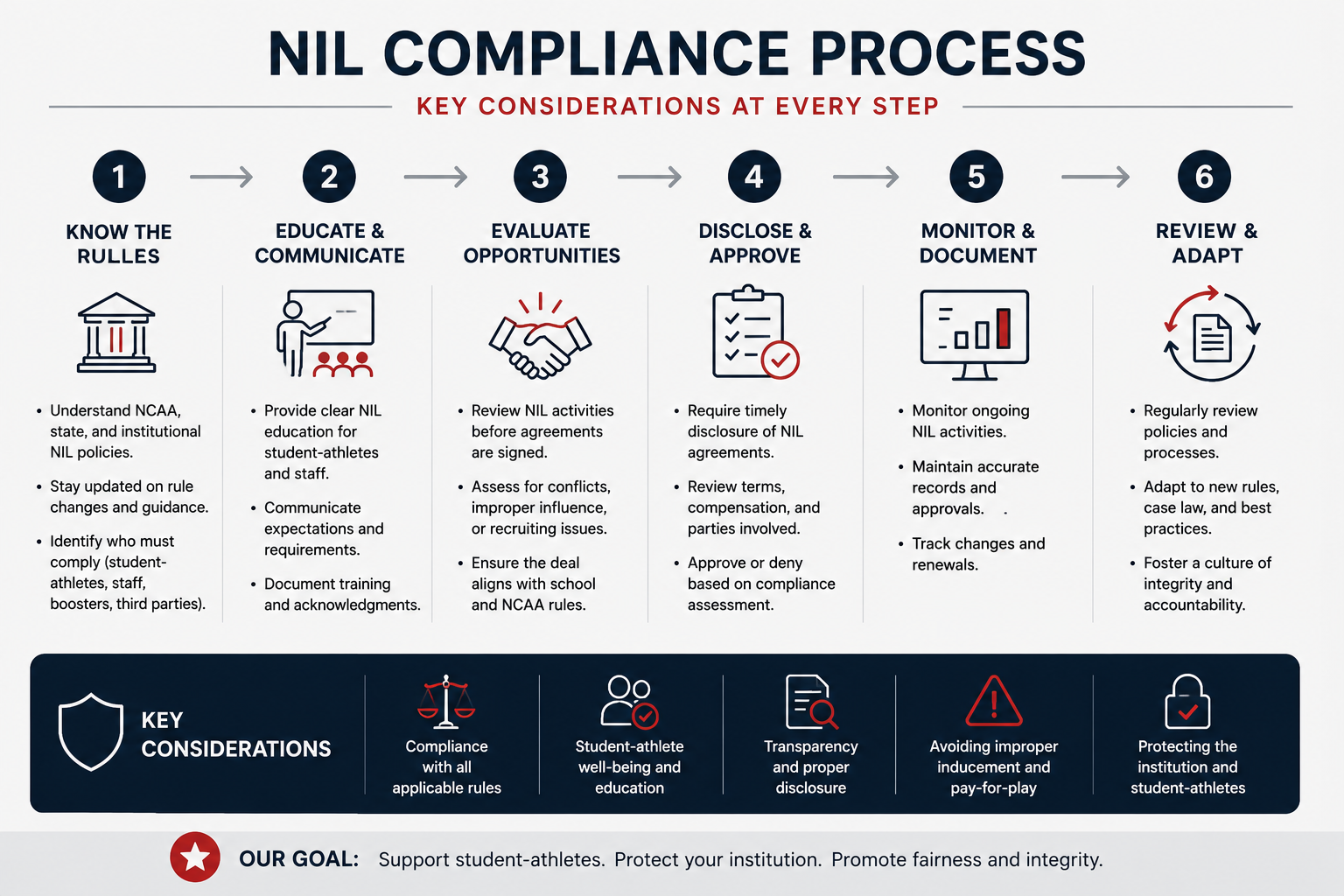
Policy Development Supports Long-Term Compliance
Effective NIL programs begin with thoughtful policy development.
Well-written policies publicly express clear expectations for coaches, student-athletes, staff, and university leadership, while internal policy documents guide specific enforcement actions.
Masterly Consulting Group works with institutions to evaluate existing practices, support teams creating stronger internal policies, and reinforce that NIL compensation cannot be contingent on athletic performance or used as inducements.
These policies can take different forms, including outward-facing standards and internal enforcement guidelines.
Clear policies also help improve communication across the athletic department, and they should be updated through regular reviewing so institutions can adjust them as laws and campus practices change.
Risk Reduction Through Proactive Education
The most effective compliance programs focus on prevention rather than reaction.
Our training programs emphasize risk reduction by helping institutions identify areas of exposure before selecting the right control measures and addressing potential concerns before they become larger compliance issues. Ongoing monitoring and reviewing of incidents helps institutions adjust strategies over time.
Proactive education supports:
- Better decision-making
- Consistent leadership
- Stronger internal communication
- Improved institutional confidence
- Long-term compliance planning
- Operational efficiency
- Financial stability
- Stronger market position
Reducing risk today helps protect the future of the athletic department and creates lasting benefits that allow programs to invest with greater confidence.
Why Institutions Choose Masterly Consulting Group
Athletic departments need more than a presentation.
They need experienced professionals who understand higher education, college athletics, the business side of college athletics, leadership development, compliance expectations, and organizational decision-making. Risk identification is the foundation of any risk reduction strategy, and effective risk reduction enhances operational efficiency and financial stability.
Institutions choose Masterly Consulting Group because we provide:
- Customized NIL training
- Higher education experience
- Leadership-focused instruction
- Practical compliance guidance
- Interactive training sessions
- Policy support
- Responsive communication
- Long-term partnership with experienced partners who help schools maintain quality standards and safety standards in training and reporting practices
Every training engagement is designed around the institution's goals, culture, compliance priorities, and safety, with guidance that helps institutions stay ahead of competition and protect program credibility.
Proactive Training Builds Stronger Athletic Programs
Waiting until compliance concerns arise often limits available options.
Regular NIL education helps athletic departments strengthen communication, improve consistency, and prepare leaders to respond confidently to evolving requirements by reviewing policies and tracking progress over time.
Investing in education today supports stronger compliance and helps institutions adjust before small issues become larger incidents, protecting institutional reputation tomorrow and better positioning programs to serve long-term institutional goals.
Building a Culture of Compliance Beyond the Game
Effective NIL compliance is about more than the game itself. Colleges and universities must balance athletics with academics, ensuring that student-athletes remain focused on both their educational and athletic responsibilities. Coaches, administrators, and faculty all play an important role in supporting compliance while helping students make informed decisions. Institutions that are interested in long-term success benefit from training that promotes consistency across every area of the athletic program.
Practical Training for Every Course of Leadership
Compliance is not limited to a single course or one training class. It requires ongoing education for coaches, athletic administrators, compliance staff, and institutional leaders. Masterly Consulting Group provides practical guidance and proven tools that help organizations strengthen communication, reinforce policies, and support confident decision-making as NIL requirements continue to evolve.
Supporting Student-Athletes in a Changing World
Today's student-athletes compete in an environment that is changing across the country and around the world. Institutions have a responsibility to provide guidance that supports responsible decision-making while protecting both the individual student-athlete and the athletic program. Whether advising an incoming freshman or helping a child transition into collegiate athletics through appropriate educational resources, our training helps institutions create a stronger foundation for long-term compliance and organizational success.
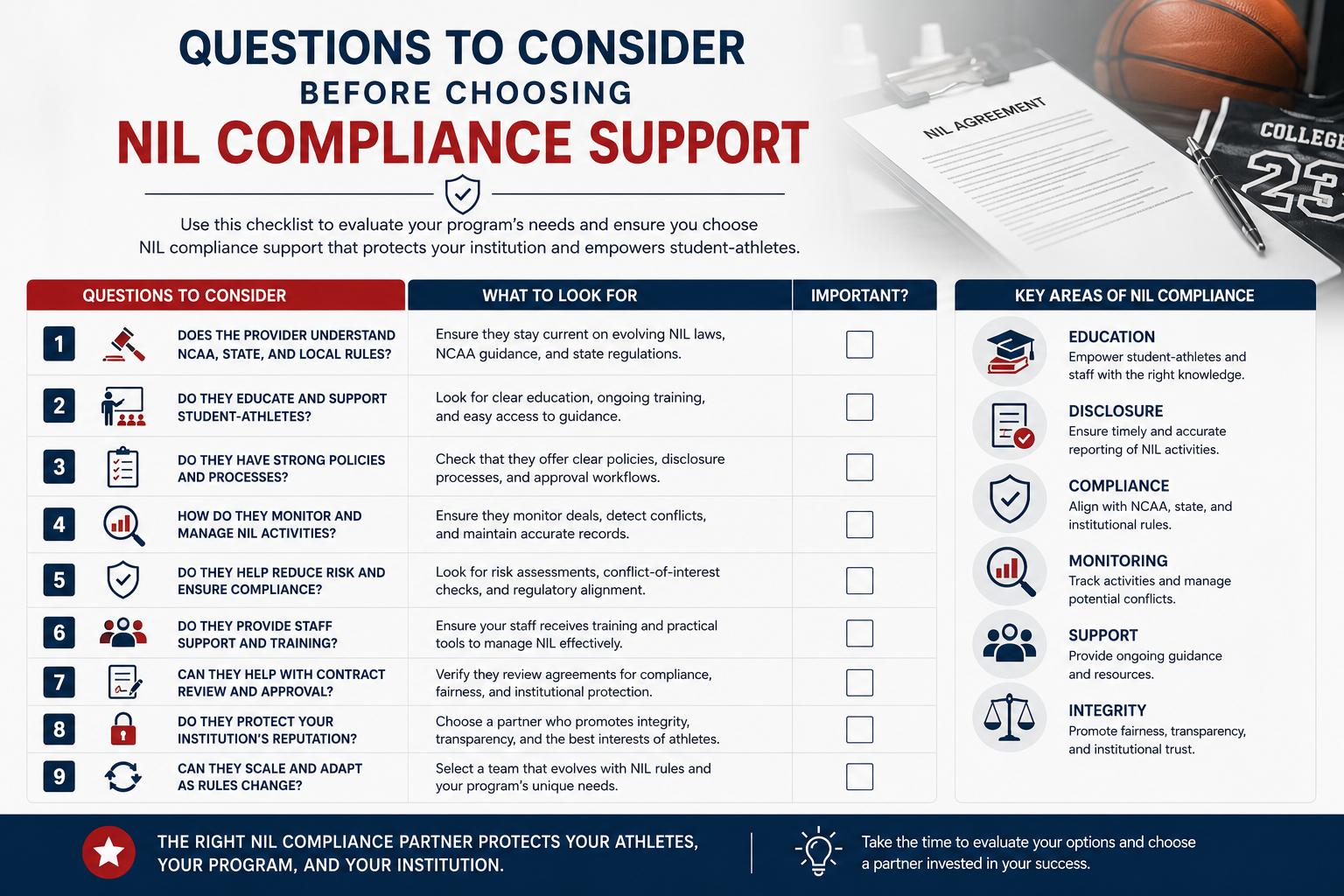
Frequently Asked Questions
What is NIL compliance?
NIL compliance involves helping colleges and universities develop policies, training, and procedures that support Name, Image, and Likeness activities while meeting institutional and applicable regulatory requirements, including legal reporting, documentation, and oversight responsibilities. In positive terms, it means building clear, workable systems that keep NIL activities aligned with current standards; nil compliance problems occur when institutions do not meet regulatory requirements during reporting periods.
Who should attend NIL training?
NIL training is valuable for athletic directors, coaches, compliance professionals, university leadership, student-athletes, booster organizations, and athletics support staff. When they play a role in NIL decisions, students, coaches, administrators, and support staff should participate in training, and peers and campus leaders benefit when the whole group shares the same expectations.
What does college athletics compliance training include?
College athletics compliance training may include NIL responsibilities, institutional policies, leadership expectations, communication strategies, and compliance best practices tailored to the organization. It may also include examples of covered topics, such as how nil deals are reviewed and why contracts involving prohibited industries such as gambling or alcohol are banned in NIL. Training may also cover third-party NIL deal reporting and the role of the College Sports Commission in managing that process, with a final focus on risk from outside companies or inexperienced agents when agreements are not structured properly.
Why is student-athlete education important?
Student-athlete education helps athletes understand institutional expectations, available resources, and their responsibilities when participating in NIL opportunities, including how deals are valued, what services they are expected to provide, and why unclear agreements create risk. It also helps student-athletes see the difference between real compensation for services and pay tied to athletic performance.
Why should booster organizations receive guidance?
Providing booster guidance helps supporters understand institutional expectations, including the different forms of communication and support that are permitted versus those that create inducement concerns, strengthens communication, and reduces compliance risks that could affect athletic programs. Clear direction also helps control risk and protect eligibility, especially because unclear agreements can lead to situations where compensation is paid without services provided.
How does policy development support NIL compliance?
Strong policy development is an ongoing process that includes creating clear expectations, assigning responsibility, improving consistency, supporting leadership decision-making, and reviewing policies over the life of the program to help institutions reduce compliance risk over time. Policies should also adjust as campus practices, laws, and reporting requirements change.
Request an NIL Compliance Training Proposal
Billions have flowed into college athletics since NIL policies began, making structured nil compliance more important than ever through informed leadership and consistent education. Whether your institution needs comprehensive NIL compliance training, college athletics compliance training, student-athlete education, booster guidance, policy development, or strategies focused on long-term risk reduction, we help institutions adopt training that protects eligibility, reputation, and long-term program stability.
Visit https://www.masterlygroup.com/ or call (972) 236-5051 to Request an NIL compliance training proposal and learn how customized training can help strengthen your athletic department and support long-term compliance success.