Strategy and Operations: Connecting Direction to Weekly Work
A company can have a strong strategy and still struggle to execute it.
Leadership may agree on the direction. The business may have clear growth goals. The annual plan may look strong on paper. But once the week begins, urgent issues take over, teams focus on different priorities, and important initiatives lose momentum.
This is where strategy and operations need to work together. In practice, strategy and operations connect an organization's long-term direction with the daily decisions, processes, resources, and work required to move it forward.
Strategy determines where the organization is going. Operations determines how the organization moves in that direction every day. When those two functions are disconnected, leadership can spend significant time planning without seeing consistent results, accountability can become unclear, initiatives can stall, and growth, customer experience, and employee confidence can all suffer.
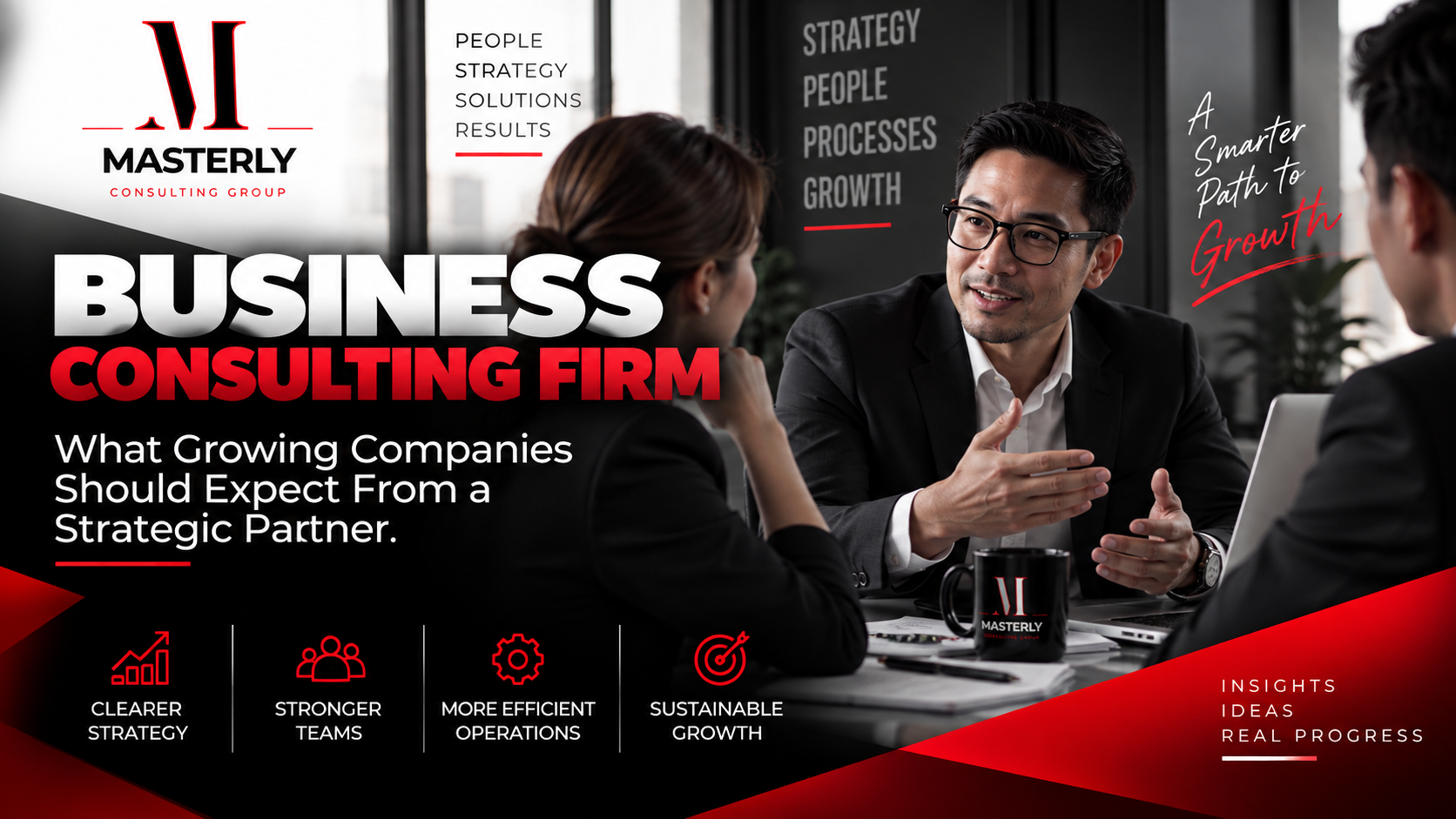
Masterly Consulting Group helps founders, executives, leadership teams, growing businesses, established organizations, and educational institutions connect strategic direction with operating decisions, priorities, accountability, and execution. This page explains how strategy and operations alignment works, where breakdowns typically happen, what strategy means for day-to-day operations, how consulting support can help, and what practical steps turn leadership direction into consistent execution.
When Strategy Does Not Reach the Work
One of the most common problems in growing organizations is the gap between what leadership says is important and what teams actually work on.
A leadership team may identify five major priorities. Then, within weeks:
- Teams are working on projects that do not clearly support those priorities.
- Leaders are pulled into daily operational problems.
- Different departments make decisions based on different goals.
- Important initiatives lack clear ownership.
- Meetings focus on urgent issues instead of strategic progress.
- Employees are unsure which work should come first.
- Leadership cannot easily see whether the strategy is producing results.
The issue is not necessarily a lack of effort.
People can work extremely hard and still move the organization in different directions.
The problem is alignment.
A strong strategy operations alignment connects leadership priorities to the decisions, resources, processes, and work happening throughout the organization.
Strategy and Operations Must Move in the Same Direction
Strategy cannot remain a presentation that leadership reviews once a year.
It has to influence what gets funded, what gets prioritized, who owns the work, how performance is measured, and what leaders discuss each week.
At the same time, operations cannot exist separately from strategy.
Operational decisions should support the direction the organization has chosen.
For example, if growth is a major strategic priority, leadership may need to examine whether current processes, staffing, technology, customer experience, and management capacity can support that growth.
If operational capacity cannot support the strategy, the organization may need to change its priorities or operating model.
That is the connection between operations strategy and strategic direction.
Masterly Consulting Group's current consulting work includes strategic planning, process optimization, efficiency improvement, business growth, digital transformation, and implementation support.
The Cost of Strategy and Operations Being Disconnected
A disconnect between strategy and operations can create problems that are easy to overlook.
A company may miss a growth opportunity because its processes cannot support increased demand.
A promising initiative may stall because nobody has clear ownership.
A leadership team may approve a new direction while departments continue operating according to older priorities.
Customers may experience inconsistent service because internal teams are not aligned.
Over time, these problems can affect more than productivity.
They can affect your company's reputation.
Customers do not see your internal strategy meetings. They experience the service, communication, delivery, and decisions that come out of those meetings.
Employees also notice when leadership priorities change without clear direction.
When the organization repeatedly announces priorities that do not translate into visible action, confidence can decline.
This is why strategic operations are not simply an internal management concern. They can influence how employees, customers, partners, and other stakeholders experience the business.
Strategic Operations Should Turn Strategic Objectives and Priorities Into Decisions
Effective strategic operations connect long-term direction with practical operating decisions.
Leadership should be able to answer questions such as:
- What are our most important priorities right now?
- Which initiatives directly support those priorities?
- Who owns each priority?
- What resources are required?
- Which decisions need executive attention?
- What should teams stop doing?
- How will progress be measured through key performance indicators and real-time dashboards that track critical operational metrics?
- When will leadership review performance?
- What needs to change if results fall behind, based on measurable outcomes tied to strategic objectives?
These questions help prevent strategy from becoming disconnected from the work.
Masterly Consulting Group's strategic management work emphasizes connecting direction to priorities, resource allocation, operating goals, accountability, performance measures, and execution.
The objective is not to create more meetings or more documents.
It is to create greater clarity about what the organization needs to do and how leadership will know whether it is working.
When Growth Exposes an Operating Problem
The need for better strategy and operations alignment often becomes clear during growth.
A business that worked well at one size may struggle at another.
More employees create more coordination needs. More customers create greater operational demands. New locations create more management complexity. New products create additional processes. Technology changes can affect roles, systems, and workflows.
The business may continue growing while the operating model falls behind.
This can create symptoms such as:
- Slow decision-making
- Repeated operational problems
- Unclear accountability
- Too many management approvals
- Competing departmental priorities
- Duplicated work
- Projects that remain unfinished
- Leaders spending too much time solving routine issues
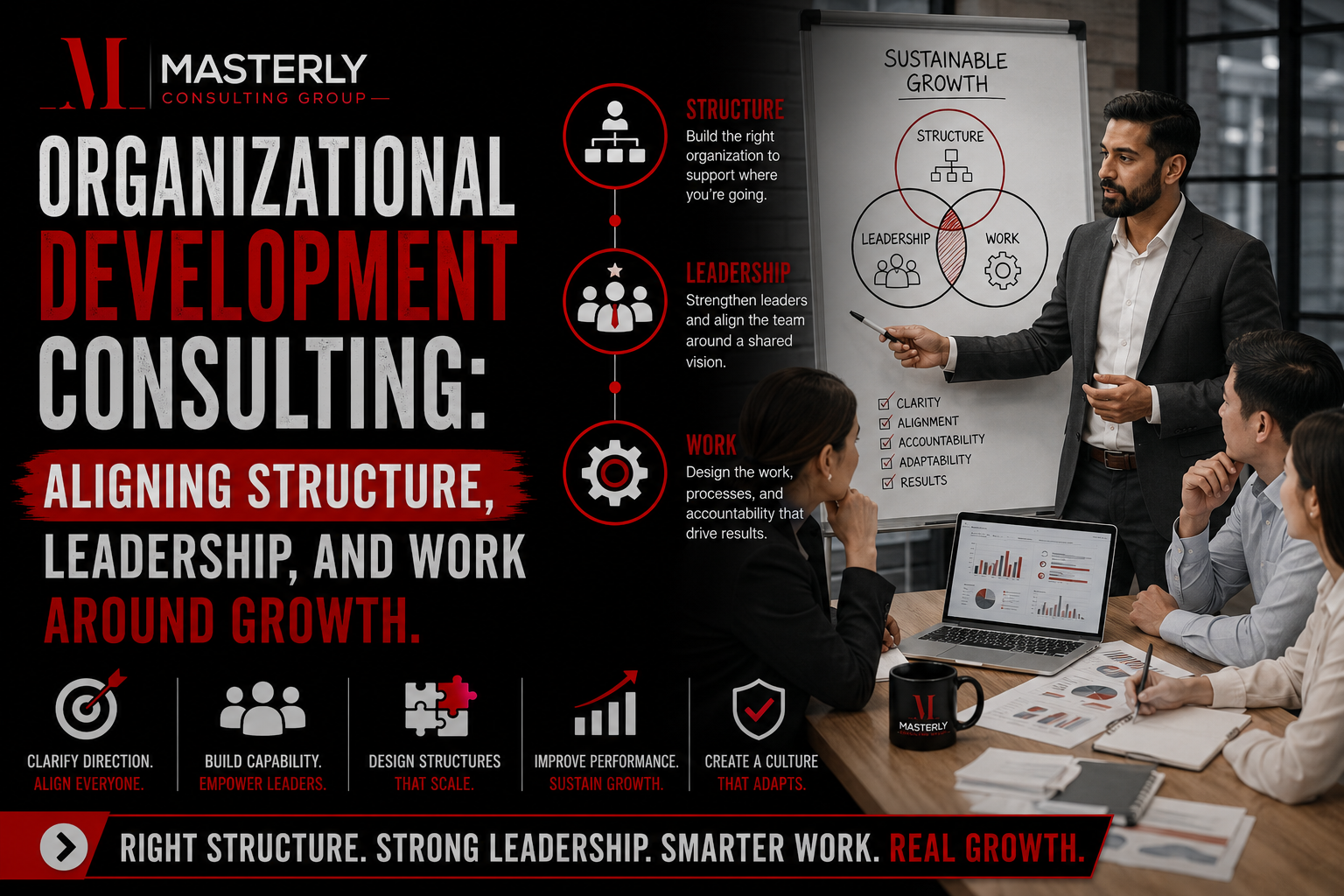
Masterly's organizational effectiveness work addresses areas such as decision-making, accountability, structure, processes, and execution systems because these elements determine how effectively an organization turns strategy into results.
Why Leadership Teams Bring in Outside Support
Founders and executives are often too close to daily operations to objectively evaluate the connection between strategy and execution.
They are managing customers, employees, finances, growth, risk, and unexpected problems at the same time.
An outside consulting partner can provide structure and an independent perspective.
Masterly Consulting Group works with entrepreneurs, managers, businesses, colleges, universities, and school districts, providing customized strategies based on each organization's needs. Its consulting process includes an initial consultation, strategic planning, implementation support, and ongoing evaluation.
For founders and leadership teams, this means the engagement can focus on the actual business problem rather than forcing the organization into a standard consulting model.
How Masterly Consulting Group Connects Strategy and Operations
Masterly Consulting Group takes a practical approach to consulting.
The firm works with leadership to understand the organization's challenges, define long-term strategic goals, shape strategic initiatives, support implementation, and evaluate progress over time.
Depending on the organization's needs, the work may include:
- Strategic planning
- Business growth planning
- Operating model assessment
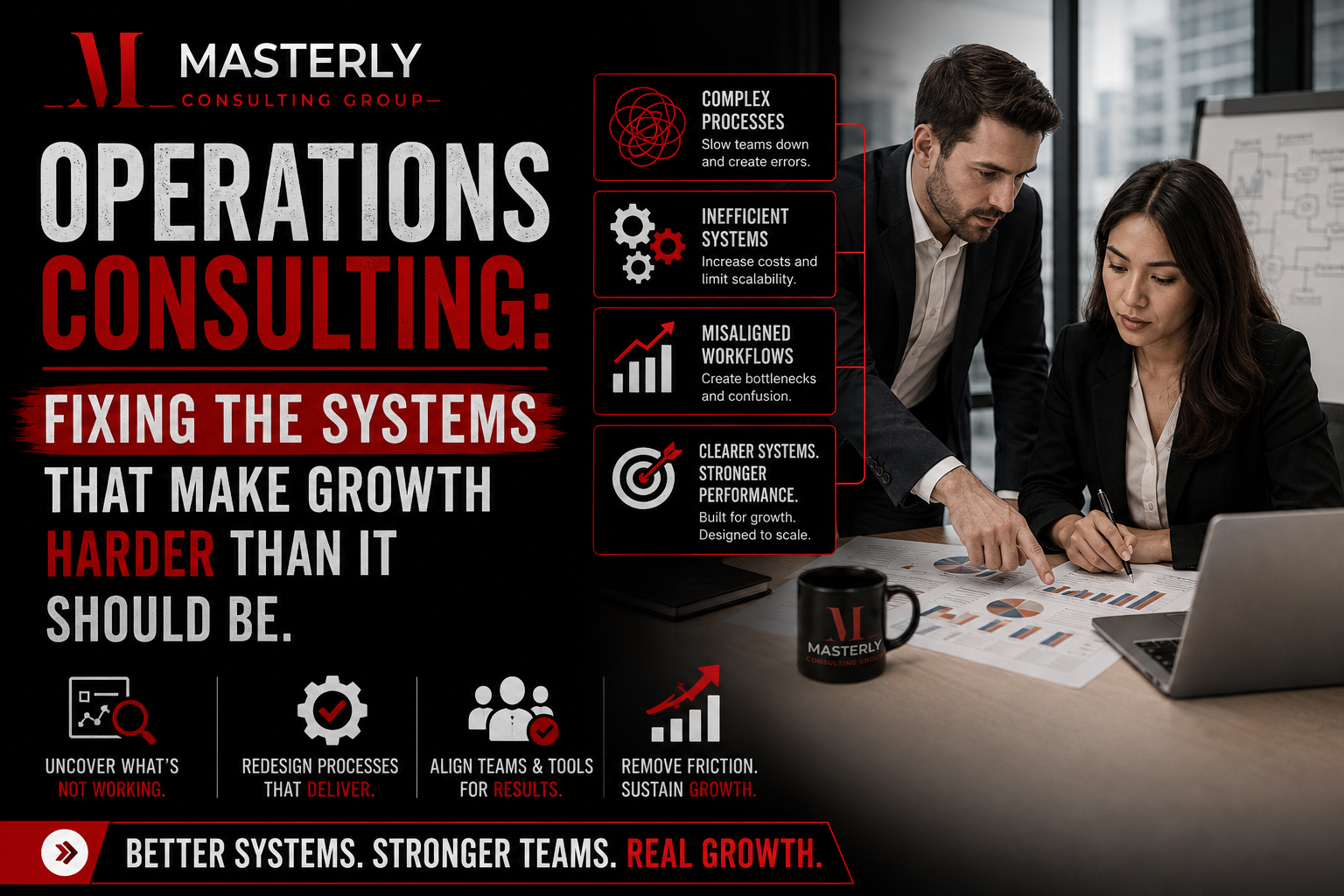
- Process optimization
- Organizational effectiveness
- Leadership alignment
- Accountability and decision clarity
- Performance measurement and continuous monitoring
- Digital transformation
- Implementation support
- Ongoing evaluation
Masterly's business transformation work specifically recognizes the operating model as the bridge between strategy and daily execution. Its approach can address governance, decision rights, processes, technology, talent, organizational structure, and performance management. Connecting strategy to day-to-day operations also requires the right granularity of detail, and advanced analytics can turn raw data into key performance indicators for better decision making.
This matters because strategy and operations cannot be separated when the organization is trying to make a major change.
A new strategy can affect staffing.
It can affect budgets.
It can affect technology.
It can affect processes.
It can affect reporting relationships.
It can affect customers.
The operating implications need to be considered alongside the strategic decision and relevant market trends.
A Better Connection Between Leadership Direction and Daily Work
Your leadership team should not have to choose between strategic thinking and operational control.
The goal is to connect them.
When strategy clearly informs operations, teams can better understand what matters, leaders can improve efficiency, different teams can see the big picture more clearly, leaders can focus their attention on higher-value decisions, and important initiatives have a clearer path toward execution.
The right structure also gives leadership visibility into whether the strategy is working.
If performance is falling behind, continuous monitoring and performance metrics help raise concerns earlier, support focus time for higher-value work, and help leaders identify the issue and make a decision rather than waiting until the next annual planning cycle.
That creates a more useful management rhythm around strategy.

Frequently Asked Questions About Strategy and Operations
What does strategy and operations mean?
Strategy and operations refers to the connection between an organization's long term objectives and its day to day operations, using measurable objectives to guide progress and turn priorities into actionable tasks.
Why is strategy operations alignment important?
Strategy operations alignment helps ensure that teams, resources, processes, and decisions support the organization's most important strategic priorities. Alignment across business functions plays a critical role in ensuring teams support strategic goals instead of working in silos, and stronger connectedness improves decision-making and financial performance.
What is an operations strategy?
An operations strategy defines how an organization will use its processes, people, resources, systems, and capabilities to support its broader business goals, setting the direction for operational goals across quality, cost, speed, and, where relevant, the supply chain. Done well, it can also create competitive advantage.
What are strategic operations?
Strategic operations connect business strategy to practical operating decisions, accountability, performance measures, and execution. They translate strategic goals into operational plans, key performance indicators, and measurable outcomes. Many organizations struggle with this: research shows only 37% of companies have a well-defined strategy, and 35% believe their strategy will lead to success.
How do I know if my strategy and operations are disconnected using key performance indicators?
Common signs include competing priorities, unclear ownership, slow decisions, stalled initiatives, duplicated work, and leadership spending too much time solving operational problems. Reviewing processes can also help identify areas where bottlenecks, variation, or inefficiencies are keeping strategy from turning into results, and clearer, standardized workflows often improve productivity, engagement, and service quality.
Can strategy and operations consulting help during growth?
Yes. Growth often creates new demands on processes, people, technology, leadership, and organizational structure. Consulting can help leadership evaluate those challenges and align operations with business goals.
Does Masterly Consulting Group provide strategy and operations consulting?
Masterly Consulting Group provides strategic planning, business growth, process optimization, operational improvement, digital transformation, implementation support, and project management support tailored to each organization's needs. That can include helping project managers coordinate strategic initiatives, maintain clear project timelines, build contingency plans, and work across other tools when implementation needs stronger coordination and visibility.
Who can benefit from strategy and operations support?
Founders, executives, leadership teams, growing businesses, established organizations, and educational institutions can benefit when strategic priorities are not translating effectively into daily operations. Masterly serves businesses as well as colleges, universities, and school districts, helping align sales teams and other departments around strategic priorities and the big picture goals of the organization.
Request a Strategy Consultation
If your organization has a clear direction but struggles to turn that direction into consistent weekly work, the problem may not be your strategy.
The problem may be the connection between strategy and operations.
Masterly Consulting Group can help leadership teams evaluate that connection, clarify priorities, improve operating effectiveness, streamline workflows that can lead to significant cost savings, and develop a practical path from strategic direction to execution that supports more sustainable growth.
The firm's approach is customized to the organization's goals and includes implementation support and ongoing evaluation, not simply a strategy document delivered at the end of an engagement.
Call Masterly Consulting Group at (972) 236-5051 or visit Masterly Consulting Group to request a strategy consultation.
Connect your direction to the work that moves your organization forward.