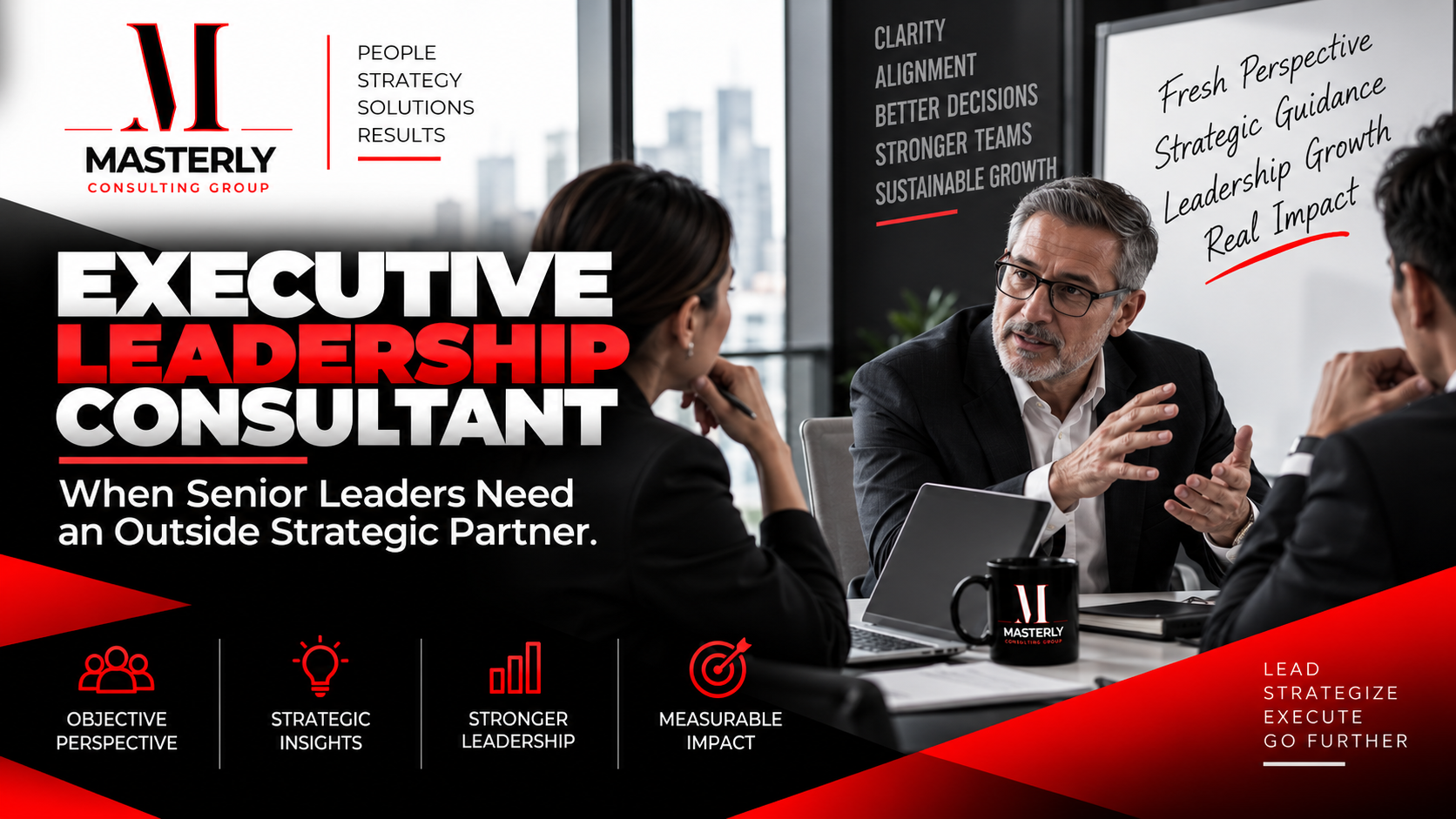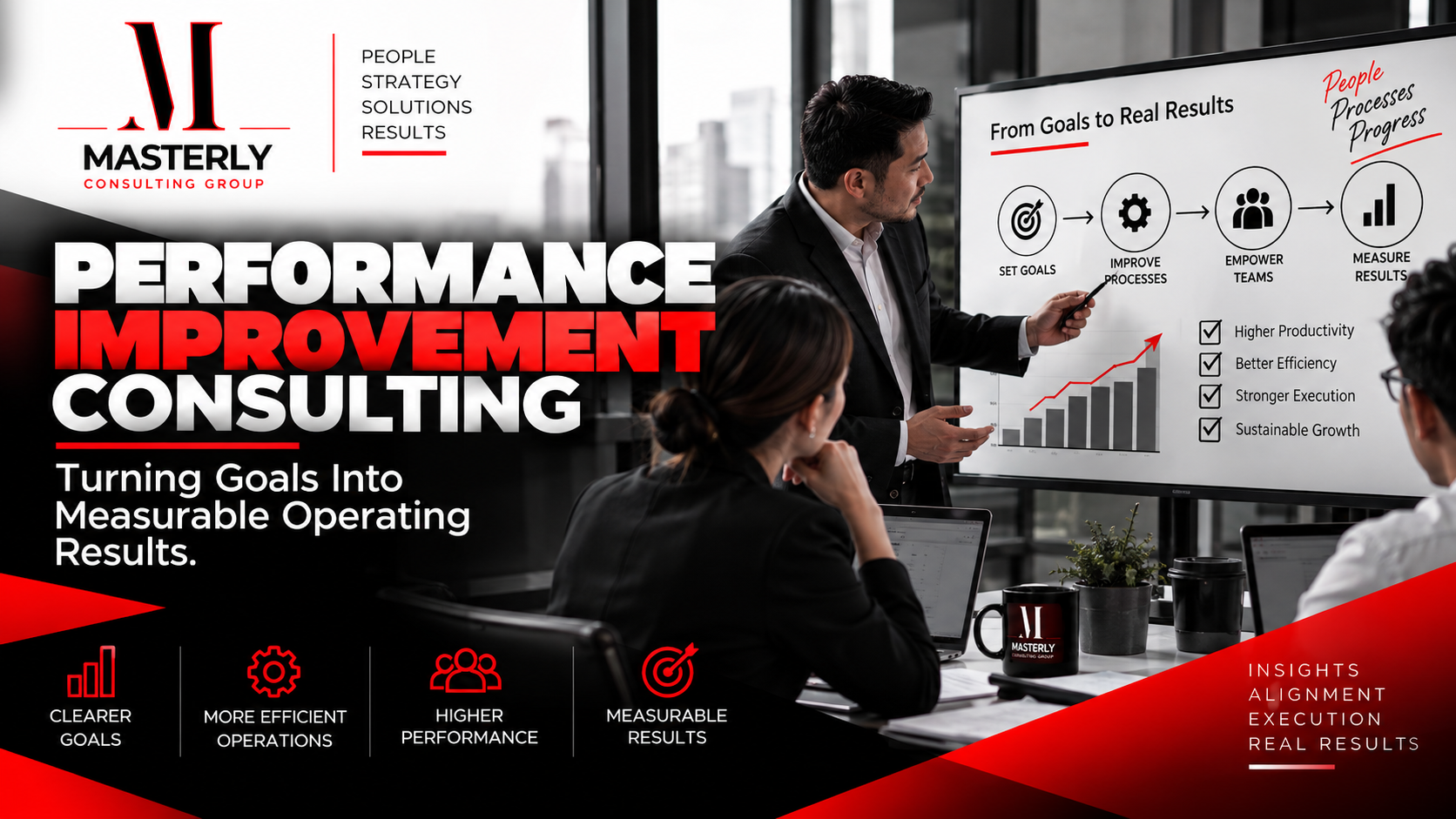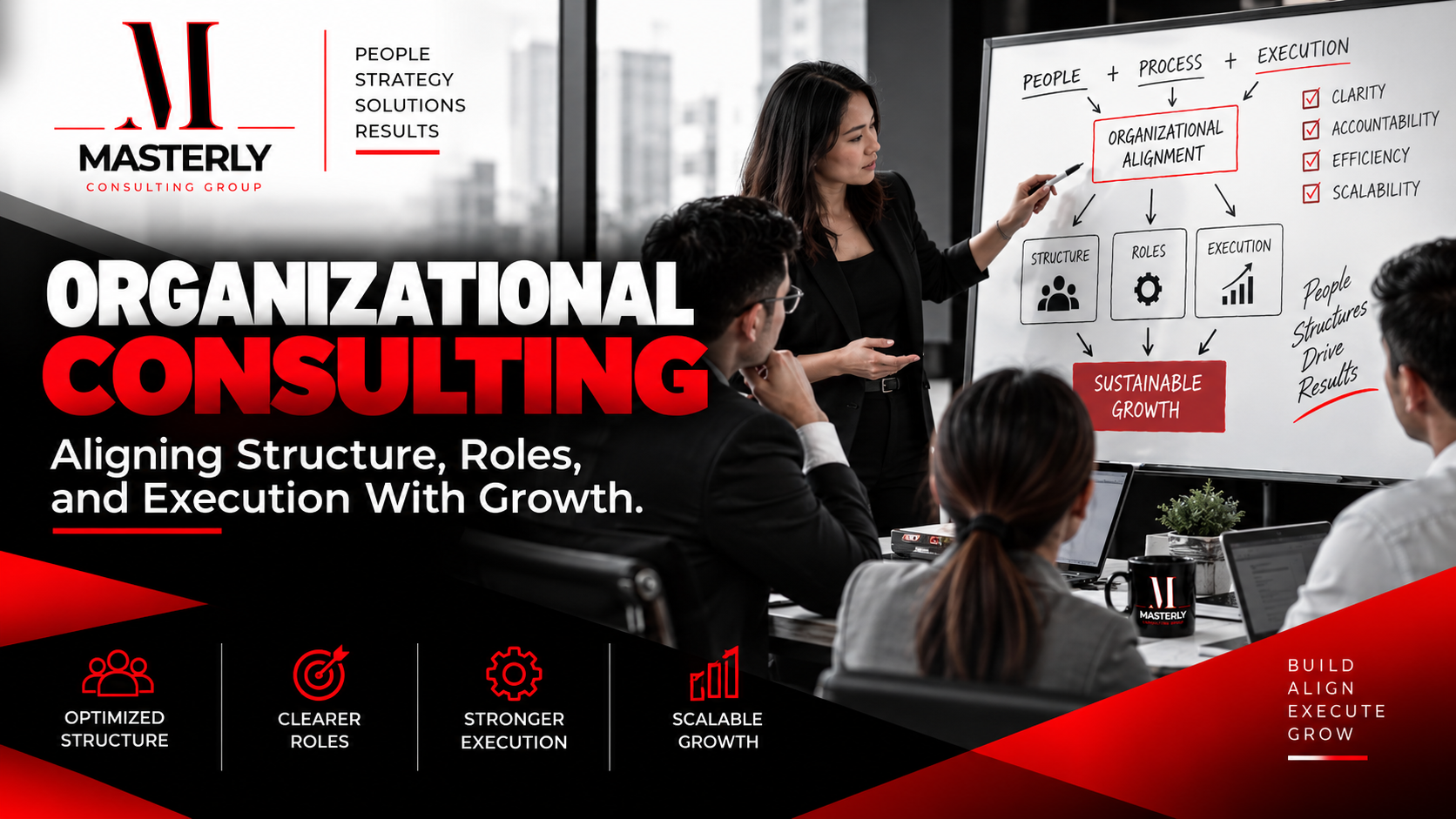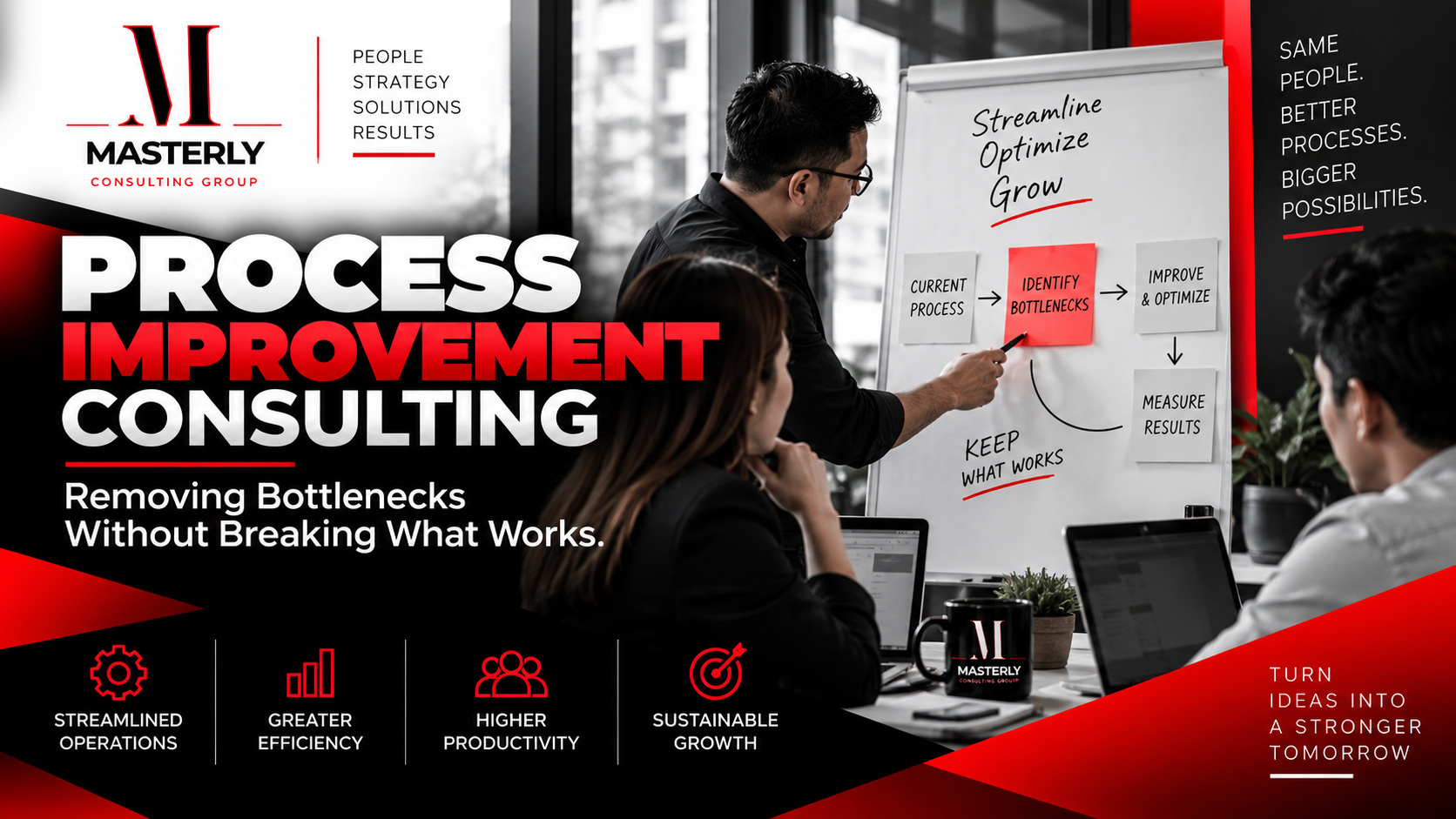
Senior Executive Coaching When Experienced Leaders Need a Different Kind of Support
Senior leaders are expected to provide direction even when the right answer is unclear. They make decisions that affect employees, customers, revenue, culture, and public trust. At the same time, fewer people inside the organization can challenge their thinking openly.
A founder leading a larger company may still rely on habits that worked when the team was smaller. A newly promoted executive may need to lead former peers. An experienced leader may be navigating a merger, restructuring, succession, conflict, or a period of rapid growth.
These situations require more than general leadership advice. Senior executive coaching provides a confidential and structured setting where experienced leaders can examine decisions, strengthen leadership effectiveness, and prepare for higher-stakes responsibilities.
Masterly Consulting Group provides coaching for senior executives and founders who need focused support around leadership, transitions, organizational growth, and execution.
Why Senior Leaders Need a Different Kind of Support
As leaders gain authority, the quality of honest feedback often declines. Employees may be careful about raising concerns. Peers may have competing priorities. Board members and investors may focus on results without seeing the day-to-day leadership pressures behind them.
The executive can become surrounded by information while still lacking a safe place to think.
This problem may appear when:
- The organization has outgrown its current leadership structure
- A senior leader is managing a larger or more complex team
- Important decisions remain unresolved
- Different departments are competing instead of collaborating
- The leadership team avoids difficult conversations
- A transition has changed roles or expectations
- The executive is carrying too many operating decisions
- Employee trust or engagement is declining
- The company’s strategy is not becoming measurable work
- The leader’s communication style is creating confusion
An executive coach for senior leaders provides outside perspective without becoming part of the organization’s internal politics. The goal is not to make decisions for the executive. It is to improve how the leader evaluates information, understands impact, and follows through.
What Senior Executive Coaching Should Address
Effective coaching begins with the leader’s actual responsibilities and the organization’s needs, combining proven methodologies with tailored approaches. It should not rely on a standard list of leadership topics that ignores the business context.
A senior executive coaching engagement may address:
- Decision-making under uncertainty
- Executive communication
- Strategic focus
- Leadership-team effectiveness
- Delegation and accountability
- Organizational change
- Conflict and difficult conversations
- Stakeholder management
- Founder-to-executive transitions
- Role clarity
- Succession planning
- Executive presence
- Culture and trust
- Personal leadership patterns
- Sustainable performance
Measurable action plans help connect leadership goals to business outcomes.
The International Coaching Federation describes coaching as a partnership that helps people develop solutions, clarify goals, and strengthen professional potential through thoughtful questions and dialogue. International Coaching Federation
At the senior level, this partnership must respect the leader’s experience while still creating room for challenge, and effective coaching is often data-driven and evidence-based. Experienced executives do not need someone to repeat basic management advice. They need a process that helps them see what their position, habits, or assumptions may be preventing them from seeing.
Higher-Stakes Decisions Need Structured Thinking
Senior executives often make decisions with incomplete information. Waiting for certainty may not be possible, but moving too quickly can create financial, operational, or reputational harm.
Leadership coaching for executives can provide a disciplined setting for examining:
- What decision must be made
- Which facts are known
- Which assumptions are being treated as facts
- Who will be affected
- What risks have not been discussed
- Which voices are missing
- What tradeoffs leadership is accepting
- How the decision will be communicated
- Who will own implementation
- How progress will be reviewed
This is not a step-by-step formula for making every decision. It is a way to improve the quality of the executive’s judgment.
The coaching conversation may reveal that the leader is avoiding conflict, relying too heavily on one source, or trying to protect a past decision. It may also confirm that the executive has the right direction but needs a stronger plan for alignment and execution.
Leading Larger Teams Requires a Shift in Role
A leader can succeed with a small team by staying close to every project. That same approach becomes a problem when the organization grows.
Senior leaders cannot remain the main decision-maker for every department. When too many decisions move upward, managers lose authority, employees wait for answers, and the executive becomes a bottleneck.
Senior leadership coaching can help an executive examine:
- Which decisions should remain at the senior level
- Which decisions should move closer to the work
- Whether managers have clear authority
- How accountability is being handled
- Where responsibilities overlap
- Whether the executive team is operating as a team
- How information reaches leadership
- What the leader should stop owning personally
Delegation is not simply giving away tasks. It requires clear outcomes, decision rights, resources, and follow-up. An executive who delegates work but keeps all authority has not truly changed the leadership system.
Masterly Consulting Group helps leaders connect their personal leadership choices to the structure and performance of the wider organization.
Executive Communication Shapes Trust
Employees often interpret a leader’s silence, timing, tone, and choice of words as signals about what matters. A short message from a senior executive can affect confidence across the company.
Communication becomes especially important during growth, restructuring, leadership changes, layoffs, mergers, or periods of uncertainty. Employees want accurate information, but executives may not be able to share every detail. This is where emotional intelligence is crucial for managing high-level interpersonal dynamics.
Leadership coaching for executives can help a leader consider whether communication is:
- Clear about what is known
- Honest about what remains undecided
- Consistent across leadership levels
- Connected to the organization’s priorities
- Appropriate for the audience
- Supported by visible action
- Delivered at the right time
A message loses credibility when employees hear one priority but experience another. Senior leaders must align communication, decisions, and resource allocation.
Coaching can help the executive identify gaps between intended meaning and actual impact. This protects leadership credibility and strengthens trust during difficult periods.
Transitions Can Expose Leadership Gaps
Executive transitions change more than a title.
A newly appointed senior leader may inherit unresolved problems, established relationships, and expectations that were never clearly stated. A founder moving into a more strategic role may struggle to release operating control. A leader preparing for succession may need to transfer knowledge and authority without weakening confidence. The same is often true during a major career transition, when a leader has to establish credibility quickly in a new context.
Transitions may include:
- Promotion into executive leadership
- Movement from functional leader to enterprise leader
- Founder-to-chief-executive growth
- Appointment to lead a larger team
- Merger or acquisition
- Organizational restructuring
- Board or ownership changes
- Planned succession
- Departure of a key executive
- Return after a major disruption
Coaching provides structure for understanding the new role, setting priorities, and building the relationships needed to lead effectively, which can accelerate performance in the first 100 days.
It can also reduce onboarding time from 18-24 months to 6 months.
The purpose is not to produce a rigid transition plan. It is to help the leader understand what must change in their thinking, behavior, and use of time.
Conflict at the Senior Level Has Wider Consequences
Conflict between senior leaders rarely stays contained. Employees notice delayed decisions, competing instructions, withheld information, and changes in behavior.
Unresolved executive conflict can affect:
- Strategic execution
- Cross-department cooperation
- Employee morale
- Customer experience
- Budget decisions
- Talent retention
- Board confidence
- Organizational reputation
A senior executive may avoid conflict to protect a working relationship. Another may address concerns so directly that the conversation becomes harder to resolve.
An executive coach for senior leaders can help the client understand the issue, prepare for a difficult conversation, and distinguish personal tension from a real disagreement about priorities, authority, or performance.
Coaching does not replace mediation, legal advice, or a formal investigation when those services are required. It can help the executive lead responsibly before, during, or after a challenging situation.
Leadership Patterns Become Organizational Patterns
Senior leaders shape more than decisions. Their behavior influences how the rest of the organization operates.
If the executive delays difficult decisions, managers may do the same. If the leader rewards urgent work over planned work, teams may remain in constant reaction mode. If the executive dismisses disagreement, employees may stop raising risks.
These patterns can become part of the culture even when the leader never intended them.
Senior leadership coaching creates space to examine questions such as:
- What behavior does the leader reward?
- What do employees avoid discussing?
- Which problems repeatedly reach the executive?
- How does the leader respond to bad news?
- Does the team understand what good performance means?
- Are accountability standards consistent?
- What leadership habits no longer serve the organization?
Greater self-awareness matters only when it changes behavior. A useful coaching engagement connects insight to action, communication, and measurable leadership practices.
How Executive Coaching Supports Organizational Reputation
A senior leader’s decisions can affect how employees, customers, partners, regulators, and the public view the organization.
Poorly managed change may cause employees to lose trust. Inconsistent leadership may weaken the customer experience. A rushed public response may create reputational damage that lasts longer than the original issue.
Senior executive coaching helps leaders consider both immediate business needs and wider organizational impact. This may include how a decision will be understood, what stakeholders need to know, and whether leadership can explain the reasoning clearly.
Coaching cannot remove every risk. It can help the executive approach difficult moments with stronger judgment, greater awareness, and a more deliberate communication plan.
What a Strong Coaching Engagement Should Include
A senior executive coaching engagement should have a clear purpose. Strong executive coaching services should create a confidential space while also connecting the work to defined leadership outcomes and organizational goals.
Coaching sessions are typically scheduled regularly and often run for six to twelve months to support behavioral change. An engagement may include:
- An initial leadership and organizational review
- Clear coaching objectives
- Regular confidential sessions
- Decision-focused discussion
- Leadership feedback
- Action commitments
- Progress reviews
- Alignment with organizational priorities
- Stakeholder input when appropriate
- A closing review of progress and continuing needs
The exact structure depends on who sponsors the engagement. Some executives hire a coach directly. In other cases, the organization or board supports the engagement.
When the company sponsors coaching, expectations about confidentiality and progress reporting should be clear. The executive needs a protected space for honest discussion, while the organization may need to understand whether the engagement is supporting agreed goals.
Senior Executive Coaching From Masterly Consulting Group
Masterly Consulting Group provides done-for-you senior executive coaching and executive leadership coaching for executive leaders facing complex decisions, managing complex teams, transitions, and higher-stakes decisions.
Our coaching support may include:
- Executive decision support
- Leadership-role clarification
- Strategic focus
- Communication planning
- Delegation and accountability
- Executive-team effectiveness
- Organizational transition support
- Conflict preparation
- Leadership-pattern review
- Stakeholder management
- Founder leadership development
- Succession discussions
- Action planning and progress review
We begin with the executive’s actual responsibilities and the organization’s current needs, with the work aligned to the organization's goals and business goals. The engagement is structured around the decisions, relationships, and leadership behaviors that matter most. Our executive coaches work closely with leaders to strengthen leadership impact and support sustainable change.
Masterly Consulting Group provides a professional outside perspective while respecting the leader’s experience, authority, and responsibility for final decisions, helping senior leaders build strong leadership in support of the organization's success.
Developing Leaders in Complex and Uncertain Environments
Developing leaders requires more than preparing them for predictable decisions. C-suite executives often lead global teams, manage competing demands, and guide organizations through complex and uncertain environments.
Senior executive coaching helps by enabling leaders to clarify shared priorities, communicate expectations, and keep different departments working toward shared goals. This support can play a key role during organizational transformation, rapid growth, or other periods of transformational change.
Leadership Across Global Organizations
Global organizations require leaders to work across cultures, locations, and professional backgrounds. Cultural intelligence and cross-cultural communication can affect trust, decision-making, and how global teams respond to change.
Expert coaching can help executives examine their assumptions, strengthen communication, and develop a deep understanding of how leadership decisions may be received. Focus groups, stakeholder feedback, and input from other organizations may also provide useful context when appropriate.
Connecting Coaching With Talent and Execution
Executive coaching may support talent management, talent development, project management, and the work of program managers. It helps leaders connect personal growth with the systems responsible for business execution.
Professional coaches may bring industry insights from multiple industries. Some may also offer experience as a former CEO or senior executive. The right background depends on the leader’s goals, organization, and current challenges.
Strong coaching recognizes that executives have personal lives as well as professional responsibilities. Sustainable leadership should help leaders create real progress without ignoring the personal demands that affect judgment, energy, and long-term performance.
Frequently Asked Questions About Senior Executive Coaching
What is senior executive coaching?
Senior executive coaching is confidential, structured support for experienced leaders managing complex decisions, teams, transitions, or organizational responsibilities. It helps executive leaders build new skills that strengthen decision-making, communication, and overall leadership effectiveness.
Who benefits from senior leadership coaching?
Senior executives, founders, chief executives, functional leaders, and newly promoted enterprise leaders may benefit from coaching. It can also support top leaders, high performing leaders, and emerging leaders as part of broader leadership development and succession planning. Organizations may also use coaching to support top talent and strengthen the leadership pipeline.
What does an executive coach for senior leaders do?
The coach provides outside perspective, focused questions, accountability, and structured support around leadership decisions and behavior. Depending on the leader’s needs and the scope of the engagement, the coach may also serve as an external perspective or a business coach. The work is designed to help leaders strengthen leadership skills, apply leadership experience more effectively, and clarify priorities with key stakeholders.
Is leadership coaching for executives confidential?
Executive coaching is generally confidential, but the exact terms should be clear at the beginning, especially when an organization sponsors the engagement.
Can executive coaching help during a transition?
Yes. Coaching can help a leader clarify the new role, establish priorities, manage relationships, and adjust leadership habits during a transition or period of change management. Personalized coaching can accelerate a new leader’s impact in the first 100 days.
Does senior executive coaching include business advice?
It may include discussion of business context and leadership decisions. The exact scope depends on the engagement and whether consulting support is also needed.
How is coaching progress measured?
Progress may be measured through leadership goals, completed actions, feedback, decision quality, communication changes, team effectiveness, and organizational outcomes. It can also be evaluated through measurable outcomes tied to organizational goals and business outcomes. In coaching studies, 91% of leaders achieve higher goal attainment after coaching, and 56% report improved leadership effectiveness after coaching.
Is executive coaching only for performance problems?
No. Experienced and successful leaders often use coaching to prepare for growth, a larger role, succession, or a difficult strategic decision. It is also widely used for leadership development and professional development, with 40% of Fortune 500 companies using executive coaching.
How long does an executive coaching engagement last?
The length depends on the goals, situation, and pace of change. Many engagements last six to twelve months, depending on the leader’s goals, the pace of organizational change, and the desired sustainable success. Masterly Consulting Group defines the expected structure during the consultation process, with sessions designed to support lasting behavior change rather than a one-time conversation.
Request an Executive Coaching Consultation With Masterly Consulting Group
If a larger role, complex transition, or high-stakes decision requires a different kind of leadership support, senior executive coaching can provide a confidential setting for clearer thinking and stronger execution; research shows 56% of leaders report improved leadership effectiveness after coaching, and this support is designed to create a positive impact on leadership and business outcomes.
Call Masterly Consulting Group at (972) 236-5051 or visit MasterlyGroup.com to request an executive coaching consultation with Masterly Consulting Group and find the right coach for the leader’s goals.