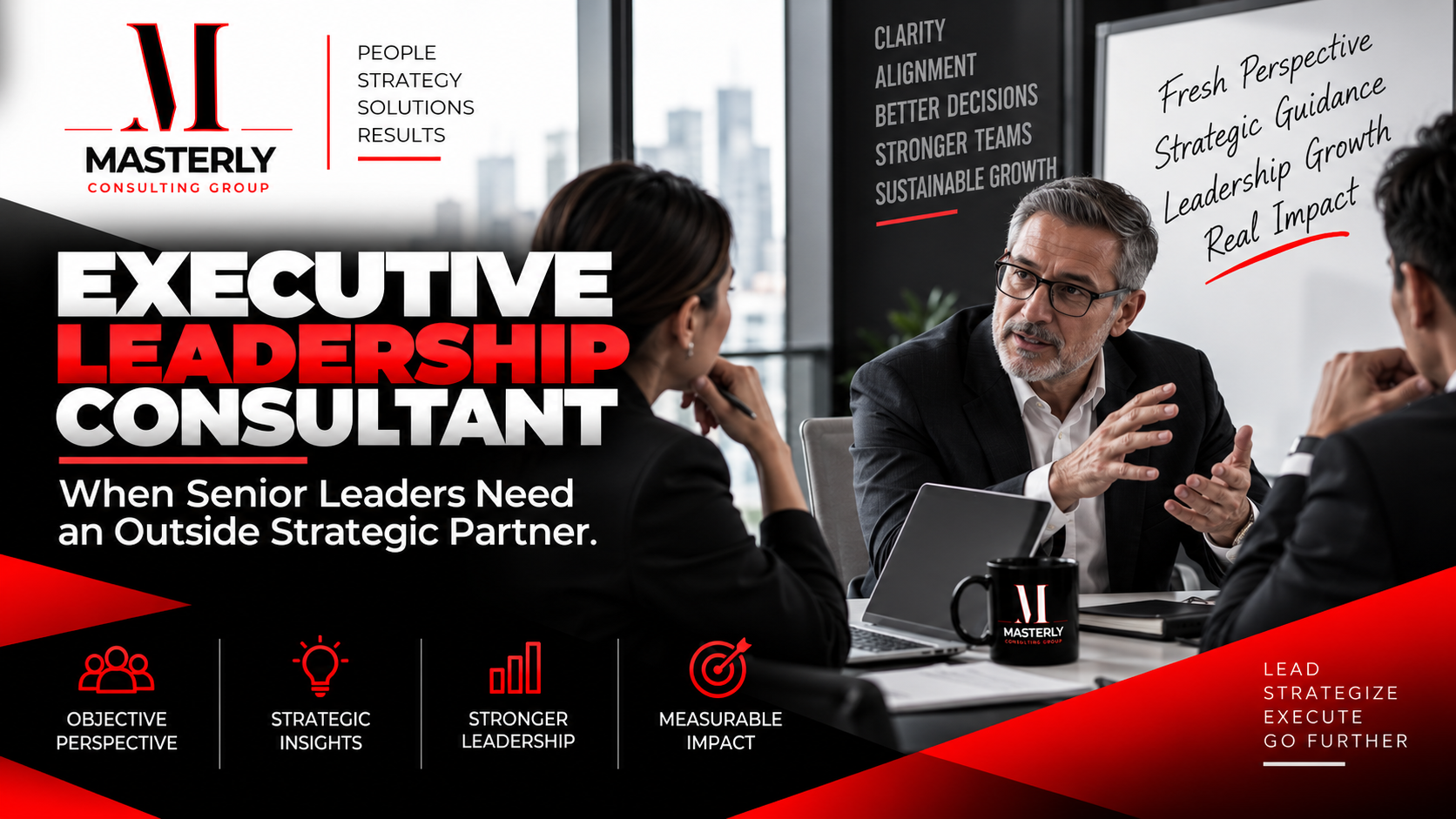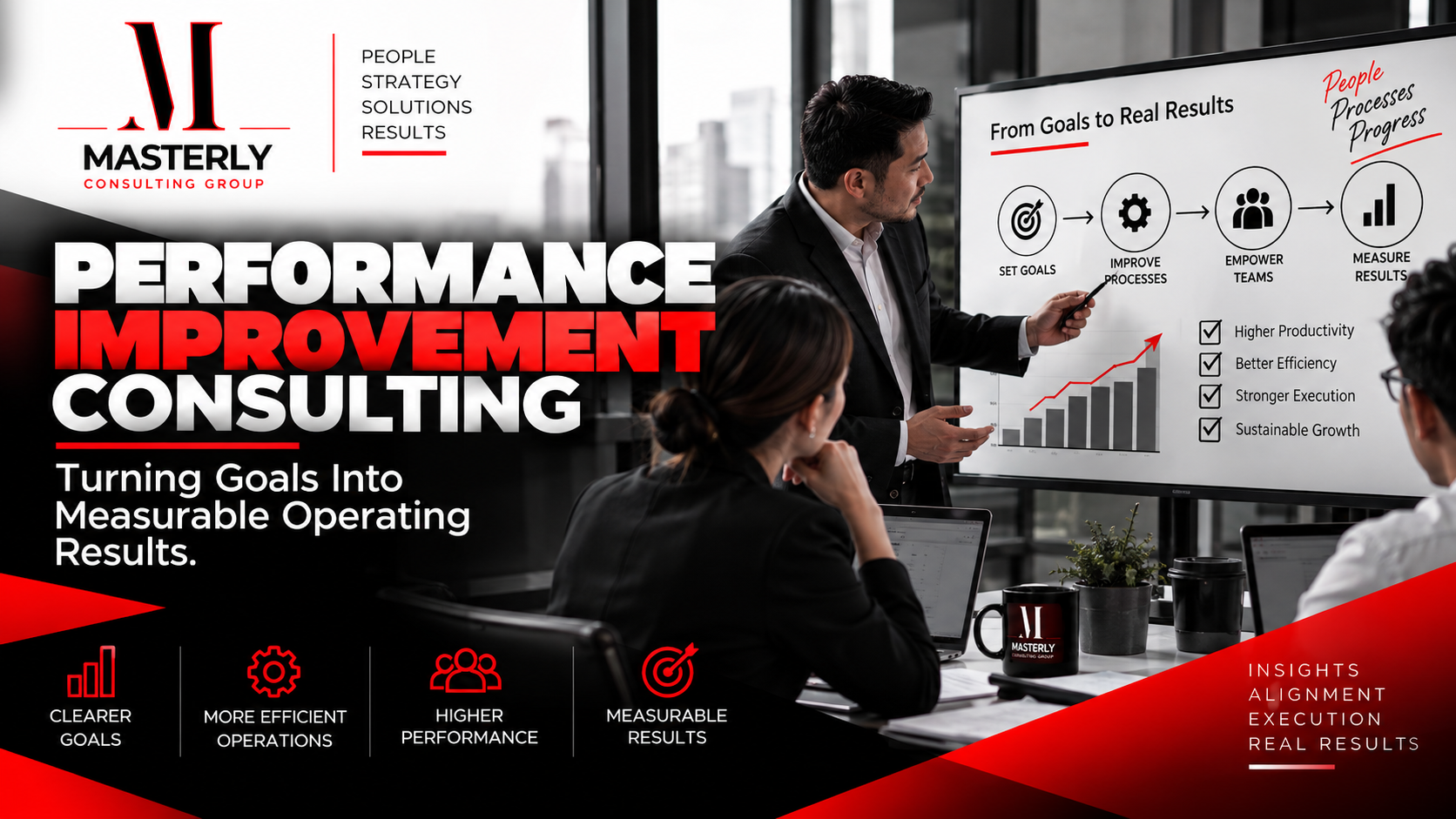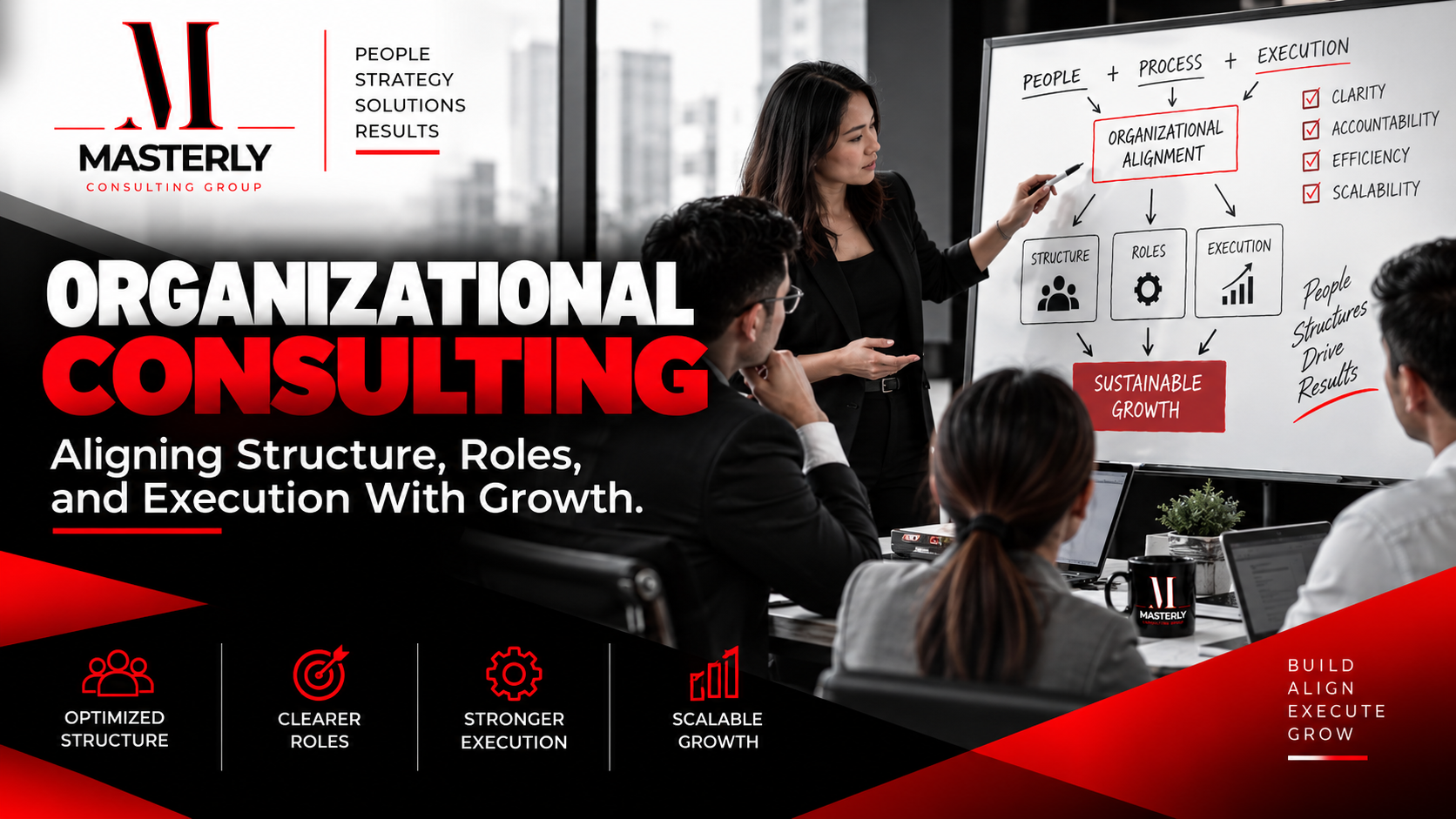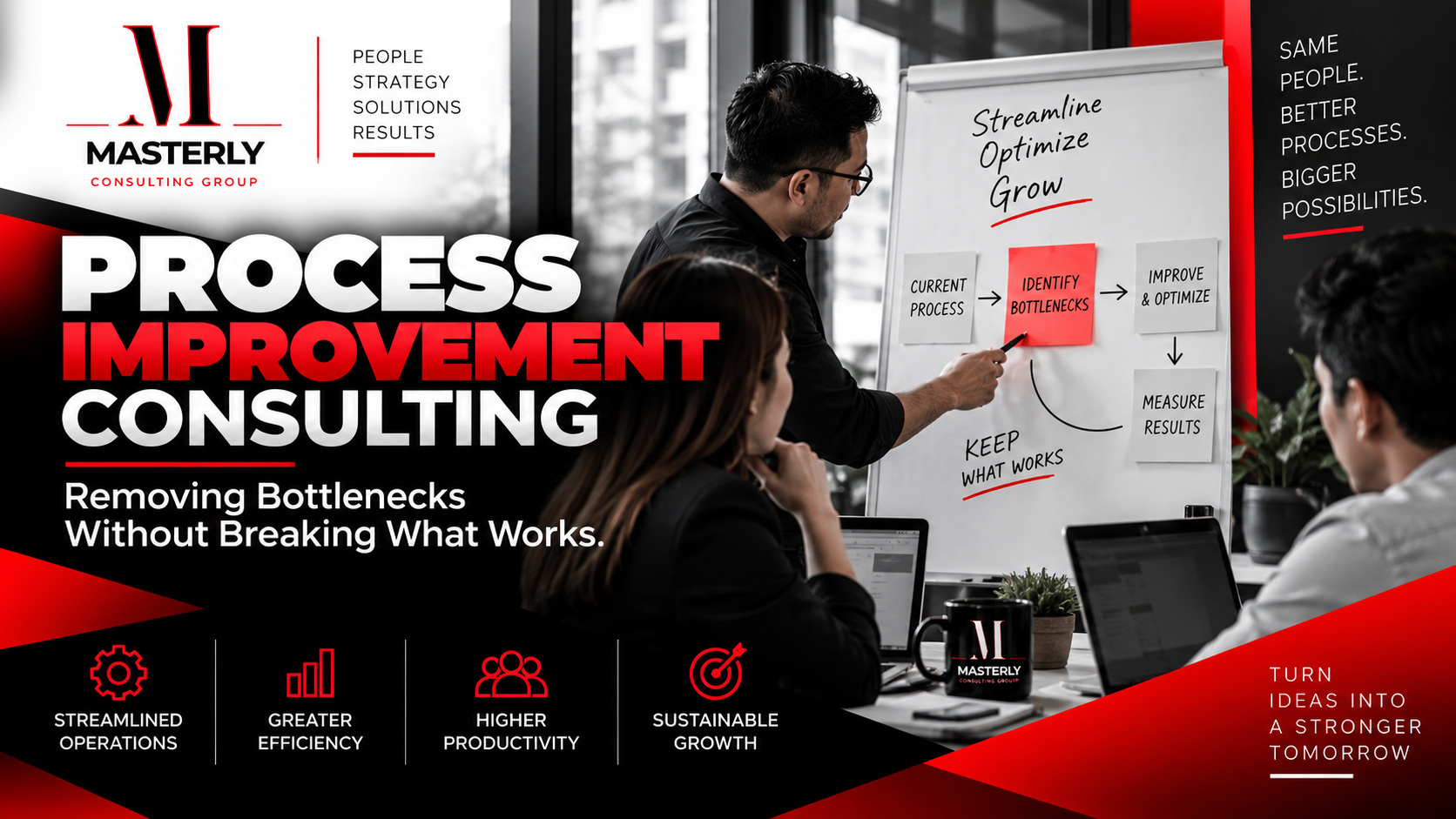
Management Consulting Services: What Growing Companies Should Expect From an Outside Strategic Partner
Overview of Management Consulting Services for Growth-Minded Companies
Management consulting services help organizations improve performance and solve operational problems that cut across strategy, people, processes, and finance. For owners and executives of companies with 20 to 2,000 employees, the term can feel vague. In practice, management consulting is disciplined problem solving paired with change support. It means an outside partner helps you diagnose what is actually holding the business back, supports leadership in making high-stakes decisions, and stays involved through execution.
This article explains what a management consulting firm actually does, how engagements work from diagnosis to implementation, and how to evaluate the right outside strategic partner. Whether you are comparing management consulting firms to internal hires, specialist agencies, or large consulting firms in the broader consulting industry, the goal is the same: clarity on scope, process, and expected outcomes.
Masterly Consulting Group serves as a management consultancy focused on multi-function business challenges spanning strategy, operations, and organization for growing and mid-market companies. This is not a narrow look at only strategic planning or only process improvement. It covers the full life cycle of consulting services, from diagnosis through decision support and execution.
The U.S. management consulting industry generates $307 billion annually, with approximately 90,000 firms operating across multiple industries. Digital transformation is a major driver of consulting demand, and AI is reshaping the management consulting landscape. Key growth areas include technology implementation and sustainability consulting. Consulting benefits include faster problem solving and objective perspectives on strategic challenges that internal teams may not surface on their own.

When a Growing Company Should Consider Management Consulting Services
Management consulting services are valuable when organizations face complex, high-stakes issues that cross functional boundaries. Common inflection points include a revenue plateau in the $10M to $50M range, rapid growth after an acquisition, or preparing for private equity investment. At these moments, executives often realize that the challenge is not isolated to one department.
A company experiencing rapid growth that outpaces current processes often finds that back-office functions, leadership bandwidth, and workforce capacity all strain simultaneously. Stalled profitability despite strong annual revenue growth signals misalignment between strategy and operations. Entering a new market in the next 12 to 18 months demands new capabilities and clear organizational design. Preparing for a capital raise or exit requires tighter governance, repeatable metrics, and documented processes. High turnover in key roles may indicate deeper issues with organizational consulting, culture, or role clarity. And sometimes leadership teams are simply too close to the problem, or day-to-day demand leaves no bandwidth for cross-functional analysis.
Many owners first turn to accounting firms for financial clarity or niche agencies for marketing or information technology. They then discover the challenge spans strategy, people, and execution, requiring broader management advisory services. Management consulting can provide unbiased assessments of operational bottlenecks and strategic blind spots. It can also accelerate project execution without disrupting daily operations. A management consultant is not a substitute for day-to-day leadership but a force-multiplier during time-bound, high-stakes change.
What Management Consulting Firms Actually Do: Core Service Areas
Management consultants provide specialized expertise that may not exist within the client's internal team. They provide objective assessments that internal teams might overlook, and they help organizations identify inefficiencies and optimize resource allocation. Core areas of management consulting include strategy, operations, technology, human resources, and finance.
Strategy consulting focuses on long-term goals and market positioning. This includes setting growth priorities, competitive analysis, scenario planning, and advising executives on where to focus resources over a one-to-three-year horizon.
Operations consulting aims to optimize internal processes and reduce waste. This covers supply chain, workflow redesign, cycle time reduction, and process documentation to improve operational efficiency across the business.
Technology consulting guides the implementation of digital solutions and IT upgrades. Digital consulting aligns business goals with modern technology and IT systems, including digital tools that support scalable growth.
Human resources consulting handles organizational design and talent management. This means clarifying roles, governance structures, and development paths for employees and rising leaders across the organization.
Financial consulting focuses on restructuring finances and improving budgeting accuracy. Risk and compliance consulting ensures organizations adhere to regulations and internal controls.
What separates a business management consulting engagement from specialist work is integration. A management consulting firm connects strategy (what to do), operations (how to do it), organization (who does it), and metrics (how to measure it). For example, a mid-market B2B company seeing flat margins might engage management consultants who diagnose pricing strategy, redesign the sales process, and clarify organizational role clarity, all within a single engagement rather than three separate projects.
How a High-Quality Management Consulting Engagement Typically Works
Effective consulting engagements require clearly defined objectives and leadership involvement from the start. The typical life cycle follows a phased model.
Initial Inquiry and Qualification. The consultant meets with the leadership team to understand high-level challenges, context, time horizon, and constraints. Both sides assess fit in terms of scale, culture, and complexity.
Discovery and Diagnosis. This phase involves interviews with executives and front-line teams, data review, process mapping, and external benchmarking. The goal is to identify root causes, size opportunities, and surface gaps relative to best practices.
Recommendations and Decision Support. The firm presents findings and builds options with trade-offs across cost, risk, and timeline. Scenario analysis over 12 to 36 months helps the leadership team choose a coherent path. This is where the consultant's role as a partner in analysis and research matters most.
Implementation Roadmap. A detailed plan with phases, milestones, owners, and resource needs is developed. This includes a change management plan, governance rhythms, and KPIs aligned to strategic goals.
Follow-Through and Measurement. Consultants support execution with recurring steering meetings, leading and lagging indicators, and course corrections. Over time, responsibility shifts to internal teams.
Typical timelines range from 8 to 16 weeks for a focused diagnostic or roadmap, 3 to 6 months for advisory plus implementation support, and 6 to 12 months or more for complex transformations. Masterly Consulting Group follows a similar phased model and tailors timeline and intensity for owner-led businesses versus more complex divisional structures.

Management Consulting vs. Other Professional Advisors
Many owners already work with accounting firms, law firms, and marketing agencies. The question is when to add a management consulting partner.
Audit and tax-focused accounting firms manage finance, compliance, and reporting, but they typically do not advise on go-to-market strategy, organizational design, or cross-functional process redesign. Creative and digital agencies deliver marketing execution but rarely address operational efficiency or governance. Executive coaches support individual leader development but do not typically run multi-workstream business transformation.
Consider a margin problem. An accounting firm might identify where costs are high. A management consultant would connect that analysis to pricing strategy, sales process, customer segmentation, and organizational structure to create solutions that address the root cause across functions.
The Big Four firms entered strategy consulting in 2010 and have since expanded aggressively. Deloitte acquired Monitor Group in 2013. PwC acquired Booz & Company in 2013. EY acquired The Parthenon Group in 2014. These acquisitions gave large accounting firms substantial consulting capabilities. However, mid-market companies may prefer a boutique management consulting firm for senior-level attention and flexibility. The collapse of Arthur Andersen years earlier had already demonstrated the risks of blurred boundaries between accounting and consulting practices. Management consulting sits at the intersection of strategy, operations, organization, and metrics, coordinating work across more specialized providers where necessary.
Strategy, Private Equity, and Major Transactions
Some moments demand especially rigorous management consulting support: preparing for a sale, recapitalization, or large acquisition. For many executives, this is a once-in-a-career event, which increases the value of outside management advisory services to de-risk decisions and accelerate value creation.
A management consultant supports private equity scenarios by conducting pre-LOI strategic assessment, building commercial and operational readiness before due diligence, and developing post-close value-creation plans. For an owner-operated company, getting investor-ready over 12 to 24 months means clarifying strategy, tightening KPIs, improving governance, and documenting repeatable processes.
The Big Three strategy consulting firms, McKinsey, Boston Consulting Group, and Bain & Company, also known as MBB, are widely regarded as leaders in large-scale transaction and private equity consulting. Booz Allen Hamilton is known for serving defense agencies and government clients at scale. Boutique firms like Masterly Consulting Group focus on serving growing and mid-market companies with similar rigor but more direct senior engagement and flexibility.
How to Evaluate and Select the Right Management Consulting Partner
With approximately 90,000 consulting firms in the U.S., selection can feel opaque. Here are criteria that matter:
Look for demonstrated experience with companies of similar scale and complexity. Evaluate whether the firm provides clear engagement scope and deliverables or speaks only in generalities. Ask whether recommendations are practical and implementable, not just analytical. Confirm the firm's willingness to work with existing teams rather than operate in isolation. Assess communication style and cultural fit, including the ability to challenge leadership respectfully. Ask for example workplans or anonymized case descriptions to understand how the firm structures diagnosis, decision support, and implementation. Evaluate whether the firm builds internal capabilities or creates dependency. Finally, consider whether the professionals assigned are highly skilled senior consultants or if the firm delegates to junior staff after the sales process.
Masterly Consulting Group focuses on multi-function business challenges and long-term capability-building rather than one-off report delivery, and client relationships are managed by senior consultants throughout.
What Growing Companies Should Expect During Implementation
The value of management consulting services is realized during implementation, not in the recommendation deck. Over a 3 to 12 month implementation phase, leaders should expect recurring steering meetings, clear owners and milestones, leading and lagging indicators, and visible changes in behaviors and processes.
Typical roles include an executive sponsor, an internal project lead, functional workstream owners, and the management consultant as facilitator, problem-solver, and accountability partner. Change management matters: communication planning, stakeholder mapping, managing interests across affinity groups, and addressing resistance without derailing momentum.
Capability transfer involves upskilling internal employees through collaboration during projects. A responsible management consultant designs themselves out over time, leaving behind tools, frameworks, and internal capabilities rather than permanent dependency.
Standards, Credentials, and Professionalism
While the consulting industry is not licensed like public accounting, recognized standards signal professionalism. ISO 20700 was published on June 1, 2017, and is the first international standard for management consultancy. It focuses on transparency, value, and ethical behavior across the consulting engagement life cycle.
The Certified Management Consultant (CMC) is an international qualification administered in the U.S. by the Institute of Management Consultants USA. It indicates that a consultant has met specific experience, competency, and ethical standards. Many strong management consultants also bring MBAs or other advanced degrees, and publications in outlets like Harvard Business Review can signal depth of expertise. But track record with companies like yours matters more than credentials alone.
Masterly Consulting Group aligns its practices with recognized guidelines, including clarity of scope, confidentiality, and conflict-of-interest management.
Costs, Engagement Models, and ROI
Management consulting services are a significant investment. Common engagement models include fixed-fee projects with clear scope, phased engagements with go/no-go checkpoints, and retainer-based advisory for ongoing strategic support.
Think about ROI in terms of revenue growth, margin improvement, risk reduction, and strategic positioning over 12 to 36 months rather than only short-term cost-cutting. Ask prospective firms how success will be measured and what assumptions underpin impact estimates. Masterly Consulting Group favors transparent scopes, phased commitments, and measurable outcomes so that executive teams can justify the investment to boards and stakeholders.
How to Prepare Your Organization
The effectiveness of any management consulting firm depends heavily on how ready the organization is to engage and act. Align the executive team on why an external partner is being engaged. Designate an internal point person who can manage access to data, people, and schedules. Gather baseline data on performance, finance, and operations before kickoff.
Set clear expectations with managers and many employees about the consultant's role. This is about improvement, not surprise performance reviews. Define high-level goals for the next 12 to 24 months so consulting work stays anchored to outcomes. Masterly Consulting Group provides a short pre-engagement checklist to help clients prepare, and similar preparation can significantly accelerate early wins.

FAQs About Management Consulting Services
How long does a typical engagement last? A focused diagnostic or roadmap runs 8 to 12 weeks. Advisory plus implementation support typically spans 3 to 6 months. Complex transformations across multiple functions can take 6 to 18 months.
Will consultants work on-site or remotely? Most engagements use a hybrid model. Discovery workshops and alignment sessions are often on-site, while ongoing support and analysis happen remotely.
Do we need a minimum revenue size? Mid-market companies with roughly $10 million or more in annual revenue tend to see the clearest return, though smaller companies facing significant challenges can also benefit.
What if we have worked with a consulting firm before and recommendations were not implemented? Common failure points include weak internal ownership, lack of governance, unclear metrics, and insufficient resources. A quality consultancy will address these gaps from the start.
What is the difference between strategy consulting and broader management consulting? Strategy consulting firms tend to focus on what you should do, covering vision, options, and market positioning. Full management consulting includes how you will do it, encompassing processes, people, metrics, and execution support.
What is the first step with Masterly Consulting Group? Reach out to schedule a management consulting inquiry. The initial conversation covers your business goals, current challenges, and whether an engagement is the right fit.
Next Steps: Schedule a Management Consulting Inquiry With Masterly Consulting Group
If your leadership team is navigating growth, a transaction, or operational complexity across the business, an outside management consulting partner can create clarity and accelerate execution. Masterly Consulting Group works with owners and executive teams facing multi-function challenges where strategy, operations, and organizational design need to achieve alignment.
The initial inquiry is a 30 to 60 minute conversation about your business goals, current challenges, timelines, and whether management consulting services are the right fit. Come prepared with your top priorities, key metrics, and existing initiatives so the discussion is immediately useful, even if you decide not to proceed.
Contact Masterly Consulting Group at (972) 236-5051 or visit masterlygroup.com to schedule an exploratory conversation. The inquiry is just that: exploratory, not a high-pressure sales call.