Sales Training Consultant: Build a Repeatable Sales Process Without Sounding Scripted
A sales training consultant improves sales team performance by diagnosing what breaks between a first conversation and a signed engagement. For professional service firms, founders, and business-development teams, that gap is rarely about enthusiasm or expertise. It is about process: inconsistent qualification, stalled deals after a promising discovery meeting, weak follow-up discipline, and a lack of confidence when handling objections or pricing conversations.
At Masterly Consulting Group, the focus is on improving how your team qualifies, discovers, communicates value, manages follow ups, and closes-not on hard selling. Sales consultants help improve communication and persuasion skills for sales leaders and non-sales professionals alike, including consultants, partners, and subject-matter experts who never came up through traditional sales roles. If your team converts inquiries into clients less often than it should, schedule a sales-process and training consultation to identify exactly where deals stall.
When You Need a Sales Training Consultant (and When You Don't)
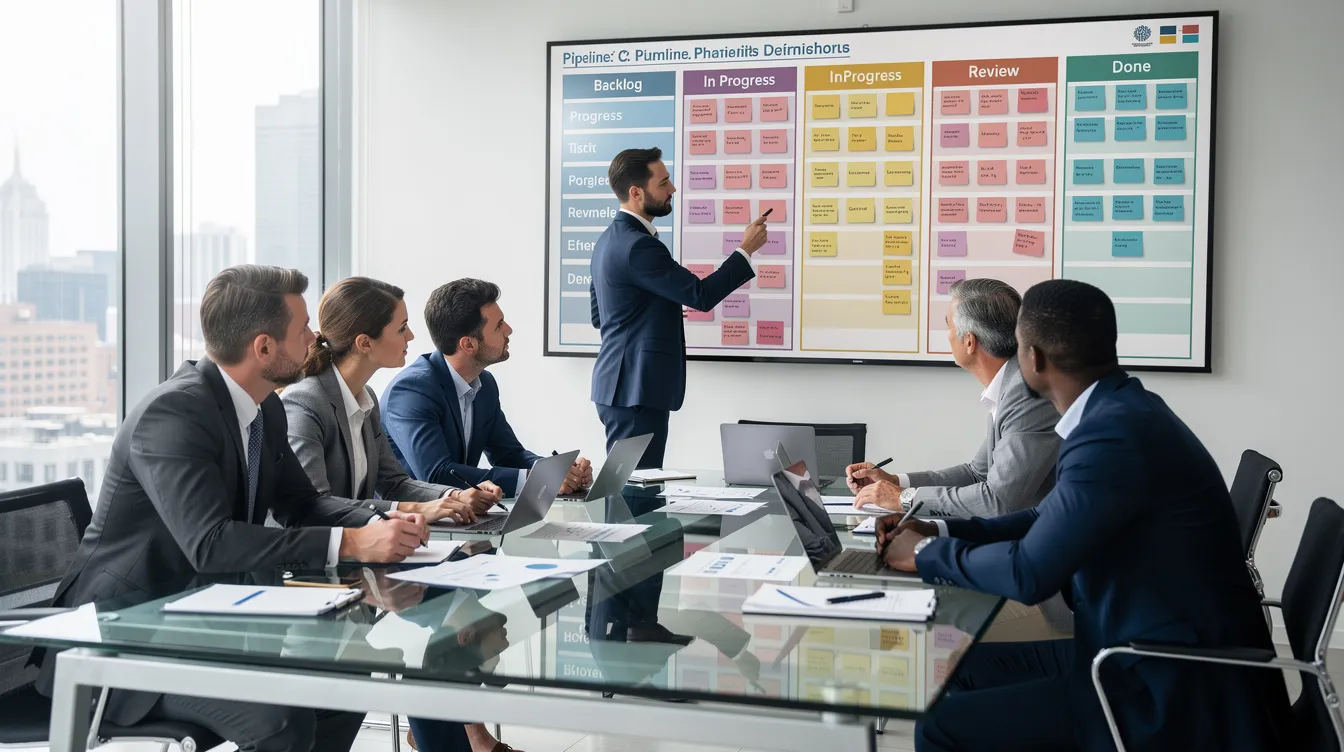
Online courses and internal enablement work when your team has a functioning process and just needs sharpening. A specialized sales training consultant is warranted when the process itself is missing or broken. Here are concrete trigger signs:
- Low conversion from discovery call to proposal (a boutique consulting firm stuck at sub-25% close rates, for example)
- Too many "we'll think about it" outcomes with no clear next step
- Long sales cycles with no decision and unclear decision makers
- High volume of unqualified leads consuming your best people's time
- Inconsistent performance across salespeople, with no shared method
Lead qualification helps identify high-value leads quickly, and qualified leads are good fits for your product and budget. When your team cannot distinguish between a prospective customer worth pursuing and one that will never close, lead qualification can improve sales outcomes significantly. Sales qualified leads (SQLs) are ready for sales follow-up, but if your reps cannot define what "qualified" means, that is a process problem.
If the main issue is lead volume or brand awareness, a sales consultant may not be the first hire. If the problem is what happens after leads arrive, a sales training consultant is usually the right fit.
Core Outcomes a Sales Training Consultant Should Deliver
Good sales training consulting ties directly to measurable business results, not just more confident sales people. Here is what you should expect:
- Higher conversion rates: moving discovery-to-close rate from 18% to 30% over 6–12 months
- Shorter sales cycles: deals faster through the pipeline with clear exit criteria at each stage
- Stronger proposals: customized to client language, not generic templates
- Consistent follow ups: tracked, timely, and adding value each touchpoint
- Improved forecasting: pipeline reviews grounded in data, not hope
- Shared sales process language: teams using common definitions for stages, qualified leads, and next steps
Effective training can lead to better conversion and revenue performance. One sales transformation case study showed pipeline creation increasing by 31% and win rates improving by 33% over three quarters. Another business services engagement produced a 39% increase in new customer sales and 20–30% gains in sales productivity.
Consultants help establish a consistent sales process across organizations. Effective sales strategies can boost win rates and revenue growth. Sales training can increase win rates significantly across organizations, and beyond the numbers, sales training increases job satisfaction and reduces turnover-meaning the skills you invest in stay with your company.
Masterly Consulting Group focuses on embedding accountability rhythms like weekly call reviews, pipeline reviews, and follow-up standards so results persist long after training programs end.
Inside a Modern Consultative Sales Process
A consultative sales approach replaces the "pitch and pray" model with structured stages designed to build relationships and build trust. Here is a process that works across professional services-from law firms to IT services to architecture studios.
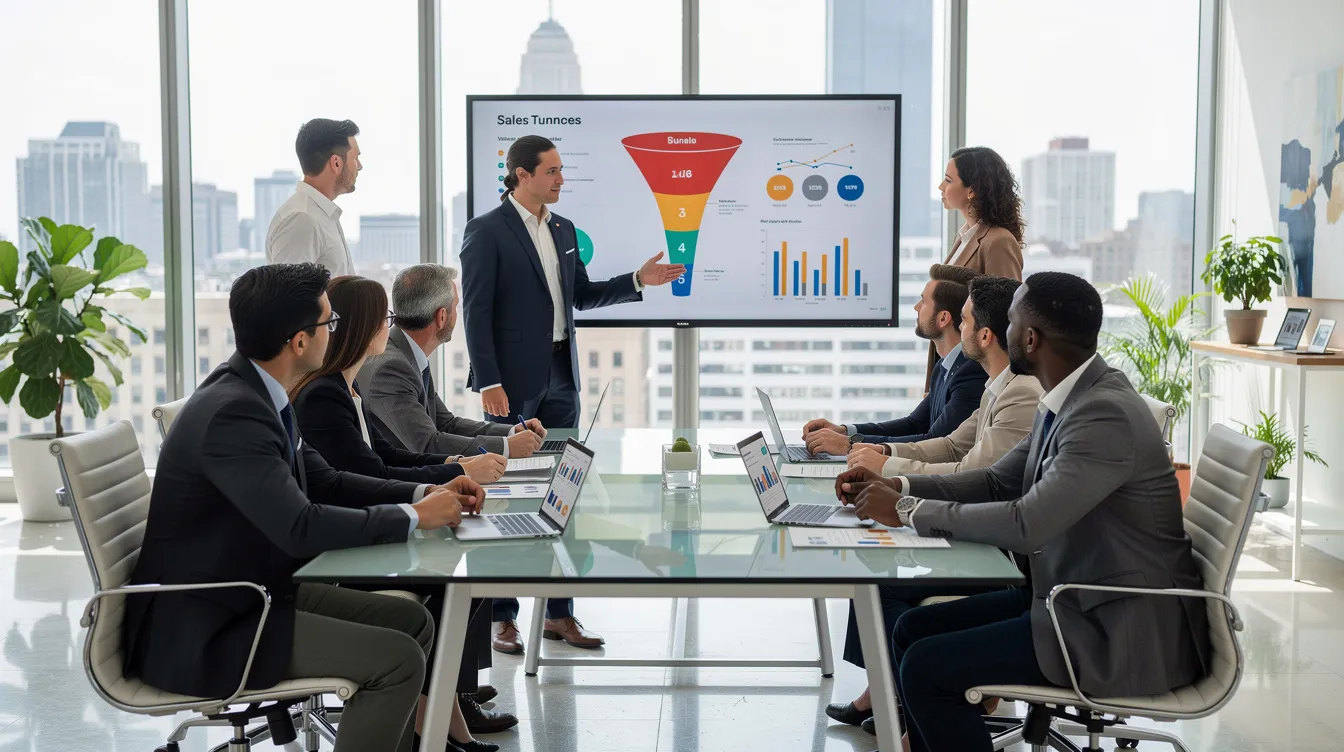
- Lead Qualification - Define what makes a lead worth pursuing. B.A.N.T. is a common lead qualification framework for assessing prospects on budget, authority, need, and timeline. B.A.N.T. helps separate high value opportunities from time wasters early.
- Discovery Call - Deep questioning where the prospect talks 70–80% of the time. Capture current state, goals, challenges, buying committee members, and risk concerns.
- Diagnosis and Alignment - Map the prospect's current versus desired state. Confirm fit internally before investing more resources.
- Value Communication - Frame outcomes in the client's own language, not features. Use stories, case studies, and ROI modeling.
- Proposal and Pricing - Transparent, tiered options that protect value and anticipate objections. Proposals should reflect discovery input directly.
- Structured Follow Ups - Systematic check-ins with added insights. No dropped deals, no radio silence.
- Close and Win-Loss Review - Formal close conversations and post-deal reviews to capture lessons and improve the process.
Sales strategies must align with buyer preferences and market conditions. Effective sales training aligns with buyer preferences and conditions, and a sales training consultant helps define clear exit criteria at each stage-what makes a "qualified lead," what must be captured in discovery notes, what signals readiness for a proposal. Slowing down early in consultative selling often speeds up decisions later.
Key Skills Your Sales Training Consultant Should Build
The right partner does not drop a script on your desk. They develop adaptable selling skills that work across markets, deal sizes, and industries. Here are the core areas:
- Lead qualification and disqualification - Reps can say "no" to bad-fit prospects without hesitation, spending money and time where it counts.
- Discovery call training - Consultative selling research suggests prospects should do most of the talking. Good reps recap the problem in the client's own words.
- Value-based questioning - Drawing out business impact and cost of inaction, not just "what do you want?"
- Storytelling around business outcomes - Using case studies and relevant information to connect emotionally and validate claims.
- Structured follow ups and next-step conversations - Each interaction ends with an agreed next step, tracked and executed.
- Objection handling and pricing confidence - Reframing objections rather than reflexively discounting. Negotiating scope instead of price.
- Stakeholder navigation - Uncovering hidden decision makers, internal politics, and risk concerns that can stall or kill deals.
Sales strategies should be tailored to specific business needs, and consultants help develop sales strategies to achieve specific outcomes. Consultants design customized training programs to address specific needs. Sales training can strengthen knowledge and practical sales behaviors across the entire team.
Proven frameworks inform this work. Sandler's methodology boosts win rates for enterprise teams, and Sandler's training improves sales strategy for 70% of participants. Wilson Learning's programs have shaped sales culture for decades and enhance sales effectiveness and productivity. The RAIN selling methodology focuses on rapport and impact. Over 10,000 salespeople have benefited from Pclub's training programs. The best sales training consultant blends these frameworks with live practice-role-plays, call reviews, proposal critiques-so skills transfer into real conversations quickly.
For every $1 invested in sales training, firms can expect roughly $4.53 back in returns.

How Sales Training Consulting Engagements Typically Work
Here is what a standard engagement looks like, from first conversation to sustained reinforcement:
Assessment and Audit - Consultants assess current sales team skills and identify gaps. They review pipeline data, call recordings, proposals, and CRM usage. Consultants provide objective assessments of sales processes and team performance. Sales training consultants analyze current sales performance to identify skill gaps across roles.
Design Phase - Define goals with leadership (for example, improve qualified lead conversion by 10 percentage points in 9 months). Choose focus areas like discovery, follow ups, or proposal quality. Build a training roadmap.
Delivery - Small-group workshops, 1:1 coaching for sales leaders, live discovery call reviews, and team sessions on follow-up cadences and messaging. Customized sales training replaces generic lectures.
Reinforcement and Accountability - Weekly or biweekly check-ins, simple scorecards, ongoing call and email critiques, and adjustments based on what is working. According to McKinsey research, reinforced training vastly outperforms one-off sessions.
Short engagements for a small business might run 2–3 months. Larger sales organizations may need 6–9 months for full adoption. Behavior shifts typically emerge within weeks; pipeline impact shows within a few sales cycles.
Training Different Roles: Sales Leaders, Reps, and Subject-Matter Experts
A modern sales organization often includes career sales professionals, partners, founders, and technical experts who all touch the sales process differently.
Sales leaders learn to coach their teams, run effective pipeline reviews, set expectations around qualification and follow ups, and model consultative selling in their own deals. Sales coaching improves win rates by 20% or more, and effective sales coaching can increase sales productivity by 30%. Sales teams with regular coaching achieve 50% higher quota attainment. Coaching sessions should occur at least once a month for best results.
Frontline salespeople and business development reps focus on running high-quality discovery calls, managing calendars and follow-up sequences, and confidently moving from conversation to next steps. A sales manager learns to reinforce these habits through accountability rhythms.
Non-traditional sellers-consultants, principals, architects, engineers-need training on questioning, value framing, and handling early-stage conversations without slipping into jargon or lecture mode.
Masterly Consulting Group unifies these groups under a common language and playbook so clients experience a consistent, trust-building journey from first inquiry through proposal and kickoff.
Selecting the Right Sales Training Consultant for Your Organization
Not every consulting business or sales consultant is a fit. Vet partners as carefully as your customers vet you. Evaluation criteria to consider:
- Relevant experience with your industry or sales motion
- Ability to customize around your sales process rather than forcing a rigid script
- Depth in discovery call training, not just closing or presentation skills
- A reinforcement and coaching model that extends beyond initial workshops
- Evidence of measurable outcomes with firms similar in size and deal type
- Cultural fit-tone, approach, and alignment with authenticity
Questions to ask: What does a typical 90-day plan look like? How do you involve sales leaders? What metrics do you track-qualified leads to proposal rates, proposal to close rates, sales cycle length?
Red flags: one-size-fits-all playbooks, promises of quick wins without process change, focus only on demos while ignoring qualification and follow ups.

FAQ: Sales Training Consulting for Professional Services
These are the most common questions Masterly Consulting Group hears from partners, founders, and sales leaders evaluating a sales training consultant.
How long does it take to see improvements? Behavior shifts often appear within weeks. Pipeline impact typically shows within one to two sales cycles. Significant revenue or win rate changes usually become visible in three to four months, with full process adoption taking six to nine months.
What is the difference between sales training and sales process consulting? Sales training programs build individual selling skills. Sales process consulting redesigns the stages, exit criteria, and accountability structures your team follows. The most effective engagements combine both so that new skills operate inside a repeatable, measurable process.
Will this work if we do not have full-time sales people? Yes. Many professional services firms rely on partners, founders, and consultants to develop new business. Training adapts to these roles, focusing on discovery, value communication, and managing follow ups without requiring a dedicated customer success team or large sales team.
How do you adapt training for remote or hybrid teams? Over 27% of B2B buyers will close deals remotely over $500,000, so remote selling is now standard. Delivery blends virtual workshops, recorded call reviews, and asynchronous coaching to fit distributed teams.
Will structured frameworks make our conversations sound scripted? No. A consultative sales approach gives your team a reliable structure-what to cover, when, and why-while leaving room for natural, person-to-person conversation. Think of it as a flight checklist, not a telemarketing script. The goal is to close deals fast without sacrificing authenticity.
Do we need new software? You can start with your existing CRM and communication stack. The focus is on process and habits, not tools.
Next Steps: Schedule a Sales-Process and Training Consultation
A clearer, more consistent sales process helps your team qualify better, run stronger discovery, communicate value, manage follow ups, and close more deals-without sacrificing authenticity or the trust that drives loyal customers back to your company.
This is for professional service firms, business-development teams, founders, and organizations where revenue depends on complex, relationship-based selling rather than one-click purchases.
Schedule a sales-process and training consultation with Masterly Consulting Group. The call will review your current process, key bottlenecks, and potential training focus areas. After booking, you will receive a simple pre-call worksheet to map your current sales journey from inquiry to close-so we can get the ball rolling before we meet.