The Costly Mistakes Athletic Departments Make Without Professional Sports Consulting
Athletic departments face more pressure today than ever before. Expectations from athletes, fans, administrators, donors, sponsors, and communities continue to grow. At the same time, departments are expected to manage budgets, improve performance, enhance the fan experience, maintain compliance, and generate new revenue opportunities. With so many responsibilities competing for attention, even well-run programs can struggle to identify hidden weaknesses before they become major problems.
Many leaders believe they can handle every challenge internally. While internal knowledge is valuable, relying solely on in-house perspectives can sometimes prevent organizations from seeing issues that are developing beneath the surface. Small operational inefficiencies, outdated strategies, and missed growth opportunities often go unnoticed until they begin affecting performance and financial stability.
This is where sports consulting becomes valuable. Professional consultants bring outside expertise, objective insights, and specialized experience that help athletic departments identify risks and create solutions before problems become expensive. At Masterly Consulting Group, we help athletic departments strengthen operations, improve decision-making, and position themselves for sustainable success in an increasingly competitive sports industry.
Why Athletic Departments Face Greater Challenges Than Ever
The sports industry has evolved dramatically over the past decade.
Athletic departments are no longer focused solely on competition. Today's leaders must manage business operations, athlete development, fan engagement, sponsorship opportunities, technology initiatives, and organizational growth. The scope of responsibilities continues to expand.
As the demands placed on sports organizations increase, the need for strategic planning and professional guidance becomes more important.
The Hidden Cost of Operating Without Outside Perspective
Many athletic departments become accustomed to operating the same way year after year.
While consistency can be beneficial, it can also create blind spots. Leaders who work within the same environment every day may not recognize inefficiencies, outdated processes, or emerging risks.
Professional sports consulting provides an objective evaluation that helps organizations identify challenges before they affect performance.
Why Sports Consulting Is More Than Problem Solving
Some organizations only seek consulting assistance when a crisis occurs.
In reality, sports consulting is most effective when used proactively. Consultants help organizations improve operations, evaluate strategies, and create long-term plans that support future growth.
The goal is not simply to fix problems. The goal is to prevent them.
The Business Side of Athletics
Athletics has become increasingly connected to business strategy.
Athletic departments must manage budgets, staffing, facilities, sponsorships, media relationships, and long-term planning. These responsibilities require specialized knowledge beyond coaching and competition.
Successful programs recognize that athletic achievement and strong business management often go hand in hand.
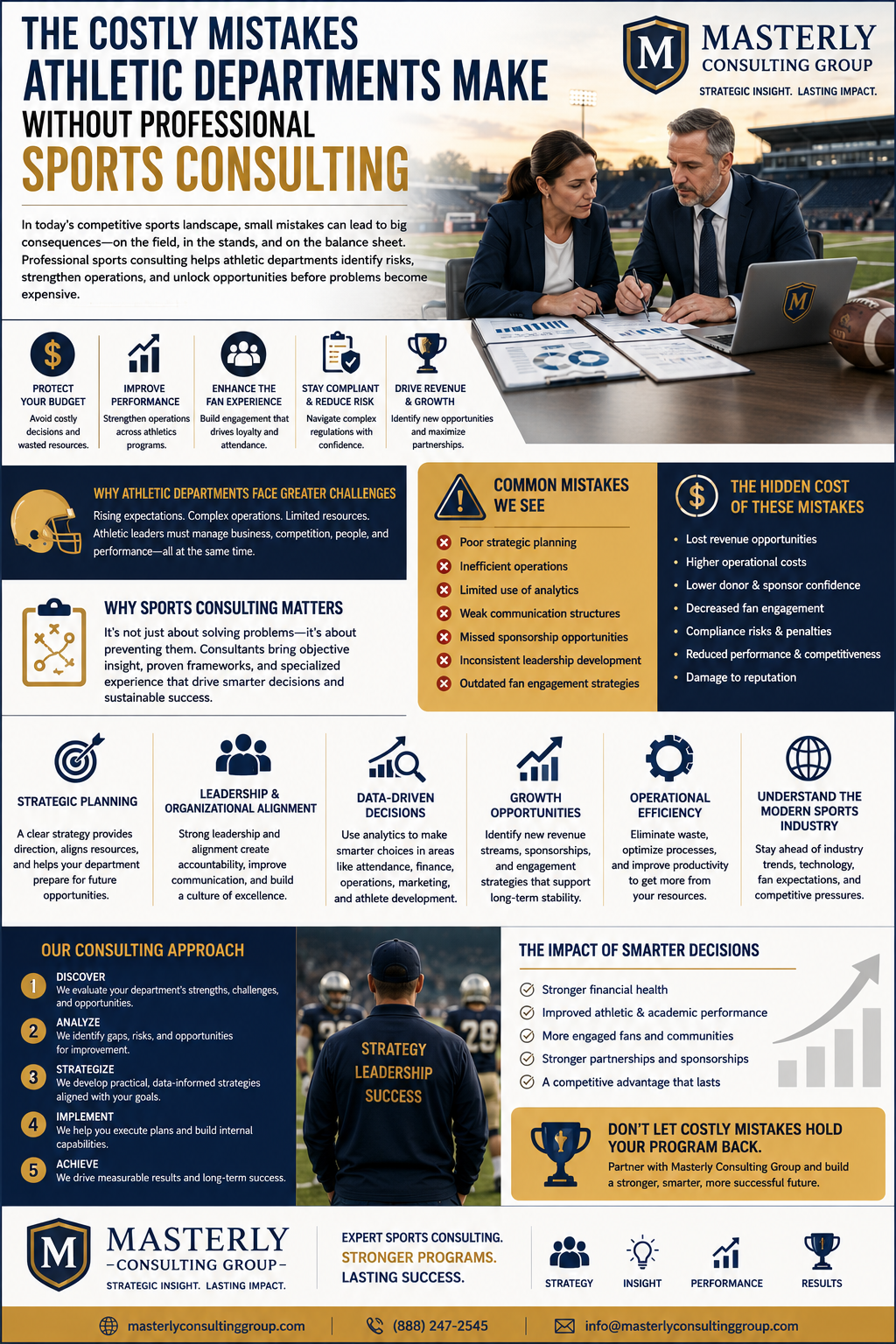
Common Mistakes Athletic Departments Make
Many departments encounter similar challenges.
Common issues include:
- Poor strategic planning
- Inefficient operations
- Limited use of analytics
- Weak communication structures
- Missed sponsorship opportunities
- Inconsistent leadership development
- Outdated fan engagement strategies
These challenges can affect both short-term performance and long-term organizational health.
Failing to Develop a Clear Strategy
Without a clear strategy, athletic departments often find themselves reacting to circumstances rather than shaping outcomes.
Strategic planning provides direction and helps organizations align resources with goals. It allows leaders to focus on priorities while preparing for future opportunities.
Departments without a defined strategy frequently struggle to achieve consistent results.
The Impact of Weak Leadership Structures
Leadership influences every aspect of an athletic department.
Strong leadership promotes accountability, communication, and organizational alignment. Weak leadership can create confusion, reduce morale, and hinder performance.
Professional consulting firms often help departments assess leadership structures and identify opportunities for improvement.
Why Organizational Alignment Matters
Athletic departments function best when everyone is working toward a shared vision.
Coaches, administrators, support staff, and leadership teams must understand organizational goals and expectations. Misalignment often leads to inefficiencies and internal conflict.
Consultants help organizations align priorities and create a stronger foundation for success.
Missing Growth Opportunities
Growth opportunities are often overlooked because leaders are focused on daily responsibilities.
Revenue generation, sponsorship development, fan engagement, and operational improvements may receive less attention when departments are managing immediate concerns.
Professional consultants help identify opportunities that support long-term growth and organizational stability.
The Importance of Data-Driven Decisions
Many athletic departments collect data but fail to use it effectively.
Analytics can provide valuable insights regarding attendance, fan behavior, operational efficiency, athlete development, and financial performance. Departments that leverage data effectively often make better decisions.
Data-driven leadership reduces guesswork and improves strategic planning.
Why Analytics Matter in Modern Sports
The role of analytics continues to expand throughout the sports world.
Analytics are no longer limited to player performance. Organizations use analytics to evaluate marketing efforts, sponsorship effectiveness, ticket sales, and fan engagement.
Departments that fail to embrace analytics may struggle to compete with organizations that use data to gain advantages.
Understanding the Modern Sports Industry
The sports industry is changing rapidly.
Technology, consumer behavior, media consumption, and economic factors continue shaping how organizations operate. Departments that fail to adapt may fall behind competitors.
Professional consultants help organizations understand industry trends and prepare for future challenges.
The Cost of Inefficient Operations
Operational inefficiencies can have significant financial consequences.
Small issues often accumulate over time, creating unnecessary expenses and reducing productivity. Many departments do not realize how much inefficiency is affecting performance until a detailed assessment is conducted.
Consulting firms frequently identify operational improvements that generate immediate value.
Why Fan Experience Cannot Be Ignored
Fans play a critical role in athletic success.
A positive fan experience contributes to attendance, revenue, sponsorship opportunities, and long-term loyalty. Departments that neglect fan engagement may struggle to maintain support.
Improving the fan experience often requires a combination of technology, communication, and strategic planning.
The Relationship Between Fans and Revenue
Revenue generation depends heavily on fan engagement.
Ticket sales, merchandise purchases, sponsorships, and donations are all influenced by how connected fans feel to an organization.
Athletic departments that invest in fan relationships often achieve stronger financial outcomes.
Sponsorship Opportunities Are Often Underutilized
Many athletic departments fail to maximize sponsorship potential.
Sponsors want meaningful partnerships that provide measurable value. Organizations that lack clear strategies may miss opportunities to secure and retain sponsorship support.
Consultants can help evaluate sponsorship programs and identify new revenue opportunities.
The Growing Role of Technology
Technology has transformed nearly every aspect of sports management.
From ticketing systems and analytics platforms to communication tools and fan engagement applications, technology influences operations throughout athletic departments.
Organizations that leverage technology effectively are often better positioned to compete and grow.
Why Departments Need Specialized Expertise
Athletic departments face complex challenges that require specialized expertise.
A sports consultant brings professional experience, industry knowledge, and objective insights that internal teams may not possess. This outside perspective often helps organizations solve problems more effectively.
The value of consulting extends beyond recommendations. It includes implementation support and strategic guidance.
Learning From Leading Sports Organizations
Successful sports organizations continually evaluate their performance and seek opportunities for improvement.
Many of the world's most respected teams, leagues, and athletic programs rely on consulting support to strengthen operations and improve decision-making.
Their willingness to seek outside expertise often contributes to long-term success.
The Influence of Global Sports Trends
Global sports continue influencing local athletic organizations.
Innovations developed by global sports organizations, sports leagues, and olympic committees often shape industry expectations and operational standards.
Departments that monitor global sports trends are often better prepared for future developments.
Why Thought Leadership Matters
Thought leadership helps organizations stay ahead of industry changes.
Leaders who engage with new ideas, emerging trends, and evolving best practices are often more successful in navigating challenges.
Professional consultants frequently provide thought leadership that helps clients prepare for future opportunities.
Building a Winning Team Beyond the Field
Success requires more than talented athletes.
A winning team includes effective leaders, skilled administrators, committed staff members, and strategic partners. Every role contributes to organizational performance.
Athletic departments that invest in leadership and organizational development often achieve stronger outcomes.
Revenue Challenges Athletic Departments Commonly Face
Many athletic departments struggle with revenue generation despite having strong programs and dedicated supporters.
Revenue challenges often stem from outdated business models, limited sponsorship development, ineffective marketing efforts, or underutilized assets. These issues can reduce financial flexibility and limit growth opportunities.
Professional sports consulting helps organizations identify revenue streams that may have been overlooked and develop strategies that support long-term financial stability.
Why Financial Planning Matters in Sports
Strong financial planning creates a foundation for organizational success.
Athletic departments must balance operational expenses, facility costs, staffing needs, program investments, and future initiatives. Without a clear financial strategy, even successful programs can experience instability.
Consulting firms frequently assist organizations with financial evaluations and strategic resource allocation.
The Risk of Operating Without Long-Term Vision
Many organizations become focused on immediate challenges.
While short-term priorities are important, departments that fail to establish a long-term vision often struggle to sustain success. A lack of future planning can lead to reactive decision-making and missed opportunities.
Professional consultants help organizations develop a vision that aligns with both current realities and future goals.
Why Sports Leagues Continue to Evolve
Sports leagues constantly adapt to changes in technology, consumer behavior, and market demands.
Organizations that fail to evolve alongside the industry risk losing relevance. Fans expect new experiences, sponsors seek measurable value, and stakeholders demand innovation.
Sports consulting firms help departments understand these shifts and develop strategies that keep them competitive.
The Importance of Understanding Market Conditions
Every athletic department operates within a unique market.
Local demographics, fan preferences, sponsorship opportunities, and competitive pressures all influence organizational decisions. Leaders who understand their market are often better equipped to make strategic choices.
Consulting firms frequently conduct research and market assessments that provide valuable insights for decision-makers.
Why Fan Expectations Are Changing
Today's fans expect more than simply attending events.
Modern sports consumers seek engagement, convenience, technology integration, and memorable experiences. Organizations that fail to meet these expectations may struggle to maintain support.
Creating meaningful fan experiences has become an essential component of organizational growth.
Enhancing the Fan Experience
The fan experience influences attendance, loyalty, and revenue generation.
Small improvements can significantly affect how fans perceive an organization. Enhanced communication, upgraded facilities, digital engagement tools, and personalized experiences often contribute to stronger relationships.
Sports consulting professionals frequently help organizations evaluate and improve fan engagement strategies.
Using Analytics to Improve Decision-Making
Analytics provide athletic departments with actionable information.
By examining attendance patterns, ticket sales, sponsorship performance, and operational efficiency, leaders can make more informed decisions. Analytics reduce reliance on assumptions and improve organizational performance.
Departments that leverage analytics effectively often gain advantages over competitors.
Why Data Should Guide Strategy
Data provides clarity in complex environments.
Athletic departments collect large amounts of information, but many organizations fail to convert that information into meaningful action. Effective use of data helps leaders evaluate performance and identify areas for improvement.
Consultants help organizations develop systems that transform data into strategic value.
Leadership Development Is Often Overlooked
Leadership development is one of the most valuable investments an athletic department can make.
Strong leaders influence culture, communication, accountability, and organizational performance. Yet many departments focus heavily on operational needs while neglecting leadership growth.
Professional consulting services often include leadership development initiatives that strengthen organizations from the inside out.
Building Stronger Leadership Teams
Effective leadership requires continuous development.
Athletic directors, administrators, coaches, and department heads benefit from ongoing training and professional development opportunities. Strong leadership teams help organizations navigate challenges more effectively.
Investing in leadership creates benefits that extend throughout the organization.
The Value of Professional Development
Professional development supports both individual and organizational growth.
Leaders who continue expanding their skills are better equipped to manage change, address challenges, and guide teams effectively. Development initiatives also improve retention and morale.
Sports consulting firms frequently assist with customized training programs designed to strengthen leadership capabilities.
Why Organizational Culture Matters
Culture influences how organizations operate every day.
A positive culture promotes collaboration, accountability, innovation, and commitment. A weak culture can contribute to inefficiency, conflict, and reduced performance.
Consultants often evaluate organizational culture as part of broader strategic assessments.
Addressing Communication Challenges
Communication issues frequently create unnecessary obstacles.
Miscommunication between departments, leadership teams, coaches, and stakeholders can reduce efficiency and create confusion. Clear communication structures support better decision-making and stronger organizational alignment.
Professional consultants help identify communication gaps and implement improvements.
Sports Management Requires Specialized Knowledge
Sports management extends far beyond athletic competition.
It involves strategic planning, financial oversight, sponsorship development, operational management, risk mitigation, and stakeholder engagement. These responsibilities require a broad range of professional skills.
Departments that invest in specialized expertise often achieve stronger outcomes.
Why Consulting Firms Add Value
Consulting firms provide objective perspectives that internal teams may lack.
An experienced consultant can identify challenges, evaluate opportunities, and recommend solutions based on extensive experience across multiple organizations. This outside perspective often reveals issues that might otherwise remain hidden.
The value of consulting frequently exceeds the cost of engagement.
The Importance of Strategic Partnerships
No organization succeeds entirely on its own.
Strong partners help athletic departments expand capabilities, access expertise, and achieve goals more efficiently. Strategic partnerships often contribute to innovation and growth.
Professional consulting relationships are often among the most valuable partnerships an organization can develop.
Evaluating Organizational Performance
Performance should be measured across multiple areas.
Athletic success is important, but organizational performance also includes operational efficiency, financial stability, fan engagement, and leadership effectiveness.
Comprehensive evaluations provide a clearer understanding of organizational strengths and weaknesses.
Why Departments Must Adapt to Industry Trends
Industry trends influence nearly every aspect of athletics.
Technology, fan expectations, media consumption habits, and sponsorship models continue evolving. Organizations that remain informed about emerging trends are often better positioned for future success.
Consultants help departments monitor and respond to changing industry conditions.
Managing Complex Projects Successfully
Athletic departments regularly undertake significant projects.
Facility improvements, technology upgrades, organizational restructuring, and strategic initiatives require careful planning and execution. Poor project management can create delays, budget overruns, and frustration.
Professional consultants often provide project oversight that improves outcomes and reduces risk.
The Growing Influence of Entertainment in Sports
Sports and entertainment have become increasingly interconnected.
Fans expect engaging experiences that extend beyond competition. Entertainment elements influence attendance, engagement, and brand perception.
Athletic departments that recognize this connection are often more successful at attracting and retaining supporters.
Why Brand Development Matters
A strong brand creates recognition and trust.
Athletic departments benefit from clear messaging, consistent identity, and meaningful engagement with stakeholders. Brand strength often influences sponsorship opportunities, fan loyalty, and organizational reputation.
Consultants frequently assist organizations with brand strategy and positioning.
Creating Alignment Between Vision and Execution
Many organizations establish ambitious goals but struggle with implementation.
Success requires more than a compelling vision. It requires alignment between leadership, operations, resources, and daily execution.
Professional consultants help departments ensure that organizational vision translates into measurable action and meaningful results.
Why Athletic Departments Need a Trusted Consultant
Athletic departments face decisions that affect finances, reputation, athlete development, fan engagement, and organizational stability.
An experienced consultant provides objective guidance that helps leaders navigate these decisions with greater confidence. Rather than reacting to problems after they occur, organizations can proactively identify risks and opportunities.
The right consultant becomes a valuable resource for long-term planning and sustainable growth.
Understanding the Role of Sports Consulting Firms
Sports consulting firms serve a variety of clients throughout the sports industry.
These organizations help athletic departments, sports teams, governing bodies, and other stakeholders improve operations, strengthen leadership, and enhance performance. Their expertise spans numerous areas including strategy, sponsorship development, analytics, and organizational management.
The best sports consulting firms bring both technical expertise and practical experience.
Why Experience Matters in Sports Consulting
Every athletic department faces unique challenges.
Professional experience allows consultants to draw from real-world situations and proven solutions. Organizations benefit when advisors understand the realities of athletics rather than relying solely on theoretical concepts.
A consultant with extensive industry exposure often identifies opportunities that internal teams may overlook.
Learning From Global Sports Organizations
Many of the most successful global sports organizations invest heavily in strategic planning and operational excellence.
These organizations understand that success depends on more than athletic achievement. Strong leadership, effective management, fan engagement, and financial stability all contribute to long-term sustainability.
Athletic departments can learn valuable lessons by studying the practices used throughout global sports.
How Sports Organizations Create Competitive Advantages
Successful sports organizations continuously evaluate their operations.
They invest in leadership development, data analysis, technology adoption, and organizational improvement. These efforts create competitive advantages that support long-term performance.
Departments that embrace continuous improvement are often better positioned to succeed.
Why Sports Consulting Firms Help Departments Stay Competitive
Competition within the sports industry continues to increase.
Athletic departments compete for athletes, sponsors, fans, media attention, and financial resources. Sports consulting firms help organizations develop strategies that improve competitiveness and strengthen their market position.
Maintaining a competitive edge requires ongoing evaluation and adaptation.
The Value of Thought Leadership
Thought leadership plays an important role in organizational development.
Departments that stay informed about industry developments are often better prepared to respond to challenges and opportunities. Thought leadership helps leaders explore new ideas, understand emerging trends, and improve decision-making.
Professional consultants frequently provide thought leadership that helps organizations remain forward-thinking.
Why Research Supports Better Decisions
Research helps organizations understand their environment more clearly.
Whether evaluating fan behavior, sponsorship opportunities, industry trends, or operational performance, research provides valuable information for decision-makers.
Consultants often conduct research that helps clients make informed strategic choices.
Understanding Consumer Expectations in Sports
Consumer behavior continues to influence athletic organizations.
Fans expect engaging experiences, convenient access, digital connectivity, and meaningful interactions with their favorite teams and organizations. Departments that understand consumer expectations are often more successful at building loyalty.
Meeting these expectations requires thoughtful planning and execution.
The Importance of Feedback
Feedback provides organizations with valuable perspectives.
Input from fans, staff members, sponsors, athletes, and stakeholders helps leaders identify strengths and opportunities for improvement. Departments that actively seek feedback often make better decisions.
Consultants help organizations develop systems that collect and utilize feedback effectively.
Why Departments Must Evaluate Performance Regularly
Continuous evaluation supports continuous improvement.
Athletic departments that regularly evaluate performance can identify emerging challenges before they become larger problems. This proactive approach reduces risk and improves organizational effectiveness.
Professional consultants often assist with performance assessments and strategic reviews.
Aligning Resources With Organizational Goals
Resources should support organizational priorities.
Whether allocating budgets, staffing positions, or investing in facilities, leaders must ensure resources align with strategic objectives. Misalignment often creates inefficiencies and limits results.
Consultants help organizations align resources with their long-term vision.
The Connection Between Leadership and Organizational Growth
Growth begins with leadership.
Strong leaders create environments that support accountability, innovation, and collaboration. Leadership influences culture, decision-making, and overall organizational effectiveness.
Athletic departments that invest in leadership development often experience stronger organizational growth.
Why Vision Matters
Organizations without a clear vision often struggle to maintain direction.
A strong vision provides guidance during periods of change and uncertainty. It helps leaders prioritize initiatives and communicate expectations throughout the organization.
Consultants frequently assist departments in refining and implementing their vision.
Managing Limited Resources Effectively
Most athletic departments operate with limited resources.
Budget constraints, staffing challenges, and competing priorities require careful planning. Leaders must make strategic decisions regarding how resources are allocated.
Professional consulting helps organizations maximize value while minimizing waste.
Understanding the True Cost of Delayed Action
Many departments postpone important decisions because immediate challenges seem more urgent.
Unfortunately, delayed action often increases costs over time. Problems that could have been addressed proactively may become larger and more expensive to resolve.
Early intervention frequently produces better outcomes and lower long-term costs.
Why Organizations Pay for Expertise
Some leaders view consulting as an expense rather than an investment.
In reality, organizations often pay significantly more when problems remain unresolved. Effective consulting creates value by reducing inefficiencies, improving operations, and identifying opportunities for growth.
The return on investment frequently exceeds the initial cost of engagement.
How Sports Consulting Creates Long-Term Value
The benefits of sports consulting extend far beyond individual projects.
Consultants help organizations build stronger systems, improve leadership, enhance decision-making, and develop sustainable strategies. These improvements continue generating value long after a consulting engagement concludes.
Long-term value is one of the primary reasons organizations invest in professional consulting services.
Why Athletic Departments Need Strategic Partners
Athletic departments face increasingly complex challenges.
No single leader or department can possess expertise in every area. Strategic partners provide specialized knowledge, objective insights, and additional resources that strengthen decision-making.
The strongest organizations recognize the importance of collaboration.
Helping Clients Navigate Change
Change is inevitable within athletics.
New technologies, shifting industry expectations, evolving fan preferences, and economic pressures require organizations to adapt continuously. Clients who prepare proactively are often better positioned for success.
Consultants help clients navigate change while minimizing disruption and maximizing opportunity.
The Future of Sports Consulting
The demand for sports consulting continues to grow.
Athletic departments, sports leagues, teams, and organizations increasingly recognize the value of specialized expertise. As the sports industry becomes more complex, consulting services will play an even greater role in organizational success.
Departments that embrace innovation and strategic guidance are likely to remain competitive in the years ahead.
How Masterly Consulting Group Helps Athletic Departments Succeed
At Masterly Consulting Group, we understand that successful athletic departments require more than passion and dedication. They require strategy, leadership, operational excellence, and a commitment to continuous improvement.
Our consulting services are designed to help athletic departments identify risks, improve performance, strengthen operations, and pursue meaningful growth opportunities. We work closely with our clients to understand their goals, evaluate challenges, and develop customized solutions that create measurable value.
Whether your organization is seeking support with strategic planning, leadership development, operational assessments, analytics implementation, organizational management, or long-term growth initiatives, our team is prepared to help.
Why a Deep Understanding of Athletics Creates Better Results
Successful sports consulting requires more than general business knowledge. A consultant must possess a deep understanding of the unique challenges facing athletic departments, sports organizations, and competitive programs. Every company involved in athletics operates within an environment shaped by performance expectations, stakeholder relationships, financial pressures, and rapidly changing industry trends. Organizations that work with advisors who truly understand these dynamics are often better positioned to make informed decisions and achieve sustainable growth.
Strong leadership is equally important at every level of an athletic department. From coaches and administrators to executives responsible for long-term planning, effective decision-making influences organizational success. Professional consulting can help leaders develop the skills necessary to navigate complex challenges, improve operations, and strengthen organizational culture. Whether supporting education initiatives, evaluating workforce development opportunities, or helping departments identify the right person for a critical job, experienced consultants provide valuable guidance that empowers organizations to move forward with confidence.
The power of strategic planning should never be underestimated. Athletic departments that invest in leadership development, continuous education, and organizational improvement are often more successful than those that rely solely on past practices. By combining expertise, practical experience, and a commitment to growth, sports consulting helps organizations build stronger foundations for the future while preparing leaders to meet the demands of an evolving industry.
Contact Masterly Consulting Group for a Free Consultation
Athletic departments that wait until problems become visible often face higher costs, greater disruption, and more difficult recovery efforts. Proactive planning and professional guidance can help organizations avoid costly mistakes while positioning themselves for future success.
At Masterly Consulting Group, we partner with athletic departments, educational institutions, sports organizations, and industry leaders who want to strengthen their operations and improve outcomes. Our team brings deep industry insights, strategic expertise, and practical solutions designed to support long-term success.
If you are evaluating your department's current strategy, exploring growth opportunities, improving leadership effectiveness, enhancing fan engagement, or addressing operational challenges, we invite you to speak with our team.
Call (888) 209-4055 today to book a free consultation and learn how Masterly Consulting Group can help your organization build a stronger future.