Strengthening Corporate Compliance Through Effective Sexual Harassment Prevention Programs
Creating a workplace where employees feel safe, respected, and valued takes ongoing commitment. Many organizations do their best to build positive cultures, but sexual harassment can still occur when prevention efforts fall short. Companies today face growing compliance requirements, shifting regulations, and higher expectations from employees who want a respectful environment. That makes sexual harassment prevention training more than a legal obligation—it becomes an important part of strong leadership and corporate responsibility.
At Masterly Consulting Group, we work with organizations seeking practical ways to protect their teams, reduce risk, and strengthen compliance. With the right training programs, employers can prevent harassment before it occurs and reinforce the conduct standards necessary for a healthy workplace. This article offers a humanized look at how harassment prevention training protects people, supports business goals, and helps foster workplaces where everyone feels safe enough to excel.
Understanding Why Sexual Harassment Prevention Training Matters
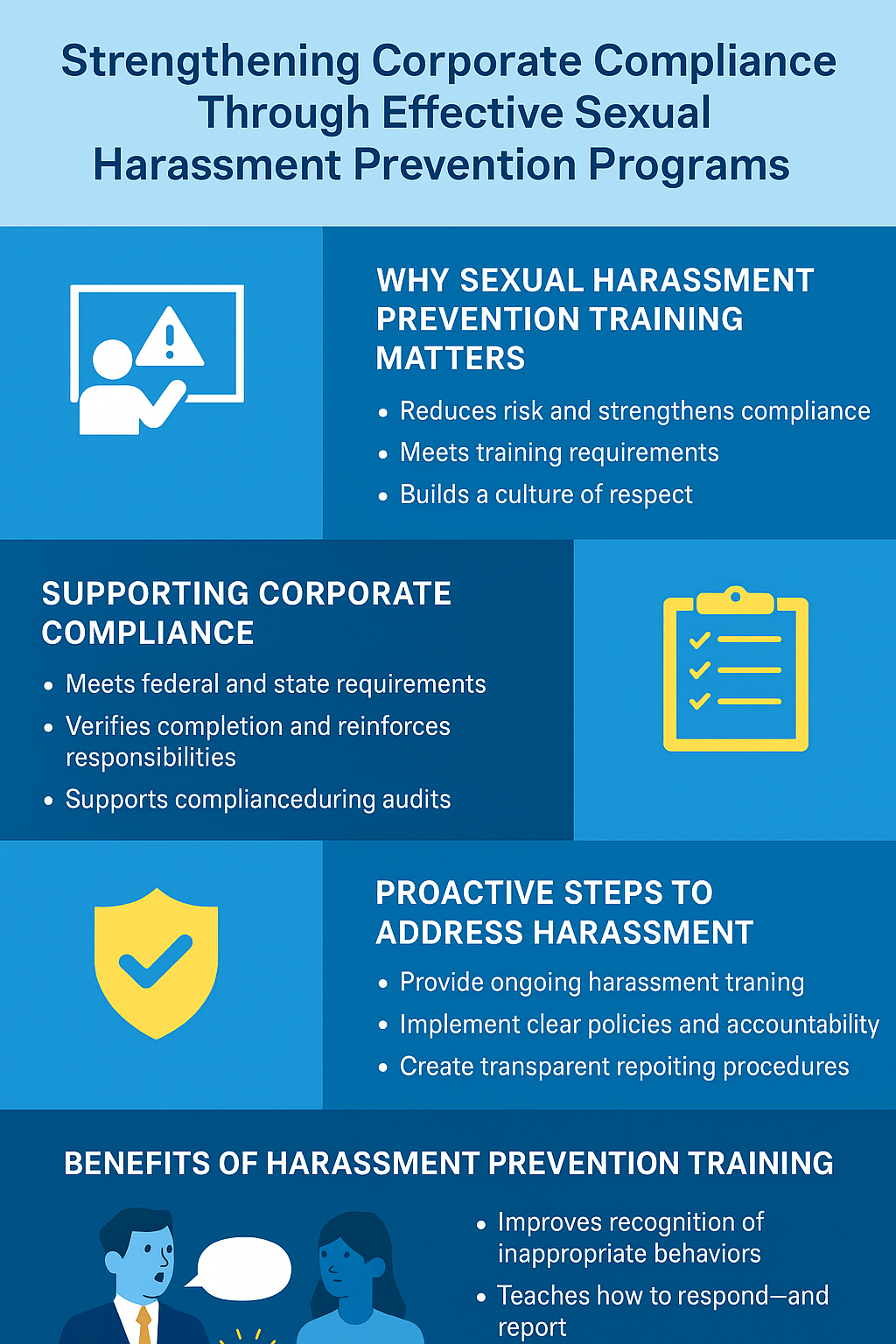
Sexual harassment remains one of the most common workplace issues, affecting employees across industries. When organizations take harassment prevention seriously, they reduce the risk of incidents, strengthen compliance, and build cultures grounded in respect. This type of training helps employees recognize the behaviors that cross boundaries and understand how to respond when misconduct occurs.
Comprehensive training programs also play a vital role in meeting federal, state, and local training requirements. Many jurisdictions—such as california, illinois, and connecticut employers—have increased their regulations to ensure that one or more employees receive training that meets legal standards. Even york city employers must comply with specific training requirements to reduce discrimination and promote workplace civility.
How Harassment Prevention Programs Support Corporate Compliance
Sexual harassment prevention training is not only about education; it serves as a compliance training foundation that helps employers comply with regulations. Training requirements vary widely, and organizations operating across other states often struggle to keep up. Strong training programs simplify the process and ensure employers meet federal and state requirements with confidence.
Effective training also includes forms of documentation that verify completion, reinforce responsibilities, and support compliance during audits. The certificate issued after completion becomes essential proof that employees engaged with required material and understand the rules.
Why Sexual Harassment Must Be Addressed Proactively
Sexual harassment affects productivity, trust, morale, and workplace culture. When inappropriate behavior goes unchecked, it creates environments where employees feel unsafe or undervalued. Prevention requires more than awareness—it demands ongoing training, clear policies, and accountability at every level.
By providing workplace harassment training on conduct standards, organizations demonstrate their commitment to prevention. Employees recognize warning signs more clearly and understand how to report concerns without fear of retaliation. Creating this type of transparent environment takes leadership, consistency, and training that reflects real-life situations.
Understanding Workplace Harassment in All Its Forms
Sexual harassment prevention training teaches employees and supervisors how to identify harassment. While many people think harassment only involves extreme behaviors, it can also include subtle or repeated actions that create uncomfortable environments. Training helps clarify what constitutes harassment, discrimination, or behaviors that violate human rights.
Organizations benefit when employees recognize the signs early. Effective training ensures employees understand the difference between one-time misunderstandings and recurring inappropriate behavior. This awareness reduces incidents and improves workplace safety.
The Role of Training Programs in Preventing Misconduct
Strong training programs provide employees with accessible, practical guidance. These programs break down the complexities of sexual harassment, other forms of misconduct, and workplace harassment. Employees learn how to respond, how to report, and how their responsibilities support compliance.
Modern training programs vary from in-person workshops to online training courses. Online training offers access from any mobile device, allowing new employees to complete their course shortly after hire date or within required date ranges. This flexibility ensures employers can comply with regulations while offering user-friendly solutions.
Why Harassment Prevention Training Works
Harassment prevention training works because it brings clarity to expectations. Employees learn what violates policy, how to prevent harassment, and how supervisors must respond when incidents occur. Instead of vague rules, training transforms policies into understandable guidance.
In addition, harassment prevention reinforces respectful communication and strengthens workplace civility. Employees who understand these expectations are better equipped to engage with coworkers professionally.
Essential Components of a Sexual Harassment Prevention Policy
A sexual harassment prevention policy is the framework for an organization’s conduct standards. This policy outlines the rules employees must follow, provides definitions, identifies prohibited behaviors, and establishes reporting procedures.
The policy also serves as a resource for supervisors and managers who must respond promptly to incidents. When combined with harassment prevention training, the policy ensures that reporting systems, responsibilities, and expectations align with compliance standards.
How Employers Strengthen Training Through Realistic Examples
Training content becomes far more meaningful when it includes relatable scenarios. Organizations that engage employees with practical examples help employees recognize inappropriate behavior in everyday moments. These examples also improve retention and encourage confident reporting.
Examples may include:
- Conduct that creates hostile environments
- Behaviors that appear joking but violate boundaries
- Responding respectfully to uncomfortable situations
By illustrating what sexual harassment can look like, training becomes more effective.
Creating Training Programs That Work for Non Supervisory Employees
Non supervisory employees often experience harassment differently than managers or supervisors. Training programs must cover their responsibilities, their reporting rights, and protections against retaliation. Tailored courses ensure all employees understand their role in prevention.
Illinois employers and california employers have specific rules requiring non supervisory employees to complete state-approved training. Organizations operating in multiple regions must ensure their program meets federal requirements as well as these state requirements.
The Importance of Training for Supervisors and Managers
Supervisors play a pivotal role in preventing harassment. Their responsibilities extend beyond reporting; they must address incidents promptly, maintain respectful environments, and uphold the company’s policies. Without proper training, supervisors may overlook signs of harassment or hesitate to act.
Harassment training for supervisors helps reinforce expectations, improve conflict resolution skills, and strengthen compliance efforts.
Using Online Training to Reach All Employees
Online training is one of the most efficient ways to ensure employees complete mandatory courses. With online training, organizations can schedule reminders, track completion, provide technical support, and maintain records easily.
Employees can engage with content on any mobile device, making participation more convenient. Whether an organization employs remote teams or one or more employees on different schedules, online training ensures accessible learning.
Ensuring Training Meets Federal and State Requirements
Employers must offer sexual harassment prevention training that complies with local regulations. Many training requirements specify the training content that must be included, how often training must occur, and which employees must receive it.
Employers who operate across other states often face additional requirements that differ from those in their headquarters location. With the right resources, organizations can customize their programs to comply with all applicable laws.
Helping Employees Recognize Inappropriate Behavior
A major goal of training is to ensure employees recognize what behaviors cross boundaries. Sometimes employees are unsure whether certain behaviors constitute harassment. Training gives them clarity, confidence, and knowledge to respond.
Without this clarity, employees often remain silent, which allows harassment to escalate. Empowering employees helps create safer workplaces.
Providing Employees With Clear Reporting Procedures
Employees must understand how to report harassment without fear of retaliation. Training walks them through the reporting process, identifies who receives the report, and explains how the organization will respond.
Clear reporting processes:
- Prevent incidents from worsening
- Support compliance
- Encourage employees to speak up
- Build trust throughout the workplace
Training programs teach both employees and supervisors how to follow these procedures.
Why Compliance Training Must Extend Beyond The Basics
Compliance training is foundational, but effective training must go further. Employees need more than definitions—they need guidance on how to prevent harassment, intervene safely, and support coworkers experiencing discrimination.
Comprehensive training is interactive, engaging, and designed to reflect modern workplace realities.
The Benefits of Engaging Training Courses
A training course becomes effective only when employees genuinely engage. Modern courses incorporate videos, real-world scenarios, knowledge checks, and accessible resources.
Engagement leads to better retention, stronger compliance, and reduced risk. Employees must feel confident enough to ask questions, identify concerning behaviors, and respond appropriately.
Why Harassment Prevention Must Be an Ongoing Effort
Prevention is not a one-time event. It must be reinforced regularly, especially as laws change, new employees join, and workplace norms evolve. For organizations with diverse teams, ongoing reminders help employees maintain respectful environments.
Regular refreshers also help supervisors stay aligned with their responsibilities.
Using Certificates to Track Progress
Many states require that employers issue a certificate after completing harassment prevention training. Certificates verify completion dates, confirm content engagement, and help employers demonstrate compliance.
Certificates also help track progress across departments and identify when employees need updated training.
How Training Helps Prevent Retaliation
Retaliation often occurs when an employee reports harassment. Sexual harassment prevention training reinforces that retaliation is prohibited and teaches supervisors what steps to follow.
Clear understanding of retaliation protects the reporting person and reduces legal and operational risk.
Why Organizations Must Address All Forms of Harassment
Sexual harassment occurs alongside other forms of misconduct. Effective training programs address discrimination, inappropriate conduct, and behaviors that undermine workplace safety. This holistic approach improves long-term compliance.
Employees learn how to respond to various forms of harassment and support coworkers who report concerns.
Building Respectful Workplaces Through Strong Policies
Workplace civility begins with clear expectations. Respect is a core value that shapes how employees interact, communicate, and collaborate. Training reinforces these principles so employees engage professionally.
Employees understand how their conduct influences those around them and how to maintain respectful work environments.
The Importance of Accessible Resources
Employees should always have access to training resources that reinforce what they learned. These may include reporting documents, additional information pages, or guidance for responding effectively to misconduct.
Providing resources demonstrates organizational commitment and increases confidence in reporting protocols.
Supporting New Employees From Their First Day
New employees must receive training early to align with company culture. Many regulations require that training occur within a set period after the hire date.
Providing training early ensures new employees understand expectations before issues arise.
How Training Programs Help Employers Reduce Risk
Harassment increases legal, financial, and reputational risk. Effective training reduces these risks by preventing incidents and improving reporting processes.
Organizations that invest in prevention demonstrate responsibility, transparency, and leadership.
Connecting Harassment Prevention to Broader Company Values
Harassment prevention is not merely compliance—it supports values like fairness, dignity, and equality. When organizations articulate these values, employees feel respected and empowered.
Strong values promote safe environments and better workplace outcomes.
Why Employers Must Stay Updated on Regulations
Employment law evolves constantly. Regulations shift across states, industries, and sectors. Employers who stay informed remain ahead of potential issues.
Training helps ensure organizations comply with changes and update their policies accordingly.
Helping Managers Respond to Incidents Properly
Managers must understand their responsibilities when responding to harassment. Training provides guidance on documentation, investigation steps, and maintaining confidentiality.
Managers who respond effectively strengthen employee trust.
How Sexual Harassment Prevention Protects Organizations Long-Term
Harassment prevention creates workplaces where employees feel safe and supported. Reduced risk, stronger morale, and improved retention make prevention training an important part of organizational success.
Through consistent effort, prevention becomes a cultural expectation rather than a mandatory box to check.
Humanized Final Thoughts
Creating a workplace free from harassment is more than a legal responsibility—it’s a commitment to protecting people. Every person deserves to work in an environment where they feel safe, supported, and respected. When organizations invest in training, they show employees that their well-being matters, their voices matter, and their experiences matter. Prevention programs not only protect companies from risk—they help build workplaces where every employee can thrive. Your organization has the power to change someone’s work life for the better simply by making training a priority.
Speak With Our Team About Sexual Harassment Training for Employees
If your organization is ready to strengthen compliance, improve workplace culture, and prevent harassment more effectively, Masterly Consulting Group is here to support you. We offer sexual harassment training for employees designed to meet state requirements, reduce risk, and help employers navigate complex regulations with confidence. Our training course options, workplace training tools, and expert guidance ensure your organization has everything needed to foster a respectful environment.
Contact us at (888) 209-4055 to book a free consultation, and let our team help you build a safer, stronger, and more compliant workplace through customized training solutions.