Strategy Consulting: When Leaders Need Outside Structure for a High-Stakes Business Decision
Leadership teams rarely struggle because they have no ideas.
The harder problem is deciding which idea deserves commitment.
A company may be considering expansion, restructuring, a new market, a major investment, a change in leadership responsibilities, or a different operating model. Each choice can affect people, budgets, customers, operations, and future opportunities.
The stakes become even higher when senior leaders see the situation differently.
One executive wants growth. Another wants stability. Finance sees risk. Operations sees capacity problems. Employees want clarity. Everyone may be looking at the same decision through a different lens.
That is where strategy consulting can create value.
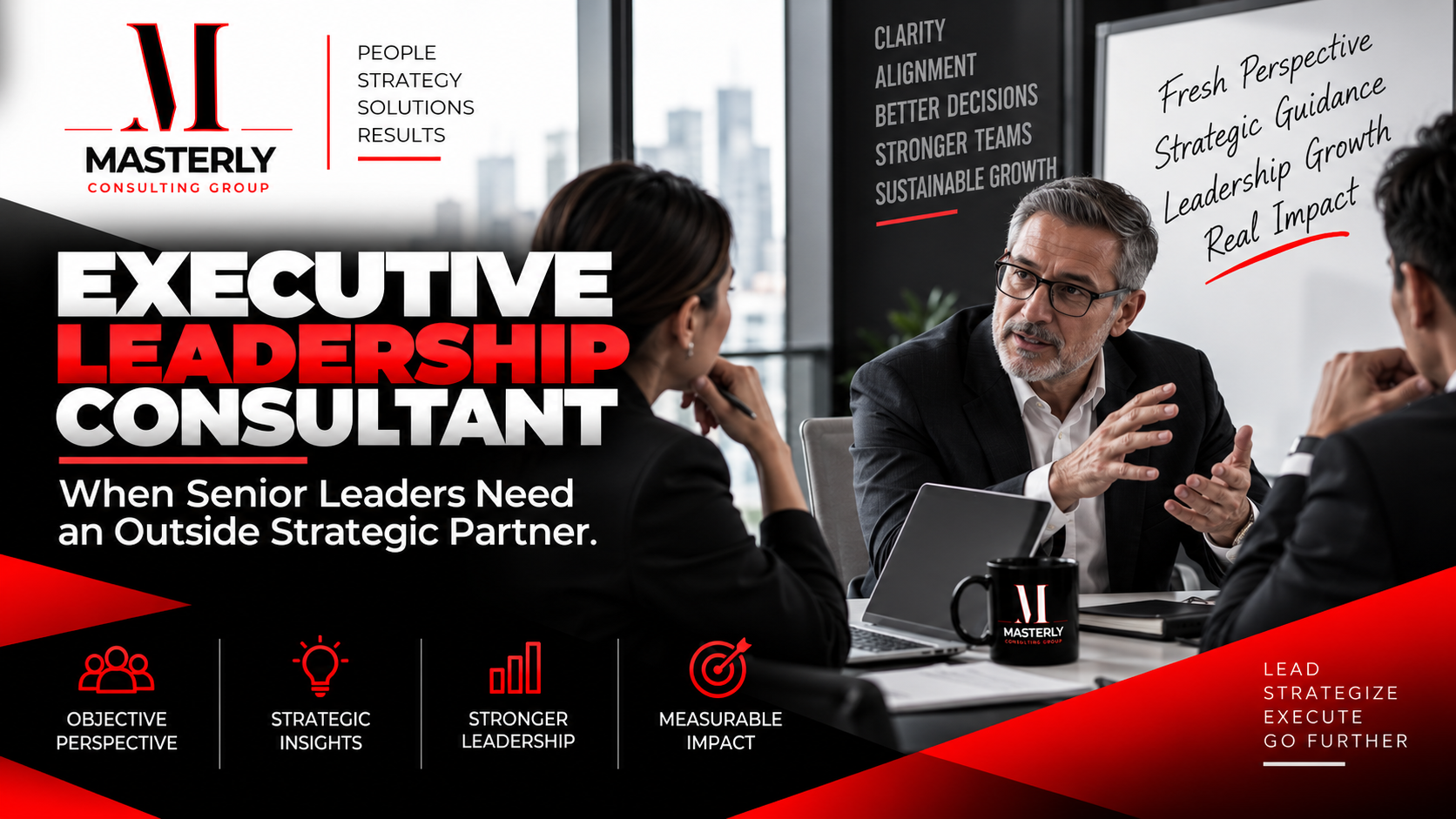
Professional strategy support gives leaders outside structure for evaluating major choices, testing assumptions, defining decision criteria, clarifying business priorities, and identifying the operating consequences of the direction they choose.
Masterly Consulting Group currently provides business consulting that includes strategic planning, business growth, process optimization, risk management, and digital transformation. Its public approach also describes working with organizations to develop customized strategies and support implementation.
For leaders facing an important decision, the goal is not another presentation. It is a clearer path from uncertainty to action.
Strategy Consulting Helps When the Decision Is Bigger Than One Department
Some decisions can be handled inside a single function.
A marketing leader can select a campaign.
An operations manager can improve a workflow.
A department head can adjust staffing.
Other decisions cut across the organization.
Should the company enter a new market?
Should two business units be combined?
Should resources move away from one priority and toward another?
Should a new service be launched?
Should the organization centralize an important function?
These questions affect several parts of the business at once.
That is where strategy consulting becomes different from routine problem-solving.
A strategic decision must consider the broader system.
It may affect leadership responsibilities, capital, staffing, customer experience, technology, timing, and execution capacity.
An outside advisor can help leadership evaluate those connections before the organization commits to a direction.
High-Stakes Decisions Need Clear Decision Criteria
Executives often know the options.
What they may not have is agreement about how those options should be evaluated.
Imagine a company deciding between three growth opportunities.
One offers more revenue potential.
One fits existing operations better.
One requires less investment.
Which option is best?
There is no useful answer until leadership agrees on what "best" means, because the main objective is to judge each option against the company goals.
The strategic planning process starts by agreeing on key objectives before options are compared.
Decision Criteria Create a Common Standard
A structured strategic decision making process, grounded in strategic thinking, can establish the criteria that matter most.
Those criteria should reflect the company's mission and long term vision, and may include:
- Strategic fit
- Resource requirements
- Operational capacity
- Customer impact
- Financial exposure
- Timing
- Leadership attention
- Organizational readiness
- Long-term consequences
The purpose is not to reduce strategy to a scorecard.
It is to give leaders a shared framework for discussing tradeoffs while keeping short-term choices connected to long term objectives.
Without that structure, the loudest opinion can become the strategy.
A Strategic Advisor Helps Surface Hidden Assumptions
Major decisions are often built on assumptions.
Leaders may assume customers will respond positively.
They may assume the team has capacity.
They may assume a new market behaves like an existing one.
They may assume technology can support the change.
They may assume the organization can execute several priorities at the same time.
Some of those assumptions may be correct.
Others may need a more thorough analysis of the assumptions behind them.
A strategic advisor can help leadership make those assumptions visible.
That matters because an unspoken assumption cannot be challenged.
Once leadership can see the assumptions behind a choice, the team can ask better questions.
What would need to be true for this decision to work?
What could prevent execution?
What evidence supports the assumption?
In strategy consulting, testing assumptions means focusing on relevant data, using data analysis, and applying market research.
What happens if the assumption is wrong?
This creates a more disciplined conversation around risk and opportunity.
Business Strategy Consulting Should Clarify the Choice, Not Add More Options
Leadership teams often have too many priorities already.
The answer is rarely to create another list.
Effective business strategy consulting should help narrow choices.
A company may say it wants to:
Grow revenue.
Enter new markets.
Improve margins.
Build a stronger leadership team.
Launch new services.
Improve customer experience.
Modernize technology.
Reduce risk.
All of these goals may be reasonable.
They cannot always receive equal attention at the same time.
Strategy requires choice.
Business Priorities Require Tradeoffs
A true priority consumes resources.
It affects budgets.
It changes calendars.
It requires leadership attention.
It may mean another good idea has to wait.
These tradeoffs shape strategic decisions with long term implications.
That is why business priorities need more than agreement in a meeting.
Leadership should understand what the priority requires from the organization and what the organization will not pursue while that priority receives attention.
Outside strategy support can make those tradeoffs easier to discuss because collaborative decision making helps leaders discuss significant changes more productively.
Executive Alignment Does Not Mean Everyone Has the Same Opinion
Executives do not need to agree on every detail, and effective decision makers do not need identical opinions.
Healthy disagreement can improve a decision.
The problem appears when disagreement continues after the organization needs to move.
Without executive alignment, different departments may begin executing different versions of the strategy.
Finance applies one interpretation.
Operations applies another.
Marketing assumes a third.
Employees receive mixed signals.
The organization appears active but is not moving in one direction.
A structured strategy engagement can help leaders identify where agreement is necessary.
That matters for business leaders, especially since executives spend around 40% of their time making decisions.
That may include agreement on:
The decision itself.
The reason for the decision.
The major risks.
The priorities that follow.
The leaders responsible for execution.
The measures that will show whether progress is occurring.
Alignment is not about removing debate.
It is about reaching enough clarity to act.
Leadership Strategy Must Translate Into Operating Decisions
A strategy becomes meaningful when it changes decisions.
If leadership approves a major direction but budgets, staffing, priorities, meeting rhythms, and ownership remain exactly the same, the strategy may never become operational.
That is why leadership strategy should connect directly to operating decisions and operational decisions.
For example, a company that decides customer retention is its highest strategic priority may need to reconsider:
Which teams own customer experience.
How leaders review retention performance.
Where resources are allocated.
Which internal processes create customer friction.
Which technology supports customer information.
How success is measured.
The strategic choice creates operating consequences.
Those consequences should be considered before the organization announces the strategy, because strategy execution depends on working through operational considerations before launch.
Strategy Consulting Should Consider Execution Before the Decision Is Final
Execution should not begin after strategy ends.
Execution should influence the comprehensive strategy itself.
A theoretically attractive decision may be unrealistic if the company lacks the people, systems, capital, or leadership capacity required to carry it out.
A stronger strategy process asks:
Can the organization actually execute this?
That includes weighing the potential benefits against the potential risks.
What must change for execution to work?
Who needs authority?
What capabilities are missing?
Which existing priorities will compete for resources?
What dependencies could slow progress?
These questions help prevent leadership from approving a direction without understanding whether it creates a credible path forward.
Operating Decisions Reveal Whether Strategy Is Real
Companies often describe strategy in broad language. Strategy work becomes real when operating choices support future growth.
Grow.
Transform.
Expand.
Modernize.
Differentiate.
Those words sound clear until managers have to make daily decisions.
What gets funded?
What gets stopped?
Who owns the work?
Which customers receive attention?
Which projects move first?
How should conflicting priorities be resolved?
Those are operating decisions that determine how the company operates.
Masterly Consulting Group's current Strategic Management content focuses on this same connection between long-term direction, strategic priorities, resource allocation, operating goals, accountability, and execution.
Recommended internal link: Link the phrase strategic management to the existing Masterly Consulting Group article, Strategic Management: Turning Long-Term Direction Into Operating Decisions. It reinforces the execution side of the topic without competing directly with this page's primary strategy consulting intent.
A Practical Framework for a High-Stakes Strategy Decision
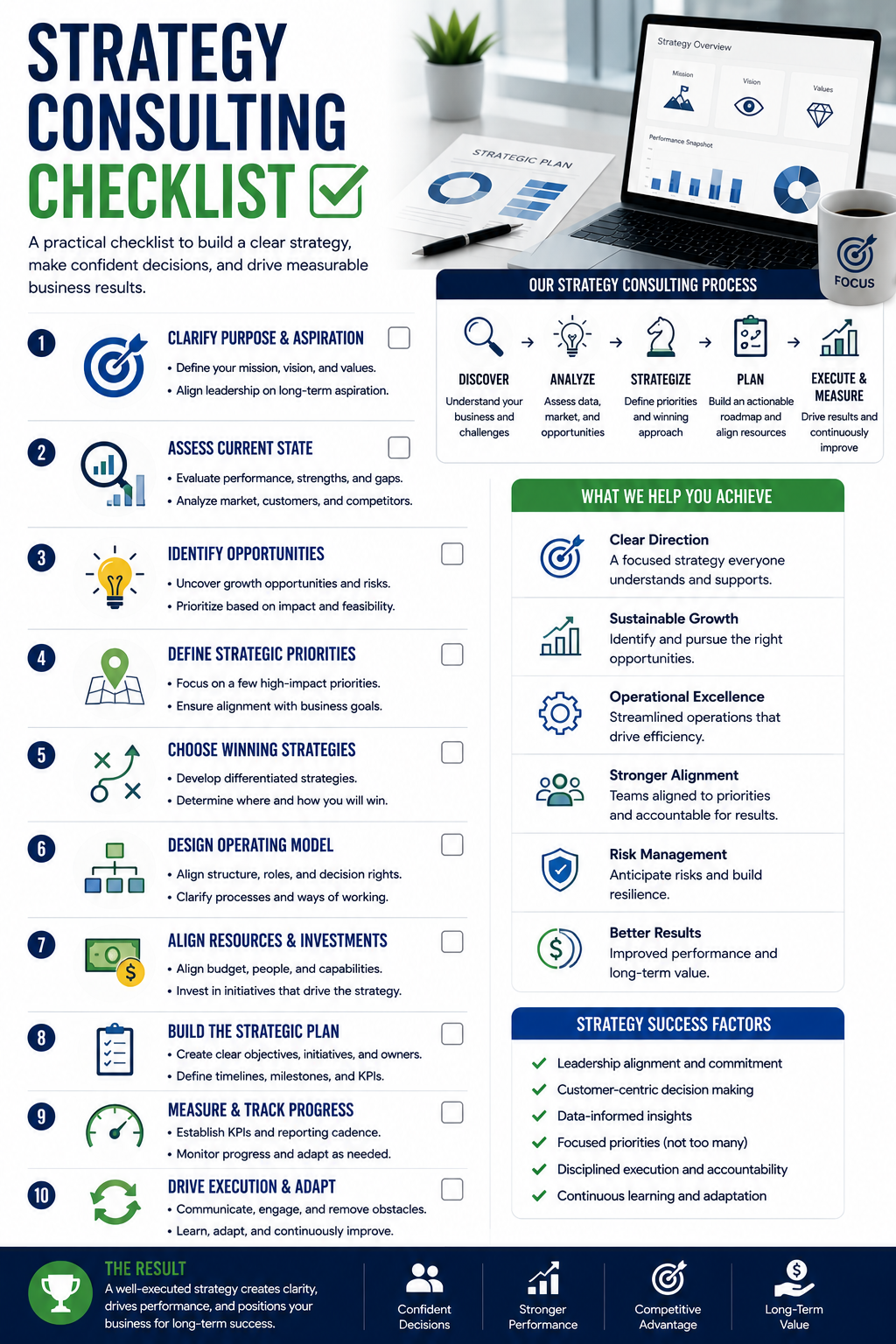
A useful strategy engagement can organize leadership thinking around four areas.
1. Clarify the Decision
Define the actual choice leadership needs to make.
The issue should be specific enough that leaders understand what is being decided, what the main objective is, and what is outside the current scope. Before evaluating options, make sure that scope aligns with the company’s vision and mission statements.
2. Test the Assumptions
Identify what leadership believes about customers, resources, competitors, capabilities, internal factors, timing, and execution.
Important assumptions deserve examination before commitment. In uncertain conditions, scenario planning helps teams consider potential outcomes before they commit.
3. Define the Tradeoffs
Every major decision creates opportunity costs.
Leadership should understand what resources, priorities, or alternatives may be affected in a changing market. Leaders should also compare options against market demand and market trends.
4. Translate the Decision Into Ownership
Once the direction is chosen, leaders need clarity around accountability, timing, resources, and the operating decisions that follow.
Clear ownership helps strategic leaders and subject matter experts support implementation.
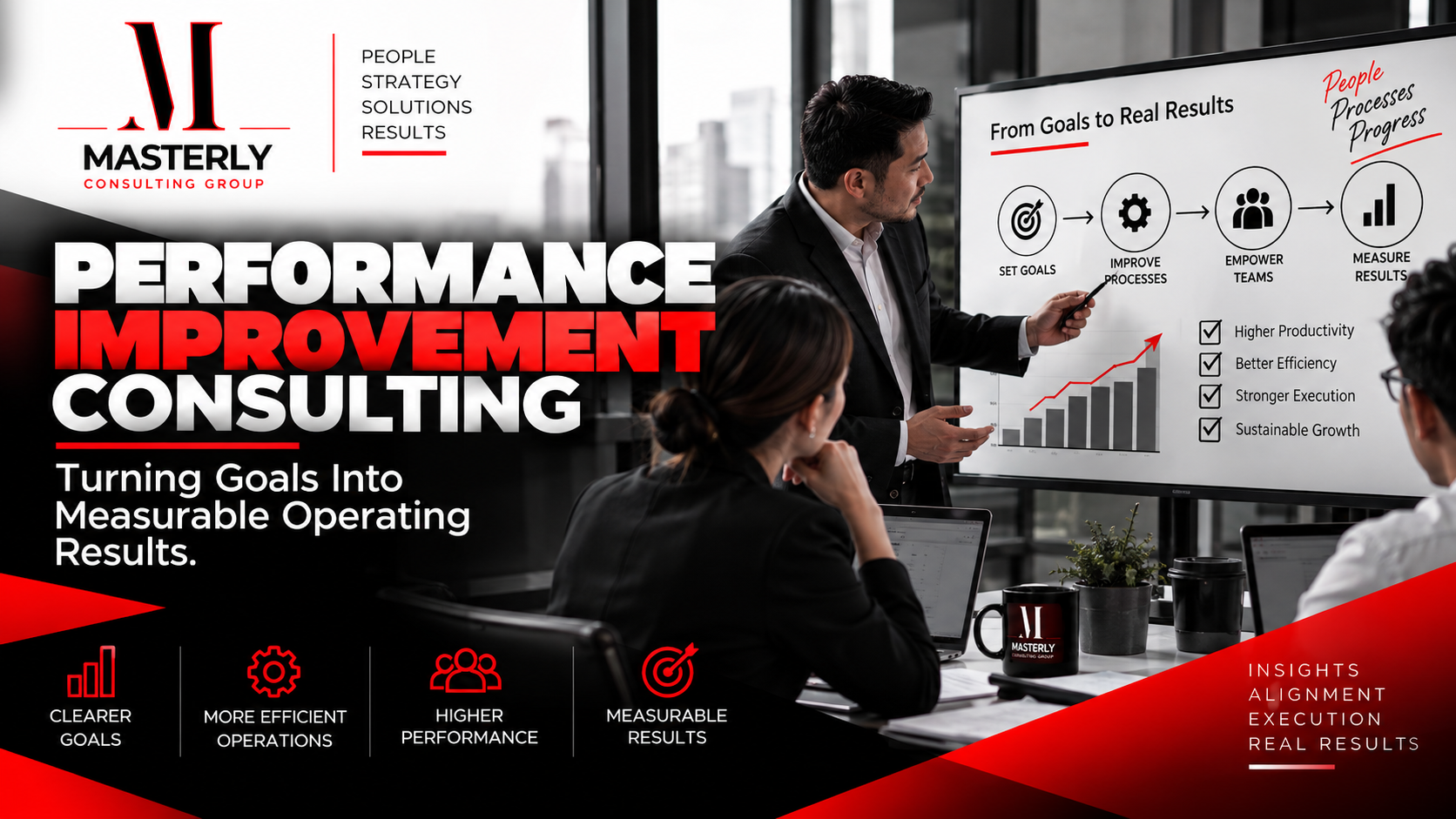
This is where strategy moves from discussion into organizational action and strategy execution.
When Outside Strategy Consulting Creates the Most Value
Not every decision requires an outside consultant.
Leadership teams make important decisions every day.
Professional strategy consulting becomes especially useful when strategy consultants are supporting unusually complex decisions involving senior leadership, C-suite executives, or boards of directors, especially when several executives have competing views, the organization is entering unfamiliar territory, or the consequences of a poor decision would be difficult to reverse.
Outside support can also help when:
- Leadership keeps revisiting the same decision
- Too many priorities are competing for attention
- Departments are pursuing conflicting approaches
- The organization needs neutral structure for a sensitive decision
- Strategy discussions remain broad and do not produce commitments
- Leaders understand the direction but cannot translate it into execution
- Major operating consequences have not been fully examined
Recommendations are usually presented to senior management in concise formats.
The consultant does not replace leadership judgment.
Leadership still owns the decision.
The consultant provides structure around how that decision is evaluated and translated into action.
Masterly Consulting Group Brings Strategy Back to Practical Decisions
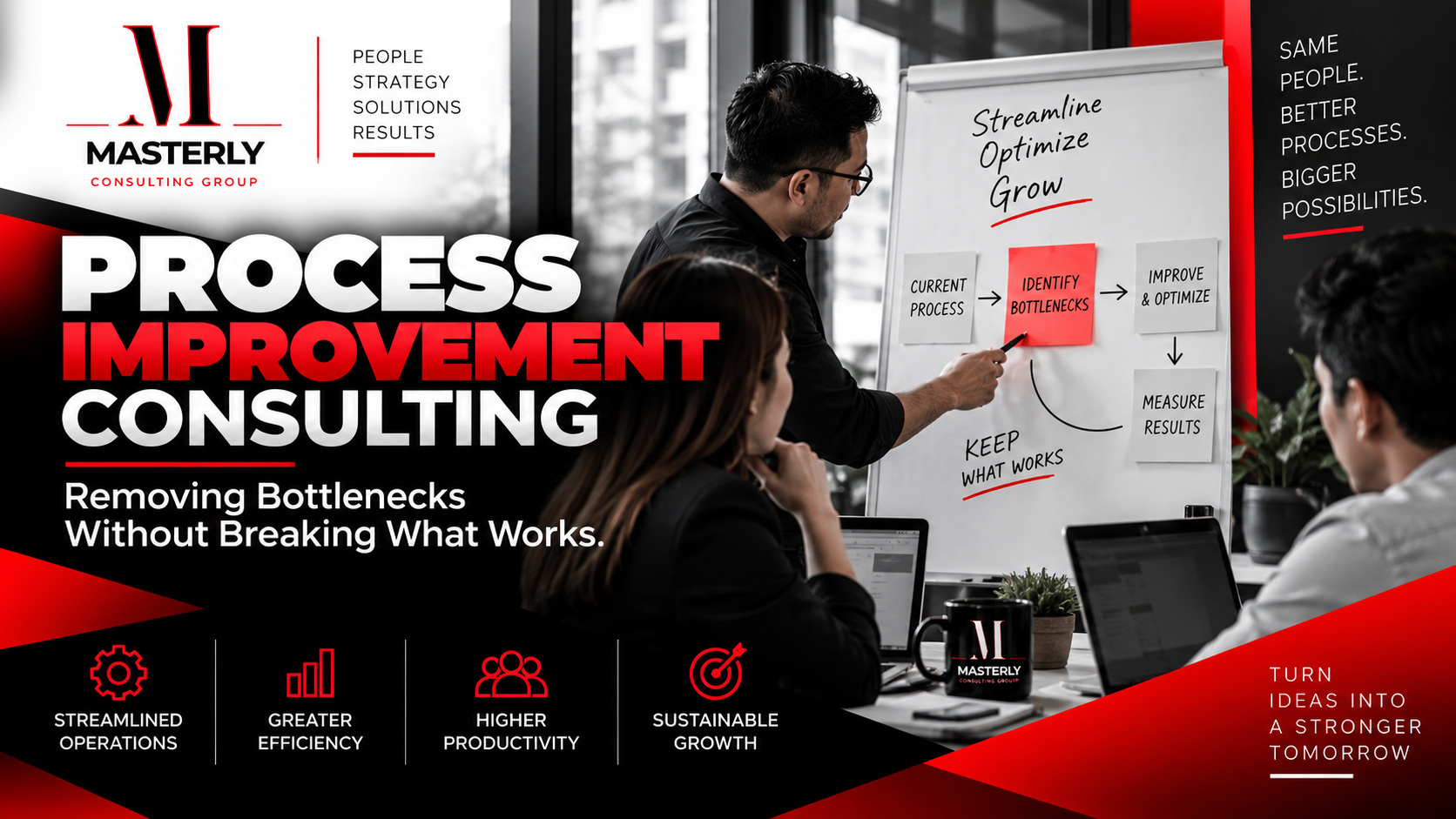
Masterly Consulting Group's current business consulting services include strategic planning and business growth, process optimization, risk and compliance management, market expansion, and digital transformation, and strategy consulting is a specialized subset of management consulting. Its public process also includes consultation, customized planning, implementation support, and ongoing evaluation.
That broader business perspective matters during high-stakes strategy work.
A major strategic choice rarely affects one issue.
It can influence operations, leadership, resources, risk, technology, and execution at the same time.
Masterly Consulting Group works with leaders to bring greater structure to complex business questions and develop practical strategies tailored to the organization's needs. Strategy consulting work can include corporate strategy and Business Model Transformation, and it can span eight disciplines, including Mergers & Acquisitions. The specific scope of any engagement should be defined based on the decision, organization, and agreed objectives.
The purpose is not to produce strategy for its own sake.
It is to help leaders make a clearer decision and understand what that decision means for the business.
Frequently Asked Questions About Strategy Consulting
What is strategy consulting?
Strategy consulting provides outside support to help leaders evaluate important business choices, clarify priorities, test assumptions, consider tradeoffs, and determine what decisions should follow through rigorous analysis that supports informed decisions. The work often combines strategic planning with data analysis, market research, and a clearer path forward.
When should a company hire a strategic advisor?
A strategic advisor can be useful when leadership faces a complex or high-stakes decision, lacks alignment, or needs outside structure to evaluate options.
What is business strategy consulting?
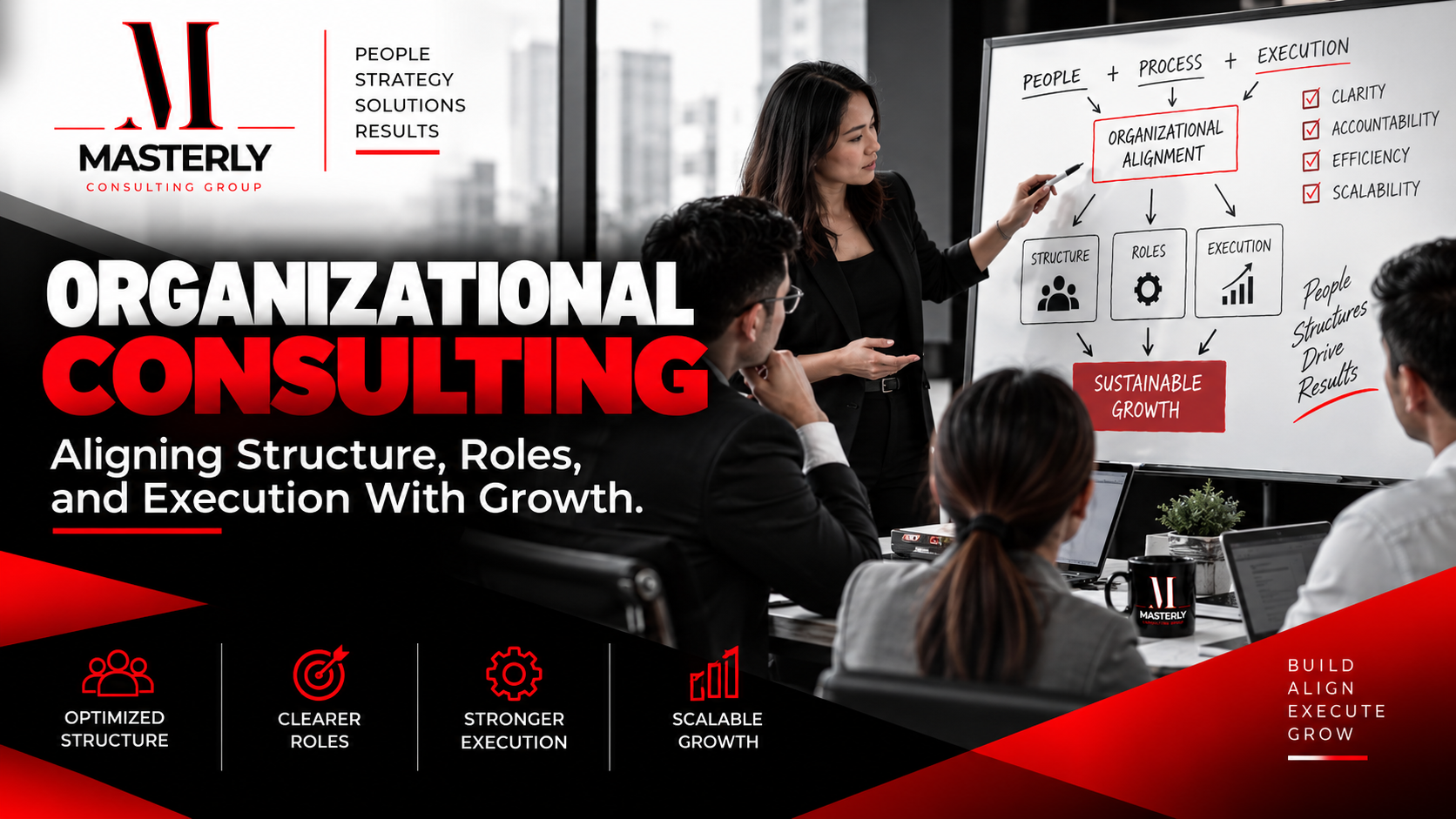
Business strategy consulting focuses on major choices affecting the organization's direction, priorities, resources, competitive position, execution, and long-term competitive advantage. It may use frameworks such as Porter's Five Forces to assess industry structure and competitive landscapes, including the industry competitive environment. Organizational questions may also be examined through the McKinsey 7S Model, which analyzes organizational design through seven elements.
Does strategy consulting make the decision for leadership?
No. Leadership remains responsible for the final decision. A consultant helps structure the analysis, questions, tradeoffs, and decision process.
How does strategy consulting support executive alignment?
It helps leaders clarify the decision, discuss assumptions and competing priorities, and establish enough alignment to support well-informed decisions rather than rushed agreement. Collaborative decision making also helps with overcoming common challenges by reducing conflicting interpretations around common challenges and execution.
What is strategic decision making?
Strategic decision making is the process of evaluating choices that can materially affect the organization's future direction, resources, operations, or priorities, with a focus on long-term implications and business success. It matters because companies focusing on long-term goals see 47% higher revenue growth, while 80% of new products fail due to poor decision making.
How do business priorities relate to strategy?
Business priorities determine where leadership attention and organizational resources should be focused, including how time and budget are allocated across different customer segments. Strategy helps leaders choose among competing priorities in ways that support growth strategy, not just short-term activity.
What happens after a strategic decision is made?
The decision should be translated into ownership, resources, timelines, operating decisions, communication, and measures of progress.
Does Masterly Consulting Group provide strategy consulting?
Masterly Consulting Group publicly provides strategic planning and broader business consulting services. Organizations can discuss their specific strategy needs directly with the firm to determine the appropriate engagement scope.
Discuss a Strategy Engagement With Masterly Consulting Group
A high-stakes decision should not remain trapped in another round of executive discussion.
When the options affect growth, resources, leadership responsibilities, operations, or the future direction of the organization, leaders need enough structure to gain a deeper understanding of the risks, opportunities, and business environment before they commit.
Strategy consulting can help clarify the decision, test assumptions, define business priorities, strengthen executive alignment, and help leaders make informed decisions grounded in relevant data and a clearer path forward.
Masterly Consulting Group helps organizations bring greater structure to complex business challenges through customized consulting and strategic support.
Call Masterly Consulting Group at (972) 236-5051 or visit masterlygroup.com to discuss a strategy engagement with Masterly Consulting Group.