Strategic Planning Consultant: Turning Annual Goals Into Decisions, Owners, and Deadlines
Your leadership team probably does not need another list of goals.
It needs decisions.
Many companies enter a new quarter or year with ambitious plans for growth, operations, hiring, technology, customer experience, and profitability. Everyone agrees on the direction during the planning meeting. Then daily business takes over.
Priorities compete. Deadlines move. Important projects lack clear ownership. Leaders make decisions within their own departments without always knowing how those choices affect the larger strategy.
A strategic planning consultant can help leadership turn broad goals into a practical plan built around priorities, responsibilities, decisions, and timelines.
Masterly Consulting Group works with businesses that need strategy to move beyond discussion. Our consulting approach focuses on practical solutions tailored to the organization, with planning designed to support clearer decisions and measurable objectives.
Your Company May Have Goals Without Having a Strategic Plan
Goals and strategy are related, but they are not the same thing.
"Increase revenue" is a goal.
"Expand into a new market" is a goal.
"Improve operations" is a goal.
Leadership still has to decide what those goals require from the organization.
Which initiatives receive priority? What needs to happen first? Who is responsible? What resources are involved? Which decisions cannot wait? How will leadership know whether execution is moving in the intended direction?
That is where business strategic planning becomes valuable.
A practical strategic plan creates structure around what leadership has decided matters most.
A Strategic Planning Consultant Helps Turn Discussion Into Direction
Leadership teams often know their businesses extremely well.
That can make strategic planning harder.
Every department has legitimate concerns. Sales sees one opportunity. Operations sees another challenge. Finance may have different priorities. Leadership may also be balancing current demands against longer-term growth.
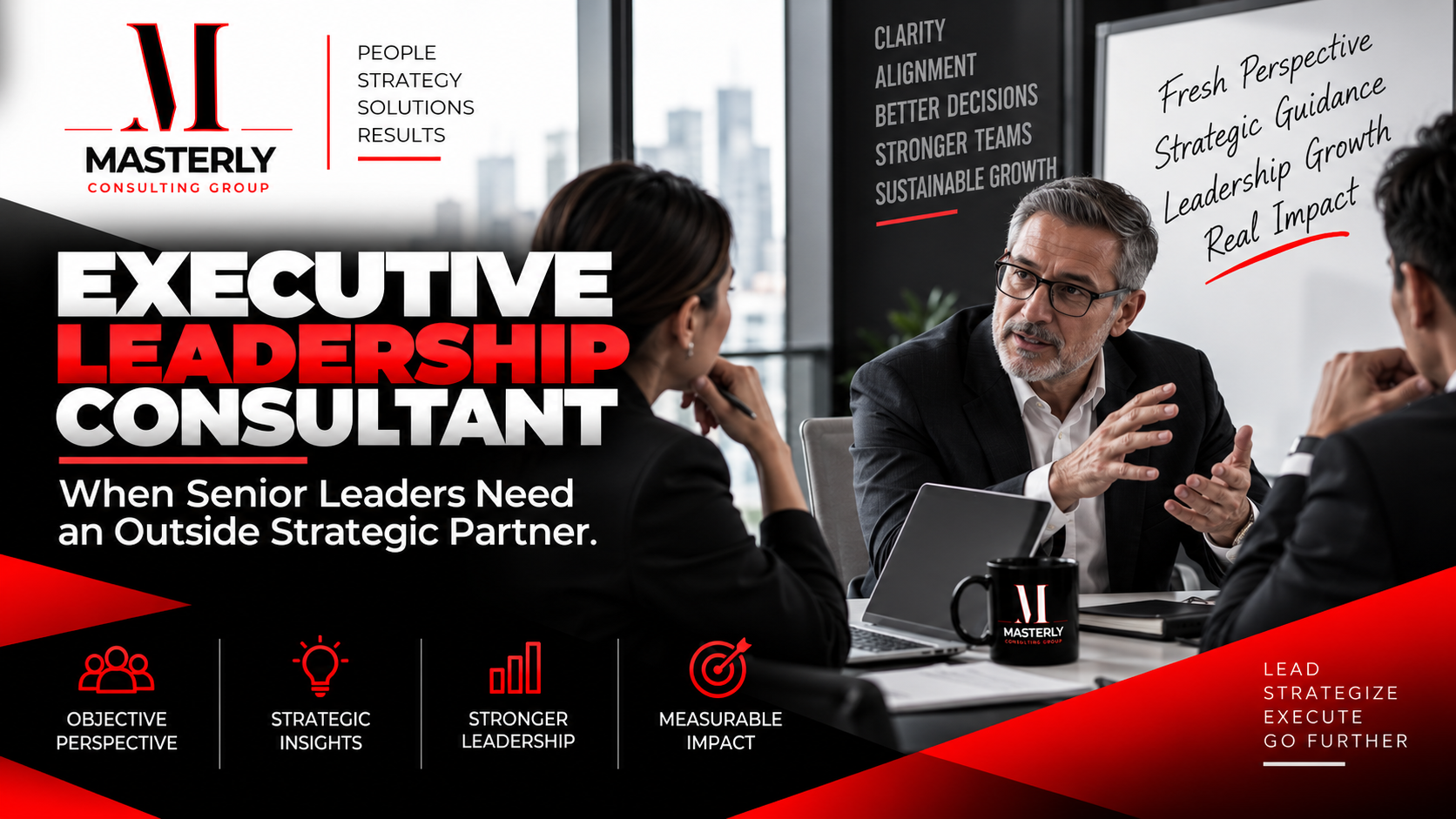
A strategic planning consultant brings an outside perspective to that conversation.
The purpose is not to replace the knowledge of the leadership team.
It is to help organize that knowledge into a clearer strategic direction.
Professional strategic planning consulting can help leadership examine competing priorities, clarify decisions, and connect high-level objectives with the practical work required to move them forward.
Outside Perspective Can Help Leadership See the Whole Organization
Senior leaders spend much of their time solving immediate problems.
That makes it easy for planning conversations to become dominated by whatever issue is most urgent that week.
Strategy requires a wider view.
It also means looking at external factors alongside internal priorities so decisions reflect the full landscape.
Leadership may need to consider operations, staffing, technology, revenue, market opportunities, customer experience, and future growth together rather than as separate conversations.
A consultant can help keep the larger organization visible while leadership evaluates individual priorities.
Strategy Needs Ownership or Execution Can Stall
A strategic priority without ownership can quickly become everyone's responsibility and, in practice, no one's responsibility.
The leadership team may agree that an initiative is important while leaving the next step unclear.
Who moves it forward?
Who has authority to make decisions?
Who needs to contribute?
When should leadership revisit progress?
A practical strategic plan should make ownership easier to understand.
This does not mean creating unnecessary layers of reporting. It means connecting priorities with people who have responsibility for moving the work forward.
For leadership teams already managing full schedules, that clarity can make the difference between a strategy that remains on paper and one that becomes part of business operations.
Deadlines Turn Strategic Priorities Into Commitments
"We want to do this this year" leaves a great deal of room for delay.
Business priorities compete constantly.
A project that does not have a meaningful timeline can be pushed aside whenever something more urgent appears.
Strategic planning brings time into the conversation.
Some initiatives may need immediate attention. Others may depend on earlier decisions. Larger objectives may require several stages before the organization can reasonably expect progress.
A strategic plan consultant can help leadership think through the sequence of priorities instead of treating every goal as equally urgent.
The result should be a plan leadership can use, not simply admire.
Business Strategic Planning Connects Departments Around Shared Priorities
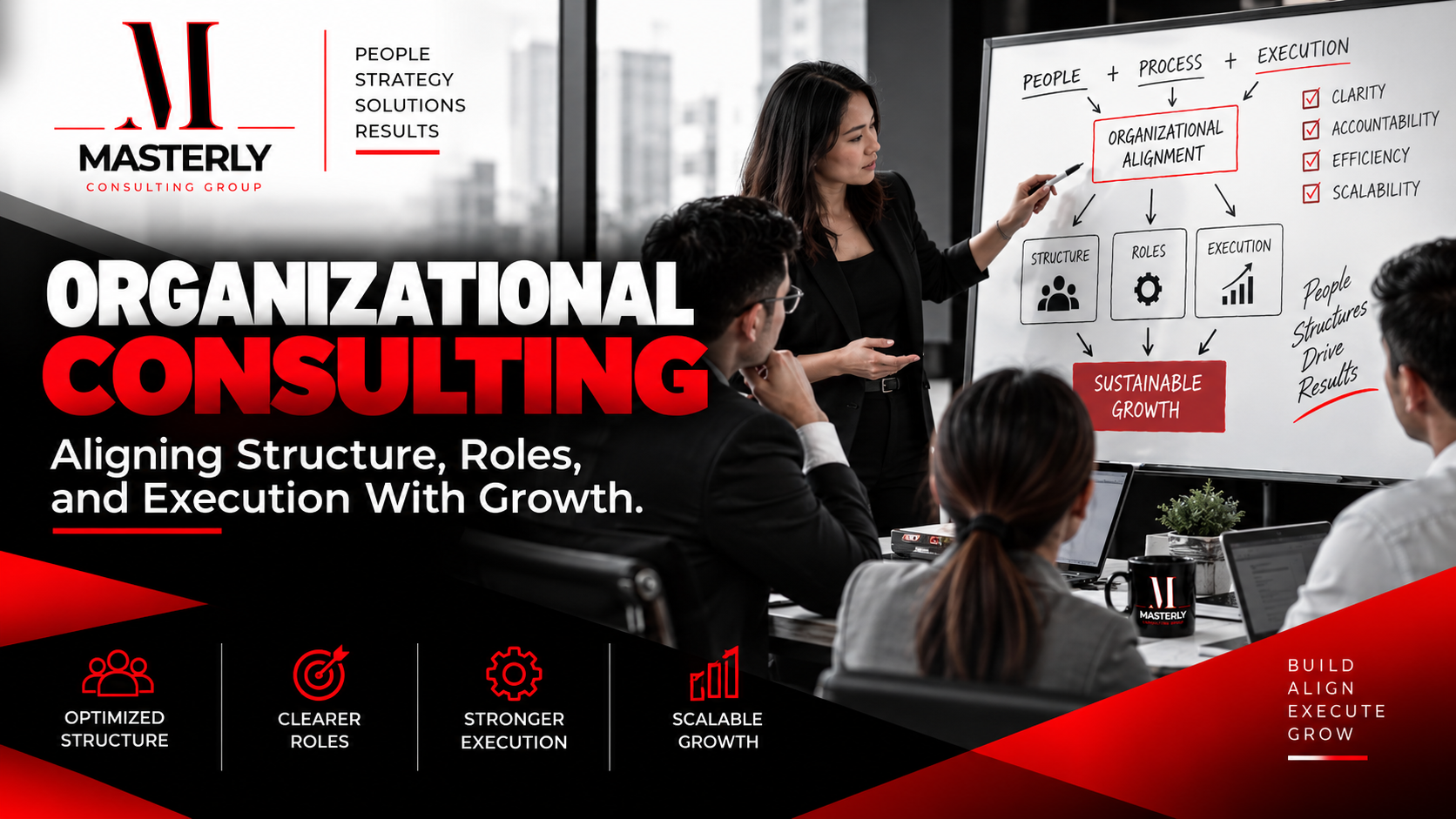
One of the hardest parts of execution is keeping different parts of the company aligned.
A decision made in one department can create work somewhere else.
A sales initiative may affect staffing. Growth plans may require technology investments. Operational changes can affect the customer experience. New markets may require leadership attention and additional resources.
Effective business strategic planning recognizes those connections.
Instead of allowing departments to build isolated plans, leadership can examine how major priorities affect the organization as a whole.
This can create a clearer foundation for decision-making when competing needs appear later.
Leadership Alignment Does Not Mean Everyone Gets Every Priority
Strategic planning requires choices.
A company cannot always pursue every opportunity at the same time.
That can make planning uncomfortable.
Leaders may need to decide which initiatives move forward, which need more information, which should wait, and which no longer support the company's direction.
A productive leadership planning session should create room for those decisions.
The objective is not to leave the room with the longest possible list.
It is to leave with clearer direction.
A Strategic Plan Should Be Practical Enough to Use After the Meeting
Some strategic plans look impressive but are difficult to apply.
They contain broad statements about growth, innovation, customer service, or operational excellence without explaining what leadership needs to do next.
A practical plan should help guide decisions after the planning session ends.
When a new opportunity appears, leadership should be able to compare it with existing priorities.
When resources are limited, the strategy should help inform where attention belongs.
When an initiative falls behind, leadership should know who owns it and when it needs to be discussed.
That is why strategic planning services should focus on strategy execution as well as direction.
The document is not the strategy.
The decisions behind it are.
In practice, strong plans turn priorities into action plans, not just a document.
Strategic Planning Should Connect Current Needs With Future Goals
Leadership teams have to operate in two time frames at once.
The business has needs today.
It also has a future to prepare for.
Longer-term planning may involve market expansion, staffing growth, technology investment, operational scaling, revenue planning, leadership succession, or sustainable growth. The right priorities depend on the organization.
Focusing only on immediate problems can make it difficult to prepare for what comes next.
At the same time, a long-term vision that ignores today's operating reality may be difficult to execute.
Professional strategic planning consulting can help leadership connect those two perspectives.
Measurable Priorities Create Better Leadership Conversations
A goal such as "improve operations" can mean many things.
Different leaders may interpret it differently.
A stronger planning conversation helps create clear priorities and measurable goals around what the organization is actually trying to accomplish and what leadership needs to watch.
Not every strategic objective can be reduced to a single number, and planning should not invent measurements simply to make a document appear more precise.
But priorities should be clear enough for leadership to discuss progress meaningfully.
Where appropriate, key performance indicators give leadership a practical way to track progress without oversimplifying the work.
This creates a better foundation for accountability.
Instead of repeatedly asking, "How are we doing on the strategy?" leadership can discuss specific priorities, responsibilities, deadlines, obstacles, and decisions.
Strategy Should Change When the Business Requires It
A strategic plan should provide direction without preventing leadership from responding to reality.
Markets change. Customer needs shift. Staffing changes. New risks appear. Opportunities develop.
That does not make strategic planning useless.
It makes regular leadership attention important.
Regularly revisiting the plan and making adjustments improves responsiveness when conditions change.
A plan can provide a reference point for deciding whether a new development changes the company's priorities or simply creates another distraction.
When circumstances change, leadership can make a deliberate decision rather than allowing the strategy to fade quietly into the background.
Masterly Consulting Group Brings Strategy Back to Execution
Masterly Consulting Group approaches strategy as a practical business tool.
Our existing consulting approach emphasizes creating clarity, refining leadership expectations, and developing practical solutions around the needs of the organization.
For strategic planning, that means looking beyond broad statements about where the company wants to go.
Leadership needs to understand the decisions involved.
Priorities need ownership.
Important work needs realistic timing.
Different parts of the organization need enough alignment to execute without constantly working against one another.
Our strategic planning services are designed around that practical need for structure.
Your Leadership Team Does Not Need Another Planning Exercise
A planning session should not exist simply because the calendar says it is time for annual planning.
Leadership time is valuable time.
Choosing the right consultant matters, because the wrong process can waste leadership time without producing usable decisions.
The conversation should help the company make decisions it has been postponing, clarify priorities that have become confused, and determine what needs to happen after everyone leaves the room.
Masterly Consulting Group helps businesses approach strategic planning with execution in mind.
The goal is not to produce a larger collection of ideas.
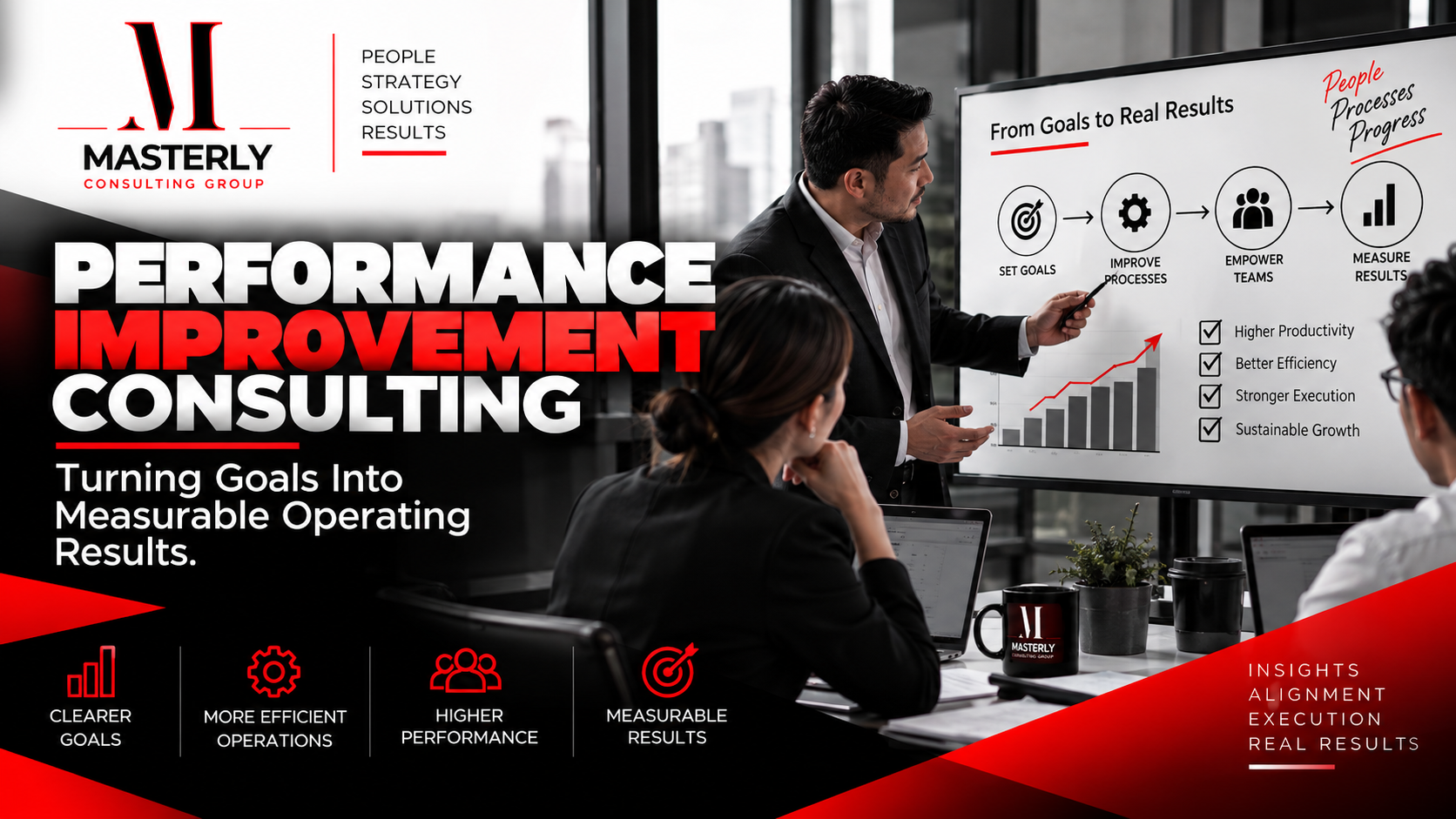
It is to help leadership create a clearer path from goals to action.
A Comprehensive Strategic Planning Process Should Lead to Actionable Plans
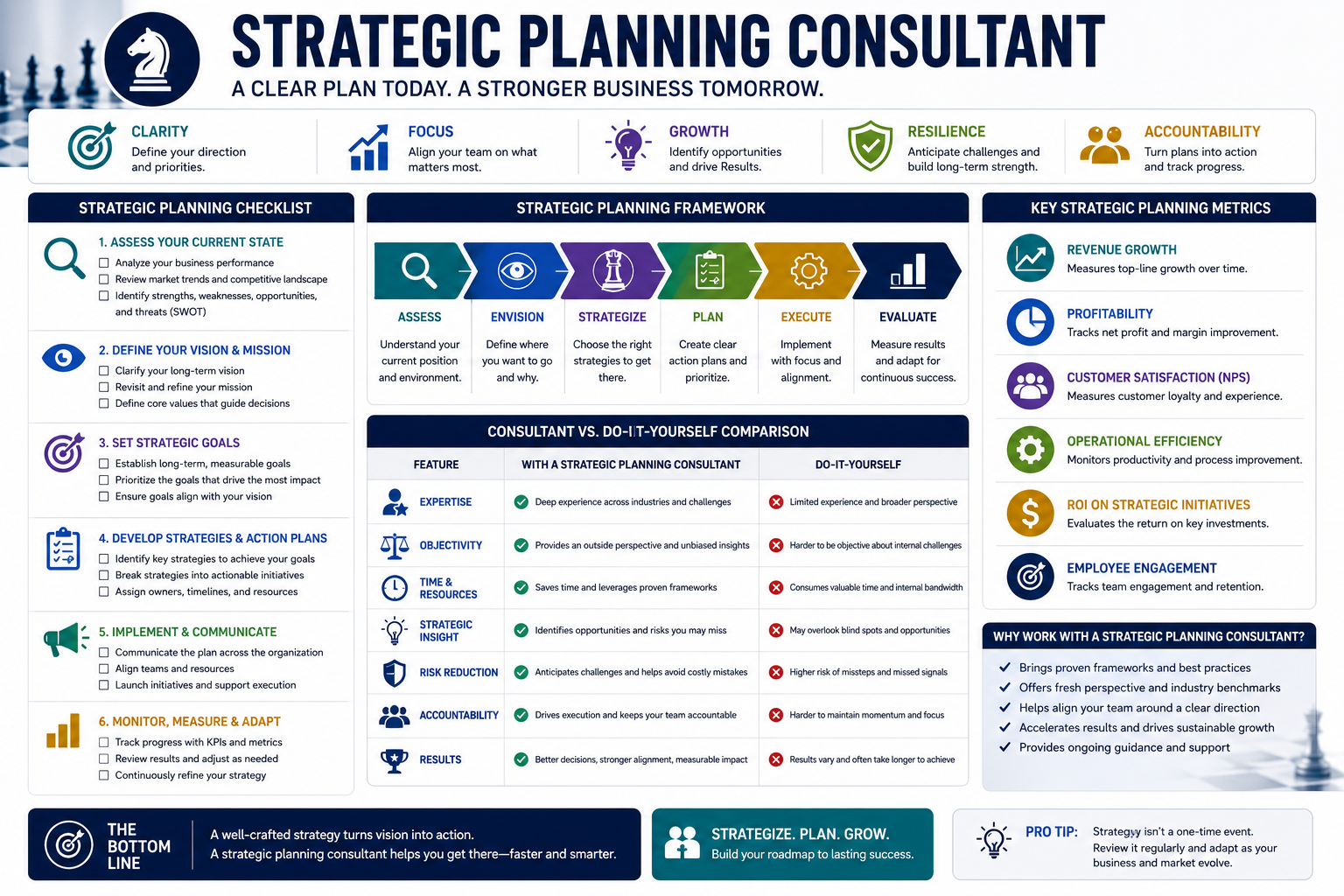
A comprehensive strategic planning process should help leadership move from broad ideas to a clear vision, defined strategic goals, and practical actionable plans. For many organizations, the challenge is not deciding that strategic planning is important. The challenge is creating enough structure to move from discussion to decisions that support the organization's direction.
A structured approach can help leadership consider both internal and external factors that may affect the plan. That can include current operations, market conditions, workforce needs, competitive pressures, community needs, available resources, and other issues relevant to the organization. Professional planning may also involve data analysis, situational analysis, and identifying opportunities that leadership wants to evaluate before final priorities are set.
The purpose is not to create the longest possible document. It is to connect the organization's goals with realistic priorities and achievable goals that leaders can use after the planning process ends.
Strategic Planning Sessions Should Include the People Who Need to Support the Plan
A plan can be difficult to execute when it is developed without enough input from the people affected by it. Depending on the organization, strategic planning sessions may involve senior management, business leaders, board members, department leaders, or other internal teams.
Some organizations may also need broader stakeholder engagement. That can include stakeholder interviews, stakeholder feedback processes, or input from relevant external stakeholders. A nonprofit organization, for example, may need to consider the perspectives of nonprofit leaders, board members, community partners, or others connected to its mission.
The right level of participation depends on the organization.
The goal is to build buy in without allowing the planning process to become so broad that decisions never get made. A skilled consultant can help support consensus building, keep conversations focused, and help leadership build consensus around the priorities that matter most.
Strategic Initiatives Need an Implementation Process
The value of a strategic plan appears after the planning meeting.
Once leadership agrees on strategic initiatives, the organization needs an implementation process that connects priorities with ownership, timing, and decision-making. Otherwise, even a strong final written strategic plan can become disconnected from daily operations.
This is where strategic planning and change management can intersect.
New priorities may require different responsibilities, processes, investments, or leadership decisions. The entire organization may not be involved in every strategic initiative, but employees and leaders need enough clarity to understand how the plan affects their work.
Masterly Consulting Group helps leadership teams focus on the practical side of planning so strategy can move toward execution rather than stop at the final document.
Planning Should Support Long-Term Direction, Not Just the Next Quarter
Short-term priorities matter, but a strategic plan should also help leaders think about growth strategies, organizational capacity, and the conditions needed for long term success.
For most organizations, a successful future depends on balancing current operating needs with longer-term priorities.
That does not mean a consultant can promise success or guarantee that every strategy will work. Business and nonprofit environments involve uncertainty, changing conditions, and complex problems.
Professional strategic planning can, however, help leadership examine those issues more deliberately.
A strong plan can provide lasting value when it gives leaders a clearer basis for making decisions, adapting priorities, and maintaining alignment around the organization's goals.
Nonprofit Strategic Planning Requires Mission and Stakeholder Context
Organizations searching for a nonprofit strategic planning consultant may face planning questions that differ from those of a traditional business.
A nonprofit may need to connect strategic priorities with its mission, funding environment, board responsibilities, programs, human services, stakeholder expectations, and community impact.
That makes context especially important.
The planning process should reflect the needs of the specific organization rather than apply a generic business template to every situation. Leadership may need to balance organizational sustainability with the meaningful impact the nonprofit exists to create.
Masterly Consulting Group's strategic-planning approach focuses on practical organizational needs. Any specific nonprofit engagement should be shaped around the organization's circumstances, leadership structure, mission, and planning objectives.
Avoid Common Pitfalls That Leave Strategic Plans Unused
Many planning efforts become less useful because they lose connection with execution.
Some common pitfalls include setting too many priorities, creating goals without ownership, ignoring stakeholder concerns, using vague language, or developing a plan that does not reflect the organization's actual capacity.
Another problem is expecting the document itself to create lasting change.
A strategic plan is a decision-making tool. Leadership still has to use it.
The most valuable planning process helps the organization establish guiding priorities and practical next steps while leaving room to respond when circumstances change. Those principles guide future leadership conversations and help the organization decide whether new opportunities fit the strategy.
Masterly Consulting Group helps leadership teams work toward that kind of practical alignment. The emphasis is on turning organizational priorities into plans that can support decisions, ownership, and execution rather than creating strategy for its own sake.
Choose Experience Based on the Needs of Your Organization
Organizations evaluating consultants may ask about real world experience, facilitation style, planning approach, and experience addressing issues similar to their own.
Those are reasonable questions.
Claims involving previous clients, specific results, specialized industry experience, or guaranteed outcomes should be verified directly rather than assumed from general marketing language.
The right consultant should understand the organization's planning needs, ask useful questions, and help leadership address the issues that matter to the specific engagement.
For Masterly Consulting Group, the goal is to provide a practical planning conversation focused on clarity, strategic direction, and execution.
Frequently Asked Questions About Strategic Planning Consulting
What does a strategic planning consultant do?
A strategic planning consultant helps leadership examine business priorities, clarify strategic decisions, and organize goals into a more practical plan. The specific engagement depends on the needs of the organization.
What is strategic planning consulting?
Strategic planning consulting provides outside professional support for organizations developing or refining their strategic direction, priorities, and execution planning. The strategic planning process is usually structured over time, often taking 9–12 months and resulting in a 3–5 year plan. Good consulting support also sets up tracking frameworks and regular plan reviews so leadership can revisit priorities as conditions change.
What is business strategic planning?
Business strategic planning connects an organization's larger goals with decisions about priorities, resources, responsibilities, timing, and future direction.
When should a company hire a strategic planning consultant?
A company may consider outside strategic planning support when leadership has competing priorities, lacks alignment around execution, is preparing for growth or change, or needs to turn broad goals into a clearer plan.
What is a leadership planning session?
A leadership planning session brings key leaders together to address strategic priorities and decisions, and it may also include stakeholder participation beyond the core leadership group when broader alignment is needed. The purpose and structure should reflect the organization's specific planning needs. Involving diverse stakeholders can improve planning outcomes and support a shared vision.
Can a strategic plan consultant help with accountability?
A strategic plan consultant can help leadership clarify ownership, priorities, and timelines as part of the planning process. The organization's leaders remain responsible for executing the decisions they make.
Are strategic planning services only for large companies?
No. Organizations of different sizes can face problems with unclear priorities, leadership alignment, ownership, and execution. The appropriate planning approach depends on the business.
Does strategic planning guarantee business growth?
No. A strategic plan cannot guarantee revenue, growth, profitability, or other business outcomes. It can provide clearer structure for the decisions and priorities leadership chooses to pursue.
Does Masterly Consulting Group provide strategic planning services?
Strategic planning consulting costs vary widely, often ranging from $5,000 to $150,000 or more depending on scope. Several factors affect pricing, including the consultant's experience, project complexity, and expected hours; where hourly billing is used, average rates are about $132 and many projects run 50–200 hours. Leadership teams can contact Masterly Consulting Group to discuss their goals and determine whether professional strategic planning services fit their current business needs.
Request a Strategic Planning Consultation with Masterly Consulting Group
Your leadership team may already know where the company wants to go.
The challenge is turning that direction into decisions people can execute.
Masterly Consulting Group provides professional support for organizations that need a strategic planning consultant to help bring greater structure to priorities, ownership, deadlines, and leadership planning through a structured process that leads to action, not just discussion.
Do not let another annual strategy become a document that disappears once normal business resumes.
That focus helps support successful execution after the planning conversation.
Bring your leadership priorities, current challenges, and future goals to the conversation. We can discuss the strategic planning support your organization needs.
Visit MasterlyGroup.com or call (972) 236-5051 to request a strategic planning consultation with Masterly Consulting Group.