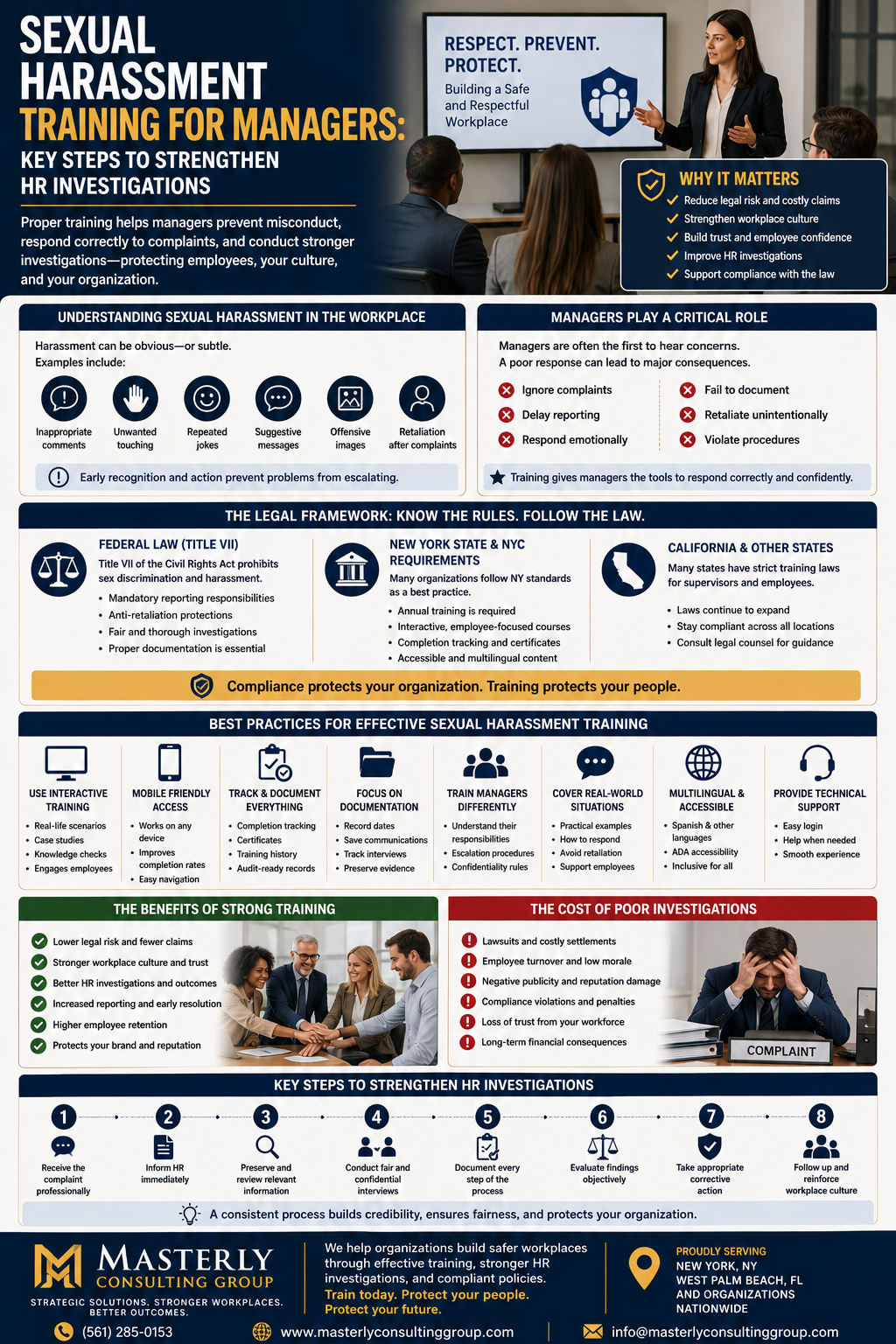
Sexual Harassment Training for Managers: Key Steps to Strengthen HR Investigations
Why Sexual Harassment Training Matters More Than Ever
Every organization wants a workplace where employees feel safe, respected, and valued. Unfortunately, many companies still underestimate how damaging sexual harassment claims can become when managers are not properly trained. A single complaint handled incorrectly can lead to legal disputes, employee turnover, public reputation damage, and long-term financial consequences for employers.
At Masterly Consulting Group, we regularly work with organizations that believed their policies alone were enough to protect the company. In reality, written policies without effective training often fail during real-world workplace investigations. Managers and supervisors need practical guidance that helps them recognize warning signs, respond appropriately, and document complaints properly before situations escalate.
Sexual harassment prevention training is no longer something businesses can treat as optional. Federal law, state regulations, and changing workplace expectations continue increasing pressure on employers to create stronger workplace training programs. Companies that invest in meaningful training often experience stronger workplace culture, lower legal risk, and more effective HR investigations.
Understanding Sexual Harassment in the Workplace
Sexual harassment in the workplace can take many forms, and not every situation looks obvious at first. Some employees assume harassment only involves extreme conduct, but inappropriate behavior often begins with smaller actions that gradually create a hostile environment.
Examples may include:
- Inappropriate comments
- Unwanted touching
- Repeated jokes
- Suggestive messages
- Offensive images
- Retaliation after complaints
Managers who receive proper workplace harassment training are usually better prepared to identify concerns early before they become larger legal problems.
Why Managers Play a Critical Role
Managers and supervisors are often the first people employees approach when workplace concerns arise. Because of this, management responses can significantly affect the outcome of harassment complaints and internal investigations.
A poorly trained supervisor may:
- Ignore complaints
- Delay reporting
- Respond emotionally
- Fail to document incidents
- Retaliate unintentionally
- Violate compliance procedures
Even good managers may mishandle situations without proper sexual harassment training. This is why employers should prioritize leadership education rather than assuming common sense alone is enough.
The Cost of Weak HR Investigations
Many organizations discover weaknesses in their HR process only after complaints become public or legal claims emerge. Weak investigations often create larger problems than the original incident itself.
Poor investigations may result in:
- Lawsuits
- Employee distrust
- Negative publicity
- High turnover
- Compliance failures
- Financial settlements
Effective sexual harassment prevention training helps organizations reduce these risks by improving how complaints are handled from the beginning.
How Federal Law Shapes Workplace Training
Federal law strongly influences how employers approach sexual harassment prevention policy development and employee education. Title VII of the Civil Rights Act prohibits workplace discrimination and harassment involving protected characteristics, including sex discrimination.
Because of Title VII requirements, employers should ensure managers understand:
- Reporting responsibilities
- Anti-retaliation protections
- Documentation standards
- Investigation procedures
- Employee rights
Failure to comply with federal standards may expose organizations to serious legal liability.
Why New York State and NYC Requirements Matter
New York State and NYC requirements have significantly influenced workplace harassment training standards across the country. Many businesses operating in other states now follow similar models because these laws established strong expectations for annual training and documentation.
New York State regulations often require:
- Annual sexual harassment prevention training
- Interactive course participation
- Employee completion tracking
- Accessible training materials
Even organizations outside New York State frequently adopt these standards to strengthen compliance efforts and reduce legal exposure.
California and Other States Continue Expanding Requirements
California has also implemented strict workplace harassment training laws requiring education for supervisors and employees. Other states continue expanding compliance expectations as workplace harassment concerns receive increased public attention.
Employers operating across multiple states often struggle to manage varying state regulations while maintaining consistent training standards throughout the organization.
This is one reason many businesses partner with consulting professionals to develop scalable workplace training programs.
Why Online Training Has Become So Important
Online training platforms allow organizations to educate employees more efficiently while maintaining consistent standards across locations. Businesses with remote workers or multiple offices often rely heavily on online training systems.
Strong online training programs provide:
- Flexible access
- Completion tracking
- Digital certificates
- Interactive learning
- Easy record storage
- Mobile device compatibility
Employees increasingly expect training programs to work smoothly on computers, tablets, and smartphones.
Mobile Device Accessibility Improves Completion Rates
Modern employees frequently complete training using a mobile device instead of a desktop computer. If the training system lacks accessibility or mobile responsiveness, participation rates may decline significantly.
Effective platforms should support:
- Mobile device learning
- Touch navigation
- Simple logins
- Easy progress tracking
- Fast page loading
Organizations that improve accessibility often experience higher completion rates and stronger employee engagement.
Why Interactive Training Works Better
Employees rarely retain information from passive lectures or outdated slide presentations. Interactive training programs generally produce stronger results because users actively participate throughout the course.
Interactive learning may include:
- Real life situations
- Workplace scenarios
- Knowledge checks
- Discussion prompts
- Case studies
These methods help employees understand how harassment issues appear in everyday workplace situations rather than abstract legal concepts.
Real-Life Situations Help Managers Respond Better
One of the biggest weaknesses in many training programs is the lack of realistic workplace examples. Managers often struggle because they understand the policy theoretically but do not recognize problems during actual employee interactions.
Real life situations help supervisors practice:
- Responding professionally
- Managing complaints calmly
- Avoiding retaliation
- Escalating issues properly
- Supporting employees respectfully
Practical training improves confidence and decision-making during stressful investigations.
Why Documentation Is So Important
Documentation often becomes one of the most critical parts of HR investigations. Organizations that fail to maintain clear records may struggle to defend decisions later.
Strong documentation practices include:
- Recording complaint dates
- Preserving communications
- Tracking interviews
- Saving completion records
- Maintaining investigation files
Good records help organizations demonstrate compliance and strengthen credibility during disputes.
The Importance of Completion Tracking
Many employers fail to track whether employees actually completed required training. This creates major compliance risks if complaints arise later.
Effective systems should track:
- Completion date
- User participation
- Certificate status
- Training history
- Course updates
Completion tracking helps employers prove that employees and supervisors received required education.
Why Certificates Matter
Training certificates may appear minor, but they often become extremely important during legal disputes or compliance reviews.
A certificate may help demonstrate:
- Training participation
- Compliance efforts
- Completion date verification
- Organizational accountability
Businesses should maintain secure records of all employee certificates for future reference.
How Sexual Harassment Prevention Training Strengthens Culture
Good training does more than reduce legal exposure. It also helps create a more respectful workplace culture where employees feel safer reporting concerns.
Organizations that prioritize education often experience:
- Stronger morale
- Better communication
- Increased trust
- Improved retention
- Reduced workplace conflict
Employees are more likely to report problems early when they believe management will respond appropriately.
Why Employees Need Multiple Learning Formats
Not all employees learn effectively through the same methods. Strong workplace training programs often combine several approaches to improve understanding and retention.
Formats may include:
- Online training
- Video lessons
- Interactive activities
- Printable materials
- Group discussions
Flexible learning formats improve accessibility across diverse workplaces.
Spanish Language Accessibility Matters
Organizations with multilingual workforces should ensure training is available in Spanish and other appropriate languages. Employees cannot follow policies effectively if they struggle to understand the training content itself.
Providing Spanish training materials demonstrates respect while helping improve participation and compliance across the organization.
The Role of Technical Support in Training Programs
Technical support is often overlooked during workplace training implementation. Employees may abandon programs if login issues, website problems, or software errors become frustrating.
Strong technical support helps users:
- Access courses
- Recover accounts
- Save progress
- Print certificates
- Resolve computer issues
A smooth user experience improves participation significantly.
Why Employers Should Regularly Review Training Programs
Training programs should not remain unchanged for years. Laws, workplace expectations, and organizational risks continue evolving over time.
Employers should regularly review:
- Course content
- Compliance updates
- State regulations
- User feedback
- Completion data
Frequent review helps organizations maintain stronger effectiveness and legal compliance.
How Retaliation Claims Often Develop
Retaliation claims frequently arise after harassment complaints are reported. Even well-meaning supervisors may unintentionally create retaliation concerns through poor communication or inconsistent treatment.
Training should help managers understand:
- Protected activity rights
- Documentation standards
- Communication boundaries
- Performance management risks
Retaliation allegations often create legal exposure separate from the original harassment complaint.
Why Supervisors Need Specialized Training
Managers and supervisors carry greater responsibilities than general employees during workplace investigations.
Supervisor training should emphasize:
- Escalation procedures
- Reporting obligations
- Investigation support
- Confidentiality concerns
- Documentation standards
Specialized education helps supervisors respond more consistently during difficult situations.
Conflict Resolution Skills Improve Investigations
Conflict resolution skills are extremely valuable during harassment investigations because emotions often run high among employees, witnesses, and supervisors.
Managers trained in conflict resolution may handle difficult conversations more professionally while reducing unnecessary workplace tension.
Why Organizations Need Clear Reporting Procedures
Employees should clearly understand how to report harassment concerns. Confusing procedures discourage reporting and increase organizational risk.
Strong reporting systems should include:
- Multiple reporting options
- Confidential communication methods
- Clear escalation paths
- Accessible policies
Simple procedures encourage earlier intervention before problems escalate.
The Benefits of Strong Workplace Harassment Training
Organizations investing in workplace harassment training often experience several long-term benefits.
Potential advantages include:
- Reduced legal exposure
- Stronger culture
- Improved morale
- Better investigations
- Higher employee trust
Effective education strengthens both compliance and workplace relationships.
How Training Helps Protect Human Rights
Respectful workplace culture directly supports broader human rights principles involving dignity, fairness, and equality.
Organizations that prioritize harassment prevention demonstrate commitment to treating employees professionally while reducing discrimination concerns.
Why Compliance Alone Is Not Enough
Some employers approach sexual harassment prevention training as a simple compliance requirement rather than a meaningful educational effort.
Unfortunately, “check-the-box” programs often fail because employees:
- Lose interest
- Forget material quickly
- Do not practice real skills
Effective training requires genuine engagement rather than minimal compliance.
The Importance of Accessibility Features
Accessibility features ensure employees with different needs can fully participate in training programs.
Important accessibility considerations may include:
- Screen reader compatibility
- Captioned videos
- Mobile access
- Flexible pacing
Organizations should make training accessible to all users whenever possible.
Why Managers Must Understand Their Responsibilities
Managers often underestimate their responsibilities after receiving workplace complaints.
Training should clearly explain:
- Mandatory reporting duties
- Confidentiality limits
- Documentation expectations
- Investigation support roles
Managers who understand responsibilities are more likely to respond appropriately during stressful situations.
Why Organizations Should Save Training Records
Employers should securely save training records because documentation may become important years later during audits or litigation.
Records may include:
- Completion certificates
- User data
- Course participation history
- Policy acknowledgments
Strong recordkeeping improves organizational protection significantly.
How Workplace Culture Affects Reporting
Employees are more likely to report concerns in workplaces where they feel respected and supported. Fear-based environments often discourage reporting until problems become severe.
Positive culture encourages:
- Early reporting
- Better communication
- Stronger trust
- Reduced conflict
Training helps reinforce these cultural expectations across the organization.
Why Employers Should Utilize Modern Training Tools
Modern training tools improve engagement and make learning more effective.
Helpful tools may include:
- Interactive modules
- Video scenarios
- Mobile-friendly platforms
- Automated reminders
Organizations that utilize updated systems often experience better participation and completion rates.
The Role of Search Functions in Training Platforms
Employees frequently revisit training materials after completion. Search functions help users quickly locate policies, procedures, and educational resources when questions arise later.
Easy search access improves long-term usefulness and employee confidence.
Why Organizations Need Flexible Access Options
Employees may complete training at different times, locations, and schedules depending on workplace demands.
Flexible access helps employees:
- Train remotely
- Continue interrupted sessions
- Learn at their own pace
Accessibility and flexibility significantly improve overall program participation.
Why Printed Materials Still Matter
Even with digital systems, some organizations still prefer supplemental print materials for reference and policy distribution.
Printable resources may include:
- Policy summaries
- Reporting procedures
- Investigation guidelines
Physical materials help reinforce digital learning.
How HR Investigations Benefit From Better Training
Well-trained managers often improve HR investigations significantly because they:
- Respond faster
- Document better
- Preserve evidence
- Reduce emotional escalation
Strong preparation strengthens organizational response during difficult situations.
Why Organizations Should Generate Better Training Data
Training platforms often generate valuable data that helps organizations evaluate participation and effectiveness.
Useful data may include:
- Completion trends
- Participation rates
- User engagement
- Department performance
Organizations can utilize this information to improve future training efforts.
Why Employees Prefer User-Friendly Platforms
Employees are more likely to complete training programs when platforms feel intuitive and easy to navigate.
Poorly designed systems often frustrate users and reduce engagement. Modern training websites should prioritize simplicity, speed, and accessibility.
The Growing Importance of Annual Training
Many organizations now require annual sexual harassment prevention training to reinforce expectations and maintain compliance standards.
Regular refreshers help employees:
- Remember policies
- Practice reporting procedures
- Understand updated laws
Ongoing education supports long-term workplace improvement.
Why Employers Should Track Progress Carefully
Organizations should track employee progress carefully throughout the training process.
Tracking systems may monitor:
- Completion percentage
- Login activity
- Course participation
- Certificate generation
Strong tracking improves accountability and compliance management.
How Respectful Workplaces Improve Business Performance
Respectful workplaces often experience stronger teamwork, improved morale, and lower turnover rates.
Employees who feel respected are generally more likely to:
- Stay engaged
- Communicate openly
- Report concerns early
Positive culture directly supports organizational success.
Why Website Accessibility Supports Compliance
Training websites should prioritize accessibility so all employees can participate effectively regardless of technical ability or device preference.
Accessible websites improve:
- Participation
- Compliance
- User satisfaction
Good design strengthens the entire learning experience.
Helping Organizations Develop Better Training Programs
At Masterly Consulting Group, we help organizations develop workplace training programs designed to strengthen compliance, improve HR investigations, and create healthier workplace culture.
Our experienced team understands the challenges employers face when balancing legal obligations, employee education, and organizational growth.
Why Businesses Need Stronger Sexual Harassment Prevention Policies
A strong sexual harassment prevention policy provides the foundation for effective workplace investigations and employee accountability.
Policies should clearly explain:
- Reporting procedures
- Investigation expectations
- Anti-retaliation protections
- Disciplinary standards
Clear communication helps employees understand organizational expectations.
How Better Training Protects the Future of Organizations
Organizations investing in stronger workplace education often position themselves more effectively for long-term success.
Better training may help:
- Reduce legal disputes
- Improve retention
- Strengthen culture
- Protect reputation
Workplace education should be viewed as a long-term investment rather than a short-term requirement.
Why HR Sexual Harassment Training Requires Professional Guidance
HR sexual harassment training often becomes more effective when organizations work with experienced consultants who understand compliance standards, employee behavior, and investigation best practices. Many employers struggle to balance legal requirements with practical workplace communication, especially when managing large teams or remote employees. Professional guidance may help organizations develop stronger training strategies tailored to their workforce and operational needs. Businesses that invest in customized education programs frequently improve employee engagement and strengthen workplace culture. Effective training helps organizations prepare managers and supervisors for real-world situations before problems escalate.
Speak With Masterly Consulting Group About Workplace Training Solutions
If your organization wants to strengthen HR investigations, improve workplace culture, and reduce legal risk, investing in stronger sexual harassment prevention training may be one of the most important steps you can take. Employers throughout New York State, California, NYC, and other states continue facing increasing pressure to improve compliance, accessibility, and employee education standards.
At Masterly Consulting Group, we help employers develop workplace training solutions designed to improve effectiveness, strengthen investigations, and support respectful workplace culture. Whether your organization needs online training, compliance guidance, leadership education, or support developing a stronger sexual harassment prevention policy, our team is prepared to assist you.
We understand how important proper training has become for modern organizations trying to protect employees, reduce workplace harassment concerns, and improve internal reporting systems. Our programs are designed to help employers build stronger workplaces while supporting long-term organizational success.
Contact us at (888) 209-4055 to book a free consultation. We can answer your questions, review your current training process, and discuss strategies designed to improve compliance and workplace culture within your organization.