How Schools Can Empower Student-Athletes Through Responsible NIL Education
A New Era for Student Athletes and Schools
The conversation around NIL has changed the landscape of college sports and high school athletics. In recent years, the NCAA changed rules that previously limited the ability of college athletes to earn compensation from their name image and likeness. That shift opened the door for NIL deals, brand partnerships, and endorsement opportunities that allow student athletes to profit from their personal brand.
As these opportunities grow, schools are now facing an important responsibility. Administrators, coaches, and school employees must help students understand how to navigate NIL rules, avoid prohibited NIL activities, and protect their long-term eligibility. Without proper guidance, high school athletes and college athletes may unknowingly violate NIL laws, school policies, or state law regulations.
Responsible NIL education helps schools support student athletes while maintaining integrity in interscholastic athletics. With structured training, workshops, and guidance from experienced professionals, schools can empower students to safely explore NIL opportunities while staying compliant with rules established by the NCAA, state regulators, and the association governing their sport.
Understanding the Foundation of NIL
The concept of NIL centers on the right of athletes to profit from their name image and likeness. This means students may be paid for endorsements, marketing partnerships, or appearances based on their identity, reputation, and athletic success.
For many college athletes, these opportunities have resulted in significant NIL deals with national brands and major companies. Some of the top NIL college athletes have reached remarkable levels of success by building strong personal brands and leveraging their athletic recognition.
However, the rapid growth of NIL deals has also created confusion for high school student athletes, coaches, and schools. Each state law governing NIL rights may differ, and NIL rules often vary based on the specific school, athletic association, or educational institution.
Without proper education, student athletes risk entering agreements that may jeopardize their ability to play in college sports or remain eligible in high school athletics.
The Role of Schools in Responsible NIL Education
Many schools initially approached NIL with caution because of uncertainty surrounding NIL laws. As several states introduced legislation allowing high school athletes to profit from their image and likeness NIL rights, schools realized the importance of proactive education.
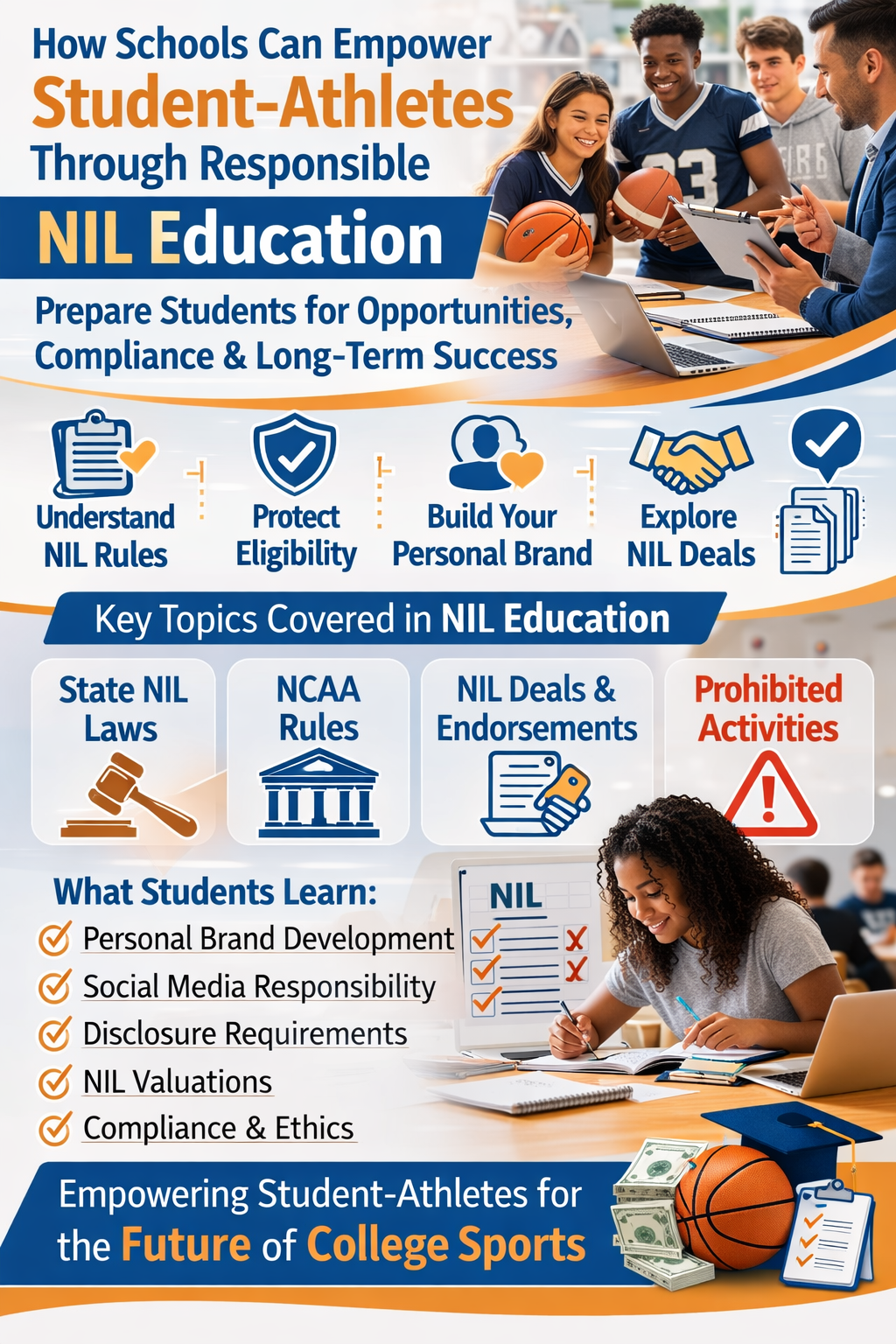
Today, responsible NIL education programs help students understand:
- What types of NIL deals are permitted
- Which NIL activities may be considered prohibited NIL activities
- How state law and NCAA rules affect eligibility
- When a required disclosure must be submitted
- How school logos may or may not be used in marketing
These educational efforts help schools create an environment where athletes can explore NIL opportunities responsibly.
Why High School Athletes Need NIL Guidance
While the spotlight often focuses on college athletes, the next wave of NIL deals may involve high school athletes and young prospects preparing for the college level. As recruiting continues to evolve, high schoolers with strong performance and active social media posts can attract attention from brands and local businesses.
However, high school participation in NIL activities is governed by strict rules designed to protect the fairness of competition in interscholastic athletics. Many high school student athletes are unaware that certain agreements could result in losing eligibility.
For example, using school logos in advertisements or participating in unauthorized endorsements may violate school policies or state law. Responsible NIL education helps high school athletes recognize these risks before signing NIL deals.
The Importance of Personal Brand Development
One of the most valuable lessons schools can teach students about NIL is the importance of building a strong personal brand. Successful NIL deals often come from athletes who understand how to present themselves professionally online and within their community.
Developing a personal brand includes:
- Maintaining professional social media content
- Representing the school and sport responsibly
- Engaging positively with fans and followers
- Creating content that reflects strong character and leadership
A strong personal brand increases NIL valuations and attracts companies seeking partnerships with student athletes.
Navigating State NIL Laws
One of the most complex aspects of NIL is that NIL laws differ significantly across the country. State law determines whether high school athletes may enter NIL deals, what disclosures are required, and how schools must monitor activities.
For example, regulations in Texas, Michigan, and Ohio may differ from policies in South Carolina, New Mexico, Rhode Island, South Dakota, North Dakota, or New Hampshire. These variations require schools to stay informed about changing NIL rules.
Educational programs ensure that students, school employees, and administrators understand the rules applicable within their specific school and athletic association.
NIL Collectives and Their Influence
Another important concept for student athletes to understand is the role of the NIL collective. These organizations often support college athletes by organizing NIL deals funded by donors or brand partners.
While NIL collective groups can provide opportunities for college athletes, they also raise important compliance questions for schools and students. Proper NIL education helps athletes understand the difference between legitimate opportunities and arrangements that could violate amateurism rules.
Responsible guidance ensures that student athletes evaluate potential deals carefully and seek proper approval when required.
The Role of High School Athletic Directors
The high school athletic director plays a critical role in guiding students through the evolving NIL environment. As the leader responsible for maintaining fairness in interscholastic athletics, the athletic director must balance opportunity with compliance.
This often includes working closely with the school, legal advisors, and education consultants to establish a clear NIL policy. A well-designed NIL policy outlines:
- Approved NIL activities
- Disclosure requirements
- Limitations involving school logos
- Rules regarding endorsements and sponsorships
These policies help protect high school student athletes while supporting responsible NIL deals.
Understanding NIL Valuations
Another topic that responsible NIL education addresses is NIL valuations. This refers to estimating the financial value of an athlete’s name image and likeness based on factors such as performance, media visibility, and social media posts.
Some college athletes have achieved highest NIL valuations by building strong followings and winning major competitions. However, high school athletes must understand that NIL valuations can fluctuate significantly depending on performance, community engagement, and market demand.
Teaching students how to evaluate NIL deals responsibly helps prevent unrealistic expectations about NIL money.
Common NIL Deal Opportunities
Responsible NIL education helps student athletes understand the types of NIL deals that are commonly allowed under state law and school policies. While opportunities differ between high school and college, some common examples include:
- Sponsored social media posts
- Promotional partnerships with local businesses
- Paid autograph signings
- Appearances at community events
- Marketing partnerships with regional companies
These NIL activities allow athletes to earn money while representing their school and sport responsibly.
Avoiding Prohibited NIL Activities
While many opportunities exist, certain NIL activities remain restricted. Schools must educate students about prohibited NIL activities that could violate NIL rules.
These restrictions often involve:
- Unauthorized use of school logos
- Conflicts with school policies
- Agreements that violate state law
- Activities considered recruiting inducements
Understanding these rules helps student athletes avoid mistakes that could impact their eligibility.
The Growing Influence of NIL in College Sports
The expansion of NIL deals has dramatically changed the structure of college sports. Some college athletes now generate substantial NIL money, particularly those competing in nationally recognized programs.
In some cases, athletes with the highest NIL valuations may earn significant compensation through endorsements and media opportunities. While this level of success is not guaranteed, the presence of NIL deals has transformed the financial landscape of college athletics.
For high school athletes, understanding these trends can help them prepare for future opportunities.
NIL Education Protects Eligibility
Perhaps the most important reason for schools to provide NIL education is protecting student athletes from losing eligibility. Violating NIL rules, even unintentionally, could prevent a student from competing in high school or at the college level.
Education programs explain the relationship between NIL rights, amateurism rules, and the policies enforced by the NCAA or state athletic association.
By understanding these rules, students can confidently explore NIL deals while protecting their future in college sports.
Preparing Students for the Future of NIL
The world of NIL will continue evolving as state law changes and schools adapt to new opportunities. Responsible education ensures that students are prepared for these developments.
Interactive workshops, seminars, and training programs help student athletes ask NIL questions, understand legal guidelines, and evaluate potential deals responsibly.
Through education and guidance, schools can help athletes build sustainable opportunities that align with their academic and athletic goals.
Empowering Students Through Responsible Guidance
Responsible NIL education does more than explain rules. It empowers students to understand the business side of athletics while maintaining strong academic and ethical standards.
Programs designed for high school student athletes help them learn how to protect their image, manage financial opportunities, and represent their school responsibly.
By supporting students with knowledge and professional guidance, schools strengthen the future of college sports and interscholastic athletics.
How Masterly Consulting Group Supports Schools
At Masterly Consulting Group, we work closely with schools, athletic departments, and administrators to develop effective NIL education programs. Our workshops help student athletes, school employees, and coaches understand the evolving landscape of NIL laws and NIL rules.
Our interactive training sessions cover essential topics including NIL deals, personal brand development, compliance with state law, and evaluating NIL valuations. We help schools build structured programs that support student athletes while maintaining compliance with NCAA guidelines and state athletic association policies.
By equipping students with knowledge and practical guidance, our programs help schools prepare athletes for responsible participation in NIL activities.
Understanding That Schools May Have Their Own NIL Rules
While state law provides a general framework for NIL activities, many schools and athletic associations also establish their own NIL rules. These policies help ensure that student athletes follow guidelines that protect fair competition, academic priorities, and the integrity of the school’s athletic programs. Because NIL deals may involve sponsorships, promotions, or partnerships with outside companies, schools often set boundaries regarding the use of school logos, team uniforms, and official facilities. When student athletes understand how nil name image opportunities fit within these institutional expectations, they are better prepared to participate in NIL activities responsibly and avoid misunderstandings.
The Role of a Compliance Office in NIL Guidance
Many colleges rely on a compliance office to monitor NIL deals and ensure that student athletes follow established rules. These professionals work closely with athletic departments to review potential agreements, verify required disclosure, and confirm that athletes remain eligible under NCAA standards and state law. For students preparing to compete at the college level, learning how compliance systems operate can be extremely valuable. Educational programs at the high school level can introduce athletes to these processes early, helping them understand how to approach NIL opportunities with professionalism and awareness.
How NIL Opportunities Intersect With the Transfer Portal
The modern college sports environment has introduced new dynamics such as the transfer portal, which allows college athletes to explore opportunities at different programs. As NIL deals grow in visibility, some athletes consider how branding, endorsements, and NIL valuations may influence their decisions when transferring schools. While the transfer portal itself focuses on athletic eligibility and program changes, the presence of NIL opportunities can become part of an athlete’s long-term career planning. Educating student athletes about the relationship between recruiting, transfers, and NIL activities helps them make informed decisions as they move through their athletic careers.
Why NIL Policies May Differ Across Other States
One of the most important aspects of NIL education is understanding that regulations often differ across other states. Each state law governing name image and likeness can create unique expectations for schools, student athletes, and athletic associations. For example, policies in Michigan, Texas, or Ohio may not be identical to regulations found in other regions of the country. Because NIL laws continue to evolve, schools must stay informed about how policies may change and how those changes impact NIL deals and NIL activities. Teaching students about these differences prepares them to navigate opportunities responsibly whether they compete locally or pursue athletics at the college level.
Speak With Masterly Consulting Group About NIL Education Programs
The world of NIL continues to evolve, and schools have an important opportunity to guide student athletes through this new landscape. With the right training and educational resources, students can safely explore NIL deals, build their personal brand, and take advantage of opportunities while protecting their eligibility.
Masterly Consulting Group provides specialized training programs designed for high school athletic departments, administrators, and student athletes. Our workshops help schools answer difficult NIL questions, understand state law, and prepare athletes for responsible participation in NIL activities.
If your school wants to help students navigate NIL deals safely while preparing them for the future of college sports, our team is here to help. Contact us at (888) 209-4055 to book a free consultation and learn how our NIL education programs can support your school, your students, and the next generation of athletes.