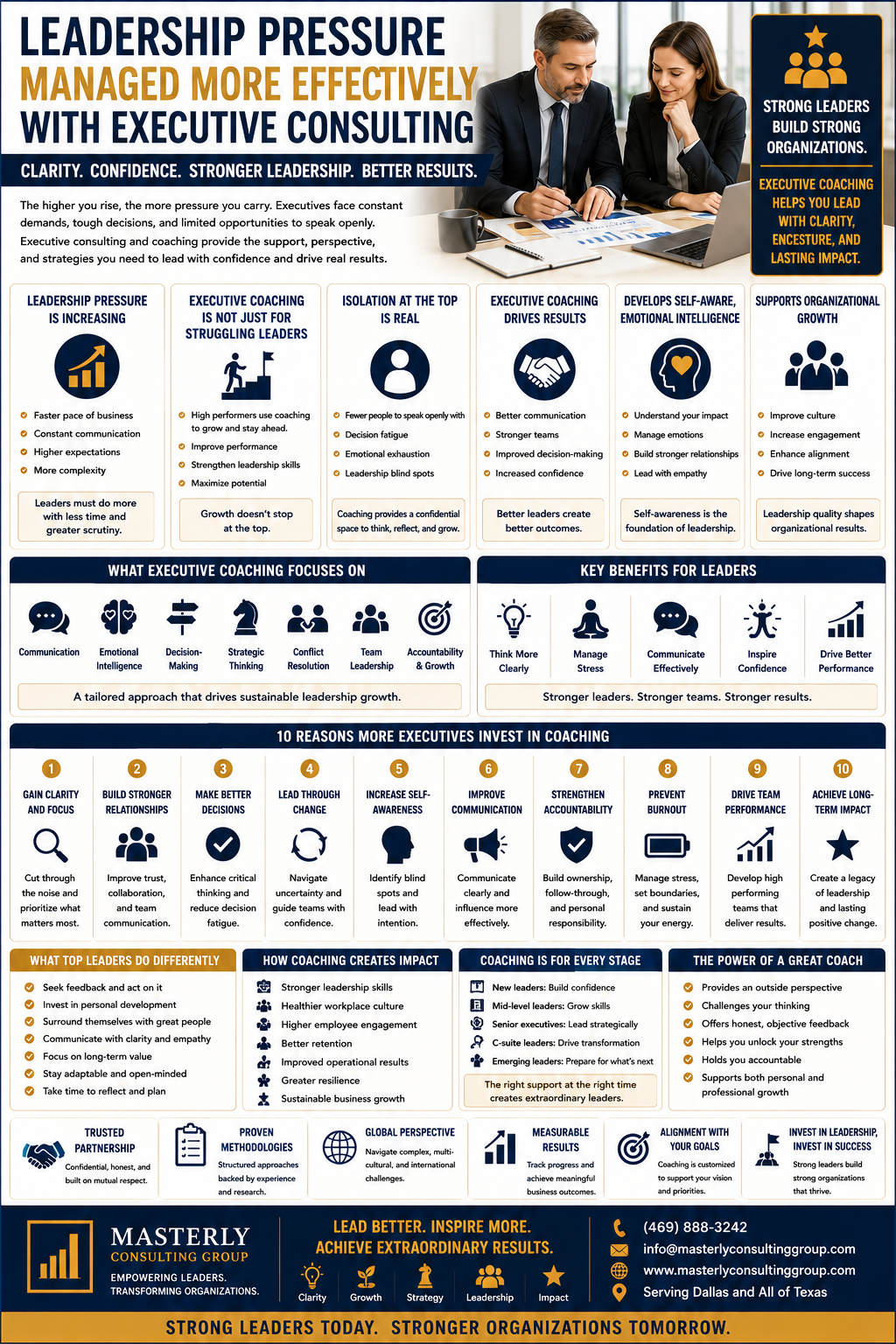
Leadership Pressure Managed More Effectively with Executive Consulting
Leadership Pressure Looks Different at the Top
Most people assume successful executives eventually become comfortable carrying responsibility. What many professionals discover instead is that pressure often increases as leadership responsibilities grow. Senior decision-makers are expected to solve problems quickly, motivate teams consistently, protect company performance, and navigate uncertainty without showing hesitation. The higher someone rises inside an organization, the fewer people they often feel comfortable speaking honestly with about stress, uncertainty, or leadership fatigue.
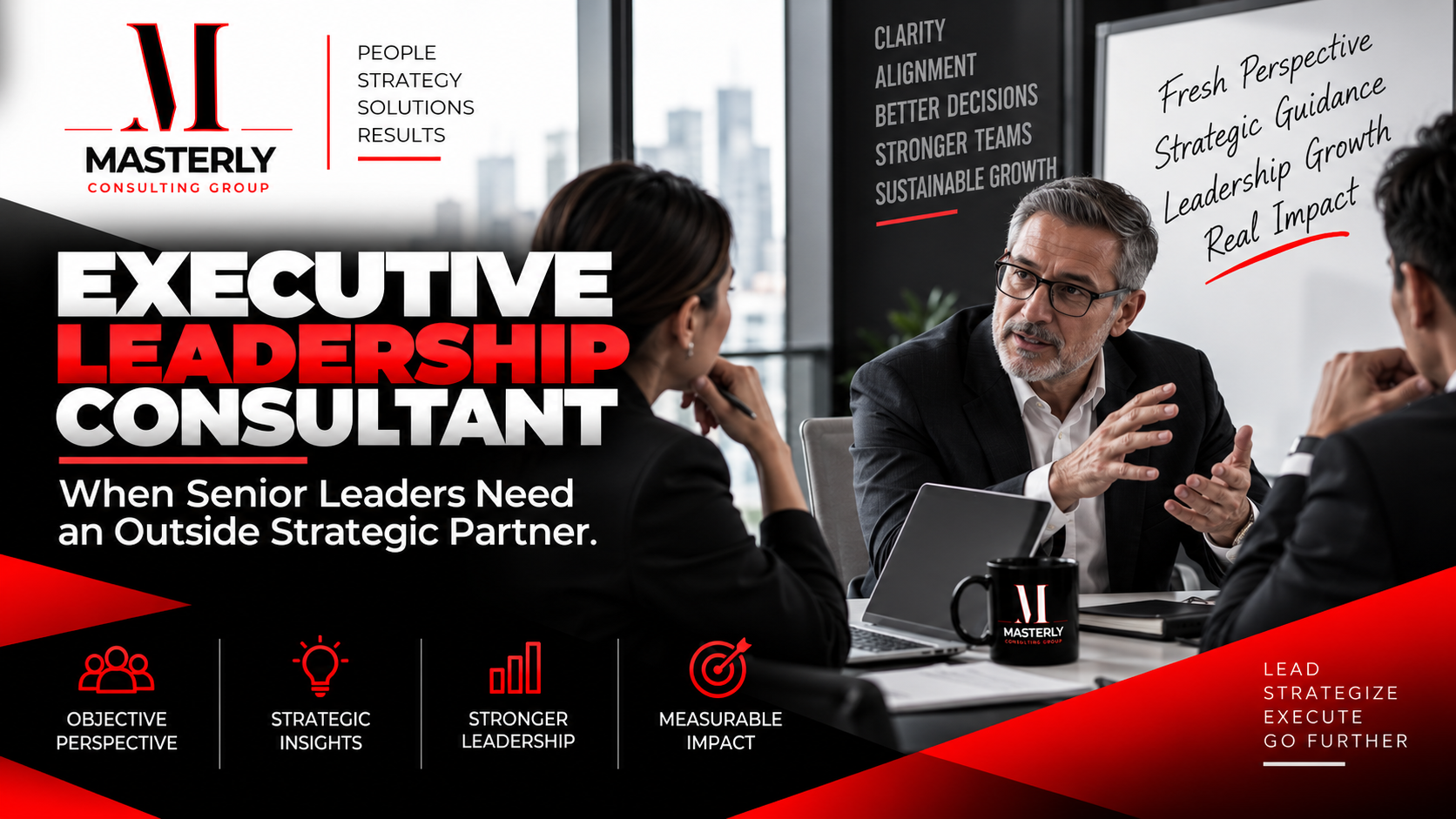
At Masterly Consulting Group, we understand that leadership pressure affects even highly experienced professionals. Executives are constantly balancing operational demands, strategic planning, staffing concerns, financial expectations, and organizational culture all at the same time. Without proper support systems, leadership stress can quietly affect communication, decision-making, team morale, and long-term performance. This is why more organizations are turning toward structured executive coaching services to support sustainable leadership growth.
Why Leadership Pressure Is Increasing Across Industries
The modern business environment moves much faster than it did even a decade ago. Executives today face constant communication demands, shifting market conditions, workforce changes, and increasing operational complexity. Many professionals feel pressure to remain available around the clock while still maintaining high levels of productivity and visibility.
At the same time, companies expect leaders to manage uncertainty calmly while continuing to inspire confidence inside the organization. These growing demands have significantly increased interest in leadership coaching and executive consulting programs designed to help professionals manage pressure more effectively.
Executive Coaching Is No Longer Reserved for Struggling Leaders
One common misconception about executive coaching is that it is designed only for leaders who are failing or underperforming. In reality, many of the world’s most successful executives work with an executive coach specifically because they want to improve performance, sharpen communication, and strengthen long-term leadership effectiveness.
Top-performing executives understand something important. Growth does not stop after reaching a senior position. In many cases, leadership growth becomes even more important at higher levels of responsibility.
Why Executive Leaders Often Feel Isolated
As professionals move into senior leadership positions, they frequently experience increased isolation. Employees may hesitate to speak honestly around executives, while leadership peers may also feel pressure to appear confident and composed at all times.
This isolation can create challenges involving:
- Decision fatigue
- Emotional exhaustion
- Communication breakdowns
- Leadership blind spots
- Increased stress
A skilled executive coach provides a confidential environment where leaders can think more clearly, process challenges honestly, and evaluate decisions objectively.
The Role of Executive Coaching Services
Strong executive coaching services focus on helping professionals improve leadership performance while navigating complex organizational challenges more effectively. Unlike consulting alone, coaching is often designed to help leaders strengthen internal awareness, communication patterns, and strategic thinking.
A successful coaching process may focus on:
- Leadership communication
- Emotional intelligence
- Team dynamics
- Conflict resolution
- Decision-making
- Strategic planning
- Personal accountability
The goal is long-term leadership growth rather than short-term motivation alone.
Why Leadership Effectiveness Requires Self Awareness
One of the biggest differences between average leaders and exceptional leaders is the level of self awareness they possess. Strong leaders understand how their communication style, emotional responses, and leadership behaviors affect the people around them.
Many executives unknowingly create tension, confusion, or disengagement because they rarely receive honest feedback from employees or peers. An experienced executive coach helps leaders recognize patterns they may not see on their own.
Improving self awareness often creates significant improvements in overall leadership effectiveness.
Executive Coaching Helps Leaders Think More Clearly
Leadership pressure often creates mental overload. Executives may spend entire days reacting to emails, meetings, staffing concerns, operational challenges, and financial decisions without time to process larger strategic issues.
Regular coaching sessions give executives space to step back and think critically about leadership priorities, communication challenges, and organizational direction. This clarity often improves focus, confidence, and long-term decision-making.
Why Emotional Intelligence Matters in Leadership
Technical expertise alone rarely creates exceptional leadership. Strong leaders also need high levels of emotional intelligence to manage relationships, communicate effectively, and navigate difficult conversations under pressure.
Executives with strong emotional intelligence often:
- Handle conflict more effectively
- Build stronger trust
- Improve team morale
- Communicate with greater clarity
- Manage stress more successfully
Executive consulting frequently focuses heavily on emotional awareness because it directly affects organizational culture and leadership performance.
Leadership Coaching Supports Organizational Growth
Strong leadership development affects far more than individual executives alone. Leadership behavior influences company culture, employee engagement, retention, collaboration, and operational stability across the entire organization.
Organizations that invest in leadership coaching often see improvements involving:
- Team communication
- Employee retention
- Strategic alignment
- Accountability
- Operational consistency
Leadership quality often shapes long-term business performance more than companies initially realize.
Why Senior Leaders Need External Perspective
Many senior leaders spend years operating inside the same internal environment. Over time, this can limit perspective and reduce openness to new ideas or communication approaches.
A professional executive coach provides an external perspective that may help leaders identify blind spots, communication habits, or operational patterns affecting performance. Outside insight often creates valuable breakthroughs that internal conversations fail to uncover.
Executive Coaching Is About Sustainable Change
Strong coaching is not about motivational speeches or temporary inspiration. Effective coaching focuses on creating sustainable change that improves leadership behavior over time.
This often involves helping leaders develop:
- Better communication habits
- Clearer priorities
- Stronger accountability
- Healthier delegation
- Improved strategic thinking
Long-term behavioral improvement usually produces stronger organizational outcomes than short-term performance boosts alone.
Why Developing Leaders Requires Consistency
Many organizations invest heavily in hiring talent but spend very little time actively developing leaders once they enter management positions. Leadership growth requires consistent learning, reflection, and accountability over time.
Strong coaching relationships help leaders continue evolving rather than becoming stagnant inside existing habits or communication patterns.
Leadership Pressure Affects Team Performance
Executive stress rarely stays isolated at the leadership level. Communication breakdowns, unclear expectations, inconsistent decision-making, and emotional fatigue often affect overall team performance throughout the organization.
Employees frequently mirror the tone and emotional stability demonstrated by leadership teams. Strong coaching helps executives manage pressure more effectively while improving organizational consistency and morale.
Why Executive Presence Matters
Strong executive presence involves more than confidence or charisma alone. Executive presence reflects how leaders communicate, respond under pressure, and influence others inside the organization.
Leaders with strong executive presence often:
- Communicate clearly
- Build trust quickly
- Handle conflict calmly
- Inspire confidence
- Create alignment
Executive coaching often focuses heavily on communication and presence because these skills strongly influence leadership credibility.
Coaching Helps Leaders Navigate Organizational Change
Periods of organizational change create enormous pressure for executives. Mergers, restructuring, staffing changes, market shifts, and rapid growth often increase uncertainty across the company.
Strong coaching support helps leaders navigate change more strategically while maintaining communication, clarity, and operational stability throughout transitions.
Why C Suite Executives Face Unique Challenges
C suite executives often carry enormous pressure that employees never fully see. Executives must balance shareholder expectations, financial performance, staffing concerns, public perception, and strategic planning simultaneously.
This level of responsibility frequently creates emotional fatigue, decision overload, and leadership isolation. Executive coaching provides structured support designed specifically for these high-pressure environments.
Leadership Coaching Supports Career Transition
Leadership transitions often create uncertainty even for highly accomplished professionals. Promotions, industry changes, expanded responsibilities, or new executive positions may require significant adaptation.
Executive coaching frequently helps leaders navigate:
- New leadership roles
- Career advancement
- Organizational restructuring
- Increased responsibility
- Leadership transitions
Structured support during transition periods often improves confidence and long-term performance.
Why Strong Leadership Strengthens Organizations
Organizations rarely outperform the quality of their leadership. Strong leadership influences culture, communication, accountability, employee engagement, and strategic execution throughout the company.
Businesses with healthy leadership cultures are often more resilient during periods of uncertainty and change.
Coaching Helps Leaders Improve Communication
Communication problems remain one of the biggest operational challenges inside many organizations. Leaders often believe they are communicating clearly while employees interpret messages very differently.
An executive coach may help leaders improve:
- Active listening
- Emotional awareness
- Message clarity
- Difficult conversations
- Feedback delivery
Improved communication often strengthens trust and organizational alignment significantly.
Why Leadership Coaching Is Growing Globally
Demand for executive consulting continues increasing across global organizations because businesses recognize how strongly leadership quality affects long-term results.
Executives leading global teams often face additional communication challenges involving:
- Cultural intelligence
- Remote collaboration
- Cross cultural communication
- Time zone coordination
- International leadership dynamics
Modern leadership increasingly requires adaptability across diverse organizational environments.
The Importance of Cultural Intelligence
Strong leadership in today’s business world often requires high levels of cultural intelligence. Executives working with diverse teams must understand how communication styles, expectations, and leadership behaviors vary across cultures.
Executive coaching may help leaders improve adaptability, empathy, and communication across international or multicultural environments.
Why Coaching Helps Build High Performing Leaders
The strongest organizations intentionally develop high performing leaders rather than assuming leadership ability develops naturally over time.
Leadership coaching often helps executives strengthen:
- Decision-making
- Strategic thinking
- Accountability
- Emotional resilience
- Team leadership
These improvements often create measurable operational benefits across the organization.
Executive Coaching Helps Organizations Retain Top Talent
Talented employees frequently leave organizations because of leadership problems rather than compensation alone. Weak communication, unclear expectations, inconsistent management, and poor organizational culture often contribute to turnover.
Organizations investing in coaching and leadership development often improve retention among top talent while strengthening overall employee engagement.
Why Strong Leadership Requires New Skills
The business environment continues evolving rapidly, which means modern leaders must constantly develop new skills to remain effective.
Leadership coaching often focuses on helping executives improve:
- Strategic communication
- Change management
- Emotional intelligence
- Decision-making
- Conflict resolution
Continuous growth is now essential for long-term leadership success.
Coaching Helps Leaders Discover Distinctive Strengths
Many executives spend years focusing heavily on weaknesses while overlooking their distinctive strengths. Effective coaching helps leaders identify what they naturally do well while improving areas limiting performance.
Understanding strengths often increases confidence, communication effectiveness, and leadership clarity.
Why Leaders Need Honest Feedback
Many executives receive filtered or incomplete feedback from employees because team members fear conflict or political consequences. This creates blind spots that may quietly damage leadership effectiveness over time.
An experienced executive coach provides honest, objective guidance that helps leaders improve without internal organizational pressure affecting the conversation.
Executive Coaching Supports Change Management
Periods of rapid growth or restructuring often require strong change management leadership. Employees frequently resist uncertainty, especially when communication is inconsistent or unclear.
Executive coaching helps leaders guide teams through change more effectively while maintaining trust, accountability, and organizational focus.
Why Leadership Coaching Improves Business Results
Strong leadership often directly influences business results because communication quality, accountability, decision-making, and organizational alignment affect operational performance.
Organizations investing in coaching frequently report improvements involving:
- Productivity
- Employee engagement
- Team collaboration
- Operational efficiency
- Leadership confidence
Leadership quality often drives measurable business outcomes over time.
The Best Coaches Focus on Practical Solutions
Strong executive coaching focuses on practical leadership application rather than abstract theory alone. Effective coaching helps leaders apply concepts directly to real workplace situations.
Practical coaching often addresses:
- Staffing challenges
- Difficult conversations
- Leadership conflict
- Team communication
- Organizational priorities
Real-world application creates stronger long-term leadership improvement.
Why Executive Coaching Requires Trust
Successful coaching relationships depend heavily on trust and confidentiality. Executives must feel comfortable discussing challenges honestly without fear of judgment or organizational politics.
Strong coaching relationships often become valuable long-term professional partnerships focused on growth and accountability.
Coaching Helps Leaders Avoid Burnout
Leadership burnout has become increasingly common across industries. Constant pressure, nonstop communication demands, and operational responsibility often create emotional exhaustion over time.
Executive coaching may help leaders:
- Improve boundaries
- Delegate more effectively
- Manage stress
- Clarify priorities
- Protect long-term performance
Sustainable leadership requires balance and intentional self-management.
Leadership Coaching Improves Organizational Alignment
Many organizational problems stem from unclear priorities or inconsistent leadership communication. Coaching often helps executives create stronger alignment between leadership decisions and operational goals.
This alignment frequently improves teamwork, accountability, and employee confidence across departments.
Why Executive Coaching Providers Matter
Not all executive coaching providers offer the same level of expertise or strategic value. Businesses should carefully evaluate coaching experience, leadership background, communication style, and industry understanding before selecting a coach.
The right coaching partnership can create lasting organizational improvements.
The International Coaching Federation and Professional Standards
Many respected coaches maintain credentials through the International Coaching Federation, which establishes professional standards for coaching ethics, communication, and development practices.
Professional standards help organizations identify coaches committed to structured growth methodologies and ethical coaching practices.
Why Leadership Development Supports Long-Term Stability
Strong leadership development creates long-term organizational stability because prepared leaders often make better decisions during uncertainty and change.
Companies investing in leadership growth frequently improve succession planning, communication quality, and operational consistency.
Coaching Helps Emerging Leaders Prepare for Growth
Many organizations focus heavily on senior leadership while overlooking emerging leaders who may eventually become future executives.
Leadership coaching helps developing professionals strengthen communication, accountability, confidence, and decision-making before stepping into larger leadership roles.
Executive Coaches Work as Strategic Partners
Strong executive coaches work alongside leaders as strategic thinking partners rather than simply offering motivational encouragement.
Coaches help executives:
- Evaluate challenges objectively
- Clarify priorities
- Strengthen communication
- Improve accountability
- Navigate leadership pressure
This partnership often creates long-term professional growth.
Why Coaching Supports Organizational Goals
Strong coaching programs should align with broader organizational goals and company priorities. Leadership growth becomes more valuable when it directly supports operational performance and strategic direction.
Coaching often improves leadership alignment with the organization’s long-term vision and mission.
Coaching Helps Leaders Create Positive Impact
Strong leadership creates ripple effects throughout organizations. Executives who communicate effectively and manage pressure well often create a more positive impact on culture, morale, collaboration, and employee engagement.
Leadership behavior influences the entire workplace environment.
Why Businesses Need the Right Coach
Finding the right coach matters significantly because coaching relationships require trust, communication compatibility, and strategic alignment.
Executives benefit most from coaches who understand leadership pressure, organizational dynamics, and real-world operational challenges.
Coaching Helps Organizations Achieve Sustainable Success
Long-term organizational growth depends heavily on leadership quality. Companies focused on sustainable success often invest consistently in leadership support, executive development, and strategic coaching programs.
Strong leaders create stronger organizations over time.
Why Executive Coaching Continues Growing
Research increasingly shows that leadership coaching improves communication, accountability, emotional intelligence, and organizational performance. As leadership demands continue increasing, more executives are recognizing the value of structured support and objective guidance.
The modern business environment places enormous pressure on leaders at every level. Coaching helps executives navigate that pressure more effectively while supporting healthier leadership habits and stronger organizational outcomes.
Why a Business Coach Can Help Executives Navigate Pressure
An experienced business coach can help executives manage leadership pressure while improving communication, accountability, and decision-making under demanding conditions. Many executives spend years focusing on operational responsibilities without taking time to evaluate how their leadership style affects long-term performance and organizational culture. A skilled business coach provides objective feedback and structured guidance that helps leaders improve clarity, emotional resilience, and strategic thinking. Businesses that invest in leadership support often see stronger communication, healthier workplace culture, and better long-term organizational stability.
What Makes a Coaching Engagement Effective
A successful coaching engagement is built on trust, consistency, accountability, and open communication between the executive and the coach. Strong coaching relationships are not based on generic motivation or surface-level conversations. Instead, effective coaching focuses on measurable leadership improvement, behavioral awareness, communication growth, and strategic decision-making over time. Executives who commit fully to the coaching process often gain stronger self-awareness, improved leadership confidence, and more effective communication across their organizations.
Why Businesses Compare Other Executive Coaching Providers
Many organizations carefully evaluate other executive coaching providers before choosing a leadership development partner because coaching quality can vary significantly between firms and consultants. Businesses often look for coaches with real-world leadership experience, strong communication skills, and the ability to provide practical guidance that aligns with operational goals. Companies should seek coaching professionals who understand organizational pressure, executive leadership challenges, and long-term business growth rather than relying only on motivational theory. Selecting the right coaching partner can greatly influence the overall success of leadership development initiatives.
The Value of Working With Certified Executive Coaches
Many businesses prefer working with certified executive coaches because professional certification often reflects structured training, ethical standards, and advanced leadership development methodologies. Certified coaches are typically trained to guide executives through communication challenges, strategic planning, emotional intelligence development, and organizational leadership concerns in a more structured and effective way. Strong certification backgrounds may also provide organizations with greater confidence in the coaching process and long-term leadership outcomes. Professional coaching standards help ensure consistency, accountability, and measurable leadership development over time.
Why Every Coaching Conversation Matters
A meaningful coaching conversation often creates breakthroughs that executives may not experience during regular workplace discussions. Leaders frequently spend most of their time responding to operational demands without stepping back to evaluate their communication style, leadership habits, or long-term decision-making patterns. Coaching conversations provide space for reflection, honest discussion, and strategic thinking in ways that many executives rarely experience inside busy organizational environments. These discussions often help leaders identify challenges earlier while improving clarity, confidence, and leadership effectiveness.
Building a Strong Leadership Pipeline Through Coaching
Organizations focused on long-term growth often invest heavily in strengthening their leadership pipeline before critical leadership gaps appear. Businesses that fail to prepare future leaders may struggle with succession planning, operational consistency, and organizational stability during periods of transition. Executive coaching helps emerging professionals strengthen communication, accountability, decision-making, and leadership confidence before stepping into higher-level responsibilities. A healthy leadership pipeline creates stronger organizational continuity and reduces disruption during leadership transitions.
Enabling Leaders to Adapt in Changing Environments
Modern executive consulting focuses heavily on enabling leaders to adapt more effectively to evolving business conditions, workforce expectations, and operational complexity. Leadership today requires flexibility, emotional intelligence, communication skills, and strategic awareness across multiple areas of the organization. Coaching helps executives develop stronger adaptability while improving confidence during periods of uncertainty or organizational change. Businesses with adaptable leadership teams are often better prepared to manage rapid growth, market changes, and operational challenges successfully.
Why Key Stakeholders Influence Leadership Decisions
Executive decisions often affect a wide range of key stakeholders, including employees, clients, investors, partners, and leadership teams across the organization. Strong executive coaching helps leaders evaluate how communication styles, strategic decisions, and organizational changes may influence these important relationships over time. Leaders who understand stakeholder impact are often more effective when managing difficult conversations, organizational change, and operational planning. Coaching frequently improves executive awareness regarding how leadership behavior shapes trust and organizational culture.
Coaching Supports Both Leadership and Personal Growth
Strong executive consulting is not limited to business performance alone because effective leadership often depends heavily on ongoing personal growth. Executives who improve emotional awareness, communication habits, resilience, and decision-making frequently become more effective in both professional and personal environments. Leadership coaching helps professionals develop healthier perspectives, stronger confidence, and more balanced approaches to pressure and responsibility. Sustainable leadership often requires growth beyond technical business knowledge alone.
Proven Methodologies Create Stronger Coaching Results
Many successful executive consulting programs rely on proven methodologies designed to support measurable leadership improvement over time. Structured coaching systems help leaders evaluate communication patterns, organizational challenges, emotional intelligence, and leadership behaviors more effectively. Businesses often benefit when coaching follows a clear framework focused on accountability, measurable progress, and long-term behavioral change. Proven methodologies provide executives with practical tools they can apply directly to real-world leadership situations.
A Deep Understanding of Leadership Challenges Matters
Strong executive coaching requires a deep understanding of the pressures, expectations, and communication challenges executives face every day. Leaders managing teams, operational growth, financial pressure, and organizational culture often require guidance that goes beyond generic motivational advice. Coaches with strong leadership experience are often better equipped to help executives navigate complicated business realities while improving strategic thinking and communication. Understanding leadership complexity helps create more meaningful coaching outcomes and stronger executive development.
Why Major Organizations Invest in Executive Coaching
Many major organizations invest heavily in executive coaching because they recognize how strongly leadership quality affects operational performance, employee engagement, and long-term business stability. Companies with strong leadership cultures are often more resilient during periods of growth, restructuring, or uncertainty. Coaching helps organizations strengthen communication, improve accountability, and develop more confident leadership teams at multiple levels of the business. Leadership investment frequently produces long-term operational and cultural benefits across the organization.
Shared Priorities Help Leadership Teams Stay Aligned
Organizations often struggle when leadership teams lack shared priorities regarding communication, operational goals, and long-term strategic direction. Executive coaching helps leaders improve alignment by strengthening collaboration, accountability, and organizational focus. When executives operate from clearly shared priorities, teams often experience stronger communication, more consistent leadership, and healthier organizational culture. Leadership alignment frequently improves efficiency and long-term operational stability throughout the business.
How Coaching Helps Teams Unlock Greater Potential
Strong leadership development can help teams unlock higher levels of communication, accountability, collaboration, and performance across the organization. Employees often respond positively when leadership becomes more transparent, emotionally aware, and strategically focused. Coaching supports stronger leadership habits that influence morale, trust, and operational consistency throughout the workplace. Organizations with healthier leadership cultures frequently experience stronger engagement and improved long-term performance.
Coaching Should Support Business Goals
Effective executive coaching should align closely with the company’s long-term business goals rather than focusing only on personal leadership improvement in isolation. Leadership growth becomes far more valuable when coaching directly supports organizational performance, strategic planning, employee engagement, and operational stability. Businesses often achieve stronger outcomes when coaching initiatives connect leadership behavior to measurable organizational priorities. Strategic coaching helps executives strengthen decision-making while supporting broader company objectives.
Leadership Experience Strengthens Coaching Effectiveness
Strong executive consulting often benefits from real-world leadership experience because coaches who have personally managed organizational pressure may better understand executive challenges and decision-making complexity. Leadership experience helps coaches provide practical insight into communication problems, organizational politics, staffing concerns, and operational stress. Executives frequently respond more positively to coaches who understand leadership realities beyond theory alone. Real-world experience often creates stronger trust and more practical coaching conversations.
Coaching Across Multiple Industries Creates Broader Insight
Executive coaches who have worked across multiple industries often bring broader perspective and adaptability into leadership development conversations. Different industries face unique operational pressures, workforce challenges, compliance concerns, and organizational structures that influence leadership style and communication. Exposure to multiple industries helps coaches identify patterns, strategies, and leadership approaches that may apply across different business environments. Broader industry experience frequently strengthens strategic insight and coaching flexibility.
Leadership Coaching Supports the Organization's Goals
Strong executive coaching should support both individual growth and the organization's goals at the same time. Leadership improvement becomes more meaningful when communication, accountability, strategic planning, and emotional intelligence directly contribute to organizational performance and long-term business stability. Coaching often helps executives align their leadership style more effectively with company priorities, culture, and operational objectives. Organizations that connect coaching with long-term goals frequently experience stronger leadership consistency and healthier workplace dynamics.
Global Leadership Requires a Strong Global Network
Executives operating in international markets often benefit from coaching perspectives connected to a broader global network of leadership insight and organizational experience. Leadership challenges involving international teams, cultural differences, remote operations, and cross-border communication require adaptability and strategic awareness. Coaches with access to global leadership perspectives may help executives navigate international complexity more effectively while improving communication and organizational alignment. Global leadership increasingly requires broader awareness beyond local operational concerns alone.
Research Shows Leadership Coaching Creates Results
Modern leadership studies consistently demonstrate that research shows executive coaching can improve communication, leadership confidence, emotional intelligence, and organizational performance over time. Businesses investing in structured coaching programs often report stronger employee engagement, healthier organizational culture, and more effective leadership communication. Research also shows that executives who receive consistent coaching support are often better prepared to manage stress, change, and organizational pressure. Leadership development continues growing because measurable coaching results are becoming increasingly visible across industries.
Why Top Leaders Continue Investing in Coaching
Many top leaders continue working with executive coaches even after reaching highly successful positions because they understand leadership growth never fully stops. Senior executives often face increasing responsibility, organizational pressure, and communication demands as their careers advance. Coaching helps top leaders maintain perspective, improve decision-making, and continue refining leadership effectiveness over time. Strong leaders frequently recognize that ongoing growth is part of maintaining long-term success.
Other Organizations Are Investing Heavily in Leadership Development
Across many industries, other organizations are increasing investment in executive coaching and leadership development programs because they recognize the direct connection between leadership quality and business performance. Companies are becoming more aware that communication problems, leadership burnout, and weak organizational culture can significantly affect productivity and employee retention. Coaching helps organizations strengthen leadership consistency while preparing executives for future operational challenges. Businesses prioritizing leadership development often create stronger long-term organizational stability.
Executive Coaching Supports Transformational Change
Periods of transformational change often create uncertainty, emotional stress, and communication challenges throughout organizations. Major restructuring, rapid growth, mergers, leadership transitions, and evolving workforce expectations all require strong executive leadership. Coaching helps leaders manage transformational change more effectively by improving communication, emotional resilience, and strategic thinking during difficult transitions. Strong leadership guidance frequently helps organizations maintain stability while adapting to significant operational changes.
Helping Leaders Grow in Their Own Way
Every executive leads in their own way, which means leadership development should never follow a rigid one-size-fits-all model. Effective coaching helps leaders strengthen communication, decision-making, and emotional awareness while remaining authentic to their natural leadership style and personality. Personalized coaching often creates more sustainable growth because leaders are not forced into artificial leadership behaviors that feel disconnected from their strengths. Strong coaching supports authentic leadership development that aligns with both personality and organizational needs.
Coaching Creates New Insights for Executives
Many executives experience important breakthroughs and new insights during coaching conversations because they finally have space to evaluate challenges more objectively. Leaders often spend so much time reacting to operational demands that they rarely pause to reflect on communication habits, organizational patterns, or leadership blind spots. Coaching creates opportunities for deeper reflection and strategic thinking that may not happen during normal workplace interactions. New insights often lead to stronger communication, better decisions, and improved leadership confidence.
Developing New Behaviors Strengthens Leadership
Long-term leadership growth often requires executives to develop healthier communication habits and new behaviors that improve organizational effectiveness. Coaching helps leaders recognize patterns that may negatively affect morale, accountability, collaboration, or operational consistency over time. By practicing new behaviors consistently, executives often improve trust, emotional intelligence, and leadership communication throughout the organization. Sustainable leadership growth typically happens gradually through intentional behavioral improvement rather than sudden transformation.
Why High Performance Leadership Matters
Organizations focused on long-term high performance understand that leadership quality strongly influences employee engagement, communication, operational efficiency, and overall company culture. Strong leadership creates accountability, clarity, and trust that support healthier workplace environments and stronger business results. Executive coaching helps leaders strengthen the habits and communication skills necessary to sustain high performance under pressure. Businesses with effective leadership teams are often better positioned for long-term growth, resilience, and organizational success.
Speak With Masterly Consulting Group About Executive Coaching
Leadership pressure affects every organization differently, but no executive should feel forced to carry those responsibilities alone. Strong coaching partnerships can help leaders improve communication, strengthen emotional resilience, navigate change more effectively, and create healthier organizational cultures over time.
At Masterly Consulting Group, we provide strategic executive coaching services designed to support leaders, executives, management teams, and organizations navigating high-pressure business environments. Our coaching programs focus on practical leadership growth, measurable outcomes, and sustainable organizational improvement rather than short-term motivation alone.
Whether you are a senior executive, business owner, leadership team member, or emerging leader preparing for greater responsibility, our team is prepared to help you strengthen leadership performance and navigate organizational pressure more effectively.
If you are ready to improve leadership effectiveness, strengthen communication, and build long-term organizational success, contact Masterly Consulting Group today. We are happy to answer your questions and discuss how executive coaching may support your leadership goals and professional growth.
Call Masterly Consulting Group at (888) 209-4055 to book a free consultation today.